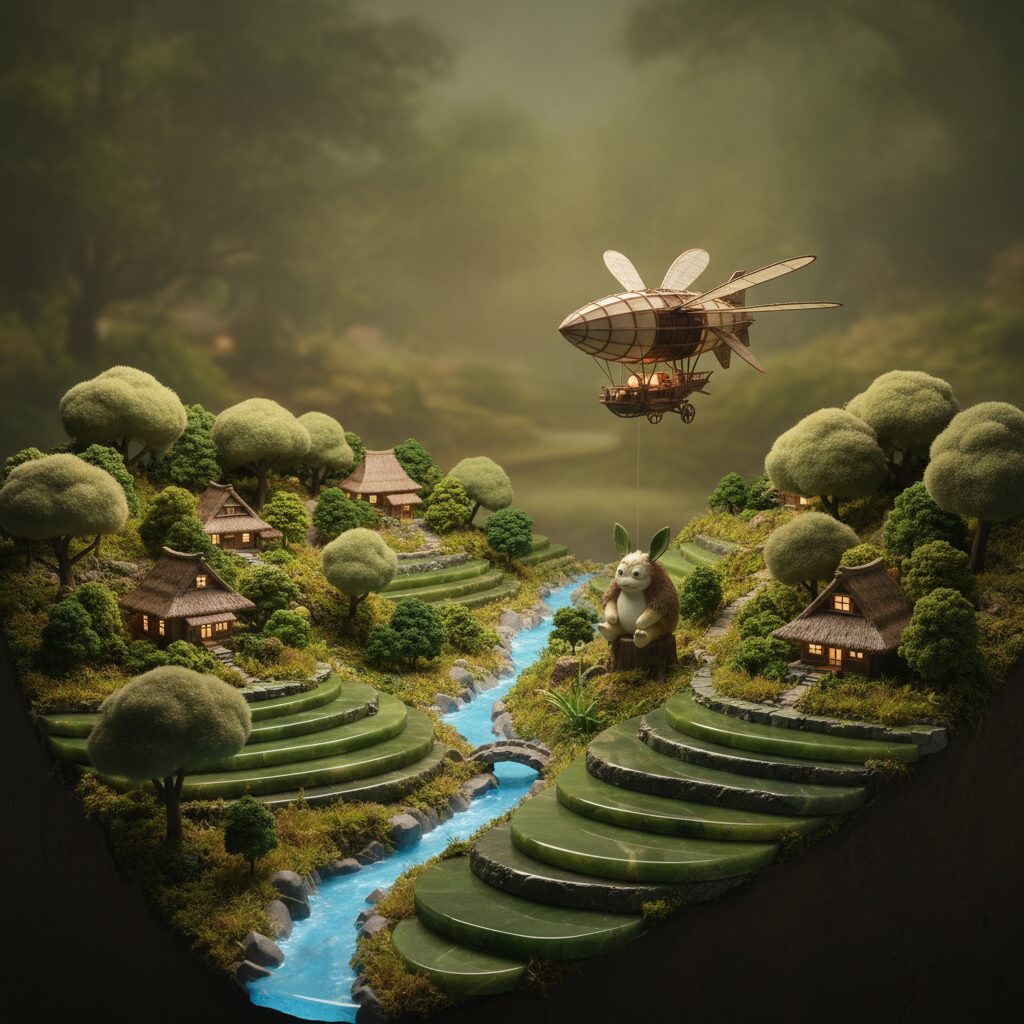
Yo, what’s the deal? Ryo Kimura here. Let’s get real for a second. You’ve seen it, right? Scrolling through your feed, and bam—a shot of Japan that looks like it’s been ripped straight out of My Neighbor Totoro. Sun-drenched rice paddies terraced up a mountainside, a sleepy village nestled in a valley, thick, mysterious forests that look like a friendly spirit could pop out at any second. It’s a whole mood. The visuals hit different, a mix of pure nostalgia for a time you never lived and a quiet fantasy that feels almost, almost real. And that’s the question that hangs in the air, isn’t it? In a country known for its mega-cities packed with neon and millions of people, is this Ghibli-esque countryside a real thing, or is it just a carefully curated fantasy for the ‘gram? Is Japan really hiding this dreamy, idyllic world, or are we all just falling for a beautifully animated lie?
Spill the tea: it’s both. And neither. The truth is way more fascinating and complicated. That scenery you’re dreaming of isn’t just “nature.” It’s not a national park. It’s not untouched wilderness. It’s a very specific type of landscape called a `Satoyama` (里山), and it’s the key to unlocking this whole aesthetic. Think of it as the ultimate collab between humans and nature, a centuries-long project that created a unique and stunningly beautiful environment. But it’s also a landscape that’s fading, haunted by the ghosts of a different era. To really get why this scenery exists and why it punches you right in the feels, you have to look past the pretty picture and understand the deep, cultural story it’s telling. It’s a story about geography, necessity, spirituality, and a collective national longing for a home that’s slowly disappearing. Before we dive deep into the lore, let’s get our bearings. The OG Totoro Forest, the Sayama Hills, is a real place, a surviving patch of this magic right on the edge of Tokyo’s urban sprawl. Check the map—it’s the ground zero for this whole vibe.
To understand the deeper spiritual connection people feel to these landscapes, consider the modern phenomenon of seeking out Ghibli-core “power spots”.
The Vibe Check: What Exactly is ‘Satoyama’?
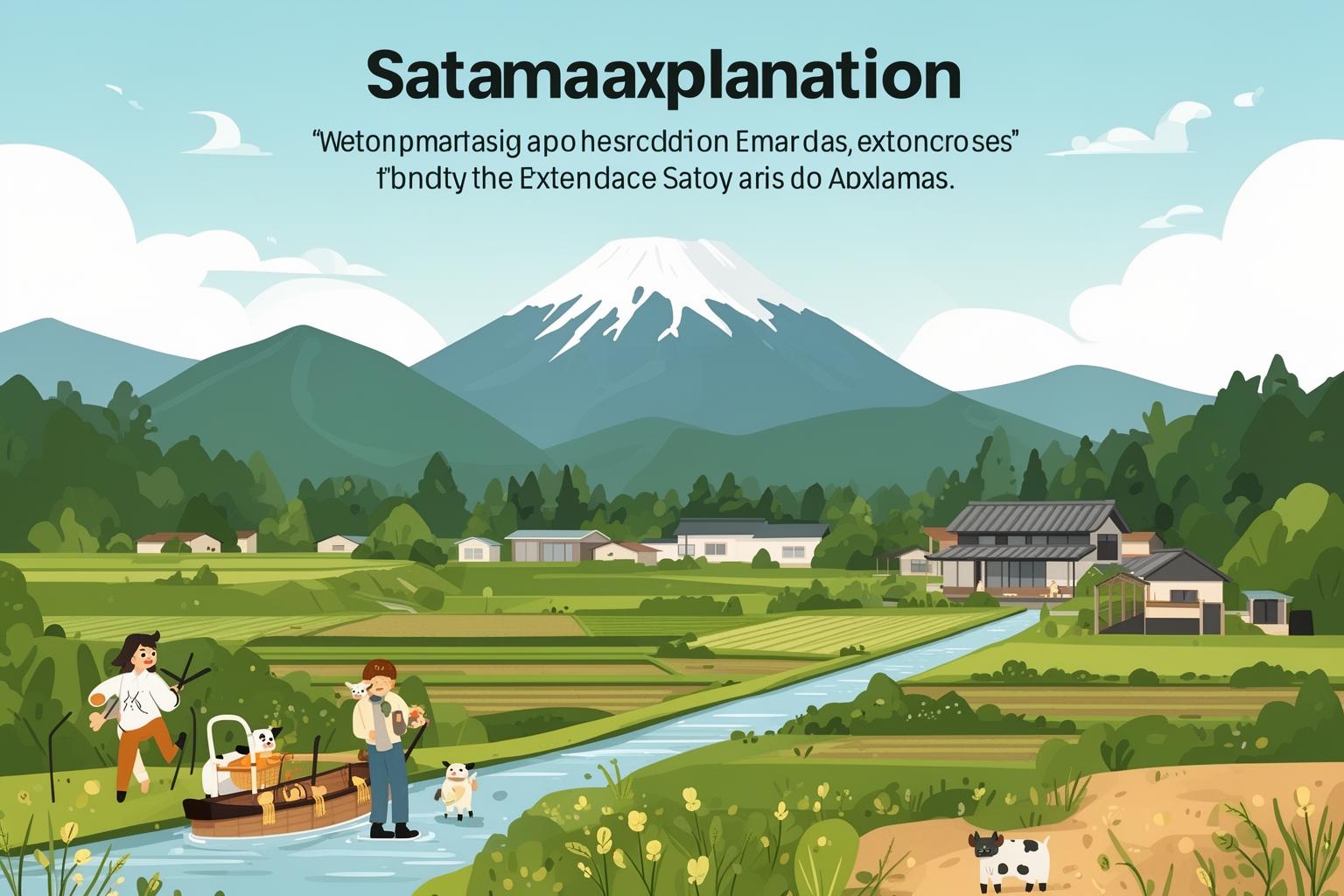
Alright, let’s break down the word `Satoyama`. It’s more than just a place name; it represents an entire concept, a type of landscape. The kanji characters reveal its meaning: `Sato` (里) means village, or a place where people live, while `Yama` (山) means mountain or hill. Combined, `Satoyama` refers to the “mountains of the village.” These aren’t the remote, wild, and potentially dangerous mountains far from civilization, nor are they the flat, cultivated land of the village itself. Instead, it’s the space in between—a borderland, a buffer zone where human and natural worlds blend and create something new. This is the very essence of the Ghibli aesthetic, a concept that lacks a precise English equivalent, since Western perspectives often draw a clear divide between “civilization” and “wilderness.” Satoyama blurs that line and flourishes within the ambiguity.
Not Wild, Not Tame: The In-Between Zone
Picture a mosaic—that’s what a Satoyama landscape is. It isn’t a single uniform entity, but a patchwork quilt of diverse environments, all interconnected and shaped by human hands. There are small rice paddies, the famous `tanada`, glimmering like broken mirrors as they ascend hillsides, nourished by a network of hand-carved irrigation channels and ponds that serve as thriving ecosystems filled with dragonflies and frogs. In the background lie the `zoki-bayashi`, or coppiced woodlands. These aren’t shadowy, primeval forests, but bright, carefully managed woods where trees were regularly harvested for firewood and charcoal, allowing sunlight to penetrate the forest floor, encouraging a rich variety of plants and insects. Scattered throughout are vegetable gardens, bamboo groves, grasslands for thatching and animal fodder, and perhaps a small stream or river. Narrow footpaths weave through the landscape, often adorned with small stone shrines (`hokora`) or statues of Jizo, the protector of travelers and children.
What’s essential to grasp is that nothing here is accidental. This entire landscape is the product of centuries of intensive, sustainable resource management. It’s a massive, living garden. The placements of paddies follow the natural contours of the land to maximize gravity-fed irrigation. The forests were managed rotationally to maintain a steady supply of fuel and timber without exhausting the resource. Grass was cut at specific times throughout the year. This wasn’t “nature” in some passive, “leave no trace” hiking sense; it involved an active, engaged partnership. Humans acted as a keystone species within this ecosystem, continuously shaping and tending it. The appeal of Satoyama isn’t the allure of untouched wilderness; it lies in the beauty of a perfectly balanced, long-term collaboration between a community and their environment. It’s a landscape that softly tells stories of human life, labor, sustenance, and profound local wisdom passed down through generations. This human presence, this sense of a nurtured, inhabited nature, is what imbues it with such a deep feeling of warmth and nostalgia.
The “Why” Behind the Scenery: A Crash Course in Japanese History and Geography
So why did Japan create this highly unique and labor-intensive landscape? Why not simply have large, flat fields as seen in other parts of the world? The explanation is not merely a matter of aesthetic preference. It’s a story shaped by geographic fate, resource scarcity, and the unrelenting demands of pre-modern life. The Satoyama is a masterpiece born out of necessity. To understand why it looks as it does, you need to grasp the fundamental limitations and pressures that shaped Japanese society for over a millennium. The picturesque scenery is essentially the beautiful outcome of some very harsh realities.
No Room to Spare: Japan’s Geographic Reality
First, consider the land itself. Japan is, to say the least, geographically constrained. A glance at a topographical map makes this immediately clear. The archipelago consists mainly of volcanic mountain ranges rising from the ocean. An astonishing 75% of the country is mountainous and steeply sloped, making it unsuitable for settlement or traditional farming. This forces everyone else into the remaining 25%—the coastal plains and narrow river valleys. Throughout most of its history, Japan has had to sustain a large population on an incredibly limited amount of usable land. There simply was no room to waste. Every single viable square meter had to be put to productive use.
This intense land pressure explains one of the most iconic Satoyama features: the terraced rice paddies, or `tanada`. When flat land in the valley ran out, where could farmers turn? Upward. They painstakingly carved terraces into the hillsides, creating new arable land, step by laborious step. This was a monumental effort, requiring not only tremendous labor but also advanced engineering to channel water from the highest terraces to the lowest. It also demanded close community cooperation. A single family could not build or maintain an entire terraced system alone. The entire village had to collaborate, managing shared water sources, repairing stone walls, and coordinating planting and harvesting. This fostered a deeply interconnected, interdependent community structure where group survival took precedence over individual interests. The landscape itself became a tangible expression of this social contract. The stunning beauty of the `tanada` stands as a tribute to centuries of collective struggle and cooperation against the unforgiving geographic constraints.
The Pre-Fossil Fuel Grind: Living off the Land
Now add another layer of challenge: for most of its history, Japan was an energy-poor country with scarce resources. Before modern imports of oil and coal, everything had to be sourced locally. The Satoyama was not just a place to grow food; it functioned as the local supermarket, hardware store, pharmacy, and power plant all in one. The entire rural material culture was built on the resources harvested from this carefully managed landscape. This direct, daily dependence on the land influenced every facet of life and dictated environmental management. It operated as a closed-loop system where nothing was wasted and every element served a purpose.
The Forest as a Supermarket
Take a closer look at the `zoki-bayashi` woodlands. To a modern observer, it may appear as a pleasant forest. To an Edo period villager, it was an essential storehouse of goods. The most important product was fuel. Wood and charcoal provided primary energy for cooking, heating, and trades such as blacksmithing and pottery. To ensure a sustainable supply, villagers practiced coppicing—cutting certain tree species (like oak and chestnut) down to the stump, which then sprouted multiple new shoots. These shoots grew rapidly and straight, ready to be harvested again in a 15-20 year cycle. This rotational harvesting kept the forest in a state of continual renewal. It also created a unique forest structure with an open canopy, allowing sunlight to reach the ground. This nurtured a wide variety of other useful resources. Villagers foraged for `sansai` (edible wild plants) such as fiddlehead ferns (`kogomi`) and bamboo shoots (`takenoko`) in spring. In autumn, they gathered mushrooms like shiitake, along with chestnuts (`kuri`) and acorns (`donguri`), which could be ground into flour during famines. Leaf litter, known as `ochiba`, was collected, composted, and used as essential fertilizer for the nutrient-poor rice paddies. The timber was used selectively: some for construction, others for tools, and bark for roofing or crafts. This forest wasn’t wild and untamed; it was a meticulously managed, productive cornerstone of the village economy.
The Paddy as the Heartbeat
At the literal and cultural center of the Satoyama was the rice paddy. Rice was far more than a staple; it formed the foundation of the entire society. For centuries, wealth and power were measured in rice. Taxes were paid in rice; samurai stipends were paid in rice. Its cultivation cycle shaped the yearly rhythm, marked by festivals and rituals tied to planting, transplanting, and harvesting. The Shinto religion is deeply entwined with rice farming, with numerous ceremonies to honor the `kami` of the fields and secure a good harvest. The whole community mobilized for the arduous work of rice farming, from seedbed preparation in spring to communal transplanting (`taue`) in early summer, often accompanied by songs and music. But the rice paddies’ influence extended beyond people. By flooding fields with water redirected from mountain streams, farmers created vast, temporary wetlands. These man-made ecosystems became rich habitats for countless species. They provided breeding grounds for frogs, newts, and iconic insects like the dragonfly (`tombo`), a cherished symbol of summer in Japan. Small fish and freshwater snails thrived in irrigation channels, attracting birds such as herons and egrets. This biodiversity was not accidental; it was a deliberate and integrated component of the system. Frogs controlled insect pests; bird droppings enriched the water with nutrients. The paddy was a complex, living environment, and its vitality mirrored that of the entire Satoyama. The sights and sounds of this vibrant ecosystem—the croaking frogs on summer nights, the hum of insects, the flash of dragonfly wings—are deeply embedded in the Japanese sensory memory and contribute greatly to the immersive feeling of the Ghibli world.
The Totoro Effect: Deconstructing the Nostalgia
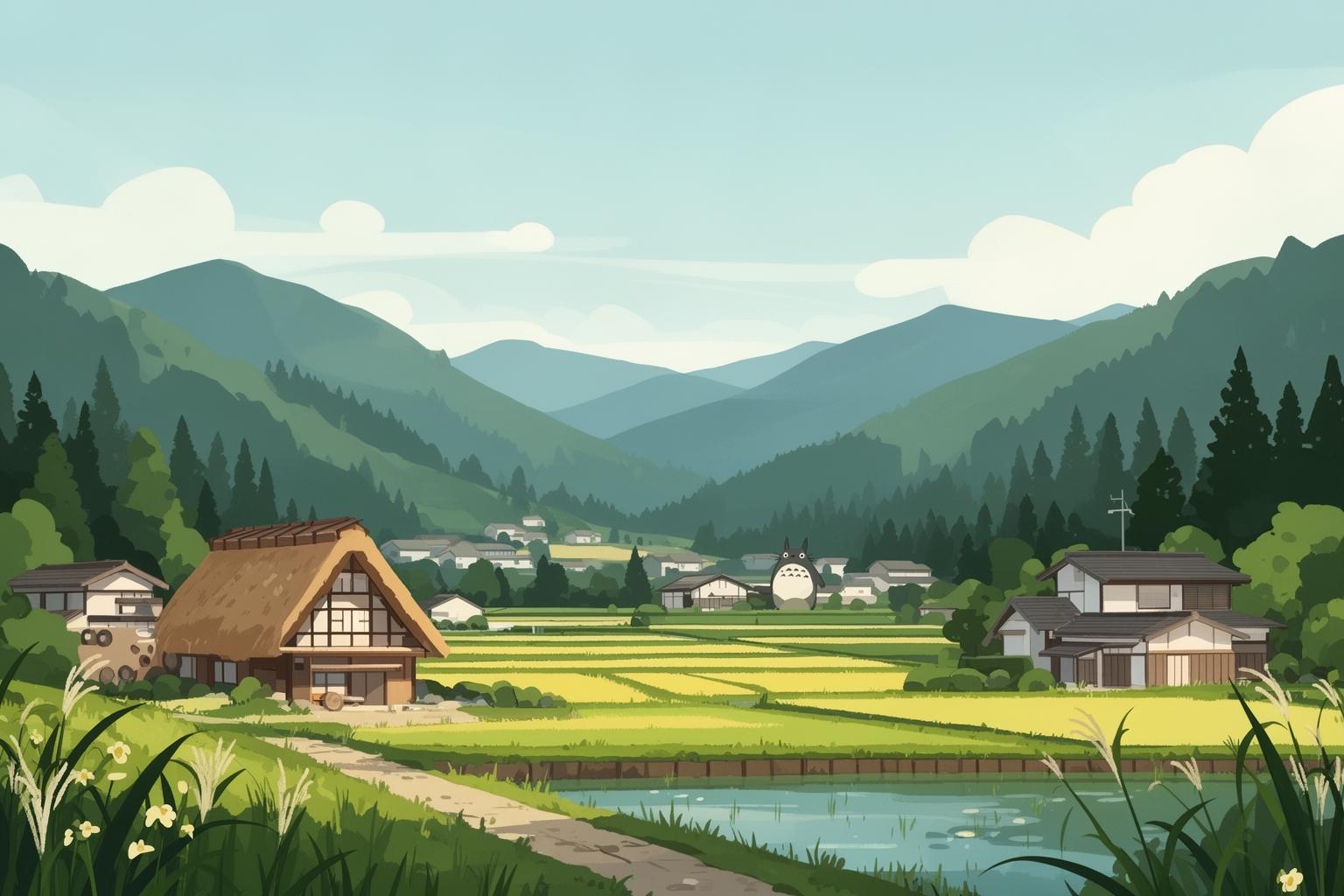
Alright, so we’ve confirmed that the Satoyama is a real, historically meaningful landscape. Yet, that alone doesn’t fully clarify the intense, almost magical sense of nostalgia it stirs, even among non-Japanese people. Why does it seem like a memory? Why does it seem like a lost paradise? This is what I refer to as the “Totoro Effect.” It involves tapping into a powerful, collective yearning for a distinct moment in time and a particular way of experiencing the world. The Satoyama landscape serves as the setting, but the emotional impact arises from the story projected onto it—a narrative of a simpler past and a world infused with quiet magic.
When Was This “Golden Age”? The Showa Era Ghost
The world of My Neighbor Totoro is specifically set in the late 1950s. In the Japanese calendar, this corresponds to the Showa Era (specifically around Showa 33). This timing is no coincidence. It is the key to the entire nostalgic equation. The 1950s in Japan was a unique, transitional era. The country had risen from the devastation of World War II and was on the brink of its miraculous economic boom, but had not yet reached it. In rural areas, the traditional Satoyama lifestyle remained largely intact. Communities were close-knit, the bond with the land was direct, and life followed the seasonal cycles of agriculture. Yet, the forces of modernity were looming. Televisions, refrigerators, and cars were beginning to appear. The lure of jobs in rapidly industrializing cities was starting to draw younger generations away from the farms. This specific moment—the final breath of the old way of life just before it was swept away by modernization—is the “golden age” being remembered. For the generation that created and consumed this media (people like director Hayao Miyazaki, born in 1941), it was their childhood. It represents a time of perceived innocence, strong family and community ties, and a life that, though materially poor, was perhaps richer in spirit. This nostalgia holds great power in contemporary Japan. It expresses a longing for a `furusato` (hometown or native place) that, for the vast majority of Japanese who now live in cities, has either disappeared entirely or remains only in an idealized form. When you watch Totoro, or look at an image of a Satoyama, you’re not just seeing a landscape; you are connecting to this vast, shared cultural memory of a lost Eden.
Animism on Mute: Why Spirits Feel at Home Here
There is another, deeper layer to this enchantment. It relates to Japan’s spiritual undercurrents, particularly Shintoism. At its core, Shinto is an animistic belief system. It does not worship a single, all-powerful deity as many Western religions do. Instead, it holds that divinity exists everywhere. Gods, spirits, or essences known as `kami` inhabit the natural world. A magnificent old tree, a uniquely shaped rock, a waterfall, a mountain—any of these can serve as homes for `kami`. Shinto focuses less on rigid doctrines and more on a sense of awe and reverence for the life force flowing through nature. The Satoyama landscape, as a vivid meeting point of human life and nature, is practically saturated with this spiritual energy. The proof is literally etched into the scenery. You’ll find small shrines tucked into groves of trees, dedicated to local mountain `kami`. Sacred ropes called `shimenawa` are tied around ancient trees, marking them as sacred objects (`goshintai`). Along the paths, rows of small Jizo statues, often adorned with little red bibs, stand as village guardians. This subtle and continuous recognition of the spiritual realm means that the boundary between the physical and supernatural has always been somewhat blurred. The world was not seen as a mere collection of resources to be exploited, but as a living community of beings both visible and invisible. So, when a character like Totoro—a furry, ancient forest spirit—appears, it doesn’t feel like a random fantasy element. It feels culturally and spiritually believable. He is the `kami` of the great camphor tree. He is part of the landscape’s living community. The idea that the forest is watching, that it has a spirit, that non-human intelligences share the world with you, is a concept woven deeply into Japanese culture for thousands of years. The Satoyama is the perfect stage for these beliefs—a place where the veil between worlds naturally feels thin.
The Reality Check: Is Satoyama Disappearing?
This is the point where the story shifts. The beautiful, harmonious world of the Satoyama that inspired this aesthetic is now facing serious challenges. The very forces of modernity that sparked nostalgia for it are simultaneously driving its decline. The romantic images commonly shared online often mask a far harsher reality marked by an aging population, economic struggles, and a fragile ecosystem falling out of balance. The Ghibli fantasy collides with the stark realities of the 21st century.
The Great Urban Migration
The post-war economic boom changed everything. Starting in the 1960s, Japan experienced one of the fastest industrializations and urbanizations in history. The appeal of stable incomes, modern conveniences, and the vibrant city life was irresistible. Millions of young people left their rural `furusato` behind to become salarymen and office workers shaping modern Japan. They abandoned the physically demanding and uncertain work of farming for jobs in factories and offices in Tokyo, Osaka, and Nagoya. This shift created a demographic crisis in rural areas. Once lively villages filled with young families began to empty, leaving an aging population behind. Today, many rural communities in Japan are designated as `genkai shūraku` or “marginal villages,” where over half the residents are over 65. The labor-intensive tasks required to maintain the Satoyama—such as clearing irrigation channels, re-thatching roofs, and coppicing forests—are simply beyond the capacity of an elderly population. Consequently, numerous rice paddies and fields have been abandoned. These `kōsakuhōkichi` (abandoned cultivated lands) are now common sights in rural Japan, slowly overtaken by weeds and scrub, silently marking the unsustainability of this way of life in the modern economy.
The Invasion of the “Wrong” Nature
There’s a common misconception: if people abandon the Satoyama, won’t it just “return to nature” and become a beautiful wilderness once more? The answer is a decisive no, and this is crucial to grasp. The Satoyama is not a purely natural ecosystem that can simply be left alone. It is a semi-artificial environment, co-created and carefully maintained by humans for centuries. When human involvement ceases, the delicate balance collapses, often resulting in negative effects. Bright, open coppiced woodlands, left uncut, become dark, overgrown tangles. The undergrowth is choked out, and biodiversity on the forest floor drastically declines. Bamboo groves, once managed as a valuable resource for construction and crafts, can turn invasive, spreading rapidly and choking out native plants. Abandoned rice paddies dry up, losing their role as vital wetlands and causing populations of frogs, dragonflies, and other wildlife to crash. Most seriously, the buffer zone between the deep mountains and villages breaks down. Continuous human activity in the Satoyama used to keep larger wildlife like wild boars (`inoshishi`), deer (`shika`), and bears (`kuma`) at bay. But with this buffer quiet and overgrown, these animals increasingly invade villages, causing severe crop damage and, in the case of bears, presenting real dangers to elderly residents. The idyllic Ghibli vision of humans and nature living in gentle harmony is being replaced by a reality of escalating human-wildlife conflict. The charming countryside is turning into a new, contested frontier.
Finding Your Own Totoro Moment: The Modern Satoyama Experience
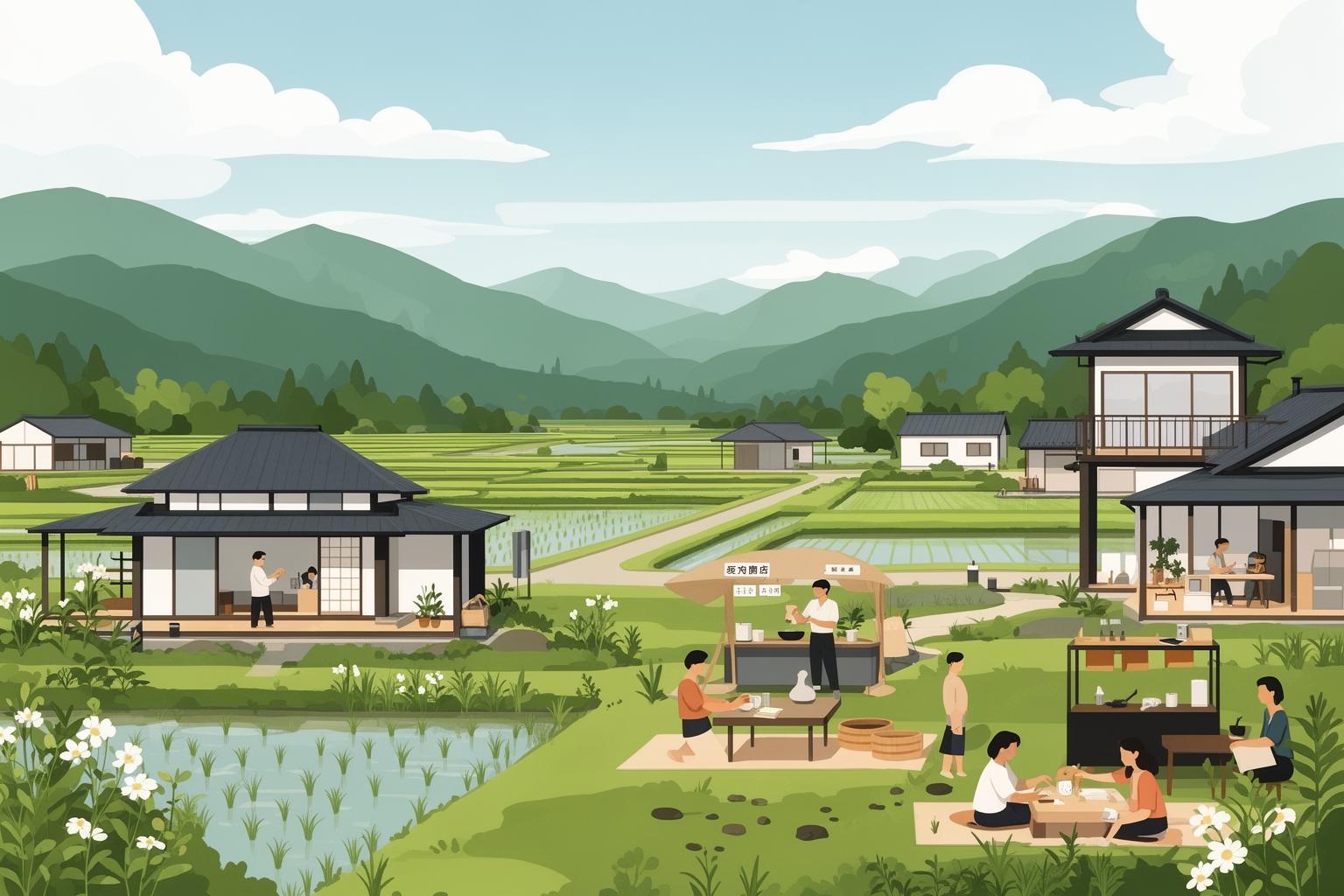
So, is everything bleak? Has the dream faded? Not entirely. The story of Satoyama in the 21st century is not solely one of decline; it’s also a tale of rediscovery and reinvention. In Japan, there’s an increasing recognition of the value of these landscapes—not only for their beauty but also for their biodiversity, cultural heritage, and the sustainable living lessons they offer. People are resisting the decline, opening up new ways for visitors to engage with the authentic Satoyama—not as passive tourists, but as active participants.
It’s Not a Theme Park, It’s a Movement
Importantly, the effort to preserve Satoyama isn’t about turning rural areas into historical theme parks or freezing them in the 1950s. Instead, it’s about redefining a modern purpose for these landscapes. This has ignited a nationwide movement. Non-profits, volunteer groups, and university students collaborate with remaining local communities to help maintain the landscape. They organize weekend trips where city residents can assist with clearing overgrown forests, repairing terrace walls, or planting rice. This has become a way for urban Japanese to reconnect with their rural roots and help preserve their cultural heritage. At the same time, there’s a growing popularity of “green tourism” and agritourism. This isn’t just about taking pictures—it means staying in renovated traditional farmhouses (`kominka`), eating meals made from locally sourced ingredients, and spending a day working alongside local farmers. Visitors can try planting rice in the mud, foraging for wild vegetables in spring, or harvesting rice with hand sickles in autumn. This hands-on approach offers the most genuine way to experience Satoyama, allowing people to see it not simply as a picturesque scene but as a living, working environment and to appreciate the skill and effort required to sustain it. It shifts the visitor’s role from a scenic consumer to an active participant, even if only for a short time.
Where to Experience the Authentic Spirit (Without Tourist Traps)
So, where can you find this kind of experience? It’s less about pinpointing a specific location and more about knowing what type of place to seek out. Look for areas known for their `tanada` (rice terraces) or traditional villages, then find organizations or inns that offer agricultural experiences. To give you a clearer idea, here are a few examples that capture the spirit of the modern Satoyama.
First, the original inspiration: Sayama Hills, straddling the border of Tokyo and Saitama Prefecture. This isn’t a remote countryside spot but a remarkable island of greenery surviving on the edge of the world’s largest megalopolis. Preserving it is a continual battle against urban development, led by the “Totoro no Furusato Foundation” (The Totoro Hometown Fund), which buys forest parcels through donations to protect them. Visiting here is a moving experience; you can stroll along the wooded paths that inspired Miyazaki, while the distant city hum serves as a stark reminder of what has been lost and what remains to be preserved.
For a more remote and striking landscape, head to the Noto Peninsula in Ishikawa Prefecture. This region has been designated a Globally Important Agricultural Heritage System (GIAHS) by the UN. It’s famous for the Shiroyone Senmaida, or “A Thousand Rice Paddies of Shiroyone,” a stunning cascade of over a thousand small rice terraces stretching down to the sea. Here, the community fights to keep its traditions alive against adversity, a struggle made even tougher by the devastating 2024 earthquake. Witnessing the reconstruction and preservation efforts offers powerful insight into the resilience of Satoyama culture.
Finally, for an in-depth look at traditional architecture, visit Miyama in rural Kyoto Prefecture. This area is known for its villages with `kayabuki no ie`, or traditional thatched-roof houses. These graceful steep roofs are more than aesthetic choices; they’re a direct result of the Satoyama system. The thatch is made from `susuki` (pampas grass) harvested from communal grasslands on nearby hills. These grasslands were maintained through controlled burning to prevent tree growth, supporting a unique ecosystem of plants and insects. The entire house—from its timber frame sourced from nearby forests to its thatched roof made from hill grass—embodies the interconnectedness of Satoyama. Staying in one of these houses, many of which have been converted into inns, feels like immersing yourself in the culture itself.
The Final Takeaway: More Than Just a Pretty Picture
So, let’s bring it all together. That Ghibli-like landscape that enchants you is not a mere fantasy, but it’s also more than just a simple, natural backdrop. It represents the visual proof of a philosophy. It is the outcome of a thousand-year-long dialogue between humans and the land, a conversation etched in stone walls, irrigation channels, and carefully tended woodlands. The beauty you admire is the byproduct of a system crafted for survival, sustainability, and community interdependence. The powerful nostalgia it evokes isn’t solely for a picturesque past. It’s a profound yearning for a different way of living—a life with a stronger sense of community, a more direct and respectful bond with the environment, and a rhythm governed by the seasons rather than the stock market.
Understanding the Satoyama is understanding a vital part of the Japanese spirit. It’s about realizing that the boundary between humanity and nature is not a barrier, but a permeable membrane. When you gaze at a photo of a terraced rice paddy, I hope you see more than just a beautiful scene. I hope you perceive the immense human effort, the geographical challenges that inspired that ingenuity, the complex ecosystem teeming with life, and the spiritual belief that finds the divine in a blade of grass. The world of Totoro is not entirely lost, but it’s not a place you can simply visit as a tourist. It’s a living, breathing, and struggling heritage—a body of knowledge that modern society is urgently trying to recall. And perhaps, just perhaps, its most crucial lesson is that the most beautiful worlds are those we create together with nature, not despite it.