Yo, what’s up fam! Megumi here, dropping in from the heart of Tokyo’s organized chaos. As an event planner, my whole gig is about what’s next, what’s new, what’s gonna be the next big trend to light up the scene. But sometimes, you gotta look back to see what’s truly timeless. And let me tell you, there’s nothing more timeless, more of a legit time warp, than stepping into a Showa-era kissaten. You’ve probably seen them on your feed: the moody lighting, the plush velvet seats that have seen some things, the almost comically perfect melon soda float with a bright red cherry on top. It looks like a meticulously designed movie set, a nostalgia-core aesthetic cranked to eleven. But here’s the tea: for a huge number of these spots, it’s not an aesthetic. It’s just… how things are. They didn’t get retro; they just never left. You walk in and it’s 1988 all over again. The air is thick with the ghosts of cigarette smoke and forgotten conversations, the coffee is brewed with painstaking slowness, and the only scrolling you’ll be doing is through the pages of a well-worn newspaper. It begs the question that hits you as soon as you sit down on that cracked leather banquette: Why? Why are so many of these cafes perfectly preserved fossils of a bygone era, specifically the flashy, confident 1980s? Is this a deliberate choice for the ‘gram, or is something deeper going on? The answer isn’t just about interior design trends. It’s a full-on lesson in Japanese economic history, social dynamics, and a cultural mindset that’s kinda hard to explain until you’ve lived it. It’s a story about a wild party, a brutal hangover, and the stubborn survivors who just kept doing their thing. So grab a cup of some slow-drip coffee, put your phone on silent (for real, they might ask you to), and let’s dive deep into the time capsule of the Showa kissaten. It’s a whole vibe, and I’m about to break down why it exists.
To truly understand this phenomenon, you need to explore why these kissaten feel like a legitimate time machine.
The OG Social Network: What Even Is a Kissaten?
Not Your Typical Coffee Shop
First, let’s clarify the terminology, because a typical modern café and a classic kissaten (喫茶店) are operating in entirely different realms. Picture a place like Starbucks or the countless trendy, minimalist coffee shops scattered across every major city worldwide. They’re bright, noisy, and efficient. The aim is transactional: grab your caffeine fix, maybe get some work done on your laptop using free Wi-Fi, and move on with your day. It’s a quick pit stop in a hectic schedule. In contrast, a kissaten is the destination. The term itself, literally meaning “tea-drinking shop,” suggests a more leisurely, intentional experience. The atmosphere is slow, quiet, and reflective. Entering one feels like agreeing to pause the frantic pace of modern life. Pulling out a laptop is often a major faux pas in many traditional spots. You’ll frequently see subtle—or not so subtle—signs forbidding laptop use or extensive photography. This isn’t because they oppose technology; rather, they fiercely protect the ambiance they have cultivated over decades. A kissaten is a “third place,” a concept you hear about often, but this is the original Japanese version—a sanctuary that’s neither the stress-filled office nor the private home. It’s a semi-public bubble where you can be alone, together. You come to read, listen to carefully chosen music, enjoy a quiet, uninterrupted conversation, or simply sit and think. The coffee isn’t merely a product; it’s your ticket to inhabit that space for a time. You’re paying as much for the atmosphere and time as for the drink itself, which is why a single cup of siphon coffee might cost more than a Venti from a chain.
The “Master” and the Ambiance
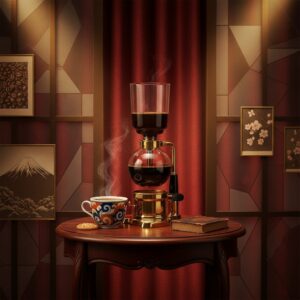
Another defining element of a kissaten’s soul is the presence of the “Master” (マスター, masutā). This isn’t simply a manager or head barista. The Master is usually the owner, an artisan who has devoted their life to this one establishment. They are the curator, gatekeeper, and living embodiment of the shop’s personality. Often an older gentleman or lady, impeccably dressed in a crisp shirt and sometimes a waistcoat or apron, they move with quiet, practiced efficiency born of decades of repetition. The Master personally selects the beans, refines the brewing technique (often a theatrical siphon or meticulous cloth-filter nel drip), chooses the music filling the room—usually a vast collection of jazz or classical vinyl—and maintains the delicate social balance of the space. They may not engage in the kind of bubbly small talk typical in Western customer service. Their communication is often subtle—a slight nod for a regular, the silent placement of a glass of water, the focused intensity as they prepare your coffee. The entire kissaten reflects the Master’s personal taste and philosophy. It’s their kingdom, their life’s work. This is a critical detail: these aren’t franchises with corporate mandates to modernize. They are deeply personal, idiosyncratic spaces reflecting one individual’s vision. When that vision was shaped in the booming 1980s and the Master has seen no reason to change it since, the result is a perfectly preserved time capsule. The long-time regulars, who have been coming for thirty or forty years, don’t want a sleek, minimal interior; they crave the familiar comfort of the Master’s unchanging world.
Riding the Bubble Wave: The 1980s Gilded Age
When Money Was No Object
To grasp the aesthetic of the classic kissaten, you must first appreciate the unrestrained frenzy of Japan’s “Bubble Economy” (baburu keiki, バブル景気) in the late 1980s. The atmosphere is nearly indescribable. It was an era of overwhelming economic confidence, a gold-rush fever dream where the celebration seemed endless. Stock markets and urban real estate prices soared to unimaginable heights. Tales of corporate expense accounts covering thousand-dollar taxi rides and golf club memberships costing more than houses were widespread. Consumerism exploded alongside a hunger for luxury goods and experiences. Japan was widely regarded as the unquestioned economic powerhouse of the future. This climate of lavish wealth and limitless optimism directly financed the creation and renovation of countless kissaten. It was no time for cutting corners or minimalism. Flush with cash and serving a clientele with money to spare, business owners poured resources into crafting opulent, inviting, and impressive interiors. They built spaces meant to exude exclusivity and luxury, a deliberate display of success and refinement. The design choices of this era were not merely about aesthetics; they were bold statements. They were building for a prosperous future they believed was assured, utilizing the finest materials money could afford. This commitment to quality and investment is a major reason many of these interiors have physically endured to this day.
The Anatomy of a Showa Interior
Let’s dissect the distinctive design DNA of these establishments, as every detail narrates the ambitions of the Bubble Era. This isn’t random vintage clutter; it’s a precise language of late-Showa luxury.
Velvet and Leather: The seating is where the ambiance first reveals itself. Forget molded plastic or light Scandinavian wood. The seats are heavy, deep-buttoned banquettes upholstered in crushed velvet or thick, dark leather. The color scheme is rich and moody: burgundy red, forest green, chocolate brown, mustard yellow. These materials were costly, comfortable, and intentionally inviting, encouraging patrons to sink in and linger for hours. The texture alone suggested wealth and European-inspired classicism. This was the opposite of light and airy; it was designed as a cozy, womb-like refuge from the harsh concrete city.
Dark Wood and Polished Brass: Walls, partitions, and counters are almost invariably covered in dark, substantial woods—mahogany, teak, or walnut—treated to a deep, glossy shine. This wasn’t mere veneer; it was solid, durable craftsmanship conveying permanence and quality. Complementing the dark wood was brass everywhere: railings, door handles, light fixtures, and decorative trim. Carefully polished to a bright gleam, the warm brass glow against the dark wood embodied the pinnacle of 1980s sophisticated design. This look was inspired by classic European hotel lobbies and exclusive private clubs, designed to make the everyday office worker feel like a VIP for the price of a cup of coffee.
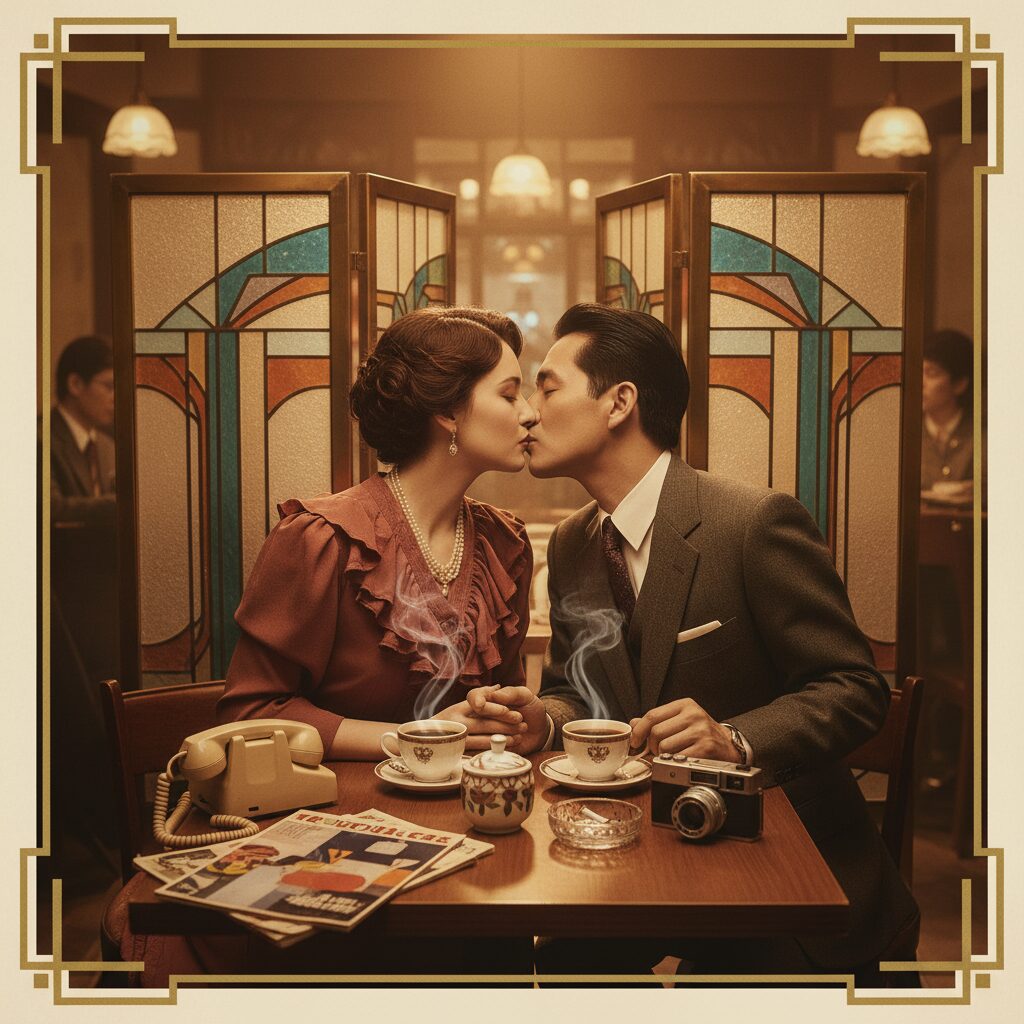
Ornate, Moody Lighting: Lighting in a kissaten is a masterclass in atmosphere. Harsh overhead fluorescent lights are rare. Instead, the space is lit by a curated collection of elaborate fixtures that create warm, intimate pools of light. Think Tiffany-style stained-glass lamps suspended over tables, casting colorful patterns. Picture multi-armed chandeliers, perhaps with crystal accents, providing a soft ambient glow. Elegant brass sconces adorn the walls. The overall effect is deliberately dim, even slightly theatrical. This wasn’t just about conserving electricity; it was about crafting a secluded, private environment where the outside world and its concerns could fade away. It was a carefully designed escape.
The Ashtray as Decor: This may jolt modern visitors, but it’s a key historical detail. Until regulations changed in 2020, smoking wasn’t just allowed; it was an essential part of the kissaten experience. Every table featured a heavy, ornate ashtray made of glass, ceramic, or metal. These weren’t flimsy plastic items; they were substantial pieces of the table setting. Even in many now non-smoking shops, you can still sense the past. The faint, sweet aroma of decades of tobacco may linger in the upholstery. This connection to smoking culture is one of the strongest sensory links to the past, a time when coffee and a cigarette were the default break ritual for a Japanese “salaryman.”
Idiosyncratic Furniture and Decor: Beyond the core features, each kissaten reflects its Master’s unique taste. You’ll find oddly shaped chairs reminiscent of retro sci-fi, custom-built partitions with intricate woodwork, and vibrant carpets patterned with geometric or floral designs. Walls might be decorated with oil paintings of European landscapes, vintage movie posters, or eclectic collections of clocks or ceramics. This personal, often quirky layer of decor prevents these spaces from feeling like sterile theme restaurants. It’s a genuine expression of an individual’s taste at a specific moment in time, preserved untouched for decades.
The Soundtrack of the Era
The soundscape of a kissaten is as intentionally crafted as its interior. Music wasn’t mere background noise; for many shops, it was the central attraction. This was the golden age of specialized music cafes, a concept that feels almost foreign today in the era of endless streaming.
Jazz Kissa (ジャズ喫茶): These venues were, and remain, sanctuaries for audiophiles. The Master would invest heavily in a high-fidelity sound system—large speakers, powerful tube amplifiers, and a top-tier turntable. A floor-to-ceiling collection of thousands of vinyl records was the highlight. In the strictest jazz kissa, conversation was forbidden. Patrons were there to listen, to absorb the music with near-religious reverence. It provided access to high-quality recordings of American jazz often unavailable elsewhere. The Master acted as DJ, curator, and tastemaker, leading guests on a sonic journey.
Meikyoku Kissa (名曲喫茶): The same idea applied to classical music. These cafés offered an escape into the worlds of Bach, Beethoven, and Mozart, played on superior sound systems. They were quiet, studious spaces, often favored by students and intellectuals. Like jazz kissa, they provided a vital public service in a pre-digital era: access to music otherwise inaccessible at home. These music-focused kissaten exemplify how these places served a tangible function that technology has largely replaced, which contributes to their profoundly nostalgic character.
The Great Freeze: Why Time Stopped in 1991
The Bubble Bursts and the Beginning of the “Lost Decades”
All these kissaten were adorned with the most lavish, extravagant 80s decor imaginable. They were thriving, confident, and seemingly built to last. Then, in the early 1990s, the music stopped. The economic bubble didn’t just deflate; it burst in a spectacular and catastrophic way. The Tokyo Stock Exchange collapsed, real estate prices plummeted, and the previously unstoppable Japanese economy came to a grinding halt. This event triggered a prolonged period of economic stagnation and deflation known as the “Lost Decades” (ushinawareta nijūnen, 失われた20年), which some argue persists in some form even today. Extravagant corporate spending vanished overnight. People had less disposable income. The wild optimism of the 80s was replaced by a mood of austerity and uncertainty. This is the single most important reason why kissaten became time capsules. The party was over, and suddenly, no one had the funds or the will to redecorate. That luxurious 1988 interior was no longer a symbol of success; it became a high-water mark of a past that would never return. Renovating that costly, high-quality interior—removing the solid wood paneling, replacing velvet banquettes, updating brass fixtures—would have been prohibitively expensive for small, family-run businesses struggling in a recession. So, they simply didn’t. They kept the lights on, continued serving coffee, and preserved the decor exactly as it was on the day the bubble burst.
The “If It Ain’t Broke…” Attitude
The choice not to renovate wasn’t solely financial; it was deeply cultural as well. The Japanese concept of mottainai (勿体無い), a strong aversion to wastefulness and a feeling of regret over waste, played a key role. The furniture, fixtures, and materials used in bubble-era kissaten were high-quality and built to last. For a small business owner, the idea of discarding perfectly functional, well-made (if dated) chairs, tables, and lamps felt incredibly wasteful. Why replace something that still worked? This mindset, combined with limited funds, created powerful inertia. Additionally, the core clientele—the local regulars who had been coming for years—weren’t demanding change. They came for the familiar comfort and nostalgic atmosphere. A sudden shift to a modern, minimalist style would have felt jarring and alienated the very patrons keeping the business afloat. The kissaten survived not by adapting but by remaining a steady, unchanging refuge amid economic and social upheaval. Their refusal to change became their greatest strength and defining feature.
The Rise of Chain Cafés
While traditional kissaten were holding steady, a new contender emerged. The 1990s saw the rapid expansion of domestic coffee chains like Doutor and the landmark arrival of Starbucks in Ginza in 1996. These chains offered a completely different model: bright, modern, and standardized. They provided lower prices, faster service, and crucially, a welcoming space for students and professionals wanting to work or study. They actively catered to laptop users with free Wi-Fi and plentiful power outlets. This directly contrasted with the quiet, introspective, no-laptop-allowed ethos of the traditional kissaten. The chains competed through convenience and modernity, winning over a large segment of the market, especially the younger generation. This fierce competition placed even more financial strain on independent kissaten. Unable to compete on price or amenities, they doubled down on what made them unique: their unchanging atmosphere, their higher-quality (if old-fashioned) coffee, and their personal touch. The rise of chains cemented kissaten’s status as a niche product, a relic of another era. They survived by appealing to a self-selecting audience seeking an escape from the very modernity the chains embodied.
The Modern Vibe: From Relic to Retro Chic
The Instagram Effect and the Charm of Analog
For a long time, kissaten were viewed by many young Japanese as outdated, smoky spots frequented by their grandfathers. However, over the past decade, something intriguing has occurred. This relic has become fashionable once again. The very qualities that made kissaten appear old-fashioned are now their greatest selling points, largely due to social media and an increasing craving for genuine, analog experiences. The Showa-era style is exceptionally photogenic. The jewel-toned melon soda floats, the perfectly symmetrical tamago sando (egg salad sandwich), the elaborate, patterned coffee cups, and the moody, cinematic lighting—all serve as irresistible visual bait for Instagram. The hashtags #喫茶店巡り (kissaten meguri, cafe hopping) and #昭和レトロ (Shōwa retoro, Showa retro) boast millions of images celebrating these nostalgic time capsules. Young people, who never lived through the Showa era, have become its most enthusiastic admirers. But it’s about more than just aesthetics. In an age of constant digital connectivity, the kissaten’s lack of Wi-Fi and tranquil, disconnected ambiance have turned into assets rather than drawbacks. It provides a deliberate digital detox—a space where patrons are encouraged to put away their phones, read a physical book, and engage in face-to-face conversations free from distractions. This rare and precious experience in the 21st century is being rediscovered and embraced by a younger generation.
Beyond a Pretty Picture: The Quest for Authenticity
The revival of the kissaten is not merely about retro-themed enjoyment. For many young Japanese, it offers a way to connect with a past they never experienced. Growing up during the “Lost Decades,” a period marked by economic hardship and pessimism, the Showa era—especially the bubble years—represents a nearly mythical time of national confidence and prosperity. Visiting a kissaten can be seen as a form of domestic tourism, a journey back to a more hopeful era. It provides a tangible connection to the lives of their parents and grandparents. For international travelers, the appeal is even clearer. In a globalized world where trendy cafes in Tokyo often resemble those in Brooklyn or Berlin, the kissaten stands out as something uniquely and authentically Japanese. It hasn’t been styled or softened to appeal to a global audience. Instead, it remains a genuine, living artifact of cultural history, made all the more valuable because its survival was accidental. Kissaten endured by resisting change, inadvertently becoming a museum of a captivating chapter in Japanese history. Its authenticity springs directly from economic difficulties and steadfast preservation, making it far more intriguing than any purpose-built retro theme park.
So, Is It Worth the Hype?
Managing Expectations: What to Really Expect
Absolutely, but you need to approach it with the right mindset. This isn’t about discovering the best cup of coffee in the world by third-wave standards. It’s about the complete experience. Let’s do an honest vibe check on what you’re really getting into.
The Coffee: The coffee is often excellent, but traditional. Expect a darker roast, carefully brewed using a siphon for a clean, smooth cup, or a nel drip method that yields a rich, full-bodied brew. It’s strong and classic, but don’t expect the bright, acidic, fruity notes typical of a lightly roasted single-origin pour-over. That’s not the intention here.
The Food: The menu offers a journey into Japanese-Western fusion comfort food, known as yōshoku. The essentials are Napolitan spaghetti (a quirky mix of pasta with ketchup-based sauce, onions, peppers, and sausage), pizza toast (a thick slice of fluffy bread topped with cheese, tomato sauce, and other ingredients), and the iconic tamago sando. It’s not gourmet cuisine, but it’s deeply satisfying and nostalgic for many Japanese.
The Service: Service tends to be reserved. The Master is an artisan, not a performer. They may be focused, quiet, and not overtly friendly. This isn’t rudeness; it’s a unique form of hospitality centered on a calm atmosphere and a perfectly crafted product. Respect the silence, speak softly, and avoid lingering if there’s a line.
The Smoke: Until recently, smoking was standard. While the 2020 regulations have made most places non-smoking, some smaller, older spots might still have exemptions or residual smoke odors. If you’re sensitive to smoke, it’s worth checking reviews or taking a quick look inside first.
Your Vibe Check: Is a Kissaten Right For You?
Here’s the bottom line. A kissaten isn’t just a coffee shop. It’s an immersive experience, a cultural institution, and a fortunate relic of history. You should definitely visit if you’re curious about 20th-century Japan, want a quiet refuge to disconnect, or simply appreciate spaces with rich, authentic character. It offers a chance to slow down to a pre-internet tempo and just be for a while. However, if you’re in a hurry, need to charge your phone and get some work done, or want a bright, lively spot for a loud chat with friends, a modern café will serve you better. The kissaten isn’t trying to please everyone. It is unapologetically itself—a time capsule kept alive by a blend of economic necessity, cultural momentum, and the quiet pride of its Master. Stepping inside is a subtle flex, a way to experience a genuine slice of Showa-era Japan that’s gradually disappearing. It’s the real deal, fam, and if you get it, you get it. IYKYK.