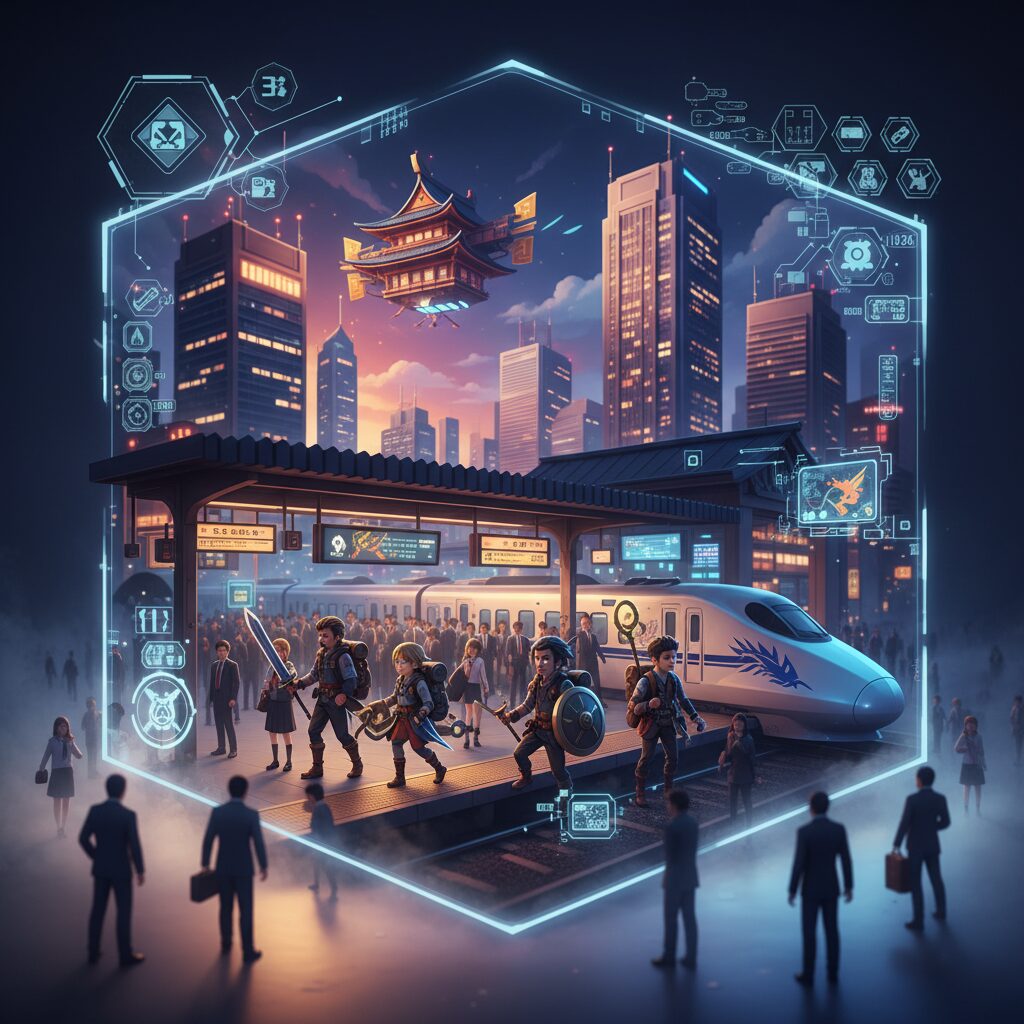
Hey everyone, Sofia here! So, you’ve seen the vids, right? The ones with the crazy packed trains in Tokyo, where station staff in white gloves are literally pushing people inside just so the doors can close. It looks kinda wild, a total mood-killer, and honestly, a bit dystopian. Your first thought is probably, “OMG, why would anyone put up with that every single day?” It’s a legit question. When I first moved here, I was shook. I thought, this can’t be real life. It felt like a daily punishment, a system designed to crush your soul before you even get to your desk.
But after years of navigating this urban labyrinth, I’ve had a major glow-up in my perspective. I started seeing something else, a hidden layer to the madness. It’s not just chaos; it’s a system. A highly complex, brutally efficient, and deeply cultural system with its own rules, rewards, and even… a weird sense of accomplishment. And that’s when it clicked. The Japanese daily commute isn’t just a trip from A to B. It’s a real-life Japanese Role-Playing Game, or JRPG. Every morning, millions of people aren’t just going to work; they’re logging in. They’re spawning into a massive, multiplayer world to ‘grind’—repeating tasks to gain experience, level up, and earn rewards, both big and small. It’s a game of endurance, strategy, and unspoken social contracts. To understand Japan, you have to understand this daily quest that shapes the lives, habits, and mindset of its people. It’s the ultimate tutorial for Japanese society, and trust me, the gameplay is way deeper than you think. Let’s explore the first level: the epic boss dungeon that is a major Tokyo station.
If you think navigating a major station is a complex quest, wait until you experience the Shinkansen, which feels like the opening mission in a grand adventure.
The Morning Spawn: Entering the First Dungeon
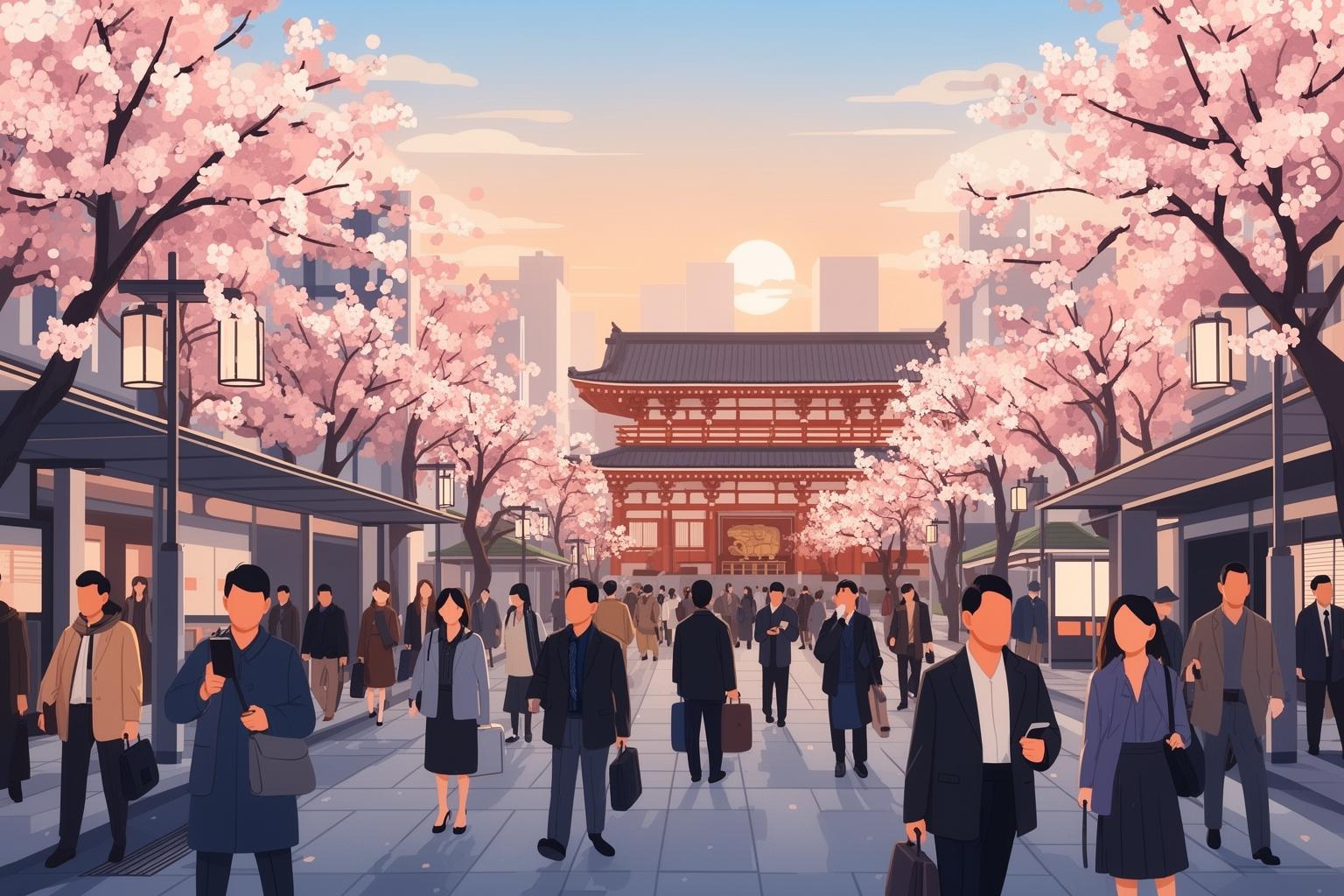
The game kicks off the moment your alarm sounds. This isn’t a gentle beginning; it’s an abrupt transition to the character selection screen. You pick your ‘armor’ for the day—the sharp suit for the salaryman, the stylish office wear for the OL (Office Lady), the uniform for the student. These aren’t just clothes; they’re your class build, setting your role in the world for the next twelve hours. You gather your ‘inventory’—a carefully packed bag, your smartphone (your main interface), and the most vital item of all, your IC card. Then, you step outside and ‘spawn’ at your local station.
The starting zone may be a quiet, residential station, but it’s a deceptive tutorial level. Here, you learn the essential mechanics. You notice the yellow lines on the platform and learn to stay behind them. You see the floor markings showing where the train doors will open and learn to form a tidy, orderly queue. This is the first lesson in the game’s core philosophy: group harmony over individual impulse. No one cuts in line. No one crowds the entrance. It’s an unspoken agreement, a social contract written in invisible ink. You’re already part of a team, a temporary party formed solely to clear this next stage.
Then, the ‘dungeon’ music rises as the train arrives. This is where the challenge intensifies. Approaching a major hub like Shinjuku, Shibuya, or Ikebukuro, the game shifts from a peaceful village into a chaotic, high-level dungeon crawl. The sheer number of other players is overwhelming. The phrase ‘crush hour,’ or ‘tsuukin rasshu’ (通勤ラッシュ), doesn’t capture it fully. It’s a physical force, a human tide pulling you along. The doors open, and a wave of players ‘respawns’ onto the platform while your party simultaneously tries to board. This is your first real combat encounter.
The notorious ‘oshiya’ (押し屋), or ‘pushers,’ are the legendary NPCs of this world, though they’re much rarer now than in the 70s and 80s. Their job was to ensure every last player fit into the carriage, a human packing algorithm maximizing server capacity. Today, the pushing is more of a group effort: a gentle but firm pressure from behind, a collective understanding that everyone must shuffle in, contract their bodies, and become one solid mass. It feels intensely personal yet utterly impersonal at once. You’re pressed against strangers, sharing the same air, but everyone gazes into the middle distance, their faces expressionless masks of stoic neutrality. This is the ‘gaman’ (我慢) stat being tested—the uniquely Japanese virtue of enduring the unbearable with patience and dignity.
Why is the dungeon designed this way? It’s a legacy issue from the game’s original developers. After World War II, Japan’s economy surged forward. The game map expanded rapidly, with massive corporate headquarters—the ‘castles’—built in central Tokyo. To serve these castles, vast ‘railway’ networks were laid, stretching into the suburbs where players could afford to live. The system was designed to move millions of players from residential zones to central business districts with maximum efficiency. Player comfort was a low-priority stat. The goal was economic growth, the ultimate national quest. The daily commute is the direct result of this map design: a centralized world requiring a massive, coordinated daily migration. The crowded trains aren’t a bug—they’re a feature of the game’s core architecture.
Mastering the System: Unlocking Skills and Abilities
Enduring the daily grind is one thing, but truly thriving means leveling up your skills. New players, much like tourists, are easy to spot. They fumble with paper tickets, get lost in the station’s maze-like corridors, and block pathways with bulky luggage. In contrast, veteran players move with a grace and efficiency that captivates observers. They have unlocked a unique set of skills, refined over thousands of hours of gameplay. These aren’t mere habits; they are advanced techniques for navigating the JRPG of life.
The Art of ‘Suica-jutsu’: The Quick-Draw Tap
The first skill every player must master is using their IC card—Suica, Pasmo, ICOCA—known by many names, but essentially your digital key to the world. The ticket gates present the initial major skill challenge. The rush-hour flow through these gates resembles a river, and you can’t be the rock that disrupts it. This is where ‘Suica-jutsu’ comes into play. It’s the art of the instantaneous tap. A seasoned player doesn’t break stride. Their wallet or phone is already in hand as they approach. With a flick of the wrist, they tap the reader—beep—and pass through immediately. There is no hesitation. Fumbling for your card, triggering the dreaded red light, and being stopped by the gates—that’s a critical fail. Not only have you failed yourself, but you’ve caused a traffic jam, a ‘debuff’ to those behind you. The collective sigh is silent yet tangible. Mastering this quick-draw tap is the first step from being a ‘noob’ to a seasoned player. It’s a minor victory, a small amount of experience points (EXP) gained, but it sets the tone for the entire quest.
Positional Awareness: The ‘Tetris’ Formation
Once aboard the train, a new mini-game begins: the battle for space. The carriage is a Tetris board, with each person as a block. The goal is to fit together as efficiently as possible. This demands nearly supernatural spatial and social awareness. Players instinctively avoid taking up more space than needed. Backpacks are swung to the front or placed on overhead racks. Legs remain close together. Everyone contracts, minimizing personal footprint for the group’s benefit. But it’s more than staying compact; it’s about strategic positioning. A veteran player knows which car section will be less crowded. They stand away from the doors if not disembarking soon, and start a slow, polite migration toward the exit two or three minutes before their stop. This is a delicate dance—a series of silent negotiations. A brief eye contact acts as a non-verbal “excuse me,” prompting others to shift slightly and let you pass. It’s a subtle, unspoken choreography. The goal is a seamless exit, causing minimal disruption. A perfect dismount feels like landing a critical hit—maximum efficiency and satisfaction. Mess it up, and you’re swimming against the tide, losing HP in stress and social discomfort.
The ‘Inemuri’ Perk: Power-Napping in Public
Look around a train car during any commute, and you’ll witness one of the game’s most unique skills: ‘inemuri’ (居眠り), or ‘sleeping while present.’ People slump in their seats or even stand, heads nodding, asleep. To outsiders, it might seem like exhaustion or laziness. But within the Japanese work grind context, it’s a status symbol. It shows you’ve been working hard and earned this moment of rest. It’s a passive healing ability, restoring a few magic points (MP) before the next office battle. This skill thrives due to two key environmental factors: extreme public safety and social trust. Players can nap knowing their belongings are secure. There’s a collective respect not to disturb someone in this vulnerable state. What’s truly astonishing is the built-in alarm: a person in deep sleep will, with nearly 100% accuracy, wake exactly as the train reaches their station. It’s a subconscious skill honed over years, an internal clock perfectly synced to the train schedule. It’s a tribute to routine’s power and the brain’s remarkable adaptability.
The Unspoken Rules: The Quest for ‘Wa’ (和)
The most powerful ability is invisible—it’s mastery of the unspoken rules designed to maintain ‘wa’ (和), or group harmony. This is the game’s overarching main quest. The train car is a sacred zone of public quietude. Phone calls are a major taboo. Phones stay on ‘manner mode’ (silent) at all times. If speech is necessary, it’s whispered. You don’t eat smelly food. You don’t play music loud enough for others to hear. The aim is to become a ghost, minimizing your presence and impact on the shared space. These rules aren’t enforced by authorities or penalties; they’re self-monitored. Breaking them won’t get you fined but will earn you the ‘evil eye’ debuff—a barrage of disapproving glances from fellow players. This social pressure is far stronger than any official sanction. It’s a continuous, collective effort to make an otherwise unbearable situation a little more tolerable for everyone. By following these rules, you help the party’s overall well-being, ensuring the journey remains as smooth and stress-free as possible for the entire group.
The Rewards System: What’s the ‘EXP’ For?
So, you endure the crush, hone your skills, and abide by the rules. But why bother? In any JRPG, the grind is only worthwhile if there are rewards. You need loot, EXP, and a feeling of progress. The Japanese commute surprisingly offers a complex and satisfying reward system, though most of it hinges on micro-transactions of convenience and social validation rather than epic treasure chests.
Micro-Rewards: The Convenience Store ‘Potion Shop’
Japanese train stations are more than just transit hubs; they’re vast, multi-level commerce ecosystems. They serve as the ‘item shops’ and ‘save points’ of this daily game. This is the essence of ‘ekinaka’ (駅ナカ), meaning ‘inside the station.’ Once you pass through the ticket gates, you enter a realm built for ultimate convenience. Feeling low on HP? Grab a hot coffee from a vending machine offering dozens of varieties. Need to restock your inventory for the day? Drop by a ‘konbini’ (convenience store) for a perfectly triangular ‘onigiri’ rice ball or a crisp cold-brewed tea. These aren’t the dreary, dusty convenience stores you might picture. They are temples of high-quality, delicious, and incredibly diverse fast food. You’ll find everything from fried chicken to single-serving spaghetti to gourmet sandwiches. This is your daily ‘potion’ and ‘provisions’ stop. Beyond the konbini, bakeries emit heavenly aromas, tiny noodle stands offer quick ‘stamina boosts,’ and even upscale department stores sell ‘bento’ boxes that are culinary masterpieces. The system ensures you never have to leave the station. The reward for your grinding is a world of seamless convenience, a setup that anticipates your every need and supplies a solution in the most efficient way. Each purchase delivers a small dopamine hit, a micro-reward that makes the journey feel more productive and less like wasted time.
Social ‘Leveling Up’: The Company as a Guild
The rewards aren’t only material. The daily commute is a powerful ritual that reinforces your identity as a ‘shakaijin’ (社会人), a working member of society. Sharing the same arduous journey with your colleagues builds an unspoken camaraderie. It’s a shared trial that binds you to your ‘guild’—the company. Arriving at the office on time, having conquered the morning’s dungeon, signals your commitment and resilience. In a culture historically valuing lifetime employment and group identity, this daily act of perseverance is a way to earn social EXP. You prove you are a dependable team member, dedicated to the guild’s collective quest. While lifetime employment is fading, its cultural echo remains. The commute is a rite of passage. It shows you belong to the system, a functioning cog in the vast economic machine. The reward is a sense of belonging, stability, and a clear identity in a society that prizes the group over the individual. You are not just a person on a train; you are a Sony employee, a Mitsubishi banker, a city hall clerk. Your journey has meaning, tied to your role within the broader social structure.
The ‘Endgame’ Content: The Seasonal Events
To keep the grind from becoming soul-crushingly monotonous, the game developers—in this case, railway companies and society itself—introduce ‘seasonal events.’ The commute’s scenery constantly changes, offering novelty and breaking the routine. In spring, train cars are adorned with ads for cherry blossom viewing spots, and station shops sell sakura-flavored lattes and sweets. In summer, posters promote fireworks festivals and beach getaways, while passengers carry ‘uchiwa’ fans to beat the heat. Autumn brings a shift to warm reds and oranges, advertising trips to see fall foliage. In winter, stations sparkle with illuminations, and convenience stores stock festive cakes. These aren’t mere decorations; they’re cultural touchstones marking the year. They remind players that time is passing, that their daily grind fits into a larger, cyclical story. It’s the JRPG equivalent of a holiday event or limited-time quest. It provides a brief break from routine, a fresh visual theme, and a reason to anticipate the changing seasons, turning the repetitive commute into a timeline of cultural moments.
Boss Battles and Side Quests: The Unexpected Encounters
While the daily commute is characterized by its predictability, the game world remains dynamic. Occasionally, unexpected events disrupt the routine. These are the ‘boss battles’ and ‘side quests’ that challenge a player’s ability to adapt and improvise. How you respond to these moments reveals your true skill level and your grasp of the game’s deeper mechanics.
The ‘Jinshin Jiko’ Debuff: The Server-Wide Crash
The most dreaded event in the commuter’s realm is the ‘jinshin jiko’ (人身事故), meaning a ‘personal accident on the track.’ This term is often a euphemism for a suicide. When it occurs, the game grinds to a halt. The train stops, sometimes between stations, and an announcement, delivered in an impossibly calm and apologetic tone, informs passengers of the delay. This is a catastrophic, server-wide debuff. The entire line is paralyzed. What’s truly remarkable is the reaction. There is no shouting, no panic, no outrage. Instead, a collective, silent groan spreads through the carriage. Instantly, hundreds of smartphones light up. Players aren’t venting on social media; they switch straight to strategy mode. They check apps like Jorudan or Navitime to find alternate routes. Which line is still running? Can I transfer to the subway? Is walking faster? It becomes a vast, multiplayer logistical puzzle. Station staff, trained precisely for this scenario, appear on platforms, bowing deeply, apologizing profusely for the inconvenience, and handing out slips of paper commuters can show their bosses to verify the official delay. The response is a masterclass in collective problem-solving and social order amid chaos. It’s a tragic and somber event, but the way both system and players respond offers powerful insight into the Japanese emphasis on resilience, adaptation, and maintaining order, even when the game world crashes.
The Drunken ‘Salaryman’: The Random Encounter
The late-night commute presents a different kind of side quest: the encounter with the drunken ‘salaryman.’ After a long office day followed by a mandatory drinking session with colleagues (‘nomikai’), many workers board the last train heavily inebriated. This creates a random, unpredictable NPC encounter. Some are harmless, sleeping soundly and smelling strongly of sake, sometimes missing their stop and ending up at the last station. Others can be more disruptive—loud, boisterous, or even sick. Handling this encounter requires a specific skill set. The most common tactic is ‘ignore.’ Players form a small bubble of personal space around the drunken salaryman, pretending he isn’t there. It’s a non-confrontational approach that avoids escalation. Occasionally, a fellow passenger or station attendant gently rouses him at his stop. It’s a strange blend of annoyance and sympathy. He is a casualty of the very work culture the entire train system supports. He’s a player who has overextended himself, whose stamina has hit zero, and his presence is a glitch in the otherwise orderly commute.
The Tourist ‘Newbie’: A Living Tutorial Mission
To the veteran player, encountering a tourist is like watching a new player struggle through a tutorial level. They’re easy to spot: giant suitcases blocking the aisle, a confused glance at the sprawling subway map, loud conversations in a quiet train. The response from Japanese commuters is telling. There’s no hostility—rather a mix of mild amusement, studied ignorance, and sometimes quiet helpfulness. An elderly woman might tap a tourist’s shoulder to point out the priority seating they’re occupying. A younger person may step in to help buy the correct ticket from a confusing machine. For the local player, the tourist is a reminder of how complex and unintuitive their world can be to outsiders. They become a walking, talking side quest offering an opportunity to be a helpful NPC. It reinforces the local player’s mastery of the system. Seeing someone struggle with the basics reminds you how far you’ve come, how many hours you’ve played, and how you’ve transformed this chaotic, complex dungeon into your familiar, everyday world.
Is This Grind Worth It? The Evolving ‘Meta’
The ultimate question for any game is whether the grind justifies the reward. For generations, the answer in Japan was a firm ‘yes.’ The daily commute was the price of admission for a stable job, an improving standard of living, and a secure place in society. The JRPG of life followed a clear and predictable path: grind through school, secure a job at a reputable company, endure the commute, and be rewarded with lifelong security. But the game’s ‘meta’—the dominant strategy for success—is shifting. The old rules no longer guarantee victory, and younger players are beginning to question whether the grind is worthwhile at all.
The Rise of ‘Remote Play’: Telework and the New Game
The COVID-19 pandemic acted as a major system patch that forced a shift in the game. Suddenly, the daily commute—the very foundation of the work ritual—was deemed unsafe. Companies had to experiment with ‘remote play,’ or telework. For the first time, many players realized that the daily dungeon crawl wasn’t absolutely necessary to fulfill their job duties. This sparked a significant cultural shift. At first, there was strong resistance. Japanese business culture is deeply rooted in face-to-face communication, long office hours to demonstrate dedication, and physical processes like using a ‘hanko’ stamp to approve documents. The office was the guild hall, and presence was essential for team membership. Yet the pandemic proved another approach was possible. Though many companies have since pushed for workers’ return, the spell has been broken. The notion of a more flexible ‘game’ has taken hold. Increasingly, players are demanding hybrid models, refusing to spend three hours daily on crowded trains if it’s unnecessary. The great commute is no longer the only way to play.
Shifting ‘Class Builds’: From Salaryman to Freelancer
Alongside remote work’s rise, the very structure of the ‘player class’ is evolving. The classic ‘salaryman’ build, characterized by lifelong loyalty to a single corporate guild, is losing appeal among younger generations. They’ve witnessed their parents grind away for decades, only to face corporate restructuring, stagnant wages, and a sense of unfulfillment. They are less willing to sacrifice their personal lives for the company. Consequently, new class builds are emerging. More young people are choosing to be freelancers, entrepreneurs, or participants in the ‘gig economy.’ They opt for builds emphasizing flexibility, personal fulfillment, and work-life balance over the stability and prestige of the old system. These players deliberately opt out of the daily commute grind. They find alternative ways to earn EXP, gathering in co-working spaces, cafes, or their own homes. They are rewriting the game’s rules, proving success is possible without joining the great daily migration to central business districts.
So, where does this leave us? The daily commute, this remarkable real-life JRPG, sits at a crossroads. It remains a powerful symbol of Japanese society—a testament to its capacity for order, endurance, and collective harmony. Riding the Yamanote line during rush hour means witnessing the cultural values of ‘gaman’ and ‘wa’ in their most intense, concentrated form. It’s a system that, despite its flaws, stands as a marvel of engineering and social coordination. But the game is evolving. The players are changing, and so are their definitions of success and happiness. The grind is no longer the sole path to a good life. For me, understanding the commute as a JRPG unlocked a deeper insight into Japan. It’s not just about traveling from home to work. It’s a daily ritual that encodes the nation’s past, mirrors its present, and foreshadows its future. It’s an intricately complex game, and while it may seem like a punishment from the outside, for millions of players, it’s simply the way the game is played. For now.