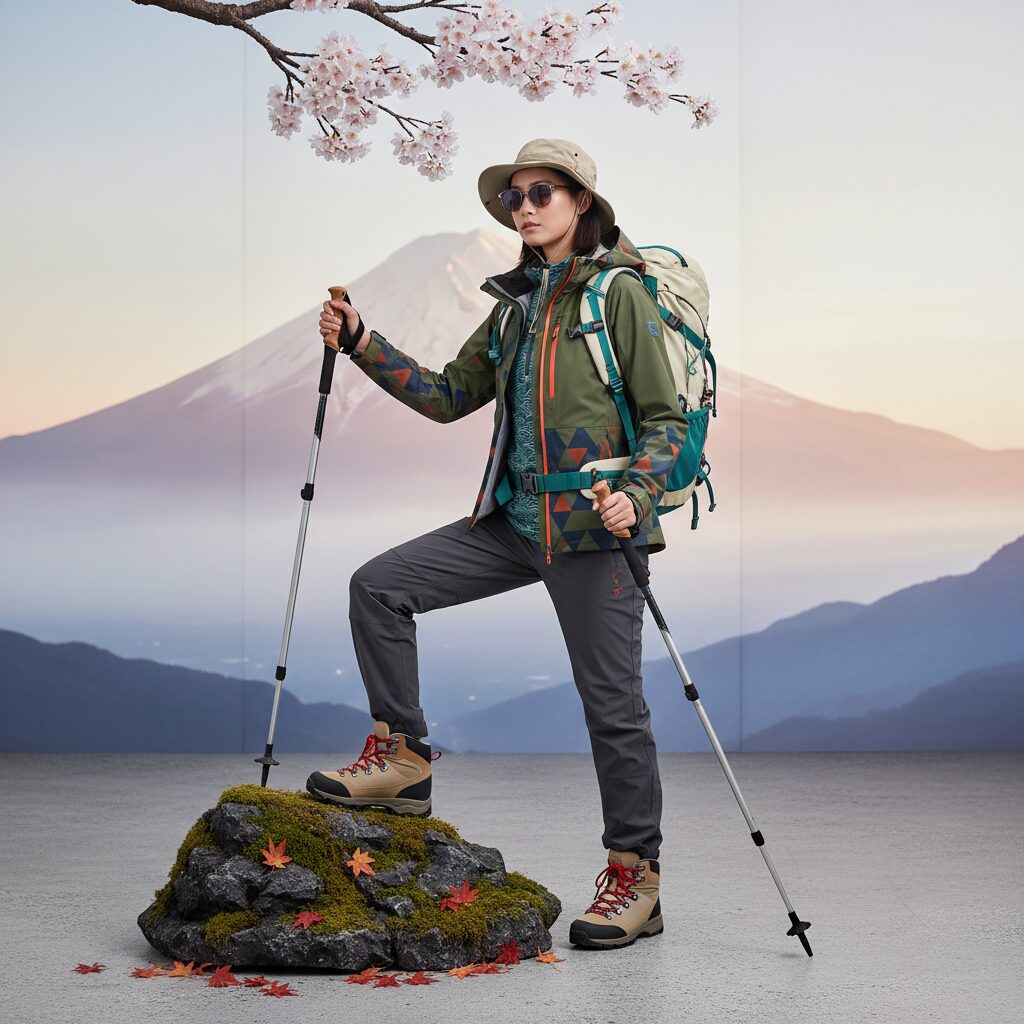
Yo, let’s get real for a sec. Picture this: you decide to dip out of the neon chaos of Tokyo for a day, maybe hit up a mountain for some fresh air. You’re thinking sensible shoes, a practical backpack, probably some drab, waterproof jacket. You hop on a train heading towards the mountains, like Takao or someplace in Hakone, and you step onto the platform. And then you see them. Groups of girls, decked out not in boring beige or serious GORE-TEX gray, but in a full-on explosion of color and style. We’re talking vibrant hiking skirts layered over patterned leggings, fluffy leg warmers, brightly colored backpacks, and felt hats that look more at home at a music festival than halfway up a mountain. It’s a look. It’s a vibe. It’s so coordinated, so intentional, that your brain kinda short-circuits. Your first thought might be, “Are they actually going hiking, or is this a photoshoot?” And that, right there, is the question. You’ve just had your first encounter with the ‘Yama Girl’ (Mountain Girl). This isn’t just about putting on some clothes to go for a walk. This is a whole cultural moment, a full-blown aesthetic that took the seriously stoic world of Japanese mountaineering and gave it a kawaii, fashion-forward glow-up. It’s one of those uniquely Japanese things that seems baffling from the outside. Why turn a rugged, sweaty activity into a runway? Is it all for the ‘gram? Is it practical? Low-key, it’s about so much more than just the gear. It’s a window into how Japan remixes and redefines hobbies, blending aesthetics with activity until you can’t tell where one ends and the other begins. It’s about creating a whole new way to belong in the great outdoors. So, let’s break down this vibe, because understanding the Yama Girl is understanding a key piece of modern Japanese culture. Bet.
This vibrant, expressive approach to the mountains stands in fascinating contrast to the quiet, introspective tradition of Japan’s silent hiking.
The Before Times: The Ojisan’s Mountain
To truly understand why the Yama Girl phenomenon resonated so deeply, you need to grasp what the Japanese hiking scene was like beforehand. It was essentially the complete opposite vibe—serious and solemn. Japan’s mountains are more than just beautiful landscapes; they are sacred places, intimately tied to Shinto and Buddhist traditions. For centuries, mountain climbing was a spiritual pilgrimage, an act of austere discipline. Jump to the post-war period, and that solemnity transformed into a more secular but equally serious focus on alpinism. The atmosphere was stoic, masculine, and intensely practical. The typical hiker was the ‘yama-otoko’ (mountain man), usually an older gentleman—what we might warmly call an ‘ojisan.’ His attire was a model of function over form: khaki convertible pants, a muted navy or forest green windbreaker, well-worn heavy leather boots, and a backpack that had conquered far more summits than you’ve had meals. The colors were understated, blending seamlessly with the rocks and trees—a camouflage against frivolity. The goal was to conquer the mountain, endure its hardships, and do so with quiet, rugged competence. This was no social outing; it was a personal test of determination.
The Culture of Stoicism and Function
This traditional hiking culture reflected a specific generational mindset in Japan. There was a profound respect for nature, born out of awe and a hint of fear. Nature was powerful, not to be trifled with. Gear was not for fashion but armor; every item served a purpose aimed at survival and efficiency. Conversations on the trail were not about leisure plans but practical exchanges on weather or trail conditions. The scene was dominated by university mountaineering clubs (sangakukai) and company hiking groups—structured, hierarchical, and overwhelmingly male. These clubs were focused on serious alpine skills, with strict protocols for gear and a stoic demeanor to uphold. There was absolutely no room for what might be deemed ‘frivolous.’ Expressing individuality through bright colors? Unthinkable. Wearing a skirt? Equated to showing up in heels. The mountain was a realm of seriousness, not self-expression. The collective mission of reaching the summit safely outweighed any individual flair. This culture created a high barrier to entry, particularly for young women interested in the outdoors who were put off by the intense, gear-heavy, and somewhat grim environment. Hiking was not casual; it was a mountaineering expedition, even for a day trek. The psychological barrier was as formidable as the physical one. The ojisan’s mountain was a respected institution, but it wasn’t exactly an inviting place for newcomers who didn’t fit the traditional mold.
The Gear: A Palette of Earth and Stone
Let’s take a closer look at the gear, because it reveals so much. For decades, the dominant Japanese outdoor brand has been Montbell, embodying a philosophy of pure function, reliability, and no-frills design. The gear is exceptional but featured a color palette that was essentially a tribute to dirt, rocks, and trees—khaki, olive, navy, gray, and occasionally deep burgundy if daring. This wasn’t a critique, but the whole point: the equipment was a tool, not an accessory. It was made to perform, endure, and avoid drawing attention. The North Face, a global giant, also had a presence, but its products in ’80s and ’90s Japan similarly stressed high-performance alpinism. The concept of “lifestyle outdoor” wear was far from mainstream. So, if you were young—especially a young woman—looking to get into hiking, your choices were limited: either gear up like a seasoned middle-aged mountaineer or make do with inadequate equipment not designed for the mountains. There was no in-between. No gear that said, “I want to enjoy nature, have fun with friends, and look cute doing it.” The market simply didn’t acknowledge that desire. This sartorial gap was a crucial part of the picture. The stage was set for a revolution—a burst of color on a background of muted earth tones.
The Spark: A Fashion-Fueled Outdoor Revolution
So, what changed? Like most cultural shifts, it wasn’t a single factor but rather a perfect storm of influences brewing through the mid-to-late 2000s. Japan was experiencing a broader societal transformation. The post-bubble economy had settled into a new normal, and young people sought fulfillment beyond traditional work and consumerism. Interest in health, wellness, and the so-called ‘slow living’ movement was growing. People desired experiences, not merely possessions. For urbanites confined to Tokyo or Osaka, the mountains offered a nearby, accessible escape. Yet, the old, stoic style of hiking didn’t resonate. A new generation needed a fresh approach, a new aesthetic to embrace. And indeed, they found one. The term ‘Yama Girl’ entered the cultural vocabulary around 2009 and quickly spread. It was more than a label; it became an identity, naming a feeling already emerging among young women who wanted to connect with nature on their own terms.
The Power of Print: Magazines as Tastemakers
In Japan, the influence of magazines in shaping and creating trends cannot be underestimated. Before Instagram influencers, there were magazine editors and stylists. In the late 2000s, a new genre of women’s magazines emerged, focusing on lifestyle and hobbies rather than just high fashion. The true game-changer was a magazine called “Randonnée.” Launched in 2009, its name—the French word for a long walk or hike—was a clear symbol. This wasn’t about conquering summits; it was about enjoying the journey. The magazine was a revelation, portraying hiking not as an arduous, sweaty challenge but as a fun, stylish, and social activity. The models weren’t rugged mountaineers; they were cute girls with rosy cheeks, smiling and posing amidst stunning natural scenery. And their outfits—that was the essence. Randonnée and other similar magazines like “Go Out” and “Fudge” crafted a whole new visual language for the outdoors. They curated a look, taking functional pieces from outdoor brands and styling them in a fresh, innovative way. They championed the hiking skirt (yama sukaato), patterned leggings, colorful socks, and jaunty hats. They taught women how to layer, mix colors, and transform functional gear into something undeniably fashionable. Essentially, they created the blueprint for the Yama Girl look. They made it aspirational and fun and gave women permission to engage with the outdoors authentically, blending their love of fashion with a newfound passion for nature.
Entering from the Form: The ‘Katachi kara Hairu’ Mentality
To truly grasp the Yama Girl vibe, it’s essential to understand a core concept in Japanese culture: katachi kara hairu (形から入る). It literally means “entering from the form” or “starting with the appearance.” In the West, this might be viewed as superficial—an “all the gear and no idea” mentality. But in Japan, it’s a legitimate and common approach to taking up a new hobby. The idea is that by first adopting the proper form, equipment, and appearance, you show respect for the activity and put yourself in the right mindset to learn and enjoy it. Getting the uniform right is the initial step on the journey. Consider other Japanese traditions: the intricate tea ceremony, specific uniforms in martial arts, or the precise tools used in calligraphy. The external form is intertwined with the internal experience; it acts as the gateway to it. The Yama Girl aesthetic was the katachi for a new generation of hikers. Wearing the “right” outfit—the colorful layers, cute hat, stylish backpack—wasn’t about showing off but about feeling a sense of belonging. It boosted confidence and made the intimidating mountain environment feel welcoming. Sporting the Yama Girl uniform signaled membership in this new, fun, fashion-conscious community. It was a visual language saying, “I’m here to enjoy this, and I take the aesthetic aspect of that enjoyment seriously.” It transformed hiking from a mere physical challenge into a holistic experience involving creativity and self-expression. This is a key point often missed by outsiders. It’s not vanity; it’s a cultural approach to participation.
Deconstructing the Yama Girl Uniform
Alright, let’s dive into the details of the look. The Yama Girl aesthetic is an expert blend of layering, color theory, and the seamless integration of technical gear with playful, almost rustic touches. It follows a very particular formula, yet offers endless possibilities for personalization. At its core, it’s practical, but the execution is all about style. Every piece contributes to the overall vibe.
The Foundation: Skirts and Leggings
The most defining feature, the very heart of the Yama Girl style, is the pairing of a hiking skirt or shorts layered over thick, patterned leggings or tights. This was groundbreaking. While leggings as pants were just catching on in the West, hiking trails remained dominated by trousers. The Japanese hiking skirt, or yama sukaato, changed the game. Brands like Marmot and Columbia quickly designed them specifically for the Japanese market. Made from technical, quick-drying fabrics, they often featured bright colors or plaid patterns. Why choose a skirt? Aesthetically, it was distinctly feminine and cute—a direct contrast to the masculine, utilitarian hiking pant. Functionally, supporters claimed it provided better ventilation and freedom of movement than trousers. But the true brilliance was in the layering. The leggings underneath offered warmth, protection from scratches and insects, and often added a bold splash of color or pattern. Geometric shapes, Nordic-inspired motifs, polka dots, stripes—everything was fair game. This combination was the perfect blend of function and kawaii. Practical enough for the trail yet stylish enough for the train ride home and a coffee stop afterwards.
The Upper Layers: A Symphony of Color
Layering remained central on top. Starting with a moisture-wicking base layer, it was the additional layers that shaped the look. Instead of one bulky jacket, the Yama Girl opted for several thin layers—a fleece vest over a long-sleeve shirt, topped with a brightly colored, lightweight waterproof shell. This was not only practical for the changing mountain climate; it also served as a canvas for color-blocking. A fuchsia jacket over turquoise fleece over a yellow base? Absolutely. The color schemes were vibrant and joyful, a bold shift from the earthy tones of earlier outdoor styles. The look often drew inspiration from North American outdoor heritage or European folk costumes, but reinterpreted through a Tokyo perspective. Think of Patagonia’s retro-X fleeces, styled in a fresh, innovative way. The goal was to create a silhouette that was both functional and visually captivating from every angle.
The Accessories: Where Personality Shines
If the layers were the canvas, the accessories were the brushstrokes. This is where the Yama Girl could truly customize her look and ramp up the adorable factor. Let’s break it down.
Headwear
A hat was essential. But it wasn’t just any hat. Often it was a felt wide-brimmed hat, evoking a classic adventurer’s fedora, sometimes in jewel tones like emerald or deep purple. Colorful beanies and patterned bandanas worn as headbands were also big. The hat was more than sun protection; it framed the face and completed the silhouette.
Legwear and Footwear
Socks were a major statement. Thick, chunky, and often with intricate patterns, they peeked out over hiking boots. Brands like Chup Socks gained cult status for their detailed, high-quality designs. These were worn with sturdy yet stylish boots from brands like Keen, Danner, or Merrell, often in colors that complemented the outfit. The boots conveyed seriousness, while the visible socks added fun.
The Gear as Fashion
The backpack was more than a utility item—it was central to the look. Instead of sleek, minimalist packs, the Yama Girl favored retro-inspired rucksacks from brands like Karrimor or Millet, often in vibrant color-blocked styles. A bright pink and blue pack wasn’t just for carrying essentials; it was a key element of the color scheme. Even water bottles became fashion accessories, with Nalgene bottles adorned with stickers or carried in cute, crocheted holders. Everything was an opportunity to express personality.
The Commercial Response: Brands Get the Memo
The Japanese market is well known for its quick response to trends, and the outdoor industry treated the Yama Girl movement like a gold rush. They didn’t just observe it; they embraced it wholeheartedly. Brands that had traditionally targeted serious male alpinists suddenly shifted gears, launching entire collections aimed at this new, style-conscious female consumer. It was a brilliant example of market adaptation.
The Emergence of the ‘Outdoor Lifestyle’
Brands like Montbell, previously recognized for their straightforward approach, began introducing brighter colors and more flattering cuts for women. The North Face, through its Japan-exclusive Purple Label line designed by Nanamica, had already mastered the blend of high-performance function and high-fashion appeal. They were ideally positioned to serve both the Yama Girl and her urban counterpart. Their pieces worked equally well on the trail and on the streets of Harajuku. International brands also jumped on board. Columbia, Marmot, and Aigle started creating products specifically for the Japanese market, acknowledging the unique tastes and demands. Aigle, leveraging its French heritage, tapped into the desire for a chic, subtly European outdoor look, selling large numbers of their stylish rubber boots and parkas. It was a mutually beneficial relationship: magazines fueled desire, the girls personified the trend, and the brands provided the wardrobe. This commercial ecosystem firmly established the Yama Girl aesthetic and made it accessible to anyone wanting to embrace the style. Specialty outdoor retailers like Ishii Sports and L-Breath revamped their layouts, setting up dedicated, brightly lit sections for women’s apparel that resembled fashion boutiques rather than cluttered gear shops.
The Magazine-Brand-Retailer Connection
The synergy was seamless. A magazine like “Randonnée” would showcase a fully styled outfit featuring a new jacket from The North Face, a skirt from Marmot, and a backpack from Karrimor, listing exactly where each item could be purchased. The brands, in turn, advertised heavily in those same publications. Retailers created in-store displays that mirrored these magazine looks. It was a closed-loop cycle of inspiration and purchasing. This classic Japanese marketing approach was executed with remarkable effectiveness in the outdoor sector, making it easy to join the trend. You didn’t need to be a fashion expert to assemble a Yama Girl outfit; the magazines and stores simplified the process. They didn’t just sell individual products but offered a complete, ready-made identity. This is why the look spread so rapidly and became instantly recognizable—a uniform effortlessly embraced.
The Vibe Shift: How Yama Girls Changed the Trails
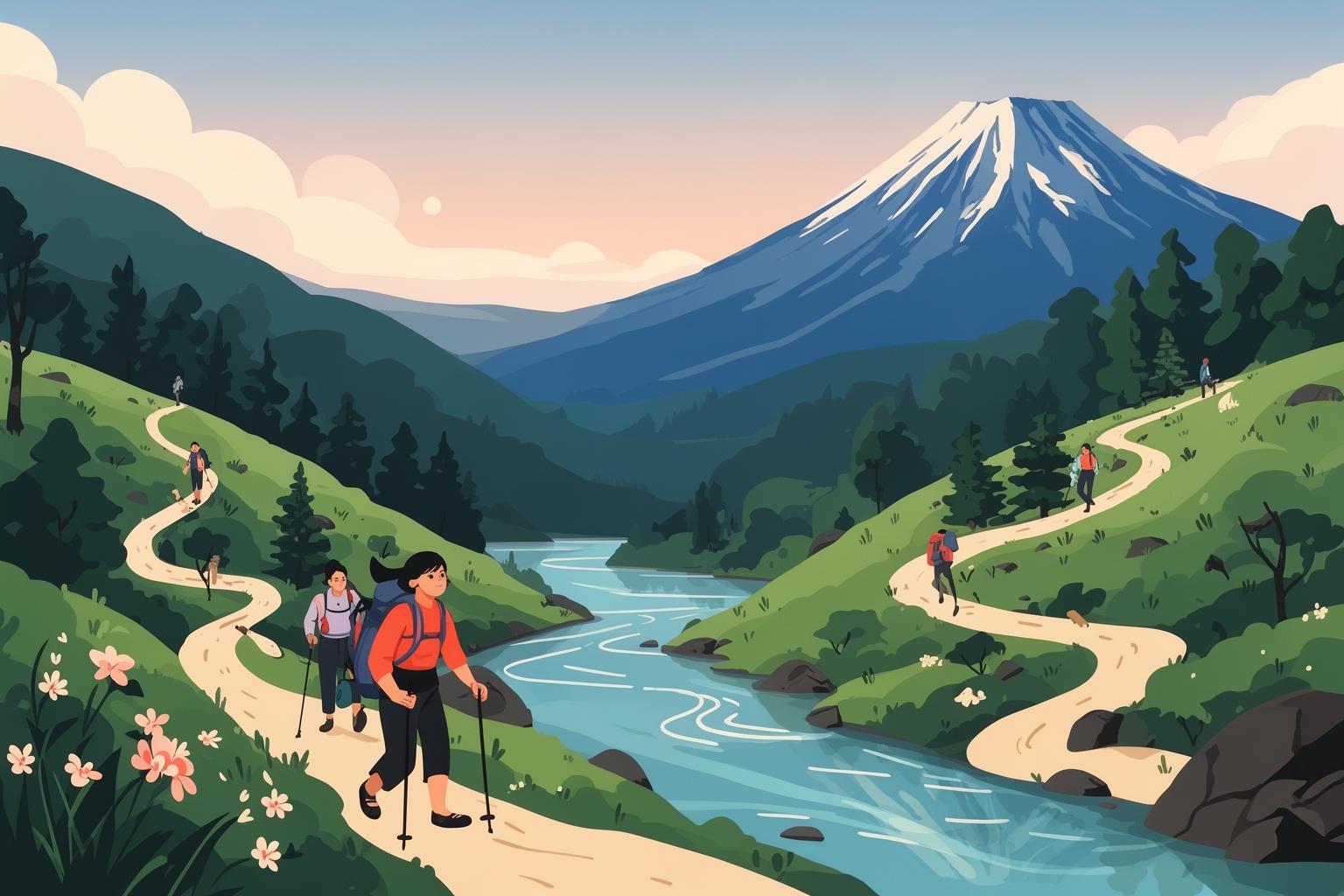
The arrival of thousands of young women dressed in vibrant colors on the hiking trails inevitably transformed the atmosphere. This cultural shift extended far beyond mere aesthetics. The mountains, once the serene refuge of solitary, dedicated hikers, became more social, lively, and arguably, more inclusive.
From Solitude to Socializing
Yama Girls often hiked in groups of friends, redefining the activity itself. The aim was no longer just to reach the summit but to spend quality time together, appreciate the scenery, and, of course, take many photos. The sounds of the mountains changed. The quiet rustle of leaves was now woven with laughter, conversation, and the click of camera shutters. This newfound social energy made the outdoors less daunting for beginners. You didn’t need to be an expert athlete to participate; a positive attitude and good company were enough. A key element of the Yama Girl experience was yama gohan (mountain meal). This wasn’t simply a squished sandwich and trail mix. It involved bringing portable stoves to cook proper meals, brewing fresh coffee with pour-over kits, and sharing adorable, well-prepared snacks. It was part of the aesthetic—the experience should not only feel enjoyable but look appealing as well. A simple lunch break became a mini gourmet picnic, another moment to be cherished and shared on social media. This holistic focus—the journey, the friendships, the food, the fashion—marked a fundamental shift away from the previous summit-obsessed mindset.
The Old Guard vs. The New Wave
Predictably, there was some initial tension. Some old-school yama-otoko were skeptical and even critical. They viewed the Yama Girls as frivolous, ill-prepared, and not respectful of the mountains. They grumbled about their fashion choices being inappropriate or their focus on photography being a distraction. There was a feeling that these newcomers hadn’t “earned” their place on the trails, treating a serious environment like a theme park. This is a classic insider-outsider dynamic in Japan, where the established group, with its unspoken traditions, can be wary of those who don’t follow the usual rules. However, such criticism mostly faded over time. Firstly, it became evident that although Yama Girls emphasized fashion, they were not careless. They invested in high-quality technical gear—colorful GORE-TEX jackets, waterproof boots with proper grip. For the most part, they were well-equipped. Secondly, their large numbers and economic influence were undeniable. They revitalized the outdoor industry and attracted a huge new demographic to hiking. Mountain huts and local businesses around hiking areas benefited greatly from the influx of visitors. As time passed, spotting a group of girls in hiking skirts became commonplace. The ojisan and the Yama Girls learned to share the trails, each enjoying the mountains in their own way.
The Legacy: Yama Girl 2.0 and the ‘Go Out’ Generation
So, is the Yama Girl still relevant? The answer is both yes and no. The peak of the ultra-specific, leggings-under-skirt uniform likely occurred in the early-to-mid 2010s. Like any trend, it has transformed over time, yet its influence is everywhere. The Yama Girl movement didn’t vanish; instead, it dismantled the barriers between outdoor gear and everyday fashion, leaving a lasting legacy that continues to shape style in Japan.
From Mountain Trail to City Street
The greatest impact of the Yama Girl was normalizing the use of outdoor gear in non-outdoor settings. She served as a bridge. The gear was so stylish it felt too good to be restricted to the mountains. Fleece vests, colorful windbreakers, sturdy backpacks—they all began to seep into the everyday urban wardrobe. This paved the way for the broader ‘Outdoor Mix’ or ‘Go Out’ style (named after a popular magazine). Nowadays, you’ll spot both men and women in Tokyo wearing technical shell jackets from Arc’teryx over office attire or carrying rugged outdoor backpacks on their daily commutes. Brands like Snow Peak and The North Face Purple Label evolved into bona fide fashion labels, participating in fashion weeks and collaborating with high-end designers. The line has completely blurred. The Yama Girl’s conviction that functional gear could also be fashionable has fundamentally reshaped the Japanese fashion landscape. It made prioritizing comfort and practicality cool, as long as it was approached with a keen aesthetic sense.
The Evolution: Camp-Joshi and Glamping
The spirit of the Yama Girl lives on in newer outdoor movements. The 2010s saw the rise of kyan-joshi (camp girls), inspired by the slice-of-life anime and manga series “Yuru Camp” (Laid-Back Camp). This trend carries forward the Yama Girl’s love for aesthetics, applying it to camping. It’s about curating a cozy, stylish, and photogenic campsite. Think well-designed tents, wooden furniture, vintage lanterns, and gourmet campfire cuisine. The principle remains unchanged: the experience is holistic, where the gear and atmosphere are just as vital as the camping itself. The surge in glamping across Japan also stems from this legacy. It represents the ultimate way to enjoy nature with comfort and style, elevating the Yama Girl’s aesthetic impulse to its most luxurious form. All these trends trace back to a shared origin: the Yama Girl who first declared the outdoors could be a fashion runway. Having observed similar, though perhaps less defined, trends emerge within youth culture in China, the Yama Girl phenomenon feels especially poignant. There’s a shared East Asian sensibility in embracing a hobby with such aesthetic thoroughness. It’s a deep immersion, a wholehearted dedication where visual identity and activity merge. The Yama Girl didn’t just alter trail fashion; she redefined how a generation relates to the great outdoors. She transformed the intimidating, stoic mountain symbol of the ojisan into a vibrant, inviting space for everyone. And that vibe? It truly slays.