So you’ve scrolled through the endless reels of Tokyo. You’ve seen the Blade Runner aesthetic of Shinjuku at night, the chaotic yet perfectly orchestrated human flood at Shibuya Crossing, the wild fits of the Harajuku kids. It’s a city that feels like it’s living in the year 3000, a hyper-modern, high-gloss urban organism that’s constantly evolving, upgrading, and moving at a speed that can give you whiplash. The whole vibe is peak efficiency, peak consumerism, peak future. And then, someone tells you to go to Yanaka. You hop on the Yamanote line, the circular artery of this futuristic metropolis, get off at Nippori or Sendagi, walk five minutes, and… the signal drops. Not your phone signal, but the signal from the 21st century. Suddenly, the concrete towers are gone, replaced by low-slung wooden buildings with tiled roofs. The roar of traffic fades into the chime of a shopkeeper’s bell and the distant chatter of a TV from an open window. The air smells not of exhaust fumes and expensive perfume, but of roasting tea, sweet dango, and damp earth from the temple grounds next door. It’s a full-on vibe shift, and it’s honestly kinda jarring. Your brain short-circuits. Is this a movie set? A carefully curated tourist trap? Why does this pocket of the past exist, stubbornly resisting the relentless tide of development that has defined the rest of Tokyo? This isn’t just about finding a “quaint” or “old-school” spot for the ‘gram. Understanding Yanaka is about understanding Japan’s deeply complex and often contradictory relationship with its own past, the true meaning of craftsmanship in a world of mass production, and how a community can function on a completely different operating system within one of the world’s biggest cities. As someone whose life revolves around aesthetics and the stories behind the things we create, Yanaka feels less like a place and more like a thesis statement on an alternative way of living. It’s a living mood board that challenges everything you thought you knew about Tokyo, and it’s giving major main character energy for anyone who’s tired of the hype and wants to get to the real real.
For a different kind of Tokyo time-slip that also captures a uniquely nostalgic and solitary atmosphere, explore the city’s iconic vending machine culture.
The Shitamachi Paradox: Why Tokyo Clings to Its “Low City”
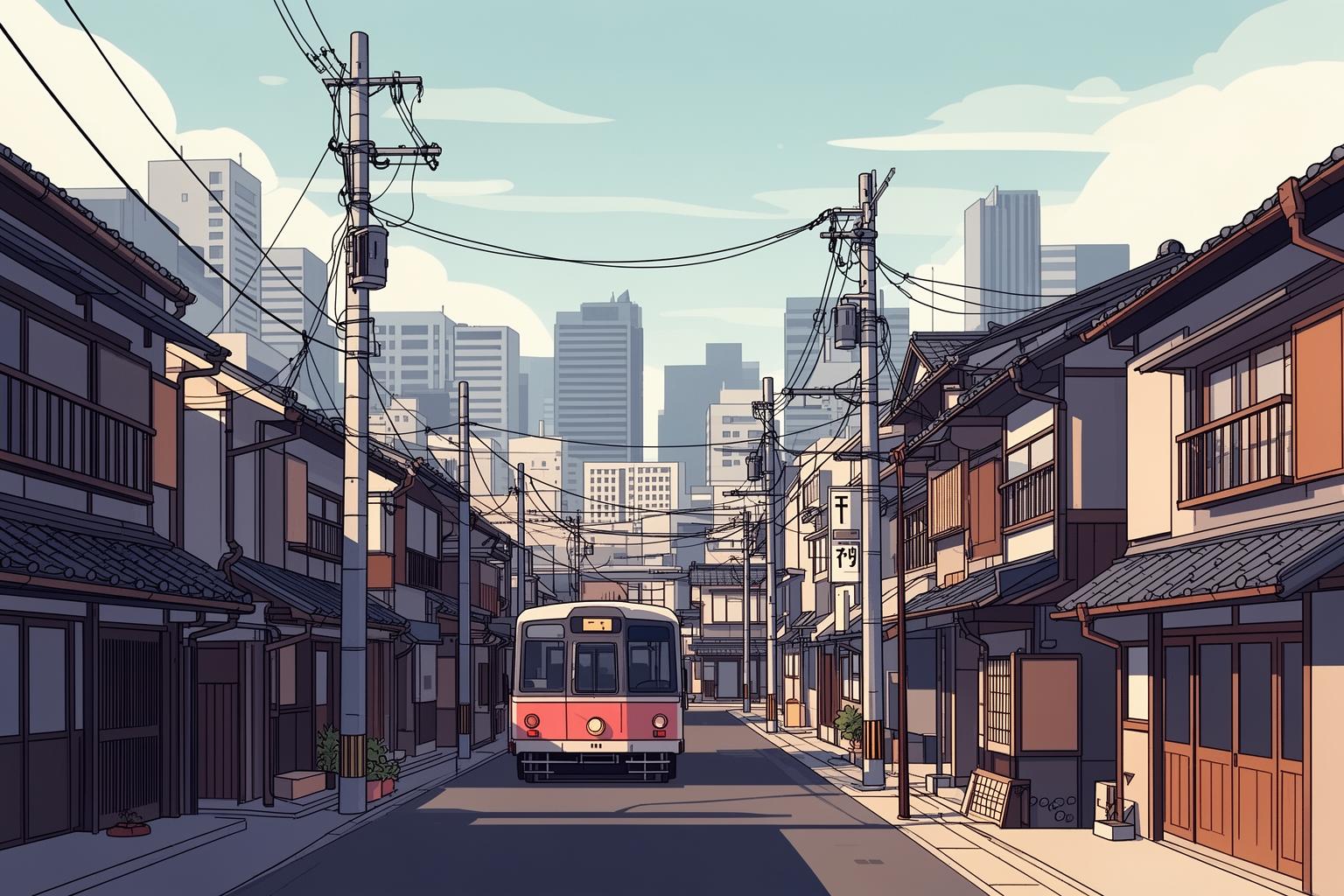
Before you can begin to grasp the Yanaka vibe, you first need to understand a fundamental concept that divides Tokyo in two—an invisible split far deeper than any borough or ward boundary. This is the cultural geography of “Yamanote” and “Shitamachi.” It’s not just about geography; it encompasses class, history, and an entire way of thinking. It’s the city’s operating system, running two distinct programs at once.
Breaking Down “Shitamachi” vs. “Yamanote”
Literally, Yamanote means “mountain’s hand,” referring to the elevated, hilly western part of the city. Shitamachi means “low city,” designating the flat, low-lying plains to the east near the Sumida River. This division dates back to the Edo period (1603-1868), when Tokyo was Edo and the Shogun ruled from his castle (now the Imperial Palace). Geography shaped destiny. The daimyo (feudal lords) and their samurai retainers established their grand homes on Yamanote’s solid, elevated terrain—it was safer from floods, cooler in summer, and symbolically “higher” in status. This was the territory of the ruling class, a realm of politics, ceremony, and refined culture—think of it as Edo’s version of the Upper East Side. Conversely, Shitamachi was home to the common people: merchants, artisans, entertainers—all crowded into the lowlands. This area was the city’s commercial heart, a lively, chaotic network of workshops, shops, and theaters. It was also vulnerable to notorious fires, earning the nickname “flowers of Edo,” and prone to flooding. Life here was tougher, harsher, and more uncertain. Yet from this arose a distinct culture: pragmatic, straightforward, and deeply communal, as survival depended on close neighborly ties. Today, though the class lines have blurred, the cultural DNA persists. Yamanote districts like Shinjuku, Shibuya, and Ginza are hubs of corporate power, high fashion, and sleek anonymity, while Shitamachi neighborhoods like Yanaka, Asakusa, and Ueno maintain a legacy of craftsmanship, close-knit community, and grounded realism. It’s the contrast between a custom-tailored suit and a perfectly worn pair of artisan jeans—both valuable, but speaking entirely different languages of status and identity.
War and Progress Bypass Yanaka: A Story of Accidental Preservation
Why does Yanaka look the way it does? It’s not due to any grand government preservation scheme. Its survival is largely a historical accident—a story of what didn’t happen there. Tokyo has been repeatedly destroyed and rebuilt. The Great Kanto Earthquake of 1923 devastated vast areas, and the World War II firebombing in 1945 was even more destructive, reducing much of Tokyo to ruins. Most of the city’s historic character was erased. Remarkably, the area known as Yanesen—an acronym for the three adjacent neighborhoods Yanaka, Nezu, and Sendagi—escaped much of the worst bombing damage. There isn’t a single clear reason why; a mix of factors, including its location away from key industrial and military targets and perhaps sheer luck, meant its pre-war landscape survived. This is crucial. Yanaka is not a reconstruction; it’s an original survivor. Its buildings are not replicas but genuine relics, bearing the subtle marks of age. Following this, the post-war economic boom swept through Tokyo. While much of the city raced to build bigger, modern, concrete office towers, grand train stations, and sprawling highways, Yanesen remained largely ignored. It was mostly residential, filled with temples and a large cemetery, making it less appealing for large commercial development. Its narrow, winding streets were unsuitable for modern traffic. As a result, it was left untouched. This “lack of progress” became its greatest form of preservation. The Showa-era (1926-1989) atmosphere here wasn’t deliberately curated; it persisted because the area was simply passed over. Now, in a twist of irony, this accidental time capsule has become one of its greatest treasures—a rare window into a Tokyo that has nearly vanished.
The Maker’s Mindset: What Yanaka Reveals About Japanese Craftsmanship
Strolling through Yanaka feels like entering a living museum of Japanese work ethic—though not the familiar “salaryman” culture of endless overtime in sterile office towers. This is something older, deeper, and far more personal. It’s a world where success isn’t measured by explosive growth but by quiet, sustained excellence. It’s the culture of the “shokunin,” the artisan or craftsperson, woven tightly into the neighborhood’s very fabric.
“Kodawari” – An Obsession Beyond Michelin Stars
You’ve likely heard “kodawari” describing a sushi master spending sixty years perfecting rice or a ramen chef simmering broth for 72 hours. But kodawari isn’t reserved for elite cuisine alone. In Yanaka, it’s a democratic ideal applied to even the humblest crafts. The term defies simple translation—it’s more than “passion” or “attention to detail.” It signifies a personal, often stubborn, deeply held standard of excellence in one’s chosen work. It means relentlessly pursuing an ideal, frequently for its own sake, independent of commercial gain. You see it in the elderly man in a tiny, dim shop selling only handmade “tawashi”—scrubbing brushes crafted from tightly wound palm fibers. He could mass-produce or use cheaper materials but chooses not to. His kodawari shows in how he sources the fibers, the precise tension used in winding, and techniques passed down through generations. It’s reflected in the brush’s durability and feel. It’s evident in the senbei shop, where a grandmotherly figure grills each rice cracker by hand over charcoal, meticulously brushing on a secret soy sauce blend. She watches the cracker bubble and toast with a near-spiritual focus. Each cracker is a unique creation. The motivation here isn’t building a global brand; it’s rooted in a cultural philosophy that work reflects character. Doing a job carelessly means having a careless soul. Mastering a craft, or a “michi” (“path” or “way,” as in “kado,” the way of flowers, or “sado,” the way of tea), is spiritual discipline. It’s about claiming a small corner of the universe and striving to perfect it. In Yanaka, this philosophy isn’t abstract—it’s a lived, daily reality and the local economy’s operating system.
The Anti-Hype Economy: Valuing Smallness
My world of fashion and apparel is often shaped by Western models: scale rapidly, disrupt markets, go viral, chase venture capital, and aim for global domination. Success is measured by growth rates and market share. Yanaka’s model is the polar opposite. For many shop owners here, the goal is explicitly not to grow. The aim is to remain small. This isn’t failure or lack of ambition—it’s success itself. Staying small ensures absolute quality control. The tofu maker knows exactly which farmer grew his soybeans. The knifemaker sharpens every blade by hand. Expanding, hiring many employees, or opening branches would sever this intimate connection to the product and dilute the kodawari. Staying small also preserves a direct, personal relationship with customers. The shopkeeper knows regulars by name, their families, and exactly how they prefer their daikon radish cut. Transactions aren’t anonymous but social interactions woven into community life. This creates loyalty no marketing campaign can match. Finally, staying small redefines a “good life.” It’s not about maximizing profit to buy luxury items but earning enough to live comfortably, taking pride in one’s work, being respected locally, and maintaining autonomy. Often, the shop connects directly to the family home, blending work and life in an integrated, non-intrusive way. This is a sustainable, community-centered capitalism prioritizing stability and quality over relentless, often destructive, growth.
A Case Study: The Tofu Maker on the Corner
Consider a small, representative corner of Yanaka: a tofu shop barely wider than a single-car garage, open to the street. The day begins before dawn—around 4 AM—in cool quiet. The owner, perhaps a third-generation tofu master, starts by soaking soybeans—not just any, but a specific high-protein, subtly sweet variety from a particular Hokkaido region. He has maintained a decades-long relationship with the farmer. The beans are ground with fresh, clean water, the stone grinder humming a familiar tune. The soy milk is heated in a large vat, requiring constant gentle stirring and an intuitive feel for temperature that no thermometer can replace. Adding “nigari,” a coagulant from seawater, he watches the liquid transform into soft, custardy curds with chemist-like precision. The curds are ladled into cypress wood molds lined with cheesecloth, gently pressed to expel whey, then cooled in a water bath. By neighborhood wake-up, neat rows of “kinugoshi” (silken) and “momendofu” (firm) tofu stand ready. An elderly woman arrives with her small bowl. Without asking, the owner knows she wants a half-block of silken tofu for her husband’s miso soup. They chat briefly about the weather and a neighbor’s health. The exchange is completed with a few coins. Later, a young mother arrives with her child seeking “atsuage” (deep-fried tofu) for dinner. This rhythm repeats throughout the day. The owner isn’t on social media or running a slick website. His marketing is the scent of fresh tofu carried by the breeze and the trust built over fifty years. His success isn’t in profit margins but in the quiet nod of approval from customers who know this is the best tofu around. This whole ecosystem—the supplier relationship, craft mastery, community role—is the foundation of Yanaka’s economy. It’s profound and entirely, refreshingly, anti-hype.
The Architecture of Community: Reading the Streets of Yanaka
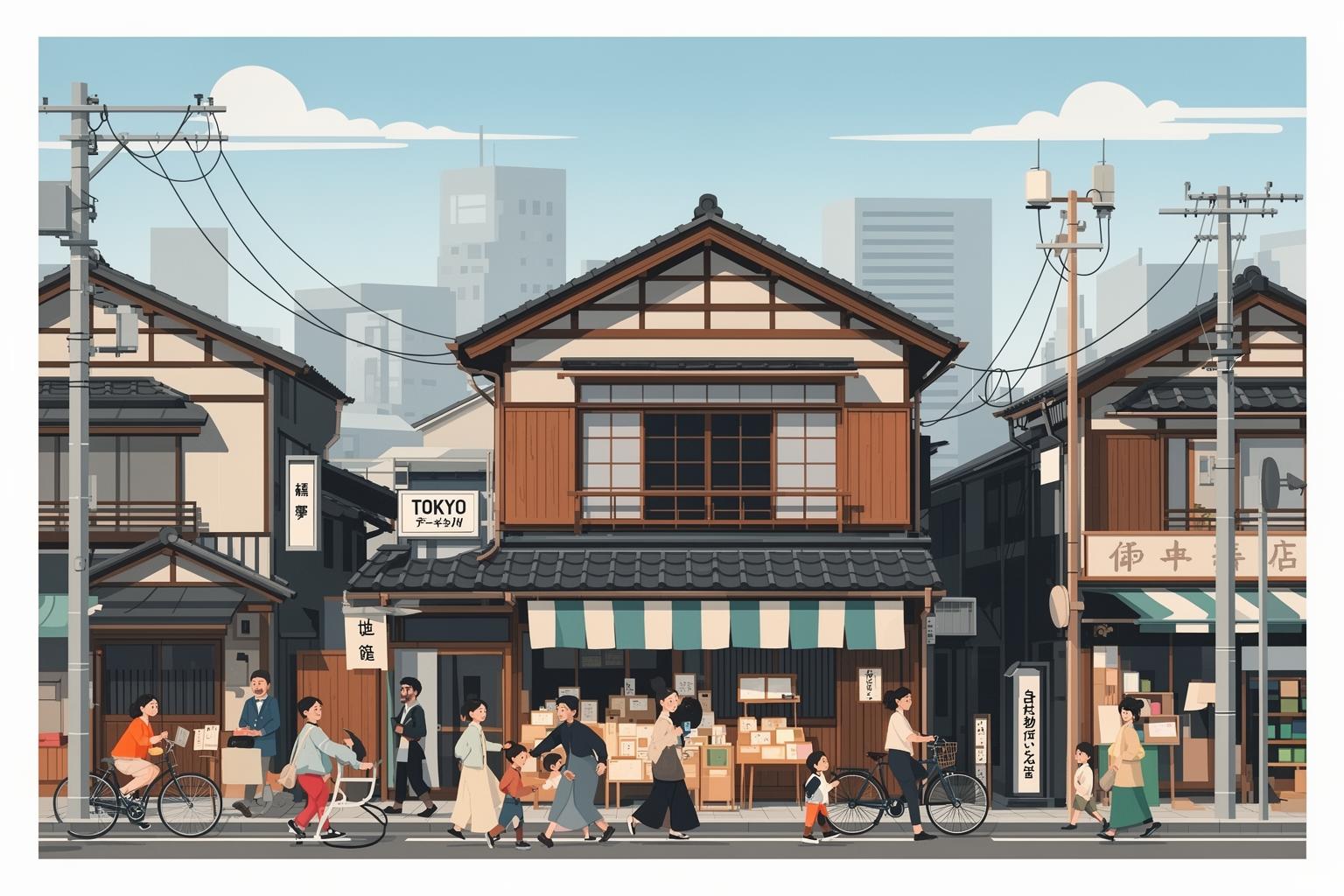
The design of a city reveals much about the people who inhabit it. In Yanaka, the streets themselves serve as a narrative, exposing a social structure that contrasts sharply with the impersonal, car-focused layout typical of many modern cities. This architecture is founded on trust, shared spaces, and a profound connection to history and nature.
No Sidewalks, No Problem: The Blurring of Public and Private Space
One of the most noticeable features of Yanaka’s backstreets is the absence of sidewalks. The narrow asphalt lanes are used collectively by pedestrians, cyclists, and the occasional slow-moving delivery van. Even more remarkable is how private property merges seamlessly into public space. Shopkeepers situate their vegetable and pottery displays right at the street’s edge. Residents adorn the lanes with a diverse array of potted plants—bonsai trees, morning glories, tiny maples—forming an impromptu, shared public garden. A chair might be left outside a doorway, inviting neighbors to pause and chat. This kind of openness would be unimaginable in many Western cities, where the boundary between public and private is strictly maintained. Here, it works because of an unspoken social agreement. The street is much more than a passageway; it is a semi-private, communal area—an extension of everyone’s living space. There is a collective understanding that this environment must be nurtured and respected. People sweep in front of their homes and water plants that are not technically theirs. From my viewpoint as a woman who often travels alone, this generates a strong sense of safety. These are not dark, deserted alleys that provoke fear after dusk. Rather, they are continuously enlivened by the residents. This exemplifies Jane Jacobs’ “eyes on the street” theory in practice. The ongoing, informal watchfulness of the community creates a safety network far more effective than surveillance cameras. Walking here feels more like moving through a village than an anonymous city block.
The Temple as the Neighborhood’s Anchor
Yanaka is often referred to as “Teramachi,” or Temple Town, and for good reason. The neighborhood boasts over seventy temples clustered close together, along with the extensive Yanaka Cemetery. In many cultures, cemeteries lie on the outskirts, somber places visited only on special occasions. But Yanaka Cemetery acts as the greenery at the heart of the community. On sunny days, families picnic, artists sketch the gnarled branches of ancient cherry trees, and elderly couples take leisurely strolls along its broad paths. The cherry blossoms in spring are renowned, attracting visitors who enjoy them away from the frantic crowds of Ueno Park. This seamless integration of a cemetery into everyday life reveals much about the Japanese perspective on ancestry and the continuum of life and death. Ancestors are not regarded as gone but as a tangible presence—a part of the extended family and community. Routine visits to family graves are as natural as visiting a living relative. The temples, too, serve more than religious functions. Traditionally, they were hubs of community life—operating as schools, archives, and gathering places. Tennoji Temple, featuring a large bronze Buddha statue, serves as a significant landmark and peaceful sanctuary. The toll of its bell and the scent of curling incense smoke act as sensory markers for the neighborhood, marking the flow of the day and the seasons. These elements root the community in a timescale far deeper and more enduring than the fast-paced, news-driven tempo of the modern world.
The Cat Cult: More Than Just a Cute Mascot
No discussion of Yanaka is complete without mentioning the cats. They are everywhere—lounging on temple walls, napping on shop awnings, confidently wandering down the middle of the street as if they rule the place—which, in some sense, they do. These are not feral or neglected cats but community companions. They are well-fed, sleek, and unbothered by people. Shopkeepers leave out food and water bowls, and residents know them by name, exchanging stories about their various antics. The neighborhood embraces its feline fame with cat-themed decorations, cat-shaped sweets, and cat motifs adorning everything from shop signs to manhole covers. But what does this enthusiasm for cats really mean? On one level, it ties into traditional Japanese culture. Cats, especially the “maneki-neko” (beckoning cat), symbolize good fortune and luck. On a deeper level, it reflects Shinto animism, where spirits, or “kami,” inhabit animals and natural objects. This fosters a cultural respect and coexistence with nature, even within an urban environment. Most importantly, the cats have become living symbols of Yanaka’s spirit. They are independent yet dependent on the kindness of the community. They live by their own rhythms—napping at will, indifferent to the daily rush. They encapsulate the slow, relaxed, and slightly rough charm of the shitamachi. They are the ultimate insiders, the furry custodians of the neighborhood’s genuine atmosphere. Being accepted by a Yanaka cat means intuitively understanding how to live and move in this special place.
The New Wave vs. The Old Guard: Gentrification, Japanese Style
Any place this authentic and charming is inevitably bound to be “discovered,” and Yanaka is no exception. In recent years, it has emerged as a hotspot, drawing not just tourists but also a new generation of young, creative Japanese seeking alternatives to the mainstream. This naturally brings up concerns about gentrification. However, what’s unfolding in Yanaka isn’t the typical scenario of hipster cafés and luxury condos displacing the local community. Instead, it’s a more nuanced and complex process of evolution and adaptation.
It’s Not Your Typical Hipster Takeover
Indeed, new businesses are opening. You’ll find minimalist coffee shops serving perfectly crafted single-origin drip coffee, chic art galleries featuring emerging artists, and stylish bakeries offering artisanal sourdough bread. Yet, the way these newcomers integrate is distinctly Japanese. Unlike the often aggressive gentrification seen in Western cities, where new enterprises may seem indifferent or even hostile to existing culture, Yanaka’s new arrivals frequently show profound respect for it. They don’t aim to replace the old atmosphere; they are drawn here because of it. A young couple might restore a dilapidated “kominka,” a traditional wooden house, carefully preserving its original features while transforming the interior into a modern gallery space. A new coffee shop might be designed to blend seamlessly with the streetscape, using natural wood and muted tones instead of flashy neon signs. There is often a genuine desire to learn from the old guard. The new baker might become a regular at the old tofu shop, or the gallery owner might collaborate with a traditional craftsman on a special exhibition. It feels less like a hostile takeover and more like gently grafting new branches onto an old, sturdy tree. Change is happening, but it’s slower, more respectful, and more symbiotic than one might expect.
The Challenge of Succession (“Ato-tsugi” Problem)
The true, existential threat to Yanaka’s character isn’t a wave of hipsters, but a quiet demographic crisis affecting all of Japan: the “ato-tsugi” or successor problem. For generations, small shops operated as family businesses, passed down from parent to child, with the eldest son typically inheriting the trade. That social contract is now broken. The younger generation, having grown up with more options and different aspirations, often doesn’t want to take over the family business. The work is physically demanding, hours are long, and financial rewards are modest compared to corporate jobs. They seek nine-to-five schedules, weekends off, and lives beyond the neighborhood shop. Consequently, many cherished, centuries-old businesses close when elderly owners retire or pass away. You can see the impact throughout Yanaka: shops with their metal shutters permanently down, signs faded and peeling. This represents a slow hollowing out from within—a silent erosion of the neighborhood’s soul. This is where the “new wave” can play a vital, positive role. Sometimes, a passionate young outsider who loves the craft apprentices under an aging master. After years of training, they might inherit the shop—not by blood, but through dedication. They inject new energy and ideas—perhaps starting an Instagram account or modernizing a traditional product—while preserving the core techniques and the kodawari of the original owner. This new model of succession, fueled by passion rather than lineage, may be the only way for many traditional crafts to endure into the future.
From Local Market to Tourist Hotspot: The Yanaka Ginza Dilemma
Nowhere is the tension between old and new, local and tourist, more apparent than on Yanaka Ginza. This is the neighborhood’s main “shotengai,” a traditional covered shopping street. For decades, it served as the local pantry and living room, where residents purchased fish, vegetables, tea, and daily necessities. The famous butcher shop selling “menchi-katsu” (fried meat cutlets) for a couple hundred yen was not a tourist snack but an affordable, delicious dinner staple for local families. Today, however, Yanaka Ginza is a recognized tourist destination, featured in numerous guidebooks and viral TikTok videos. On weekend afternoons, the narrow street is often packed shoulder-to-shoulder with visitors snapping photos of retro signs and queuing for the famous street food. The dynamic has fundamentally shifted. Many shops now cater more to tourist yen than local patrons. Souvenir shops have sprung up, and food stalls focus on photogenic, easy-to-eat snacks. The pressing question is challenging: can the area maintain its authentic role as a community hub while also serving as a major tourist attraction? It’s a delicate balancing act. The influx of tourists provides crucial income to aging businesses that might otherwise close, yet it also alters the atmosphere, making everyday shopping harder for locals and eroding the quiet, daily life charm that originally made the place special. Yanaka is experiencing this dilemma firsthand. It represents a microcosm of the challenge facing all of Japan as it navigates the pressures and promises of mass tourism. There are no easy answers, and the future identity of this beloved street remains uncertain.
So, What’s the Real Vibe? Your Guide to Not Being “That” Tourist in Yanaka
After all this, you might be curious about how to approach a place like Yanaka. It’s clearly not just another spot to tick off your Tokyo itinerary. Visiting Yanaka calls for a shift in mindset, an adjustment of your internal rhythm to align with the slow, deliberate pace of the neighborhood. The aim isn’t to conquer it but to respectfully observe and, if you’re fortunate, briefly partake in its unique way of life.
It’s a Neighborhood, Not a Theme Park
This is the most important point to keep in mind. The charming old houses are people’s homes. The shopkeepers aren’t actors in costume; they’re individuals trying to earn a living. The cats are not mere props for your photos. This awareness should guide all your behavior. So, some practical advice rooted in the cultural context we’ve discussed: Walk slowly. The relentless speed of Shinjuku has no place here. Rushing feels out of place. Wander, get a bit lost in the backstreets, and welcome serendipity. Bring cash. Many smaller, older shops don’t accept credit cards—not due to being technologically backward, but because their business relies on a local, cash-based economy of small, personal exchanges. Having exact change shows respect. Be considerate when photographing. These are people’s lives and private properties. Avoid pointing your camera at a shopkeeper without permission. The best approach is to become a customer first. Buy a rice cracker, a piece of pottery, or a cup of tea. Participate in the local economy. A simple “Konnichiwa” (Hello) and “Arigato gozaimasu” (Thank you very much) can transform an anonymous exchange into a genuine human connection. And above all, be quiet. The neighborhood’s peace is fragile and precious. Don’t be the noisy group that disrupts it. Match your volume to the ambient sounds—the hum of a bicycle, the rustle of leaves, the murmur of a quiet conversation.
Finding Your Own “Kodawari” Moment
Ultimately, a visit to Yanaka shouldn’t revolve around ticking off “Top 10 Sights.” It should be an exercise in observation and an appreciation of a different value system. The real souvenir isn’t a cat-themed trinket; it’s a fresh perspective. Rather than a checklist, here’s a different kind of to-do list: Find a small, old-fashioned “kissaten” (coffee shop). Sit at the counter, watch the master carefully prepare your coffee with a cloth filter, and just listen to the ticking clock and quiet conversations of the regulars. Seek out the tofu maker, the rice cracker baker, or the tatami mat weaver. Don’t just snap a photo and leave. Stand and watch their work for a few minutes. Notice the economy of movement, the focused intensity, the decades of practice shown in their hands. This is a meditation on mastery. Wander through the cemetery. Don’t rush to the famous graves. Find a quiet spot beneath a tree and simply sit. Observe how the light filters through the leaves, the different styles of gravestones, the fresh flowers and incense offerings left by families. It’s a profound lesson in how another culture weaves memory and the passage of time into everyday life. Pet a cat, but only if the cat initiates. It’s a good metaphor for your entire visit. Don’t force it. Be patient, remain calm, and let the experience come to you. Yanaka is an antidote to the modern world’s obsession with efficiency, scale, and constant stimulation. It reveals the profound beauty of the small, the slow, and the steady. It reminds you that a life devoted to doing one thing exceptionally well, in service of a community, holds immense dignity and meaning. That’s the true spirit. And if you grasp it, you’ll have experienced a piece of Japan’s soul that no gleaming skyscraper could ever reveal.