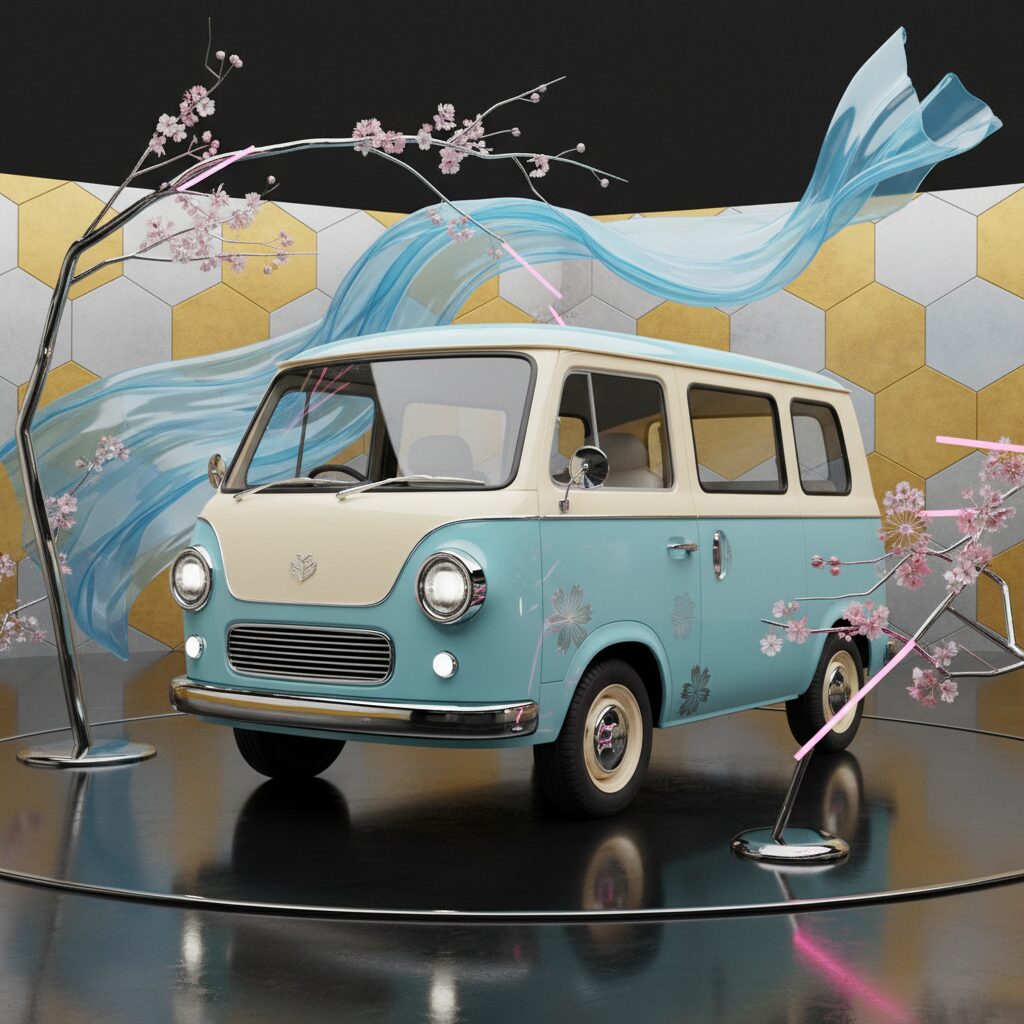
Yo, what’s good? It’s Hiroshi. So you’ve been scrolling the ‘gram, right? You’ve seen ’em. Those sick, boxy little vans, perfectly patina’d, parked up in front of some epic Japanese coastline, surfboards leaning against the side. You’re getting ideas. You’re picturing it: windows down, cruising a winding coastal road, Lo-fi beats on the speaker, on the hunt for that perfect, uncrowded break. A full-on blue wave surf trip in Japan, living that #vanlife dream. It’s a vibe, for real. But let’s pause the daydream for a sec. You’re probably thinking, “Sweet, I’ll just fly into Narita, hit up a rental spot, and grab one.” Nah, fam. Pump the brakes. That’s where the dream collides with the reality of Japan, and it’s where things get… interesting. Why do these vans look so different, so compact, so… uniquely Japanese? And why is finding that perfect retro ride not as simple as a few clicks on a booking site? The thing is, chasing this van isn’t just about renting a vehicle. It’s about plugging into a whole subculture, a specific aesthetic, and the deep, often unspoken rules of how Japan works. It’s a full-on cultural deep dive on four wheels. Before we get into the nitty-gritty of how you can actually make this happen, you gotta know the lay of the land. Let’s start with a classic launch point for many Tokyo-based surfers, the Shonan coast. Peep the map below, this is where the modern Japanese surf story really began, and it’s still the spiritual home for many weekend wave warriors.
This guide is your key. We’re gonna break down why Japanese vans are built different, the cultural wave that made ‘em cool, and the legit, no-cap ways you can get behind the wheel. We’re talking models, mods, and the unwritten rules of the road. So buckle up. It’s time to decode the Japanese retro van game.
To truly understand the roots of this aesthetic, it helps to explore the cultural obsession with an imaginary California that defined the era.
The Real Deal on Japan’s Van Scene: It’s Not What You Think

First things first, you need to reset your understanding of what a “van” really is. If you’re imagining a huge Ford Transit, a roomy VW California, or an extensive Sprinter conversion, you’re on a completely different page. The Japanese van world is an entirely different creature, shaped by a unique mix of factors: an ultra-dense population, narrow streets that resemble alleyways, and a government that loves creating highly specific regulations. This isn’t about sprawling RVs; it’s about incredibly efficient, space-saving little boxes. This reality breaks down into two main categories: the compact powerhouses and the reliable workhorse legends.
Kei Vans: The Compact Powerhouses
This is probably what comes to mind when you think of a “Japanese van.” These tiny, almost comically boxy vehicles seem to defy logic with how much they carry. They belong to a special category called Kei-jidosha, or “light automobiles.” It’s not just a cute nickname; it’s a legally defined class of vehicle with strict limits on every aspect: physical size and especially engine displacement, capped at a tiny 660cc—smaller than many motorcycles. So why do these exist? You have to go back to post-WWII Japan. The country needed to get moving again, mobilize its workforce and economy, but most people couldn’t afford full-sized cars. The government, brilliantly, created the Kei car category in 1949, offering massive tax breaks, cheaper insurance, and exemptions from certain parking rules. The aim was affordable car ownership, and it worked beautifully. Though the category has evolved, the core idea remains: these are the most practical, economical choices for navigating Japan’s tight urban and rural spaces.
Now, let’s talk models, because these are true icons. The holy trinity includes the Suzuki Every, the Daihatsu Hijet (and its slightly more passenger-friendly cousin, the Atrai), and the Honda Acty. Their design philosophy is pure function over form—a core principle in Japanese aesthetics. The boxy shape isn’t a retro style choice; it’s the most efficient way to maximize interior space within strict exterior limits. It’s a design born of constraint, and that’s precisely why it’s brilliant. To Western eyes, they might look underpowered or unstable, but that misses the point. These vans are expertly engineered for their environment. They can zip down tiny farm roads, make U-turns in cramped city centers, and fit into parking spaces smaller than a bike’s. For a surf trip, this is a quiet superpower. That hidden trail to a secret break? A Kei van will get you there while a larger van gets stuck a kilometer back, guaranteed. They embody the Japanese saying, “sansho wa kotsubu de mo piriri to karai”—even a small peppercorn packs a spicy punch.
The “Normal” Sized Legends: HiAce and TownAce
What if you need more room for a 9-foot log and all your gear? Then you move up to the next tier—the undisputed champion of Japanese vans: the Toyota HiAce. The HiAce is more than just a vehicle; it’s an institution. It’s the backbone of Japan’s commercial and trade sectors. Look around any Japanese street, and you’ll see them everywhere. White, boxy HiAces are the uniform of carpenters, plumbers, electricians, delivery drivers, and countless other trades. They’re famous for one thing above all: rock-solid reliability. A HiAce engine is known to easily reach 500,000 or even a million kilometers with just basic upkeep. Built to be abused, they work hard every single day without complaint. This toughness is why they’ve been embraced by the outdoor and surf communities, who take that indestructible canvas and make it their own.
The models that the retro-surf crowd really digs are the older generations. The H100 series (produced from 1989 to 2004) hits peak retro with its rounded corners and honest, simple design. The H200 (2004-present) is the current workhorse, with early models now turning into classics. People don’t buy them for luxury—there aren’t any—but for their blank slate potential and the confidence that they’ll never let you down. Alongside the HiAce, you’ll find its main rival, the Nissan Caravan, serving the same role. For a softer, more family-friendly retro vibe, check out the older Toyota TownAce or LiteAce vans. These were quintessential family wagons of the 80s and 90s, often sporting cool, kitschy graphics and plush velour interiors. They lean less toward rugged workhorses and more toward pure Showa-era nostalgia.
Why the Retro Vibe is So Fire Right Now
So, why has there been a sudden surge in popularity for these old, utilitarian vehicles? It’s not just about their looks. It reflects a deeper cultural shift—a response to the relentless pace and sterile perfection of modern Japan. People are seeking something with more soul, more character, and a story behind it. Young Japanese are actively searching for ways to express their individuality in a society that often values conformity, and their choice of vehicle has become a major outlet for that expression.
A Response to Modern Blandness
Consider modern cars: incredibly safe, efficient, and packed with technology, but, to be honest, somewhat dull. Designed by committees and wind tunnels to be as inoffensive and broadly appealing as possible, they lack personality. The retro van movement stands in direct defiance of this trend. It’s about choosing a vehicle full of quirks and imperfections. An old HiAce doesn’t come with a fancy touchscreen infotainment system; it has a simple cassette deck. A Kei van lacks lane-keep assist; it demands your complete attention. This analog, tactile experience is exactly what people crave. It ties into a larger trend in Japan called Showa Retro. The Showa era (1926-1989) is increasingly seen with nostalgia as a period of rapid economic growth, optimism, and analogue charm. People are flocking to traditional kissaten (coffee shops), playing city pop records on vinyl, and wearing vintage clothing. The retro van serves as the ultimate mobile expression of this nostalgia. It’s about rejecting today’s disposable, cookie-cutter culture and embracing something with history and durability. It’s a deliberate choice to slow down and appreciate the journey rather than just the destination. It’s the automotive equivalent of choosing a film camera over an iPhone—less convenient, but yielding a more meaningful and authentic experience.
The Customization Culture: Making It Your Own
Here’s the real secret: almost no one keeps these vans stock. The base vehicle is merely the starting point—a blank canvas for a masterpiece of personal expression. Japan boasts a mind-blowing customization culture, and the van scene is currently at its epicenter. This isn’t just about adding a few stickers; it’s a deep, obsessive art form sustained by a vast network of specialty shops and artisan builders.
Body Kits and Paint: Transforming Identity
The most dramatic changes happen to the exterior. Companies like DAMD, Blow, and T-Style are renowned for body kits that can totally alter a van’s personality. The most popular trend is making Kei vans resemble classic Western vehicles. For example, you can get a kit for your Suzuki Every that turns its front into a convincing replica of a vintage VW bus, a classic Ford Bronco, or even a Land Rover Defender. It’s playful, creative, and guaranteed to turn heads. Then there’s the paint: standard commercial white is swiftly replaced with earthy, military-inspired, or pastel shades. Matte desert tan, sage green, battleship grey, and baby blue are highly favored. This isn’t a quick spray job; it’s often a high-quality, full-body repaint signalling a strong dedication to the aesthetic.
Lift Kits, Wheels, and Tires: Achieving the Off-Road Stance
To complete the rugged look, the right stance is essential. Even vans that never leave the pavement often get a slight lift and chunky, all-terrain tires to appear more aggressive and capable. Wheel choice is equally important, with many opting for simple, retro-style steel wheels painted black or white to emphasize the utilitarian vibe. This blend of retro-inspired bodywork, earthy paint tones, and rugged stance defines the signature look of the modern Japanese surf van.
The Art of the Interior: Functional Minimalism
Inside, the magic of Japanese design philosophy truly comes to life. The goal is not to cram in every RV-style amenity possible, but rather to create a warm, beautiful, and highly functional space guided by minimalist principles. Wood dominates the interior. Builders use thin planks of cedar, hinoki cypress, or pine to clad the walls and ceiling, instantly transforming the cold metal shell into a cozy cabin or mobile tea house. This reflects Japan’s traditional love of natural materials and craftsmanship. Storage is ingeniously designed, demonstrating the Japanese art of shuno (storage and organization). Everything has its place. Fold-down tables, modular bed platforms that convert to benches, and hidden compartments are all standard features. The influence of Japanese outdoor brands like Snow Peak, known for elegant, minimalist camping gear, is profound. The final space feels less like a camper van and more like a serene, multifunctional room you can take to the beach—your personal chill zone, gear storage, and sleeping pod all wrapped up in a beautifully wood-paneled package.
The Hunt: How to Actually Score Your Dream Ride
Okay, you’re excited. You understand the culture, you know the models, and you have a clear vision of your ideal ride. Now here’s the million-yen question: how do you actually get one for your trip? This is where you need to forget everything you think you know about renting a car. The road to a retro van is less traveled, and you’ll need a local’s guide to navigate it. It takes more effort, but the reward is a truly unique experience.
Forget Conventional Rental Agencies
Let’s clear this up immediately. You won’t find a customized 1998 Toyota HiAce or a VW-bus-style Suzuki Every at Nippon Rent-A-Car, Times Car Rental, or Toyota Rent-a-Lease. It just isn’t going to happen. Their business model focuses on volume, reliability, and minimizing risk. They operate fleets of new, identical, base-model vehicles that are simple to maintain and insure. A 25-year-old van with custom parts is their worst nightmare—too costly to maintain and an insurance headache. So don’t waste your time browsing their websites. You need to dig deeper, into niche markets where enthusiasts live and breathe this culture.
The Real Gems: Specialized Rental Shops & Private Sharing
This is where the magic happens. In recent years, a small but growing number of boutique rental companies have emerged, catering specifically to the van life and outdoor communities. Many are small, independent businesses run by surfers, campers, and van builders who truly understand the culture and have built the very vans you’re dreaming of. These places exist but are not large chains. You’ll need to get good at Google searching using terms like 「キャンピングカー レンタル カスタム」 (custom camper rental), 「バンライフ レンタル」 (van life rental), or 「レトロバン レンタル」 (retro van rental). Many of their websites may be in Japanese only, so be prepared to use Google Translate and exercise patience throughout the communication process. These shops are typically located near popular outdoor spots (such as Chiba or Shonan for surfing), not at airports. The rental process will be more personal, and they’ll likely be excited to share local tips and insights. It’s more than just a transaction; it’s an invitation into a community.
Another excellent option is peer-to-peer car sharing. The largest platform in Japan is Anyca, Japan’s version of Turo. This is where private owners list their personal vehicles for rent, and guess what? It’s a goldmine of incredible, privately owned custom vans. You’ll find everything from fully decked-out HiAces to cute Kei van campers. This is often the most direct way to secure an authentic vehicle that perfectly matches your vision. However, there’s a catch: the platform is mostly in Japanese, and you generally need a Japanese driver’s license for smooth approval. While some owners might be open to renting to foreigners with an International Driving Permit, communication and verification can be challenging. If you have a friend in Japan who can help, this is definitely one of the best routes. You’ll be renting a vehicle into which someone has invested their heart, soul, and money, making it a truly special experience.
The “Buying It” Option (For the Dedicated)
If you’re planning a long-term trip (several months or more), you might consider buying a used van and selling it afterward. This offers ultimate freedom, but it is a bureaucratic marathon. Owning a car in Japan means wading through extensive paperwork designed to maintain strict social order and responsibility. First, you’ll need a visa permitting long-term residency and an official address. Then, you must secure a parking spot—you cannot park on the street. You’ll need to prove to the police that you have an off-street parking space by obtaining a shako shomeisho (parking space certificate). The police will literally come out and measure the spot to ensure the car fits; this process alone can take weeks.
Next, there’s the vehicle. Every car in Japan requires a rigorous inspection every two years called the shaken. This isn’t merely an emissions test; it’s a comprehensive safety and roadworthiness check that can be expensive, often costing hundreds or even thousands of dollars if repairs are needed. When buying a used car, you’re dealing with the remaining shaken period. Finally, you have insurance, taxes, and title transfer procedures, which require multiple visits to government offices, with each involving various forms to be completed in Japanese, stamped with your personal seal (hanko), and submitted in triplicate. While there are amazing vans listed on sites like Goo-net and CarSensor, purchasing and registering one as a foreigner is a serious undertaking. It’s not impossible but requires time, patience, and ideally, a Japanese-speaking friend to guide you through the bureaucracy.
Van Life, Japan Style: What to Expect on the Road
Congratulations, you’ve made it. You’ve navigated the subculture, found the perfect shop, and now you hold the keys to your retro dream van. You’re ready to hit the road. But just like the vans themselves, van life here is different. It’s a uniquely Japanese experience with its own rhythm, rules, and incredible rewards. It’s less about rugged, off-grid isolation and more about smartly leveraging Japan’s amazing infrastructure to craft a comfortable and culturally rich mobile lifestyle.
Hitting the Waves: The Surfing Culture Connection
Your van is the ultimate surf companion. It’s your mobile basecamp, changing room, and nap spot between sessions. Japan has a passionate and lifelong surf culture, with several key regions to explore. Near Tokyo, the Chiba peninsula is the must-visit spot. It boasts a long stretch of beach breaks that catch plenty of swell, with places like Ichinomiya serving as the heart of Japan’s pro surfing scene. Further south, Shonan, near Kamakura and Enoshima, is the historic center of Japanese surfing—popular, often crowded, but with a classic, laid-back vibe. For bigger waves, especially during typhoon season, surfers head to Shikoku, to spots like Ikumi Beach, or to the Izu Peninsula. For warm water and a tropical atmosphere, Miyazaki on Kyushu’s southern island is paradise. The surfing culture here reflects Japan’s typical respectfulness and order. There’s a pecking order, locals control the prime peaks, so be humble, wait your turn, and avoid hogging waves. A friendly nod and a simple “ohayo gozaimasu” (good morning) go a long way.
The Michi-no-Eki and Onsen Combo: The Ultimate Life Hack
This is the very heart of Japanese van life, the secret to its smooth operation. Let’s talk about Michi-no-Eki, or “roadside stations.” Forget the grimy North American truck stop stereotype. Michi-no-Eki are government-backed complexes that are clean, safe, and community-centered. They offer spotless, 24-hour public toilets, shops with fresh local produce and unique regional souvenirs, and restaurants serving delicious, affordable local cuisine. They’re incredible. While official overnight camping is a gray area, shachuhaku (sleeping in your vehicle) is widely accepted at most Michi-no-Eki as long as you stay discreet: no setting up awnings, chairs, or BBQs in the parking lots. Just pull in, close your window covers, and enjoy a quiet night. It’s a system built on mutual respect and trust.
Now, combine this with Japan’s other national treasure: the onsen (hot spring). After a full day surfing, battered by salt and sand, nothing beats immersing your tired body in a volcanically heated, mineral-rich hot spring. Nearly every town, no matter how small, has a local onsen or sento (public bathhouse). For a few hundred yen, you gain access to pure bliss. The daily routine for the Japanese van-lifer is simple and perfect: surf hard, drive to the local onsen for a deep soak, grab dinner and local beers at a nearby restaurant or convenience store, then settle in at a quiet Michi-no-Eki for the night. It’s a cycle of pure joy. This is structured freedom, and it’s magnificent.
Navigating the Streets: Toll Roads and Tiny Alleys
Driving in Japan is easy in terms of safety and road quality, but there are a few things to keep in mind. Expressways, or kosoku-doro, are impeccably maintained but notoriously expensive. A two-hour drive can easily cost $30 to $40 in tolls. If renting, ensure your van is equipped with an ETC (Electronic Toll Collection) card reader. While it won’t reduce toll fees, it will save you the hassle of stopping and paying cash at each booth. Many prefer sticking to the shitamichi, or regular roads. Slower but toll-free, they take you through charming small towns and scenic countryside—exactly what a road trip should be about. This is also where your van choice really shines. When pulling into a tiny fishing village to check a surf spot, you’ll navigate streets built centuries before cars existed. A compact Kei van or even a HiAce feels like a precision instrument, while a larger imported van can be cumbersome and stressful. The van is perfectly scaled to its environment, giving you a true, tangible sense of why Japanese design is so thoughtful.
The Vibe Check: Is This Trip Actually For You?

So, let’s be honest. Is this type of trip suited for everyone? Probably not. If your van life dream means total freedom, parking wherever you like, lighting a campfire on a deserted beach, and living completely off-grid, Japan will be a shock to the system. This country functions based on a deeply rooted set of rules, both explicit and implicit. It’s a society that prioritizes harmony, order, and consideration for others above all. “Wild camping” is generally off-limits. You can’t just pull over on the roadside or in a scenic spot to spend the night. You need to find a designated or accepted location, such as a Michi-no-Eki or an official campground (oto-kyanpu-jo).
Space is limited, both inside your van and across the country itself. Surf breaks can get crowded, parking lots may be full, and roads often narrow. This isn’t a trip for rugged solitude in the wilderness. Instead, it’s about navigating a beautiful, highly organized, and densely populated country in a clever, self-contained mobile home. The challenge and reward don’t come from conquering nature but from skillfully blending into Japanese society.
However, if you can embrace that mindset, accept the rules, and appreciate this unique system, you’re in for the trip of a lifetime. The payoff is a level of immersion you simply can’t achieve by staying in hotels and taking trains. It’s the freedom to wake up at a Michi-no-Eki in the mountains, check the surf forecast, and spontaneously decide to drive three hours down the coast. It’s the delight of discovering a tiny, family-run ramen shop in a village you’d never otherwise visit. It’s the simple perfection of the ritual—onsen, van, sleep. It’s about experiencing the real, unfiltered, everyday Japan that exists between the well-known tourist spots. Scoring a retro van and cruising the coast is more than a surf trip; it’s a masterclass in Japanese culture, design, and the art of living well in a compact, intentional way. It’s a whole vibe, and if you’re ready to catch it, the waves are waiting.