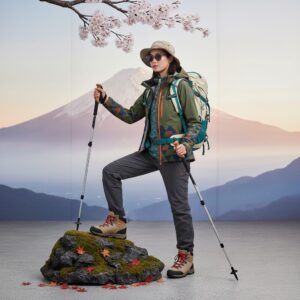
Alright, let’s set the scene. You’re there. You actually did it. You’re standing on a trail somewhere deep in the heart of the Japanese Alps. The air is so crisp it practically cracks when you breathe. The sky is a shade of blue you thought only existed in high-end anime productions. Below you, a sea of clouds, or maybe a valley floor carpeted in a green so vibrant it feels unreal. The vibe is, for lack of a better word, immaculate. It’s quiet. Like, truly quiet. Not just city-quiet where there’s still a background hum, but a deep, profound silence punctuated only by the whisper of wind through ancient cedar trees and the frantic beat of your own heart. And in that moment, a primal, undeniable urge bubbles up from your soul. You want to shout. You want to throw your voice into that vast, beautiful emptiness and hear it come flying back at you. A big, hearty “HELLOOOOOOO!” seems like the only appropriate response to this level of majestic scenery. It’s the main character energy moment you’ve been waiting for. But you hesitate. You look around. A few other hikers are on the trail, a mix of stoic-looking older gentlemen with pro-level gear and younger couples in trendy outdoor wear. They’re all just… quiet. They’re sipping tea from a thermos. They’re taking a photo. They’re just staring into the distance, vibing with the silence. No one is shouting. No one is even talking loudly. Suddenly, your urge to scream into the void feels less like a cathartic release and more like a massive social blunder waiting to happen. Is this a thing here? Or is the whole shouting-into-the-mountains trope just something you saw in a movie? You’re confused. You’ve hit one of those invisible cultural walls that Japan is so famous for. What, exactly, is the deal with yama-biko, the mountain echo? Is it a cherished tradition or a cringey tourist move? Bet. Let’s get into it, because the answer is so much deeper and weirder than you think. This isn’t just about acoustics, fam. It’s a full-blown cultural deep dive into spirits, social harmony, and the unspoken rules of making noise in a place that worships silence. It’s the ultimate lesson in reading the air, or as they say here, `kuuki wo yomu`. Before we get lost in the woods, let’s get our bearings.
This profound silence is a key part of the unique mountain vibe in Japan, which you can explore further in our article on the spiritual significance of Japan’s sacred peaks.
The OG Echo: Yama-biko as a Yokai, Not a Physics Lesson
Before Science, There Were Spirits
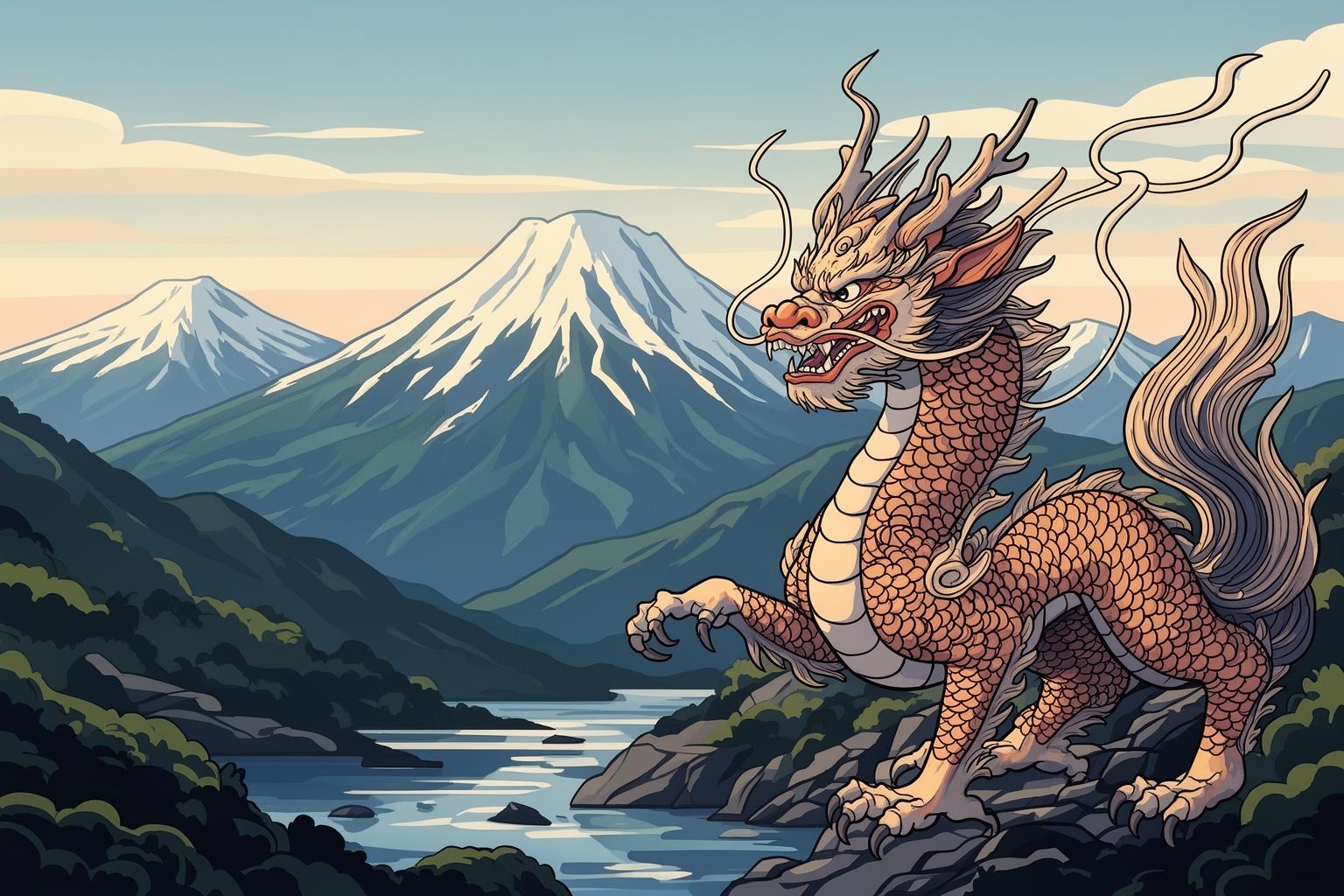
To truly understand why shouting into a Japanese mountain carries so much meaning, you need to rewind time—way back. Before physics explained sound waves bouncing off surfaces, an echo was pure magic: mysterious and alive. In Japan, when something in nature is mysterious and alive, it’s probably a `yokai`—a spirit, monster, or supernatural being. The echo wasn’t just a natural phenomenon; it was a creature known as `Yama-biko` (山彦), which literally means “mountain echo,” but whose kanji can also be read as “mountain boy” or “mountain prince.” This was not merely a passive reflection of your voice; it was a conscious entity responding to you. When you shouted into the valley, you weren’t simply making noise—you were initiating a conversation with a mountain spirit. This transforms the entire act: you’re not testing science, but engaging in a supernatural call-and-response. This ancient belief is deeply rooted in Shintoism, Japan’s indigenous faith, which holds that `kami` (gods or spirits) reside in all natural things. Mountains are especially sacred, regarded as homes of powerful deities, training grounds for ascetic monks (`yamabushi`), and, in many folk beliefs, the resting place of souls after death. A mountain is not just rocks and soil; it’s a living, breathing entity, a cathedral of nature, and `Yama-biko` was one of its voices. Early texts and folklore portray `Yama-biko` in various forms—sometimes a strange dog-like creature with one front leg and a curious expression, other times an invisible spirit revealed only by its echo. In Toriyama Sekien’s famous Edo-period yokai encyclopedia, Gazu Hyakki Yagyō (The Illustrated Night Parade of a Hundred Demons), `Yama-biko` appears as a small, ape-like figure posing like a wise old man, cupping a hand to its ear as if listening intently before replying. The message is clear: `Yama-biko` is a clever mimic, not a random echo, but an entity choosing to respond. This belief adds a layer of reverence—and even caution—to hearing an echo. You had to be mindful of what you said because the mountain was listening and talking back. Shouting insults or curses was risky, possibly angering the spirit. A clear, strong echo was a good sign, indicating the `kami` of the mountain were pleased or acknowledged you. A weak or distorted echo could be a bad omen—perhaps the spirit was weak, angry, or some malevolent force was interfering. This spiritual context underpins the modern-day hesitation. Even if most people today no longer believe a dog-faced goblin mimics their calls, the cultural legacy remains. The mountains command respect, and part of that respect is being mindful of the sounds you make in their sacred silence. The echo was a dialogue, and you don’t just barge into a temple and start shouting. The same principle applies here—a ghost of that ancient belief still haunts the trails.
A Playful but Powerful Spirit
Let’s explore the personality of this `yokai` further. Was `Yama-biko` a friend or foe? Like much in Japanese folklore, the answer is complex—it’s a vibe thing. `Yama-biko` wasn’t generally seen as malicious; it was more of a trickster, a neutral natural force simply doing its thing. Its defining trait was mimicry—calling back whatever it heard perfectly. This could be playful: imagine travelers calling out and hearing their cheerful voices echo back, sharing a joyful moment with the unseen world. It’s a game—you shout, the mountain shouts back, proving that this vast, intimidating landscape is interactive and alive. However, that mimicry could also be unsettling. Stories tell of `Yama-biko` imitating the sounds of chopping wood when no one was near, the cry of a baby, or a dog barking—leading travelers astray or simply unnerving them. It was a reminder that you were a guest in a realm with its own rules and invisible residents. This dual nature is essential. `Yama-biko` embodies Japan’s relationship with nature: a source of immense beauty, playfulness, and spiritual connection, but also of danger, unpredictability, and awe-inspiring power demanding respect. That’s why calling out to it was never entirely casual—it was acknowledging this power. You were poking the bear, so to speak, even if it was mostly a friendly one. This idea connects to the broader pantheon of mountain spirits. Mountains were not just the home of `Yama-biko` but also the domain of formidable `Tengu`—long-nosed goblin-like beings skilled in martial arts who might abduct those who disrespected their territory—and `Yama-uba` (mountain hags) who could help or devour lost travelers. Above all, the mountain itself was often revered as a powerful `kami`. So, when standing on a trail, the silence isn’t empty culturally; it’s filled with these presences. The quiet signals peace and respect, and making a loud, uninvited noise could disrupt the spiritual balance—it’s like walking into someone else’s home and putting your feet on the coffee table. You simply don’t do that without clear permission. This spiritual weight, this long history of the echo as a conscious reply from a powerful place, is the invisible force that makes you hesitate before you shout. It’s a cultural memory whispering, “Be cool. Read the room. You’re not alone.” Even for modern, secular Japanese people, this sense of reverence for mountain spaces runs deep. They may not think about `yokai`, but they think about respect, tranquility, and their small place within a vast, ancient landscape. The playful spirit is present, but one approached with deference, never with a bullhorn.
The Modern Dilemma: To “Yaho!” or Not to “Yaho!”
The Origin of the “Yaho!” Trope
If the historical atmosphere centered around spiritual reverence and eerie `yokai`, where exactly did the cheerful “Yaho!” (ヤッホー) come from? This image is deeply ingrained in pop culture—a character in an anime reaches a summit, cups their hands around their mouth, and lets out a victorious “YAHOOOO!” It’s often seen as the iconic Japanese hiking experience. However, this is actually a much more recent creation, and its story reveals a lot about 20th-century Japan. The transition from spiritual dialogue to recreational shout gained momentum after the war. As Japan rapidly rebuilt and urbanized, nature assumed a new role. It ceased to be merely a backdrop for farming and folklore and became a refuge. The mountains offered an escape from the intense, crowded, and strictly ordered life in burgeoning megacities. Hiking and mountaineering emerged as popular leisure activities, a way for city residents to reconnect with something pure and freeing. And what’s more liberating than a hearty shout? The word “Yaho!” itself is a loanword, probably derived from the German “joho” or the English “yoo-hoo,” popularized through mountaineering culture and Western media. It carries no profound spiritual significance—just a playful, onomatopoeic expression of joy. It’s pure, unfiltered release. Mass media then amplified this image exponentially. From the 1960s onward, television shows, commercials, manga, and anime established the “Yaho!” shout as the emblematic sound of mountain fun. It became a cultural meme, shorthand for freedom, adventure, and youthful vitality. Shouting “Yaho!” at a mountain peak became akin to planting a flag: a declaration that said, “I have escaped the city! I am free! I am here!” This created a strong cultural expectation, a societal script passed down to generations of Japanese children. You climb the mountain, reach the summit, and shout “Yaho!” It’s simply what you do. It’s the reward at the end of the hike. This is the version of `Yama-biko` widely held in the minds of both Japanese and foreigners. It’s a playful, innocent, and anticipated activity. The `yokai` has been replaced by a physical phenomenon, and reverence by recreation. This explains why you feel compelled to shout. You’re reenacting a scene you’ve seen countless times. You’re trying to engage in a culture observed from afar. The catch is, you’ve arrived on stage only to discover the locals are following a completely different, unwritten script.
But… What’s the Reality on the Trail?
This brings us back to you, standing on the trail, your “Yaho!” fading in your throat. The reality of Japanese hiking trails often contradicts the pop culture trope. The prevailing atmosphere is one of calm, meditative silence. This is where one of Japan’s key societal concepts intervenes: `kuuki wo yomu` (空気を読む), literally “reading the air.” It’s the skill of sensing the unspoken social mood, grasping the collective feeling of a situation, and acting accordingly without verbal instruction. It’s the invisible social contract that governs nearly everything. On most Japanese trails, the “air” is thick with a desire for tranquility. Why? Consider what most hikers are seeking to escape. The daily soundscape in Japan is noisy: train station announcements, loud storefront ads, and the endless chatter of crowded offices. Life is loud and intrusive. The mountains serve as the antidote—a sanctuary of silence. For many Japanese hikers, the aim is to immerse themselves in that silence, to experience `shinrin-yoku` (forest bathing), to let nature’s peace wash over them. In this context, a sudden, loud “YAHOOOO!” from another hiker is like someone blasting music in a library. It violates the unspoken agreement. It disrupts the very calm everyone came for. It’s seen as childish, thoughtless, and completely missing the point. It reveals that you are not reading the air. You are, bluntly but accurately, `KY` (`kuuki yomenai`—someone who cannot read the air). There’s also a safety concern. In the mountains, loud shouting often signals distress. If you’re shouting just for fun, it may cause alarm, with others wondering if someone has fallen or needs help. This creates unnecessary confusion in an environment where clear communication is vital. So, while media promotes a fantasy of loud, triumphant shouting, the real experience is governed by the cultural value of `wa` (和), or group harmony. Here, harmony means respecting everyone’s shared goal of a peaceful outing. Your individual urge to shout is secondary to the group’s collective wish for quiet reflection. No one will explicitly tell you this. There are no signs reading “NO SHOUTING.” You won’t be confronted directly. You may receive some sideways glances or polite but cool nods. The disapproval is silent, which can be even more perplexing to outsiders. This is the essence of the `Yama-biko` dilemma: the `tatemae` (public, official narrative—shouting is fun!) clashes with the `honne` (the true, deeply felt reality—please be quiet).
The Unwritten Rules of Mountain Sounds
The basic rule is silence—but this is not a monastery. There are, naturally, accepted noises on the trail. Knowing which sounds are appropriate and which are not is a lesson in subtle Japanese nuance. It’s not about loudness but intent and purpose. First, there’s the `kuma-yoke suzu`, the bear bell. Hikers attach these small bells to their backpacks, producing a steady, gentle jingling sound as they walk. Its purpose is purely functional: to warn bears and other wildlife of your presence, preventing startling them and reducing the chance of aggression. This is intentional noise with a clear, safety-oriented function that benefits all. It’s accepted because it helps avoid dangerous encounters. The sound is constant and relatively soft, blending into the soundscape instead of breaking it like a sudden shout. It signals responsible hiking. Then there are greetings. It’s not only acceptable but polite to greet fellow hikers. A cheerful “Konnichiwa!” when passing someone is standard practice. On more remote or difficult trails, this also acts as a safety check—signaling, “I see you, you see me, we’re both okay.” This controlled, positive social interaction fosters community and mutual support. It builds harmony instead of disrupting it, respectfully acknowledging others’ presence. Finally, there is the emergency shout. This is the sole time when loud, repeated, frantic shouting is necessary and accepted. Crying “Tasukete!” (Help me!) or screaming is the universal distress signal. This is exactly why playful shouting is problematic: it appropriates the sound reserved for emergencies. It risks creating a “boy who cried wolf” effect. If hikers become desensitized to random shouts, they might hesitate when a real emergency occurs. Thus, there is a paradox: the quiet trails are punctuated by the continuous jingling of bells and exchanges of greetings—sounds that form the system’s backbone, the unspoken rules of conduct. They are functional, respectful, and community-minded. A recreational “Yaho!” is none of these—it is purely self-centered, serving only the shouter. In a culture that consistently values the collective over the individual, that’s a significant disadvantage. This is the delicate audio etiquette of Japanese mountains—a complex soundscape where a tiny bell signifies respect, while a loud shout marks ignorance.
The Social Topography: When and Where is it Okay?
Reading the “Vibe” of the Mountain
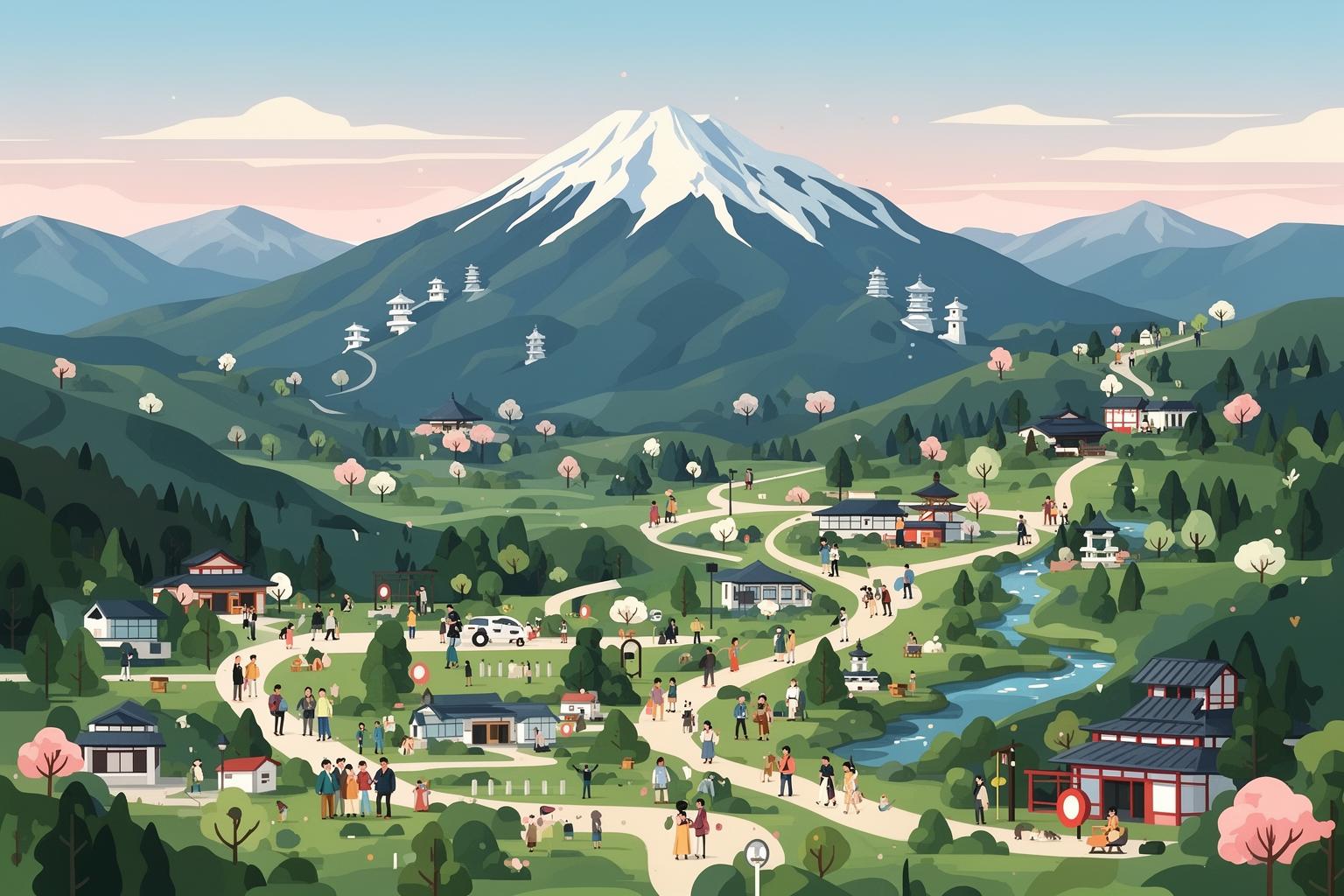
After all that, you might assume the rule is straightforward: never, ever shout. But since this is Japan, it’s naturally more nuanced. The true, advanced skill lies in recognizing that the rules shift depending on the context. The acceptability of `Yama-biko` is not a fixed constant; it’s highly situational. You must read the social landscape of the mountain just as carefully as its physical terrain. Let’s explore the different types of mountains and their distinct “vibes.” First, there’s what you might call the “Family Mountain.” This refers to popular, easily accessible mountains like Mt. Takao near Tokyo or Mt. Rokko near Kobe. On a sunny weekend, these spots are absolutely crowded. You’ll encounter families with young children, school groups on trips, and tourists ticking an item off their itinerary. The trail might be paved, and there’s likely a cable car and gift shop. The atmosphere here is entirely different—it’s not a quiet sanctuary but a bustling recreational park. It’s lively and noisy, and the expectation of serene contemplation is practically nonexistent. In this lively setting, kids excitedly shouting “Yaho!” at a lookout point is not only tolerated but often considered `kawaii` (cute). It’s part of the fun, energetic vibe. No one is there seeking a deep, meditative experience; they’re there simply for a fun day out. Shouting does not break the peace because there was none to begin with; the nature of the place grants implicit social permission. Now, contrast this with a “Serious Peak.” Imagine a demanding, multi-day trek in the Northern Japan Alps, like the Kamikochi to Yarigatake traverse. The people here are serious mountaineers with expensive gear, focused minds, and a desire for a profound, often punishing connection with raw nature. They seek solitude, challenge, and awe. The mood is one of deep respect and quiet determination. Shouting a casual “Yaho!” in this context would be a huge faux pas, seen as deeply disrespectful—not just to fellow hikers, but to the mountain itself. It’s likening a sacred cathedral to a playground, revealing a complete misunderstanding of what that space means. The social cost of shouting here is very high, marking you as an amateur, an outsider who just doesn’t “get it.” So, the first step is to assess your surroundings. What kind of mountain are you on? Who is around you? What is the collective atmosphere? Is it a party or a pilgrimage? Your right to shout is directly proportional to how casual the setting is.
The Group Dynamic: It’s a Team Sport
Another vital aspect of the `Yama-biko` equation is the group dynamic. Japanese society is highly group-oriented, and behavior strange for an individual can be perfectly acceptable within a group. This applies to shouting in the mountains, too. A solo hiker standing on a ledge, suddenly screaming into the void, might seem odd or even alarming. Are they okay? Having a breakdown? It’s an isolated, individualistic act that contrasts sharply with the communal context and lacks social grounding. But place that same shout within a group of friends celebrating a difficult climb together, and it’s a completely different story. Upon reaching the summit, buzzing with adrenaline and shared accomplishment, they huddle and all shout a loud, collective “YAHOOOOO!” This isn’t a random outburst; it’s a shared ritual of celebration—a bonding moment. The group, in that instant, creates its own temporary social bubble where this behavior is acceptable. They have read the atmosphere among themselves and decided the mood is right. If they’re in a relatively secluded spot, not disturbing others, this is usually just fine. The act remains within the group and becomes a collective memory. The key is social consensus—the decision to shout is made explicitly or implicitly by the group. It strengthens their identity as a unit, acting as an inside joke or a team cheer. This is a recurring theme in Japan: the group provides context and a permission structure for behaviors that would be awkward or inappropriate individually. So, if you’re with a group of Japanese friends and it’s “Yaho!” time, join right in! They’ve read the air for you, determining that the moment, place, and occasion are right. But if you’re alone, the responsibility to read the air falls entirely on you, and the safest choice is always to lean toward quiet respect. The social risk is much greater when you’re the only one making noise.
The “Yama-biko Spot” Phenomenon
To add even more delightful complexity, Japan sometimes resolves this ambiguity by designating specific zones for certain behaviors. When it’s unclear whether an activity is appropriate, a common solution is to create a set time and place for it. This applies from smoking areas to, yes, spots for shouting into the mountains. In some tourist-heavy locations, you’ll find what are essentially unofficial or official “Yama-biko Spots.” These might be lookout platforms, certain corners of trails known for excellent echoes, or even signs inviting you to try calling out. A famous example is the “Yamabiko Bridge” in some mountain parks, where the name itself is a big hint. These places act as cultural pressure-release valves, giving you explicit permission to enjoy the “Yaho!” tradition without fear of social disapproval. At these spots, shouting isn’t just allowed—it’s expected. It’s part of the attraction. You’ll see people lining up to shout into the valley and laugh as the echo returns. This compartmentalization is a very Japanese way of managing a social dilemma. Instead of vague, unwritten rules causing anxiety, a clear, defined space is created where fun, slightly disruptive behavior is permitted. It’s a sanctioned zone of playfulness. Inside this invisible frame, you can be loud and cathartic; outside it, you revert to the default quiet respect. This is `TPO` (Time, Place, Occasion) in action—a concept borrowed from the West but applied with Japanese precision. There is a right time, right place, and right occasion for everything, and shouting “Yaho!” is no exception. Spotting one of these areas is like finding a golden ticket. It removes the guesswork and lets you enjoy a classic Japanese experience without cultural anxiety. It’s the perfect solution to maintain harmony while allowing moments of individual expression. So if you see a sign with a cartoon character cupping its mouth, you know you’re good to go. The mountain—and the culture—has officially invited you to join in the fun.
The Takeaway: More Than Just an Echo
It’s Not About Noise, It’s About Harmony
So, what’s the final take? The playful spirit of `Yama-biko` is very real, but it operates under a complex and often unseen set of rules. This entire situation perfectly reflects Japanese social dynamics. On one hand, there’s the `tatemae`—the public-facing narrative, the pop culture image of shouting “Yaho!” with joyful abandon. On the other hand, there’s the `honne`—the true, nuanced reality where actions are guided by a profound desire for group harmony (`wa`), acute situational awareness (`kuuki wo yomu`), and a quiet, respectful appreciation of nature. The central tension is between your personal urge for expressive, cathartic release and the collective goal of a peaceful, shared experience. It’s not that Japanese people don’t want fun or loudness; rather, they believe these should happen at the right time and place—a `TPO`—so one person’s joy doesn’t disturb another’s tranquility. The echo is thus more than a mere sound. It serves as a social gauge. Your choice to shout or remain silent reveals your ability to understand and blend into the local culture. It’s a test of whether you’re a passive observer or an active, respectful participant. The mountains are a shared space—physically and culturally. The aim is to find your place within the existing harmony, not to impose your own noise on it. True connection is not about proving your voice is the loudest but about showing your willingness to listen to the silence.
So, Should You Shout? Your Field Guide to `Yama-biko`
Alright, let’s get practical. You’re back on the trail, the view is stunning, and the urge to shout remains. What should you do? Forget a simple yes or no. Here’s a culturally-sensitive field guide for navigating the `Yama-biko` moment. Think of it as a process, a vibe check. Let’s go.
Step 1: Read the Room (or the Mountain). This is the most important step. Pause and observe for a full minute. What’s the atmosphere? Are there loud families and tour groups, or is it mostly serious hikers who seem to be walking in meditation? Is this a popular tourist spot with a viewing platform, or a rugged, secluded path? Listen carefully. Are the dominant sounds birdsong and the wind? Or is there the buzz of many people talking? Essentially, assess the `TPO`. Is this really the right time, place, and occasion for a loud shout?
Step 2: Start Small. If you feel confident and the vibe tentatively allows it, don’t jump straight into a full-powered “YAHOOOO!” Instead, begin with a smaller, more traditional call. Try a soft “Oooi!” (おーい), a common Japanese way to call someone from afar. It’s less startling than a “Yaho!” and has a more functional, less purely playful tone. Send it out into the valley. Notice how it feels, how it sounds, and importantly, if it draws any looks from other hikers. If no one minds, you may have the green light. If you get a few cold stares, better to abort. Think of this as your test balloon.
Step 3: Wait for the Locals. This is the foolproof method. The ultimate `iykyk` (“if you know, you know”) move is simply to watch what the Japanese hikers do. Be patient. Wait at a scenic spot long enough to observe local behaviors. If a group of university students gets excited and releases a collective shout, congratulations—the `Yama-biko` window is open. You’ve been given social proof that here, at this time, shouts are okay. Feel free to join in. But if groups come, take quiet photos, and move on respectfully silent, that’s your clear sign the unspoken rule is in place. Follow their lead. Though it requires patience, this is the most respectful and reliable way to get it right. You’re letting the host culture set the party’s rules.
The Real Vibe of the Japanese Alps
Ultimately, chasing the `Yama-biko` is a fun side quest but not the main event. The true, deeply resonant vibe of the Japanese Alps isn’t about what you shout into them but what you hear when you stop to listen. It’s found in the profound, soul-cleansing silence so rare in our modern world. It’s in the subtle sounds: wind through the pines, the rustle of `sasa` (dwarf bamboo) along the trail, a distant hawk’s call, the gentle gurgle of a hidden stream. This is the real conversation the mountains have been having long before you arrived and will continue after you leave. The challenge and reward of being here is quieting your own inner noise enough to hear it. Shouting can be a brief, fun release—a single firework in the night sky. But the deeper, lasting connection comes from quietly observing, breathing in sync with the forest’s rhythm, and finding your small, harmonious place within the grand, silent spectacle. It’s realizing the original `Yama-biko`—the spirit, the `yokai`—was not just a mimic but a listener. By learning to listen back, you’re playing the game as it was always meant to be played. You earn a nod of approval from the ancient mountain spirit, waiting patiently in the silence. And honestly, that’s a far better vibe than just hearing your own voice.