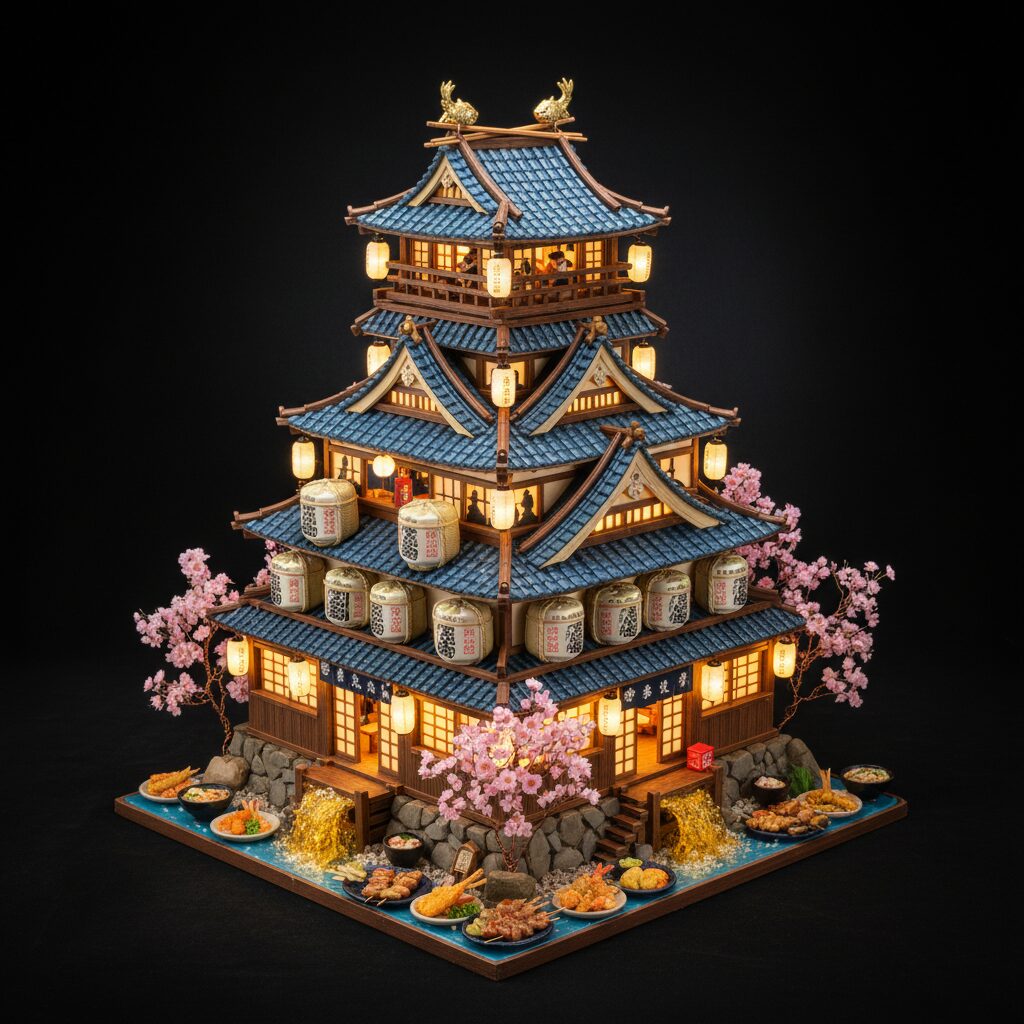
Yo, what’s good? Megumi here, coming at you live from Tokyo. So, let’s get real for a sec. You’ve seen it, right? That TikTok edit of a dude walking down some impossibly old-school Japanese street at night, paper lanterns glowing, wooden buildings looking like they were ripped straight from a samurai movie. Or maybe you’ve sunk hours into a game like Ghost of Tsushima and now you’ve got this vision in your head: you, a lone wanderer, stepping into a cozy, smoke-filled izakaya for a flask of sake after a long day’s journey. The question that’s probably rattling around in your brain is, “Is that vibe even real? Or is it just a tourist trap, a theme park version of old Japan?” It’s a valid question. You see the aesthetic online, but you’re skeptical about the reality. You wanna know if you can actually tap into that moody, historical atmosphere without it feeling staged. And the short answer is: Bet. You absolutely can. But it’s not about finding a costume party. It’s about understanding the blueprint of the past that’s still hiding in plain sight. These places, these jokamachi or castle towns, aren’t movie sets. They’re living, breathing cities that just so happen to be built on a centuries-old chassis. They are the physical manifestation of a feudal social structure, and that history is what gives them their unmatched aura. Forget the tourist traps. We’re going deep into the heart of these towns to find that authentic, lone-samurai-on-a-rainy-night feeling. It’s about knowing where to look and, more importantly, what you’re looking at. This isn’t just a trip; it’s a time-slip. Let’s break down the why, the where, and the how of finding your perfect historical izakaya moment.
For a different kind of curated drinking experience, you might want to explore the world of Japan’s secret whisky bars.
The Blueprint of Power: Why Castle Towns Feel the Way They Do
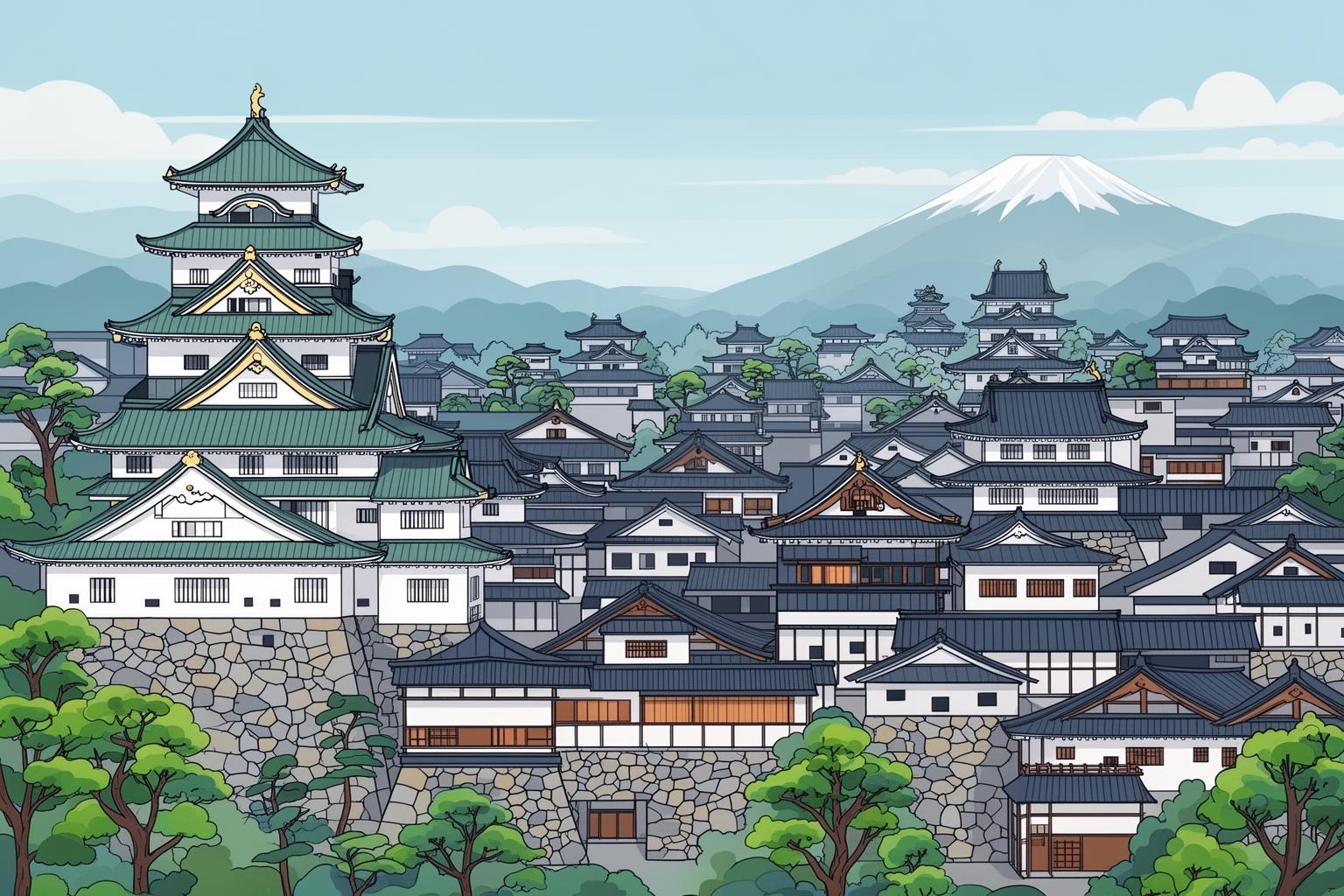
Before diving into specific towns or menu choices, we first need to assess the overall concept of the castle town itself. A jokamachi isn’t just a random cluster of old buildings gathered around a castle. It represents a masterful example of urban planning, designed with two primary goals in mind: defense and social control. Grasping this framework is essential to understanding why these towns feel so atmospheric and, at times, bewildering to navigate. It’s all intentional—a tangible remnant of the feudal system crafted in wood, stone, and plaster.
More Than Just a Castle: The Anatomy of a Jokamachi
Imagine a traditional castle town as a series of concentric circles or a spider’s web, with the lord’s castle firmly situated at the center. This was the command hub, the ultimate symbol of power. The land immediately surrounding the castle counted as prime real estate, reserved for the most important people: the highest-ranking samurai retainers and the lord’s immediate family. Their grand estates, known as buke yashiki, formed the first line of defense. These weren’t merely lavish homes; they were fortified compounds with tall walls, imposing gates, and spacious grounds capable of mustering troops. Walking through a preserved samurai district today, such as Nagamachi in Kanazawa, is like passing through the VIP section—the military and administrative core of the domain.
Moving outward from this elite center, residents’ status declined. The next ring was usually home to lower-ranking samurai. Their houses were smaller, their parcels more modest. Streets here were often narrower, and walls lower. The architecture constantly and visibly reinforced the social hierarchy; there was no pretense—your address quite literally determined your status.
Beyond the samurai quarters lay the commoners: merchants and artisans. This commercial area, the chounin-machi, was typically a chaotic and vibrant mix of shops, workshops, and townhouses (machiya). Streets here prioritized commerce but also defense. Many were deliberately narrow, with sharp turns and T-junctions, designed to slow and confuse any invading forces that breached the outer defenses. This is why wandering through an old merchant district can feel like being in a maze—because you are. It was a deliberate feature, not a flaw.
Finally, on the town’s outermost edge, there was usually a cluster of temples and shrines. This wasn’t just for spiritual reasons; it was a clever defensive tactic. Temples were built like fortresses, with large grounds, sturdy walls, and heavy gates. In times of war, they could quickly be converted into strongholds, serving as a last formidable barrier protecting the town. This layered, strategic design is the invisible architecture that surrounds you: winding alleys, sudden dead ends, imposing walls—all combining to create a sense of being enveloped in a world governed by different rules.
The Ghost in the Machine: Where Did the Samurai Go?
If these towns were built by and for the samurai, where did they all go? The answer lies in one of the most dramatic turns in Japanese history: the Meiji Restoration of 1868. In a swift and sweeping action, the new imperial government dismantled the entire feudal system. The samurai class, which had existed for nearly 700 years, was abolished. Their privileges revoked, stipends cut off, and the right to carry their two swords—the symbol of their identity—was forbidden.
This upheaval profoundly affected the castle towns. With their lords gone and their social roles erased, many samurai were forced to sell their ancestral homes and relocate to rapidly industrializing cities like Tokyo and Osaka to seek new work. The grand samurai districts, once power centers, often fell into disrepair or were repurposed. The very reason for the towns’ existence had vanished overnight.
What followed explains why some castle towns feel like time capsules while others are simply modern cities with a castle at their center. Many former castle towns, especially those that became prefectural capitals, embraced modernization wholeheartedly. They tore down old gates, widened streets to accommodate trams and cars, replaced wooden buildings with concrete, and erased their feudal past in the name of progress. But other towns, often due to lack of funds, geographic isolation, or failure to attract new industry, were left behind. They stagnated, and paradoxically, this economic stagnation became their salvation—they were preserved through neglect.
Towns like Hagi, for example, were once the powerful capital of the Choshu domain, a cradle for the revolutionaries who overthrew the shogun. But after the restoration, the prefectural capital was moved, and Hagi became a quiet backwater. With no money or reason to tear down the old samurai and merchant houses, they simply remained. This is the poignant, bittersweet truth behind many of Japan’s most stunningly preserved towns. Their beauty testifies to a history that ended, a wave of change that passed them by. So when you stroll these quiet streets, you’re not witnessing a reenactment. You’re encountering the real, lingering imprint of a vanished society—an echo carved into the architecture. The vibe is one of absence, the silence where swords once clashed.
Chasing the Vibe: Finding Your Lone Samurai Izakaya
Alright, you grasp the theory and comprehend the historical essence of a castle town. Now, let’s dive into the main attraction: discovering that ideal izakaya where history feels alive. Instead of merely listing towns, we’ll treat them as case studies, each possessing a distinctive flavor shaped by its unique past. This journey is about aligning the town’s vibe with what you seek—be it artistic elegance, stoic resilience, or revolutionary spirit. Every town offers a different kind of time travel experience.
Kanazawa: The Art of Preservation and Power
If you’re after a castle town that feels less like a quaint relic and more like a city that has elegantly carried its history into today, Kanazawa is your destination. It exudes main character energy—polished, sophisticated, and steeped in a culture only wealth and power amassed over generations can foster.
The Kaga Domain’s Influence
To truly understand Kanazawa, you must know the Kaga Domain, governed by the Maeda clan. During the Edo period, they were Japan’s wealthiest domain outside the Shogun’s lands. Their massive rice productivity made the Shogunate in Edo uneasy. To avoid appearing as a military threat, the Maeda lords strategically invested their vast riches into arts and culture. They patronized Noh theater, master gold leaf artisans, lacquerware craftspeople, kimono dyers, and created one of Japan’s most stunning gardens, Kenrokuen. This cultural patronage forged a uniquely refined ambiance that still fills the city. Crucially, Kanazawa escaped World War II firebombing, preserving its historical districts extensively and authentically. It’s not a reconstruction; it’s a genuine city that has never lost its link to its golden era.
Exploring the Districts: Samurai Residences to Geisha Houses
Kanazawa vividly portrays the castle town’s social fabric. Wander through Nagamachi, the old samurai district, with ochre earthen walls, private gates, and ancient canals. This is where powerful retainers lived, radiating a calm, dignified order. Yet samurai needed amusement too. For that, they crossed the river to the chaya districts—teahouses offering high-end entertainment with geisha performances, music, and fine dining. Kanazawa retains three beautifully preserved chaya districts, with Higashi Chaya being the largest and most celebrated. Here the atmosphere shifts: streets line up with two-story wooden townhouses adorned with elegant latticework, known as kimusuko. This is where the domain’s wealth was displayed and enjoyed. Your ideal izakaya likely isn’t in the stately samurai quarter but in these lively, somewhat secretive entertainment areas or nearby merchant districts like Owari-cho.
The Kanazawa Izakaya Experience
Passing through a Kanazawa izakaya’s noren curtain, you enter a culinary world shaped by local history and geography. Close to the Sea of Japan, seafood is exceptional here. Look for nodoguro (blackthroat seaperch), a rich, flavorful fish often grilled with salt, alongside shimmering plates of local sashimi. The region’s produce, or Kaga yasai, includes unique vegetables such as Kaga lotus root and sweet potatoes. The sake, or jizake, is superb; Ishikawa Prefecture hosts renowned breweries using pure mountain water from nearby Mount Hakusan. In a traditional Kanazawa izakaya, you might sit at a polished wooden counter in a converted machiya, watching the chef craft each dish. The experience reflects the city itself: elegant, artistic, and deeply rooted in a refined tradition. It’s less about rustic toughness and more about savoring the sophisticated flavors cultivated by a wealthy domain over centuries.
Matsumoto: The Stoic Black Crow and Its Domain
If Kanazawa is the polished aristocrat, Matsumoto is the weathered warrior. Its atmosphere is different—more grounded, stoic, and dominated by its grand, imposing castle. This is a city built for defense, a fortress nestled in a valley framed by the towering Japanese Alps.
The Fortress Town’s Character
Your first impression of Matsumoto will be its castle. Unlike the graceful white “Egret Castle” of Himeji, Matsumoto Castle is black, earning it the nickname Karasu-jo or “Crow Castle.” Its dark, formidable presence sets the town’s tone. This castle was built for war, not ornament, and is one of Japan’s few original castles with its main keep preserved. The town around it mirrors this martial nature. It feels more compact and purposeful than Kanazawa. The mountains loom constantly, reminding of the harsh, rugged terrain the domain had to dominate.
Nakamachi Street and the Kura
Although Matsumoto’s samurai districts are less intact than others, its merchant quarter remains beautifully preserved. A key architectural highlight is the kura, traditional storehouses. Along streets like Nakamachi, dozens of these structures feature thick white plaster walls and the distinctive black-and-white crisscross pattern called namako-kabe. This design wasn’t merely decorative but fireproof, vital in cities of wood and paper. These storehouses belonged to wealthy merchants and sake brewers who powered the town’s economy. Walking here, you sense the town’s commercial grit. This wasn’t a hub of delicate arts but a center of practical trade, supporting the castle and region.
Drinking in the Alps’ Shadow
An izakaya in Matsumoto offers a taste of this tough, mountain culture. The cuisine is rustic and satisfying. Located in Nagano Prefecture, the heart of soba noodle production, many izakayas serve excellent handmade soba as a closing dish (shime). Local specialties include oyaki—savory dumplings filled with vegetables or red bean paste—and, for the more adventurous, basashi: thin slices of raw horse meat, a regional delicacy that is surprisingly lean and tasty. The local sake is crisp and clear, nourished by Alpine snowmelt. Matsumoto izakayas tend to be down-to-earth and unpretentious, often cozy wood-paneled spaces filled with locals, favoring hearty flavors over ornate presentation. It’s the ideal spot to recharge after exploring castle and mountains—a drink well earned. The lone samurai vibe here is less brooding and more about finding warmth in a cold mountain refuge.
Hagi: A Forgotten Capital of Revolutionaries
For those seeking a more profound historical atmosphere, to feel truly transported back in time, there’s Hagi. This remote town on the Sea of Japan coast is arguably the most perfectly preserved castle town in Japan. Its quiet, modest streets conceal an immensely significant history: it’s where the plan to overthrow the Tokugawa Shogunate was born.
The Birthplace of the Meiji Restoration
Hagi was the capital of the Choshu domain, one of the two powerful outer domains (alongside Satsuma) that spearheaded the Meiji Restoration. Here in the castle and schools, young, ambitious samurai like Ito Hirobumi (Japan’s first Prime Minister) and their mentor Yoshida Shoin debated Western ideas and plotted revolution. Ironically, after their success, the domain’s capital moved to Yamaguchi City, and Hagi faded into obscurity. Its remote location and economic decline allowed its feudal-era street plan and buildings to survive nearly untouched. Walking Hagi feels heavy with the spirits of these young revolutionaries. You can visit their homes and schools. The atmosphere is contemplative, intellectual, and charged with historical weight.
The Town as a Living Time Capsule
Hagi’s layout is a masterclass in defensive design, wedged between two rivers and the sea. The castle ruins sit by the water, and the town extends behind them. Its samurai districts are extensive, marked by tall earthen walls, imposing wooden gates, and the surprise of orange natsumikan citrus trees peeking above. The merchant quarters are equally charming with old shops and workshops. Because it’s off the main tourist routes, Hagi is peaceful. Often, the only sound you hear is your footsteps crunching on gravel. This quiet solitude makes the experience deeply moving. You’re not sharing the space with crowds; you’re alone with history.
An Izakaya for Plotting Revolutions
Stepping into a Hagi izakaya feels deeply personal. These are often small, family-run spots with a warm, local atmosphere. The experience is tightly woven with the town’s culture. Fresh seafood from the Sea of Japan—squid, sea bream, pufferfish—is a staple. But the true cultural link is the sake, often served in cups made of Hagi-yaki, the town’s famous pottery style. Known for its rustic, imperfect beauty and porous clay, Hagi-yaki is said to evolve in color and character over time as it absorbs tea or sake. Holding a piece of Hagi-yaki, sipping local sake, and eating fish caught that morning, you might imagine young samurai in the 1860s doing the same, their low voices humming with plans for revolution. The lone samurai vibe here is about connecting to a pivotal moment—a quiet town that gave birth to a new nation.
The Izakaya Code: How Not to Look Like a Lost Tourist
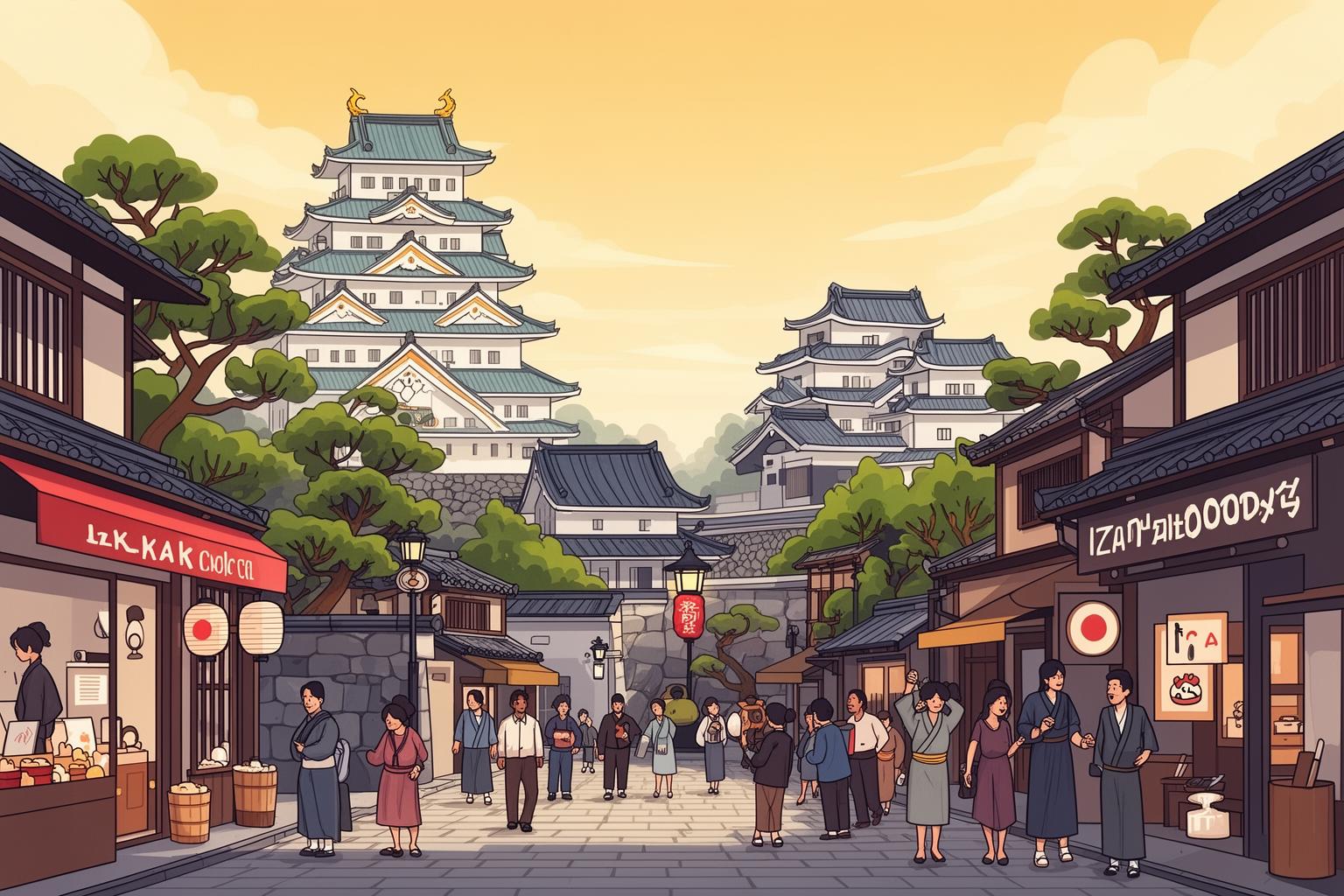
Alright, you’ve found your town, chosen a promising spot, and pulled aside the noren curtain. Now what? The izakaya has its own rhythm and social etiquette. It’s not complicated, but knowing a few unwritten rules will make your experience smoother, more immersive, and more respectful. This isn’t just about ordering food—it’s about engaging in a cultural institution.
More Than Just a Bar: The Izakaya’s Social Role
First, you need to understand what an izakaya is. The name literally means “stay-drink-place” (居酒屋). It’s not a bar, where alcohol is the main focus and food is secondary. Nor is it a restaurant, with a structured meal. It’s a vibrant, liminal third space where eating and drinking hold equal importance. Izakayas evolved from sake shops in the Edo period that started allowing customers to sit and drink on-site, eventually offering small snacks to accompany the drinks. They have long served as Japan’s living room, a space for after-work release, celebrations, and casual gatherings. In a society often formal and hierarchical, the izakaya acts as a pressure valve. It’s where coworkers can speak more openly, friends can relax, and the strict social rules of the office are temporarily loosened. Walking in means stepping into one of Japan’s key social arenas.
The Unspoken Rules of the Game
You don’t have to be fluent in Japanese, but understanding the flow will make you look like a pro. The experience is designed to be communal and leisurely, unfolding over the course of an evening.
Ordering Flow: The Sacred First Beer
Nine times out of ten, the first thing a group of Japanese people will say at an izakaya is, “Toriaezu, nama!” (とりあえず生ビール), meaning, “For now, draft beer!” It’s the default way to kick off the evening. Everyone orders a beer, clinks glasses (Kanpai!), and savors that first glorious sip. It’s a way to get things rolling while browsing the menu. From there, orders come in waves. Unlike in a Western restaurant, you don’t order your entire meal at once. Instead, you order a few small plates (otsumami), share them, get another round of drinks, then order more plates. The meal unfolds like a slow, meandering conversation between you, your companions, and the menu.
Otoshi: The Surprise Appetizer Explained
Soon after you order your first drink, your server will bring a small dish you didn’t order. This is the otoshi. For first-timers, this can be confusing—is it free? A mistake? Neither. The otoshi is a small, mandatory appetizer that also serves as a cover charge or table fee (seki-ryo). Instead of charging just for sitting, they provide something to nibble on while your initial orders are prepared. Don’t see it as a scam; it’s part of the system. It’s a gesture of hospitality marking the beginning of your meal. Often, the quality of the otoshi reflects the overall quality of the kitchen.
Mastering the Menu (Even if You Can’t Read It)
Old-school izakaya menus, especially in historic towns, can be intimidating—frequently handwritten in Japanese calligraphy on strips of paper pasted to the wall. But don’t worry. Your phone’s camera translator can be a lifesaver. If that doesn’t work, look for the magic word: osusume (おすすめ), meaning “recommendation.” Simply ask, “Osusume wa?” and staff will point out their best or most seasonal dishes. Pointing at what someone else is eating is another perfectly acceptable strategy. Key categories to know include yakimono (grilled items, like yakitori), agemono (fried dishes, like tempura or karaage), sashimi (raw fish), nimono (stewed dishes), and gohan-mono (rice dishes, usually eaten last). The goal is to enjoy a variety of flavors and textures.
The Art of Paying
When you’re ready to leave, don’t flag down your server to ask for the check at the table. Instead, get up, go to the front register (typically near the entrance), and signal that you’re ready to pay. They’ll have your bill waiting there. Tipping doesn’t exist in Japan; it’s simply not done. The price on the bill is what you pay. In smaller, older places, be prepared with cash, as credit cards may not be accepted. If you’re in a group, don’t expect the staff to split the bill evenly. Usually, one person pays the total, and the others reimburse them in cash. This group-oriented practice, called warikan, is a small but telling reflection of the communal nature of the izakaya experience itself.
The Verdict: So, Is the Samurai Vibe Real?
After all this—exploring the historical blueprint, searching for the ideal town, and unraveling the izakaya’s social customs—we return to the initial question: Can you truly find that solitary samurai atmosphere? The answer is a firm yes, but with an important qualification. The atmosphere isn’t something presented to you. It’s not found in a costume or a flawlessly staged tourist setting. It’s something you need to attune yourself to.
The “samurai vibe” is an ambient essence, a reverberation of history that lingers in the physical surroundings. It’s in the purposeful complexity of a twisting merchant street meant to deter invaders. It’s in the heavy silence of a samurai district, where towering mud walls still murmur secrecy and status. It’s in the formidable outline of a black castle beneath a stormy sky. These elements are genuine. They are the direct, unfiltered outcomes of a feudal society’s structure, fears, and aesthetics. They weren’t created for Instagram; they have simply endured.
That sensation you’re seeking, the feeling of being a lone figure moving through a story-rich landscape, is an inward experience. It arises in moments of quiet reflection. It happens when you’re the only person on a lantern-lit street after the day-trippers have left. It falls into place when you sit at a weathered wooden counter in a century-old building, sipping sake from a cup crafted from local clay, brewed with water from nearby mountains. It’s about linking the flavors of the food, the architectural style, and the profound history of the place you’re in.
The lone samurai in films was often an outsider, a wanderer witnessing a society in transition. To capture that feeling, you must adopt a similar perspective. Be an observer. Notice the details. Understand that the past isn’t truly gone here; it lies just beneath the surface of the present. The castle towns are not theme parks. They are genuine communities where people live and work, their modern lives unfolding amid an ancient setting. The izakaya is the ideal stage to witness this interaction. It’s where the place’s history meets the living culture of its people. The atmosphere is real, but you have to be willing to look beyond the surface and listen to the echoes.