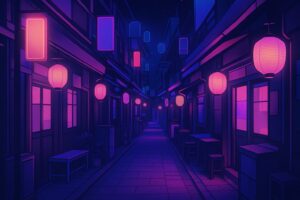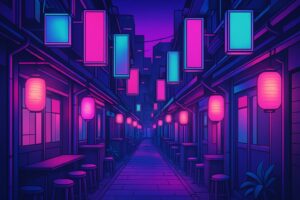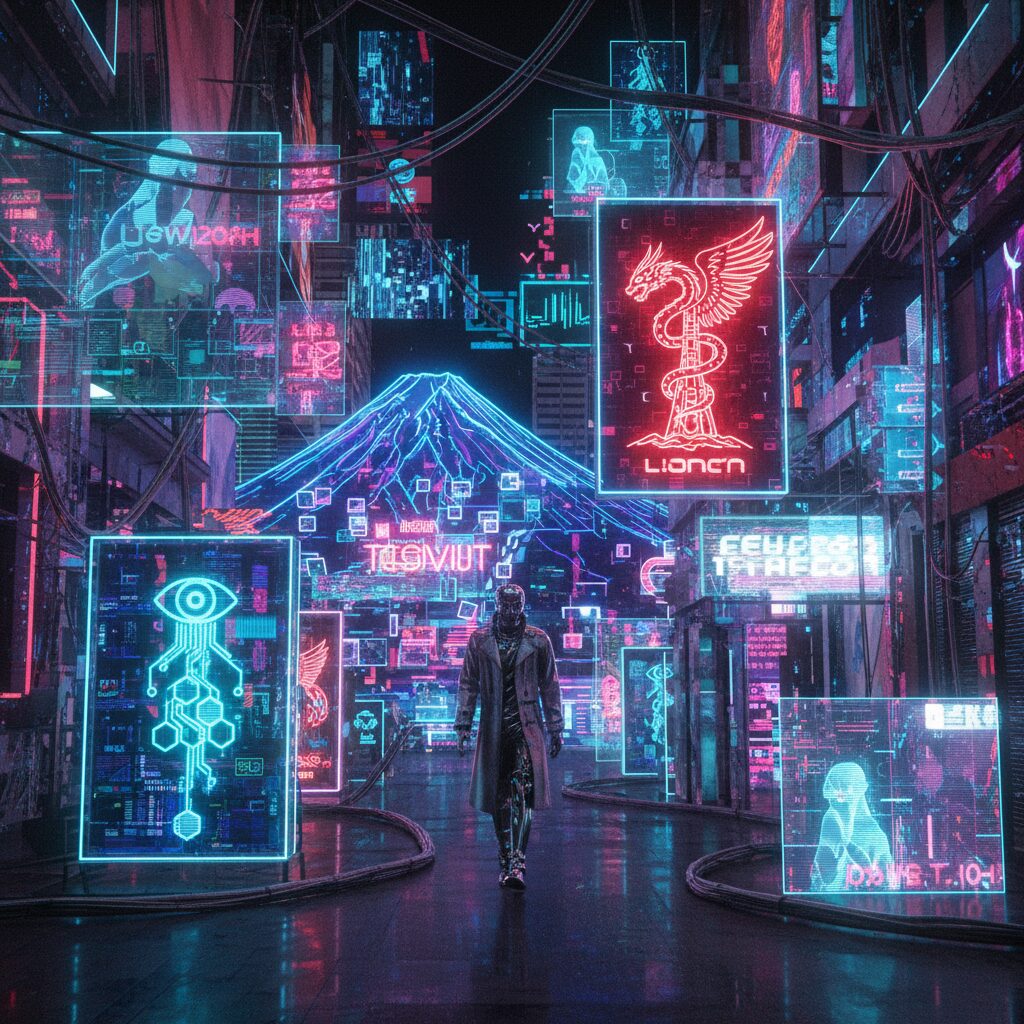
Yo, let’s get real for a sec. You’ve seen the photos, right? The ones that splash across your feed looking like a live-action scene straight out of Blade Runner 2049 or a panel from Akira. A narrow alley, so tight you could probably touch both walls. Steam hissing from a vent somewhere unseen. A chaotic tangle of wires drooping overhead like electric vines. And the neon—oh, the neon. Kanji characters glowing in electric pink, blue, and green, casting long, distorted shadows on the slick pavement below. It’s a whole vibe. The ultimate cyberpunk aesthetic. The question that hits different is: why? Is Japan just leaning into the aesthetic because it looks dope for tourists? Is this some meticulously crafted theme park experience designed to separate you from your yen? The short answer is nah. The long answer is way more interesting. It’s a story of accidental beauty born from post-war grit, social necessity, and the beautiful, chaotic mess of urban evolution. What you’re seeing isn’t a set piece; it’s a living, breathing, smoking, drinking fossil record of Tokyo’s past, hiding in plain sight. These places, these yokocho (side alleys), aren’t cyberpunk because someone designed them that way. They’re cyberpunk because history, struggle, and a whole lot of beer made them that way. Before we dive deep into the matrix of wires and smoke, let’s get our bearings.
To fully immerse yourself in this retro-futuristic aesthetic, you can also explore the vibrant chaos of Japanese game centers.
The Ghost in the Machine: Where the Vibe Comes From
To truly understand why these alleys resonate so deeply with the cyberpunk aesthetic, we need to rewind time—way back. We’re talking about post-World War II Japan. Cities like Tokyo were, to say the least, devastated. Bombed out, leveled, and grappling with severe shortages of everything: food, housing, jobs—you name it. Amid this destruction and disorder, something new had to emerge. And it did, naturally and without any grand design. This is where the yami-ichi, or black markets, come into play. These weren’t your typical farmers’ markets; they were sprawling, makeshift hubs of commerce and survival that sprang up near major train stations like Shinjuku and Ueno. People set up stalls, shacks, and carts selling whatever they could scavenge—from food and drink to everyday items. These spaces were gritty, unregulated, and absolutely crucial. Many of today’s yokocho are direct descendants of these post-war black markets. They took root in the cracks of the city, in narrow gaps between rebuilt buildings, along railway tracks, and in forgotten corners. Their layout wasn’t crafted by city planners with rulers and blueprints; it was driven by necessity, the path of least resistance, with people carving out a living inch by inch. This origin story forms the very foundation of the cyberpunk vibe. Cyberpunk as a genre is often summed up as “high tech, low life.” These alleys embody the “low life” aspect in full force. They stand as a testament to human resilience and ingenuity amid collapse. The haphazard, patched-together appearance isn’t just style; it’s a scar, a reminder of a time when people used whatever materials they could find to build a roof overhead and a counter to serve a drink.
Breaking Down the Aesthetic: It’s All in the Details
So, when you find yourself at the entrance of an alley like Shinjuku’s Omoide Yokocho, what exactly are you seeing that screams cyberpunk? Let’s dissect the visual language, because every element tells part of the story. You’ll quickly see it’s less about deliberate design and more about the beautiful, layered chaos of time.
The Wiring: A Tangled Network
First, look up. That chaotic mass of electrical wires and cables overhead is iconic. In many Western cities, utilities are buried underground for a clean, orderly look. In many parts of Tokyo, especially these older neighborhoods, that never happened. Why? For several reasons. It was cheaper and faster to string wires on poles during rapid post-war reconstruction and the economic boom that followed. It also made repairs and additions easier. As each tiny bar and eatery in the alley needed power, a new line was added. Then another for a phone. Another for an air conditioner. Another for a neon sign. Over decades, this created a dense, tangled web that looks like the city’s nervous system exposed to the elements. It’s functional, but not conventionally pretty. This is a visual representation of decades of unplanned, ad-hoc growth. This is pure cyberpunk imagery—the raw, unfiltered infrastructure of the city laid bare, a stark contrast to the sleek, wireless worlds we’re often promised.
The Signage: A Symphony of Neon and Paper
The neon lights are what grab your attention first. In the tight confines of a narrow alley, there’s no choice but to build up. Signs pile on top of one another, all competing for the attention of passersby. You see glowing plastic signs for Kirin Beer alongside weathered wooden boards with hand-painted kanji, buzzing neon signs advertising yakitori, and simple paper lanterns (chochin) casting a warm, soft glow. This vertical crowding of information, often in a language you might not understand, creates a sense of overwhelming yet beautiful sensory overload. It’s the urban environment singing a loud, chaotic chorus. In cyberpunk fiction, cities are often depicted as saturated with advertisements and corporate logos. Here, it’s less corporate and more fiercely independent. Each sign is a small business, a single proprietor shouting their presence into the night. The mix of old and new technologies—glowing LEDs, buzzing neon, and fragile paper—perfectly captures the genre’s theme of a future unevenly distributed.
The Scale: Human and Inhuman
The extreme narrowness of these alleys is key. They’re built on a human scale, designed for walking, not cars. This creates a sense of intimacy and sometimes claustrophobia. You brush past people, catch the smell of food from every stall, and hear conversations coming from five different bars at once. This dense sensory experience is then sharply contrasted by the towering skyscrapers of Shinjuku or Shibuya looming just beyond the alley’s entrance. You can be in a tiny, smoky wooden shack that seems unchanged since 1955, then step outside to see a 50-story building sparkling with futuristic lights. This jarring contrast in scale, between old and new, human and mega-corporate, is the very soul of the cyberpunk experience. It’s the friction between two worlds coexisting in the same physical space.
More Than Just a Vibe: The Social Function of the Yokocho
Alright, so we’ve confirmed that the alleys fit the image well. But if they were merely attractive, empty movie sets, they wouldn’t have survived for over 70 years. The real story is that these yokocho play an essential social role in Japanese society. They act as a pressure release valve for one of the most famously reserved and rule-bound cultures in the world. To grasp this, you need to understand the concept of uchi-soto, which roughly means “inside/outside.” In Japan, there are distinct modes of behavior depending on whether you’re dealing with your “inside” group (family, close colleagues) or the “outside” world (strangers, society at large). The public persona tends to be formal, polite, and emotionally restrained. But where do people go to relax, speak freely, and be their “true” selves? For many, particularly the generations of salarymen who shaped modern Japan, the answer was the izakaya.
The Izakaya: Japan’s Living Room
An izakaya is neither just a bar nor just a restaurant. It’s a third space, a home away from home. The izakayas that fill these alleys are often tiny, seating perhaps eight to ten people at a cramped counter. Private tables are rare or nonexistent. You’re literally sitting shoulder to shoulder with the person next to you, whether they’re a coworker or a complete stranger. This close proximity is intentional, not accidental. It dissolves normal social barriers. In the warm, smoky, and slightly tipsy environment of a small izakaya, the strict office hierarchies can soften. A junior employee might feel at ease joking with their boss. Strangers might strike up a conversation over a shared plate of motsuni (stewed offal). The taisho (master) of the place is more than just a cook or bartender; they act as the host, orchestrating the evening’s social interactions. They remember their regulars (joren), know their preferred drinks, and encourage conversation. This communal vibe is the heart of the yokocho. It’s a space for genuine human connection in a megacity that can often feel anonymous and isolating. It’s where people come to vent about work, celebrate small successes, or simply enjoy feeling part of a community for a few hours. This social role is what has kept these alleys vibrant and thriving, long after their original function as black markets has faded into the past.
A Tale of Two Alleys: Shinjuku’s Dueling Personalities
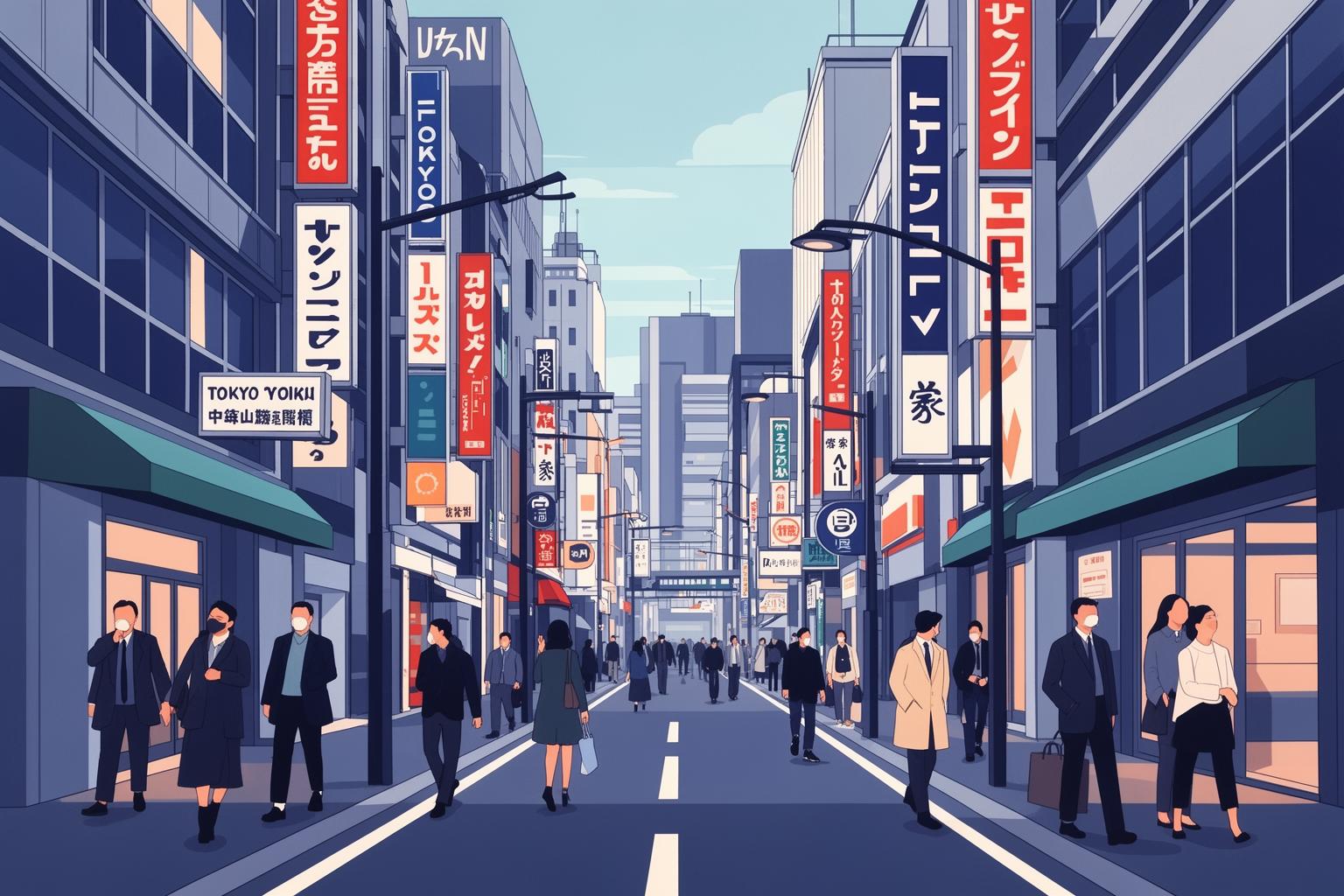
Not all yokocho are the same, and even within a single neighborhood, you can discover vastly different atmospheres. The two most renowned examples, both located in Shinjuku, serve as ideal case studies: Omoide Yokocho and Golden Gai. They share a post-war origin and a worn, rustic charm, yet their moods couldn’t be more distinct. Experiencing both in one evening offers a masterclass in the subtleties of Tokyo’s nightlife culture.
Omoide Yokocho: Memory Lane’s Smoky Embrace
Officially named Omoide Yokocho, which means “Memory Lane,” locals often refer to it by its more infamous nickname: “Piss Alley.” Yes, you read that correctly. The nickname dates back to the early post-war period when there were no proper restroom facilities and patrons would relieve themselves on nearby train tracks. Although modern toilets are now available, this gritty, unpretentious moniker has endured, perfectly capturing the spirit of the area. Omoide Yokocho is loud, smoky, and thoroughly democratic. It consists of dozens of tiny eateries, most specializing in one thing: yakitori—skewers of grilled chicken, pork, and vegetables cooked over charcoal. Upon stepping into the alley, the thick, savory smoke hits you instantly, clinging to your clothes and hair—a souvenir you’ll carry whether you want to or not. The atmosphere is open and generally welcoming. The stalls have open fronts spilling into the narrow walkway. You can watch everything being cooked, hear the sizzle of the grill, and feel the heat. It’s a spot for a quick beer and a few skewers after work—welcoming to salarymen, students, and tourists alike. The entry barrier is low: find an empty seat, point at what you want, and you’re in. It feels ancient and chaotic, a direct, unbroken link to the yami-ichi of the 1940s. It represents the raw, unfiltered, working-class core of the yokocho experience.
Golden Gai: A Labyrinth of Intimacy and Art
A short walk from Omoide Yokocho lies another, very different realm: Golden Gai. This area is not just one alley but a tight cluster of six, packed with over 200 tiny bars. If Omoide Yokocho is a sprawling, smoky public square, Golden Gai is like a secret, exclusive library. The buildings here are mostly two-story, rickety wooden structures that have miraculously survived fires and redevelopment plans. Many bars are so small they seat only five or six people. Climbing the notoriously steep, narrow staircases to a second-floor bar is a rite of passage. The history here centers less on black markets and more on counter-culture. In the 60s and 70s, Golden Gai became a refuge for artists, writers, musicians, filmmakers, and intellectuals. Each tiny bar developed its own unique personality, often reflecting the interests of its owner or “Master.” One bar might focus on vintage punk rock, another on classic literature, another on arthouse cinema. This history has shaped a very different social dynamic. Many Golden Gai bars have a cover charge, and some have an unspoken (or sometimes explicit) preference for regulars. The vibe can feel more intimidating to first-timers. You’re not just entering a bar; you’re stepping into a very small, specific social club. This reflects the concept of ichigensan okotowari (refusing first-time customers) in a gentler form. While tourism has encouraged many bars to be more open, the core values of intimacy and shared interests endure. A night in Golden Gai is about conversation, discovering a tiny room that matches your vibe, and becoming a temporary member of a highly exclusive world. It’s the artsy, intellectual, and slightly more daunting cousin to Omoide Yokocho’s blue-collar straightforwardness.
The Instagram Effect: Authenticity in the Age of a Thousand Photos
Here’s the paradox we need to discuss. These alleys have become world-famous precisely because they feel so “real,” so “authentic,” so untouched by the glossy modernity that defines much of Tokyo. Yet, their very popularity, boosted by countless Instagram posts and travel blogs, puts that authenticity at risk. The tourist gaze has a peculiar way of transforming what it observes. The arrival of foreign visitors has often been a lifeline for these areas, bringing in funds that help preserve the aging structures and support small business owners. Many alleys now offer English menus and staff accustomed to interacting with non-Japanese speakers, making them more accessible, which is positive. However, there is a downside. On a busy evening, places like Omoide Yokocho can feel less like local hangouts and more like tourist spots. You might find more people photographing their food than engaging in conversation. Additionally, some newer establishments in or near these areas are designed to look like old yokocho, creating a kind of “Showa-retro” theme park version of the genuine article. So, is it still worth visiting? Absolutely. But you need to adjust your expectations. You are not a bold explorer uncovering a hidden world; you are a visitor engaging with a living, evolving piece of cultural history. The key is to look beyond the crowds and focus on the details: the vintage posters on the walls, the skilled taisho expertly flipping skewers over the grill, the laughter of Japanese office workers gathered at the counter. The authenticity remains, but you may have to search a bit harder for it. It’s less about uncovering a secret and more about respectfully observing a culture that has generously opened its living room to the world.
So, the next time you see an incredible photo of a Tokyo alley, you’ll understand. It’s not a fabricated scene for cyberpunk enthusiasts—it’s quite the opposite. Cyberpunk as a genre was inspired by the reality of places like this: dense, chaotic, layered, and deeply human pockets of a hyper-modern city. What you’re witnessing is the beautiful, unintentional poetry of urban survival. It’s a narrative written in tangled wires, greasy smoke, and glowing neon—a mix of past, present, and a distinct sort of future, all compressed into one impossibly narrow space. And that’s a vibe that can’t be faked.