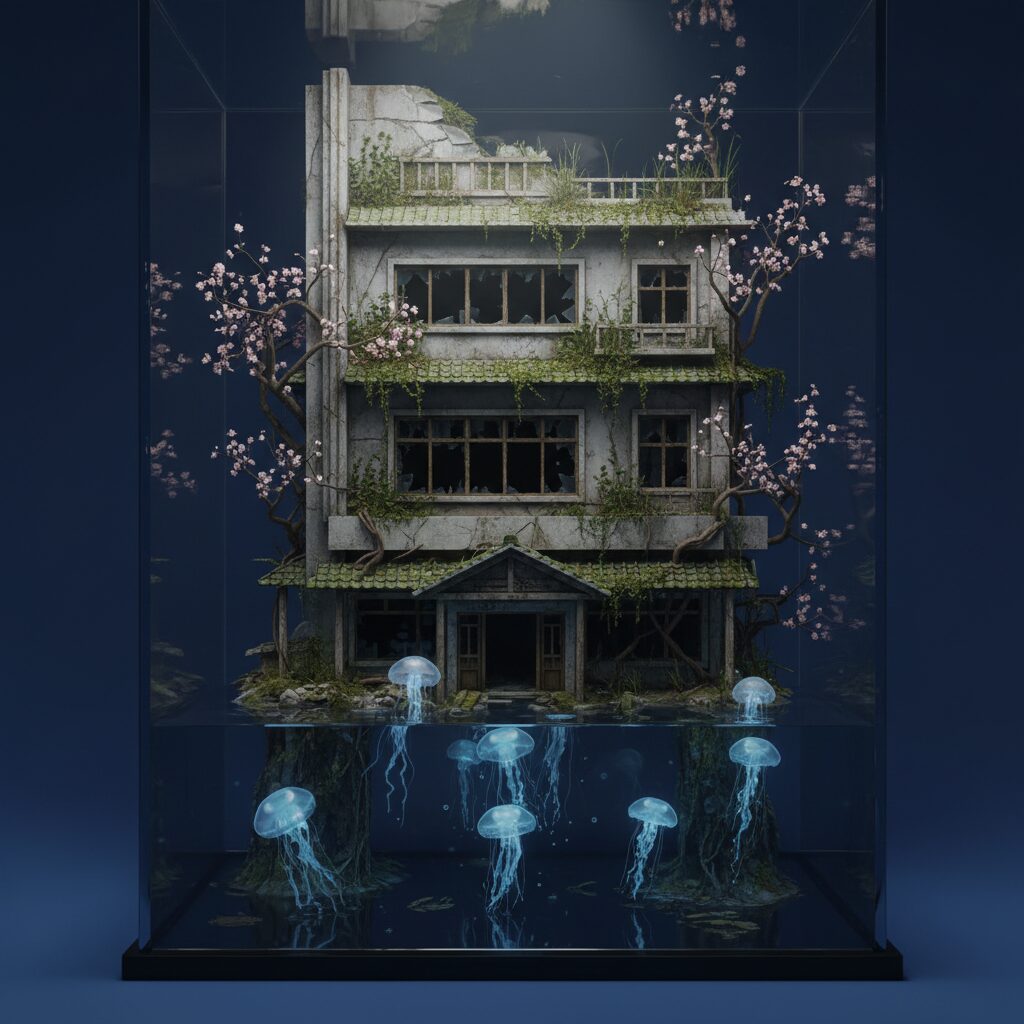
Yo, what’s good? Hiroshi here. So let’s talk real for a sec. You’ve been scrolling, right? Deep on the ‘gram or some random Reddit thread, and you see it. A picture from Japan. But it’s not glowing neon in Shinjuku or some serene temple in Kyoto. It’s this… massive, empty hotel. It’s got this crazy perfect symmetry, all done up in faded pastel pinks and mint greens, sitting lonely in the middle of a forest or overlooking a grey sea. The caption probably says something like “Accidental Wes Anderson,” and yeah, you totally see it. It’s got the vibe. The Grand Budapest Hotel, but make it haunted. And you’re thinking, “That’s sick, but also… what the actual heck is going on?” Why are there so many of these majestic, melancholy giants just… left to rot all over Japan? Is this a thing? Yeah, it’s a thing. And trust me, the story behind them is way wilder than any movie. These aren’t just cool ruins for urban explorers, or what we call `haikyo`. They’re legit monuments to a time when Japan was basically on economic god mode, a period so insane it feels like a collective fever dream. They are the ghosts of the Bubble Era, or `baburu jidai` (バブル時代), and understanding why they exist is like unlocking a major cheat code to understanding modern Japan’s psyche, its ambitions, and its epic, decade-spanning hangover. This isn’t just about abandoned buildings; it’s about an abandoned future. It’s the story of a party that was so lit, no one realized the house was on fire until the morning after. And these hotels are the empty, confetti-strewn rooms left behind for us to puzzle over. Before we dive into this economic ghost story, let’s get a feel for the landscape where many of these dreams were built, and where they now lie sleeping.
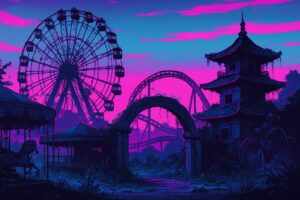
These abandoned hotels are not alone in their haunting beauty, as you can also find a similar melancholic atmosphere in Japan’s ruined theme parks.
The Bubble Era: Japan on Economic God Mode
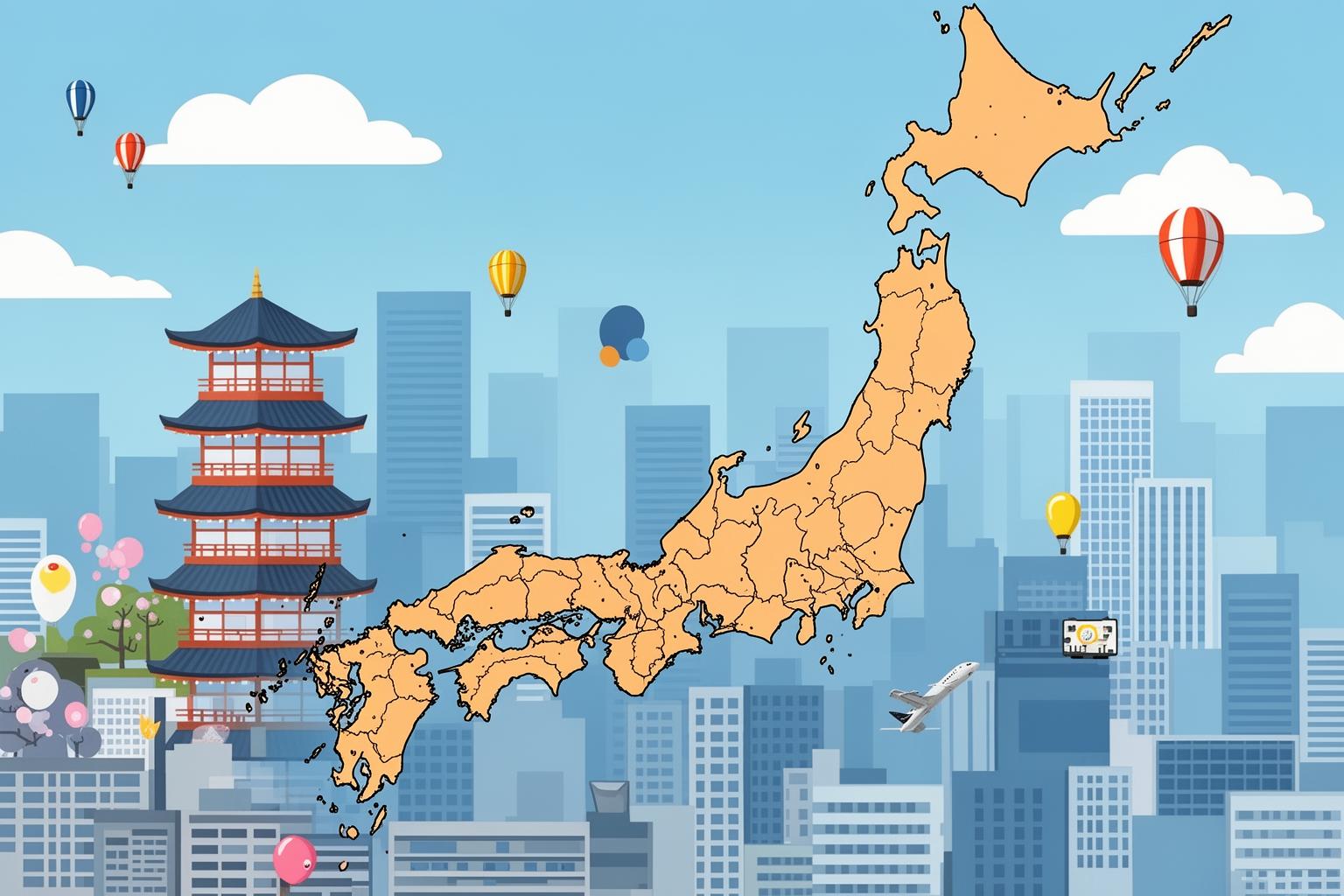
To understand why these Wes Anderson-style resorts are found scattered throughout Japan’s countryside, you need to grasp the absolute mania of the late 1980s. This era wasn’t just marked by a strong economy; it was a speculative frenzy that defied all logic. We call it the “baburu jidai,” the Bubble Era, and it was quite the experience.
So, What Was the “Bubble”?
Imagine this: from around 1986 to 1991, Japan’s economy soared at an incredible pace. The stock market, the Nikkei, climbed to seemingly impossible heights. Land prices became so exorbitant that it was rumored the grounds of the Imperial Palace in Tokyo were worth more than the entire state of California. This wasn’t based on actual value; it was pure speculation. Everyone believed prices would only keep rising. Forever. It became a national mindset of untouchable financial strength.
Think of it like this: it was as if the whole country collectively believed they had discovered an infinite money glitch. Companies were swimming in so much cash, they literally didn’t know how to spend it all. Tales from that era are legendary and almost sound fabricated. Executives took helicopters to work to avoid traffic. Business dinners featured sushi adorned with edible gold leaf, and corporate expense accounts were virtually bottomless pits of extravagant spending. There was a widespread, unshakable confidence that Japan was the new center of the economic universe, and that this level of prosperity was the new normal. It was a potent mix of ambition, pride, and a dangerous detachment from reality. This wasn’t just about wealth; it was about showcasing riches in the most ostentatious ways possible. And when you have that much money and confidence flowing freely, you begin looking for grand projects to invest in.
The Resort Mania: If You Build It, They Will Come (Right?)
Enter the great Japanese resort boom. The government, also riding this wave of hyper-optimism, decided to funnel this momentum into rural areas. In 1987, they passed the Comprehensive Resort Area Development Act, or the “Resort Law.” The idea seemed sound at the time: encourage big city corporations to build lavish resorts in rural, depopulating regions to boost local economies and provide the newly wealthy urbanites with places to spend their money and leisure time.
The law offered a mix of attractive incentives—tax breaks, low-interest loans, and simplified approvals. For cash-rich companies, this was a green light for an all-out construction spree. It became a matter of corporate prestige. If you were a major player, you had to own a resort. A sprawling golf course, a state-of-the-art ski lodge, a Mediterranean-themed seaside hotel complex—it was the ultimate corporate status symbol. The reasoning was driven by pure bubble mentality: build it, and people will come. They assumed the endless flow of wealthy Tokyoites would happily drive hours to their remote, luxurious retreats. They envisioned a future where every weekend was a holiday and every family could afford an extravagant getaway. The catch? They were building for a fantasy, a level of endless economic prosperity that was, in reality, just a short-lived, artificial glow.
The Architecture of Optimism: Why They Look So… Wes Anderson
The reason these ruins evoke such a distinct visual impression—that symmetrical, pastel, melancholic atmosphere—is no coincidence. It directly stems from the Bubble Era’s peculiar cultural ambitions. The design of these hotels reveals everything you need to understand about the aspirations and illusions of that period.
The “European Fantasy” Aesthetic
One of the most remarkable aspects of these resorts is how completely un-Japanese they appear. Minimalist `wabi-sabi` aesthetics are nowhere to be found here. Far from it. This was the era of extravagant, imported fantasy. The dream wasn’t a refined Japanese `ryokan` (traditional inn); it was a full-fledged European getaway without the need for a passport. Architects were commissioned to produce imitations of foreign elegance. In the mountains of Nagano or Niigata, sprawling resorts resembling Swiss alpine chalets or Bavarian castles emerged. Along the coasts of the Izu or Boso Peninsulas, gleaming white hotels were built to recall the French Riviera or a Greek island village.
Why the fascination with Europe? Because at that time, traveling abroad was the ultimate symbol of status and sophistication. For the average Japanese family, it remained a major endeavor. These resorts provided an alternative: a domestic version, a carefully crafted replica of a foreign fantasy. It was about consuming the image of luxury. You could pose for photos in front of a fake Eiffel Tower, dine in a faux-Italian trattoria, and sleep in a room furnished in the Louis XIV style—all within a few hours’ drive from Tokyo. It was a kind of cultural cosplay, a stage set for the emerging Japanese elite to enact their dreams of worldly leisure. The designs were inherently theatrical, intended to be photographed and to whisk guests away to an idealized, imaginary world far removed from the drab realities of city life.
Symmetry, Pastels, and Grand Folly
Here lies the essence of the Wes Anderson comparison. The filmmaker’s signature style relies on elements like strict symmetry, precisely arranged shots, and distinctive color schemes. Bubble-Era architects embraced these same concepts, albeit for different purposes. Grand, symmetrical facades quickly conveyed wealth, order, and classical European luxury. A flawlessly balanced building featuring a grand central entrance, matching wings extending on both sides, and a sweeping, impeccably maintained driveway shouted, “This place is important. This place is expensive.” It was architecture designed to command immediate respect.
The color choices were another crucial aspect. The now-faded mint greens, dusty rose pinks, and soft yellows were extremely fashionable in the late 1980s and early 1990s. They aimed to evoke cheerfulness, lightness, and aspiration—the hues of leisure and carefree vacations. Years of exposure to sun, rain, and neglect have faded them into the subdued, melancholic shades we see today, adding a layer of poignancy to their original brightness. This unintended aging process is what imparts their perfect nostalgic charm.
Then there was the sheer extravagance of everything. These places were filled with elements of grand folly. Think massive ballrooms with crystal chandeliers that never hosted a single event. Ornate spiral staircases leading to empty observation decks. Indoor water parks with wave machines that operated only briefly. Heart-shaped jacuzzis in honeymoon suites. The interiors were a lavish mix of faux marble, brass railings, and plush, patterned carpets. Every detail was crafted to project boundless wealth. Functionality was secondary; the goal was to evoke a feeling, to create an overwhelming sense of lavish fantasy. This commitment to a slightly off-kilter, over-the-top style is what makes them resemble a movie set for a film that was never produced.
The Hangover: The Pop and the Aftermath
Every wild party comes with a morning after. For Japan, the dawn of January 1992 was a harsh awakening. The music didn’t just taper off; it came to an abrupt, jarring stop. The Bubble, which had appeared so solid and unstoppable, had burst. And the resulting hangover would linger for decades.
When the Music Stopped: The Bubble Bursts
The collapse was sudden and unforgiving. The stock market, which had fueled all the wealth, plunged sharply, losing nearly half its value in a brief span. The vastly inflated real estate market collapsed. Suddenly, land once worth a fortune was valued at only a fraction of its peak price, while the massive loans secured against that land remained very real. The endless flow of easy money that had financed everything from gold-leaf sushi restaurants to Swiss-chalet resorts completely dried up.
The resort boom’s consequences were devastating. Companies that had borrowed billions to build their extravagant projects were now burdened with crippling debt and assets that were essentially worthless. Many of these grand hotels and resorts were still under construction as the crash occurred. They were immediately abandoned, leaving skeletons of concrete and steel to decay. Others had recently opened, only to find the affluent tourists they had counted on had vanished. People were losing jobs, not planning lavish ski vacations. These luxurious resorts, built for a future of limitless prosperity, became obsolete overnight. They were grand answers to a problem—excess leisure and cash—that no longer existed.
The “Lost Decade(s)”: Why They’re Still Standing
This brings up the question you’re likely asking: “Okay, the bubble burst thirty years ago. Why do these massive buildings still stand? Why hasn’t anyone torn them down?” The answer lies in a complicated mix of economics, legal entanglements, and a uniquely Japanese form of cultural inertia.
First, the hard truth about money. Demolishing a massive concrete structure in Japan is prohibitively expensive. These resorts are often situated in remote, mountainous areas, making it difficult and costly to bring in heavy equipment. Additionally, many buildings from this period contain asbestos and other hazardous materials, requiring specialized, meticulous, and thus very costly removal processes. In nearly every case, the cost of demolition far exceeds the value of the vacant land beneath. There is simply no financial motivation to clear the site.
Second, the legal morass. Ownership of these properties is frequently an impenetrable snarl. The original company that built the resort went bankrupt. The property was then sold for a fraction of its value to a second investment firm, which also failed. Sometimes it passed through multiple shell corporations. Decades later, it is often unclear who legally owns the land or is responsible for maintaining or demolishing it. Property taxes go unpaid, and local governments, already stretched thin, lack the resources to engage in lengthy legal battles to seize ownership and pay the multi-million-dollar demolition costs themselves. It’s a situation of complete ownership limbo.
Lastly, there is a cultural mindset at work, a kind of resigned acceptance known as `shouganai` (しょうがない), roughly meaning “it can’t be helped.” The problem is so enormous, expensive, and legally complex that all involved— from local officials to surrounding communities—find it easier to simply ignore it. The ruins become part of the landscape, silent concrete mountains that everyone eventually accepts. They stand as a tangible symbol of a national mistake, a monument to a collective failure too big and awkward to address, left to slowly and quietly decay.
Reading the Ruins: More Than Just Urbex Porn
These locations are more than mere spooky, photogenic backdrops for urban explorers; they serve as historical documents. Viewing them is like reading a story about a very specific moment in time—a narrative of ambition, failure, and the peculiar beauty found in decay.
A Time Capsule of a Forgotten Future
To glimpse inside one of these places (through photos and videos, naturally) is to enter a time capsule—not of the past, but of a past vision of the future. The remnants left behind capture the moment the celebration ended. You’ll find bulky CRT televisions still in hotel rooms, rotary or early push-button phones on reception desks, and guest ledgers open to the final day of business in 1992. The furniture, carpets, and wallpaper are all impeccably preserved artifacts of late-80s interior design. Nature is gradually reclaiming these man-made structures: vines creep through broken windows, moss carpets the once-plush floors, and water stains create abstract murals on the walls. It stands as a powerful, tangible reminder of a future that never came to be—a ghost of promised prosperity and a silent testament to how swiftly and completely a nation’s path can change.
Mono no Aware: The Beauty of Impermanence
Although the Bubble Era was characterized by gaudy excess and a rejection of traditional Japanese aesthetics, the ruins of that era have, ironically, become perfect embodiments of a deeply traditional Japanese concept: `mono no aware` (物の哀れ). This foundational cultural idea is often translated as “the pathos of things” or “a gentle sadness for their passing.” It reflects the bittersweet awareness that all things are transient—the feeling evoked when watching cherry blossoms fall, knowing their beauty lies precisely in their fleeting nature.
These abandoned hotels represent `mono no aware` on a grand scale. Once symbols of strength, permanence, and endless growth, they now, through their slow, silent decay, evoke a profound sense of impermanence. There is a quiet beauty in seeing a grand ballroom, once filled with laughter and music, now enveloped in silence and encroaching nature. This is not merely a sad scene; for many Japanese, it resonates deeply and movingly. The fascination with these `haikyo` goes beyond the thrill of exploration; it connects with this profound cultural sentiment. The ruins offer a powerful meditation on human hubris and the inevitable triumph of time and nature. They are beautiful not despite their decay, but because of it.
So, Should You Go Hunting for Wes Anderson’s Japan?
After all this, you might be thinking, “Okay, I get it. Now I want to see it.” Hold on. While the stories and photos are captivating, it’s essential to grasp the reality of `haikyo` exploration in Japan.
The Reality of `Haikyo` (Ruins Exploration)
Let’s be perfectly clear: entering these sites is a bad idea. First and foremost, it is trespassing and illegal. You risk arrest and fines. More importantly, it is extremely dangerous. These buildings have been deteriorating for thirty years. Floors are weak, ceilings collapse, and staircases can give way without warning. They often contain hazardous materials like asbestos and broken glass, and can house wildlife such as hornets, wild boar, or even bears. Often located in remote areas without cell phone coverage, if you get injured, help is unlikely to arrive quickly. The community of devoted Japanese `haikyo` explorers follows a strict code of ethics—“take only pictures, leave only footprints”—yet even they face considerable legal and physical dangers. These places are not tourist attractions; they are hazardous and off-limits.
The Vibe is the Destination
So, how can you experience this unique aesthetic without breaking the law or risking your safety? The key is to seek out the echoes of the Bubble Era that lie openly throughout Japan. You don’t need to enter ruins to capture the vibe.
Drive through a ski resort town like Naeba or the hot spring areas of the Izu Peninsula. You’ll find plenty of hotels built during the bubble that have endured. They may not be abandoned, but they often feel as if they’re frozen in time. The grand, slightly oversized lobbies, dated color schemes, ambitious yet now quiet amenities—the spirit of the Bubble Era lingers. Staying in one feels like sleeping in a museum of the 1980s. Visit an old-school `kissaten` (coffee shop) with plush velvet seats and ornate lighting. Explore a slightly faded tourist spot in a rural area that clearly thrived decades ago. The Bubble Era’s aesthetic—that grand, optimistic, slightly kitschy, and now nostalgic vibe—is interwoven into modern Japan’s landscape. You just need to know where to look. The goal isn’t to find a ruin; it’s to understand a feeling, an era. And that feeling is everywhere.
The Ghost in the Machine
So, the next time you come across a photo of a perfectly symmetrical, pastel-colored abandoned hotel in Japan, you’ll understand what you’re truly seeing. It’s not just a cool, eerie building or an “Accidental Wes Anderson” set piece. You’re witnessing the ghost of a specific, bombastic, and uniquely vivid moment in history. You’re looking at a monument to the `baburu jidai`.
These buildings are the tangible remnants of a national dream of unending economic dominance. They were constructed with the boundless optimism of a nation that believed it had conquered the 20th century, only to be overtaken by the harsh realities of the 21st. They stand as quiet, beautiful, and slightly absurd warnings of what happens when ambition surpasses reality. They tell a story of hubris, collapse, and the strange, melancholic beauty found in failure. And that, you must admit, is a story far more captivating than any film.