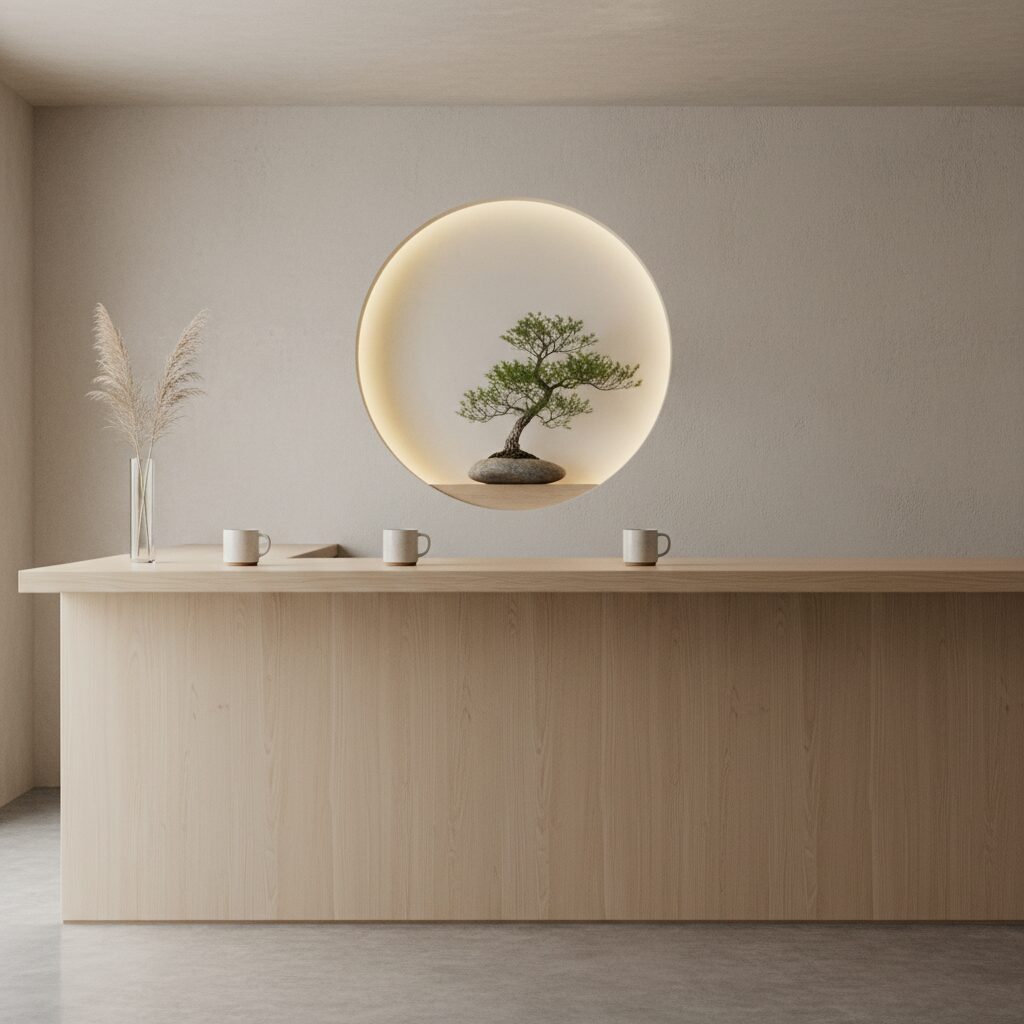
Yo, what’s good? Taro here. Let’s talk about something you’ve definitely seen flooding your social media feeds if you have even a passing interest in Japan. I’m talking about those cafes. You know the ones: stark grey walls, maybe a single wooden bench, and a lone, perfectly placed plant in the corner. It’s all exposed concrete, sharp lines, and so much empty space you could probably park a car in it. Your first thought might be, ‘Is this place still under construction?’ or ‘Did they forget to buy furniture?’ It’s a legit question. It seems cold, unwelcoming, almost sterile. It’s a universe away from the cozy, cluttered, ‘Friends’-style coffee shop vibe we’re used to in many parts of the world. It also clashes with the other images of Japan you might have in your head—the neon-drenched streets of Shinjuku, the hyper-cute ‘kawaii’ culture of Harajuku, or the serene, ancient temples of Kyoto. So what’s the deal with these concrete bunkers serving lattes? Why is this raw, unfinished look such a massive mood in Japan right now? Bet. Let’s get into it. This isn’t just a fleeting trend or architects being lazy. This whole minimalist cafe scene is a deep, full-on immersion into some core Japanese philosophies that have been around for centuries, just remixed for the 21st century. We’re talking about concepts like wabi-sabi, the beauty of imperfection, and Ma, the power of negative space. It’s a deliberate, calculated retreat from the sensory overload of modern Japanese urban life. It’s a statement. It’s a sanctuary. It’s a way of recalibrating your brain and forcing you to focus on one thing: the damn good cup of coffee in your hand. Before we break down the cultural DNA of these spaces, here’s a pin to get you oriented. This spot is a classic example of the vibe we’re about to explore.
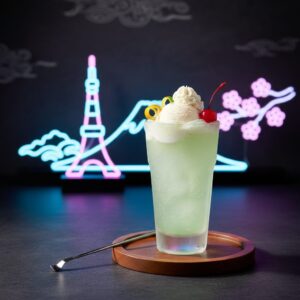
If you’re intrigued by how Japan’s cafe culture can transform a simple beverage into a cultural experience, you’ll definitely want to explore the Tokyo cream soda craze.
The ‘Why’ Behind the Grey Walls: Wabi-Sabi Goes Modern
So, first things first, let’s dive into the big concept: wabi-sabi. You’ve likely heard the term tossed around, often linked with cracked pottery or moss-covered gardens. But it’s not just some old, dusty idea; it’s a vibrant, living philosophy deeply rooted in the Japanese mindset. And it’s the main reason these concrete cafes exist.
Breaking Down Wabi-Sabi (But Keep It Easygoing)
Set aside the heavy, academic explanations for now. At its heart, wabi-sabi is about appreciating beauty that is ‘imperfect, impermanent, and incomplete.’ It’s a way of seeing value in the humble, the rustic, and the unconventional. Imagine this: you have two bowls. One is a perfectly symmetrical, mass-produced ceramic bowl from a factory. The other is a handmade bowl, slightly irregular, with a subtle crack on the rim repaired with gold—a technique known as kintsugi. The first bowl is flawless but lacks soul. The second has a history. It has character. It’s lived. That second bowl? That’s wabi-sabi.
This idea goes back centuries, most famously to the 16th-century tea master, Sen no Rikyū. He transformed the Japanese tea ceremony by rejecting the ornate, flashy Chinese utensils favored by the elite at the time. Instead, he preferred simple, rustic, and sometimes even imperfect pieces made by local Korean and Japanese craftsmen. He taught that true beauty and spiritual fulfillment come from simplicity and austerity. He designed tea rooms as tiny, unadorned huts with mud walls and minimal decoration, focusing attention on the ritual and the host-guest connection.
Fast forward to today. How does that relate to a cafe in Shibuya? Exposed concrete is the 21st-century counterpart to Rikyū’s rustic tea bowl. Concrete as a material is raw, honest, and unpretentious. It doesn’t disguise itself. When you look at an exposed concrete wall, you see everything—the texture left by wooden molds, tiny air bubbles called ‘bug holes,’ subtle shifts in color and tone. It’s not polished to a high gloss or disguised with wallpaper or paint. The architect essentially says, ‘This is the material in its true form. It’s flawed, it’s raw, and that’s where its beauty is.’ The scuffs on the floor, the way the wall ages—all add to its character. It embraces impermanence. The space isn’t striving for perfection; it’s designed to evolve and show its wear gracefully, just like that wabi-sabi tea bowl.
A Visual Break from ‘Kawaii’ Overload
To understand why this minimalist style resonates so strongly in Japan, you need to see what it’s reacting against. Life in a major Japanese city, especially Tokyo, is an intense sensory onslaught. From the moment you step outside, you’re overwhelmed. Train stations are filled with announcements, jingles, and hurried crowds. The streets burst with flashing neon signs, giant video billboards, and colorful ads. Stores pump out J-pop at ear-splitting volumes. This is a Japan of sensory maximalism.
Then there’s the ‘kawaii’ culture, or cuteness. It’s everywhere. From bank mascots to government posters to food packaging, everything is personified with big eyes and cheerful smiles. While endearing, it can also be relentless. This nonstop demand for your attention, this unending stream of stimulation, can be utterly exhausting.
Enter the concrete cafe. It stands as the opposite of all this. It’s a conscious act of sensory reduction. Stepping into one of these spaces from a chaotic Harajuku street feels like entering a soundproof room. The visual clutter vanishes. The palette shrinks to shades of gray, black, and wood. Silence is broken only by the soft hiss of the espresso machine and the gentle clink of ceramics on concrete. It’s a refuge. A place to reset frazzled nerves. It’s not a rejection of Japan’s vibrant, chaotic energy, but a much-needed balance. In a culture that often swings between extremes—intense, crowded cities and serene, empty nature—these cafes serve as small, human-made pockets of calm carved out of the urban frenzy. They’re a modern form of meditation, spaces designed to offer a moment of peace and clarity within the beautiful chaos.
The Power of Nothing: Understanding Ma (間)
If wabi-sabi captures the texture and ‘feel’ of these cafes, then the concept of Ma explains their layout and structure. When you enter one and your initial reaction is ‘wow, it’s so empty,’ you’re not observing a lack of design; you’re witnessing a very intentional and powerful design choice. You are experiencing Ma.
More Than Just Empty Space
Ma (間) is one of those quintessentially Japanese ideas that is notoriously difficult to express with a single English word. It’s often translated as ’emptiness’ or ‘negative space,’ but these terms don’t fully encompass its meaning. Ma is not simply a void; it is the ‘interval’ or the ‘space between things’ that gives form and significance to the things themselves. It’s the silence between notes in music that shapes rhythm and melody. It’s the unpainted silk on a scroll that draws attention to the brushstrokes of calligraphy. It’s the pause in conversation that adds depth and feeling to spoken words. Ma is the deliberate, active use of absence to create a richer experience.
This concept is fundamental to all forms of Japanese art and design. In traditional Japanese architecture, it appears in the engawa, the veranda-like space that is neither fully inside nor outside, establishing a smooth transition between home and garden. In ikebana, the art of flower arranging, the focus is as much on the spaces between flowers and branches as on the flowers themselves. The objective is not to fill the vase but to achieve a harmonious balance between presence and emptiness.
So, when you encounter a minimalist cafe with just a few stools spaced widely along a long concrete counter, the architect is employing Ma. The expansive empty space isn’t wasted; it is the focal point. This emptiness serves a purpose. It directs your attention. With no clutter, no posters on the walls, no bookshelves to peruse, your focus naturally falls on the few elements present: the barista performing the precise pour-over ritual, the steam rising from your cup, the subtle dance of light and shadow on the concrete wall as the sun moves across the sky. The emptiness enhances the sensory experience. It encourages you to slow down, be present, and savor the details. The space itself becomes an active participant in the coffee-drinking experience.
Designing for Focus, Not Distraction
This design philosophy represents a stark contrast to the dominant cafe culture in many Western countries. The typical Western cafe aims to be a ‘third place’—a home away from home. It seeks to create a cozy, comfortable, and stimulating atmosphere. It is filled with plush sofas, communal tables designed to encourage interaction, eclectic art, and shelves crowded with books. These spaces are made for lingering, socializing, and working.
Japanese minimalist cafes, by contrast, often serve a different purpose. They are less social clubs and more like temples for contemplation. The design intentionally removes all non-essential elements to cultivate an environment of pure focus. It is a space for an intimate, one-on-one experience between you and your coffee. Hard stools and backless benches are not oversights; they subtly signal that this is not a place to settle in for hours with a laptop. The absence of Wi-Fi or power outlets in many such places reinforces this notion. The intent is not to be unwelcoming but to encourage a different kind of engagement.
It’s about nurturing a moment of deep, mindful appreciation. Every aspect—from the architecture to the furniture to the acoustics—is tuned to enhance the flavor of the coffee. This philosophy aligns with the Japanese concept of kodawari, which can be understood as a relentless, almost obsessive dedication to one’s craft. The baristas in these cafes are artisans, and the minimalist space is the gallery showcasing their skill. You are not merely a customer; you are an audience, invited to witness and value their mastery. It is a brief, powerful, and restorative experience—a deliberate pause in the unending rush of your day.
Concrete Dreams: The Architectural Influence
The widespread use of exposed concrete in Japan is not a spontaneous aesthetic trend that emerged overnight. It is rooted in a rich and influential architectural tradition, with one figure standing out above all: Tadao Ando. To truly appreciate these cafes, one must first grasp his impact.
The Legacy of Tadao Ando
Tadao Ando is, to say the least, an architectural giant. A living legend, he is renowned for creating powerful, spiritual spaces primarily using exposed concrete. What makes his journey even more remarkable is that he is entirely self-taught. Once a professional boxer, Ando chose to pursue architecture in his twenties without formal university education. He educated himself through books, night classes, and extensive travels to study iconic buildings—from Rome’s Pantheon to Le Corbusier’s masterpieces.
When Ando returned to Japan and launched his practice in Osaka in 1969, he began shaping a distinctive style unlike any other. He transformed concrete—a cheap, industrial, and commonplace material—into a medium of poetic expression. His philosophy revolved around core principles: the use of simple, raw materials (notably his signature silky-smooth concrete), the crafting of complex spatial flows, and above all, the brilliant use of natural light. Ando asserts that light breathes life into architecture, famously stating, “I think architecture becomes interesting when it has a double character, that is, when it is as simple as possible but, at the same time as complex as possible.”
His structures often resemble austere, fortress-like exteriors but reveal sanctuaries of stunning beauty inside. A quintessential example is the ‘Church of the Light’ near Osaka—a simple concrete box where a cruciform slit cut into the wall behind the altar lets morning sunlight pour in, forming a luminous cross that enlivens the dark interior. This effect, created with minimal means, evokes a deeply moving experience. Similarly, his work on Naoshima Island, particularly the Chichu Art Museum, involves submerging much of the building underground to protect the landscape, using geometric concrete openings to channel daylight onto artworks by Monet and Walter De Maria. Through Ando’s vision, concrete emerges not as cold or oppressive but serene, contemplative, and profoundly spiritual.
A New Generation’s Interpretation
Today’s young architects and interior designers behind minimalist cafes are direct heirs to Ando’s philosophy. They grew up in a Japan where Ando’s concrete aesthetic was already hailed as high art. They adapt his monumental, museum-quality concepts into more approachable, everyday settings. Applying the same principles—raw materials, spatial clarity, and the dance of light and shadow—they reinterpret these ideas in humble coffee shops.
They appreciate the technical mastery required to achieve that ‘Ando-esque’ finish. The ultra-smooth concrete surface is no accident—it results from painstaking craftsmanship involving finely made plywood formwork, precise concrete pouring, and carefully mixed materials. This commitment to perfection, even with such an ostensibly ‘raw’ material, echoes the Japanese spirit of shokunin (craftsmanship).
In essence, these cafes democratize high-concept architecture. You no longer need to journey to a remote island or specific chapel to experience the profound, meditative atmosphere of a thoughtfully designed concrete space. Now, that feeling is accessible for the price of a flat white. These cafe owners and designers curate an experience, employing Tadao Ando’s architectural language to reflect the coffee they serve: simple, pure, of the highest quality, and deserving of savoring in a space that embodies those very values. It’s a seamless blend of philosophy, architecture, and gastronomy.
Is It For You? Managing Expectations
So, you’re convinced by the philosophy and ready to explore the world of Japanese minimalist cafes. Great. But before you head out, it’s important to adjust your expectations. This isn’t your typical coffee run. Understanding the purpose and etiquette of these spaces will enhance your experience tremendously.
The Coffee Takes Center Stage
First and foremost, recognize that in these cafes, coffee is the undeniable star. The minimalist design isn’t just a stylistic choice; it’s functional, intended to remove distractions so your attention stays fully on the drink in your hand. These aren’t simply places that serve coffee—they are sanctuaries of third-wave coffee culture.
This movement, deeply rooted in Japan, treats coffee with the same respect and complexity as fine wine. The focus is on single-origin beans, allowing you to trace the coffee back to a specific farm and country. The flavor profiles are intricate—you’ll hear baristas describing notes like jasmine, citrus, or dark chocolate. Brewing methods are precise and often performative. You won’t find large pots of drip coffee on hot plates. Instead, baristas use techniques such as the V60 pour-over, AeroPress, or elegant siphon, each carefully selected to highlight unique characteristics of the beans. These baristas are not merely servers; they are skilled artisans who have spent years honing their craft. So when you visit, be ready to engage with the coffee. Ask for recommendations. Take time to inhale the aroma before sipping. Try to detect the various flavors. The entire setting is designed to support this experience.
Not Your Typical ‘Work from Cafe’ Environment
Now, some straight talk. If you’re hoping to spread out your laptop, take calls, and work for hours, these cafes are probably not the right place. In fact, such use can be unwelcome. Seating is often deliberately minimal and not particularly comfortable—think hard stools, narrow benches, or low concrete ledges. Long-term comfort isn’t a priority.
Moreover, many cafes intentionally exclude public Wi-Fi and power outlets. This signals their intended use: a mindful, brief pause—a 30-minute break to savor superb coffee, alone or in quiet company. This approach aligns with the broader Japanese cultural value of being considerate in shared spaces (meiwaku). Occupying a table for hours with one drink, or speaking loudly on the phone, would be seen as disrespectful to both staff and other guests seeking tranquility. The atmosphere encourages quiet reflection, not busy productivity. Expect a remote office and you’ll be let down; expect a short, focused, and delightful coffee ritual and you’ll have a fantastic time.
A Few Spots to Experience the Vibe
To truly appreciate these principles, here are some examples that capture different aspects of the minimalist concrete style. They serve not just as recommendations but as case studies.
For the Ando Influence: KOFFEE MAMEYA -Kakeru-, Kiyosumi-Shirakawa, Tokyo An evolution of the famous Omotesando Koffee, this site is a masterclass in architectural minimalism. Designed by the visionary team at 14sd, it features a long gallery dominated by a monolithic concrete counter. Precise, dramatic lighting highlights the baristas as performers on a stage. This space perfectly embodies Ando’s principles of creating powerful experiences through simple geometry and honest materials. Here, ordering coffee is like taking a ‘course’—a guided tasting led by the barista. The architecture and service are seamlessly intertwined, making it feel less like a cafe and more like a high-end cocktail lounge for coffee. It’s a full immersion in the art of coffee, set within a concrete sanctuary.
For the Wabi-Sabi Spirit: Lattest Omotesando Espresso Bar, Tokyo Nestled on a quiet side street in the fashionable Omotesando district, Lattest is a basement spot that captures the rough, imperfect beauty of wabi-sabi. The space is raw and industrial—walls of exposed concrete, peeling paint, and rough plywood, illuminated by moody lighting with bare bulbs casting shadows. There’s no attempt at polish. It feels like an underground workshop where coffee is the craft. The all-female barista team serves some of Tokyo’s finest espressos. The atmosphere is authentic, lived-in, and effortlessly cool, embodying the wabi-sabi philosophy that beauty lies in genuine, slightly imperfect reality rather than sterile perfection.
For the Ma Concept: Blue Bottle Coffee Kiyosumi-Shirakawa Flagship Cafe, Tokyo Though an American brand, Blue Bottle’s first Japanese location fully embraces the concept of Ma. Situated in the coffee-obsessed neighborhood of Kiyosumi-Shirakawa, the cafe occupies a large former warehouse. Rather than crowd the space with tables, designers at Schemata Architects left much of the ground floor open, creating a vast, airy atrium. The coffee counter, roasting equipment, and a few benches are positioned around the edges, making the emptiness the centerpiece. This deliberate use of open space, or Ma, delivers a calm, uncluttered environment even when busy. It invites quiet breathing room and allows focus on the dramatic coffee-making process. It is a bold statement valuing space and experience over maximizing seating.
The Takeaway: It’s More Than Just Grey
So, the next time you’re scrolling through your feed and come across an image of a stark, grey, seemingly empty cafe in Japan, you’ll understand. You’ll see past the minimalist design and grasp the deep cultural currents that lie beneath the surface. You’ll realize that the raw concrete is more than just a building material; it’s a tribute to wabi-sabi, honoring the beauty found in imperfection and authenticity. You’ll recognize that the vast empty spaces aren’t wasted—they are an expression of Ma, a deliberate design choice that fosters focus and tranquility.
These cafes are more than a fleeting trend. They represent a thoughtful, modern interpretation of age-old Japanese philosophies. They stand as a quiet rebellion against the sensory overload of contemporary urban life. In a world constantly demanding our attention with more, more, more, these spaces offer a radical alternative: less. Less clutter, less noise, less distraction. They are founded on the bold belief that by removing the non-essential, you can experience more deeply the things that truly matter—like a perfectly brewed cup of coffee, a moment of quiet reflection, and the simple beauty of light falling on a concrete wall. It’s an entire vibe, and one definitely worth seeking out.