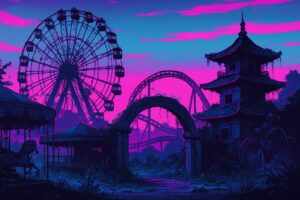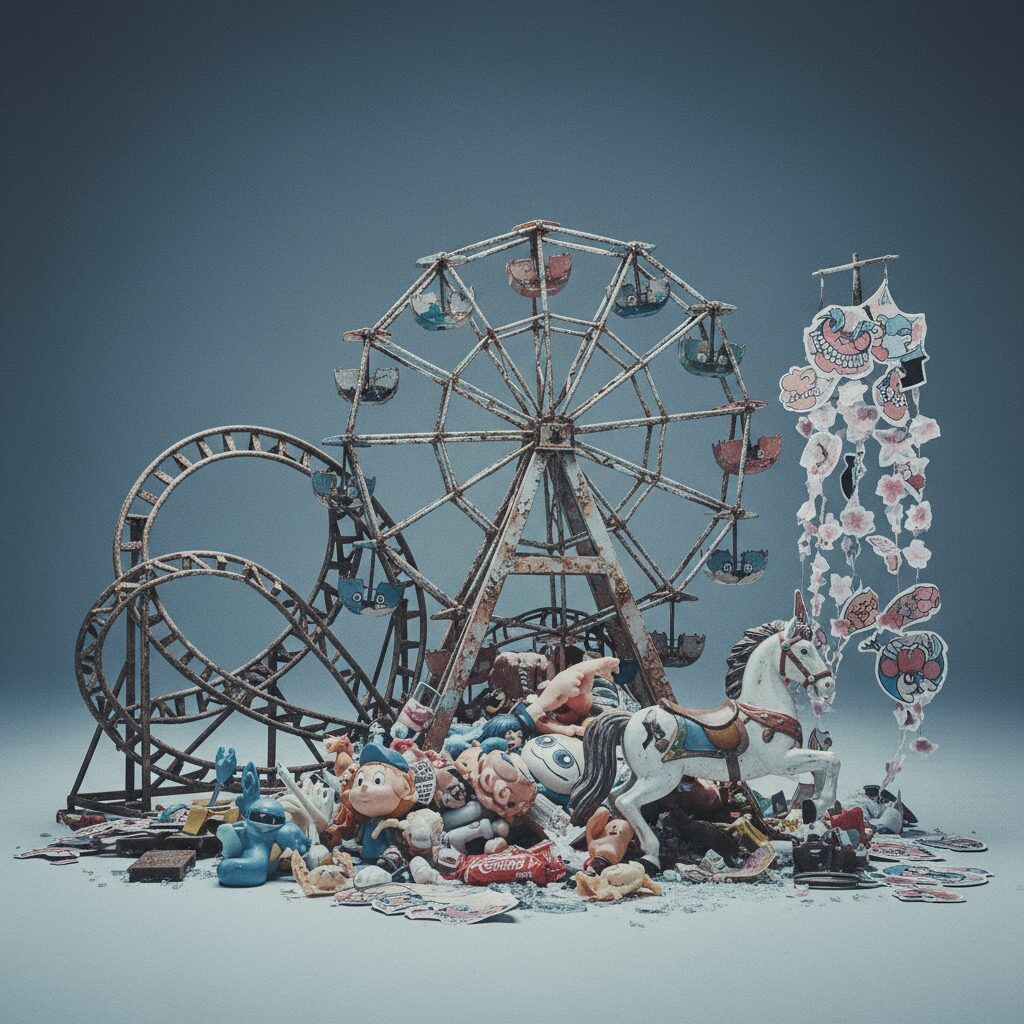
Yo, what’s the vibe? Ami here. When you picture Japan, what hits your feed? Probably a tidal wave of visuals, right? Like, Blade Runner-level neon in Shinjuku, serene temples in Kyoto so quiet you can hear a leaf drop, and food that looks too perfect to actually eat. It’s a country that vibes with precision, cleanliness, and an almost obsessive attention to detail. Everything in its right place, everything sparkling. But what if I told you there’s a whole other side to this picture-perfect nation? A flip side that’s messy, decaying, and hauntingly beautiful. I’m talking about Japan’s `haikyo`, the ruins. And not just any ruins—I’m talking about the ghosts of pure, unadulterated joy: abandoned theme parks. Picture this: a rusted Ferris wheel, frozen against a cloudy sky, its carriages creaking in a wind that carries no laughter. A peeling cartoon mascot, its once-bright smile warped into a creepy grimace by sun and rain. A roller coaster track, now a metal spine for a forest of weeds reclaiming the land. This is the Japan that doesn’t make it into the glossy travel brochures. It’s a Japan that asks some seriously deep questions. In a culture that values renewal and perfection, why are these massive monuments to fun and fantasy just left to rot? Why does a place that once echoed with screams of delight now hold nothing but a deafening silence? It’s a whole mood, a strange, melancholy playlist of forgotten dreams. Exploring these places is like stepping into a real-life Studio Ghibli movie that took a dark turn. It’s a trip that gets you way closer to the complex soul of modern Japan than any tourist trap. It’s about understanding the insane highs of an economic boom, the crushing lows of its collapse, and the uniquely Japanese way of finding beauty in the breakdown. So, buckle up. We’re about to take a ride into the eerie, silent world of Japan’s melancholy playgrounds and unpack why they are, low-key, one of the most fascinating things you’ll ever see here.
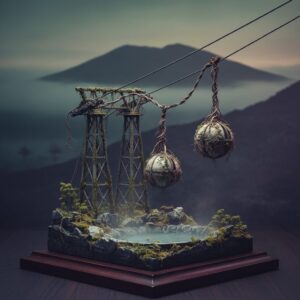
This eerie silence isn’t unique to theme parks, as you can also find it while exploring Japan’s abandoned ropeways.
The Bubble That Never Popped (Just… Deflated)
To truly understand why these amusement parks have become mere shadows of their former glory, you need to rewind to late 1980s Japan. This was not just a time of prosperity; it was an economic supernova dubbed the “Bubble Economy,” or `baburu keiki`. The atmosphere was one of unfiltered optimism. The Japanese yen was dominating globally, the stock market was soaring, and real estate prices in Tokyo were so high that, for a brief moment, the land beneath the Imperial Palace was theoretically worth more than all of California. It was an extraordinary era. Companies weren’t simply wealthy; they were drowning in cash. And with that level of money and confidence, lavish extravagance became the norm.
The Gilded Age of Showa
This period was Japan’s modern Gilded Age, characterized by a culture focused on consumption, luxury, and leisure. People indulged in everything from designer fashion to outrageously expensive meals garnished with real gold flakes. There was a widespread belief that these prosperous times would never end. The nation was caught in a collective euphoria powered by economic supremacy. It felt like Japan had perfected capitalism and was harvesting limitless rewards. This mindset extended far beyond corporate finances; it permeated daily life. People took extravagant vacations, corporations lavished unbelievable sums on client entertainment, and there was a frenetic energy to build, innovate, and spend. Every endeavor grew bigger, bolder, and more ambitious than the last. The future seemed dazzlingly bright, like a neon-lit highway without any exits. It was within this environment of boundless optimism and ample cash flow that the theme park boom was born.
A Theme Park for Every Prefecture
With money flooding the market, developers went all out. The rationale was straightforward: if people have disposable income and a craving for entertainment, let’s create fantasy worlds for them. And they certainly built them. It felt like there was an unspoken rule that each prefecture, no matter how isolated, needed its own spectacular theme park. It became a matter of regional pride. But these weren’t ordinary local fairs with a few rides; they were massive, highly themed creations. The ambition was staggering. Why just visit Europe when you could construct a German village with timber-framed houses and bratwurst stands right in the Japanese countryside? Not into Germany? How about a Dutch town complete with windmills and canals, or a chunk of Spain, or a Canadian village? These parks were authentic replicas of foreign fantasies, built with painstaking—sometimes bizarre—detail. They symbolized Japan’s global reach and economic muscle—we could afford to buy the world and rebuild it here for our amusement. They were monuments to a nation confident it was at the peak of its power, capable of turning any dream into reality through sheer concrete and capital.
The Crash and the Long Hangover
Then, as all bubbles do, it burst. Around 1991, everything came to a halt. The stock market crashed, real estate prices plummeted, and Japan’s once unstoppable economy ran headfirst into a brick wall. The crash wasn’t a short recession; it marked the start of the `Ushinawareta Jūnen`, or the “Lost Decade.” That decade stretched into two, and some argue its effects linger today. The exuberance of the 80s vanished, replaced by a harsh reality of debt, restructuring, and stagnation. The party was over, and the aftermath was harsh.
The Economics of Abandonment
So what became of all those fantasy lands? As the economy collapsed, people’s disposable income disappeared. The excessive spending of the bubble years gave way to cautious saving. Suddenly, a weekend trip to a fake Spanish village wasn’t such a great idea. Attendance plummeted. The parks, which were costly to build and maintain, started hemorrhaging money. Many had been financed through loans that could no longer be repaid. Bankruptcies ensued. But here lies the key to understanding why: in many cases, it was cheaper to abandon the parks than to tear them down. Demolishing huge theme parks—with their intricate steel frameworks, concrete bases, and extensive facilities—is an astronomically expensive task. The bankrupt companies lacked funds. The banks that took ownership refused to cover the costs. Japan’s complex land laws and regulations made redevelopment a bureaucratic nightmare. So, the simplest and often only financial solution was to lock the gates, walk away, and allow the sites to decay in suspended animation. Nature became the new caretaker, and time the new ride operator. The end result is a landscape peppered with eerie time capsules of a forgotten economic dream.
More Than Just Rust: The Aesthetics of Decay
The economic narrative explains how these parks fell into ruin, but it doesn’t fully capture why they hold such fascination, especially for a segment of the Japanese population. Why explore these silent, decaying sites? The answer lies less in economics and more in a deeply ingrained cultural aesthetic. In the West, ruins often symbolize failure or neglect; in Japan, they signify something more—a canvas for a unique kind of beauty, a profound reflection on existence itself. This isn’t merely about eerie atmospheres; it’s about philosophy. It’s about discovering an unusual sense of peace in the process of deterioration.
Finding Beauty in Impermanence: `Wabi-Sabi` and `Mono no Aware`
To truly appreciate the allure of `haikyo`, you need to understand two essential concepts ingrained in the Japanese worldview: `wabi-sabi` and `mono no aware`. These are not just artistic terms—they are feelings, ways of perceiving the world that permeate the culture.
`Wabi-Sabi` 101
You’ve likely encountered `wabi-sabi` on design blogs, often portrayed as rustic or minimalist, but it’s far more profound. `Wabi-sabi` is a worldview embracing the acceptance of transience and imperfection. It celebrates beauty that is flawed, fleeting, and incomplete. It values modesty, humility, and the unconventional. Picture a handcrafted ceramic bowl with slight asymmetry, the patina on an old metal gate, or moss growing on a stone statue—this is `wabi-sabi`. Now, apply that perspective to a ruined theme park: the peeling paint on a carousel horse, rust blooming on steel tracks, vines creeping over a cartoon castle. Through the lens of `wabi-sabi`, this is not mere decay; it is a natural process that adds character and beauty. The park evolves from a flawless human creation into a shared work of art between man and nature—a tribute to the inevitable, beautiful process of entropy. It quietly defies the manufactured perfection it once symbolized.
The “Ahh-ness” of Things: `Mono no Aware`
While `wabi-sabi` finds beauty in imperfection, `mono no aware` is the emotional response that beauty elicits. Often translated as “the pathos of things” or “a sensitivity to ephemera,” it conveys a gentle, transient sadness over the impermanence of all things. The classic example is cherry blossoms: breathtakingly beautiful, yet their charm lies in its brevity, lasting only a week or two before the petals fall. This bittersweet blend of appreciation and sorrow defines `mono no aware`. An abandoned theme park exemplifies `mono no aware` at its height. Designed to create moments of joy and laughter, it now lies utterly silent. Walking its empty paths floods one with the ghostly echoes of past happiness—you can nearly hear children laughing and cheerful music. The stark contrast between past joy and present silence is deeply moving. It’s a tangible reminder that even the happiest times are fleeting. This feeling isn’t necessarily depressing; it is a profound, resonant melancholy—a beautiful ache that connects one to the passage of time.
The Haikyo Subculture: Urban Exploration as Modern Pilgrimage
This aesthetic appreciation of ruins has inspired a subculture of urban explorers, or `haikyoists`. They are not merely thrill-seekers; for many, exploring these spaces is a serious hobby, a form of modern pilgrimage. These photographers, historians, and artists are drawn to the unique atmosphere of forgotten places. The community follows an unwritten code summed up by the global urbex mantra: “Take only pictures, leave only footprints.” The aim is to document these sites without causing damage, preserving their graceful decay before they vanish entirely. For them, a `haikyo` is a museum of memories, where each peeling poster and dusty artifact tells a story. It is a way to connect with a lost chapter of their nation’s history on an intimate and evocative level. They seek the feeling of `mono no aware`, visiting these silent places to experience a profound bond with time and impermanence.
A Tour Through the Looking Glass: Iconic Ghost Parks
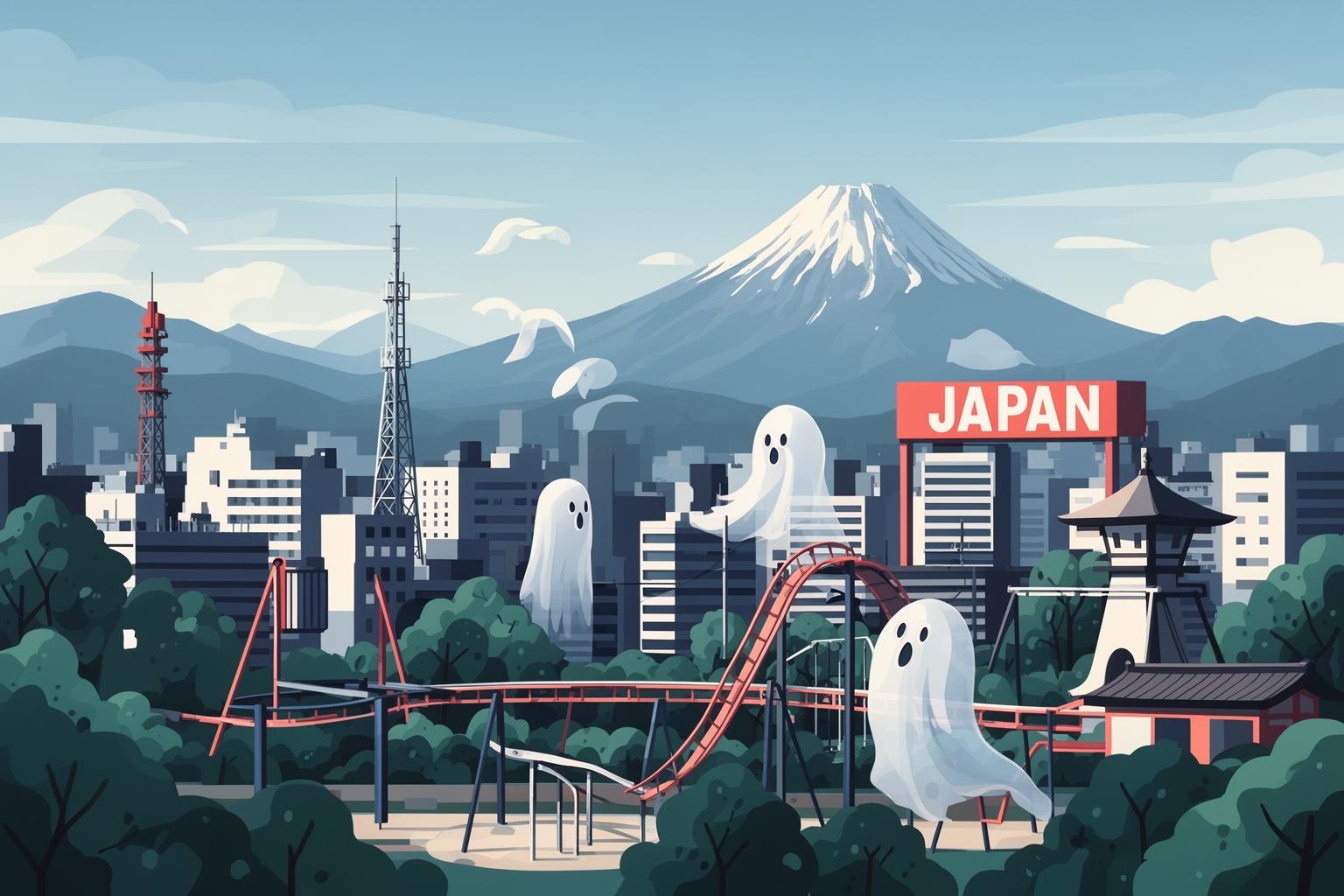
While countless `haikyo` are scattered throughout Japan—from abandoned schools and hospitals to entire mining towns—the ruined theme parks occupy a special place in the imagination of urban explorers. They stand as the most dramatic symbols of the bubble-era dream collapsing into a post-bubble nightmare. Let’s take a stroll through a few legendary examples, each one a study in ambition, failure, and the peculiar beauty that ensues.
Nara Dreamland: Japan’s Fallen Kingdom
Nara Dreamland was the original, the stuff of `haikyo` legend. It was the quintessential fallen kingdom. Opened in 1961, it served as Japan’s unapologetic answer to Disneyland. And by unapologetic, I mean it was nearly a direct copy. It boasted its own Sleeping Beauty Castle (the pink one), its own Main Street USA, a monorail, and similarly themed lands. For decades, it was a beloved destination for families in the Kansai region. However, with the arrival of Tokyo Disneyland in 1983 and later Universal Studios Japan in Osaka, Dreamland’s old-school charm gradually faded. Visitor numbers declined, and the park steadily fell into disrepair before finally shutting its doors in 2006. For ten years, it lingered as a perfectly preserved ghost of its former self. It became the holy grail for urban explorers worldwide. Photos from inside were surreal: the massive wooden roller coaster, Aska, engulfed by a tide of green vegetation; the teacups filled with murky rainwater; the pastel-colored buildings of Main Street cloaked in grime and peeling paint. Walking through it was like wandering a post-apocalyptic version of the Happiest Place on Earth. It was the ultimate symbol of bubble-era hubris meeting the quiet, relentless forces of nature. Nara Dreamland was completely demolished in 2017, a fact that stirred a wave of `mono no aware` within the `haikyo` community—the ruin of a ruin, a final vanishing act.
Western Village: A Ghost Town in the Wild East
If Nara Dreamland was a fairy tale gone awry, Western Village in Tochigi Prefecture, near the renowned shrine town of Nikko, is a bizarre fever dream. Opened in 1975, it was themed around the American Wild West. This sprawling complex featured a faux Mount Rushmore, saloons, a sheriff’s office, and even a replica U.S. presidential residence. Its main draw was the heavy use of animatronics. The saloons were filled with robotic cowboys playing poker, while a staged bank robbery show unfolded multiple times daily with jerky, animatronic gunslingers. The park struggled for years before finally closing in 2007. What remained is pure uncanny valley horror. Explorers who ventured inside found a surreal, eerie tableau. The animatronic figures still lingered, slumped in their chairs, dust-covered and wrapped in cobwebs. A robotic John Wayne stood eternally watchful in a dusty corner. The faces of the fake Mount Rushmore, including a slightly off-model Abraham Lincoln, peer from behind overgrown trees. It’s an especially strange ruin because it is a decaying imitation of a fantasy from another culture. It’s a Japanese interpretation of the American West, now left to rot in the mountains of Japan. The silence is broken only by the sheer oddity of seeing these lifeless figures—designed to mimic life—now frozen in a permanent, dusty death. It serves as a time capsule of a distinct cross-cultural fascination, now halted and decaying.
Gulliver’s Kingdom: A Giant’s Final Slumber
Perhaps the most visually striking and thematically unsettling of all ghost parks was Gulliver’s Kingdom. Opened in 1997 at the tail end of the bubble’s collapse, it was a project destined to fail. Its theme was, unsurprisingly, Jonathan Swift’s Gulliver’s Travels. Its location was… questionable, built near Aokigahara, the infamous “suicide forest,” and in the shadow of Mount Fuji. Talk about clashing vibes. The park’s centerpiece was a colossal, 45-meter-long statue of Lemuel Gulliver lying on his back as if bound by the Lilliputians. The park was a financial catastrophe, partly due to its grim location and partly because it was financed by a bank that collapsed because of its ties to the Aum Shinrikyo cult, responsible for the Tokyo subway sarin attack. The park lasted only four years, closing in 2001. During the years it stood abandoned, it became one of the most powerful images in the entire `haikyo` world. The giant, prone Gulliver—with a neutral, slightly pained expression—slowly overtaken by nature. It was a potent metaphor for humanity’s grand projects being brought down by uncontrollable forces. It felt less like a failed theme park and more like an ancient, forgotten god fallen to earth. The park was demolished in 2007, but the haunting image of the giant’s final slumber remains iconic in the memory of the `haikyo` community.
The Legal and the Lethal: A Word of Warning
Now, after browsing all those epic, atmospheric photos online, you might be thinking, “Alright, bet. I’m adding this to my Japan itinerary.” Hold on a moment. As someone who values stylish but safe travel, I have to give you the real talk. This isn’t like visiting a temple or a museum. Exploring a `haikyo` is a whole different challenge, and it comes with some serious legal and physical risks. It’s crucial to understand what you’re getting into before you even consider climbing a fence.
Trespassing is Still Trespassing
Let’s address the biggest issue first: it’s illegal. Every one of these abandoned sites remains private property. Entering without permission is trespassing, or `fuhō shinnyū` in Japanese. Although Japan doesn’t enforce “No Trespassing” signs as aggressively as some other countries, getting caught can still have serious consequences. We’re talking potential fines, and in the worst case, arrest and even deportation if you’re a foreigner. Local police, particularly in rural areas where many of these spots are, won’t be swayed by your artistic intentions. To them, you’re simply breaking the law. The `haikyo` community exists in a legal gray zone, but the law is clear-cut. This isn’t an approved tourist activity; it’s a risky, covert operation that requires a lot of discretion and respect for the fact that you’re technically not allowed to be there.
The Real Dangers Beyond the Law
Even if you avoid getting caught, the physical dangers are very real. These places have been abandoned for decades. There are no safety inspections, no maintenance crews, nothing. You’re completely on your own. Floors may be rotten and unstable, ready to collapse under your weight. Staircases might be rusted through. Broken glass is everywhere. Sharp, twisted metal hides beneath overgrown weeds. Many buildings from that era were built with asbestos, which poses serious health risks if disturbed. And that’s just the man-made dangers. Nature has taken over. You might encounter snakes, aggressive `suzumebachi` (Japanese giant hornets), or `inoshishi` (wild boars). These aren’t animatronics—they’re real animals that can seriously hurt you. If you get injured deep inside a vast, abandoned park, good luck getting help. There’s likely no cell signal, and no one knows you’re there. That’s why experienced explorers never go alone, always share their exact plans, and bring proper gear: sturdy boots, thick gloves, a powerful flashlight (even during the day), a mask, and a first-aid kit. This isn’t a place for fresh sneakers and a cute outfit. It’s a dangerous environment that demands preparation and caution.
Why This Vibe Resonates: The Modern Ruin in Pop Culture
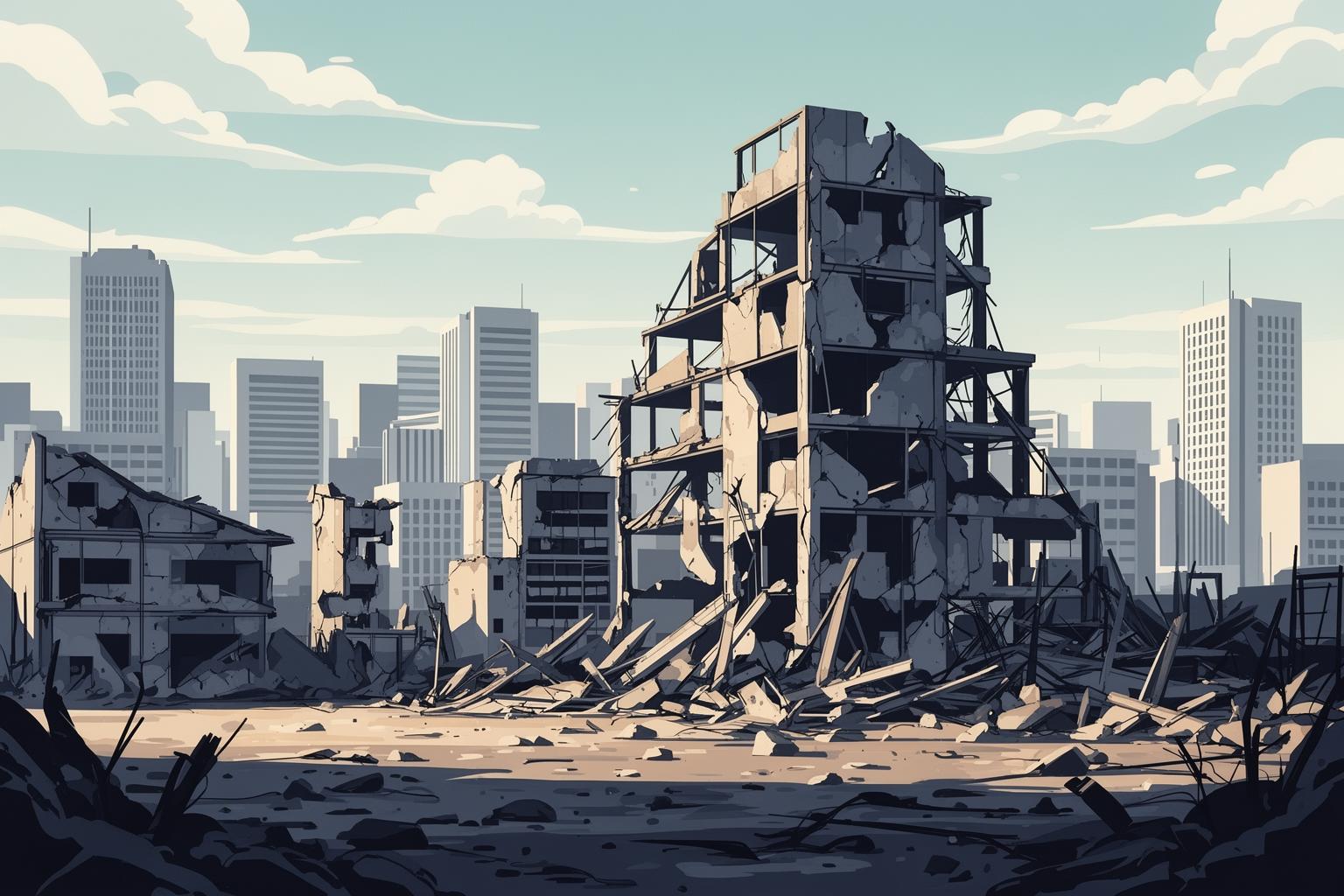
So, if these locations are dangerous and illegal to enter, why are we so captivated by them? The fascination with these somber playgrounds extends far beyond the `haikyo` subculture. This aesthetic of beautiful decay, where nature reclaims civilization, has deeply influenced Japanese pop culture and, from there, spread across the globe. It’s a visual language that resonates with many modern anxieties and desires.
Anime and Manga’s Post-Apocalyptic Playgrounds
Consider some of the most iconic anime and manga you’ve encountered. How many feature ruins? The answer: numerous. Hayao Miyazaki’s masterpiece Spirited Away literally begins with Chihiro’s family discovering an abandoned theme park, a place where the gods of a forgotten era come to rest. The acclaimed video game Nier: Automata presents a hauntingly beautiful level set entirely within a ruined amusement park, where broken-down robots endlessly perform a twisted parody of a parade. The post-apocalyptic landscapes of Akira and the overgrown worlds in many other series frequently use this imagery. This is no accident. The ruin serves as a powerful visual shorthand in Japanese storytelling. It symbolizes nostalgia for a lost past, anxiety about a shattered future, and nature’s enduring, quiet strength. It directly taps into the `mono no aware` feeling, instantly evoking melancholy and wonder. These creators grew up in the post-bubble era, and the landscape of their country, dotted with real-life ruins, became ingrained in their artistic identity.
The Instagram Effect and the Allure of the Aesthetic
And then there’s social media. The rise of Instagram and other visual platforms has propelled the `haikyo` aesthetic into global awareness. Moody, desaturated photos of abandoned places make perfect content for feeds centered around certain vibes: dark academia, cottagecore’s gothic cousin, or simply cinematic melancholy. The hashtag `#abandonedplaces` leads to a rabbit hole of stunning, eerie photography worldwide, but Japanese `haikyo` holds a special, almost revered status within it. This creates a double-edged sword. On one side, it has increased appreciation for this unique form of beauty. On the other, it can detach these places from their context, reducing them to just another cool, edgy backdrop for selfies. This can prompt a new wave of explorers who lack understanding or respect for the `haikyo` code, resulting in vandalism, theft, and more people getting injured or arrested. It’s a classic dilemma: the more popular something becomes, the greater the risk it will lose the essence that made it special initially.
The Echo in the Silence
So, what remains when we gaze upon these rusting carousels and silent roller coasters? They represent more than just failed ventures or eerie spots to explore. They stand as physical ghosts of a distinct moment in Japanese history—a period marked by boundless ambition and seemingly infinite possibility. They serve as monuments to a dream that soared too close to the sun. Every peeling sign and overgrown path tells a tale about economics, culture, and the arrogance of believing the celebration will never end. Yet, they also convey a deeper, more universal narrative. They remind us that nothing endures. Not economic booms, not grand dreams, not even the concrete and steel with which they were built. In their silence, these parks offer an unusual kind of solace. They reveal a quiet beauty in the process of decay—in letting go and allowing nature to take its course. This perspective stands in stark contrast to the unceasing forward rush of modern life. Visiting them, or merely reflecting on them, provides a glimpse into a different facet of the Japanese spirit—one deeply in tune with the cycles of growth and decline, and one that has perfected the art of finding profound meaning in the bittersweet beauty of impermanence. You don’t need to jump a fence to feel it. Simply look at the photos, grasp the story, and listen for the echo of laughter that still lingers in the silent, empty air.