The Future Cost of Japan’s Iconic Bullet Train Under Debate
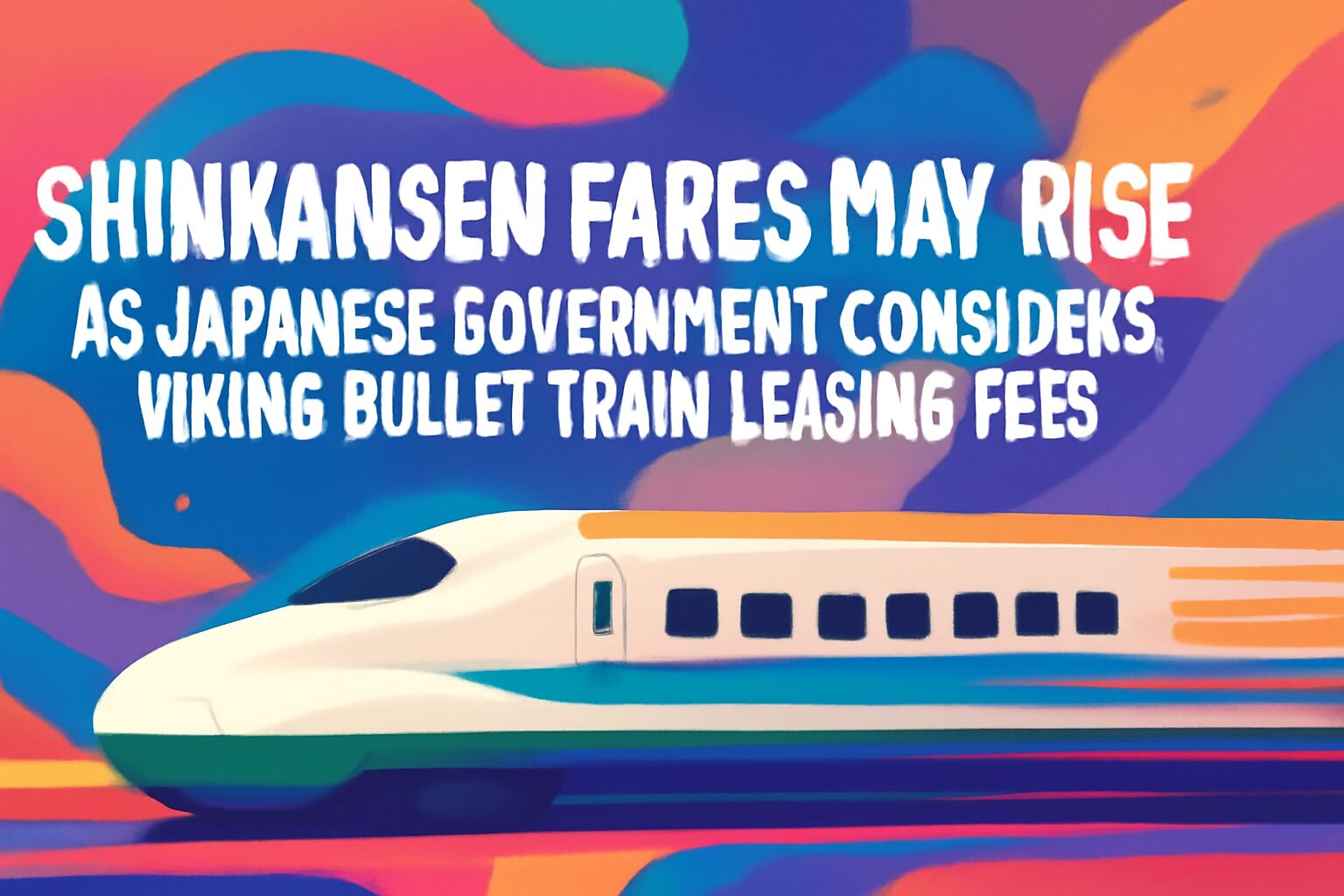
The Japanese government is considering a move that could ripple through the travel plans of millions: increasing the leasing fees for its world-renowned Shinkansen bullet train network. This proposal, currently under review by the Ministry of Land, Infrastructure, Transport and Tourism, pits the government’s need for infrastructure funding against the arguments of major operators like JR East and JR West, potentially impacting future ticket prices for travelers.
Background: Who Really Owns the Shinkansen?
To understand the debate, it’s crucial to know how the Shinkansen system operates. While private companies like JR East, JR Central, and JR West manage the daily operations, sell tickets, and run the trains, they don’t actually own the tracks, tunnels, and stations for many of the newer lines. This core infrastructure is owned by a government-affiliated organization, the Japan Railway Construction, Transport and Technology Agency (JRTT).
The JR companies pay a fee to JRTT to lease and use this infrastructure. These agreements were initially set for a period of 30 years. Now, with the contracts for key lines approaching their expiration date, the government is re-evaluating the terms. A prime example is the Hokuriku Shinkansen line; its initial section connecting Takasaki and Nagano opened in 1997, meaning its 30-year milestone is drawing near.
The current fee structure is designed to be flexible, calculated based on the profits the JR companies earn from operating the lines. As profits go up, so do the leasing payments.
A Clash of Interests: Government vs. Railway Operators
The Government’s Stance
The Ministry’s primary motivation is to secure a stable and long-term financial source for the future of the Shinkansen network. This includes two main objectives:
- Future Construction: Funding ambitious and costly expansion projects, such as extending the Hokkaido Shinkansen to Sapporo and the Hokuriku Shinkansen beyond Tsuruga.
- Large-Scale Maintenance: Covering the immense costs of maintaining and renovating the aging infrastructure of existing lines to ensure continued safety and reliability.
Government officials point to the strong recovery of the JR companies. Bolstered by the post-pandemic travel boom and a surge in inbound tourism, operators are reporting significant profits. The government’s perspective is that a portion of this increased revenue should be reinvested into the national infrastructure that makes it possible.
The JR Companies’ Rebuttal
The railway operators strongly oppose the proposed fee hikes. Their argument is that their recent financial success is not merely a result of a favorable market but the direct outcome of their own business strategies and efforts. These include:
- Developing attractive travel packages and marketing campaigns.
- Expanding commercial facilities within and around stations (known as “Ekinaka”).
- Investing in real estate and other businesses along their railway lines.
The companies contend that a higher leasing fee would unfairly penalize them for their successful business innovations. They warn that absorbing such a significant cost increase could force them to make difficult decisions, potentially impacting everything from service investments to, ultimately, passenger fares.
What This Could Mean for Travelers
While discussions are still in the early stages, any change to the leasing fees could have tangible consequences for tourists and domestic travelers alike.
Potential Fare Increases
The most direct concern for travelers is the possibility of higher ticket prices. If the JR companies are faced with substantially higher operating costs, they may have little choice but to pass some of that burden on to customers. This comes after Japan Rail Pass, a popular option for foreign tourists, saw a major price increase in October 2023, making any further rise a sensitive issue for Japan’s tourism appeal.
Impact on Services and Investment
Alternatively, to avoid raising fares, companies might cut back on investments. This could mean slower rollouts of new, more comfortable train cars, delays in station renovations, or a reduction in other passenger-focused service enhancements.
A Look Ahead: A Critical Balancing Act
The negotiations between the Japanese government and the JR Group will be a critical balancing act. On one hand, ensuring the long-term sustainability and expansion of the Shinkansen network is vital for Japan’s national infrastructure. On the other, maintaining affordable and high-quality service is key to its role as a cornerstone of Japan’s economy and tourism industry.
For now, travelers can continue to enjoy the Shinkansen as they always have. However, the outcome of these governmental reviews will be a key story to watch, as it will shape the cost and experience of traveling on Japan’s iconic bullet train for decades to come.