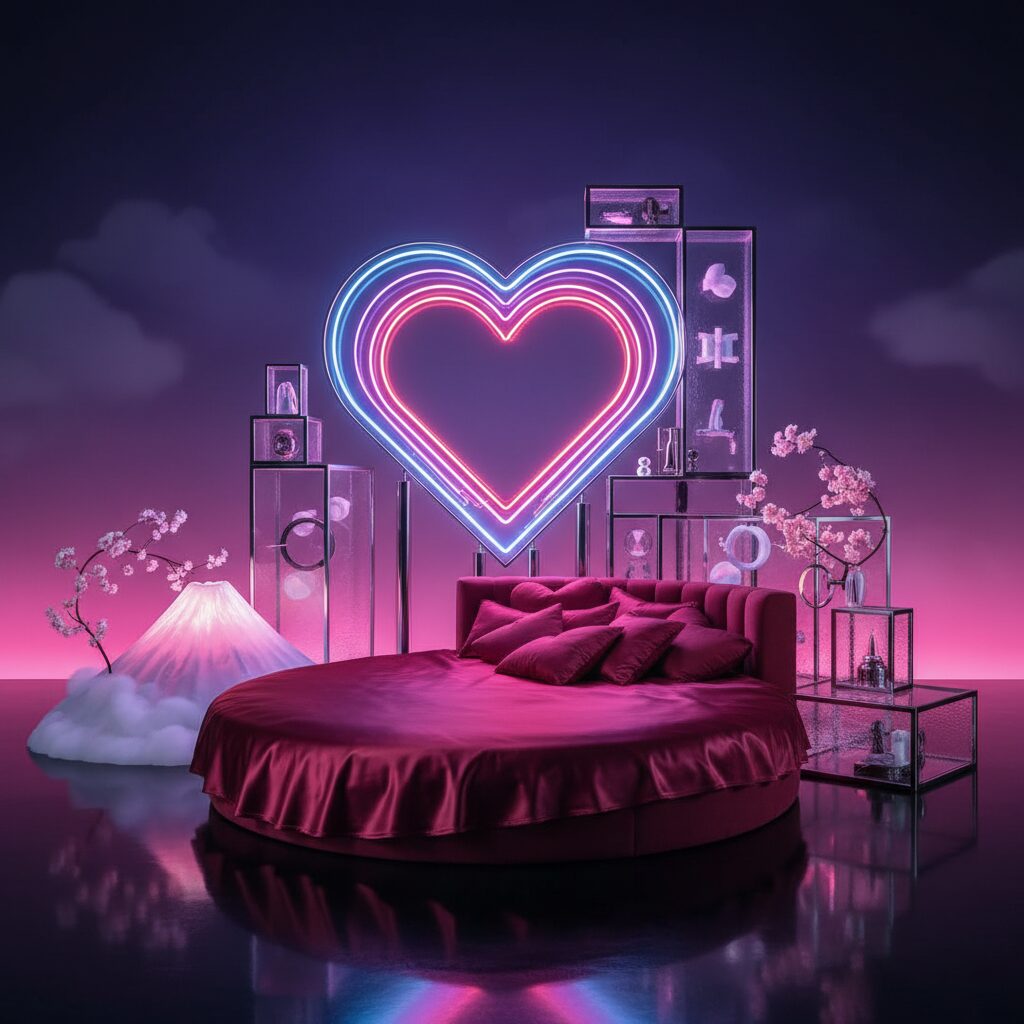
Hey everyone, Sofia here! So, you’ve probably scrolled past them on your feed—those wild, unbelievable pictures from Japan. A hotel room with a full-on carousel in it. Another one decked out like a spaceship cockpit. Or maybe a room that’s an exact replica of a high school classroom, complete with desks and a chalkboard. And you’re probably thinking, “Is this for real? And, like, is this supposed to be romantic?” The answer is a massive YES, it’s real, and “romantic” isn’t even half the story. It’s so much more wonderfully weird and complex than that. Before I came here, I thought I understood themed hotels, but Japan took the concept, launched it into the stratosphere, and turned it into an art form of pure, unadulterated escapism. It’s not just about a night away; it’s about stepping into a completely different dimension for a few hours. These places, known as “love hotels” or “rabuho,” are a cultural phenomenon, a secret world hiding in plain sight behind the most fabulously gaudy exteriors you’ve ever seen. They’re a mystery box of neon, privacy, and pure fantasy. Forget what you think you know about hotels, because we’re about to dive deep into a world that feels more like a dream you can’t quite explain in the morning. And to understand why these incredible spaces exist, you have to understand a little bit about the Japanese approach to privacy, space, and fun. It’s a trip, and I’m taking you with me. Peep the map below to see one of the most iconic hotspots for these places in Tokyo, the famous “Love Hotel Hill” in Shibuya. It’s literally a whole neighborhood of castles, chapels, and futuristic pods waiting to be explored.
This fever-dream approach to entertainment is part of a broader cultural ecosystem that includes everything from themed cafes to the wildly creative Japanese karaoke boxes.
The Real MVP: Why Privacy is the Ultimate Japanese Luxury
Alright, first and foremost, let’s dive into why love hotels exist in the first place. In many Western cultures, inviting a date home is quite common—your home is your sanctuary. But in Japan, the situation is very different. To understand why, imagine the living arrangements for a large number of people, especially in major cities like Tokyo or Osaka. It’s all about shared spaces and close quarters. Many young adults live with their parents until marriage, and even afterward, it’s common for multi-generational families to share a single household. Picture this: you, your partner, your parents, and possibly a grandparent all under one roof. That environment isn’t exactly ideal for romance, right? Inviting a partner into that family space, or `uchi`, is a significant step. It’s not casual—it carries an implication of seriousness that might not be welcome just yet.
Now, suppose you do have your own place. Yay, independence! However, that apartment, or `apaato`, is probably much smaller and less soundproof than you might expect. We’re talking about thin walls that let you hear your neighbor’s TV clearly. Traditional Japanese home interiors, featuring sliding paper screens like `fusuma` and `shoji`, are designed for airflow and flexibility—not for blocking noise. While beautiful, this design doesn’t provide acoustic privacy. This cultural and architectural reality creates a strong need for one thing: private space. A place where couples can be themselves, away from the watchful eyes and ears of family and neighbors, free from pressure or judgment. This is not a recent issue either. The origins of love hotels stretch back centuries, but their popularity surged after World War II as `tsurekomi yado`, or “bring-along inns.” They fulfilled a straightforward, practical role—they addressed a societal need for privacy that homes simply couldn’t offer. So, before we explore the quirky features like merry-go-round beds and spaceship control panels, remember that at its core, the love hotel is meeting a very real, very understandable need. It provides the ultimate luxury in a crowded society: a room of one’s own, even if only for an hour or two.
From Practical to Pure Palace: The 80s Bubble Era Glow-Up
We’ve established the “why,” but that doesn’t explain the “how.” How did we go from simple, discreet rooms to full-blown rotating-bed, mirror-ceilinged, fantasy-filled palaces? To answer that, we need to travel back to Japan’s 1980s economic bubble. This era was next-level extravagant. The economy was booming, money flowed freely, and there was an extraordinary surge of creativity, consumerism, and a craving for over-the-top experiences. It was a time of grand confidence and excess, and love hotels were right in the thick of it. They stopped being just functional spaces and became destinations. Competing for customers, they escalated the fantasy—they wouldn’t offer a boring room when they could offer a night in a European castle, a Roman bath, or even a UFO.
It was during this time that the architecture of the hotels themselves became part of the spectacle. Driving along the highway, you might suddenly spot a German-style castle or a giant cruise ship situated in a residential neighborhood. These were more than signs; they were invitations. They shouted, “Leave your dull reality behind! Inside here, you can be anyone you want.” The interiors matched the bold exteriors. Designers were given large budgets and complete creative freedom, installing features purely for decadent fun: slides from the bedroom to a private pool, beds that vibrated and spun, jacuzzis equipped with built-in TV screens and light shows. It was a full sensory experience. This approach is closely linked to other aspects of Japanese entertainment culture. Consider karaoke boxes—you don’t just get a mic in a plain room; you get disco lights, wild decor, and tambourines. It’s about creating an immersive environment for fun. The bubble-era love hotel was the pinnacle of this philosophy. It transformed the industry from simply offering private space to delivering affordable, accessible fantasies. It tapped into a collective yearning for escapism and play, turning an ordinary stay into a mini-vacation from daily life. The legacy of this time is why we have these incredible, photogenic fever dreams today—they stand as living monuments to an era when everything seemed possible and “too much” was never enough.
Decoding the Fever Dream: A Guide to the Wildest Themes
Alright, let’s dive into the exciting part: the themes. This is where you’ll be amazed. It’s tempting to dismiss them as simply “weird,” but each popular fantasy scenario taps into a specific cultural current in Japan. Understanding them is like unlocking a cheat code for Japanese pop culture and aesthetics. They aren’t just decoration; they serve as immersive stage sets for imaginative play.
H3 The European Castle & Rococo Romance
This theme is a timeless favorite. Expect rooms lavishly adorned with gold leaf, chandeliers the size of small cars, velvet curtains, and extravagantly ornate furniture. To a Western eye, it might come off as slightly kitschy, almost like a budget Versailles. But that misses the point! The focus here isn’t on historical accuracy; it’s about aspirational fantasy. For decades, Europe has symbolized a certain kind of fairy-tale luxury and romance in the Japanese imagination. A trip to Paris or Rome is seen as the ultimate romantic getaway. This room theme condenses that entire dream into just a few hours. It offers a chance to play prince and princess in your own private castle without the hefty price tag of a plane ticket. It’s pure, unapologetic romanticism turned all the way up. The aim is to feel glamorous and special, surrounded by opulence that contrasts starkly with a minimalist, 20-square-meter Tokyo apartment. It’s escapism in its most classic, glittering form.
H4 The Sci-Fi Spaceship & Anime Adventure
Beam me up! Enter one of these rooms, and you find yourself on the bridge of a starship. The bed serves as a command chair, walls are lined with blinking lights and futuristic panels, and windows might be screens displaying views of outer space. This theme pays direct homage to the monumental influence of anime and manga on Japanese culture. Series like Gundam, Macross, and Space Battleship Yamato are more than cartoons; they are cultural milestones that have shaped generations. This room lets you live out that sci-fi fantasy. It’s about adventure, technology, and the thrill of exploring new worlds. It taps into a shared cultural lexicon of mechs, spaceships, and intergalactic heroes. For couples who grew up with these stories, it offers an incredibly fun and playful environment. It’s not just a room; it’s the set for the first episode of your own personal space opera. Geek culture becomes romantic here, and it’s absolutely brilliant.
H4 The Classroom, The Doctor’s Office, The Train Car
Now, this is where things get… quite specific. These role-playing rooms often confuse non-Japanese visitors the most. A classroom complete with a teacher’s desk? A doctor’s examination room with a medical bed? A replica subway car? It’s easy for the imagination to leap to risqué conclusions, and while that’s part of the draw for some, it’s not the entire story. These rooms are deeply connected to cosplay and adopting a different identity. In a society that often values conformity and defined social roles in public, the opportunity to privately assume another persona is a potent form of release. These spaces provide the perfect immersive sets. The school theme, for instance, evokes nostalgia and the iconic status of the Japanese school uniform—a powerful symbol of youth and a distinct phase of life. These scenarios are about storytelling. They’re playful, theatrical, and offer a break from the routine of adult life. It’s less about fetish and more about enjoying make-believe freedom. It’s the joy of performance, enabled by a meticulously detailed environment.
H4 The Traditional Japanese Getaway (Onsen & Ryokan)
This theme might seem less unusual, but it’s still a fantasy. Many rooms are styled like a traditional Japanese inn, or `ryokan`. Expect tatami mat floors, a low table, and—most importantly—a large private bath, sometimes even an outdoor one (`rotenburo`) on a small balcony. A real trip to a hot spring resort, such as in Hakone, is a significant undertaking—expensive and difficult to book in advance. The love hotel `ryokan` room offers a slice of that experience right in the city, available for just a few hours. It’s the fantasy of a serene, romantic escape, condensed and made accessible. It’s perfect for when you want the feel of a traditional getaway without any hassle. You can soak in your private `onsen`-style bath, order sake room service, and completely forget you’re just minutes from the world’s busiest train station. It’s a brilliant concept, offering a fantasy of peace and tradition amid urban chaos.
H4 The Pure Playground: Carousels, Slides, and Ball Pits
And here’s my personal favorite: rooms that are outright playgrounds for adults. Yes, the rumors are true. Some rooms feature fully functional carousels. Others have slides that land you right in bed or a ball pit. Some include mini-golf courses or basketball hoops. Here, the love hotel concept abandons any pretense of being solely about romance and embraces pure, unfiltered FUN. It’s a radical idea when you stop to think about it. It suggests that a core part of intimacy is silliness and playfulness. These rooms invite you to be childish and goofy with your partner. In a high-pressure, work-driven society, a space devoted to pointless, joyful fun is a rare treasure. It’s the ultimate rejection of seriousness. Why just lie in bed when you can ride a unicorn in circles first? This joyful absurdity is, in my opinion, the most misunderstood—and most wonderful—aspect of love hotel culture. It’s not seedy; it’s silly. It’s not scandalous; it’s a slide. And it’s an absolute blast.
The System: A Masterclass in Anonymity and Automation
So you’ve noticed the castle on the corner and are ready to explore the spaceship room. How does it actually function? The process is just as unique as the rooms themselves, serving as a masterclass in efficiency, privacy, and minimizing social awkwardness. The entire system is designed so you hardly have to interact with another person. It’s quintessentially Japanese in that way—smooth, automated, and discreet.
Starting with the entrance, you’ll often find two: one for cars leading to a private, covered garage, and one for pedestrians. Both are intentionally low-key. Once inside the lobby, you won’t see a typical reception desk with a friendly attendant. Instead, you’re met with a large, glowing panel of buttons. This is the core of the system. The panel displays pictures of all available rooms, showcasing the wild themes. Lit-up photos indicate free rooms, while darkened ones show occupied spaces. You simply stand there, browse the themed options, and press the button for the room you want. Spaceship? Classroom? Roman bath? The choice is yours. It’s like a vending machine for hotel rooms.
After making your selection, a key might dispense, or a light will guide you to the elevator and your room. The door often unlocks automatically. Once inside, the door locks behind you, and your private adventure begins. Now, about the payment—that’s where things get even more cleverly anonymous. In many classic love hotels, there’s no checkout at a front desk. Instead, a small machine in your room or a pneumatic tube system handles payment—I’m not joking! You place your cash or card into a capsule, whoosh, it disappears, and moments later, whoosh, your change returns. It’s both futuristic and retro simultaneously. Pricing is unique too: you don’t just book overnight. You can choose a “rest” (`kyukei`), usually 2-3 hours, or a “stay” (`shukuhaku`), which lasts the entire night, generally starting after 10 PM. This flexible, hourly model makes it highly accessible and affordable. The whole process is seamless and frictionless, designed with one purpose: to guarantee total privacy for the guest. No judgmental looks, no awkward small talk—just direct access to your own private fantasy world.
The Modern Love Hotel: Is the Fever Dream Fading or Evolving?
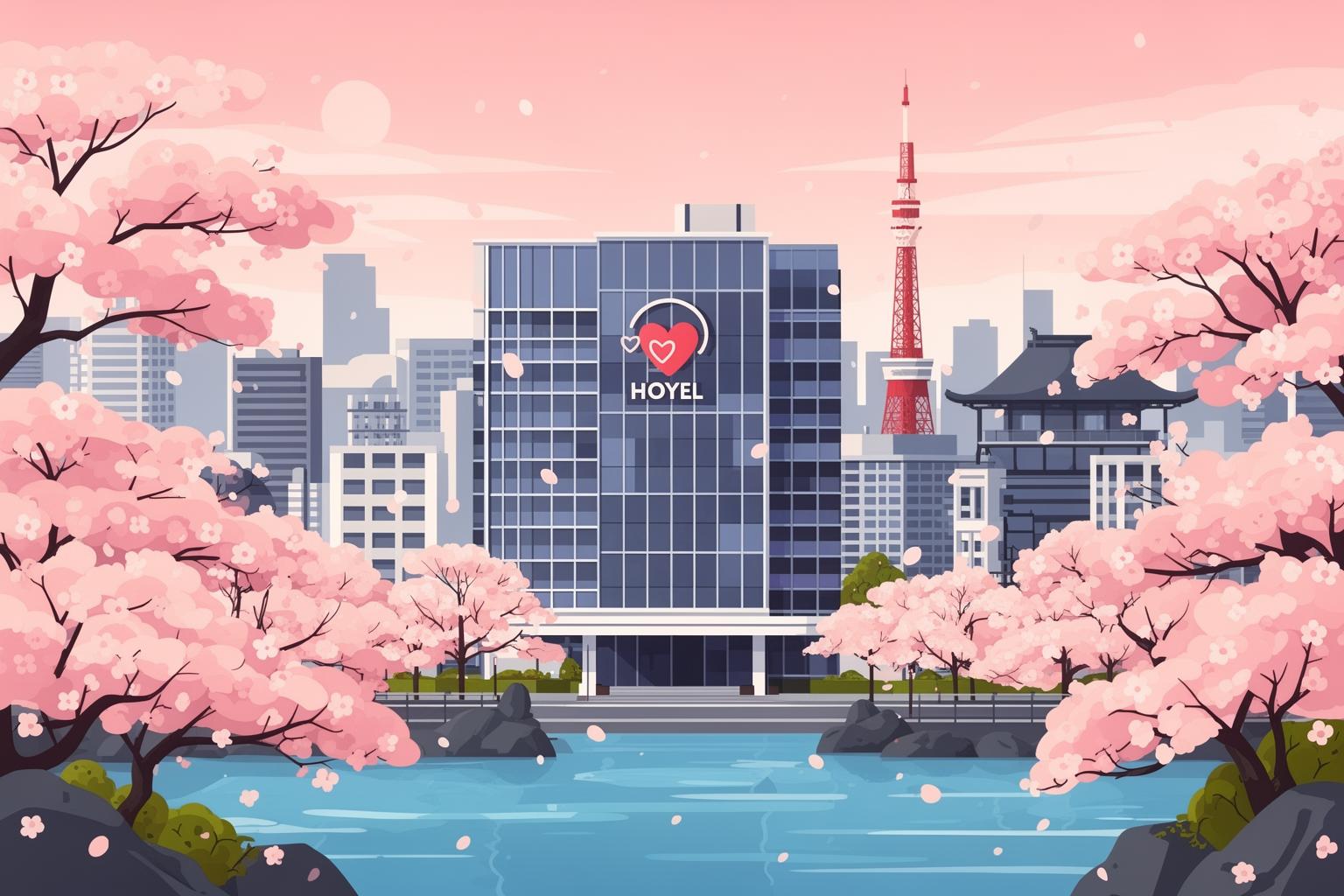
So with all this history, what is the status of the love hotel in the 21st century? Is it a fading relic from the bubble era? Not at all. It’s transforming. While some of the most extravagantly themed hotels from the 80s and 90s have unfortunately shut down due to aging facilities and shifting preferences, new regulations have also prompted the industry to rebrand. Today, many refer to themselves as “leisure hotels,” “boutique hotels,” or “amusement hotels” to attract a wider audience and shed old stigmas.
The most significant shift is in their design. Although the wild, themed hotels remain beloved by many—and are considered retro-cool and popular on social media—there has been a major rise in modern, stylish, and minimalist love hotels. These spaces seem designed by Muji or a top interior designer, featuring clean lines, neutral tones, designer furnishings, and spa-like bathrooms. The attraction here isn’t a quirky theme but a sleek, sophisticated blend of luxury and comfort. It’s a different kind of fantasy—the fantasy of living in a flawless, uncluttered, high-end apartment. These newer hotels appeal strongly to a younger generation that values chic design as much as privacy.
Another fascinating trend is the diversification of how these spaces are used. They are no longer just for couples. One huge trend is the joshi-kai, or “girls’ party,” where groups of friends rent lavish rooms for an afternoon or evening to enjoy top-notch amenities. These rooms often boast huge movie screens, professional-grade karaoke setups, large jacuzzis, and extensive room service options. It’s far cheaper and more private than renting a party venue elsewhere. Guests bring snacks, drinks, and cosplay costumes, spending time taking photos and relaxing in a fun, safe setting. Some hotels have even begun marketing directly to this crowd. This showcases the incredible adaptability of the love hotel concept, evolving from a simple need for privacy into a versatile entertainment space. So no, this fever dream isn’t fading; it’s just dreaming new, different dreams. Whether it’s on a spinning bed in a rococo palace or a sleek designer sofa, the love hotel remains a vital, vibrant, and uniquely Japanese cultural institution. It stands as proof that sometimes, the best way to engage with reality is to step away from it for a while.