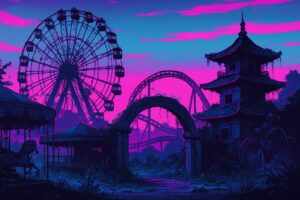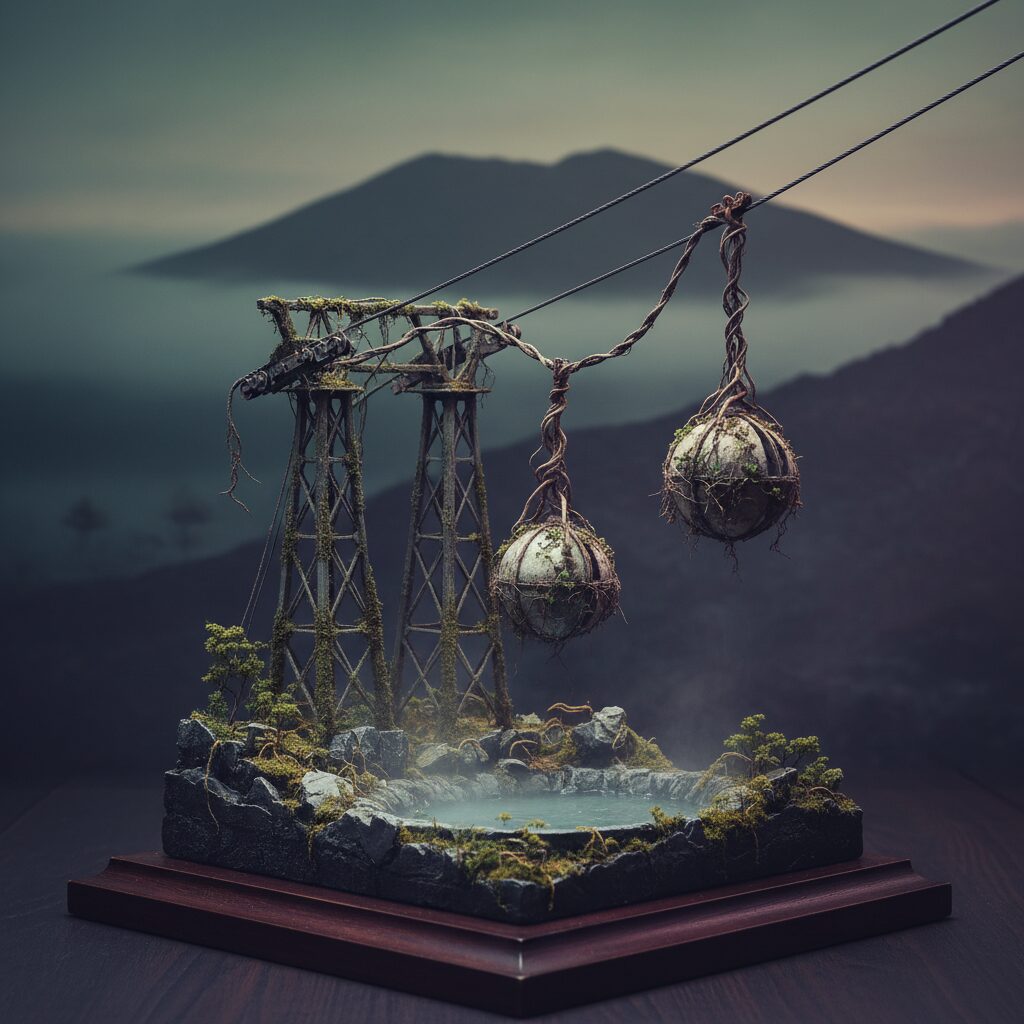
Yo, let’s talk real for a sec. You’ve probably seen the pics online, right? The ones that hit different. Not the super-slick neon-drenched Tokyo shots or the serene Kyoto temple gardens. I’m talking about the other stuff. The eerie, busted-up places. Specifically, those ghost-like ropeway gondolas, just hanging there in the mountain mist, frozen in time for like, decades. They’re usually bright, happy colors—bubblegum pink or sky blue—but the paint is peeling, and the metal is bleeding rust. They float over forgotten lakes and silent, overgrown forests. It’s giving major post-apocalyptic energy, like something straight out of Nier: Automata or a Ghibli movie after the world ended. And the first thing you probably think is, “Wait, what? I thought Japan was all about pristine efficiency and cutting-edge tech. Why is this epic, expensive piece of infrastructure just… left to rot in the sky?” It feels like a glitch in the matrix, a total contradiction to the Japan brand. And honestly? You’re not wrong to be confused. It makes no sense on the surface. But that’s the thing about Japan. The stuff that makes no sense is usually where you find the realest stories. These aren’t just random forgotten tourist traps. They’re time capsules. They’re physical scars from a totally wild, crazy, and ultimately heartbreaking chapter of modern Japanese history. They are the ghosts of a dream, and to understand them is to get a massive clue about the pressures and personality of Japan today. So, buckle up. We’re not just looking at ruins; we’re about to decode the whole vibe of a nation through its abandoned sky-trams. It’s a deep dive, for real.
To fully grasp this haunting aesthetic, consider exploring the equally eerie atmosphere found in Japan’s abandoned rural shrines.
The Bubble Era Dream: When Japan Thought the Party Would Never Stop
To understand why these ropeways exist in the first place, you need to grasp the essence of 1980s Japan. Honestly, it’s difficult to fully capture just how wild that era was. Picture an entire country hitting the jackpot simultaneously. That was the “Bubble Economy” or baburu keizai. It was pure, unfiltered economic euphoria. The Japanese stock market, the Nikkei, was skyrocketing. Property values in Tokyo soared to such heights that, on paper, the land beneath the Imperial Palace was worth more than all of California. Seriously. People were flush with cash. Companies handed out enormous bonuses, and everyone was spending as if tomorrow didn’t exist. It was a time of ultimate confidence—the belief that Japan had mastered capitalism and was poised to become the world’s leading economic superpower. The future appeared bright, shiny, and incredibly costly.
So, what do you do when money and optimism are this abundant? You build. You build everything, everywhere, all at once. And the focus was on leisure. The Japanese work ethic is well known, right? The flip side is a strong desire to play just as hard. The Bubble Era took this to new extremes. The government launched initiatives to encourage domestic tourism, and cash-rich corporations poured billions into developing resorts. We’re talking huge ski resorts in Niigata’s mountains, sprawling Hawaiian-themed water parks in remote locations, flashy fantasy castles, and lavish onsen hotel complexes large enough to accommodate a small city. The motto was “bigger is better,” and no idea was too extravagant.
This is where the ropeways come into play. They perfectly symbolized the Bubble Era’s ambition and style. Sleek, futuristic, and a bit magical, they promised an effortless escape from the ordinary world, whisking visitors over valleys and forests to scenic mountain paradises. Every new resort, grand observation deck, or remote temple seeking tourists needed a ropeway. They were the lifelines of the leisure boom, linking new golf courses, hotels, and theme parks with major transport hubs. Building one was a proud show of strength—a statement that humanity could conquer nature and transform even the most inaccessible peak into a lucrative tourist spot. Painted in the vibrant pop-art colors of the 80s, with cabins shaped like sci-fi pods, they weren’t just transportation; they were part of the experience, a journey into a future that seemed limitless.
The Crash and the Long Hangover: Why Everything Froze in Time
Here’s the thing about bubbles: they always burst. When Japan’s bubble collapsed in the early 1990s, it wasn’t a slow deflation—it was a catastrophic explosion. The stock market crashed so severely it still hasn’t returned to its peak. Real estate values plummeted, wiping out trillions of dollars in wealth overnight. The companies behind those lavish fantasy resorts suddenly found themselves drowning in debt they couldn’t repay. The party was over, and the resulting hangover was brutal. This era came to be known as the “Lost Decade,” a label that proved tragically optimistic, as it extended into twenty, and some argue even thirty, years of economic stagnation.
Suddenly, all the frantic construction stopped. Projects were abandoned mid-way. Resorts that had just opened saw their customers vanish as companies slashed extravagant corporate trips and families tightened their budgets. The dream was over. And here lies the key to understanding why these structures still stand: why aren’t they simply torn down? The answer lies in a complicated mix of economics, logistics, and a kind of societal paralysis. First, demolition in Japan is incredibly costly, especially in remote, mountainous regions. Heavy equipment must be brought in, steep terrain negotiated, and materials disposed of under strict environmental regulations. For bankrupt companies, these costs were simply unmanageable. It remains cheaper to just lock the doors, walk away, and let nature take its course. It becomes a problem for an entity that no longer exists to resolve.
Second, there’s the question of ownership. The land might belong to one party, the ropeway equipment to the defunct operating company, and debts held by multiple banks. Sorting out this legal tangle to secure demolition permissions can take years, even decades. Often, no one wants to assume responsibility because it comes with cost. Thus, these structures exist in limbo—phantoms on bank balance sheets and local government records. Everyone knows they’re there, but no one has the means or incentive to act. So they remain, rusting, becoming unintended monuments to a time when Japan’s ambition exceeded its reality. This isn’t mere laziness or neglect, as one from another culture might assume; it’s a systemic freeze, an economic and legal trap with no simple way out.
Case Study 1: The Okutama Lake Ropeway – A Ghost Floating Over Tokyo’s Backyard
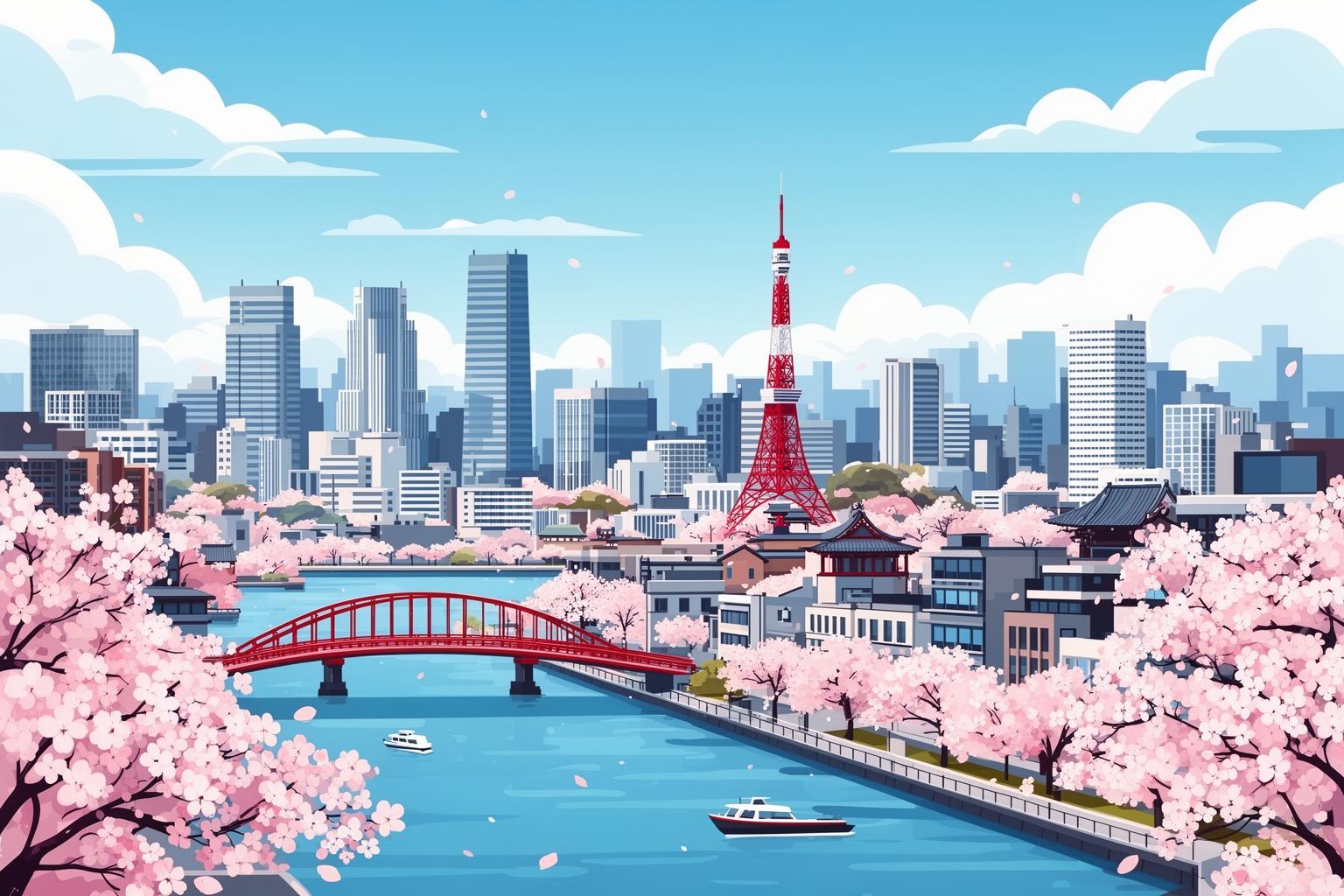
If you want a perfect example of this entire phenomenon, look no further than the Okutama Lake Ropeway, officially known as the Okutama Kōjō Cable Car. It’s probably the one featured in the most haunting photos online. Located just on the outskirts of Tokyo Metropolis, it is a stunningly eerie sight—a tangible embodiment of a dream that died and was left suspended in time.
The Promise: A Quick Trip to Paradise
This ropeway was actually constructed slightly before the main bubble, opening in 1961. Yet, it was born from the same spirit of post-war optimism and the growing domestic tourism boom that would later swell dramatically. Lake Okutama is an artificial lake, a vast reservoir supplying water to Tokyo. In the 1960s, it was marketed as a scenic escape for the capital’s ever-expanding population. The ropeway was the finishing touch. It linked two sides of the lake, running from Mitosanguchi Station to Kawano Station. The idea was to offer visitors breathtaking panoramic views of the lake and surrounding mountains. The stations themselves featured a kind of retro-futuristic design. The gondolas, named “Kumo” (Cloud) and “Yama” (Mountain), were charming, brightly colored pods. It was intended to be a fun, quick, modern way to experience the majesty of nature—a perfect, manufactured slice of paradise just a couple of hours from the city center. It symbolized progress, leisure, and humanity’s ability to package nature as an attraction.
The Reality: Why It Failed
Here’s the twist: the dream was short-lived. The Okutama Ropeway was a commercial failure almost from the beginning. It operated for only about five years before closing in 1966. Its shutdown wasn’t due to the economic bubble bursting decades later; rather, it succumbed to more mundane issues. For one, another ropeway opened on nearby Mount Mitake, which was more popular with hikers. More importantly, access to the lake improved significantly with increased personal car ownership and better roads. People could simply drive around the lake, stopping wherever they pleased. The novelty of the short ropeway ride wore off, and passenger numbers dwindled until it was no longer profitable. The operating company quietly liquidated in the 1970s. Then… nothing happened. The assets remained frozen. Plans for dismantling never materialized. The company was gone, and no one else wanted to cover the costs.
The Vibe Today: A Post-Apocalyptic Masterpiece
For over half a century, the Okutama Ropeway has simply hung there. The two gondolas remain suspended on the cables, one near each station, high above a remote inlet of the lake. They define haunting. The paint is cracked and faded, the once-shiny metal corroded with rust and grime. The windows are shattered or fogged with age. Through the trees, the abandoned stations can be seen—concrete structures slowly being overtaken by vines and moss. It is profoundly eerie. It feels wrong to see these objects, designed for motion and joy, trapped in silent, permanent stillness. When fog descends from the mountains and envelops the lake, the gondolas resemble phantom ships sailing on a sea of mist. For urban explorers and photographers, this site is legendary. It’s not just a ruin; it’s a masterpiece shaped by time, neglect, and nature’s reclaiming forces. It conveys a powerful story without words—a story of ambition, failure, and the slow, inevitable subjugation of human efforts by the natural world. It stands as the quietest, saddest, and most beautiful monument to a forgotten future you could ever imagine.
Case Study 2: The Maya Kanko Hotel & Ropeway – Kobe’s Ruined Mountaintop Palace
While Okutama reflects the quiet melancholy of a single, failed piece of infrastructure, our next case study reaches an entirely different scale of epic decay. We’re heading to the mountains overlooking the city of Kobe, to Mount Maya. Hidden here amid the clouds is not just an abandoned ropeway station, but an entire abandoned luxury hotel: the Maya Kanko Hotel. This site isn’t merely a ruin; it’s a legend. It’s so renowned for its grand, crumbling beauty that it’s often referred to as the “Queen of Haikyo” in Japan.
The Grand Dame of the Mountains
The story here is far longer and more intricate. The original hotel was constructed way back in 1929 as a lavish retreat for the wealthy residents and foreign traders of the cosmopolitan port city of Kobe. It was linked to the city below by the Maya Cablecar, an engineering marvel of its time. This was the pinnacle of pre-war modernism, a place of elegance and high society. The hotel burned down during World War II but was rebuilt in 1961 as the Maya Kanko Hotel, a spectacular concrete structure clinging to the mountainside, featuring a stunning circular ballroom with panoramic views of Kobe and Osaka Bay. It quickly became a hugely popular destination for tourists, hikers, and students. The combination of the cable car ride up the steep mountain, followed by a ropeway ride along the ridge to the hotel, was a classic day-trip experience. The hotel symbolized Japan’s post-war recovery and its renewed embrace of leisure and luxury.
A Series of Unfortunate Events
The decline of the Maya Kanko Hotel wasn’t sudden but a slow death by a thousand cuts—a tragic tale of repeated blows from both economic and natural forces. Its remote, exposed location made it vulnerable. It was damaged by a major typhoon and mudslide in 1967, which also destroyed the ropeway connecting it to the cable car station. Although the hotel reopened, access became more difficult, and its heyday began to wane. The final blows were a combination of factors. The relentless shifting of tourist trends during and after the Bubble Era rendered grand, isolated hotels like this outdated. Then, in 1995, the Great Hanshin Earthquake devastated Kobe. While the hotel structure survived, the extensive damage to regional infrastructure and the resulting economic fallout were immense. The hotel closed permanently, and the Maya Ropeway line that served it was officially abandoned. This story adds a vital dimension to understanding Japan’s ruins. It’s not always just about economic bubbles. Japan is a country locked in a constant battle with nature—earthquakes, typhoons, volcanoes, landslides. Sometimes the ruins you see aren’t monuments to failed business plans, but markers of a struggle against nature that was ultimately lost. They remind us of the fragility of human construction in one of the most geologically active places on Earth.
The Queen of Haikyo
Today, the Maya Kanko Hotel is stunning. Though only a concrete skeleton remains, it possesses incredible architectural bones. Trespassing is illegal and extremely hazardous, but photos and videos from those who have ventured inside abound online. They show the grand ballroom with its collapsed ceiling, where moss-covered chairs remain in a permanent audience facing an empty stage. Light filters through broken windows into hallways where wallpaper peels like sunburnt skin. Pianos sit silently in dusty lounges, their keys untouched for decades. Nature is mounting a full-scale takeover, with ferns growing out of staircases and trees rooting themselves on the balconies. It’s a hauntingly beautiful scene of decay. What makes the experience even more surreal is that the Maya View Line, a separate cable car and ropeway route, is still fully operational today. It carries tourists to an observation deck near the abandoned hotel. From there, you can catch sight of the ruined queen through the trees—a silent, grey ghost standing in stark contrast to the lively tourist spot just a few hundred meters away. It offers a powerful, tangible contrast between the living and the dead, the present and the ghost of a past that refuses to be entirely erased.
More Echoes in the Mist: Other Forgotten Sky-Trams
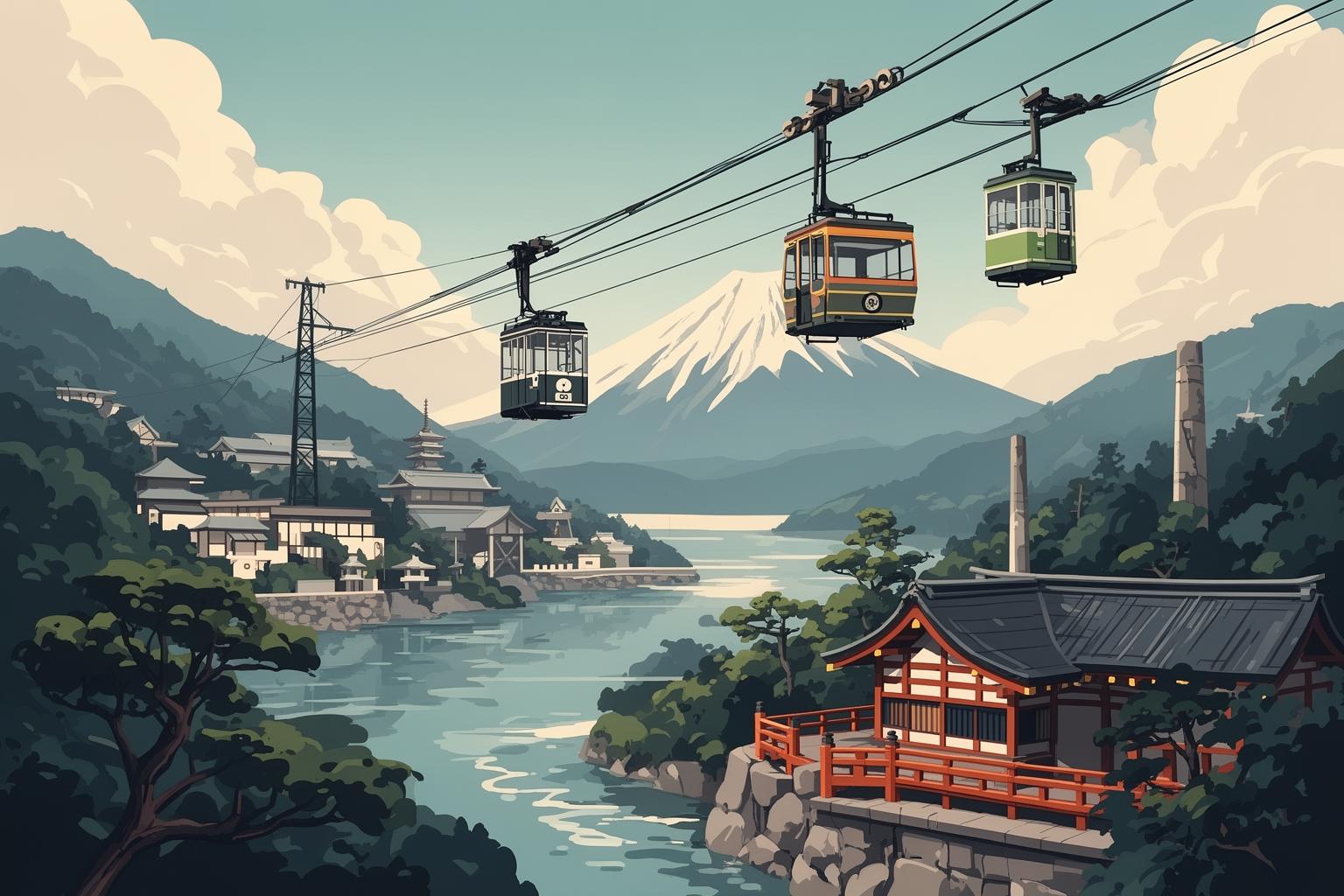
Okutama and Maya are the A-listers of the abandoned ropeway world, but in reality, this phenomenon is scattered throughout the Japanese archipelago. These are merely a couple of examples illustrating a much broader pattern of boom, bust, and decline. Once you start noticing, these ghostly remnants appear everywhere, each sharing a slightly different version of the same fundamental story about Japan’s economic and social changes over the last fifty years.
The Fading Glory of Onsen Towns
Consider the classic Japanese hot spring, or onsen, towns. During the Bubble Era, many were transformed dramatically. Old, charming inns were overshadowed by massive, multi-story concrete hotels built to host a large influx of tourists, especially for company-sponsored trips known as shain ryoko. These trips were a significant part of Japanese corporate culture—the entire department would escape for a weekend of drinking, bathing, and bonding. To entertain these visitors, developers constructed attractions around the towns: theme parks, quirky museums, and, naturally, ropeways leading to observation decks featuring “lover’s sanctuaries” or kitschy statues. But as the economy stagnated, companies cut back on these lavish trips. The culture shifted as well; younger generations were less interested in enforced weekend fun with their bosses. Consequently, many of these oversized hotels and their associated attractions slowly died out. Drive through a place like the Kinugawa Onsen area today, and you’ll find dozens of immense, abandoned hotel buildings, their empty windows staring like vacant eyes. Somewhere on the hillside above, you’ll likely discover the rusted remains of a ropeway station that once carried joyous crowds to a theme park that now no longer exists.
The Ski Lifts of Yesteryear
Another significant mark on the landscape comes from the ski boom. The late 1980s and early 1990s were the golden age of skiing in Japan, driven by a booming economy and a hit movie called “Take Me Skiing.” It became the cool, trendy activity. Young people flocked to the mountains of Nagano, Niigata, and Hokkaido. In response, developers launched a construction frenzy, opening hundreds of new ski resorts. Many were small, family-run operations with just one or two lifts. When the bubble burst and the ski craze dwindled, these smaller resorts couldn’t compete with the larger, well-funded ones and shut down by the dozen. Now, if you hike through the Japanese Alps during summer, you’ll continuously stumble upon their remains. The ski runs are overgrown, yet the skeletal towers of the ski lifts still climb the mountainside. The chairs are often piled up in a rusted heap at the bottom or, eerily, still hanging from the cables, gently swaying in the wind. These aren’t grand ropeways like Okutama, but their sheer number tells a compelling story. They symbolize the end of a distinct cultural moment—the ghost of a national pastime that burned brightly before quickly fading, leaving thousands of metal skeletons behind.
So, What’s the Real Deal with Haikyo Culture?
Alright, so we’ve identified the reasons these places exist—economic collapse, logistical difficulties, and clashes with nature. But that only covers the cause. It doesn’t fully capture the impact these places have on people, nor why they’ve become such fascinating subjects both in Japan and internationally. Why are people so attracted to these images of decay? The explanation goes far beyond just the thrill of urban exploration and taps into deeply rooted Japanese cultural and aesthetic ideas.
It’s More Than Urban Exploration; It’s a Mood
In the West, the fascination with exploring ruins is often linked to adrenaline, discovery, and a kind of post-apocalyptic fantasy. In Japan, while those elements are present, the culture of haikyo (literally “ruins”) frequently connects to something more reflective and philosophical. It involves two central aesthetic principles. The first is mono no aware, a crucial concept in Japanese culture. It roughly means “the pathos of things” or “an awareness of the impermanence of things.” It’s a gentle, bittersweet sorrow about the fleeting nature of life and the fact that everything, no matter how beautiful or magnificent, will eventually fade and vanish. Witnessing a once-shiny ropeway gondola now covered in rust isn’t just interesting; it’s a powerful stir of mono no aware. It’s a meditation on time, memory, and the unavoidable decline of all things. It’s beautiful because it’s sorrowful, and it’s sorrowful because it was once beautiful. The second concept is wabi-sabi, which you might be familiar with. It’s about appreciating beauty in imperfection, transience, and incompleteness. It’s the aesthetic found in moss on an ancient stone or a crack in a ceramic bowl. Haikyo represent the ultimate expression of wabi-sabi. The peeling paint, rust stains, and nature reclaiming man-made structures create a dynamic, living artwork of decay. It’s not about destruction, but transformation. For many, exploring or simply viewing photos of haikyo is a profoundly aesthetic, almost spiritual experience.
A Reflection of Modern Japan
Beyond the aesthetics, there’s a deeper, more current reason these ruins resonate so powerfully. They act as a physical mirror reflecting the anxieties of modern Japan. The nation faces enormous challenges: a shrinking and rapidly aging population, decades of economic stagnation, and uncertainty about its place in the world. The bubble era, despite its excesses, was a time of unlimited optimism and belief in a continually expanding future. The ruins from that time serve as a constant, nagging reminder of that lost future. They symbolize a country literally shrinking, leaving behind empty schools, deserted villages, and abandoned resorts as populations decline. They embody the aftermath of a party that younger generations never got to attend, yet they still bear the consequences. When you see that lonely gondola dangling in the mist, you’re not merely looking at a failed business from 1966. You’re witnessing a powerful symbol of Japan’s past aspirations and current struggles. It visually expresses the gap between the 20th century’s promises and the complex reality of the 21st. So yes, those images resonate deeply because they aren’t just eerie, abandoned places. They reveal the truth. They embody a messy, intricate, and melancholic part of Japan’s real story—a narrative far more compelling than the polished, flawless image the world often perceives.