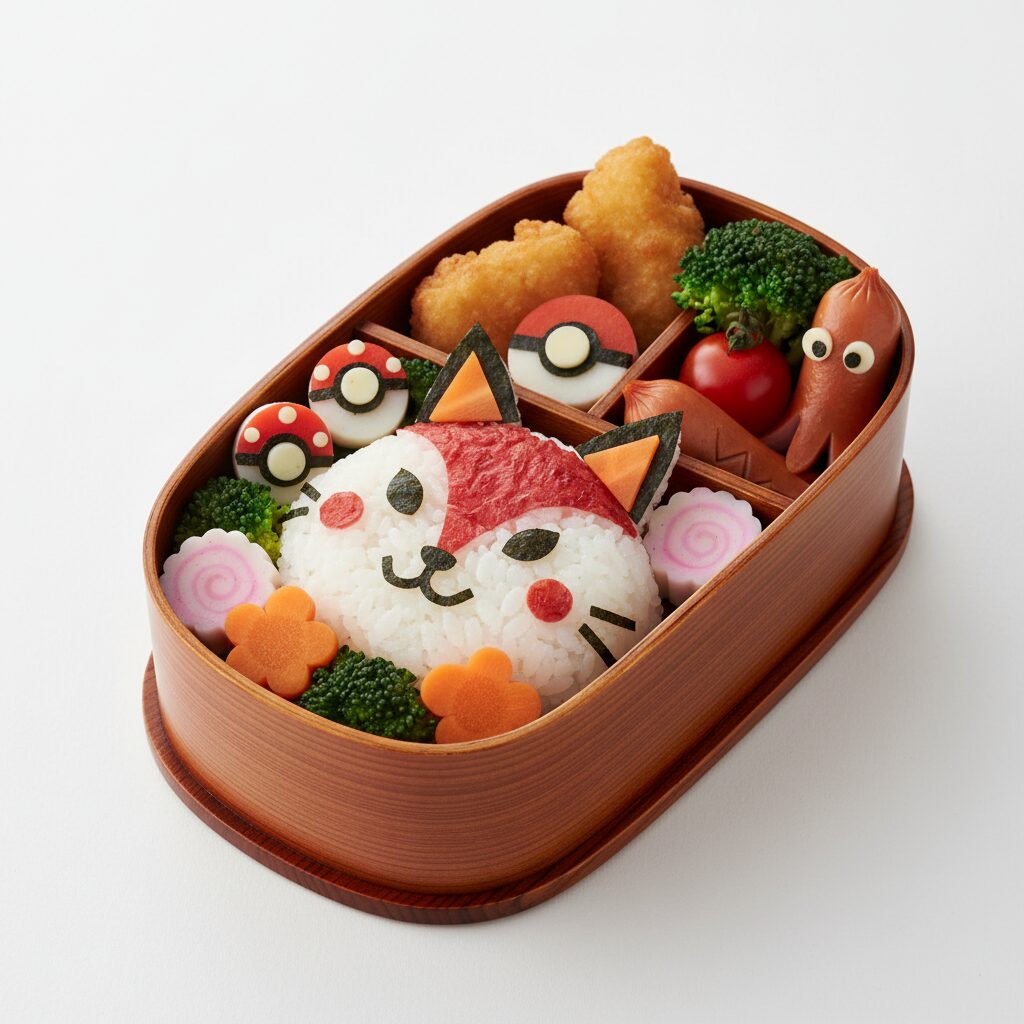
Yo, what’s good? Hiroshi Tanaka here, your local guide to the stuff in Japan that makes you go, “Wait, for real?” You’ve probably been scrolling through the ‘gram, right? And you’ve seen them. These absolutely wild, next-level lunchboxes. A perfect little Totoro made of rice and sesame seeds, snoozing on a bed of broccoli trees. Pikachu staring back at you, cheeks made of tiny circles of ketchup-infused ham. It’s called Kyaraben, a mashup of ‘character’ and ‘bento,’ and it’s a whole universe of edible art that looks more at home in a museum than a kindergartener’s backpack. And I bet your first thought was something like, “That’s fire, but who on earth has the time for this?” You might be wondering if Japanese moms are all secretly professional food artists who wake up at 4 AM to wage war with nori and cheese slices. Is this a daily reality or just a flex for social media? It’s a legit question. The vibe from the outside is confusing. It seems like an insane amount of effort for a meal that’s gonna get devoured in ten minutes flat by a five-year-old. Is it a competition? Is it a mandatory part of being a parent in Japan? Or is it just a hobby that got way, way out of hand? Let’s get into it, for real. The short answer is, yeah, it’s a real thing. But the long answer, the why behind it all, is a deep-dive into Japanese culture that’s about way more than just making food look cute. It’s a silent conversation, a form of love, a tool for education, and sometimes, yeah, a source of some serious social pressure. Kyaraben is a microcosm of modern Japan, with all its beauty, its intensity, and its unspoken rules, packed tightly into a little box. To really get the picture, you need to understand the tools of the trade, the battlefield where these edible creations are born. The epicenter for this kind of gear in Tokyo is Kappabashi Kitchen Town, a street that’s basically heaven for anyone who’s ever thought, “I wish I had a tiny hole punch that only makes smiley faces out of seaweed.” It’s ground zero for the Kyaraben arsenal.
If you think the dedication to character bento is intense, wait until you see the passion behind Japan’s yuru-chara mascots.
The Genesis of the Grind: Where Did This Bento Obsession Even Come From?
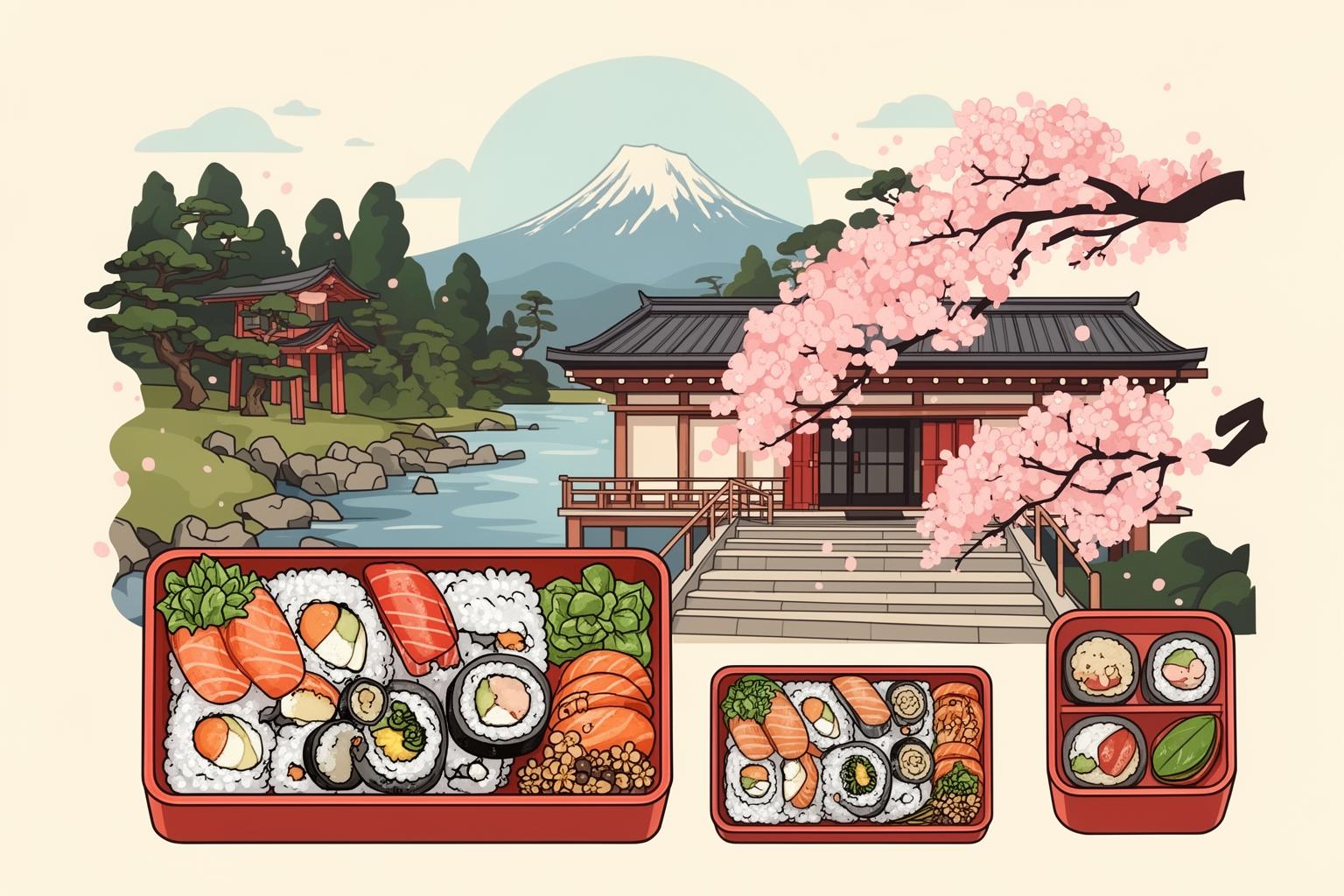
To truly understand why Kyaraben has become such a phenomenon, you need to look back in history. Bento culture itself is far from new; it’s actually ancient. We’re not just talking about a basic sandwich wrapped in plastic. The bento box is a fundamental part of Japanese life, and its transformation from a simple, practical item to an art form reveals much about the country’s shifting values and sense of beauty. It’s a progression from mere survival to a form of self-expression, from just eating to communicating.
Not Your Typical PB&J: The Original Bento Story
The idea of a portable meal in Japan dates back centuries, long before anyone started making rice balls shaped like pandas. During the Heian period, over a thousand years ago, people carried hoshi-ii, dried rice packed in small bags. It could be eaten as is or made edible by adding hot water. This was purely practical, with no emphasis on appearance—it served as sustenance for farmers, travelers, and soldiers. By the Azuchi-Momoyama period, around the late 16th century, things became more refined. This was the age of castles and powerful warlords, bringing a more sophisticated culture. The elite would pack elaborate meals in beautiful lacquered wooden boxes called jubako, which they brought to hanami (cherry blossom viewing) parties or outdoor gatherings. This marked the beginning of the bento as something beautiful, something to admire and share. The container itself gained importance alongside the food it held. During the peaceful Edo period, bento culture spread to the general public. Theatergoers attending long Kabuki performances carried makunouchi bento—“between-acts bentos”—filled with small, easy-to-eat portions of rice, fish, and vegetables. These were made for convenience, to eat neatly in cramped theater seats. Then, in the Meiji era, the rise of rail travel gave birth to the ekiben, or “station bento,” sold at train stations and often showcasing regional specialties. The ekiben turned bento into a travel experience, offering travelers a taste of places they passed through. The bento that directly inspired today’s school lunchbox took shape in the 20th century. After World War II, as Japan rebuilt, a simple, homemade bento in a plain aluminum box became a powerful symbol: a mother’s care and a promise of nourishment during difficult times. The government promoted a balanced bento for schoolchildren, emphasizing rice, a main dish, and several side dishes for a complete meal. This generation grew up seeing the bento as the ultimate expression of maternal love—the effort behind it, even if the meal was simple, was the message.
The Kyaraben Transformation: From Basic Octopus Sausages to Elaborate Anime Art
The leap from a standard, nutritious bento to the fully detailed anime-character bento—the Kyaraben—is a much more recent development, gaining momentum in the 1990s and booming in the 2000s. It was the perfect storm of cultural shifts. Japanese pop culture, particularly anime and manga, had become a global phenomenon. Characters like Hello Kitty, Anpanman, and the entire Studio Ghibli lineup were deeply ingrained in the national imagination. Kids loved these characters, so what better way to excite them about lunch? But before intricate portrayals of Naruto made from egg sheets and seaweed, there were humble beginnings. The proto-Kyaraben, the gateway for all would-be bento artists, was the tako-san wiener—a small octopus-shaped sausage. This was revolutionary. You take a simple red sausage, make a few strategic cuts, boil it, and voilà—it curls into a cute little octopus. It was simple, clever, and marked the first step toward seeing food not just as nourishment but as a creative medium. This unlocked endless possibilities. If you could make an octopus, why not a crab? Or a flower? Parents, mostly mothers, started experimenting. They shaped apple slices into bunnies and crafted rice balls into animal faces using black sesame seeds for eyes. This trend was fueled by women’s magazines featuring cute bento ideas. Then came the internet, blogs, and social media, which truly accelerated Kyaraben’s rise. Suddenly, it wasn’t only about pleasing your own child anymore. It became about sharing your creations online. It developed into a community, a hobby, and inevitably, a competition. Mothers began outdoing one another, perfecting more sophisticated techniques. Specialized tools emerged on the market: nori punches that crafted perfect smiley faces, rice molds shaped like cars and bears, and tiny cutters for making cheese stars. The Kyaraben had its transformation. It evolved from a charming parenting trick into a serious, high-level art form. The pressure was on, and the bento box officially became a canvas for showcasing creativity, dedication, and love.
The Real Tea: Is It About Love or Is It Low-Key Pressure?
Alright, this is the essence—the part that tends to get overshadowed by all the visually appealing images. Why go through all this effort? Is it truly a pure act of love, or is there something else beneath the surface? The truth is, it’s complicated. It’s a messy, intriguing blend of genuine affection, educational principles, ingrained communication customs, and yes, a significant amount of social pressure. To dismiss it as merely one of those things is to miss the bigger picture. It’s a cultural phenomenon sitting right at the crossroads of personal emotions and societal expectations.
“Shokuiku” – The Gospel of Eating Right (and Cute)
One of the major official motivators behind making food enjoyable is a concept known as Shokuiku (食育), which literally means “food education.” This is more than just a casual notion; it’s a national policy. The Basic Law on Shokuiku was established in 2005, making it a government-supported program aimed at teaching children (and adults) about nutrition, food safety, and the significance of healthy eating. It’s taught in schools, promoted at community centers, and plays a key role in the national dialogue about health. So, where does Kyaraben fit in? It’s regarded as a potent, grassroots method of delivering Shokuiku. Every parent knows the challenge of a picky eater. How do you convince a child who dislikes vegetables to eat their broccoli? In Japan, you don’t just say, “Eat it because it’s good for you.” You transform the broccoli into a magical forest for a tiny sausage explorer. You shape the bell peppers into vibrant stars. You turn the entire meal into an adventure. Kyaraben is essentially a gamified strategy for nutrition. By making healthy food visually attractive and enjoyable, mothers actively participate in Shokuiku. They teach their children to appreciate a variety of foods, colors, and textures from an early age. A colorful bento is not merely pretty; it serves as a visual indicator of a balanced meal—the red of the tomato, the green of the beans, the yellow of the egg, the brown of the meat. It’s a practical implementation of nutritional guidelines, disguised as play. This lends the whole effort a sense of righteous purpose. It’s not just a frivolous, time-consuming hobby; it’s a crucial part of nurturing a healthy, well-rounded child. It positions the mother’s labor as not only an act of love but also a responsible educational duty.
The Silent Language: Bento as a Mom-to-Kid DM
To truly grasp the emotional significance of a Kyaraben, it’s important to understand a bit about Japanese communication styles. Culturally, Japan tends to favor non-verbal and indirect expressions. Explicit, loud declarations of love and affection are less common than in some other cultures. Instead, feelings are often conveyed through actions, gestures, and thoughtful behaviors. It’s about showing rather than telling. The bento is an ideal medium for this kind of silent communication. It’s a daily, tangible message from parent to child. The tremendous time and effort invested in a Kyaraben become the message itself. Waking up an hour early, carefully crafting tiny seaweed eyebrows, precisely arranging broccoli florets—all of this sends a powerful, non-verbal “I love you. I’m thinking about you. I’m putting this effort in because you matter to me.” It can also convey specific sentiments. An extra-special bento on the day of an important test says, “Good luck! You’ve got this!” A child’s favorite character appearing in their lunchbox after a rough morning might be a way of saying, “I’m sorry we argued, let’s have a better afternoon.” When the child opens their bento at lunchtime, away from their parent, they receive this message. It’s a private moment of connection during the school day. It reassures them of their parent’s care and presence, even when they’re not physically there. In a society where parents, especially fathers, often work long hours and may have limited face-to-face time with their kids, the bento becomes an essential channel for maintaining that emotional bond. It’s a love letter written in rice and vegetables.
The Flip Side: The “Bento Shiken” (Lunchbox Test)
Now, let’s consider the darker side. For every mother who genuinely enjoys making Kyaraben as a creative outlet, there’s another who feels trapped by it. This is where social pressure becomes very real. Enter the concept of the Bento Shiken, or the “Lunchbox Test.” It’s not an official test, of course, but a very real, unspoken form of evaluation happening in kindergartens and elementary schools nationwide. When a child opens their bento at lunchtime, they’re surrounded by their peers. Other children notice what’s inside and, being kids, comment: “Wow, your bento has Anpanman!” or “Why is your bento so plain?” This can lead to what’s sometimes called “bento bullying,” where a child with a simple, “boring” lunch might feel embarrassed or excluded. The pressure, however, is most deeply felt by the mothers. The bento is viewed as a direct reflection of a mother’s competence, dedication, and even her love for her child. An elaborate, beautiful Kyaraben suggests you’re a good, capable, and caring mother. A simple or store-bought lunch may invite silent judgment from other mothers or even teachers. It creates anxiety and competition. Many kindergartens in Japan require homemade lunches, explicitly banning pre-packaged meals. This puts the entire responsibility on parents (mostly mothers). Japanese parenting forums are full of stories about the stress of daily bento preparation. Mothers share efficiency tips, complain about their lack of artistic talent, and voice worries about their child’s bento being compared to others. This ties into deeper cultural ideas like wa (group harmony) and the pressure not to stand out negatively. You want your child to fit in, and the proper bento is part of that social uniform. It also connects with tatemae, the public image one upholds. The bento becomes part of the family’s tatemae, showcasing a well-ordered and loving household. The pressure is so intense that an entire industry of “shortcut products” has emerged—frozen foods shaped like characters or bento kits that simplify assembly—for mothers who want the Kyaraben look without the hours of effort. This highlights the central tension in Kyaraben: it’s a beautiful expression of love that, under the weight of social expectations, can turn into a stressful, competitive burden.
The Arsenal: Tools of a Kyaraben Master
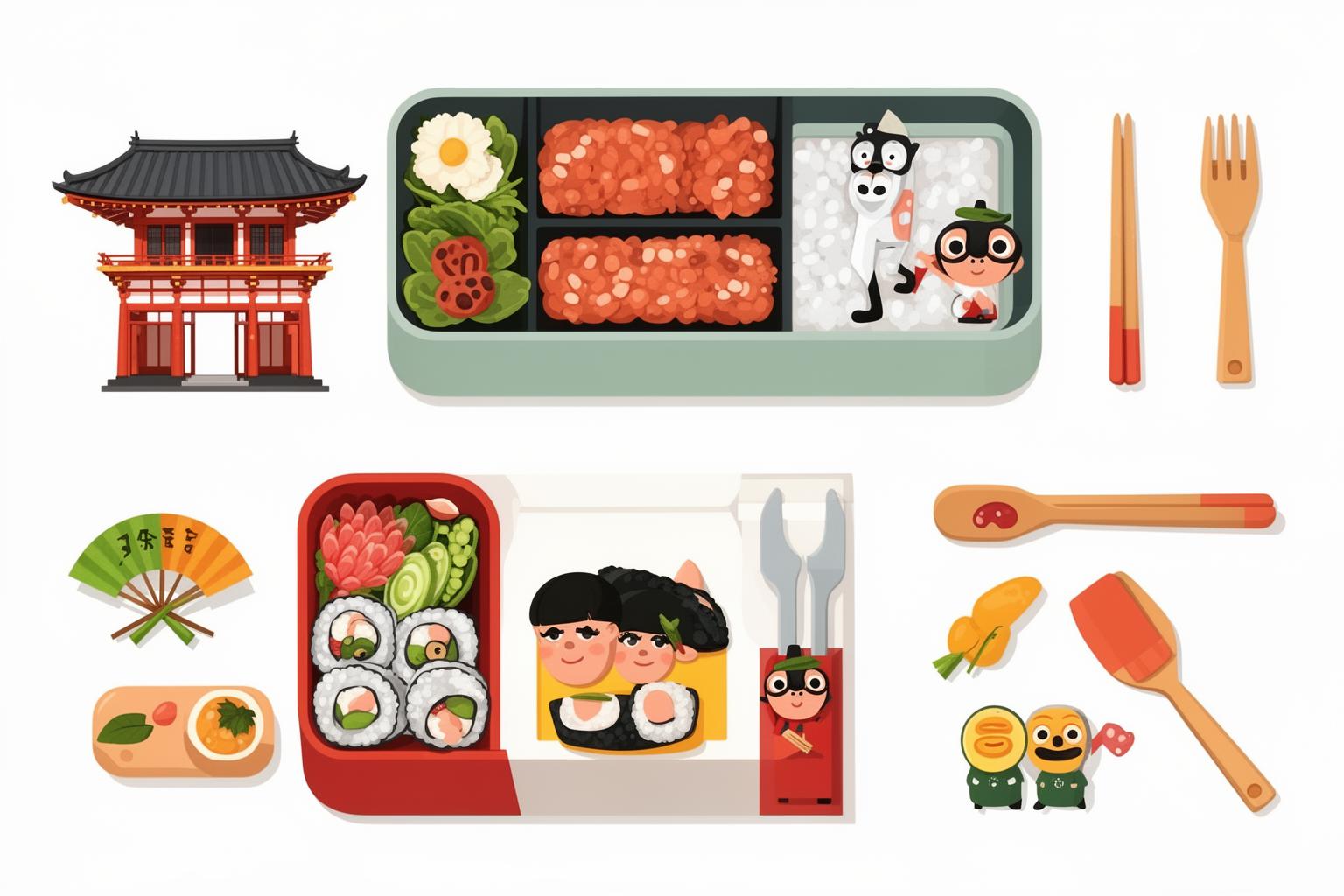
You can’t simply walk into a kitchen with an ordinary knife and expect to produce a masterpiece. Creating Kyaraben requires a specialized set of tools—an array of tiny, precise gadgets that transform a regular cooking space into an artist’s studio. It’s a realm of accuracy and intricacy, and having the right equipment is half the challenge. This isn’t your grandmother’s kitchen; this is tactical food crafting.
More Than Just a Knife: The Gear You Didn’t Realize You Needed
Entering the bento section of a Japanese department store or a 100-yen shop feels like stepping into another world. The incredible variety of tools dedicated to making food adorable is astonishing. First, there are the molds. Rice molds are essential. These plastic containers come in shapes of anything imaginable: Hello Kitty, shinkansen bullet trains, stars, hearts, bears, cars. You pack the warm rice tightly, press it down with the lid, and release a perfectly shaped base for your character. Then there are egg molds. After hard-boiling and peeling an egg while it’s still hot, you place it in the mold and submerge it in cold water. Ten minutes later, you have an egg shaped like a fish or a car. Next up are the cutters. These aren’t your average cookie cutters; they’re tiny, intricate metal cutters made for slicing ultra-thin sheets of ham, cheese, or lunch meat into delicate shapes such as flowers, musical notes, or animals. Often sold in sets, they create an edible vocabulary of decorations. The true MVP of the Kyaraben toolkit, however, is the nori punch. Nori—the dried seaweed used in sushi—is indispensable for adding fine details like eyes, mouths, and whiskers. Cutting these tiny, precise shapes with scissors is a nightmare. Enter the nori punch. Resembling a craft punch for paper but designed specifically for seaweed, you can find punches that produce perfect smiley faces, twinkling stars, tiny animal faces, or even hiragana characters. A genuine Kyaraben artist will have a whole collection of these. And to place these delicate nori details onto the rice ball? Forget your fingers—you use a pair of specialized, food-safe tweezers to arrange microscopic seaweed bits. That’s the level of detail involved. Add to this colorful silicone dividers to keep foods separate, decorative food picks topped with little cartoon characters, and tiny squeeze bottles with fine tips for drawing with ketchup or mayonnaise, and you have a full-fledged Kyaraben workshop. This equipment is what makes the magic happen, turning a mundane task into a high-level craft.
The Edible Palette: Breaking Down a Masterpiece
Knowing the tools is one thing, but understanding the ingredients as an artist’s palette is the key. Every single item in a Kyaraben is selected for its color, texture, and malleability. It’s a carefully calculated culinary construction. Let’s examine how a typical character is assembled. The canvas is almost always rice. Plain white rice serves as a blank slate, but it can be colored to match any design. For a yellow character like Pikachu, you might mix in a bit of turmeric, curry powder, or finely mashed egg yolk. For a pink character like Kirby, you can use sakura denbu, a sweet, fluffy pink fish floss, or mix in some ketchup. There are even commercial powders called deko-furi (decoration furikake) that come in a rainbow of colors and flavors made specifically for coloring bento rice. Structural elements and main features often come from proteins. Tamagoyaki, the Japanese rolled omelet, provides a vibrant, solid yellow that can be cut into squares or other shapes. Sausages can be carved into octopuses, crabs, or flowers. Mini hamburgers or meatballs work perfectly for brown, round faces like those of Anpanman. Ham and cheese slices act like edible construction paper, which can be layered and cut into clothing, blushing cheeks, or background details. Then there are the vegetables, serving both as nutrition and scenery. Broccoli florets reign supreme as bento foliage; they look just like little trees or bushes. Cherry tomatoes add a pop of bright red and can be turned into ladybugs with a few carefully placed nori dots. Sliced carrots can become flower shapes. Corn kernels offer small bursts of yellow. Edamame beans provide perfect green accents. Everything serves a purpose. The final and crucial layer is the detail work, where nori punches and tweezers come into play. Nori is used for all the black lines—eyes, mouths, noses, whiskers, outlines. It’s the ink that breathes life into the character. A tiny sliver of red bell pepper or the pink section of kamaboko fish cake can become a smiling mouth. A dab of mayonnaise acts as glue to attach features or to create white highlights in a character’s eyes. Every single element is purposeful. The aim is to build a scene that is not only visually stunning but also nutritionally balanced and, above all, delicious. It’s a puzzle where every piece must fit flawlessly.
So, Is It Worth It? The Final Verdict on the Bento Grind
After exploring the history, psychology, and impressive technical skill involved, we return to the original question: Is this entire Kyaraben phenomenon truly worth the incredible effort? From an outsider’s viewpoint, it may seem like a form of parental madness, an unnecessary burden amid an already busy life. But from within, it is a deeply rooted cultural practice intricately woven into the fabric of Japanese family life. The final answer isn’t a straightforward yes or no. It’s a “yes, but it’s complicated.” On one hand, absolutely, it’s worth it. It’s a powerful, creative, and distinctly Japanese way to express love. It strengthens family bonds, encourages healthy eating habits, and can bring genuine joy and pride to both the creator and the recipient. When a child opens their lunchbox to find their favorite hero looking back, the expression on their face is an immense emotional reward. It makes them feel noticed, special, and loved. For many parents, it’s not a task but a treasured creative outlet, a moment of mindful crafting in an otherwise hectic day. It’s a way to connect with their child’s world and interests, showing that they are truly paying attention. However, it’s important to recognize the other side of the coin. The pressure to perform, to keep up with other moms, and the fear of a child facing shame for a “subpar” bento is very real and can be extremely stressful. It exposes the often unspoken expectations placed on mothers in Japan to be flawless in every aspect of domestic life. The growth of time-saving bento products signals that the culture is evolving. Modern parents seek a compromise—a way to achieve the desired aesthetic without starting before dawn. It’s a tacit acknowledgment that the standards have become impossibly high for many. Ultimately, Kyaraben serves as a perfect metaphor for many aspects of Japanese culture. It embodies kodawari, the relentless pursuit of perfection and meticulous attention to detail. It reflects the significance of presentation and aesthetics in everyday life, the notion that beauty enhances any experience, even a simple meal. It illustrates the preference for indirect communication, where actions speak louder than words. And it reveals the delicate balance between individual expression and the pressures of group conformity. So, the next time you see a jaw-droppingly intricate Kyaraben on your feed, look beyond the initial “wow” factor. Don’t just see it as adorable food. See it for what it truly is: a complex cultural statement, a labor of love, a source of stress, a tool for education, and a silent conversation packed into a 6×4 inch box. It’s not just lunch. It’s a whole mood. It’s a vibe. It’s Japan in miniature.