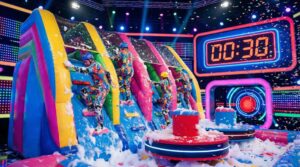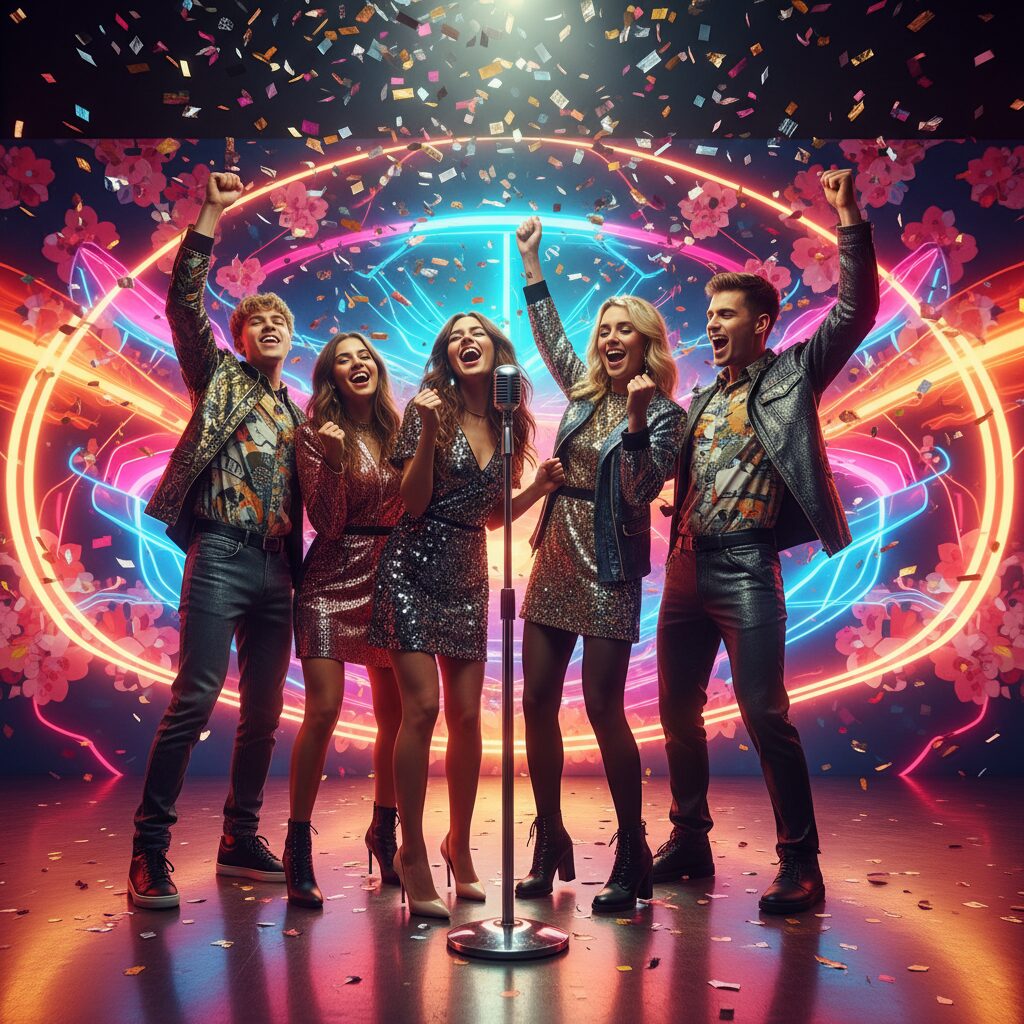
Yo, what’s good? Taro here. So you’ve been scrolling, right? Deep in a TikTok or Insta Reels rabbit hole, and you see it. Some crew in Japan, losing their minds in a room that looks like it was designed by a sugar-rushed unicorn. There are glowing walls, disco balls going wild, and they’re screaming the lyrics to an anime opening while waving inflatable guitars. And you’re thinking, “Hold up. Is that a karaoke room? It looks more like a secret level from Super Mario Party.” And honestly? You’re not wrong. That’s the exact vibe. But the real question, the one that probably hits you after the initial shock, is… why? Why is a place for singing so extra? Why isn’t it just a mic and a stage in a bar like you see in the movies? It feels like there’s a massive piece of the cultural puzzle missing. And bet, you’re right. This whole scene isn’t just about putting on a show. It’s a deep, complex, and low-key genius solution to some very Japanese social pressures. It’s about creating a temporary autonomous zone, a pocket dimension where the normal rules of society get paused. It’s a whole universe in a tiny, soundproofed box. Forget just singing; we’re talking about a full-on social ritual, a gamified bonding experience that makes perfect sense once you understand the OS it’s running on. Even for a dude like me who’s usually scaling mountains and finding my zen in nature, I gotta admit, navigating the social terrain of a high-energy karaoke session is its own kind of thrilling expedition. It’s a concrete jungle out there, but inside these boxes, it’s a whole different kind of wilderness. Before we unpack this whole wild phenomenon, let’s pinpoint ground zero. Think of the iconic spots, the ones you’ve probably seen without even realizing it, like the pulsating heart of Shibuya’s karaoke scene.
Just as these karaoke boxes create a unique social escape, you can find another layer of Japan’s ingenious, self-contained culture in its vending machine alleys.
The Core Question: Why Is Karaoke in a Private Box Anyway?
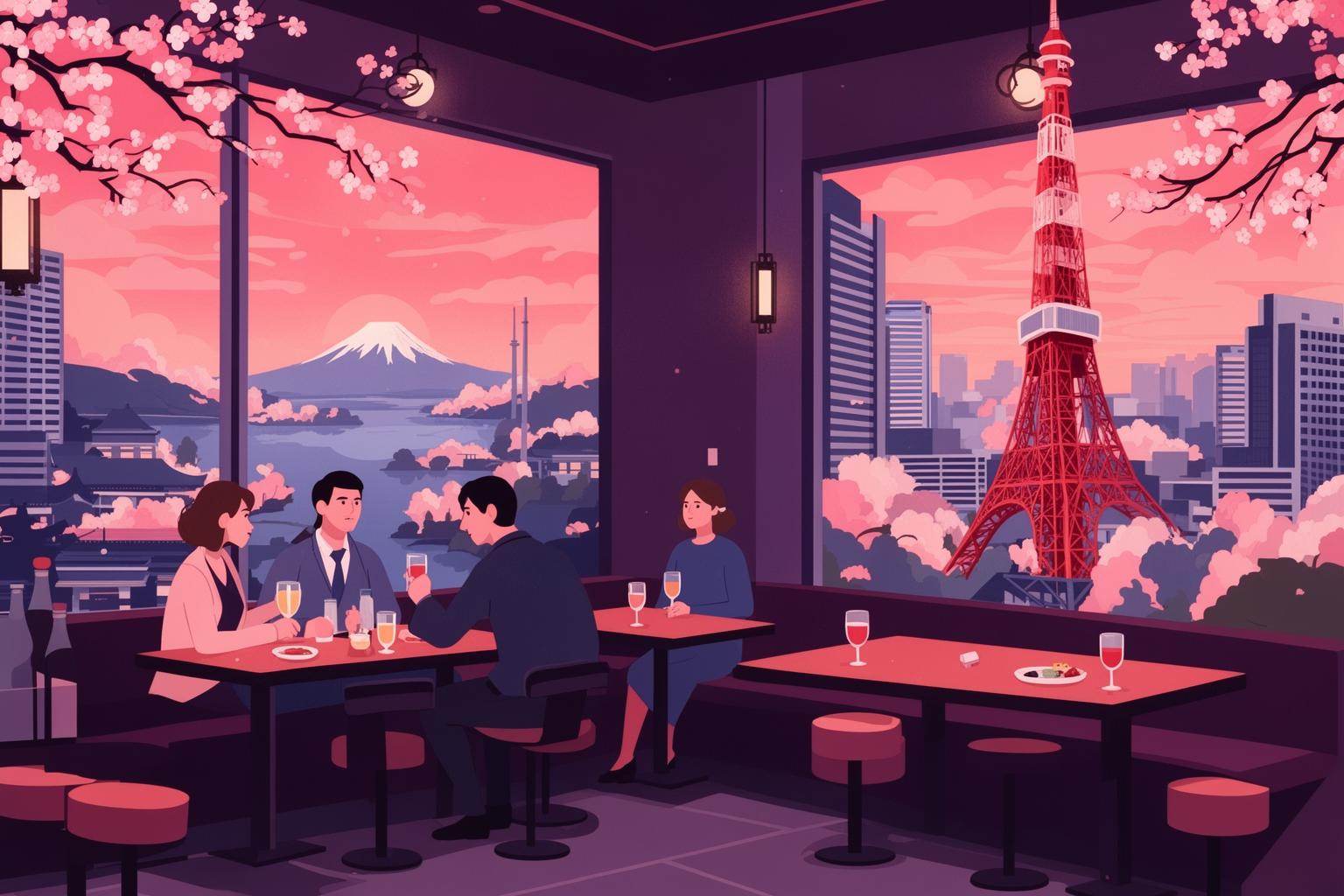
First, let’s address the biggest cultural disconnect right away. When most people outside Asia think of karaoke, they imagine a bar, a dimly lit stage, a crowd of strangers, and that one brave or overly intoxicated person belting out Bon Jovi. It’s a public performance. In Japan, however, that scene is incredibly niche, almost nonexistent. The default, the absolute standard, is the karaoke box: a private, soundproof room rented by the hour for just you and your friends. So why this obsession with privacy? It comes down to a few core pillars of Japanese social psychology, with the most important being the concept of haji, which roughly translates to shame or embarrassment. There’s a deep-rooted cultural anxiety about making a fool of oneself in public, about being judged by strangers. Singing, especially if you’re not a professional, is a vulnerable act. The idea of doing it in front of a crowd of unknown people you’ll never meet again? For many Japanese, that sounds less like fun and more like a high-stress nightmare. The potential for haji is simply too great. It isn’t necessarily about shyness; it’s about preserving social harmony and maintaining one’s public image. This leads to the second concept, meiwaku, which means bothering or inconveniencing others. A poor singer on a public stage doesn’t just embarrass themselves; they risk subjecting an entire bar to off-key noise. They are causing meiwaku. The cultural conditioning to avoid this at all costs is extremely strong. A private box completely removes both of these anxieties. There’s no risk of public haji because there’s no audience. There’s no chance of causing meiwaku to strangers since only friends who chose to be there can hear you. It’s a judgment-free zone. This creates a powerful sense of freedom—a safe space where you can be silly, sing badly, attempt that high note you know you can’t hit, and just let loose without any self-consciousness. This ties directly into another fundamental Japanese social concept: uchi-soto, or inside versus outside. Soto refers to the outside world, the public sphere where you interact with strangers, colleagues, and acquaintances. In this sphere, you’re expected to be formal, reserved, and considerate. Your behavior reflects on your company, family, or school. The pressure is intense. Uchi is your inner circle—family and closest friends. Within this trusted group, you can drop formalities, speak casually, and show your true self, your honne, as opposed to your public face, your tatemae. A karaoke box is the ultimate, artificially created uchi space. The moment the door closes, you are physically and psychologically separated from the soto world. You and your group enter a bubble, a temporary sanctuary where the strict rules of public conduct are lifted. You can be loud, silly, and simply yourself. This is why the experience feels so cathartic: it serves as a release valve from the pressures of daily life in a society that values conformity and public restraint. Looking historically, this wasn’t accidental. Karaoke began in the 1970s in sunakku (snack bars) where patrons sang along to instrumental tapes, often accompanied by the bar’s owner. It was still somewhat public. The revolutionary idea came in the 1980s when some entrepreneurs in a rice paddy field in Okayama converted old freight containers into the first “karaoke boxes.” The concept took off—it turned out people craved this privacy, this personal entertainment bubble. Technology evolved from 8-tracks to laserdiscs to today’s digital streaming services, but the core concept of the private box has remained the unshakable foundation of the entire industry. It’s not just a feature; it’s the entire point.
From a Plain Box to a Mario Kart Circuit: The ‘Theming’ Explosion
Alright, so the private box is a must-have. We understand that. But it still doesn’t explain why so many of these rooms seem like they came straight out of a fantasy video game. The early karaoke boxes were, frankly, quite bleak. They were small, functional, and had the charm of a shipping container—which, to be honest, some of them basically were. So how did we transition from a dull metal box to rooms adorned with chandeliers, stage lighting, and life-sized anime character cutouts? The answer lies in a potent mix of economic history and the unending quest for escapism. The key driver was Japan’s economic climate in the 1990s, the so-called “Lost Decade.” The bubble economy of the ’80s had burst dramatically, ushering in a widespread atmosphere of austerity and uncertainty. With less disposable income for lavish nights out like fancy dinners or clubbing, people began seeking cheaper entertainment options, and karaoke, with its per-person, per-hour model, fit perfectly. It provided hours of enjoyment at a relatively low cost. But this also ignited fierce competition among karaoke chains. Every chain was vying for a shrinking share of the entertainment market. How could they differentiate themselves when everyone offered essentially the same product—a room with a TV and microphone? Competing on song selection wasn’t viable in the long run, since the main providers, DAM and JOYSOUND, licensed their libraries to most chains. The solution was to transform the room experience itself. They weren’t just selling a singing space anymore; they were selling an atmosphere. They were selling a fantasy. This gave rise to the konseputo ruumu, or “concept room.” Instead of a plain room with a couch and table, chains began designing rooms around specific themes. You could sing in a room styled like a VIP suite, an elegant European drawing room, or even the bridge of a spaceship. The aim was to offer a deeper form of escapism. For a few hours, you weren’t just a stressed office worker in Shinjuku; you became a rock star on a massive stage, or royalty in a palace. This trend escalated with the rise of social media. The idea of insta-bae, or looking great on Instagram, became a huge cultural force in the 2010s. Suddenly, the visual appeal of the karaoke room was just as important as the sound system. An extravagant, visually striking room wasn’t just a hangout; it was content—something to be photographed, filmed, and shared. People began choosing karaoke chains based on which had the most ‘grammable rooms. This sparked a visual arms race. Themes grew more intricate and elaborate. Lighting became increasingly dynamic. Chains started partnering with popular anime, video games, and J-pop artists to create limited-edition collaboration rooms, knowing fans would flock to them. This brings us back to the Super Mario Party vibe. Many modern party rooms draw direct inspiration from the aesthetic of a Nintendo party game. It’s all about bright primary colors, flashing lights, dynamic visuals across multiple screens, and an overall atmosphere of chaotic, high-energy fun. It’s sensory overload by design. The environment is crafted to dismantle your inhibitions and encourage playful behavior. A plain, minimalist room might make you self-conscious, but it’s impossible to feel reserved when you’re perched on a plush, oversized cupcake in a room that resembles a candy kingdom. The room itself becomes an active participant in the fun, shaping the experience. It’s not merely a backdrop; it’s the game board.
Analyzing the ‘Super Mario Party’ Vibe: What Makes It Tick?
We’ve identified the ‘why’ on a broad scale—social pressures, economic forces, the rise of social media. Now, let’s focus in. What specific factors inside these karaoke boxes create that unmistakable, tangible ‘Mario Party’ vibe? It’s not a single element; rather, it’s a carefully layered blend of visuals, interactive technology, social dynamics, and even the food and drinks. Whether by design or not, it’s a masterclass in experiential design. Let’s dissect the components of this real-life minigame. Each part functions like a game mechanic, crafted to maximize engagement and enjoyment within the group.
The Visual Overload: More Colors Than Rainbow Road
Step into a typical ‘party room’ at any major karaoke chain and you’re immediately bombarded with sensory input—a visual feast in the best sense. The lighting rarely stays still. LED strips embedded in the walls and ceiling cycle through the full RGB spectrum. A classic mirror-plated disco ball scatters flecks of light around the space. Blacklights often cause anything white to glow with an eerie blue hue. Some rooms boast lasers projecting swirling patterns and smoke machines for an authentic concert vibe. The walls hardly ever have plain paint; they might be adorned with psychedelic 70s wallpaper, metallic sheens, or bizarre geometric patterns designed to mesmerize. Even the furniture contributes to the atmosphere—think plush, oddly shaped sofas in vivid colors like electric blue or hot pink. The goal is pure, unfiltered sensory stimulation—an embodied sugar rush. Compare this to the design of a track like Mario Kart’s Rainbow Road or a chaotic Mario Party minigame board: an explosion of color and motion that’s inherently stimulating and fun. This visual frenzy serves a vital psychological function, creating a strong disconnection from the outside world. Japan’s urban landscape is typically a sea of concrete greys, blacks, and whites; office interiors are sterile and utilitarian. By stepping into this psychedelic realm, you instantly enter another reality. The stark contrast makes it easier to shed your everyday persona and embrace the room’s playful, uninhibited atmosphere. It’s impossible to take yourself seriously when neon green walls pulse and a disco ball makes your face sparkle. The environment grants permission to be silly; it shouts ‘playtime,’ not ‘behave yourself.’
The Interactive Minigames: It’s More Than Just Singing
Here the analogy becomes quite literal. Modern karaoke systems aren’t merely glorified jukeboxes; they’re advanced entertainment hubs packed with features that gamify the experience. Singing is central, but it’s surrounded by numerous ‘minigames.’ The most obvious is the scoring system. After each song, the machine doesn’t just say ‘good job.’ Instead, it delivers a detailed—and often brutally honest—score out of 100, accompanied by a graph tracking your vocal pitch accuracy. Compliments like ‘great vibrato!’ or critiques such as ‘a bit pitchy’ add to the challenge. Suddenly, singing transforms into a high-score competition. Friends strive to beat your 88.5, you try to top your personal best, and the session becomes a friendly contest. Some systems, like DAM’s ‘Precision Scoring,’ are notoriously tough and have become a national obsession for dedicated karaoke fans. Beyond scoring, the remote—usually a large touchscreen tablet—is filled with interactive fun. Sound effect buttons allow you to add applause, cheering, drumrolls, or even booing during a friend’s performance. Voice-changing effects can make you sound like a chipmunk, a robot, or as if singing in a massive cathedral. These digital tools are the equivalents of the maracas and tambourines always provided in the room—props to interact with and enhance the show. It goes further still. Many systems incorporate built-in games such as bingo tied to song scores or ‘guess the intro’ quizzes. Some advanced models offer online features, letting groups compete in real-time against players from other rooms across the country. This is, without exaggeration, a nationwide Mario Party tournament where singing is the minigame. You’re not just friends in a box; you’re Team Shibuya facing off against rivals in Osaka. The entire experience is framed as a game, complete with points, rankings, and friendly competition. It transforms passive listening into active participation, ensuring everyone in the room stays engaged, even when it’s not their turn to sing.
The Cast of Characters: Your Friend Group as the Players
Consider any Mario Party session. You have your characters—Mario, Luigi, Peach, Bowser—each with unique strengths and play styles. Karaoke sessions are the same, but the characters are your friends. The private, judgment-free karaoke box nurtures social roles that wouldn’t emerge in public. It’s a social laboratory. There’s almost always ‘The Ace,’ who knows every song, from the latest J-pop hits to obscure 80s city pop, consistently scoring in the 90s with stellar performances—the Mario of the group, reliable and all-around star. Then there’s ‘The Hype Master,’ perhaps not the best singer but the party’s lifeblood—first to grab the tambourine, sings backup, nails idol hand dances, and hammers the applause button. Their mission is to keep energy at 110%, the group’s Toad, always offering enthusiastic support. You’ll find ‘The Ballad Queen/King,’ who senses when energy dips to unleash an emotional ballad, closing their eyes and gripping the mic, pouring heart and soul into their song—they’re the Princess Peach, bringing grace and emotion to the game. Lastly, ‘The Chaos Agent’ chooses meme songs, rapid-fire rap, or metal scream-fests, often hitting none of the right notes but delivering unforgettable, performance-art chaos—they’re the Wario or Waluigi injecting hilarity and unpredictability. These roles aren’t assigned; they arise naturally. The karaoke box sets the stage for this social play. It’s a bonding experience where hidden facets of friends’ personalities reveal themselves—a quiet colleague may be a secret metalhead; a serious friend might know every move to a Perfume routine. This shared performance strengthens group ties, or nakama. You’re not just friends; you’re a team triumphant after a three-hour co-op campaign.
The Power-Ups and Items: The Food and Drink Menu
No Mario Party is complete without items and power-ups that shift the game’s course. In karaoke, this role is filled by the colorful, often strange food and drink menu. The ultimate power-up is the nomihoudai—all-you-can-drink for a flat fee, granting unlimited drinks during your session. It’s the liquid courage fueling many karaoke nights, akin to a Super Star. It lowers inhibitions, boosts confidence, and keeps the party energized well into the night. Ordering is done via the same tablet used to choose songs, making it dangerously easy—just like selecting an item from your inventory. The drinks themselves are part of the fun; beyond beer and highballs, find neon cocktails named ‘Cinderella’ or ‘Blue Hawaii,’ and melon soda floats topped with vanilla ice cream. These are props as much as beverages—colorful, sugary, perfectly matching the room’s hyper-real aesthetic. The food is equally vital: a parade of high-calorie, shareable junk food—mountains of fries, crispy fried chicken (karaage), octopus balls (takoyaki), noodles, pizza, and oversized dessert parfaits. This isn’t health food; it’s game fuel, giving you the energy to power through the final hour. Sharing a basket of fries or pizza fosters a communal, relaxed vibe—a moment to regroup, refuel, and plot your next move—what’s the next song? This whole easy-access food and drink system is a crucial game mechanic, ensuring you never have to leave the bubble. The outside world fades away; all your needs are met within the four walls, enabling total immersion. It’s the ultimate power-up for an epic karaoke marathon.
So, Where Do You Find These Real-Life Game Levels?
Alright, you’re convinced. You understand the ‘why’ and the ‘how.’ Now for the ‘where.’ You want to discover these magical gateways to another dimension. But diving into Japan’s karaoke scene isn’t about pinpointing a single ‘best’ spot. It’s about grasping the different ‘tiers’ or ‘classes’ of karaoke chains, each offering a distinct experience, much like selecting different characters or vehicle classes in a racing game. They all get you to the finish line, but the journey feels completely unique. Instead of a generic list, let’s explore them as case studies in the craft of manufactured fun, from the mainstream giants to the niche, handcrafted creators of themed worlds.
The Major Players: The Mushroom Kingdoms of Karaoke
These are the huge chains you’ll find in every major city, often with multiple locations within a few blocks of any major train station. They are the reliable, go-to options—the Marios and Luigis of karaoke.
First up is Karaoke Kan. With its iconic red-and-black design, it’s arguably one of the most recognizable chains, partly famous because of a Hollywood movie where Bill Murray and Scarlett Johansson share a memorable, bittersweet singalong. Karaoke Kan offers a quintessential, no-frills-yet-great karaoke experience. The rooms are usually clean, the sound systems solid, and they provide a good mix of standard rooms alongside some more upscale ‘VIP’ or ‘party’ rooms. They set the baseline for quality. You know exactly what you’re getting, and it’s always going to be good. They focus less on extreme, specific themes and more on delivering a dependable, classic karaoke atmosphere. Think of them as the standard Mario Kart track: a perfect representation of core gameplay without too many distracting gimmicks.
Next is Big Echo. As the largest chain in Japan, Big Echo is a powerhouse. Their biggest claim to fame is their close partnership with Daiichikosho, the company behind the premier ‘DAM’ karaoke system. This means Big Echo locations often get the latest, most advanced DAM systems first, boasting superior sound quality and features. They’ve branded many rooms as ‘Live DAM’ rooms to mimic the acoustics of a live music venue. Big Echo also dominates collaborations. They consistently run campaigns with J-pop artists, anime series, and movies, offering special themed rooms, drinks, and exclusive merchandise. This makes them the top choice for fans seeking a more specialized experience. They are the ‘Yoshi’ of karaoke: mainstream, yet with a few unique moves that attract a dedicated following.
Then there’s JOYSOUND. Operated by the company behind the other major karaoke system of the same name, JOYSOUND’s biggest strength—and main selling point—is the massive size and variety of its song library. JOYSOUND is legendary among niche music fans for its incredible selection of Vocaloid tracks, indie game soundtracks, obscure anime themes (including tokusatsu hero songs), and Touhou Project arrangements. If your friend group consists of dedicated otaku, JOYSOUND is often the only choice. They embrace this identity by offering rooms with features like projectors that fill entire walls with visuals, and they’re also big on collaborations. Choosing JOYSOUND is like picking Wario: opting for a less conventional but potentially more rewarding choice tailored to your specific, perhaps quirky, tastes.
The Boutique Experiences: The Secret Warp Zones
If the big chains are the main game, these are the secret levels you unlock with a cheat code. These venues specialize in pushing the ‘concept room’ idea to its extreme, offering experiences you simply won’t find elsewhere. They’re not just karaoke rooms; they’re destinations.
The undisputed leader here is Pasela Resorts. Calling Pasela a ‘karaoke box’ is like calling Disneyland a ‘small amusement park.’ It’s an enormous understatement. Pasela has built its entire brand around extravagantly themed environments. Their flagship locations in Akihabara and Shinjuku are multi-story complexes of pure fantasy. You can sing in a room styled as a Balinese jungle hut, a 1950s classic car, a samurai residence tatami room, or the set of a cheesy game show. Their food is also a major draw, especially their signature brick-sized ‘Honey Toast’ desserts. But where Pasela truly excels is in their official collaborations. They partner with major game companies like Square Enix and Capcom to create mind-blowing themed rooms. You can book the ‘Final Fantasy XIV Eorzea’ room, surrounded by maps and lore from the game, or step into the ‘Monster Hunter’ room, which looks like a hunter’s guild hall. They also have rooms dedicated to series like Kamen Rider and Shin Megami Tensei. Entering one of these rooms is almost a religious experience for fans. It’s the ultimate expression of crafting a private uchi space, tailor-made for a specific fandom. Pasela is Bowser’s Castle: the final, epic, over-the-top level you’ll be talking about for weeks.
The Budget-Friendly Go-Karts: Manekineko & Uta Hiroba
Lastly, we have the budget options. These chains focus on one thing: making karaoke affordable and accessible. They are the entry-level choices, simple Go-Karts anyone can hop into and enjoy.
Chains like Manekineko (named after the ‘beckoning cat’ good luck charm) and Jankara are known for rock-bottom prices, especially during weekday afternoons. But their most revolutionary feature is allowing customers to bring their own food and drinks. This is a game-changer—you can grab snacks and beverages from a nearby convenience store and hold a karaoke party for a fraction of the usual cost. The rooms tend to be simpler and less thematic than the big chains but perfectly functional. These venues prove that the core appeal of a private box is paramount. You don’t need fancy lights or elaborate themes to have a great time with friends. These chains are the Toad’s Turnpike of karaoke: straightforward, no-frills, but a guaranteed good time accessible to everyone. They democratize karaoke, ensuring it remains a fundamental part of social life for students, families, and anyone on a budget.
The Unwritten Rules of the Game: Karaoke Box Etiquette
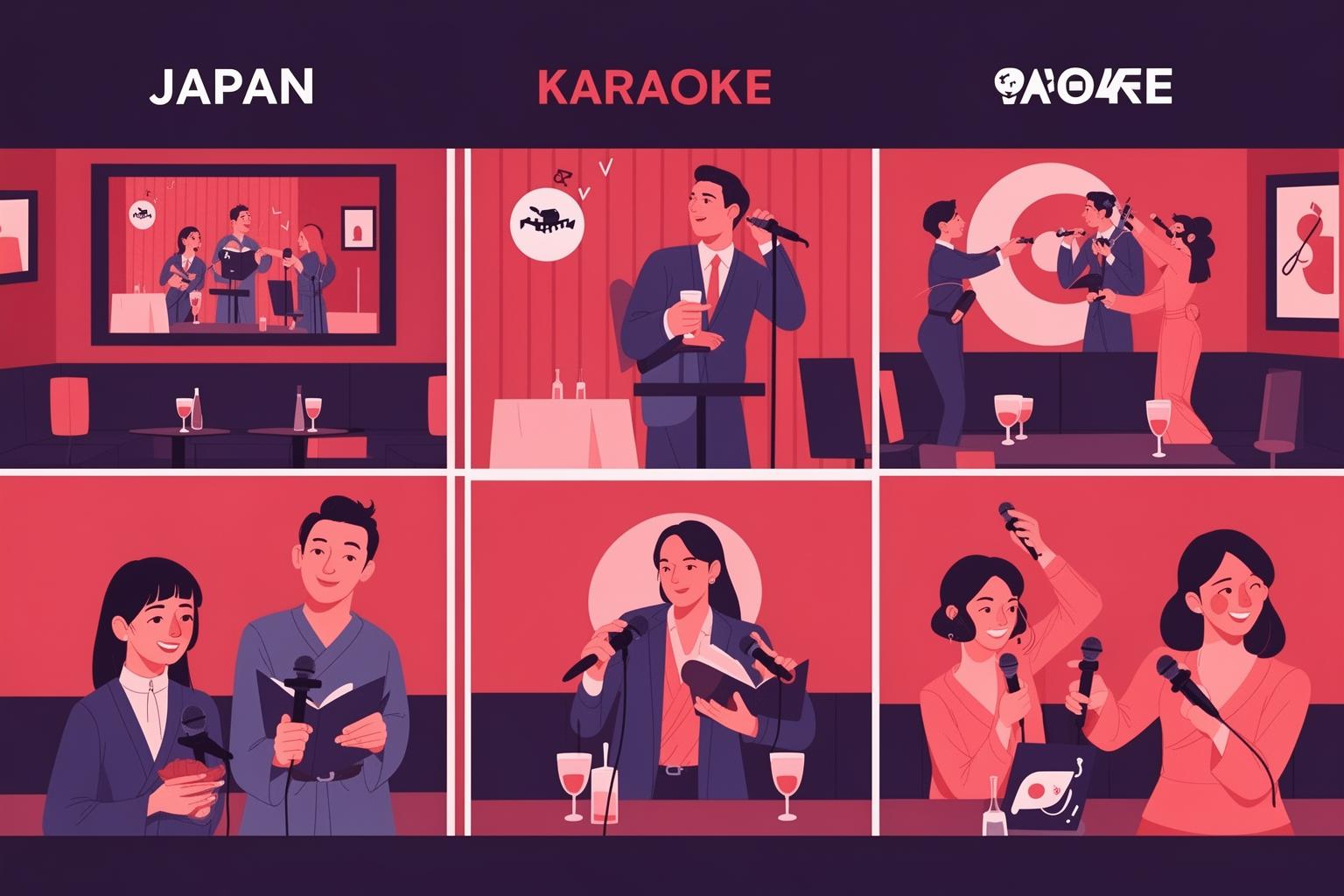
So, you’ve picked your venue, gathered your crew, and stepped into your own private universe. You might assume that once the door closes, it’s a free-for-all with no rules. But that’s not the case. While public societal rules are loosened, a whole new set of unwritten guidelines takes over. This is the internal etiquette of the karaoke box—the social code that makes sure everyone has fun. Breaking these rules is the quickest way to kill the vibe. Mastering them is essential to becoming a true karaoke pro. It’s all about kuuki wo yomu—reading the atmosphere—and keeping the multiplayer experience balanced and enjoyable.
The Song Selection Screen
The remote tablet is the central hub of the game, and managing it well is crucial. The cardinal sin of karaoke is monopolizing the remote. You don’t queue up five songs in a row for yourself—that’s a solo move in a multiplayer game. The unspoken rule is a strict one-song-at-a-time rotation. You pick your song, then pass the remote to the next person. This way, everyone gets a fair shot at singing and the ‘playlist’ stays diverse. It’s also poor etiquette to delete someone else’s queued song without their permission. The queue is sacred. Another subtle skill is managing the flow. If someone just performed a high-energy rock anthem, don’t immediately follow it with a slow, heart-wrenching ballad. Let the energy have room to breathe. The group, collectively and without saying a word, shapes the vibe of the session through their song choices.
During the Song
When someone’s singing, your job is not to zone out on your phone. You are an active audience member. That’s where moriageru comes in—to boost the energy, hype up the mood. Your role is to support the performer. That might mean grabbing maracas or a tambourine and providing some (hopefully) on-beat percussion. You can clap along. If it’s a song you know, sing along with the chorus. Offer words of encouragement. Simple phrases like “Good choice!” or “You’re killing it!” go a long way. The goal is to make the singer feel like a rock star, even if they’re totally off-key. The karaoke box is a system of mutual support: you hype your friends during their turns, and they’ll hype you during yours. It’s this shared energy that makes the experience special.
Picking Your Battles (Songs)
The songs you choose say a lot about you and your ability to read the room. There’s a strategy involved. The first song of the session is especially important. Never start with an obscure, nine-minute prog-rock epic or a deeply personal sad ballad—that kills the energy before it even begins. The opener should be an ‘icebreaker’: a well-known, high-energy pop or rock anthem that everyone can sing along to. It sets a positive, inclusive tone for the night. As the session progresses, you can get more adventurous with your choices, but always stay tuned to the group’s energy. If people are winding down, maybe it’s time for that ballad. If everyone is pumped, keep the bangers coming. It’s a dynamic process of reading and responding to the group’s mood.
The Final Lap: The Last 10 Minutes
The end of a karaoke session is a ritual in itself. About ten minutes before time’s up, the front desk calls with a heads-up. This sparks a frantic, exciting debate over the ‘last song.’ The final song is the grand finale, the last boss battle of your session. It carries weight. It has to capture the spirit of the night. Almost always, the last song is a huge group singalong—either a nostalgic classic everyone grew up with, or a current mega-hit. Everyone stands, arms around each other’s shoulders, shouting lyrics in one final, cathartic burst. Choosing and performing this last song is the ultimate act of cementing the shared experience. It’s the ‘Mission Accomplished’ screen, the final group photo before the credits roll. You leave the box on a high, voices hoarse and ears ringing, the bond with your crew a little stronger than it was hours before.
So when you see those wild videos of karaoke in Japan, you’re not just watching a room. You’re witnessing the brilliant, chaotic, deeply human result of a culture solving a problem: how to let loose and bond meaningfully in a society that often prizes public restraint. The karaoke box, glowing with neon lights, is the answer. It’s not just a place to sing off-key; it’s a gamified social arena, a private world, a real-life Super Mario Party where the only goal is to have an absurd amount of fun with your favorite people. It’s a whole vibe—a carefully crafted experience that’s far more than the sum of its parts. So next time you’re in Japan, don’t just walk past those towering karaoke signs. Grab your crew, step inside, and pick up the mic. You’re not renting a room—you’re entering a private server for a few hours of co-op play. It’s time to press start.