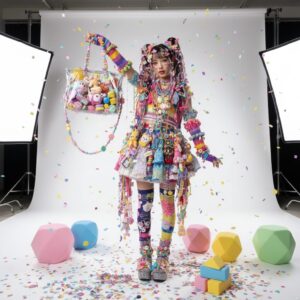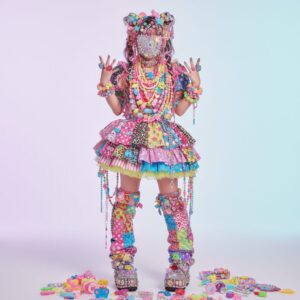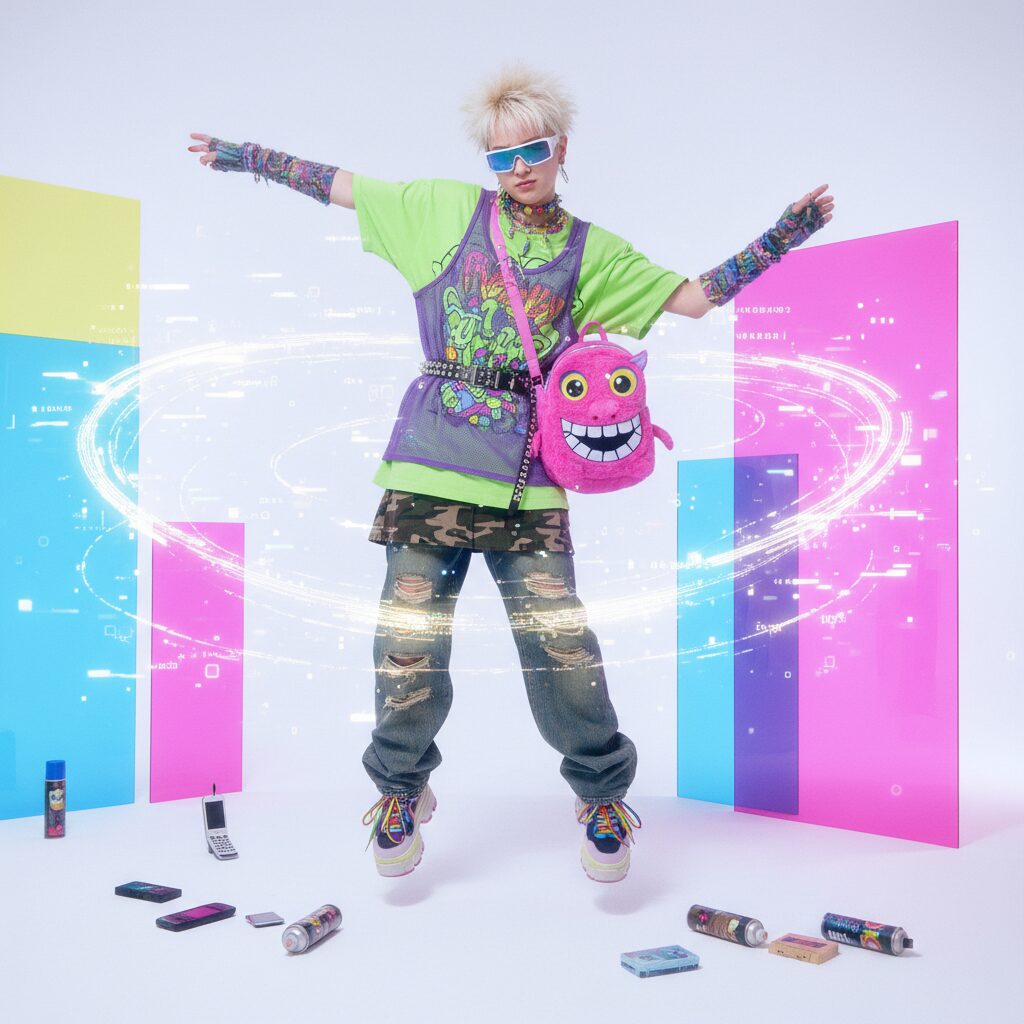
Yo, what’s the deal? So you’ve seen the pics, right? Tokyo, Harajuku. A tidal wave of pink, frills, and rainbow-colored everything crashing down a single, impossibly crowded street. You’ve seen the giant cotton candy, the cosplayers, the crepes stuffed to bursting. That’s Takeshita Street. It’s the face of Harajuku, the one plastered all over Instagram, the one that makes you think, “Okay, Japan, I see you, and you are… a lot.” It’s loud, it’s in-your-face, it’s a full-on sugar rush for the senses. And look, it’s a vibe. For a minute. But then you start to wonder, is this it? Is this the legendary fashion capital that birthed styles that echoed across the entire globe? It feels a little… pre-packaged. A theme park of cute. And you, my friend, are right to be skeptical. Because the Harajuku that really mattered, the one that defined a generation and still has its fingerprints all over what you think is cool today, isn’t on that street. It’s hidden. Tucked away in a maze of quiet back alleys, a place you’d miss if you weren’t looking for it. They call it Ura-Harajuku, or “Ura-Hara” for short. The “Back Harajuku.” And that’s where we’re going. Not by squeezing through a crowd, but by bike. Because to understand Ura-Hara, you need to feel its rhythm, its quiet confidence, its deliberate pace. You need to glide through its veins and see it not as a list of shops, but as a living, breathing organism that created a whole universe of cool out of nothing. This isn’t just about clothes; it’s a deep dive into the soul of Japanese youth culture from a time before the internet flattened everything. It’s about understanding why a bunch of kids in a sleepy residential area managed to change the world of fashion forever. Let’s peel back the layers and find the real story hiding just behind the curtain of ‘kawaii.’
To truly grasp the cultural context of this era, it’s also worth exploring the world of Heisei-era J-Pop idols who shared the same creative timeline.
The Great Misunderstanding: Harajuku Isn’t Just One Street
The first thing we need to clarify is the geography, because it’s not simply about location; it’s a fundamental concept deeply embedded in Japanese culture. The Harajuku you think you know is a performance. The Ura-Harajuku we’re here to explore represents the reality. They are two sides of the same coin, and distinguishing between them is your first lesson in decoding Japan.
Takeshita Dori vs. The Labyrinth
Let’s start with Takeshita Street. It’s a direct path, a pedestrian conveyor belt designed for quick and maximum consumption. Everything is visible, accessible, and vying for your attention. The shops have wide-open fronts, blasting J-pop, with staff practically pulling you inside. It’s sensory overload by design. This area caters mainly to young teenagers and tourists seeking that iconic, easily digestible “wacky Japan” photo opportunity. The fashion here is fast, disposable, and often a caricature of subcultures like Lolita or Decora. It’s like a costume party. You buy the outfit, eat the crepe, take the picture, and post it. It’s an experience made to be consumed and shared instantly. There’s no mystery here; everything is on the surface, and that’s exactly its purpose.
Now, let’s literally hop on a bike and pedal just one block away. The moment you turn off the main drag of Omotesando, the grand, zelkova-lined boulevard often called Tokyo’s Champs-Élysées, you enter a different world. Welcome to Ura-Harajuku. The noise level falls from a roar to a whisper. The wide avenues give way to narrow, winding asphalt paths that feel more like residential alleyways than commercial streets. There are no massive storefronts; instead, you find tiny, nearly hidden shops tucked into apartment ground floors or up rickety stairs to the second floor. Some have no sign at all, just a cryptic logo or an artfully displayed T-shirt in a small window. You could easily ride past the most legendary streetwear store in the world without realizing it’s there. This is intentional. Ura-Hara was never about mass appeal. It was a club, and finding the clubhouse was part of the initiation. The labyrinthine layout isn’t a flaw; it’s a feature. It filters people out. It forces you to slow down, observe, and explore. It demands your participation. You don’t consume Ura-Hara; you discover it.
The Psychology of “Ura” (裏) and “Omote” (表)
This physical division between the front and back of Harajuku is no accident. It perfectly embodies a core concept in Japanese society: Omote (表) and Ura (裏). Omote is the front, the public face, the polished exterior shown to the world. It’s the carefully maintained garden, the formal business meeting, the polite smiles and bows. Takeshita Street epitomizes Omote. It’s Harajuku’s public face, shiny and inviting.
Ura, conversely, is the back. It’s the private reality, the hidden truth, the place where genuine conversations happen and true feelings emerge. It’s the messy kitchen behind the pristine restaurant, the casual chat with colleagues after the formal meeting has ended. Ura-Harajuku is the fashion world’s Ura. It’s where the real creative energy bubbled beneath the surface, where the community was forged, and where the trends that would later be diluted and sold on the Omote side were born. This duality is everywhere in Japan. There’s tatemae, the public facade or socially expected opinions, and honne, one’s true inner feelings. Grasping this dynamic between public presentation and private reality is the key to unlocking much of what about Japan seems puzzling from the outside. Ura-Harajuku was not just a place; it was a mindset. It was a space for youth to cultivate their honne, their authentic identity, away from the scrutinizing eyes of the mainstream world represented by the big, shiny boulevards just a stone’s throw away.
Birth of a Counter-Culture: Why Here? Why the 90s/2000s?
So why did this burst of creativity occur specifically in these backstreets at this particular time? It wasn’t by chance. It resulted from a perfect storm of economic collapse, pre-internet information culture, and a deep-rooted Japanese passion for craftsmanship. This wasn’t merely young people deciding to sell T-shirts; it was a generational reaction to a transforming Japan.
The Post-Bubble Economic Hangover
To understand Ura-Hara, you first need to grasp the atmosphere of 1990s Japan. The 80s, known as the “Bubble Era,” was a period of extreme economic excess. It felt like the celebration would never end. Japan seemed destined to dominate the world. People bought Rolexes as casually as Casios, and companies guaranteed lifetime employment. Then, in the early 90s, the bubble burst—brutally. The stock market collapsed, real estate values plummeted, and Japan plunged into what became known as the “Lost Decade.” For the generation maturing during this era, the promises their parents trusted vanished. The reliable corporate ladder disappeared. The dream of a steady, predictable life was shattered. This bred widespread cynicism and disillusionment with the mainstream. Why play a game that was stacked against you? This context is essential. The youth of the 90s weren’t rebelling just for rebellion’s sake; they sought alternative ways to live and define success. They had no desire to become salarymen in dull suits. They wanted to create something of their own. Ura-Harajuku became the incubator for this new ambition. Launching a small, independent clothing brand from a modest, low-rent backstreet shop wasn’t a mere hobby; it was a legitimate and incredibly cool career choice. It was a quiet defiance—a way to build a world on their own terms, far removed from the ruins of the corporate dream. This was anti-establishment, but distinctly Japanese: not loud protest, but quietly crafting something better, something more authentic.
The Information Scarcity Era
Nowadays, if you want to know what’s trendy, you scroll Instagram. Trends are born, spread worldwide, and fade within weeks. But in the 90s and early 2000s, social media didn’t exist. Although the internet was around, it wasn’t the all-encompassing cultural force it is today. So how did you discover what was cool? The answer was print. Specifically, a few cult-status magazines that served as the ultimate bibles for anyone passionate about style, music, and culture. Titles like POPEYE, Boon, relax, and smart were the gatekeepers and tastemakers. Getting your hands on the newest issue was an event. You didn’t just skim them; you studied every page. You memorized product details, read interviews with designers, and absorbed the entire world they depicted. These magazines didn’t merely showcase clothes; they imparted a philosophy. They crafted a narrative around the Ura-Harajuku scene, elevating key figures—such as Nigo of A Bathing Ape, Jun Takahashi of Undercover, and Shinsuke Takizawa of Neighborhood—into cultural icons. The shops in Ura-Harajuku were physical shrines to this magazine-fueled movement. If you read about a hyper-limited jacket in Boon, your only chance to get it was to make a pilgrimage to the actual store. This scarcity of information forged an incredibly dedicated and knowledgeable fan base. You had to put in work to be part of the culture. You had to read, search, and physically go there. This fostered a powerful sense of community and shared discovery that today’s hyper-connected world cannot replicate.
The “Limited Edition” Obsession: More Than Just Hype
A defining trait of Ura-Hara culture was the passion for limited-edition products, or gentei (限定). This wasn’t merely a clever marketing ploy to manufacture artificial scarcity, though it certainly functioned that way. It was deeply embedded in traditional Japanese values. Consider the appreciation for seasonal foods—eating strawberries only when perfectly in season or celebrating the brief cherry blossom period. There’s a profound cultural respect for the transient, the rare, and the moment-specific. This mindset translated into streetwear. Brands would release a T-shirt in a unique colorway, limited to just 30 units, sold only at their flagship store, on one specific Saturday morning. This sparked the infamous lines winding through Harajuku’s backstreets, with youths camping out for days to snag a coveted item. Owning that piece wasn’t about flaunting wealth. It was a badge of honor. It said, “I know. I was here. I am part of this.” It proved dedication, knowledge, and commitment to the scene. The concept of kodawari (こだわり)—the relentless pursuit of perfection and obsessive attention to detail—was vital as well. The products themselves were often of extraordinary quality, made with Japanese textiles and craftsmanship surpassing that of American sportswear that inspired them. A hoodie wasn’t just a hoodie; it was a perfectly crafted garment with subtle details only a true fan would notice. This blend of limited availability and fanatic quality created a value system distinct from mainstream luxury fashion. It wasn’t about the price tag but about the story and cultural capital the item embodied.
The Ura-Hara Cycling Route: A Journey Through Time
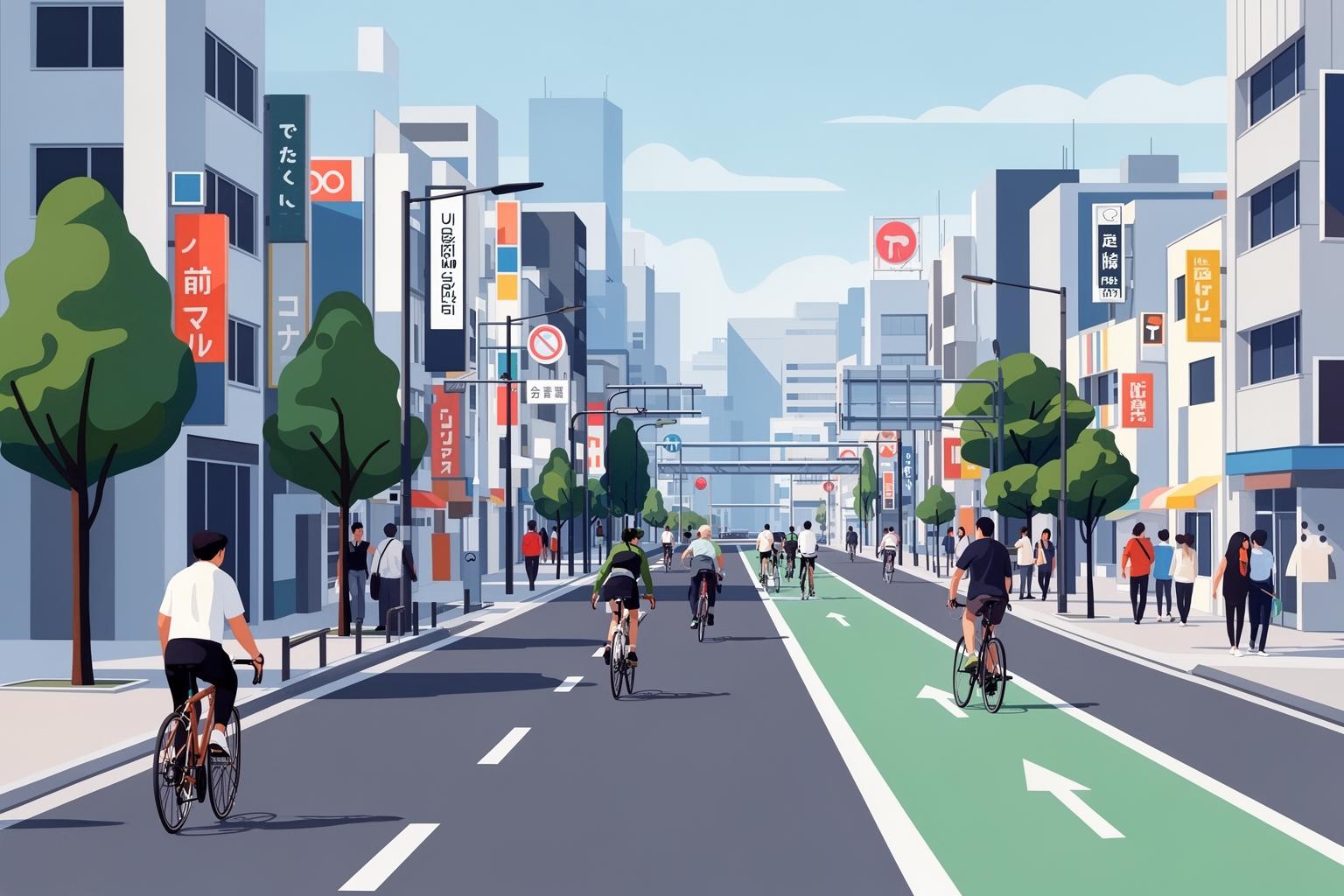
Alright, enough theory. Let’s hop on the bike and actually ride through this area. The beauty of exploring by bicycle is that you can cover distance while still moving slowly enough to notice the details. You can slip into tiny alleys, stop instantly when something catches your eye, and sense the subtle changes in atmosphere from one block to another. This isn’t a checklist of stores to visit. This is an archaeological dig. We’re searching for the ghosts and echoes of a cultural revolution.
Starting Point: Meiji-Jingumae Crossing – The Gateway
Our journey begins at the Meiji-Jingumae crossing, a huge intersection where the wide, polished boulevards of Omotesando and Meiji Dori meet. This is the heart of mainstream, high-fashion Harajuku. Here you’ll find massive flagship stores for international brands, crowds of tourists, and an overall sense of commercial energy. It’s the Omote. But we’re going to turn away from it. We’ll pedal just a few meters down Meiji Dori before making a sharp right into one of the narrow side streets. The shift is immediate and stark. The six lanes of traffic vanish. The city’s roar gives way to the gentle hum of air conditioners and the distant clatter of a restaurant kitchen. The perfectly manicured trees of Omotesando yield to a charmingly chaotic tangle of electrical wires, potted plants outside apartment doors, and vending machines softly glowing on corners. The first sensation is one of being slightly lost, and you should welcome it. Ura-Hara’s layout is deliberately confusing. It’s a web, not a grid. Let the bike wander. Follow a street because it looks intriguing. This is how hidden gems are found. You’re shedding the skin of a passive tourist and becoming an active explorer.
The Cat Street Artery: Where Past and Present Collide
Eventually, your wandering will bring you to the main artery of Ura-Harajuku: Cat Street. Today, it’s a relatively well-known pedestrian-friendly street lined with a mix of international skate brands, trendy cafes, and independent boutiques. It’s the most commercialized part of Ura-Hara, but its history is far grittier. Before its makeover, it was a much rougher place, the epicenter of the 90s movement. As we cycle down its gentle incline, we ride over sacred ground. This area was the stomping ground for the brands that defined the era. Let’s pause and talk about the titans.
Here, in this vicinity, was the original NOWHERE store, opened in 1993 by Jun Takahashi and Nigo. It was a small shop, half dedicated to Takahashi’s punk-inspired Undercover brand and half to Nigo’s curated selection of vintage and obscure American goods, which would soon evolve into A Bathing Ape (BAPE). NOWHERE was ground zero. It was more than a store; it was a clubhouse, a rendezvous point for the whole scene. Imagine a time when two of the most influential designers of their generation shared a cramped retail space. The creative energy must have been electric.
Let’s talk about BAPE for a moment. Nigo was a master of remix culture. He took American pop culture iconography—the Planet of the Apes, military camouflage, the Nike Air Force 1 silhouette—and reinterpreted it through a Japanese lens. The BAPE camo wasn’t just a copy; it was a playful, almost pop-art version, with hidden ape heads woven into the pattern. The BAPESTA sneaker was an homage, crafted with incredible patent leather in wild colors never seen before. He combined this with the gentei (limited) release model, generating a hype level never before achieved. People weren’t just buying clothes; they were buying into the BAPE lifestyle—a world of pop art, hip-hop, and obsessive collecting.
Then there was Undercover. Jun Takahashi approached things from a completely different angle. He was inspired by punk rock, specifically the Sex Pistols. His slogan, “We make noise, not clothes,” sums it up. His designs were deconstructed, patched, and often featured unsettling or surreal graphics. It was darker, more intellectual, and more confrontational than anything else in the scene. While BAPE celebrated and perfected pop culture, Undercover dismantled it and reassembled it into something new and challenging. Takahashi showed that streetwear could be as conceptually rigorous as high fashion, and he eventually went on to be celebrated on Paris runways, proving the creative power born in these backstreets.
Cycling further, we’d pass the phantom locations of other key players. Neighborhood, founded by Shinsuke Takizawa, was fueled by a deep, almost academic obsession with American subcultures: motorcycle gangs, military history, and classic workwear. But Neighborhood wasn’t about costumes. They took these archetypes and perfected them with Japanese craftsmanship. Their denim was woven on vintage looms, their leather jackets built to last a lifetime. They channeled the raw, rebellious spirit of Americana through a lens of extreme quality and detail. It was tougher, more masculine, and attracted a slightly older crowd than the pop-infused world of BAPE.
The Deeper Cuts: Exploring the Tiny Side Alleys
Now, let’s peel off Cat Street. This is where the real magic happens. We’ll venture into even narrower side streets, mostly residential except for a single, unassuming storefront. This is the heart of the true Ura-Hara experience. Here, you would find stores that were notoriously intimidating. Unlike the loud, welcoming shops on Takeshita Street, these places were often silent. The staff, usually impossibly cool kids who were friends with the designers, wouldn’t greet you with a booming “Irasshaimase!” They might just give a silent nod, if they acknowledged you at all. They were the gatekeepers. You couldn’t simply wander in and ask clueless questions. You were expected to know what you were looking at. The product was displayed like art in a gallery—a single jacket hung on a wall, a row of T-shirts folded with geometric precision. No price tags were visible. If you had to ask, you weren’t part of the club. This could be intimidating for a young fashion fan. Imagine saving your allowance for weeks to buy a single T-shirt. You’d pass the store three or four times, trying to summon the courage to go in. When you finally did, you’d enter a space of reverent silence. You’d try to act cool, like you belonged there. You’d find the shirt you saw in the magazine, take it to the counter, and pay quietly. The staff might silently inspect you, your outfit, before giving a slight, almost imperceptible nod of approval. Getting that nod meant everything. It was validation. It meant you were accepted. This dynamic is completely alien to today’s retail experience, which focuses on customer service and making consumers comfortable. Ura-Hara was about protecting the culture. It was a test, and the reward was belonging to a secret tribe. This is also where the furugiya, or vintage clothing stores, played a vital role. Scattered throughout these alleys, they were filled with treasures from America. These shops were the libraries and laboratories of the scene. Young kids could affordably buy into a look by picking up a vintage college sweatshirt or a pair of old Levi’s. Aspiring designers would scour the racks for inspiration, studying the construction of a vintage military jacket or the fade on a pair of old jeans before creating their own perfected versions. The ecosystem was a closed loop of inspiration, creation, and consumption, all within a few square blocks.
The Vibe Check: What Does Ura-Harajuku Feel Like Today?
So, as we ride through these streets today, what do we discover? Has the original spirit been entirely replaced by global brands and tourist traps? Is it merely a ghost town of coolness? The answer is nuanced. Though the golden era is undeniably behind us, its legacy remains pervasive, and a fresh, distinct energy is beginning to flourish.
The Ghosts of ’00s Streetwear
Many of the original iconic stores have vanished. Nigo sold BAPE years ago, and it has since become a global brand with outlets in every major city. The sense of exclusivity fades when Shark Hoodies are available at your local mall. Undercover has evolved into a celebrated Paris Fashion Week label. The internet has completely dismantled the information scarcity that once made the scene so special. Now, hype is driven by global Instagram influencers and algorithm-driven trend cycles. You can’t put the genie back in the bottle. The quiet, intimidating gatekeepers have been replaced by friendly, English-speaking staff serving a worldwide audience. Some see this shift and declare Ura-Harajuku dead. They observe a Supreme store attracting long lines of tourists and resellers and lament the loss of the authentic community that once was. In a sense, they’re right. The unique conditions that gave rise to the original movement—the economic downturn and the pre-internet media landscape—are gone forever. That lightning in a bottle can’t be recreated.
The New Shoots: What’s Growing in Its Place?
But calling it dead misses the point. The spirit of Ura-Hara didn’t disappear; it transformed. It went global, for starters. The very concepts of limited drops, brand collaborations, and story-driven streetwear that now dominate international fashion were born in these back alleys. More importantly, if you look closely while you ride, you’ll notice new life. Hidden in those same second-floor and basement spaces is a new generation of independent Japanese designers. They share the same DNA: an obsession with exceptional quality, a distinct personal vision, and a rejection of mass-market appeal. They may not possess the same global hype, but they attract a devoted local following that values their kodawari. Additionally, a vibrant “archive” culture has emerged. Young fashion fans are now zealously hunting vintage pieces from the Ura-Hara golden age. A T-shirt from early 2000s Undercover or a jacket from Number (N)ine (another legendary, now-defunct brand from that era) is now regarded as a museum artifact. This isn’t mere nostalgia; it’s a profound respect for the history and craftsmanship of that time. These enthusiasts study the past to grasp the present. Thus, cycling through Ura-Hara today offers a captivating contrast. You’ll see a massive, glossy international brand store alongside a tiny, 30-year-old vintage shop overflowing with military surplus. You’ll find hypebeasts queuing for the latest sneaker drop mere feet from a quiet, minimalist boutique where a young designer hand-stitches every piece. The old ghosts and the new shoots coexist here, intertwined. The story has simply become more complex.
Why You Should Still Cycle Through Ura-Harajuku
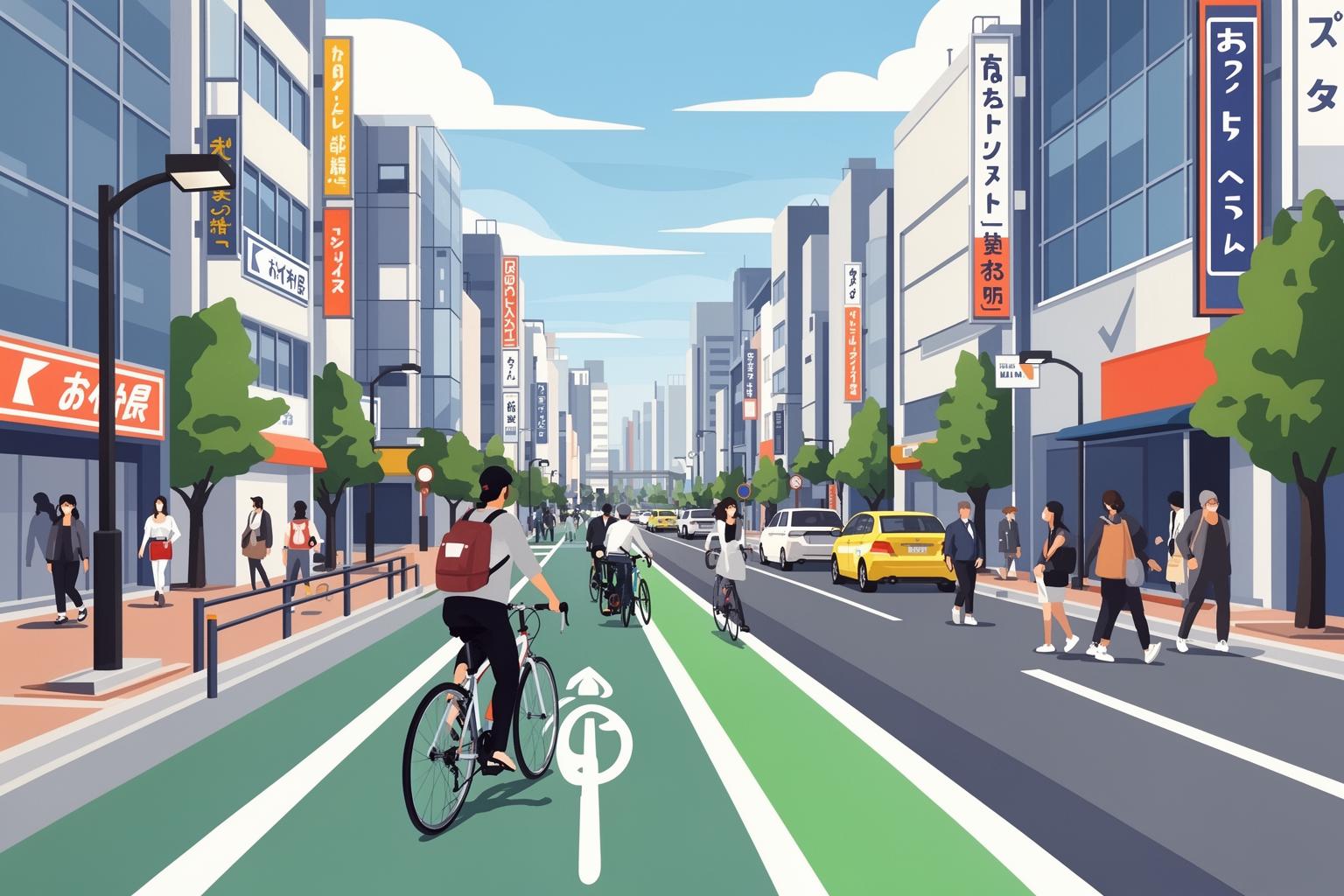
So, after all this, is it still worth it? If the golden age has passed, why invest your time exploring these backstreets? Because you’re not simply going on a shopping trip. You’re embarking on a cultural journey. You’re learning to see the city from a new perspective.
It’s Not a Shopping Trip, It’s an Urban Archaeology Expedition
Think of your ride through Ura-Hara as an act of urban archaeology. You’re there to uncover the layers of a crucial moment in global culture. When you spot a new boutique, consider the legendary store that might have occupied that exact spot twenty years ago. Look for the artifacts. You can still find old 90s brand stickers plastered on lampposts and electrical boxes, faded and peeling like ancient cave paintings. Observe the architecture: the low-rise buildings, the blend of residential and commercial spaces, which gave the neighborhood its unique grassroots vibe. Watch the people. Ignore the tourists and focus on the local shop staff, skaters, and artists. Notice their clothing. You’ll see a style that’s less about flashy logos and more about silhouette, quality, and understated confidence. Cycling offers the freedom and perfect pace for this. You can cover the entire neighborhood in an afternoon, moving slowly enough to absorb the atmosphere and feel the history embedded in the asphalt. You aren’t just a consumer passing through; you’re a detective searching for clues to a story.
Grasping the Japanese Concept of “Cool”
Ultimately, a bike ride through Ura-Harajuku is a lesson in the Japanese idea of cool. It’s a coolness that isn’t loud, flashy, or craving attention. It’s rooted in aesthetics that have been part of Japanese culture for centuries. It’s about shibui (渋い), a simple, subtle, and unobtrusive beauty. An old, perfectly faded pair of jeans is more shibui than a brand new, jewel-encrusted pair. It’s about kodawari, the obsession with perfecting details that might go unnoticed by others. And it’s about the power of community and shared understanding. The Ura-Hara movement embodied this completely. It was a subculture that valued substance over surface, knowledge over wealth, and dedication over hype. Riding through these quiet streets, you begin to realize that the empty spaces, hidden entrances, and silent shops weren’t a rejection of customers, but an invitation to a deeper level of engagement. They were encouraging you to look closer, learn the story, and become part of the culture instead of just consuming it. That is the true soul of Ura-Harajuku. And it’s a feeling you can still sense today, hanging in the air between the old buildings and new boutiques, waiting for you to discover it as you glide quietly through its maze.