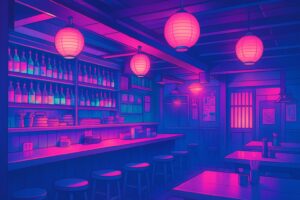
Yo, what’s the deal? Megumi here, live from Tokyo. So, you’ve scrolled through the ‘gram, seen the neon-drenched scenes, the flawless sushi plates, and maybe you even know the word ‘omakase’. You’re thinking, “I got this. Omakase equals the chef picking out some sick fish for me.” And yeah, you’re not wrong, but you’re also not seeing the whole picture. Like, not even close. What if I told you the deepest, most legit omakase experience in Japan has nothing to do with wasabi and everything to do with peat, sherry casks, and bottles that are basically ghosts? We’re talking about whisky. Omakase. For whisky. Yeah, you heard me. It’s a whole mood, a secret level of Japanese culture that most tourists, and even a lot of locals, will never unlock. It’s the kind of thing that doesn’t show up on a “Top 10 Tokyo Bars” listicle. These spots are hidden. No signs. Sometimes you need a password, or more likely, an introduction. It’s intimidating, low-key, and for a lot of people, it probably sounds kinda… extra. Why would you let someone else choose your drink? Why is it so quiet? And why does it cost a legit fortune? That’s the real question, isn’t it? This isn’t just about getting a buzz. Stepping into one of these hidden whisky temples is like plugging directly into the Japanese cultural mainframe. It’s a deep dive into the national obsessions with mastery, perfection, and the beauty of a fleeting moment. It’s where you stop being a tourist and start being an observer, and maybe, just maybe, you start to get why Japan is the way it is. So buckle up, because we’re about to leave the main road and go way, way off the grid. This is the real IYKYK culture drop.
For a different kind of curated Japanese drinking experience, explore the country’s vibrant craft gin scene.
The Omakase Mindset: More Than Just “Chef’s Choice”
Let’s get one thing clear. The term omakase (お任せ) is often used casually, but its literal meaning, “I leave it up to you,” hardly does justice to its deeper cultural significance. In the West, choice reigns supreme—you want it your way, customize everything, and maintain control. Relinquishing that control can feel strange, almost like giving up. However, in Japan, especially within a refined establishment, omakase is not surrender; it’s a deliberate gesture. It’s a sign of respect and an invitation to an experience beyond your own design. You’re not simply saying, “Give me whatever.” You’re expressing, “I recognize your years of dedication, your deep expertise, and your artistic vision. Please show me something new.” This exchange starts with listening. This philosophy forms the cornerstone of the whisky omakase experience. You enter a room with perhaps eight seats, facing a back bar stocked with hundreds of bottles from around the world—many rare, discontinued, or from distilleries long silent. You could scan a menu, if one exists, but you’d be guessing—a tourist in a vast library of liquid history. Omakase is your library card and expert librarian combined.
Trusting the Master: The Shokunin Spirit
To grasp why you’d entrust a bartender you just met, you must understand the shokunin (職人) concept. Often translated as “artisan” or “craftsman,” this term falls short, akin to calling a Michelin-starred chef merely a “cook.” A shokunin dedicates their entire life to mastering a single craft. It’s as much a spiritual quest as a technical pursuit. A shokunin doesn’t just perform a job; they embody a philosophy of relentless improvement, chasing a near unattainable ideal of perfection. The elderly sushi master perfecting the delicate pressure of a nigiri piece, the swordsmith continuing a centuries-old family tradition, and the bartender silently polishing a glass until it vanishes—each is a shokunin. Their craft transcends mixing drinks; it encompasses profound knowledge of distillation, agriculture, cask aging, chemistry, history, and geography. They’ve likely traveled to Scotland, Islay, and remote Japanese distilleries, nurturing decades-long relationships to collect the bottles lining their shelves. They’re not merely serving; they’re sharing the essence of their lifetime’s dedication. Ordering omakase connects you to this. The bartender becomes your guide, opening not with “What do you want?” but with subtle questions like, “What flavors do you enjoy?” or “How are you feeling tonight?” They assess your palate, mood, and experience—not to judge but to curate. This is an intimate service cloaked as a formal exchange. Such trust can feel foreign to those accustomed to shouting orders at a busy bar. Here, the trust is fundamental. You’re not just buying a drink; you’re investing in a master’s distilled opinion.
The Art of the Narrative Journey
Whisky omakase is no random lineup of pours; it’s a narrative. It follows a structure, a storyline, a climax. The bartender is the author, and your palate is the reader. Entrusting them control enables a crafted narrative impossible to replicate from a menu. Think of it like a concept album versus a playlist of miscellaneous hits—both enjoyable, but only one is designed to convey a specific emotional and sensory journey. A typical flight might open with an overture—light, elegant, floral—the delicate scent of a Japanese single malt from a distillery such as Hakushu, served neat to awaken your palate. This is the introduction. The plot deepens with the second pour, introducing a new character or theme—perhaps a Highland Scotch with honey and heather notes, aged in bourbon casks. It’s familiar yet layered with complexity. Then comes the conflict, the climax, where the bartender may present something bold and challenging—a heavily peated, smoky, medicinal Islay malt like Ardbeg or Laphroaig. It’s an intense, unforgettable punch. This is the story’s dramatic turning point. Finally, the resolution arrives. The last pour often serves as the grand finale, the showstopper—maybe a long-aged Japanese whisky from a silent distillery like Karuizawa, or a rich, complex sherry bomb from The Macallan older than you. It ties together all preceding themes in a lingering, exquisite conclusion. Each pour acts as a chapter, accompanied by the bartender’s narration of distillery history, cask peculiarities, and the reasoning behind the sequence. You leave not merely having tasted whisky, but having experienced it deliberately—a lesson, a performance, and a reflection all at once.
Kodawari Over Everything: The Japanese Obsession with Detail
If omakase represents the philosophy, kodawari (こだわり) embodies the methodology. There isn’t an exact English equivalent for kodawari. It signifies a commitment, an obsession, and an uncompromising pursuit of perfection in the tiniest details. It’s the conviction that the sum of countless small, flawless actions creates a truly sublime whole. This mindset pervades Japan, whether in the way a department store gift is wrapped or how a train conductor points at a signal. In a high-end whisky bar, kodawari is elevated to an extreme. It’s an environment where absolutely nothing is left to chance. Every element of the experience has been carefully considered, debated, and honed over many years. To an outsider, this might seem almost comically obsessive. Yet, for the shokunin, these details are not optional embellishments; they are essential to maintaining the craft’s integrity. To overlook them would be a sign of disrespect—to the customer, to the craft, and most importantly, to the whisky itself.
The Perfect Ice, The Perfect Glass
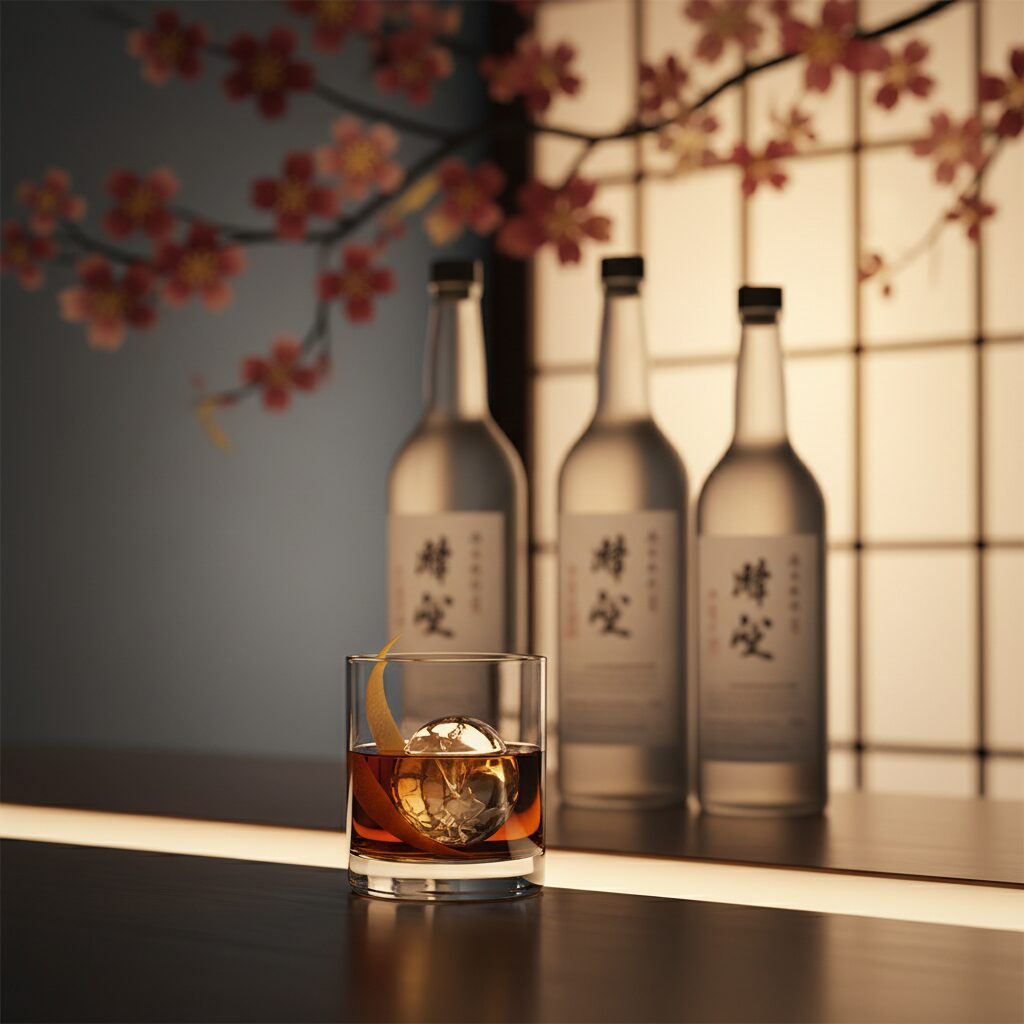
Now, let’s discuss ice. In most bars worldwide, ice is merely an afterthought. It’s machine-made, cloudy, and melts quickly, turning your drink into a watery mix. In a Japanese whisky bar, ice is treated as a key ingredient—often the first thing you’ll notice. The bartender will bring out a large, crystal-clear block of ice, frozen slowly over days to remove air bubbles and impurities. Then, with an incredibly sharp knife, they begin the carving. The sound is captivating—a soft scraping and cracking. With focused, precise motions, they transform the block into a perfect sphere or a diamond that fits your glass exactly. This isn’t just for show. It’s pure kodawari, pure science. The perfectly clear, dense ice has less surface area than regular cubes, so it melts much more slowly. It chills the whisky to an ideal temperature without shocking it and, importantly, without diluting it too quickly. This preserves the complex aromas and flavors the distiller painstakingly crafted. The same obsessive care extends to the glassware. You won’t find a one-size-fits-all tumbler here. Instead, the bar offers an extensive collection of glasses in various shapes and sizes. A delicate, tulip-shaped Glencairn glass is reserved for a complex single malt to concentrate its aroma, while a thin, fine-crystal highball glass is chosen for a Mizuwari (whisky and water) to evoke a sense of lightness and refreshment. Each glass is selected as the perfect vessel for the particular spirit you’re about to enjoy. Holding one of these glasses, feeling its weight and fragility, watching the perfect ice sphere suspended in amber liquid—it reshapes how you approach the drink. You slow down. You pay close attention. These details invite a mindful presence.
Silence as a Vibe: The Aesthetics of the Bar
Another thing you’ll immediately notice is the sound—or rather, the absence of it. These bars are quiet—sometimes profoundly so. There’s no loud music, no shouting, no clattering from a kitchen. The soundtrack consists of the gentle clink of glass, the soft pour of liquid, the scrape of the ice knife, and hushed, respectful conversation. For a Westerner used to the lively buzz of a pub or cocktail bar, this quiet can feel disconcerting, even cold or unwelcoming. But this would be a misreading. The silence is far from empty; it’s deliberate. It’s an aesthetic choice, deeply anchored in Japanese concepts like shibui (渋い)—a simple, subtle, unpretentious beauty. The quiet environment is designed to remove distractions and sharpen your senses. Freed from competing with loud music, you begin to notice other details. You can fully appreciate the delicate aroma of the whisky as it’s poured. You can focus completely on the first sip, letting it coat your tongue and discern the notes of vanilla, smoke, or fruit. The bar itself becomes a sanctuary for the senses. The lighting is warm and low, usually spotlighting the back bar to make the bottles glow like jewels. The materials are natural and tactile—smooth, long wooden counters often carved from a single piece of ancient wood, leather seats, stone accents. The attention is on the bartender and their craft. The space feels like a stage, with you as the front-row audience witnessing an intimate performance. The silence honors that performance. It invites reflection, not celebration. You’re not there to party; you’re there to savor. This represents a fundamental redefinition of what a “bar” truly means.
The Hunt for the Ghost Bottles: Why These Bars Are So Secret
So, why all the secrecy? Why are these places hidden away in anonymous basements or on the upper floors of unremarkable office buildings? Why is it so difficult to simply walk in? Part of the answer is practical—these are small spaces that can’t accommodate large crowds. But the deeper reason is more nuanced, connected to a culture of exclusivity and the challenging realities of the Japanese whisky market. The secrecy functions as a filter, ensuring that those who find their way here are not just casual drinkers but genuine enthusiasts, individuals who understand the etiquette and will truly appreciate what’s being offered. It’s about cultivating and preserving a very particular atmosphere—a sanctuary for connoisseurs. This isn’t meant to be snobbish or elitist in a Western sense; it’s about safeguarding the experience for those who seek it. It’s about keeping the sanctity of the sanctuary intact.
A Culture of Exclusivity and ‘Ichi-Go Ichi-e’
The concept of ichi-go ichi-e (一期一会), meaning “one time, one meeting,” lies at the heart of this ethos. Originating from the tea ceremony, it expresses the idea that every encounter is unique and will never occur again in exactly the same way. Each moment, therefore, should be treasured. This philosophy infuses the secret whisky bar experience. The combination of you, the bartender, the other guests, and the particular bottle opened at that time creates a singular event. The bar’s secrecy helps protect the purity of these moments. By maintaining a low profile, the master can carefully curate not only the drinks but also the clientele. Many of these bars are essentially private, operating on an introduction-only basis (ichigen-san okotowari—no first-time customers without a referral). This system fosters a community of regulars who understand the atmosphere and respect the rules. It ensures every evening holds the potential for a perfect ichi-go ichi-e moment, undisturbed by someone who might break the quiet reflection by speaking loudly on their phone or ordering a vodka soda. This exclusivity isn’t about keeping people out; it’s about welcoming the right people—those who share the same purpose as everyone else: to pay homage at the altar of great whisky.
The Disappearing Act of Japanese Whisky
There’s another, more practical reason for the secrecy: the whisky itself. You may have heard about the Japanese whisky boom. In the early 2000s, Japanese whiskies began winning major international awards, surprising the traditional Scottish producers. Suddenly, everyone wanted a bottle of Yamazaki, Hibiki, or Yoichi. The world went wild for it. The problem was that distilleries hadn’t anticipated this surge in demand. Quality whisky requires time—12, 18, 25 years aging in casks. They couldn’t just produce more overnight. Consequently, stocks of aged Japanese whisky were rapidly depleted. Iconic aged expressions—the Yamazaki 18, the Hakushu 12, the Hibiki 21—disappeared from shelves, and their prices on the secondary market soared into the thousands of dollars. They became what collectors call “ghost bottles”: known to exist but rarely seen in the wild. These secret bars are the realms of ghost bottle hunters. The masters of these establishments have spent their entire careers cultivating relationships with distilleries, collectors, and auction houses. They have access to bottles that a typical person could neither find nor afford. They might possess whisky from the legendary Karuizawa distillery, which closed in 2000 and whose bottles now fetch tens of thousands of dollars. They might have pre-boom bottlings of famous labels that taste markedly different from the current versions. The omakase is their way of sharing these treasures. They cannot simply put a bottle of 1980s Yamazaki on the menu; it would be gone within a single night. Instead, they serve it carefully, one precious dram at a time, to patrons who understand its significance. The secrecy protects their valuable, irreplaceable stock from being pillaged by speculators or wasted on those who do not appreciate it.
So, Is a Whisky Omakase Actually Worth It?
This is the big question, right? After all the discussions about philosophy, art, and ghost bottles, you’re faced with a bill that can easily reach hundreds, or even thousands, of dollars for just a few drinks. It’s a serious financial commitment. And the answer is: it depends entirely on what you’re seeking. If you want to get drunk, no. Absolutely not. It would be a huge waste of money and a complete misunderstanding of the experience. If you’re after a loud, social night out with friends, this isn’t it. But if you’re looking for something different, then yes, it is unquestionably worth it.
The Price Tag vs. The Experience
You need to rethink what you’re really paying for. You’re not just buying alcohol. You’re buying a story. You’re paying for the bartender’s lifetime of expertise and the decades the spirit spent aging in a cask. You’re paying for access to liquid history, a taste of something that may never be created again. You’re paying for the atmosphere, the silence, the perfect ice, the impeccable service—all the tiny details that form the kodawari. It’s less like buying drinks at a pub and more like purchasing a ticket to an exclusive concert, commissioning a work of art, or attending a private masterclass. It’s an investment in a memory, an education, and a deep cultural experience. Seen in this light, the price, while steep, begins to make a different kind of sense. It’s a luxury, certainly, but it’s a luxury of experience, not just consumption. It’s an ephemeral performance that you get to be part of.
Who It’s For (and Who It’s Not For)
This kind of experience is crafted for a certain type of person. It’s for the curious soul, the one who doesn’t just want to visit Japan but wants to understand it. It’s for the whisky enthusiast who wants to go beyond their usual favorites and be challenged and surprised. It’s for the introvert who finds beauty in quiet reflection and values meticulous attention to detail. It’s for anyone ready to relinquish control and trust an expert to lead them on an unexpected journey. On the other hand, it’s not for everyone—and that’s perfectly fine. It’s not for those on a strict budget. It’s not for the impatient. It’s not for anyone certain they know exactly what they like and refuse to stray from it. It’s not for groups wanting to take loud selfies and post constantly. To appreciate it, you must meet it on its own terms: quietly, respectfully, and with an open mind. Finding one of these bars is like finding a key to a locked room at the heart of Japanese culture. Opening that heavy, unmarked door and stepping inside is more than the start of a night out. It’s an entry into a world where time slows, where details matter above all else, and where a simple glass of whisky can hold an entire universe of stories. It’s the ultimate flex—not because of the price, but because of the understanding. It’s a quiet, personal discovery, a taste of the real Japan that lies far beyond the usual tourist path. And that, fam, is a vibe you simply can’t put a price on.