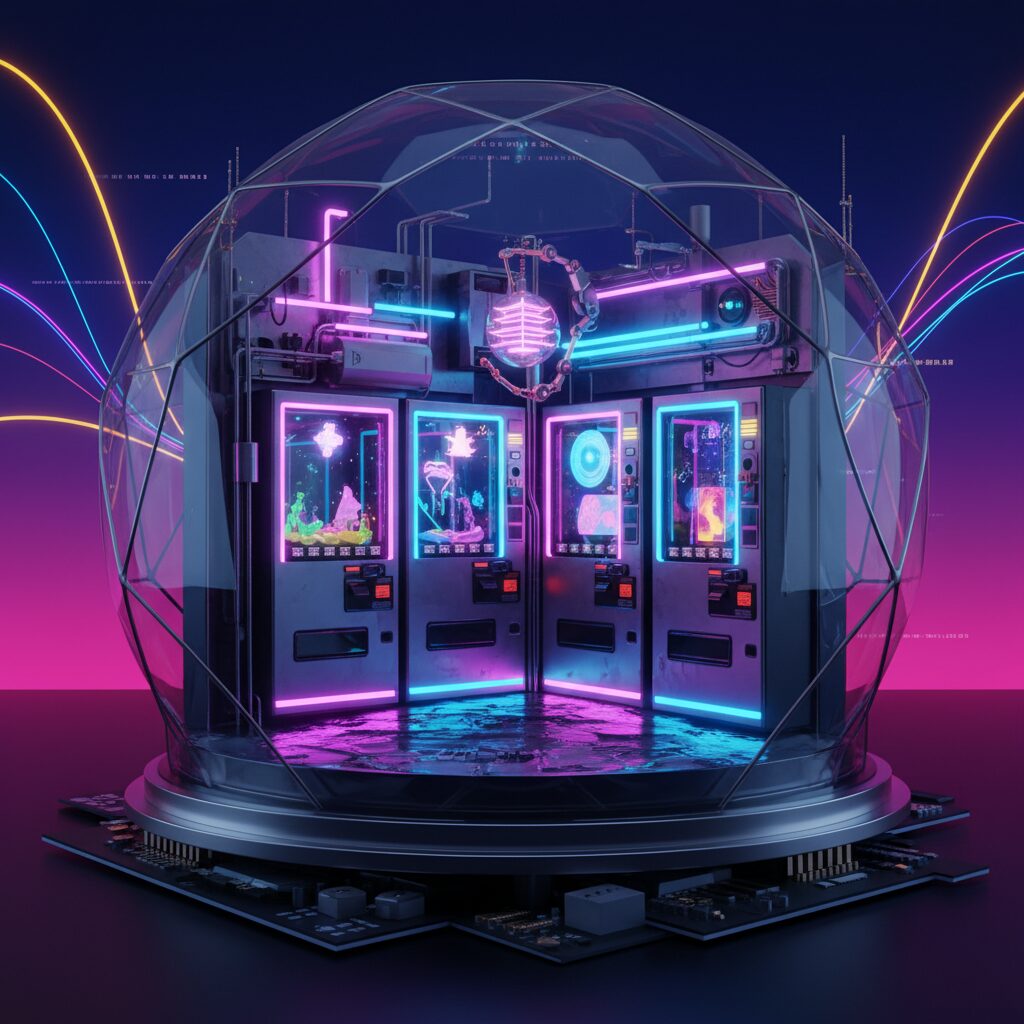
Yo, what’s the deal? You’ve seen them, right? Scrolling through your feed, you hit a photo that just stops you. A dark, narrow alley, somewhere in Japan, absolutely buzzing with light. Not from street lamps or storefronts, but from rows and rows of glowing vending machines, each a little portal of color against the night. It’s got that whole cyberpunk, Blade Runner aesthetic down. It looks unreal, meticulously designed, like a movie set. And your first thought is probably, “That’s sick, I gotta go there.” But the second thought, the one that sticks, is probably, “…Why?” Why does this even exist? Why are there so many machines crammed into one random alley? In my country, these would be empty or broken in a week. How does this work? Is it safe? Is it even a real thing, or just a couple of hyper-touristy spots?
That’s the real question, and honestly, it’s way more interesting than just finding the most photogenic spot. These glowing alleys aren’t just an aesthetic; they’re an accident. They’re the visual byproduct of a whole stack of cultural, economic, and historical layers that make Japan, well, Japan. Think of them less as a tourist destination and more as a living museum exhibit on Japanese society. They tell a story about convenience, sure, but they also tell a deeper story about public trust, a chronic labor shortage, the insane value of land, and a unique approach to public space. Getting why these alleys exist is like getting a cheat code to understanding the logic of modern Japan. It’s about peeling back the cool, neon-drenched surface to see the intricate, and sometimes contradictory, wiring underneath. So, let’s skip the list of “Top 5 Vending Machine Alleys” and actually dive into the rabbit hole. Let’s decode the matrix of metal boxes and see what they tell us about the country that created them. Because the truth is, the most fascinating thing about them isn’t the light they give off, but the culture they reflect.
To truly appreciate the depth of this phenomenon, consider exploring the weird culinary world of vending machine meals that these alleys often host.
The “Why So Many?” Question: Unpacking Japan’s Vending Machine Obsession
Before we can even reach the alleys, we must first address the fundamental question: why are there over 4 million vending machines in Japan? That equates to roughly one machine for every 31 people. They are an omnipresent part of the landscape, found everywhere from the summit of Mount Fuji to the most remote southern islands. This isn’t merely a quirky cultural habit; it’s the outcome of a perfect storm of practical factors brewing over decades. The dense concentration you see in those neon-lit alleys is just the most extreme expression of a nationwide phenomenon. To understand this, we need to examine the three pillars supporting Japan’s vending machine empire: a history of automation, an exceptionally high-trust society, and the harsh economics of urban space.
A History of Automation and Labor
The story truly begins with Japan’s post-war economic miracle. From the 1950s onward, the country was rebuilding and industrializing at an extraordinary pace. Cities grew rapidly, factories required workers, and the entire nation buzzed with activity. This swift expansion created a persistent issue: labor shortages. Simply put, there weren’t enough people to staff all the shops and services needed to support this new urban population around the clock. The vending machine, which had existed as a novelty for decades, was suddenly reimagined as a serious business solution. It became a silent, tireless worker capable of operating every hour of every day without pay or breaks.
The real turning point occurred in the 1960s. Technology was advancing, but the breakthrough was the widespread introduction of the 100-yen coin in 1967. Before this, transactions were cumbersome. The new standardized single-coin system made purchases quick and easy, prompting beverage companies like Coca-Cola to seize the opportunity and roll out machines nationwide. The 1970 Osaka Expo cemented this vision of a futuristic automated society. Vending machines were not only convenient; they symbolized Japan’s technological advancement and forward-looking approach to modern life.
This historical context remains vital because the same logic applies today, but with even greater urgency. Japan now faces a demographic crisis, boasting one of the world’s oldest populations and a shrinking workforce. Labor shortages have ceased to be a temporary growing pain and have become a permanent economic feature. Thus, automation is not optional—it is essential. The vending machine was the original automated retailer, a forerunner to supermarket self-checkouts, train station ticket machines, and robotic waiters found in some family restaurants. They helped cultivate cultural comfort with non-human interactions for simple transactions. When you see a vending machine, you’re not just looking at a dispenser of drinks; you’re witnessing the historical roots of Japan’s ongoing drive toward automation, born from the pragmatic need to accomplish more with fewer people.
The Pillars of Trust and Safety
This aspect often puzzles visitors. They see machines stocked with expensive drinks and electronics, left unattended in dim alleys, and wonder, “How have these not been vandalized or emptied?” The answer is deeply embedded in Japanese society: an exceptionally low crime rate coupled with a strong culture of public trust. Vandalism and petty theft are remarkably rare. This isn’t due to some magical moral code; rather, it stems from a complex social structure.
At the foundation lies a high level of social cohesion and mutual respect for public and private property. There is an unspoken social contract everyone implicitly accepts: we all benefit from a safe and orderly society, so we share responsibility in maintaining it. This is evident everywhere. People might leave their laptops on a café table to save their seat while ordering. Children commute alone on the subway without concern. People line up neatly at all times. This pervasive sense of security makes large-scale unattended commerce feasible. Business owners can confidently place machines worth thousands on public streets, assured they will remain intact and unharmed by morning.
Additionally, Japan’s urban design reinforces this safety. Consider the koban, small neighborhood police boxes found every few blocks in cities. Their presence fosters a constant, low-level surveillance and community policing. Even if an officer isn’t on-site, the koban serves as a symbol of order and a psychological deterrent to crime. This blend of strong social contracts and visible civic infrastructure creates a secure space where vending machines flourish without heavy security measures like cages or guards. In a way, they stand as a monument to collective trust, each machine representing a social belief that most people respect shared spaces and property.
The Economics of Space and Real Estate
The final piece of the puzzle is space. Japan is mountainous, with a dense population concentrated in a few vast urban plains. Real estate in cities like Tokyo and Osaka is incredibly expensive. Every square inch is valuable, and developers excel at maximizing it. This is where the vending machine shines as a business model. Its footprint is minuscule, allowing it to fit into tiny, awkward, otherwise unusable scraps of land—an example of what architects call “parasitic architecture.”
Think of gaps between buildings, narrow frontages of small offices, or concrete pads outside apartment complexes. Building a traditional shop there is impossible; there isn’t enough space for a proper storefront. But a vending machine fits perfectly, or two, or five. This creates a strong economic incentive. For a landowner, that small patch of “dead space” can become a source of passive income. Beverage companies pay rent for the space and take a commission on sales, or the owner may operate the machine themselves. This is micro real estate that transforms urban nooks into money-making assets.
This economic pressure explains why vending machines cluster together. If one Suntory machine performs well in a location, competitors like Kirin and Asahi are eager to join the fray. They negotiate with the landowner to place their machines side by side, creating a small consumer battleground. This organic competition, driven by the ruthless efficiency of urban land use, gives rise to vending machine corners. The alleys that appear so carefully arranged are often simply the natural outcome of this process: spots with good foot traffic and a tiny available space, fully exploited commercially by competing companies. It’s pure capitalism, compressed into the margins of the city.
From Convenience to Subculture: The Evolution of the Vending Machine Alley
So, we’ve laid out the ‘why’—the economic and social foundation that supports millions of vending machines. But that alone doesn’t fully explain how a simple, functional box transformed into a glowing, atmospheric destination. The evolution from mere utility to a subcultural phenomenon is a tale of shifting lifestyles, nostalgia, and the inadvertent creation of an aesthetic. These alleys didn’t just appear overnight; they developed gradually, mirroring the changing needs and desires of Japanese society. What started as a straightforward fix for a thirsty worker has, in some places, turned into a pilgrimage spot for retro-tech fans and urban explorers.
The Birth of the “Jihanki Corner”
The idea of the vending machine alley began not as an alley at all, but as a “jihanki corner” (自動販売機コーナー, jidouhanbaiki kōnā). These were practical, purpose-built clusters of machines long before becoming popular Instagram backdrops. Their locations were chosen strategically to meet specific needs. A classic example is outside a sento (public bath). After a long, hot soak, nothing beats a cold drink. So, sento owners lined up machines selling milk (a post-bath tradition), coffee milk, fruit juice, and beer—an essential part of the bathing ritual.
You’d also find these corners at truck stops and highway rest areas, serving long-haul drivers late at night when restaurants were closed. Near factories, they offered quick refreshments for workers during short breaks. In rural areas with few shops, a well-stocked vending machine corner often acted like a de facto convenience store for the local community. In these contexts, the machines were a lifeline—a small beacon of 24/7 service in a world not yet dominated by 24/7 convenience stores (konbini). The clustering was purely about choice and competition: one machine meant only one brand, but a corner with ten machines from different companies provided variety and catered to a wider array of tastes. It was a miniature marketplace driven by straightforward consumer demand.
The “Retro” Vending Machine Phenomenon
This is where it gets particularly intriguing. While most vending machines today sell drinks, a small but passionate subculture has emerged around older, mechanical machines that dispense hot food. We’re talking about machines from the Showa Era (1926-1989) that serve hot udon or soba noodles, toasties, hamburgers, and even curry rice. These aren’t the sleek, digital machines of today, but clunky, charmingly analog relics from the past. Discovering a location with a row of these functioning machines is like finding a time capsule.
Why the fascination? It’s all about nostalgia. These machines represented peak convenience before konbini rose to prominence in the late 1980s and 90s. For those who grew up in that era, the taste of a vending machine hamburger isn’t just about the food itself (which is admittedly quite basic), but about the memory. It’s the flavor of a late-night snack on a family road trip or a cheap, hot meal after school. The experience is crucial: inserting coins, the whirr and clank of the internal mechanics, the heated box arriving in a plain, unbranded cardboard container. It’s a tangible link to a simpler, less polished version of Japan.
Places like the now-famous retro vending machine corner at a used tire shop in Sagamihara, Kanagawa, or various spots in Gunma Prefecture, have become pilgrimage destinations. You won’t just find tourists—they attract biker groups on weekend rides, families showing their children this piece of history, and elderly couples revisiting memories. These spots have evolved from mere functional corners into vibrant community hubs. Dedicated owners painstakingly maintain these aging machines, sourcing rare parts to keep them operational. It’s a labor of love, preserving a cultural artifact that would otherwise be lost to the unrelenting advance of progress. This dedication is what elevates these locations beyond novelty—they are living museums of everyday life.
The Accidental Aesthetics: How Alleys Became “Cyberpunk”
So how did we go from nostalgic noodle machines at a tire shop to dense, neon-lit alleys that captivate global imaginations? The key is that the “cyberpunk” aesthetic was never deliberate. It’s a complete accident—a byproduct of function-over-form design choices which, when seen through a foreign pop-culture-tinged lens, resemble scenes straight out of a sci-fi movie.
Let’s examine the elements. The iconic glow? That’s not for mood lighting; it’s for commerce and security. Machines must be visible 24/7 to attract customers and deter vandals. Bright, sometimes garish lighting is the most effective way to achieve this. The dense clustering? As mentioned earlier, that stems from fierce competition and the economic need to maximize profit from limited, costly urban space. The cluttered, gritty atmosphere? That’s simply what happens when dozens of electrical machines—often from different eras and companies—operate outdoors constantly. Wires are run pragmatically, older machines weather and rust, and the ground shows stains from spilled drinks. There was no art director meticulously arranging each element to create a dystopian vibe.
This gap between intention and perception is fascinating. A Japanese person passing by a brightly lit alley in Shinjuku might simply see a convenient, if slightly overwhelming, spot to grab a coffee on the way home. They see utility. A tourist, however, arrives with a visual library shaped by films like Blade Runner and anime like Akira and Ghost in the Shell. They interpret the lights and grit as the visual language of a futuristic, dystopian metropolis—mapping it onto their preconceived idea of a “cyberpunk Japan.” Neither perspective is wrong; they are viewing the same thing through entirely different cultural lenses. The magic of these alleys lies in that perceptual divide. They perfectly exemplify how the mundane, practical infrastructure of one culture can become an exotic, aestheticized fantasy to another.
Reading the Urban Landscape: What Vending Machines Tell You About a Neighborhood
Once you begin to pay attention, you realize that vending machines are much more than mere background noise in the urban landscape. They serve as data points—silent, round-the-clock surveys capturing the needs, habits, and rhythms of a particular location. By simply observing the types of machines and their offerings, you can uncover a surprising amount about the neighborhood you’re in. They function as keys to decoding the social geography of the city, essentially a menu reflecting the local demographic. Forget traditional maps; if you wish to understand the character of a place in Japan, start by reading its vending machines.
The Drink Menu as a Social Barometer
The most prevalent vending machines dispense drinks, and their stock directly mirrors their intended audience. The selection is rarely random; it’s carefully curated by beverage companies’ route salespeople based on sales data. What you see is a precisely tailored offering for the people who pass that exact spot daily.
Consider a machine in a major business district like Marunouchi in Tokyo. It’s overwhelmingly dominated by coffee—not just one variety, but an almost comical assortment: black, 微糖 (bitō – slightly sweet), low sugar, with milk, premium boss black, morning shot, and so forth. This is the fuel for the sararīman (office worker). The machine will also include energy drinks for late nights at the office and various unsweetened teas, such as green tea or oolong, as healthier, zero-calorie options. There is a clear focus on the needs of the busy worker on the move.
Now, transport yourself to a quiet residential suburb. The machine’s offerings shift entirely. There’s a much broader range of juices and soft drinks for children, like Calpis or bottled orange juice. Large bottles of barley tea (mugi-cha), a caffeine-free staple in Japanese households especially during summer, are common. In winter, there may be canned corn soup, a warm, savory snack. And naturally, beer and chūhai (shochu highballs) are available for residents to enjoy at home. The selection caters to family life and domestic consumption.
This pattern holds everywhere. Near universities, you’ll find more sugary sodas and sports drinks. In tourist spots, the selection simplifies, emphasizing mineral water and standard green tea. Observing the ratio of coffee to juice to tea reveals whether you’re in a commercial, residential, or transient area. Don’t overlook the seasonal changes: as the temperature drops, many drinks switch from cold (marked by blue price labels) to hot (red labels), a subtle yet profound example of the Japanese cultural sensitivity to the seasons (kisetsu).
Beyond Drinks: The Weird and Wonderful
While drinks form the core of vending machines, specialized non-beverage machines truly highlight the hyper-niche and hyper-local nature of the Japanese market. These machines are often independently operated by local businesses, allowing them to sell products directly to the public without the overhead of a retail storefront. They address very specific local needs.
A classic example is the dashi vending machine. Dashi is a fundamental soup stock in Japanese cooking, and certain manufacturers, especially in southern Japan, sell their special blends via machines. You can purchase an artisan bottle of stock, sometimes including a piece of charred flying fish (ago) for added flavor. This isn’t aimed at tourists but at local home cooks seeking high-quality products anytime.
In rural areas, machines may offer fresh, locally sourced produce—fresh eggs from nearby farms, bags of rice, or seasonal vegetables. For farmers, it’s a way to sell directly to consumers without distributors; for customers, it means access to incredibly fresh food 24/7. Some machines venture into the truly unusual, at least from an outsider’s view: hot meals like popcorn or french fries, canned bread for emergencies, or even edible insects, with the latter being more of a novelty. There are also machines selling umbrellas, business cards, toys, and sake—each telling a story of specific needs or local businesses aiming to reach customers uniquely and efficiently.
The Alley as Public-Private Space
Besides their contents, vending machine corners play a fascinating and ambiguous social role in urban settings. Though technically private commercial spaces—the machines and often the land belong to private owners—they function in practice as semi-public rest stops. They occupy a liminal space, neither wholly public nor entirely private.
It’s perfectly normal and socially acceptable to purchase a drink and consume it nearby, standing or sitting on a ledge if available. You’ll often see this: a taxi driver taking a quick coffee break, construction workers rehydrating in summer heat, high school students enjoying a soda after class, or office workers smoking contemplatively in designated areas often located near vending machines. The space becomes a temporary refuge, a socially permitted pause in the city’s relentless pace.
This is supported by crucial infrastructure: recycling bins. In Japan, public trash cans are scarce. However, next to nearly every vending machine or cluster, you’ll find dedicated bins for cans, plastic bottles (PET), and sometimes glass. This smart design completes the consumption lifecycle—purchase, use, and disposal—all in one spot. It limits litter and encourages proper recycling. This small feature enables these spaces to function as rest stops without becoming dirty. It’s part of a social contract: the space is offered for your break, and in return, you are expected to clean up meticulously. This creates a unique form of public space—privately sponsored yet governed by mutual social responsibility.
The Modern Explorer’s Guide: How to Find and Appreciate These Spaces
Alright, so you understand now—vending machine alleys are a multifaceted cultural phenomenon, not merely a cool spot for photos. You want to experience them in a way that’s both respectful and genuine. The key is to change your perspective from being a tourist seeking out a famous location to becoming an urban explorer, open to uncovering the everyday magic woven into the city’s fabric. Often, the most rewarding experiences are found where you least expect them, far from the polished suggestions of travel blogs.
Moving Beyond Shinjuku and Shibuya
Indeed, places like Shinjuku’s Omoide Yokocho or certain tucked-away streets in Shibuya boast dense, visually striking clusters of vending machines. They’re undeniably impressive. Yet, these spots are on every tourist’s list, often crowded, and sometimes feel more like sets for photos than places of everyday use. To discover the true spirit of the jihanki, you need to venture off the beaten path.
In reality, the phenomenon isn’t about just a couple of famous alleys; it’s about the astounding prevalence of vending machines themselves. The real adventure lies in wandering. Choose a random train station a few stops away from Tokyo, Osaka, or any other large city’s main hubs. Get off and begin exploring. Stroll through the shotengai (local shopping arcades), meander into the quiet residential streets beyond them. Soon enough, you’ll spot the familiar glow of a vending machine down a dim street. It might be a solitary machine humming softly—or a small cluster of five or six. These serve the local community. Here, you might see a grandmother grabbing a can of soup or a child picking up a juice after school. The aesthetic might be more modest, less overwhelming, but the experience is far more authentic. It’s in these quiet moments you truly grasp the role these machines play in the daily pulse of Japanese life.
The Etiquette of the Alley
When you find a spot, whether a famous alley or a quiet nook, it’s essential to approach it with cultural sensitivity. These aren’t theme parks; they’re functional elements of the urban environment, often situated near where people live. Being a respectful observer is vital.
First, manage your time and noise levels. These spaces are transient. Buy your drink, snap your photo, soak in the atmosphere, but don’t linger for hours. Take special care with noise, especially late at night. Japanese homes often have thin walls, and loud voices can easily disturb sleeping residents. These alleys belong to their neighborhoods, not to your personal film set.
Second, the golden rule: clean up meticulously. Recycling bins are provided for a reason. Take a moment to learn the system. You’ll find separate slots for PET bottles (where you’re expected to remove caps and labels), cans, and sometimes glass. Don’t just toss your trash into the nearest opening. Following this simple rule shows great respect and demonstrates your appreciation for the collective responsibility that keeps Japan so clean.
Finally, be considerate with your camera. While these spaces are public, the people within them are not props. It’s generally fine to photograph the machines and the overall scene. However, avoid close-up, identifiable shots of people without their permission. Be discreet and aware of your surroundings. The goal is to capture the atmosphere without disrupting it or invading the privacy of those who use it daily.
Is it “Real” Japan? A Final Thought
Returning to the initial question—are these neon-lit, cyberpunk alleys the “real” Japan? The answer is a definite yes, though perhaps not in the way you might expect. Their reality isn’t in the stylized, futuristic fantasy they appear to embody. Their true essence lies in their deep, almost mundane practicality.
They represent the real Japan because they embody the country’s most fundamental social and economic forces. They’re a response to a labor shortage dating back over fifty years. They testify to a level of public safety and trust that’s nearly unimaginable elsewhere. They showcase an efficient, ruthless use of space in some of the world’s most densely populated cities. They reflect a culture that values convenience, automation, and choice—wrapped in a system of quiet, shared social rules.
The neon glow that draws us in is just the surface, a byproduct. The fascinating story lies in the everyday infrastructure—the electrical wiring, sales data logistics, recycling protocols, real estate arrangements—that makes that glow possible. The next time you pass a solitary vending machine quietly humming on a street corner in Japan, pause. You’re not merely seeing a convenient spot to buy tea. You’re witnessing a subtle monument to a complex and unique way of organizing society. That, more than any temple or tourist landmark, is the real Japan.