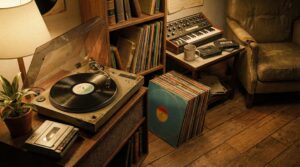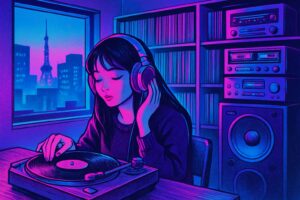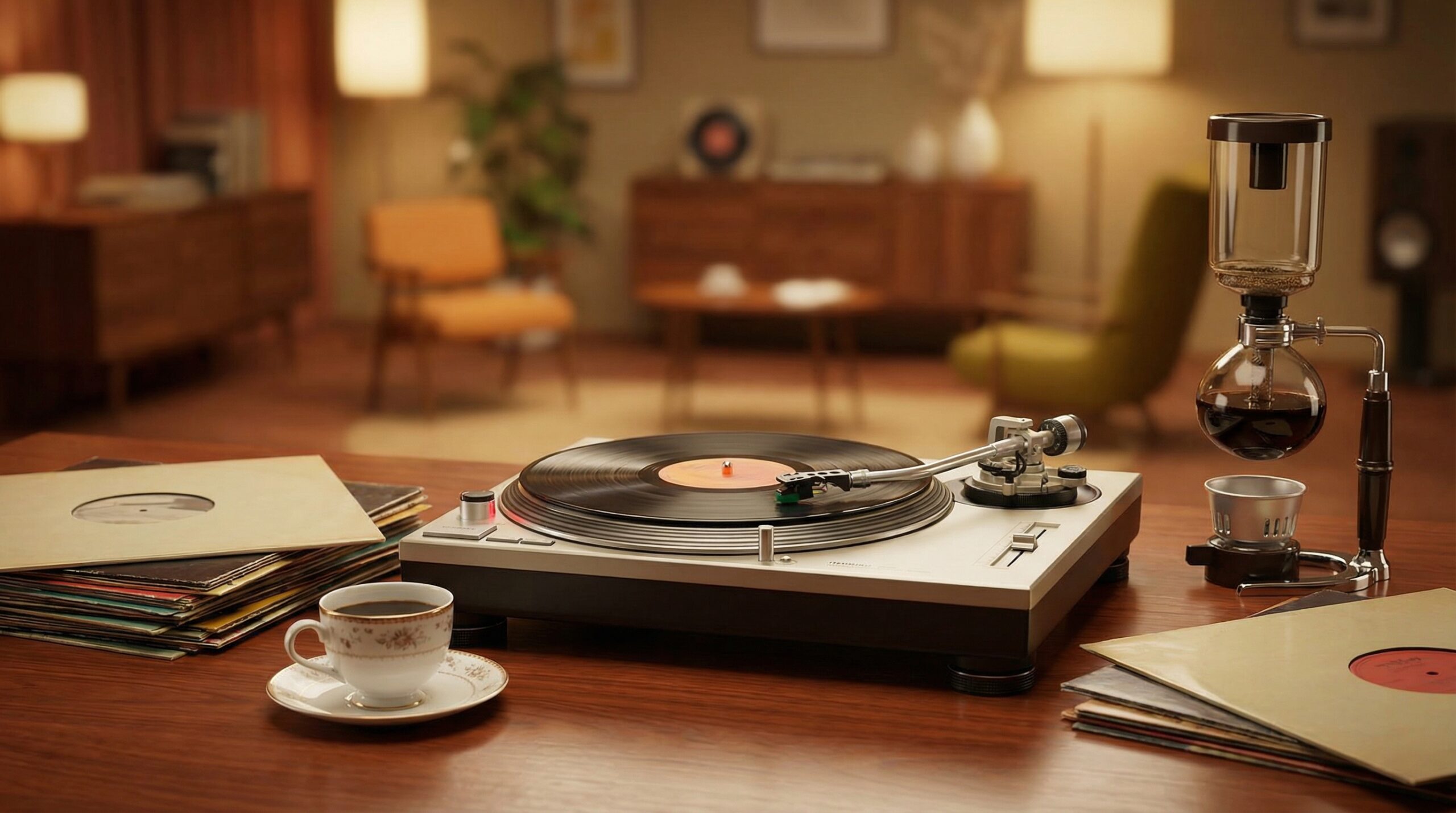
You push open a heavy, dark wood door, a small bell tinkling somewhere in the quiet. The air inside is thick, smelling of dark roast coffee, old paper, and something else… a kind of electric reverence. It’s dark. The only real light seems to glow from the vacuum tubes of a massive, otherworldly amplifier. And then you see them: two speakers the size of refrigerators, flanking a wall lined with literally thousands of vinyl records. A handful of people are scattered around in worn leather armchairs, but no one is talking. No one is scrolling on their phone. They’re just… listening. Intently. You’ve stumbled into an audiophile kissaten, a listening bar, and it feels less like a cafe and more like a church dedicated to sound. Your immediate thought is probably, “What is going on here? Why is everyone so serious? Can I even talk?” It’s a classic Japan moment – a familiar setting made deeply, fundamentally strange. This isn’t just about getting a coffee; it’s about a cultural ritual that’s totally alien to the grab-and-go, social-hub-cafe culture of the West. So, let’s break it down. Why do these sonic sanctuaries exist, and what do they tell us about the Japanese relationship with music, space, and a damn good cup of joe? It’s a vibe, for sure, but it’s one that’s built on a deep foundation of history, economics, and a specific kind of artistic obsession that is peak Japan.
For those inspired to start their own vinyl collection after experiencing this reverence for sound, a great place to begin is by exploring the record stores in Shimokitazawa.
The Genesis of the Groove: Why Did Jazz Kissa Even Happen?
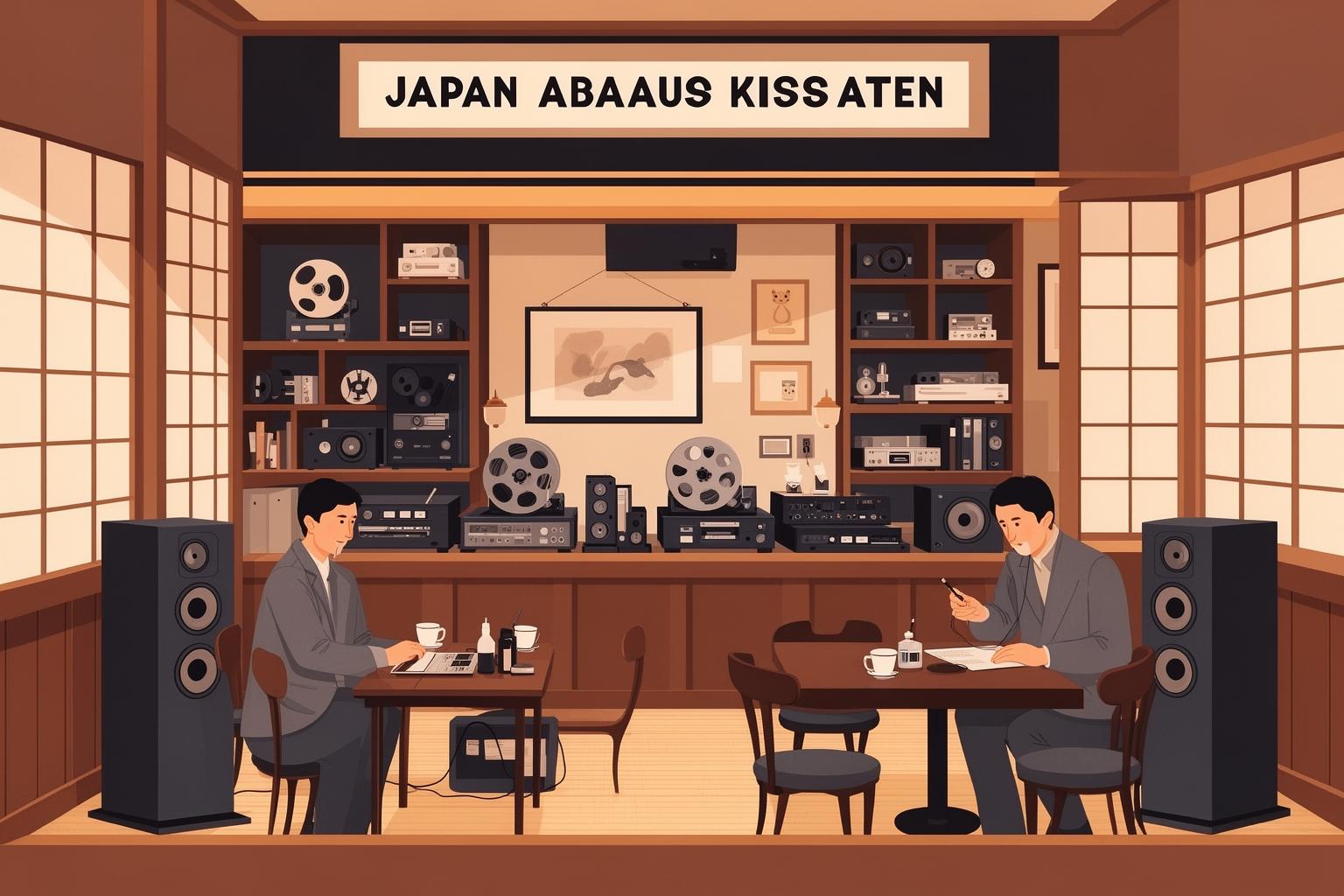
To understand why these places feel like time capsules from the Showa era (1926-1989), you need to realize that, in many respects, they truly are. They weren’t created to be “retro”; they are authentic relics of a distinct period in Japanese history. Their existence is a direct response to a unique set of social and economic circumstances that sparked a craving for a sound both foreign and futuristic. These weren’t merely cafes that happened to play great music; they emerged out of a desperate need to access that music in the first place.
Post-War Escapism and the American Dream, on Vinyl
Imagine Japan in the 1950s and 60s—a nation rising from the devastation of World War II, undergoing an astonishing economic recovery. There was a powerful energy, a blend of reconstructing national identity while being immersed in American culture from the post-war occupation. For young people at the time, America symbolized something incredibly cool: a world of freedom, rebellion, and artistic expression that felt distant from their own regimented, recovering society. And jazz was the soundtrack to that dream. Artists such as John Coltrane, Miles Davis, and Bill Evans were more than musicians; they were icons of a refined, emotional, and liberated world. Listening to jazz was a form of intellectual and cultural aspiration—a way to tap into a global current and feel modern and cosmopolitan in a rapidly transforming country. Yet, there was a significant barrier to experiencing this culture firsthand.
The High Cost of Hi-Fi
Here’s the catch: actually listening to this music was a luxury that few could afford. An imported jazz LP in the 1960s could cost between ¥2,000 and ¥3,000. That might not sound like much now, but when a university graduate’s starting monthly salary hovered around ¥15,000, that record represented a sizable portion of their income. It was akin to spending hundreds of dollars on a single album today. And that was just the record; the equipment required to appreciate it fully was another huge financial hurdle. A proper hi-fi setup—turntable, amplifier, and those massive, high-performance speakers—was a dream investment comparable to buying a small car. Most people living in cramped, thin-walled Japanese apartments simply couldn’t afford the money or space for a personal audio sanctuary. Thus, a dilemma arose: a generation was falling in love with a culture they couldn’t truly experience. This economic reality is the foundational reason the audiophile kissaten came into being. It was an ingenious, communal answer to an individual challenge.
The “Master” as Curator
The central figure in this story is the “Master,” the respectful term for the owner and operator of the kissaten. These Masters were more than business owners; they were obsessive, passionate advocates for sound. Many risked everything on their devotion to music, often investing life savings and sometimes incurring significant debt to obtain what their customers couldn’t: world-class sound systems and extensive record collections. They didn’t just stock popular hits; they imported rare pressings, obscure B-sides, and comprehensive artist discographies. The Master’s kissaten functioned as a public resource for culture enthusiasts; it was at once a library, a concert hall, and a living room. For the price of a single cup of coffee, patrons could access this extraordinary cultural trove, spending hours receiving a musical education curated by someone devoted entirely to this art form. The Master was the original DJ, the first influencer, the analog algorithm who determined what was essential and what you needed to hear. Their taste and personality were woven into the very essence of the establishment. Some were known for their love of bebop, others for free jazz, and some for complete Blue Note collections. Visiting their kissaten wasn’t just about hearing jazz; it was about experiencing the Master’s interpretation of jazz.
The Unspoken Rules: Navigating the Sonic Sanctuary
Alright, so you understand the history. However, that alone doesn’t fully clarify the intense, library-like atmosphere that can feel so daunting to newcomers. The silence, the strict regulations, the sensation of being observed—they’re all part of the system. These aren’t random rules meant to discomfort you; they form the very foundation supporting the entire experience. It’s a social contract you accept as soon as you step inside, designed to preserve the sound’s integrity and the shared space’s sanctity. Grasping these rules is essential to appreciating the deep cultural significance placed on this distinct style of listening.
“Shh… The Music is Talking”: The Code of Silence
The primary rule, which surprises visitors the most, is the general ban on conversation. In many traditional venues, talking is strictly forbidden or strongly discouraged. For a Westerner used to the lively buzz of a Starbucks, this can seem cold or even unfriendly. But it’s not about aloofness; it’s about respect. The fundamental belief in an audiophile kissaten is that the music takes center stage. It’s the true star. The customers, the Master, the coffee—they all exist to serve the sound emanating from the speakers. Speaking over a sublime Bill Evans piano solo is seen as the ultimate disrespect. It’s comparable to shouting in a cinema or answering a phone during a church service. You’re not merely spoiling your own experience; you’re actively undermining the experience for everyone else present who came specifically to listen. This idea is closely linked to the Japanese cultural emphasis on the group over the individual. It’s about preserving social harmony, or wa (和), by ensuring one person’s desire to chat doesn’t disrupt the collective purpose of the space. It’s a shared, communal meditation. The silence is anything but empty; it’s brimming with music. It’s an engaged, attentive silence that brings out the nuances of the performance—the slide of a guitarist’s fingers, the breath of a saxophonist, the subtle brush strokes on a snare drum. It’s deep listening, a skill this environment is purposefully designed to nurture.
No Requests, No Laptops, No BS
Besides the silence, there are other rules, both explicit and implicit. The “no requests” policy is common in many traditional spots. This might seem strange—after all, isn’t this a place for music lovers? But you have to remember the role of the Master. You are in their domain, their sanctuary. They have dedicated a lifetime to cultivating their collection and refining their taste. The listening session is a performance they are carefully curating for you. A request disrupts that flow. It’s like instructing a master chef how to season their signature dish. You’re there to receive their offering and take the sonic journey they have crafted for the afternoon. Trust the Master. They will play something you need to hear, even if you don’t realize it yet. More recent rules, such as “no laptops” or “no photography,” serve a similar function: maintaining the atmosphere. A kissaten is a refuge, an analog sanctuary in an overwhelmingly digital world. The glow of a laptop screen or the click of a phone camera breaks that illusion, bringing the stresses of work and the performative pressure of social media into a space meant for quiet reflection. The goal is to be present, to disconnect from the outside world and connect solely with the music, the coffee, and your own thoughts. This enforced mindfulness can feel unsettling at first but ultimately becomes a defining part of its appeal.
The Ritual of Coffee
So, what about the coffee itself? You’ll notice it isn’t cheap. A single cup often ranges from ¥700 to ¥1,000 or more. This price isn’t just inflated for a basic brew. It’s your ticket, your seat charge for the concert you’re about to experience. It covers the maintenance of the million-yen sound system, the electricity to power vintage amplifiers, and the Master’s lifelong dedication to building this rare record collection. But the coffee also plays an integral role in the ritual. It’s rarely a quick espresso shot. More often, it’s a carefully brewed cup of nel drip or siphon coffee—slow, meticulous methods that require skill and focus. The Master prepares your coffee with the same care and attention to detail—the spirit of kodawari—that they devote to their music library. The result is a dark, rich, and intensely flavorful drink. It’s designed to be sipped slowly, savored over the duration of one side of an album. It acts as a sensory anchor for your listening experience—a warm, aromatic companion to the intricate musical notes. The menu is often equally timeless. You might find toast with melted cheese, coffee jelly, or a vivid green melon soda float topped with vanilla ice cream. These aren’t trendy items; they’re Showa-era kissaten classics, comfort foods that enhance the sense of nostalgic escape.
A Dying Breed or a Timeless Vibe? The Modern Jazz Kissa
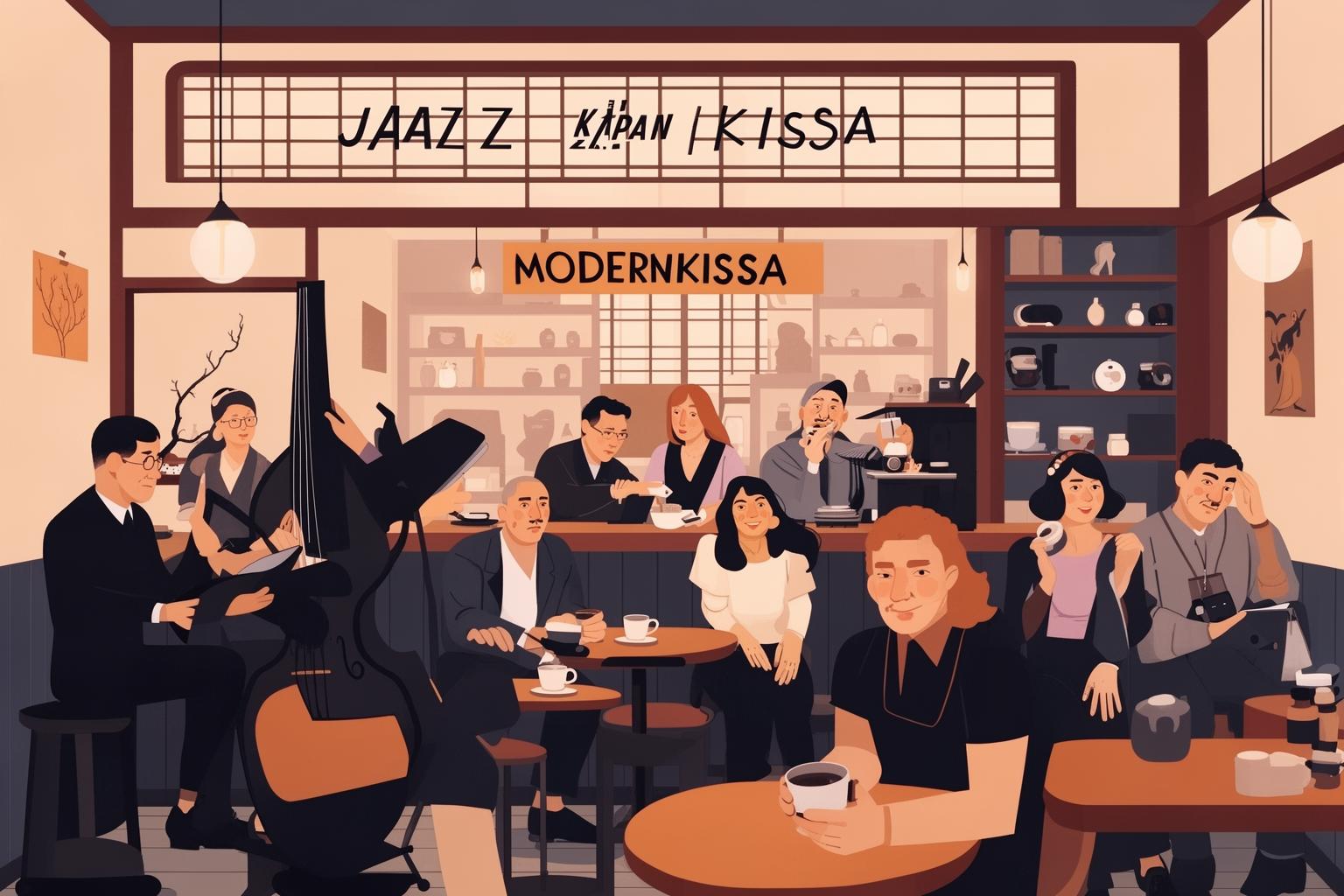
Walking into one of these classic spots, it’s easy to feel as if you’ve stumbled upon a beautiful, living relic. The sense of permanence is overwhelming. Yet, there’s an undeniable fragility beneath it. The original Masters are aging, and the economics of maintaining a small, niche business in hyper-modern Tokyo are tough. So, is this culture on the brink of extinction, or is it evolving? The answer, like much in Japan, is nuanced. It’s a bit of both. While the old guard may be fading, the core idea—the practice of deep, intentional listening in a dedicated space—remains more relevant than ever.
The Showa Era Freeze-Frame
The aesthetic of a classic jazz kissa is a character all its own. It is unapologetically old-fashioned. The interior almost always features a symphony of dark wood, from wall paneling to heavy tables and chairs. Upholstery tends to be cracked leather or worn velvet in shades of burgundy or forest green. Lighting is low and moody, provided by small, shaded lamps that cast a warm, intimate glow. And, naturally, there are the records. Floor-to-ceiling shelves brimming with vinyl spines, a testament to a lifetime of collecting. The vast physical presence of thousands of albums creates a unique acoustic dampening and a cozy, library-like atmosphere. This isn’t the curated, minimalist “retro” of a modern hipster cafe. This is genuine patina. The dust on the speaker cones is real. The faint scent of old cigarette smoke might be permanently infused in the furniture from decades when smoking was commonplace. This setting conjures powerful nostalgia, a portal to a time many Japanese—even those who never lived through it—view with romanticism. The Showa era signifies a time of rapid growth, artistic ferment, and a cohesive national identity that feels fragmented today. The kissaten perfectly preserves the mood of that era.
The New Wave vs. The Old Guard
It’s true that some legendary kissaten have shuttered their doors in recent years, their Masters retiring without successors to carry on their life’s work. Each closure is a small tragedy—the loss of a unique library and a singular curatorial voice. However, the spirit of the listening bar is far from extinct. In fact, it’s enjoying a global revival, partly inspired by these original Japanese venues. A new generation of owners, both in Japan and abroad, are reinterpreting the concept for a contemporary audience. These new “listening bars” may have a slightly more relaxed feel. They might offer craft cocktails alongside coffee. The music policy could be broader, embracing soul, funk, electronic, or ambient music alongside jazz. Quiet conversation might even be allowed. What they inherit from the original kissaten, however, is an unwavering dedication to high-fidelity sound. They continue to invest heavily in vintage audio gear—McIntosh amps, Klipschorn speakers, custom-built turntables. The focus remains on the quality of the sonic experience. They carry the torch forward, introducing the philosophy of deep listening to a new generation weary of the compressed, disposable nature of music streaming. These new spaces prove that the demand for a high-quality, communal audio experience isn’t just a thing of the past.
Why Does This Vibe Still Slap?
So, why does this seemingly old-fashioned concept still resonate so strongly in the 21st century? Because in a world of endless choice and constant distraction, the audiophile kissaten offers the opposite: curated limitation and monastic focus. We live with earbuds pumping algorithmically generated playlists into our ears while multitasking throughout our busy days. For many, music has become background texture rather than a foreground art form. The kissaten pushes back hard against this trend. It insists on your full attention. It says: for the next hour, you will sit here, drink this coffee, and truly listen to this album, from start to finish, exactly as the artist and producer intended. It’s a rebellion against the digital age. It champions the physical object (the vinyl record), the warmth of analog sound (the glow of the vacuum tube), and the irreplaceable experience of hearing music on a sound system that lets you feel the bass in your bones and discover details you’d never noticed before. It’s a secular temple for mindful art appreciation. It addresses a very modern spiritual hunger for depth, authenticity, and a shared, quiet communion in a world growing louder and more superficial. That’s why the vibe still slaps. It’s not just about old records; it’s about a timeless and deeply human way of experiencing sound.