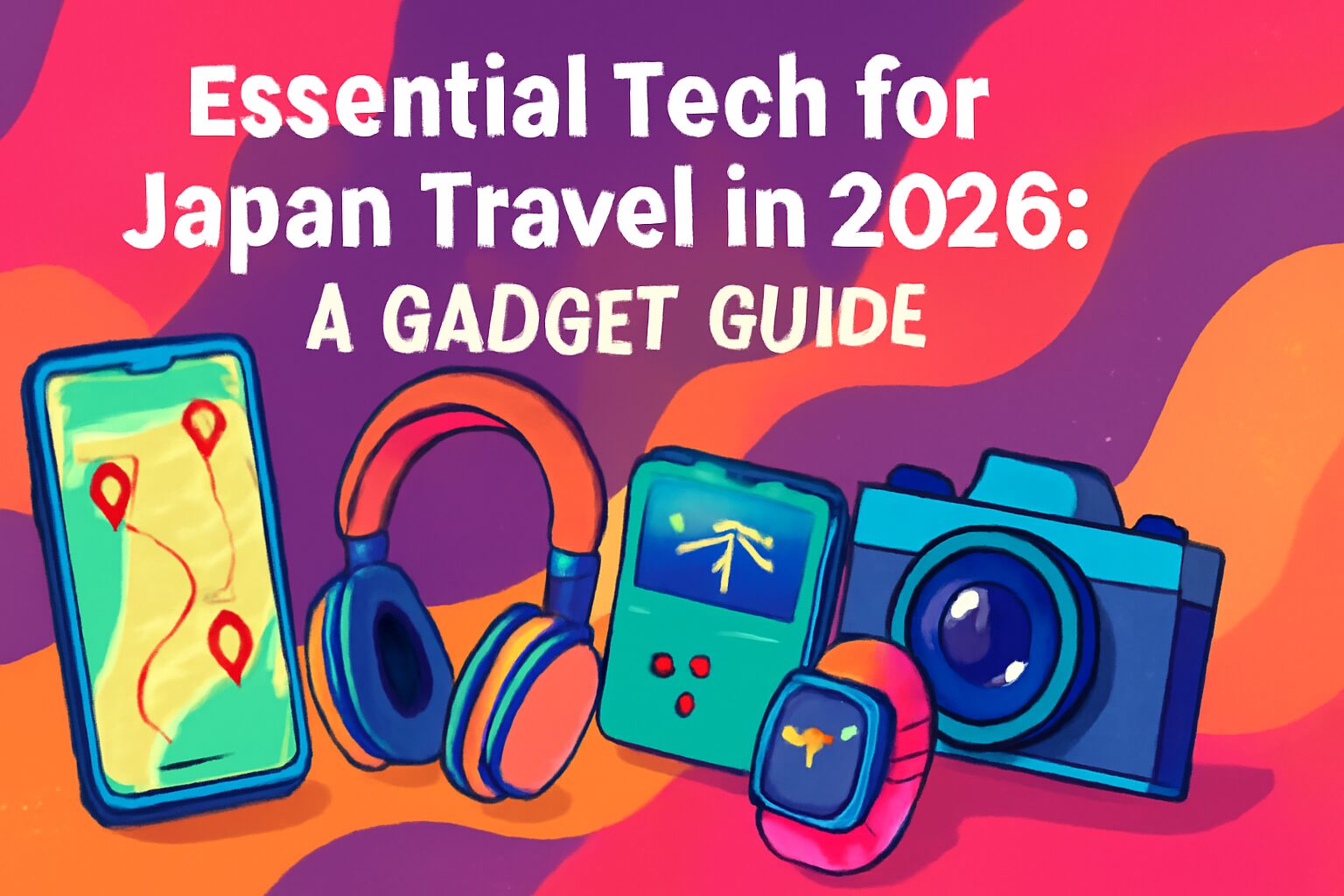
As Japan solidifies its position as a top global travel destination, a trip in 2026 promises an unparalleled blend of ancient tradition and futuristic innovation. With post-pandemic travel booming and major events like the 2025 Osaka-Kansai Expo setting the stage, the country is preparing for a record number of visitors. To navigate this dynamic landscape seamlessly, equipping yourself with the right technology is no longer a luxury—it’s a necessity. This guide outlines the essential gadgets that will transform your 2026 Japan journey from a great trip into an unforgettable, hassle-free adventure.
The Context: A Digitally Evolving Japan
Japan’s travel landscape is rapidly changing. After welcoming a record 31.88 million visitors in 2019, the country saw a swift recovery with over 25 million tourists in 2023. This number is projected to grow significantly by 2026, driven by a weak yen and sustained global interest.
While Japan is a tech powerhouse, the on-the-ground digital infrastructure for travelers has its own unique characteristics. Free public Wi-Fi is becoming more common in major cities and on public transport, but it can be unreliable in rural areas. Furthermore, Japan is still a cash-centric society in many ways. While major hotels and department stores accept credit cards, many smaller restaurants, shops, and temples do not. The cashless payment ratio in 2023 was approximately 39.3%, meaning you’ll still need yen, but your smartphone will be your primary tool for navigation, translation, and digital payments where available. This reliance on a single device makes smart tech preparation crucial.
Core Gadgets for Your 2026 Trip
Staying Connected: eSIM vs. Portable Wi-Fi
Constant, reliable internet access is the backbone of modern travel. In Japan, your main choices will be an eSIM or a portable Wi-Fi router.
eSIM: The Seamless Choice for Solo Travelers
By 2026, eSIM technology will be the standard for most new smartphones. Its key advantage is convenience. You can purchase and activate a data plan from providers like Ubigi or Airalo before you even leave home. Upon landing in Japan, your phone connects to the local network instantly, with no need to find a store or swap a physical SIM card. This is ideal for solo travelers or couples who primarily need data on their own devices.
Portable Wi-Fi: The Group and Power-User Solution
Often called “pocket Wi-Fi,” these rental devices remain an excellent option, especially for groups or families. A single router can connect multiple devices (phones, tablets, laptops) simultaneously, making it a cost-effective solution. Companies like Japan Wireless and Ninja Wi-Fi offer easy airport pickup and drop-off. By 2026, expect these devices to feature longer battery life and 5G speeds as standard, ensuring a fast connection for everyone in your party.
Powering Your Journey: The High-Capacity Power Bank
Your smartphone is your lifeline in Japan. It’s your map (Google Maps is indispensable), your translator, your camera, your train pass (with mobile Suica/Pasmo), and your wallet. This constant usage drains the battery quickly.
A high-capacity power bank is non-negotiable. For a full day of exploring, a minimum of 20,000mAh is recommended. This will provide multiple full charges for a typical smartphone. By 2026, look for power banks equipped with GaN (Gallium Nitride) technology, which allows for smaller, lighter designs and faster charging speeds. A model with multiple ports (including USB-C for modern devices) will be essential for keeping all your gadgets powered up.
Capturing the Moment: A Dedicated Camera
While smartphone cameras are incredibly capable, Japan’s breathtaking scenery—from the neon-lit chaos of Shinjuku’s nightlife to the serene beauty of a Kyoto bamboo forest—deserves to be captured in the highest quality possible.
A dedicated mirrorless camera or a high-end compact camera offers significant advantages: superior image quality, especially in low light; the versatility of optical zoom to capture distant details of a castle or temple; and greater creative control. As you document your journey, having a separate device for photography also helps conserve your phone’s precious battery life for essential tasks.
The Near Future: Tech Trends to Watch for in 2026
Technology is always advancing, and a few emerging trends will likely become mainstream by the time of your trip.
AI-Powered Real-Time Translators
While apps like Google Translate are useful, dedicated AI translation devices will offer even more fluid, two-way conversations. These devices, which can be worn as an earpiece or held, will break down language barriers more effectively, allowing for deeper connections with locals, especially when venturing off the beaten path.
Seamless Digital Transit and Payments
The integration of Japan’s transit cards, like Suica and Pasmo, into Apple Pay and Google Wallet is already a game-changer. By 2026, the process of adding and recharging these digital cards with international credit cards is expected to be even more streamlined. This will make hopping on trains and buses, or paying at convenience stores, as simple as a tap of your phone or smartwatch.
Augmented Reality (AR) Navigation
Navigating sprawling, multi-level train stations like Shinjuku or Tokyo Station can be daunting. AR navigation, already present in apps like Google Maps, will become more sophisticated. By simply holding up your phone, you’ll see digital arrows and signs overlaid on the real world, guiding you precisely to the correct platform or exit, turning a potentially stressful experience into a futuristic convenience.
By preparing with the right tech, your 2026 trip to Japan will be smoother, richer, and more connected, allowing you to focus on what truly matters: immersing yourself in one of the world’s most captivating cultures.