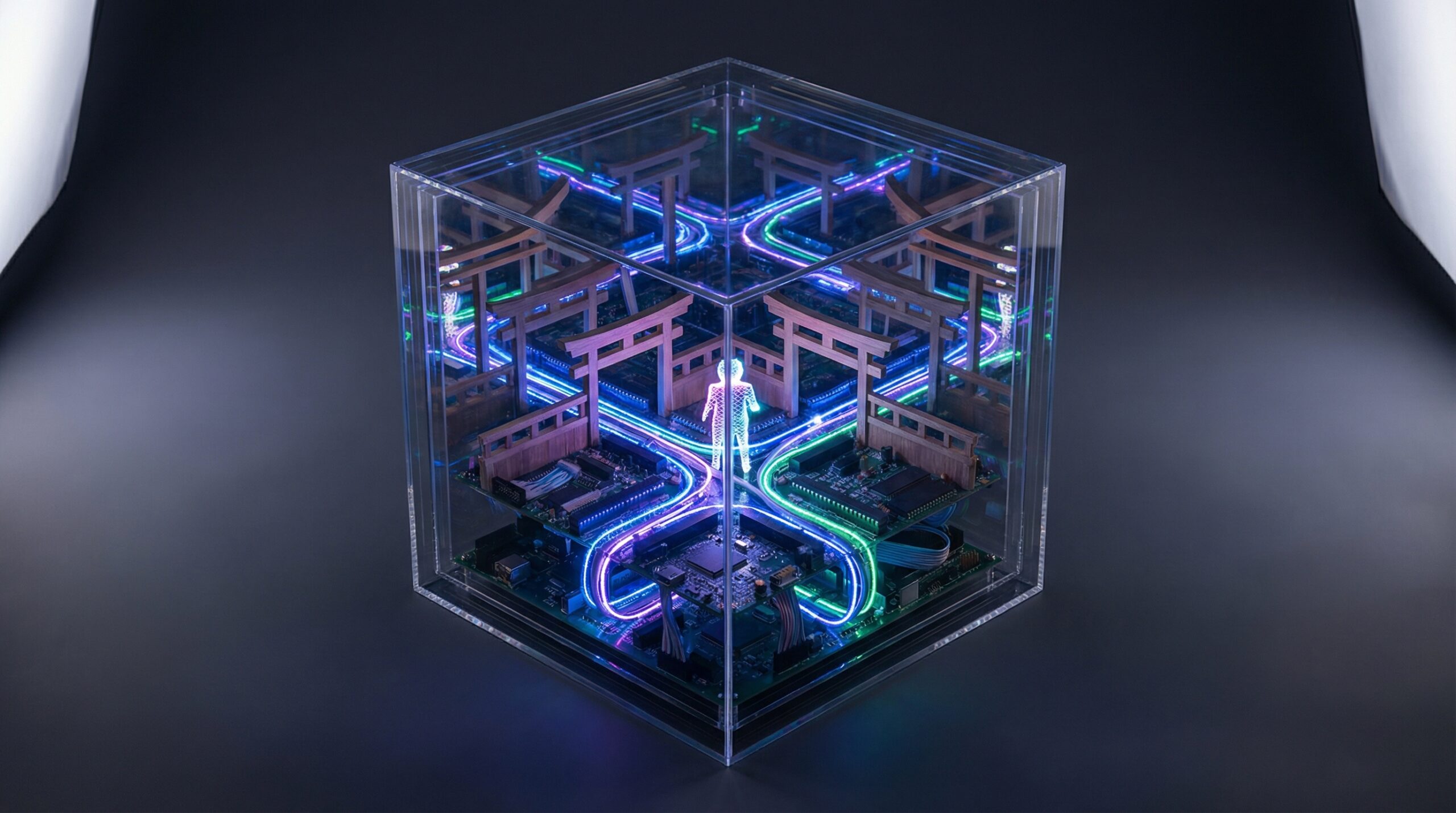
Yo, what’s the deal? Keiko here, coming at you straight from the neon-soaked heart of Tokyo. Let’s talk about art. But nah, we’re not talking about dusty old paintings hanging in some stuffy, silent room where you’re scared to even breathe too loud. Forget that vibe entirely. We’re diving headfirst into a world that’s so next-level, so mind-bendingly immersive, it feels like you’ve just glitched through the screen and landed smack in the middle of a sci-fi anime. I’m talking about Japan’s digital art museums, these pulsing, living ecosystems of light, sound, and pure imagination. This ain’t your average gallery visit; it’s a full-on sensory quest. The mission? To master the ‘Art of Invisibility.’ Think of yourself as a modern-day ninja, a shinobi of the digital age. Your training ground isn’t a secret mountain dojo; it’s a labyrinth of shimmering pixels and echoing soundscapes. Here, you learn to move through environments made of pure data, to dissolve into cascading waterfalls of light, and to become one with the shadows cast by crystalline forests. It’s a place where the art watches you back, where your every step, every touch, sends ripples through the universe around you. You’re not just an observer; you’re the catalyst, the ghost in the machine. These experiences are designed to make you forget where you end and the art begins. Boundaries? Totally last season. Here, they get blurred, then erased completely. You become a phantom, a whisper, a shadow dancing in an infinite galaxy of light. This is the ultimate stealth mission for your soul. Ready to disappear? Let’s get into it. This is your official invitation to ghost the real world for a few hours and become a true master of light and shadow. Peep the map below to find ground zero for your first mission.
If you’re ready to take your stealth skills on the road, learn how to master the art of ghosting Japan on the Shinkansen.
The New Wave of Japanese Art: Where Pixels Meet Philosophy
Alright, let’s break it down. We’re witnessing a full-scale revolution in the Japanese art scene, unfolding in real-time. This is more than a trend; it’s a paradigm shift—a completely new language expressed through projectors and sensors. It’s the kind of transformation that makes you rethink what art can actually be. The creative energy here is electric, drawing from centuries of Japanese aesthetics—like the appreciation of fleeting beauty in `mono no aware`—and fusing it with the cutting-edge technology that defines modern Tokyo. This wild fusion of ancient philosophy and futuristic vision makes the entire scene explode in a way you won’t find anywhere else in the world. This is where Japan’s digital soul is being crafted, in dark rooms illuminated by impossible light.
Beyond the Canvas: What Exactly Is Digital Art?
So, what do we really mean by ‘digital art’? First, erase the idea of just a screen. We’re not talking about JPEGs or digital paintings you scroll past online. This is physical, spatial, immersive. Think of it this way: a traditional artist works with canvas and paint. These new artists use the entire room as their canvas. The ‘paint’ is light, carefully programmed and emitted from dozens, sometimes hundreds, of hidden projectors. The ‘brushstrokes’ are complex algorithms creating living patterns—flowers that bloom and wither in an endless cycle, or digital schools of fish swimming across the walls. But it goes deeper. The real revolution is interactivity. These spaces are embedded with motion sensors, cameras, even heat detectors tracking your every move. When you step inside, you’re not just entering a physical space; you’re logging into a system. The art senses your presence. Move closer to a wall, and a galaxy of stars might swirl around your feet. Touch a digital butterfly, and it could burst into a shower of petals. It’s a dialogue—a two-way interaction. This art refuses to stay static. It’s alive, responsive, and deeply personal because your presence fundamentally alters the composition. You, the viewer, are the final, unpredictable variable in the code. That’s main character energy, right? You’re not just observing a masterpiece; you’re co-creating it in real time. It’s a fleeting, unique experience that can never be perfectly replicated, and that ephemeral quality is what makes it so powerful.
The Ninja Connection: Stealth, Illusion, and Perception
Here’s where the ‘Art of Invisibility’ comes in. The entire experience feels like stepping into a ninja’s shoes—not just a clever metaphor, but embedded in the very DNA of the design. A shinobi’s greatest talents were deception, misdirection, and a deep awareness of their surroundings. They used light and shadow not as obstacles, but as tools—extensions of their own body—that allowed them to move unnoticed. These digital art museums are modern arenas for practicing those same principles. You enter a pitch-black hallway, disoriented, senses heightened. Then, a single line of light appears on the floor, guiding you forward, teaching you to trust more than just your eyes. You start to navigate by sound, by subtle vibrations beneath your feet. In mirrored rooms, you confront endless reflections of yourself, making you question which image is real. It’s a lesson in `kyojitsu tenkan`, the ninja art of turning falsehood into truth and vice versa. The artists are master illusionists, using projection mapping to make solid walls melt away or floors plunge into infinite abysses. You lose your sense of scale, direction, and orientation. This deliberate disorientation is designed to dismantle your preconceived ideas of reality. By removing the familiar, you are forced to be completely present, relying on instinct. You begin to move differently—more cautiously, more quietly. You become a shadow, both observer and part of the illusion. This is the essence of invisibility: not just being unseen, but dissolving the boundary between self and environment until you blend seamlessly with the world around you. It’s a deeply philosophical journey that pushes you to ask: if my senses can be so easily fooled, what is truly real? And in a world of infinite reflections, who am I?
The Titans of Tech Art: Must-Visit Sanctuaries of Light
Alright, so you’re convinced by the concept and ready to leave reality behind to enter the digital matrix. But where do you even begin? While the scene is bursting with incredible talent, a few undisputed heavyweights stand out—the god-tier creators who essentially wrote the rulebook for immersive art. These are the places guaranteed to rewire your brain and make you see the world in an entirely new spectrum of light. Getting lost in their creations is a rite of passage for any traveler seeking to experience the true futuristic soul of Japan. These aren’t merely museums; they are destinations, secular cathedrals devoted to technology and imagination.
teamLab: The Pioneers of Immersive Chaos
When it comes to digital art in Japan, one name stands above the rest: teamLab. They are the pioneers, the legends who transformed this concept from a niche tech demo into a global sensation. Founded by a collective of artists, programmers, engineers, and mathematicians, teamLab’s mission is to explore the intersection of art, science, technology, and the natural world. Their work is defined by its scale, complexity, and relentless push to break down barriers. They don’t just create rooms; they build entire ecosystems. They operate two flagship museums in Tokyo, which serve as essential visits for anyone interested in this art form—each offering a distinct but equally mind-altering expression of their genius.
teamLab Borderless: A Map-Free World in Azabudai Hills
Prepare to abandon your sense of direction, because Borderless is exactly that—a place without a defined path or route. It’s a single, continuous, sprawling world where artworks don’t stay confined to their spaces. They wander, interact, overlap, and blend, forming a seamless, ever-evolving universe. You might see a flock of digital crows fly out of one room, soar across the hallway, and dive into a different artwork on the other side. The new version of Borderless, located in the sleek Azabudai Hills complex, has amplified this concept to the extreme. Upon entering, darkness envelops you, and you’re set adrift—no maps, no signs. The aim is to explore, wander, get lost, and discover the world on your own terms. It’s an exercise in pure curiosity. One moment you may find yourself in the `Crystal World`, a seemingly endless space filled with hanging LED strands responding to your presence, making you feel like you’re floating inside a god’s central nervous system. Lights shift, colors morph, and the soundscape feels like witnessing the birth of a new galaxy—overwhelmingly beautiful. Next, you might wander into the `Forest of Resonating Lamps`, surrounded by hundreds of Venetian glass lamps glowing with warm, breathing light. As you approach one, it brightens, sending a ripple of light through nearby lamps, illustrating how a single presence can influence an entire system. You’ll also encounter works that depict nature’s cycles, such as virtual waterfalls cascading down walls with realistic physics or rooms where a year’s worth of flowers bloom and fade within an hour, their life cycle affected by the number of visitors. The experience is both meditative and chaotic. To truly embrace Borderless, you must relinquish control—don’t try to see it all. Instead, follow what captures your attention or what you hear in the distance. Be a digital nomad, allowing this borderless realm to reveal its secrets one breathtaking discovery at a time.
teamLab Planets TOKYO: Immerse Yourself, Literally
If Borderless invites you to lose yourself in a vast, cerebral world, teamLab Planets in Toyosu offers a more direct, physical, and sensory adventure. Here, you don’t just observe the art—you feel it with your entire body. The experience begins with removing your shoes and socks, which is mandatory. You’ll walk barefoot throughout the museum, including through water. This bold gesture immediately grounds you, heightening your other senses. The path is more linear than Borderless, guiding you through a series of unique installations. One iconic piece is `Drawing on the Water Surface Created by the Dance of Koi and People – Infinity`. You wade knee-deep into warm, murky water within a vast, dark room lined with mirrors. As you move, vibrant koi projections swim around your legs. The koi aren’t on a preset loop; they are generated in real time by a computer program reacting to your presence and others’. Touch one, and it may burst into a chrysanthemum of light before reforming. Stand still, and they’ll encircle you. It’s a surreal, playful interaction connecting you directly with a digital ecosystem. Afterwards, you might enter the `Infinite Crystal Universe`, reminiscent of Borderless’s Crystal World but experienced as a navigable path through hanging lights, making you feel like the lone explorer of a cosmic nebula. Perhaps the most serene moment is in `Floating in the Falling Universe of Flowers`, a large domed room where you’re encouraged to lie on the floor as endless cycles of digital flowers bloom, float, and drift overhead. Paired with a resonant soundtrack, it creates a profound sense of peace, as if dissolving into the universe itself—a moment of pure escapism. Planets offers a tactile, immersive experience—feeling varied floor textures under your bare feet, the warmth of water on your skin, and surrendering completely as you let the art envelop you. It’s less a mental puzzle and more a spiritual cleansing, a digital baptism that leaves you feeling refreshed and deeply transformed.
Beyond teamLab: The Underground Digital Art Scene
Look, teamLab is the undisputed leader, and you absolutely must pay your respects. But assuming they’re the only major players would be a big mistake. The spirit of digital art has spread widely in Japan, creating an entire ecosystem of talented artists and collectives pushing boundaries in their own unique ways. Exploring their work is like uncovering the hidden B-side tracks of your favorite album—they might not have blockbuster fame, but they offer a distinctive flavor and fresh perspective that deepens your appreciation of the whole scene. These are the ninjas working behind the scenes, transforming everything from ancient castles to corporate showrooms into fleeting pockets of magic.
NAKED, INC.: Masters of City-Sized Canvases
If teamLab constructs immersive self-contained worlds, then NAKED, INC. focuses on transforming our existing reality. These artists are projection mapping wizards, often using the city itself as their canvas. They specialize in illuminating iconic landmarks—historic castles, modern skyscrapers, tranquil gardens—and turning them into entirely new, fantastical creations after dark. Their work is usually temporary, appearing to celebrate a season or special event, which adds to its special allure. Witnessing a NAKED event is like seeing a rare celestial phenomenon; you know it’s a fleeting moment of beauty. One of their most legendary projects is their recurring takeover of Kyoto’s Nijo Castle, using the ancient walls and gardens as the backdrop for stunning projections that narrate Japanese folklore or celebrate seasonal changes. Imagine cherry blossoms blooming in a storm of light on walls that have stood for centuries, or golden dragons slithering across historic gates. It’s a dialogue between past and future, blending heritage and cutting-edge artistry. They’ve also transformed Tokyo Tower into a vivid canvas and created permanent installations like `Tree by NAKED` in Yoyogi Park—an interactive dining experience that fuses art and cuisine. NAKED’s style tends to be more narrative and theatrical than teamLab’s, but no less immersive. They are urban illusionists, modern-day shinobi using the city as their playground, proving that magic isn’t limited to museums—it can erupt anywhere, anytime, turning the familiar into the extraordinary.
GINZA 456: A Bite-Sized Dose of Digital Wonder
Not every digital art experience requires hours or a ticket. Sometimes, the most delightful discoveries happen by chance. Hidden in the luxury shopping district of Ginza is `GINZA 456`, a communications hub run by telecom giant KDDI. While its main aim is to showcase future tech like 5G, it does so through the language of art. Think of it as a free, ever-changing mini-museum—a pop-up dojo for digital interaction. The experience is compact but densely packed. You might enter to find the floor bursting with digital flowers beneath your footsteps or a wall where you paint with light through hand gestures. They often include augmented reality experiences accessible via your phone, adding a hidden layer of digital magic to the physical space. Since it’s a corporate venue, exhibits change regularly to highlight new technologies, so there’s almost always something fresh to discover. It’s a perfect palate cleanser after shopping or an ideal introduction for anyone unsure about committing to a full museum visit. GINZA 456 proves that the ‘Art of Invisibility’ can also be about small, surprising moments of wonder hidden in plain sight—a quick glitch in everyday life’s fabric that reminds you the future is already here, just waiting for you to come and play.
Mastering the Art: How to Be a Digital Ninja
Alright, you know the spots, but simply showing up isn’t enough. To truly maximize your experience in these digital labyrinths, you must adopt the mindset of a ninja. It’s about preparation, awareness, and a willingness to fully immerse yourself in the mission. These aren’t passive encounters; they demand your active participation. By following a few key principles—the unwritten code of the digital shinobi—you can transform your visit from a cool light show into a genuinely transformative experience. This is your training manual.
The Shinobi Wardrobe: What to Wear
It might seem superficial, but your clothing choice can literally make or break your experience. This is your ninja uniform, your `shinobi shozoku`. Rule number one: wear solid, light-colored clothing. White is the ultimate cheat code. Why? Because you’re not just an observer—you become part of the canvas. The projections spill off the walls onto you, making you a living, breathing element of the installation. Wearing white allows the colors to pop, effectively blending you into the artwork. Dark colors absorb light, turning you into a void, while busy patterns clash with projections, creating visual chaos. Think of yourself as a blank slate. Secondly, footwear is crucial. As mentioned, places like teamLab Planets require you to be barefoot. For expansive venues such as Borderless, you’ll be on your feet for hours, often walking on uneven or sloped surfaces. Comfort is key—choose your most comfortable sneakers. Finally, a vital tip for anyone wearing skirts or dresses: many installations feature mirrored floors. This deliberate design choice creates a sense of infinite space, so be mindful and plan accordingly. It’s all part of the play of perception and reflection, but a practical detail you’ll appreciate knowing ahead of time. Dress smart, and you’ll be ready to dissolve into the light.
The Way of the Silent Step: Navigating the Labyrinth
Once inside, your greatest enemy is impatience. The modern urge to rush, to see everything, to check items off a list—you must leave that mindset at the door. A ninja moves with purpose and patience, and so must you. In a place like Borderless, which offers no map, the temptation is to try to systematically find every room. Resist. The true magic lies in wandering and accidental discoveries. Follow a sound that intrigues you. Let a wave of digital light guide you in a new direction. Allow yourself to become genuinely lost. This is how you uncover hidden corners and secret rooms that others rush past. Furthermore, practice the art of observation. Many artworks contain hidden interactive elements. Stand still in a room for a full minute and watch what unfolds. The art might shift, revealing new layers. Gently touch a wall—some respond. The artists have embedded secrets in these worlds for those patient enough to find them. And now, about photography. While snapping pictures is allowed and encouraged, don’t experience the museum solely through your phone’s screen. A camera can’t capture the feeling of scale, the soundscape, or how the light touches your skin. Be present. Live in the moment first, capture the memory second. And for all that is sacred, turn off your flash. It ruins the illusion for everyone and is the ultimate rookie move. Move quietly, stay aware, and don’t be the noisy tourist who ruins the mission for others.
The Ninja’s Mind: Embracing the Experience
Your most important tool is your mindset. To master the art of invisibility, you need to open your mind fully to the experience. If possible, go alone or with just one other person. Large, chatty groups create a reality bubble that insulates you from the immersive atmosphere the artists have worked so hard to craft. Going solo lets you sink into the world without distraction, fully present with your own thoughts and senses. Speaking of senses, engage them all. Don’t just look—listen to the carefully designed soundscapes filling each room, a crucial part of the emotional journey. Feel the temperature shifts between installations. Notice the different textures beneath your feet. This is a full-body experience. Lastly, remember this is more than pretty lights. Deep themes are at play here: humanity’s relationship with nature, the relentless passage of time, and the fluid nature of identity in a digital world. Take moments—especially in the meditative rooms—to sit and reflect. Let the art inspire questions within you. Why does this digital waterfall feel so real? What does it mean for a flower to bloom from code? Engaging with the experience philosophically completes your training. You haven’t just seen the art; you’ve grasped its soul.
The Future is Now: Where Does the Art of Invisibility Go From Here?
Exploring Japan’s digital art scene is like stepping into a future unfolding right before our eyes. This is not a static form of expression; it is a living, breathing entity that continuously evolves alongside the technology that drives it. The artists and engineers behind these creations are in a constant state of innovation, pushing boundaries and ensuring each experience is uniquely different. Entering these spaces offers a glimpse into the future of how we will engage with art, space, and one another.
The Ever-Evolving Dojo
One of the most exciting aspects of this art form is that it is never complete once the museum opens. The artworks are powered by intricate computer programs, allowing them to be updated, adjusted, and transformed just like the apps on your phone. Artists at collectives like teamLab are always refining their algorithms and introducing entirely new pieces into the existing worlds. An installation might shift its color scheme to mirror the current season outside, displaying cherry blossoms in spring and fiery maple leaves in autumn. This means a visit to Borderless in May will provide a distinct experience from one in November. This fluid nature turns the museums into living dojos, constantly evolving and challenging your perceptions. It breaks the traditional museum model of a static collection, offering instead a vibrant world that grows and shifts with its audience. This dynamic encourages repeat visits, inviting you to continue your exploration and uncover new secrets within the labyrinth. The art is not a monument; it is a flowing current, always changing, ensuring you can never step into the same digital river twice.
Your Own Digital Quest
So, the mission is clear: Japan is calling, and its digital realms are ready to be discovered. This is your opportunity to trade the ordinary for the extraordinary, stepping through the looking glass into a world governed by a different set of rules. It’s a journey that will awaken your senses, spark your imagination, and perhaps even alter your perception of reality. Within these immersive sanctuaries, you receive a rare gift—the chance to vanish. You can shed your everyday identity and become a ghost in the machine, a shadow dancing with light, a modern-day ninja in search of wonder. You are not a passive observer in a gallery; you are an active participant, a co-creator, the essential element that completes the artwork. So dive in, get lost in the code. Wander through borderless worlds and wade in digital rivers. Discover hidden secrets and let a universe of flowers surround you. It’s a whole vibe, a journey you need to experience to believe. Your digital quest awaits. Bet you won’t regret it.