Yo, what’s up, world travelers! Yuki here, coming at you straight from the sun-drenched coast of Japan. Picture this: The sun is blazing, a golden orb hanging high in the cerulean sky. You’ve been out there for hours, just you, your board, and the endless rhythm of the Pacific. Your arms are aching with that good kind of burn, the one that tells you you’ve given it your all. Salt is crusted on your skin, a fine, glittery powder that tastes of pure ocean energy. Your hair is a tangled, sea-whipped mess. You are blissfully, completely, and utterly exhausted. This is the aftermath of a perfect surf session on the Shonan coast, a feeling of being totally drained yet more alive than ever. It’s in this exact moment of beautiful fatigue, as you drag your board across the hot sand, that a specific, almost primal craving hits. It’s not for water, not for an energy drink. It’s a need for something cold, something sweet, something that screams summer. And that’s when you see it. Tucked away at a classic, rustic `umi no ie`—a Japanese beach house that pops up every summer—is the answer. A cooler full of ice, and nestled within, glowing like a sapphire, is a bottle of Ramune. This isn’t just a soda. This is the ritual. This is the reward. This is the sound and taste that defines a Japanese summer, and trust me, after a day wrestling with the waves, it’s a straight-up vibe.
For anyone planning a trip, especially if you’re chasing that authentic coastal Japan experience, you’ve gotta know the lay of the land. The spot I’m talking about, the legendary Shonan coast, is just a stone’s throw from Tokyo, making it the ultimate getaway. We’re talking about a stretch of coastline that’s pure magic, with iconic views of Enoshima Island and, on a clear day, the majestic Mount Fuji watching over you from a distance. The heart of this surf scene, a place like Shichirigahama Beach, is where it all goes down. To really get the picture, you need to see it, feel it. So before we dive deep into the pop and fizz of it all, check out the map below. This is the epicenter of the vibe, the ground zero for your future Ramune moment.
While the Shonan coast offers an iconic experience, true surf aficionados seeking Japan’s best waves should explore Okinawa’s legendary surf spots.
The Treasure in the Ice
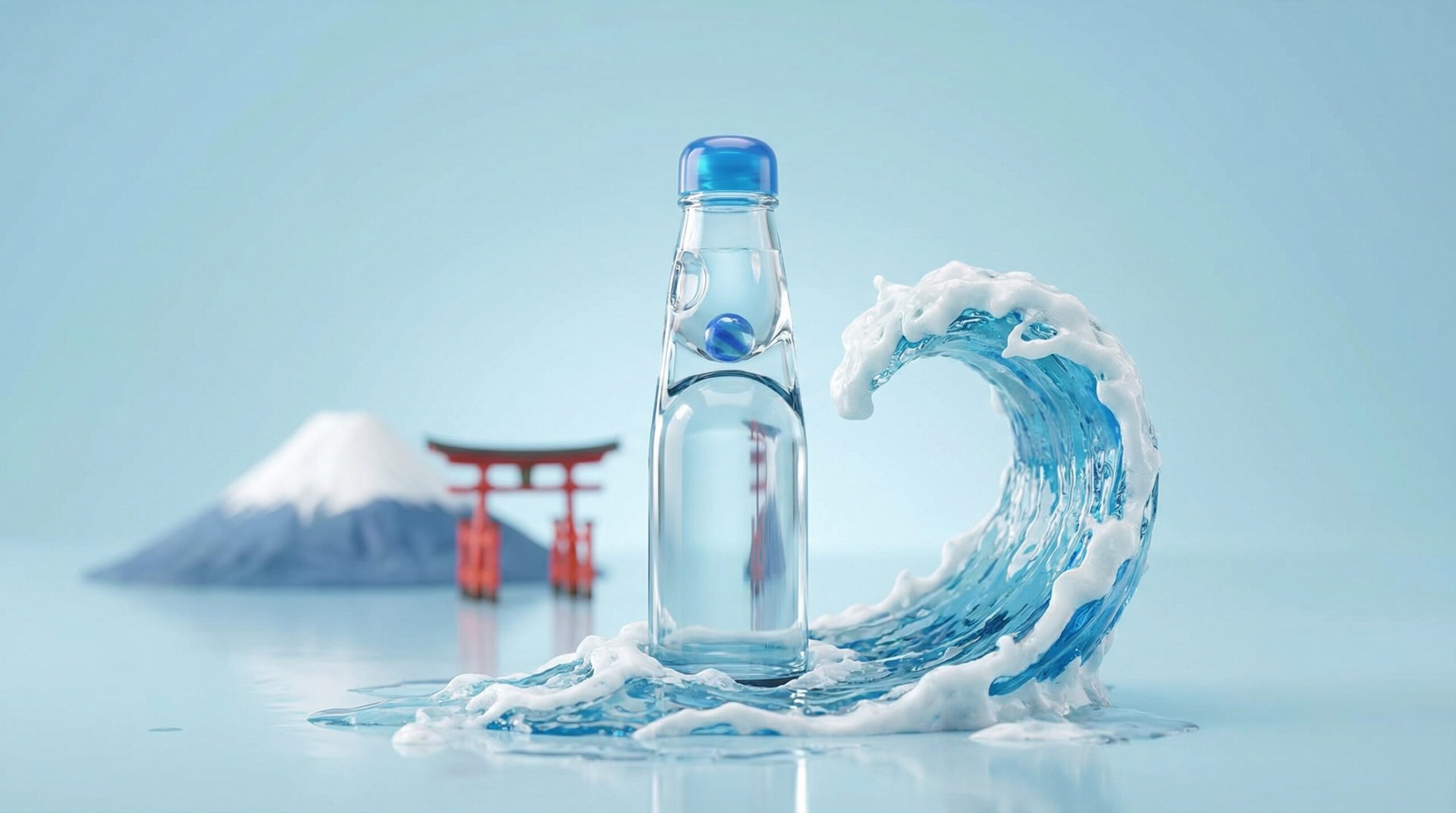
Walking up to the `umi no ie`, the air is thick with the aroma of grilled squid and soy sauce, accompanied by the sounds of J-pop blasting from worn-out speakers and the joyful chatter of families and friends. It’s a complete sensory experience. Your eyes drift past the colorful shaved ice (`kakigori`) and the perfectly charred `yakisoba` because you’re on a mission. And there it is. The cooler isn’t a sleek, modern appliance. It’s probably a bit battered, maybe a classic blue and white, packed to the brim with chunky, glistening ice and water. It’s a treasure trove. Moving aside bottles of green tea and sports drinks, your fingers, still numb from the cool ocean water, find it. The glass is surprisingly cold, and condensation quickly fogs its surface, making the vibrant blue liquid inside appear otherworldly. This isn’t just any bottle. The Ramune bottle is an icon, a piece of design brilliance known as a Codd-neck bottle, named after its British inventor, Hiram Codd. It’s a relic from another era, a rebellion against the modern world of screw caps and aluminum cans. Its shape is distinctive, with a thick, heavy glass body and a characteristic pinched neck. And inside that neck, you spot it: a small glass marble, held in place solely by the pressure of the carbonation within. It’s a puzzle, a promise of the fizzy delight trapped inside. Holding it, you can feel its weight, its history. It feels solid, significant. The soda’s color itself is an impossible, electric blue, the kind of hue seen in tropical lagoons in travel magazines. It doesn’t look natural, and that’s part of its appeal. It’s pure, unapologetic fun, a liquid embodiment of summer itself. It glows with an inner light, promising a sugar rush and a rush of cold that will cut through your fatigue and the afternoon heat.
The Ritual: A Challenge Before the Reward
Opening a Ramune is half the fun. It’s not meant for beginners. You can always spot tourists struggling with it, their faces full of bewilderment. It’s a rite of passage. This soda demands effort, and the reward tastes sweeter because of it. It’s a small ceremony you perform, a ritual that links you to generations of Japanese summer festival-goers.
The Mysterious Green Cap
First, you remove the plastic wrapper from the top. Beneath it, there’s no usual twist-off cap. Instead, you find a two-part plastic device, often bright green or blue. You separate the pieces. One is a simple ring you can toss aside. The other is the key—the plunger. It’s a small, T-shaped plastic piece that fits perfectly over the bottle’s opening. For a first-timer, this is the moment of hesitation. What is this? Am I supposed to pry something open with it? There are no instructions, just a straightforward, intuitive design you have to figure out yourself. You set the plunger on top of the marble, feeling it settle securely in the neck. You’re ready. You take a deep breath, preparing for what comes next. This is the moment of commitment; there’s no turning back once you begin.
The Moment of Truth: The POP
Here’s where the magic happens. You grip the bottle firmly with one hand. With your other hand, you place your palm over the plunger and press down. At first, there’s strong resistance. The carbonation inside pushes back fiercely, holding the marble in place like a guarded gate. For a moment, you might doubt yourself, thinking it won’t work. You push harder. The pressure mounts. Your muscles tighten. The world narrows down to the single point where your hand, the plastic, and the glass meet. Then, suddenly, it happens. With a sharp, explosive POP! like a wave crashing on a shore, the marble breaks free. It’s a startlingly loud and satisfying sound. A burst of white, fizzy foam shoots up the bottle’s neck—a tiny volcano of sweet carbonation. Sometimes, if you’re not careful, it spills over, a sticky tribute to the Ramune gods. The pressure releases, and the marble tumbles into the pinched chamber of the neck, rattling and clinking on its way down. That pop signals the official start of refreshment. For any Japanese person, that sound can instantly transport them back to childhood—a hot summer night at a festival, a sparkler in one hand and a freshly opened Ramune in the other. It’s a sound of pure, unfiltered joy.
An Ocean of Flavor in a Glass Bottle
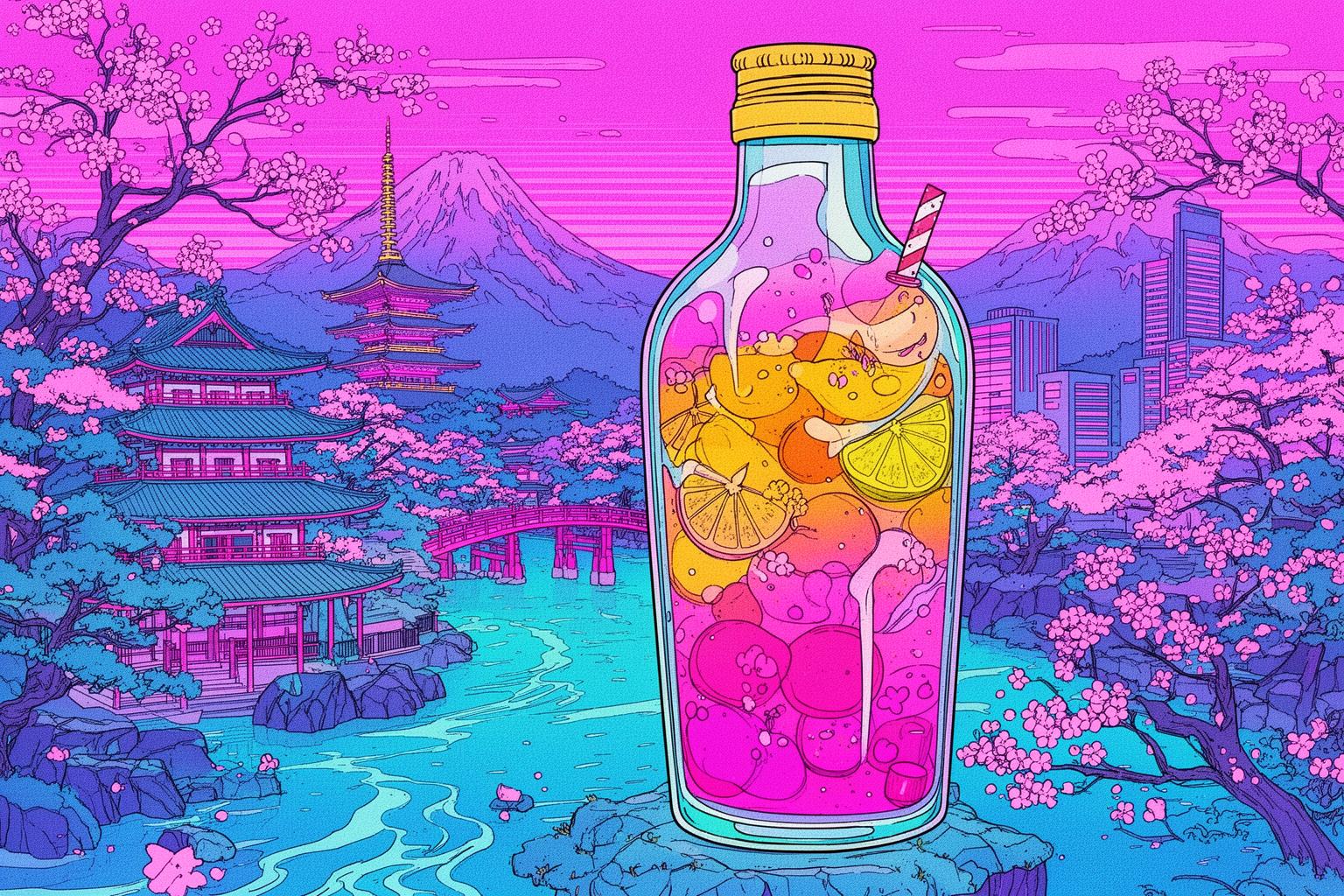
With the seal broken and the fizz still bubbling, you lift the bottle to your lips. The ritual is complete, and now it’s time for the reward. The cool glass feels soothing against your sun-warmed skin. The scent rising up is a distinct, sweet aroma that’s hard to describe but instantly recognizable as “Ramune.”
The First Taste of Summer
That first sip is a revelation. It’s a pure sugar rush, but in the best possible way. The flavor is often said to be a blend of lemon-lime, cream soda, and bubblegum. It’s unapologetically artificial, a taste crafted in a lab rather than grown on a tree. And yet, it’s perfect. It doesn’t attempt to be anything else. It’s simply sweet, nostalgic, and incredibly refreshing. The carbonation is fierce, a thousand tiny bubbles bursting on your tongue in a fizzy celebration. After hours in the salty ocean, the intense sweetness cuts through everything, delivering a burst of energy that seems to recharge your very soul. It’s the kind of cold that feels like it seeps into your bones, driving away the last traces of the oppressive summer heat. It’s crisp, clean, and goes down so effortlessly. You can feel the sugar hitting your system, the weariness from your surf session beginning to fade, replaced by a fresh sense of vibrant energy. It’s more than just quenching your thirst; it’s a full-body reset, a shock to the system that brings you back to life.
The Marble’s Song
Drinking Ramune is also an auditory and tactile experience. As you tilt the bottle to drink, that little glass marble, now your constant companion, rolls forward to block the opening. This is a design feature, not a flaw. The two small indentations in the bottle’s neck catch the marble, allowing the liquid to flow around it. You quickly learn the right angle to hold the bottle, a gentle tilt that keeps the marble nestled in its chamber while you drink. With each sip, the marble rattles and clinks against the glass, producing a delicate, playful sound. It’s a constant reminder of the unique nature of what you’re enjoying. This sound is as much a part of the Ramune experience as the taste itself. It’s the bottle’s own little song, a percussive rhythm that accompanies your moment of refreshment. It encourages you to slow down, to drink with intention. You can’t just chug a Ramune; you have to engage with it, manage the flow, and listen to its music. It’s an interactive experience, a small game you play with your beverage, making the act of drinking more mindful and enjoyable.
More Than Just a Drink: Ramune as a Cultural Time Capsule
To truly appreciate Ramune, you need to realize that you’re not just drinking a soda—you’re savoring a piece of Japanese history. This distinctive bottle serves as a direct link to the past, a cultural artifact that has endured amid a world dominated by convenience and modern packaging. It offers a taste of nostalgia, a liquid time capsule filled with memories for millions.
From Meiji Era Import to Summer Icon
Believe it or not, Ramune has foreign origins. The Codd-neck bottle was introduced to Japan from the United Kingdom during the Meiji Era in the late 19th century, a period marked by rapid modernization and the embrace of Western culture. The word “Ramune” is a Japanese transliteration of the English word “lemonade,” which was originally the primary flavor. However, as with many things, Japan adapted this foreign invention and made it uniquely its own. It quickly became popular, especially as a refreshing solution to the notoriously hot and humid Japanese summers. Over time, it became deeply ingrained in the summer experience. It’s the drink of `matsuri` (festivals), where children and adults alike pop open bottles while enjoying games like goldfish scooping and treats like `takoyaki`. It’s also the drink of `hanabi` (fireworks) displays, the sound of the bottle’s pop blending with the booming fireworks overhead. And it’s the drink you grab from a vending machine after a long, hot walk to a distant shrine or temple. For many Japanese, the taste and sound of Ramune are inseparable from their most beloved summer memories.
The Showa Retro Vibe
The enduring charm of the glass bottle is a big part of its appeal. In a time when PET plastic bottles and aluminum cans dominate, the heavy, reusable (in the past) glass bottle makes a statement. It’s a beautiful, lasting object. This connects Ramune to the broader aesthetic of “Showa Retro,” a nostalgia for the Showa Era (1926-1989), especially the mid-century period of economic growth and cultural optimism. The bottle’s design, the traditional `kanji` characters on the label, and the simple, vivid colors all evoke a sense of `natsukashii`, a Japanese term that expresses a deep, sentimental longing for the past. It’s a feeling of joyful nostalgia. Holding a Ramune bottle is like holding a piece of that era—a time seen as simpler and perhaps more genuine. It’s a tangible link to cultural memory, which explains why it resonates so strongly, even with younger generations who never lived through that time themselves.
A Rainbow of Flavors, A Universe of Memories
While the classic original flavor—that iconic electric blue—is the undisputed favorite, especially at the beach, Ramune has expanded into a vast spectrum of flavors. Visit any large supermarket or Don Quijote store in Japan, and you’ll find a vibrant array of choices. There are melon, strawberry, orange, pineapple, and lychee. Then there are more adventurous flavors like yuzu, blueberry, watermelon, and even eccentric ones such as curry, chili oil, and wasabi for the boldest palates. Each flavor has its own following and special place. The melon flavor recalls the taste of traditional Japanese melon-pan bread, while strawberry evokes sweet, summery desserts. But regardless of flavor, the ritual remains unchanged: the plunger, the push, the pop, the marble. Yet for that quintessential post-surf moment, nothing beats the original. Its bright, simple, and artificial flavor profile perfectly contrasts the raw, natural, and salty ocean experience. It’s the yin to the ocean’s yang.
The Shonan Coast: The Perfect Stage for a Ramune Moment
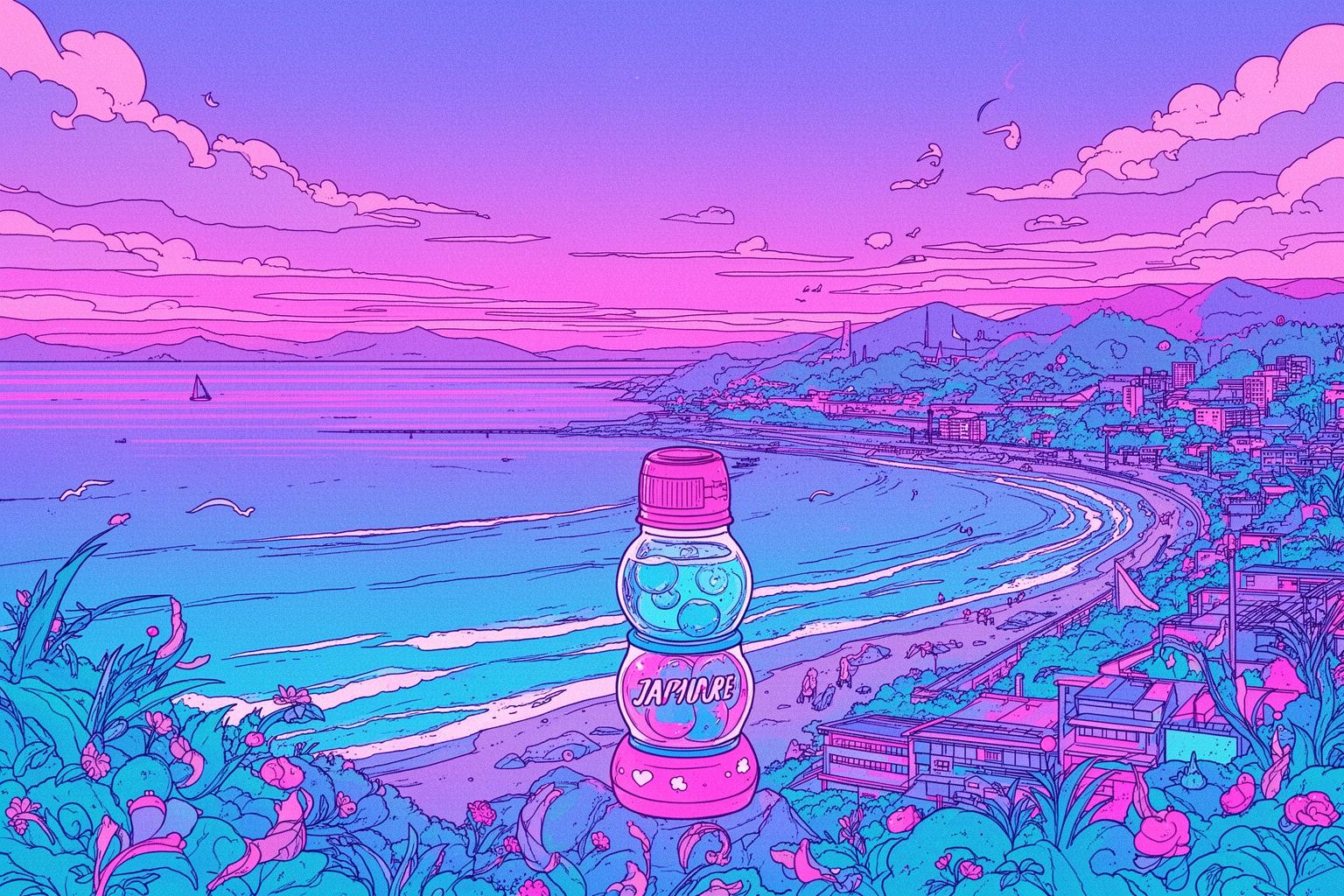
The setting is everything. You can enjoy a Ramune anywhere, but having one on the Shonan coast after a surf session is experiencing it at its absolute best. This stretch of coastline along Sagami Bay in Kanagawa Prefecture is more than just a location; it embodies a lifestyle. It’s often considered Japan’s equivalent to Southern California—a center of surf culture, beach life, and laid-back vibes, all just an hour’s train ride from the bustling city of Tokyo.
Where Surf Culture Meets Ancient History
Shonan’s charm lies in its remarkable fusion of old and new. On one side, there’s the lively, contemporary surf scene. Beaches such as Shichirigahama and Yuigahama are filled with surfers from dawn until dusk. Coastal roads are dotted with surf shops, stylish cafes boasting ocean views, and restaurants serving fresh local seafood. The atmosphere is relaxed, youthful, and deeply connected to the ocean. Just a few kilometers inland, however, is Kamakura—the ancient capital of Japan. This city is home to serene temples, giant Buddhas, and peaceful bamboo groves. You could spend your morning catching waves and your afternoon exploring the grounds of Kotoku-in Temple with its famous Great Buddha or strolling through Hokoku-ji Temple’s tranquil bamboo forest. This contrast defines the area—a place where spiritual calm and adrenaline-fueled adventure coexist, often within the same day. Sipping a Ramune here feels like bridging these two worlds—the fizzy modern fun and Japan’s timeless, enduring culture.
Riding the Enoden Line
Traveling around Shonan is a unique experience in itself, thanks to the Enoshima Electric Railway, affectionately known as the “Enoden.” This charming, slightly quaint train line has been operating for over a century and is a beloved regional icon. The small, often green train threads its way along the coast, linking Fujisawa with Kamakura. The ride is stunning. The train runs remarkably close to the ocean, offering incredible views of sparkling waters and surfers catching waves. At times, it weaves through narrow gaps between traditional Japanese homes, so near you feel you could reach out and touch them. The rhythmic clatter of the train and its distinctive bell form the soundtrack of Shonan. Riding the Enoden with salty hair and a surfboard under your arm on your way to a post-surf Ramune is a quintessential Shonan experience. It’s a scene reminiscent of a movie or anime—a memory that will linger long after.
Sunsets, Fuji, and the Perfect Sip
If timed just right, your Ramune moment can coincide with one of Japan’s most breathtaking sights. On clear days, especially in cooler months, the sunset from Shonan’s coast is sublime. As the sun sinks below the horizon, it paints the sky with vibrant shades of orange, pink, and purple. Enoshima Island becomes a striking silhouette against the vivid backdrop. Farther away, the unmistakable, perfectly symmetrical cone of Mount Fuji appears, its snow-capped peak glowing softly in the twilight. Sitting there on warm sand, feeling the gentle evening breeze while watching this spectacular natural show with a cold, clinking bottle of Ramune in hand… it’s a moment of pure, unfiltered perfection. A moment where you feel profoundly connected to Japan’s beauty—where a simple soda transcends into an unforgettable, almost spiritual experience.
Why This Simple Soda is the Ultimate Post-Surf Elixir
So why does this particular drink, this nostalgic soda, feel so right after a surf session? It’s a blend of physical and psychological factors coming together to create the ideal refreshment. Physically, your body craves sugar and hydration. Surfing is extremely demanding, burning a lot of energy. The high sugar content of Ramune delivers an instant energy boost, a quick remedy that aids recovery from physical exertion. The intense cold and carbonation are also deeply satisfying, providing a sensory jolt that refreshes and cools you from the inside. Yet, the psychological aspect is even more compelling. Surfing is about being fully present, finding a state of “flow” where you’re completely aligned with the ocean and your board—a pure, simple joy. Ramune reflects that feeling. It’s not a complex or sophisticated drink. It’s straightforward, nostalgic, and pure fun. The ritual of opening it, the pop, the clinking marble—it’s a playful experience that evokes a childlike sense of wonder. In a world full of complicated choices, the simple, uncomplicated pleasure of a Ramune is the perfect way to conclude a day of equally pure joy on the waves. It’s the final punctuation of a perfect sentence, the encore of an incredible performance.
The Quest for the Marble: A Final Farewell
After you’ve savored the last sweet, fizzy drop, the experience isn’t quite finished. There’s one final challenge left: the marble. Now freed from its sugary trap, it rests at the bottom of the bottle, a small glass sphere that seems to invite you. Whether as a child or an adult, the urge to retrieve it is irresistible. You shake the bottle, try to pry off the plastic cap, and come up with all sorts of clever (and usually fruitless) schemes to free the marble. It’s a timeless childhood quest. Naturally, the bottle is designed to keep you from removing it without breaking the glass. And in that lies a subtle lesson. The marble is a keepsake you cannot take with you. It reminds you that some of the best parts of an experience are meant to be enjoyed in the moment and then left behind. You can’t capture the feeling of a perfect wave or a stunning sunset, just as you can’t take the marble from the Ramune bottle. It serves as a metaphor for the fleeting, ephemeral beauty of an ideal summer day. You live it, you treasure it, and then you let it go, holding onto the memory rather than the object. It’s a fitting conclusion to the ritual, a final, playful nod to the idea of living in the present.
As the last light of day slips away and the first stars begin to twinkle, you rise, brushing sand from your legs. The sweet taste of Ramune still lingers on your tongue, a pleasant echo of the electric blue pop that revived you. Your body feels exhausted, but your spirit soars. The endless rhythm of the waves continues, a gentle lullaby to close out the day. Cradling the empty bottle, the marble silent inside, you are filled with a deep sense of contentment. This is it. This is the feeling you came searching for. It’s more than surfing, and more than just a soda. It’s the perfect blend of place, culture, and sensory experience. It’s a memory etched into your soul, one you can summon whenever you need a reminder of the simple, profound joy of a Japanese summer. So when you visit Japan, trust me—go to the coast. Get in the water. And when you come out, tired and happy, find that cooler, grab that iconic bottle, and make your own POP. It’s a vibe you’ll never forget.