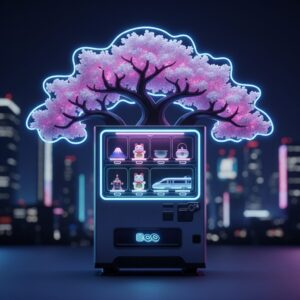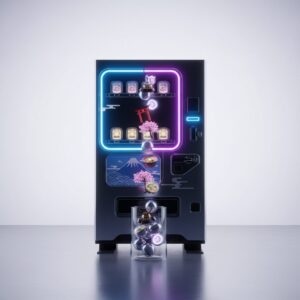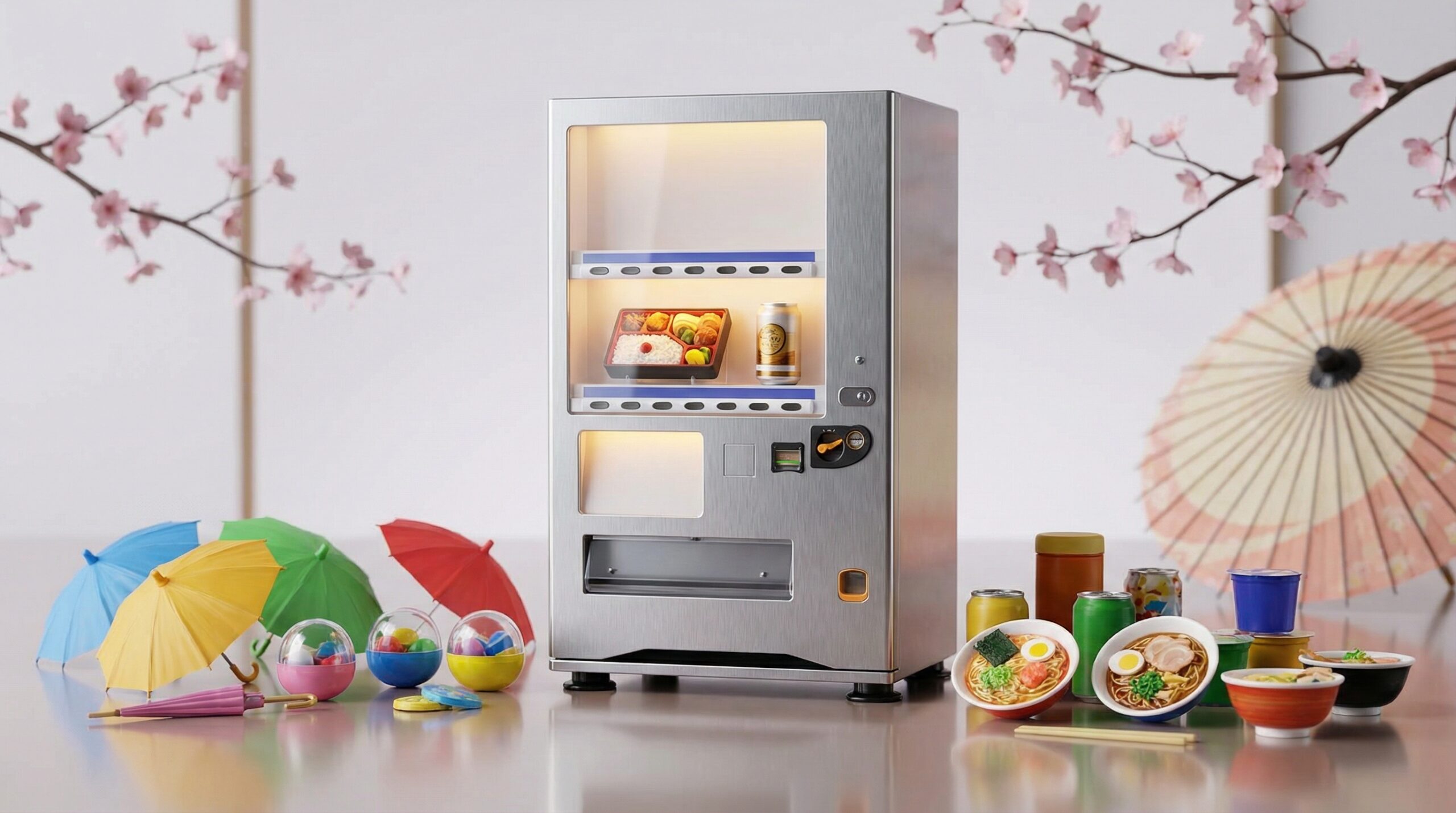
Yo, let’s get real for a sec. When you picture Japan, what comes to mind? Maybe the serene temples of Kyoto, the neon-drenched chaos of Shibuya Crossing, or a steaming bowl of life-changing ramen. All solid choices. But for me, the true, unfiltered soul of Japan is found on a quiet street corner, humming softly under a single streetlight. It’s the humble vending machine, or as the locals say, the jihanki. I know, I know. A vending machine? Big deal. We have them back in Australia, slinging out sodas and chips. But that’s where you’d be mistaken. In Japan, the jihanki is not just a convenience; it’s a canvas. It’s a cultural phenomenon, a technological marvel, and sometimes, just sometimes, a portal to a dimension of pure, unadulterated wonderful weirdness. It’s a whole mood. On my latest family trip, I made it my personal quest to move beyond the standard canned coffee and iced tea and hunt down the machines that sell things you’d only expect to find in a surrealist painting. It was a journey into the heart of what makes Japan so endlessly fascinating: the seamless, often hilarious, blend of the hyper-practical and the fantastically bizarre. This isn’t just about what’s inside the box; it’s about the thrill of the hunt and the stories these glowing sentinels have to tell. So grab your coin purse and let’s go exploring, because things are about to get seriously weird. To kick things off, let’s drop a pin in one of the epicenters of all things wonderfully strange, Akihabara, a place where you’re never more than a few steps from a machine that could change your life, or at least give you a really good story to tell.
If you’re looking for another uniquely Tokyo experience that perfectly captures the city’s blend of tradition and eccentricity, you should definitely explore the tiny bars of Shinjuku Golden Gai.
The Culinary Twilight Zone: Meals from a Box
You usually expect a vending machine to quench your thirst or maybe offer a bag of potato chips. You don’t typically anticipate it providing the essential ingredients for a gourmet meal. But Japan, as always, operates on a different level. My first encounter with this culinary curiosity was a machine vending one thing only: dashi.
For those unfamiliar, dashi is the essence of Japanese cooking. It’s a subtle, umami-rich broth traditionally made by simmering kombu seaweed and bonito flakes. It forms the base for miso soup, noodle broths, and countless sauces. Japanese grandmothers spend hours perfecting it. And here it was, in a vending machine, tucked between a laundromat and a bicycle parking area in a quiet Tokyo suburb. The machine itself was unassuming, but its contents were astonishing. Rows of elegantly designed glass and plastic bottles filled with amber liquid, each featuring beautifully illustrated labels. This wasn’t just any dashi. One bottle contained ago-dashi, a premium broth from flying fish, a Kyushu specialty. Another was a rich kombu dashi from Hokkaido. Sold chilled, they were ready to sip like a health tonic on a hot day or to take home and elevate dinner to restaurant quality. The idea of buying artisanal fish broth from a streetside box is wonderfully bizarre. It’s the perfect blend of convenience culture and culinary tradition. Who’s the target audience? A busy professional who forgot to pick up ingredients for tonight’s nabe hot pot? A curious foodie craving a regional taste without hopping on a shinkansen? Probably all of the above. I picked a bottle of ago-dashi, half expecting it to be a gimmick. But that evening in our apartment, I warmed it and took a sip. Delicate, smoky, and deeply savory, it was genuinely better than some broths I’ve had in restaurants. The surrealism wasn’t in the product itself, but in how it was delivered—a testament to Japan’s obsession with quality, even in the most unexpected places.
My journey into automated gastronomy took a nostalgic turn when I sought out the legendary retro vending machine arcades. These aren’t the sleek, modern machines found elsewhere. Instead, they are massive, mechanical relics from the Showa Era (1926–1989), lovingly preserved by dedicated owners. Discovering one is like stepping through a time portal. The most famous is the Used Tire Market in Sagamihara, a sprawling warehouse filled with, well, used tires—and one of the country’s greatest collections of vintage vending machines. The air thick with the scent of hot oil, rubber, and nostalgia, you’re buying more than food—you’re buying an experience. I stood in awe before a machine serving hot, steaming bowls of udon and soba noodles. Insert your coins—clink, clank—press a chunky plastic button, and a mesmerizing Nixie tube counter starts a 25-second countdown. Inside, you hear a cacophony of whirring and sloshing as the meal is prepared. Then, with a final thud, a plastic bowl filled with surprisingly delicious noodle soup appears. The noodles are tender, the broth savory, and the slice of narutomaki fish cake adds an old-school charm. Nearby stood a hamburger machine, dispensing a burger in a beat-up cardboard box, the bun slightly steamed and soggy in a way that, against all logic, is utterly divine. My kids were obsessed with the hot toastie machine, delivering grilled cheese sandwiches wrapped in foil, toasted to golden perfection inside the machine’s mysterious workings. These places are cultural touchstones—havens for truck drivers on long routes, bikers out for a late-night ride, and families like mine, craving a taste of a Japan past. It’s slow food, served fast by ancient robots. The surrealism is tangible; you’re eating a meal prepared by a 50-year-old machine in the middle of a tire depot, and it’s one of the most memorable culinary experiences in Japan.
No exploration of surreal Japanese vending machines would be complete without confronting the final frontier: edible insects. Yes, you read that correctly. Bug vending machines exist, and they’re as wild as they sound. I found one tucked away in a corner of Ameyoko, the bustling market street near Ueno Park in Tokyo. From a distance, it looked like any other snack machine, with brightly colored packaging and cheerful branding. But up close, the snacks pictured weren’t chips or cookies—they were crickets, scorpions, and giant water bugs. Packaged in sleek, resealable bags, these critters are marketed as high-protein, sustainable snacks for the adventurous. It’s a genuine trip. Options include salted crickets, considered an entry-level bug; chocolate-dipped silkworm pupae for the sweet-toothed; and even whole scorpions, intimidatingly crunchy-looking. My kids were a blend of horrified and fascinated. After about ten minutes of internal debate—and in the name of journalistic integrity—I bought a bag of ‘super spicy crickets.’ The machine hummed, and a small bag dropped into the tray with a soft thud. Peering inside, it looked exactly like crickets. Taking a deep breath, I tried one. The texture was airy and crisp, like a tiny hollow pretzel. The flavor was mostly the spicy seasoning, with a subtle, nutty, almost shrimp-like aftertaste. It wasn’t bad at all. But the psychological hurdle is huge. It’s a fascinating cultural collision. On one hand, insect-eating has a history in some rural parts of Japan—inago no tsukudani, or simmered grasshoppers, is traditional. On the other, this modern, slickly marketed presentation feels like a vision from a dystopian future where entomophagy is widely embraced. It’s low-key genius and completely insane all at once, and that, in a nutshell, is the charm of Japan’s vending machine culture.
Beyond the Edible: Everyday Oddities and Esoteric Goods
Once you get used to buying your dinner from a machine, you begin to notice those that sell items unrelated to food entirely. This is where reality starts to unravel at the edges. The undisputed champion in this realm is the Mystery Box Vending Machine, most commonly found in Akihabara, a district already pulsating with a unique vibe. These machines are often adorned with intriguing, hand-written signs and warnings. The concept is straightforward: you insert about 1,000 yen (roughly ten dollars), and receive a wrapped box. What’s inside? Nobody knows—that’s the whole point. The machine’s description might provide a cryptic hint, like “Something to make you smile,” “A story from a woman in her 40s,” or, my favorite, “We take no responsibility for the contents.” It’s the ultimate consumer gamble, Schrödinger’s shopping—each box holds both treasure and junk until opened. I had to try it. I picked a machine on a quiet Akihabara backstreet, fed it my coin, and received a surprisingly hefty box wrapped in plain brown paper. I could sense the kids’ excitement as I carefully unwrapped it. Inside was… a brand-new, high-end DSLR camera lens cap. Just the cap. Alongside it was an old, out-of-print manga from the 1980s and a small ceramic figurine of a tanuki. The collection felt so random and utterly disconnected that it seemed like a piece of performance art. It wasn’t useful or valuable, but the experience—the sheer ‘what the heck’ moment—was priceless. These machines comment on desire and consumption. In a world where you can get exactly what you want with a single click, the mystery box offers the thrill of complete uncertainty. It’s a gachapon capsule for adults, a lottery with far stranger prizes.
From the chaotic randomness of mystery boxes, we shift to the surprisingly spiritual. At many shrines and temples across Japan, alongside traditional wooden structures and tranquil gardens, you’ll find omikuji vending machines. Omikuji are paper fortunes that have been part of shrine culture for centuries. Traditionally, you make a small donation, shake a long cylindrical wooden box until a bamboo stick falls out, then exchange that stick for a corresponding fortune from a priest or shrine maiden—a ritual steeped in tradition and reverence. The vending machine version streamlines the process beautifully. I found a particularly striking one at a large temple in Kamakura, designed to look like a mythical shishi lion. For 200 yen, a rolled-up paper fortune was dispensed from its mouth. No shaking, no bamboo stick—just a simple transaction. I received ‘Future Luck’ (sue-kichi), a middling fortune advising patience and avoiding disputes. The kids, of course, got ‘Great Blessing’ (dai-kichi). The surreal question it raises: does a fortune from a machine carry the same spiritual weight as one given through ancient ritual? Does divine providence operate via cogs and circuits? For most, the answer is a resounding ‘who cares, it’s convenient!’ It perfectly captures the Japanese knack for embracing modernity without abandoning tradition. You still perform the rest of the ritual: keeping good fortunes for luck and tying bad ones to designated trees or wires on the shrine grounds, leaving misfortune behind. The machine is just a new gatekeeper to an old practice—a mechanical priest for the 21st century.
But perhaps the most astonishingly practical and futuristic vending machine I encountered was the automated hanko maker. A hanko is a personal name seal used in Japan instead of a signature for everything from opening bank accounts and signing leases to receiving packages. It’s an essential item, usually made at a specialty shop with a day or two wait. Or, you can visit a Don Quijote megastore and use this vending machine. It’s next-level. A large touchscreen lets you input your name—foreigners usually use katakana, the phonetic script for foreign words. You choose from dozens of fonts, select the size and material (from cheap plastic to fine wood), then confirm your design. Then the magic happens. You hear a low whirring as a laser inside precisely carves your personal, legally-binding seal. About ten minutes later, a compartment opens to reveal your brand-new hanko, complete with a small case and red ink pad. The sheer convenience is staggering. Imagine needing a legally recognized signature and getting one custom-made by a robot in less time than it takes to drink a coffee. It feels like something straight out of Blade Runner. It’s practical surrealism that highlights the Japanese problem-solving mindset. It takes a deeply traditional, personal item and makes it on-demand, 24/7. It’s a lifesaver for residents needing one quickly and a fantastically weird and useful souvenir for travelers. I made one with my name, and it’s now one of my most prized souvenirs from the trip.
The Art Gallery of the Absurd: When Vending Machines Become Installations
Beyond the scope of food and everyday items exists a category of vending machines that transcends mere commerce and ventures into the realm of art. These machines are rarer and often tucked away in the trendier, more bohemian districts like Shimokitazawa or Koenji in Tokyo, yet they are true treasures. I came across one inside a small, independent bookstore. It was an old cigarette machine, repurposed, but instead of tobacco, each compartment contained a small, unique artwork made by a local artist. For 500 yen, you could receive a tiny ceramic cat sculpture, a hand-printed zine, a miniature original painting, or a badge adorned with a quirky illustration. It felt like a gachapon for the soul. You weren’t just purchasing an item; you were supporting a local artist and engaging in a micro-economy of art. The selection was curated by the shop owner and continuously changed. I selected a slot labeled “random poem” and was given a small, beautifully folded piece of washi paper. Inside, delicately printed in kanji with a simple English translation beneath, was a brief, poignant verse about the sound of rain on a tin roof. It was a beautiful, fleeting connection with an anonymous artist, facilitated through a clunky, old machine. This concept democratizes art by stripping away the intimidating gallery atmosphere and making original works accessible, affordable, and enjoyable. It transforms the mundane action of using a vending machine into an act of cultural patronage and discovery. The surrealism it embodies is gentle and heartwarming. It stands as a quiet rebellion against mass production, celebrating the small, handmade, and unique, concealed within the most standardized formats.
Taking this idea further are vending machines that don’t sell products but instead offer experiences or stories. These are the rarest examples, existing more as art installations or community projects than as commercial ventures. While searching for a renowned bakery in the tranquil, old-fashioned neighborhood of Yanaka, I heard about a legendary “story vending machine.” It took some effort to find, hidden in a narrow alley, a plain white machine with no branding, just a single slot for a 100-yen coin and a button. A handwritten sign in Japanese read: “A story about this neighborhood.” Intrigued, I inserted my coin. The machine made no sound but dispensed a tiny, tightly rolled scroll of paper into the tray. I carefully unrolled it. Inside was a single paragraph, beautifully handwritten, telling a short, fictional tale about a local cat believed to be the reincarnation of a samurai, who would only accept offerings of the finest sashimi from the local fishmonger. It was charming, whimsical, and utterly delightful in the best possible sense. It gave me nothing material to keep or consume, yet it profoundly shifted my perception of the neighborhood for the remainder of the day. I found myself searching for the samurai cat, imagining his story unfolding in temples and on rooftops. The machine broke the fundamental contract of commerce by offering a fragment of imagination in exchange for a coin. It is the anti-vending machine, using a transactional mechanism to deliver something intangible. This represents the pinnacle of vending machine surrealism. It isn’t about convenience or novelty; it’s about creating a moment of pure, unexpected joy. It’s a secret whispered from the neighborhood to anyone curious enough to listen, a perfect metaphor for the countless hidden wonders waiting to be discovered in Japan’s quiet corners.
Regional Riddles: Hyper-Local Vending Wonders
One of the most rewarding parts of this jihanki hunt was discovering how various regions of Japan use vending machines to showcase their local pride and specialties. It’s a type of automated tourism, offering a convenient taste of local flavor. In Niigata Prefecture, renowned for its rice and consequently its sake, this concept reaches its pinnacle at Echigo-Yuzawa Station. Inside the station is the Ponshukan, which feels less like a shop and more like a shrine to sake. The centerpiece is a vast wall lined with over 100 different vending machines. These machines don’t dispense bottles; instead, for 500 yen, you buy a token that grants you an ochoko (a small sake cup) and five tasting credits. You then wander along the wall, exploring the incredible variety of local sakes, each machine representing a different Niigata brewery. You place your cup, insert a token, and push a button. A perfect tasting portion of sake fills your cup. It’s a brilliant system allowing you to sample a wide range of premium sakes—from dry and crisp to sweet and floral—without committing to a full bottle. The atmosphere is joyous and communal, with fellow travelers sharing their favorites. There’s even a life-sized statue of a drunk salaryman you can pose with. It’s a sake theme park, a boozy library, and utterly fantastic. The surrealism lies in the sheer scale and dedication to this one product, transforming a train station into a must-visit destination for sake enthusiasts.
Traveling to the opposite end of the country, in the subtropical paradise of Okinawa, I encountered a completely different but equally strange local vending phenomenon: the mystery drink machine. These are often older, somewhat worn machines found in rural areas. What distinguishes them is that you have absolutely no idea what you are buying. Every selection is either wrapped in plain white paper or the display is blank except for the price, often incredibly low—sometimes just 10 or 30 yen. It’s a game of beverage roulette. You insert your coin, press a random button, and see what fate delivers. Will it be a standard green tea? A can of coffee? A peculiar local sports drink flavored with Shikuwasa citrus? Or the dreaded sweet red bean soup? The thrill lies in the gamble. The low price makes it an irresistible, risk-free proposition. I tried one and received a can of sanpin-cha, a type of Okinawan jasmine tea, which was a pleasant surprise. It’s a quirky local custom that adds a spark of unpredictability to the day. Why do they exist? Some say it’s a method for vendors to clear out unpopular or near-expiry stock, but whatever the reason, it’s a delightful and slightly mad experience.
Up in Aomori Prefecture, at the northern tip of Japan’s main island, vending machines celebrate the region’s most famous product: apples. Aomori, Japan’s apple capital, produces some of the world’s most delicious and sought-after apples. So it makes sense that they’d find a way to sell them in vending machines. But these aren’t just whole apples rolling down a chute. These machines, often found at train stations or roadside rest stops, dispense bags of fresh, chilled, pre-sliced apples. Some even include a small packet of honey or caramel for dipping. It’s practical on the surface: a healthy, convenient snack for people on the go. Yet there’s something inherently strange about buying fresh fruit from a machine—it feels like a solution to a problem you didn’t know you had. The apples are crisp, sweet, and delicious, a testament to Aomori’s agricultural excellence. It’s a perfect example of Japan’s ability to take something simple and natural and present it in a high-tech, ultra-convenient format. It might not be as wild as insect snacks or mystery boxes, but seeing perfectly sliced, beautifully packaged apple bunnies in a refrigerated vending machine is a uniquely Japanese kind of surreal.
This journey into the world of unusual vending machines was more than just a quirky sightseeing tour—it was a crash course in Japanese culture. These glowing boxes are a microcosm of the country itself: innovative, convenient, sometimes deeply traditional, and always full of surprises. They reflect a society that values quality, embraces automation, and never loses its sense of humor and playfulness. From the profound utility of an on-demand name seal to the sublime silliness of a mystery drink, each machine tells a story about the needs, desires, and eccentricities of the people it serves. So next time you visit Japan, by all means, visit the temples and savor the ramen. But don’t forget to notice the humble jihanki on the street corner. Keep a pocketful of coins and an open mind—you never know what you might find. The real treasure isn’t just what’s inside the box; it’s the hunt and the delightful realization that in Japan, even the most mundane parts of daily life can open the door to the wonderfully surreal.