Yo, what’s up, world travelers! Megumi here, coming at you straight from the buzzing heart of Tokyo. When I’m not deep in the chaos of planning the city’s next big event, I’m out there chasing Japan’s most epic landscapes, the spots that make you stop and just… breathe. And let me tell you, I’ve found a place that absolutely slaps. We’re talking about a corner of Hokkaido so raw, so stunningly beautiful, it feels like you’ve stepped onto a different planet. Forget what you think you know about coastal views. We’re heading north, way north, to the Shakotan Peninsula, where the Sea of Japan carves masterpieces out of the earth. The main event? A legendary sea stack called Nabetsuru Rock. This isn’t just some random chunk of stone; it’s an icon, a mood, a total showstopper that stands against the wild northern waves. It’s got that main character energy, for real. Picture this: a rugged, dramatic coastline, water so blue they had to invent a name for it—’Shakotan Blue’—and this absolute unit of a rock, shaped like a traditional pot handle, just chilling in the sea. It’s the kind of view that floods your feed and gets you thinking about the sheer power of nature. It’s a place that tells a story of time, tide, and volcanic fire. Before we dive deep into this wild wonderland, get your bearings and see where this adventure is about to take you.
If you’re captivated by Hokkaido’s wild beauty, you’ll also want to experience the magic of Hokkaido’s legendary red-crowned cranes during the winter months.
The Legend Carved in Stone
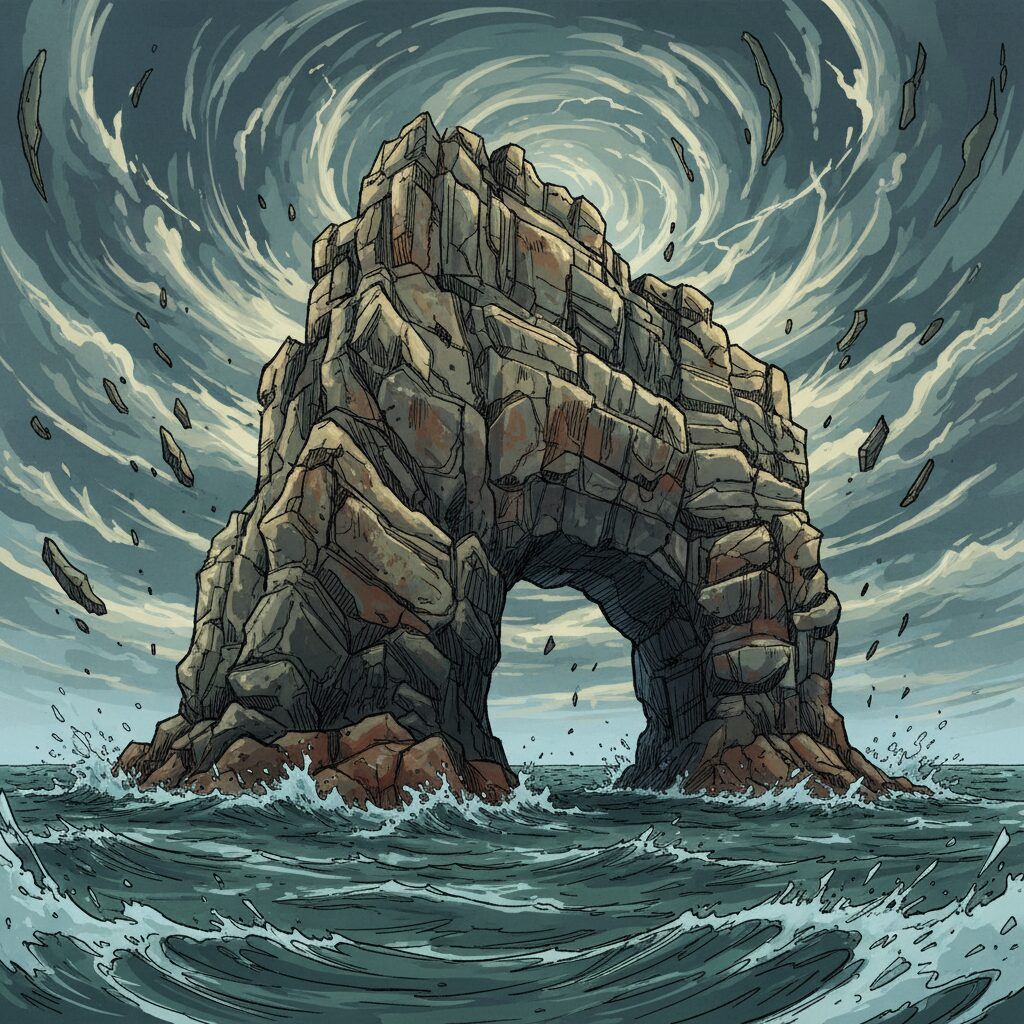
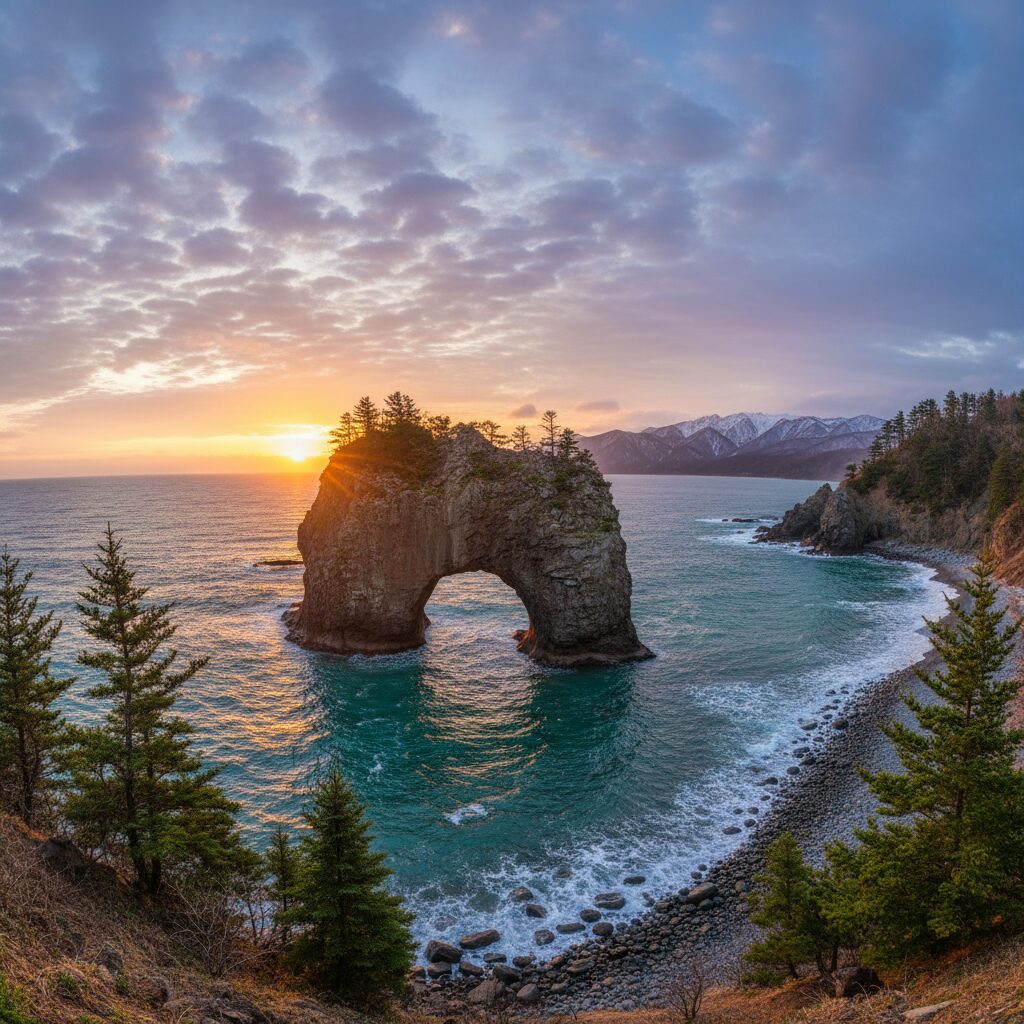
So, what’s the story behind Nabetsuru Rock? Why do both professional photographers and casual road-trippers insist on visiting it? To start, its name, ‘Nabetsuru-iwa’ (鍋釣岩), literally means ‘pot-handle rock.’ And once you see it, the name makes perfect sense. The natural arch resembles the handle of a traditional Japanese cast-iron pot, or ‘nabe.’ It’s this unique, quirky shape set against the vast ocean that makes it unforgettable. But this rock isn’t just defined by its appearance; it carries a dramatic history shaped by Mother Nature herself. We’re talking millions of years of volcanic activity, followed by countless years of relentless battering by the waves of the Sea of Japan. This is erosion turned into art. The rock is composed of andesite, a volcanic relic from a time when this area was a geological chaos. What stands today is the sturdy, enduring core of what was once a larger lava flow, with the ocean having patiently worn away the softer rock to unveil this iconic arch. Standing there, you can almost sense that ancient story—the slow, powerful clash of water and stone. It’s a humbling sight, no exaggeration. It makes you reflect on how fleeting we are compared to the planet’s longevity. The rock rises about 11.6 meters tall, a solitary sentinel watching over the coastline. It’s a symbol of resilience, and that’s something everyone can appreciate.
The Folklore and the Feeling
Every iconic landmark in Japan carries a story, and Nabetsuru Rock is no exception. Although there are various versions, a popular local legend tells of a heartbroken woman who, after being separated from her lover, prayed to the sea gods. Her devotion was so strong that her hairpin transformed into this rock—a lasting emblem of her undying love and a guiding mark for sailors. Whether you believe the legend or not, it adds a touch of romantic melancholy to the scene. When you look at the rock, standing alone amid the often-rough sea, you can sense that feeling of longing and waiting. It’s this combination of geological marvel and human emotion that creates such a powerful attraction. It’s more than just a photo opportunity; it’s a place that invites you to connect emotionally. The atmosphere here shifts dramatically with the weather and time of day. On a calm, sunny afternoon, it feels peaceful, almost serene. But when a storm approaches and waves crash fiercely against its base, sending spray high into the air, the mood completely changes—it becomes raw, intense, and a bit intimidating. It reminds you that you are at the edge of a wild, untamed sea, and that awareness is exhilarating.
Chasing the Shakotan Blue
Nabetsuru Rock is the main attraction, but the supporting scenery is equally impressive. The rock is located within the Niseko-Shakotan-Otaru Kaigan Quasi-National Park, and the entire Shakotan Peninsula coastline is absolutely stunning. The water here is renowned for its strikingly clear, vibrant blue hue, known as ‘Shakotan Blue.’ This isn’t just a promotional claim; the water clarity here is genuinely exceptional. On a clear day, you can see down several meters, observing the swaying kelp forests and perhaps spotting some marine life. The intense blue color results from the pure mountain water flowing in and the low plankton levels. It reaches its peak from June to August, when the sun is high and the sea is calm. Driving along the coastal roads with the windows down and the salty breeze flowing through is an experience in itself. Every curve unveils a breathtaking view of rugged cliffs, hidden coves, and that iconic blue water. It’s a road trip you’ll remember without effort for years. Don’t hurry—stop at the various lookout points, step out of the car, and fully take it all in. The vastness is overwhelming, and the vivid colors nearly seem unreal.
More Coastal Highlights to Discover
While you’re nearby, make sure to explore more of the peninsula. Two must-visit spots are Cape Kamui and Cape Shakotan. Cape Kamui feels like the edge of the world in the most wonderful way. This dramatic, narrow cape extends into the sea, and you can hike a trail along its ridge all the way to the tip. The views are 360-degree panoramas of pure, untouched ocean and coastline. An old superstition once barred women from entering Cape Kamui, but thankfully, that’s long gone. Now, everyone can enjoy its wild beauty—just be ready for the strong winds, which can be quite fierce. Then there’s Cape Shakotan, another breathtaking site with stunning views of the rugged shore. From the observation deck, you can gaze down at Shimamui Coast, a secluded beach with some of the clearest water you’ll ever encounter. The walk down to the beach involves passing through a dark tunnel, making the sudden reveal of the bright turquoise cove at the end even more striking. It feels like stepping into a hidden paradise. Visiting these capes offers a fresh perspective on the coastline and deepens your appreciation for the raw, untamed beauty of this part of Hokkaido.
The Golden Hour Spectacle
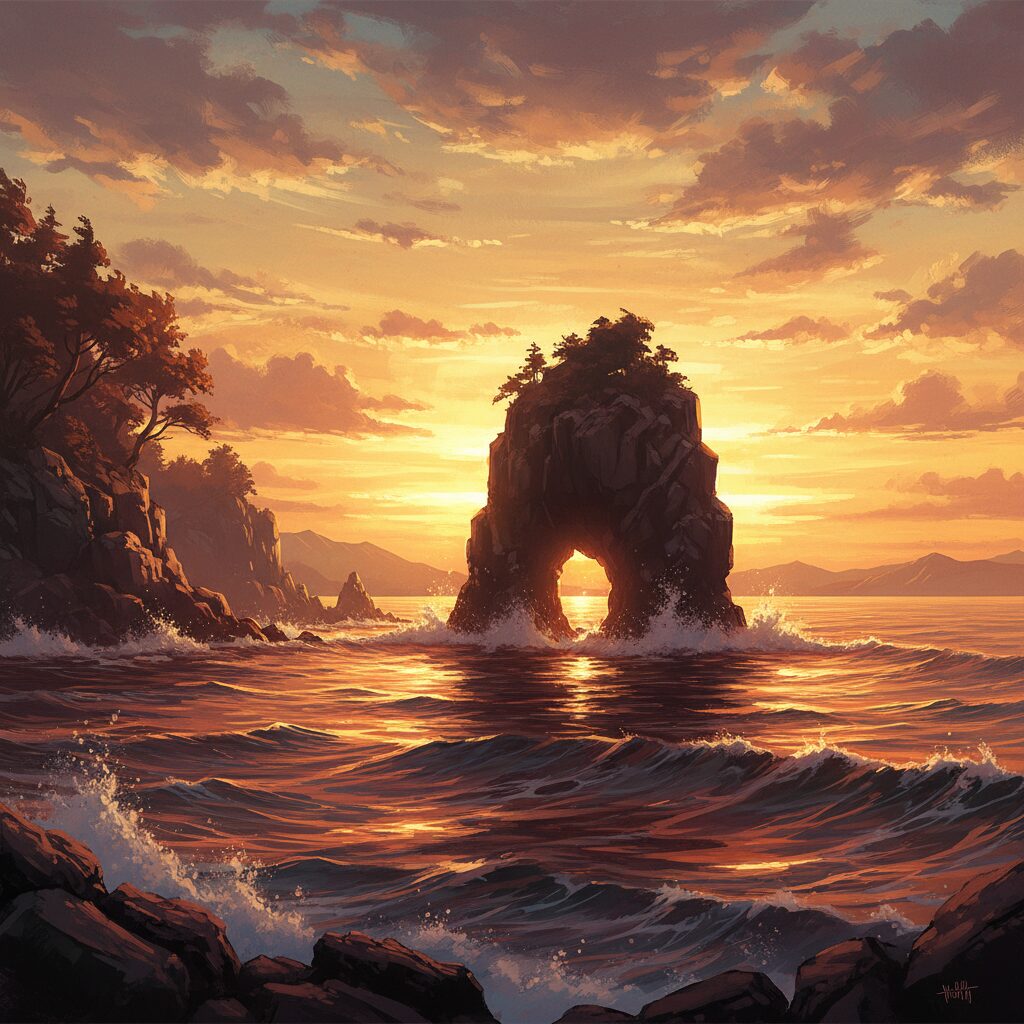
Alright, let’s get to the real reason photographers flock to Nabetsuru Rock: the light. This spot turns into a masterpiece during the golden hours at sunrise and sunset. It’s so renowned for its sunsets that it’s been named one of Japan’s ‘100 Best Sunsets.’ And believe me, it truly deserves that recognition. As the sun dips toward the horizon, the entire scene transforms. The sky bursts into a stunning palette of fiery oranges, soft pinks, and deep purples. The rock itself becomes a striking silhouette, its iconic arch perfectly framing the celestial display. The low-angle light highlights the texture of the waves, turning the sea into a shimmering expanse of liquid gold. It’s a truly magical moment. Tripods line the shore, everyone waiting quietly for that perfect shot. But even if you’re not a serious photographer, simply witnessing this is an unforgettable experience. The atmosphere is electric. The air cools, daytime sounds fade away, leaving just you, the rock, and the breathtaking sky. It’s genuinely a spiritual experience. Sunrise is just as spectacular, though it demands an early wake-up. The vibe is different—calmer, more hopeful. Watching the first light touch the rock and slowly brighten the coastline is a peaceful and powerful way to begin the day. If you can endure the early alarm, you’ll enjoy a crowd-free spectacle that feels like it’s made just for you.
Pro Tips for the Perfect Shot
If you’re bringing your camera—and you definitely should—here are some tips to enhance your shots. For those stunning sunset or sunrise images, a tripod is essential. It allows you to use slower shutter speeds to capture the motion of the waves and create that dreamy, misty effect on the water. A wide-angle lens works great for showcasing the grand scale of the scene, including the coastline and vast sky. But don’t overlook a telephoto lens; it helps isolate the rock and compress the background, making the setting sun or moon appear enormous behind it. Experiment with different compositions. Don’t just stick to the main viewing spot—walk along the shore to discover unique perspectives. Look for foreground elements like tide pools or interesting rock formations to add depth to your shots. And be patient. The best light often appears just after the sun sets, during the ‘blue hour,’ when the sky takes on a deep, rich cobalt shade. Hokkaido’s weather is famously unpredictable, so check forecasts but prepare for surprises. Sometimes the most dramatic skies happen when there are a few clouds to catch the light. So don’t be discouraged by some cloud cover—it might be the secret ingredient for an unforgettable photo.
The Yoichi Connection: Whisky and the Sea
You can’t discuss Nabetsuru Rock without mentioning its hometown, Yoichi. This town is legendary in Japan, known not only for its coastline but also for its whisky. It is the birthplace of Nikka Whisky, one of Japan’s most acclaimed spirits. The story behind it is closely tied to the rugged environment surrounding you. The founder, Masataka Taketsuru, is considered the father of Japanese whisky. After studying the craft in Scotland, he searched throughout Japan for the ideal location for his distillery. He picked Yoichi for specific reasons. He needed a climate similar to Scotland—cool, humid, with crisp, clean air. He required pure water, sourced from the nearby mountains, and peat and coal for drying the barley. Yoichi offered all of these. There is a belief that the salty, briny air from the Sea of Japan, which drifts over the distillery, subtly impacts the aging process, giving the whisky a unique character. So, when you stand there, looking at Nabetsuru Rock and feeling the sea spray on your face, you’re encountering the very essence of what makes Yoichi whisky so distinctive. It’s a taste of the terroir, the spirit of the place, captured in a bottle. Visiting the Nikka Whisky Yoichi Distillery is a must on any trip. The historic stone-built distillery is stunning, and the tours are captivating, even if you’re not a dedicated whisky enthusiast. And yes, tastings are available. Sipping a glass of Yoichi single malt while reflecting on the wild sea just down the road is a full-circle experience. It links the land, the sea, and the culture of craftsmanship that defines this town. It just hits differently.
Seasonal Moods: A Rock for All Seasons
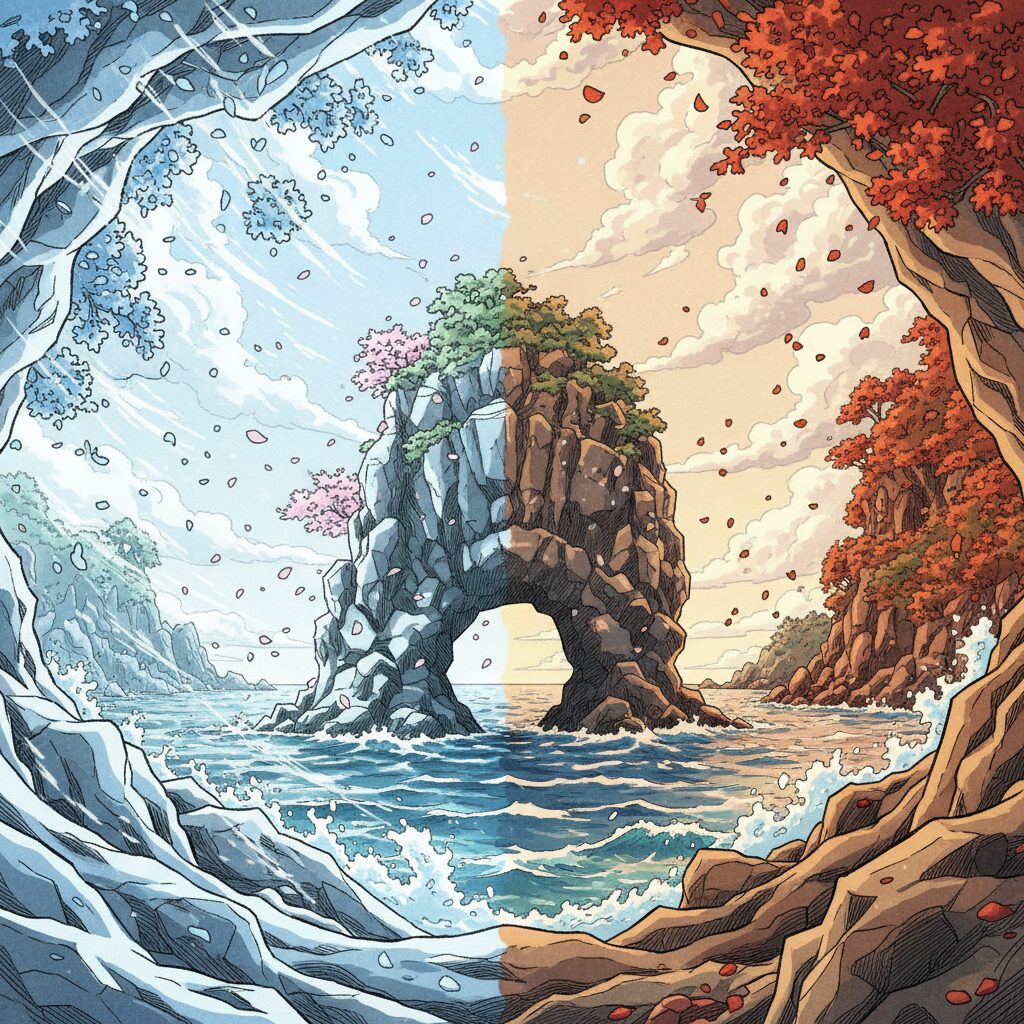
Hokkaido boasts four distinct and striking seasons, with Nabetsuru Rock showcasing a unique spectacle in each. Your visit will offer a completely different experience depending on the timing, so it’s worth considering the kind of atmosphere you’re seeking.
Summer (June – August)
This is the prime season, known for the stunning Shakotan Blue. The weather is ideal, the days are long, and the sea sparkles in brilliant turquoise. It’s the perfect time for a classic coastal road trip. The surrounding hills are lush and vividly green, with the air scented by wildflowers and salt. Summer is also peak season for local seafood, especially sea urchin (uni). Fresh uni from the Shakotan Peninsula is renowned across Japan—creamy, sweet, and incredibly delicious. The downside? It’s the busiest time of year, so you’ll share the views with more visitors, and accommodations can be more expensive. Still, for that quintessential sun-soaked Hokkaido experience, summer is unbeatable.
Autumn (September – October)
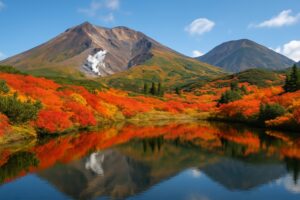
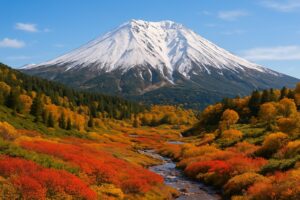
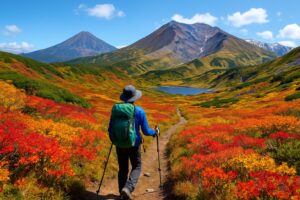
As temperatures cool, crowds lessen, and a new kind of beauty emerges. The vibrant greens of summer transition into fiery reds, oranges, and yellows. The foliage on the mountains behind the coastline contrasts beautifully with the deep blue sea. The air is crisp and clear, offering excellent visibility and often dramatic sunsets. The mood is more reflective and serene. Autumn is an ideal season for hiking and enjoying the seasonal harvest. The flavors of Hokkaido in autumn—think pumpkins, potatoes, and salmon—are just as remarkable as the summer seafood. It’s a cozy, contemplative time to explore.
Winter (December – February)
Winter is for the adventurous. Yoichi’s winter is intense—cold with heavy snowfall. Yet, the scenery is breathtaking. Nabetsuru Rock and the nearby coastline, blanketed in thick, pure white snow, resemble a fantasy landscape. The sea is wild and grey, crashing against shores glazed with ice. The chilly air stings your cheeks. This raw, powerful season is stunningly beautiful. Driving can be tricky, so a 4WD and snow tires are essential. Properly prepared, you’ll enjoy a peaceful, nearly deserted landscape of monochrome beauty. Plus, nothing beats warming up with a hot bowl of ramen or a dram of whisky after braving the cold outdoors.
Spring (April – May)
Spring arrives late in Hokkaido, bringing renewal and change. As the snow melts, life returns gradually. Brown and green patches appear, and the first cherry blossoms usually bloom in early to mid-May, much later than in Tokyo. It’s a transitional season—you may still see snow atop distant mountains while the fields below turn green. The weather is unpredictable, alternating between sunny, chilly, and rainy days. However, it’s a quiet time to visit before the summer crowds. The sense of the land awakening after a long winter is tangible, and the air feels fresh and energized.
Getting There and Getting Around: The Practical Stuff
Alright, so you’re convinced. You need to see this rock for yourself. But how do you actually get there? Yoichi is situated on the western side of Hokkaido and is relatively easy to reach from Sapporo, the island’s main city.
By Car
This is unquestionably the best way to experience the area. Renting a car allows you to explore the entire Shakotan Peninsula at your own pace, stopping whenever you want for photos or just to enjoy the view. From Sapporo, the drive takes about 1.5 to 2 hours, depending on traffic. You can take the expressway to Otaru, then follow the coastal Route 5 and Route 229. The drive itself, especially along the coastline, is a big part of the adventure. Car rental agencies are abundant at New Chitose Airport (CTS) and in Sapporo city. Just be sure to obtain an International Driving Permit before your trip to Japan, and if you’re visiting in winter, make sure your rental car is a 4WD equipped with snow tires—this is essential.
By Public Transport
If you’re not driving, it’s still possible to reach Yoichi, but it takes more planning. The usual route is to take a JR train from Sapporo to the charming port city of Otaru (about 30-45 minutes). From Otaru, catch a local train on the JR Hakodate Main Line to Yoichi Station. The train ride from Otaru to Yoichi is scenic, running along parts of the coast. Once in Yoichi, Nabetsuru Rock is about a 20-30 minute walk from the station, or you can take a taxi. To explore the wider Shakotan Peninsula, like Cape Kamui, you’ll need to rely on local buses, which may run infrequently. Chuo Bus operates services along the coast, but be sure to check the timetable carefully, especially outside of peak summer. It’s doable, but requires more patience than having your own vehicle.
First-Time Tips
- Dress in Layers: Hokkaido’s weather is famously unpredictable, even in summer. The coast can be windy and much cooler than inland. Bring a windproof and waterproof jacket, even if the forecast looks clear—you’ll be glad you did.
- Footwear Matters: You’ll be walking on uneven coastal paths and possibly rocky beaches. Wear sturdy, comfortable shoes. Nobody wants a twisted ankle to spoil their trip.
- Stay Connected (or Don’t): Cell service can be spotty in some of the more remote parts of the peninsula. It’s wise to download offline maps beforehand or embrace the chance to disconnect and enjoy being off the grid.
- Cash is King: While major hotels and restaurants accept cards, smaller local eateries and shops in rural areas might only take cash. It’s always smart to carry some yen with you.
- Respect the Wildlife: You might see foxes (kitsune) or deer. They’re adorable but still wild animals. Never feed them and keep your distance for both their safety and yours.
Fueling Your Adventure: The Taste of the Sea
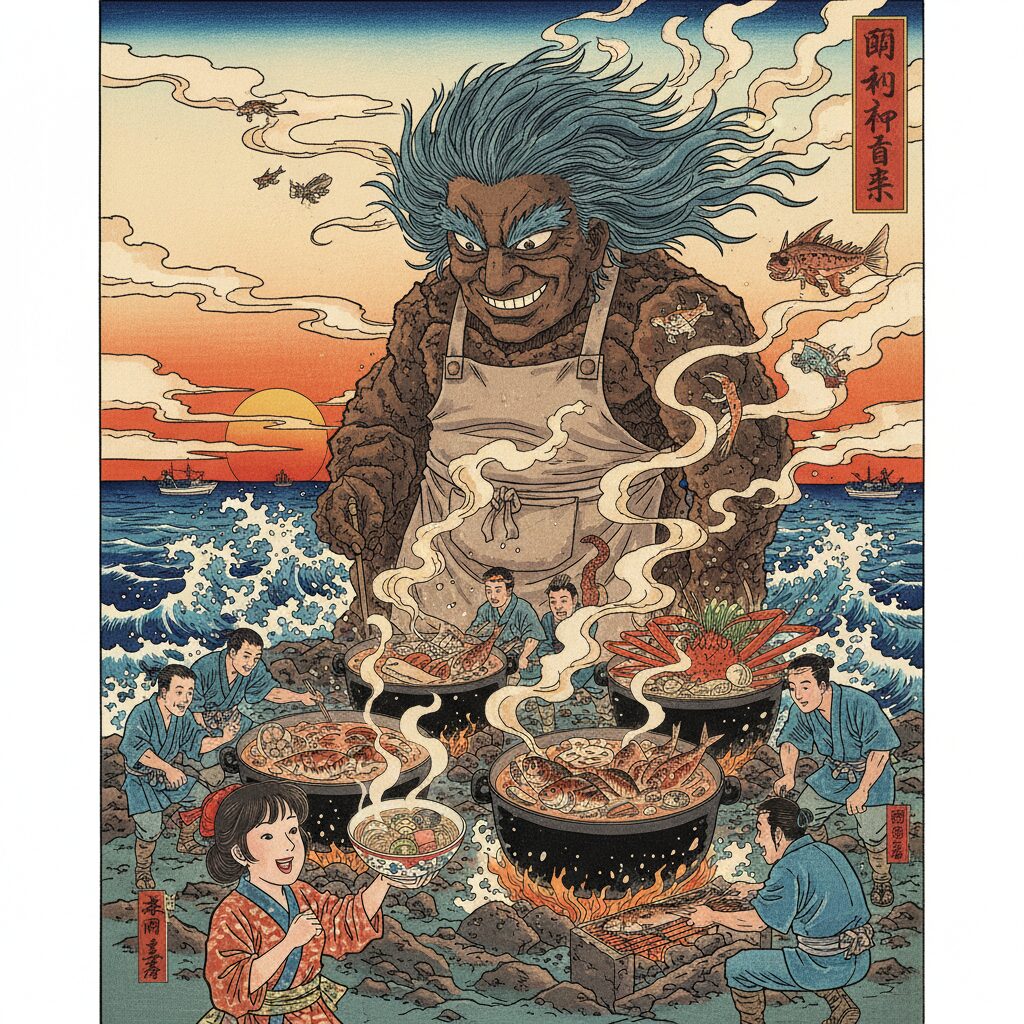
Exploring this magnificent coastline will surely work up your appetite. Fortunately, the cuisine in this region is exceptional. The bounty of the Sea of Japan takes center stage here, offering fresh-off-the-boat seafood that will set a new standard for you.
As noted, summer is uni (sea urchin) season, and enjoying it here is almost a sacred experience. Seek out restaurants serving ‘uni-don,’ a simple bowl of rice topped with a generous helping of fresh, glistening sea urchin. It’s pure, unfiltered indulgence. But uni isn’t the only highlight—you’ll also find amazing scallops, crab, squid, and a variety of fish. Visit a local ‘shokudo’ (a casual diner) and order the ‘kaisen-don’ (mixed seafood bowl) to sample a bit of everything. Another local specialty is ‘nishin’ (herring). This area was historically a major hub for herring fishing, and you can still enjoy it prepared in many ways, from grilled to pickled. Don’t overlook the local produce either—Hokkaido is Japan’s agricultural heartland. The fruits and vegetables here are outstanding, especially the sweet summer corn and melons. And naturally, a trip to Yoichi wouldn’t be complete without savoring some local whisky. Many restaurants offer an excellent range, letting you pair the spirit of the land with the flavors of the sea. It’s a flawless combination.
The Unforgettable Takeaway
So, why travel all the way to this northern coast just to see a rock? Because it’s so much more than that. Visiting Nabetsuru Rock and the Shakotan Peninsula is an immersion into the raw, untamed force of nature. It serves as a reminder of a scale and timeline far beyond our own. It’s the feeling of the wind on your face at Cape Kamui, the taste of salt in the air, the mesmerizing sight of the sun sinking into the sea, and the deep satisfaction of a dram of whisky crafted from this very landscape. It’s a place that rejuvenates your soul and fills your camera roll. It’s about the journey—the drive along the breathtaking coastline, the anticipation of discovering new views around every bend, the shared awe with fellow travelers as the sun sets. It’s a vibe, an experience, a memory that lingers long after you return to the hustle and bustle of daily life. So, if you’re seeking an adventure that’s equally beautiful, powerful, and delicious, add Yoichi to your list. Go see the pot-handle rock standing firm against the waves. Go chase that Shakotan Blue. I promise you, it’s worth it. It’s the kind of trip that reminds you why you fell in love with travel in the first place.