
Yo, what’s up, fellow Japan lovers and 90s anime connoisseurs! Ayaka here, and today we’re diving deep, like, real deep, into a mission that’s close to my heart. We’re on a quest to find the soul of Rurouni Kenshin in the sprawling, neon-drenched metropolis of modern Tokyo. If you, like me, spent countless hours watching Himura Kenshin’s journey, feeling every swing of his sakabatō and getting all the feels from the Meiji era romance, then you know what I’m talking about. That specific vibe—the one where wooden sandals clack on stone paths, paper lanterns cast a warm glow on quiet dojos, and the air crackles with the tension between a bygone samurai era and a rapidly modernizing world. It’s a whole mood. But can you actually find that atmosphere in the Tokyo of today, a city that looks more like something out of a sci-fi flick? The answer is a massive, resounding YES. You just gotta know where to look. This isn’t your average travel guide. We’re not just ticking off spots from a list. We’re chasing a feeling, a ghost of the past that’s totally still vibing in the hidden corners of this incredible city. So, grab your imaginary reverse-blade sword, and let’s go on a journey to the Bakumatsu. It’s time to find where the Kenshin-gumi would hang out, for real. This is the ultimate pilgrimage, no cap.
To truly appreciate the craftsmanship behind a blade like Kenshin’s sakabatō, consider a pilgrimage to Japan’s legendary city of blades, Seki.
So, What’s the Meiji Vibe, Anyway? A Quick Lowdown

Before we begin our epic quest, let’s make sure we’re on the same page. What exactly is this Meiji vibe we’re after? Rurouni Kenshin is set in the Meiji Period, around year 11 (1878). This was a highly transitional era for Japan. The Tokugawa shogunate, which had governed for over 250 years, had just collapsed. The samurai class was abolished, and swords were banned. Japan opened its doors to the West after centuries of isolation. It was a chaotic, thrilling, and somewhat confusing mix of old and new. Picture people in traditional kimonos walking past men in Western-style suits and bowler hats. Gas lamps began lighting streets that had previously only known paper lanterns. Steam trains rumbled alongside hand-pulled rickshaws. This cultural fusion lies at the heart of Kenshin’s world. It’s neither the pure, feudal Edo period nor the fully industrialized 20th century. It’s that beautiful, awkward, and poetic in-between. Kenshin himself embodies this conflict—a man from the old era striving to find his place in the new one without a sword. So, we’re not just searching for old buildings. We’re seeking that sense of transition, that blend of Japanese tradition and emerging Western influence, the quiet dignity and the explosive change. That’s the energy we’re after.
The Kamiya Dojo District: Finding Your Home Base in Yanesen
If there’s one spot in Tokyo that truly embodies “Kamiya Kasshin Dojo,” it’s the Yanesen area. This laid-back, unpretentious neighborhood feels like a complete time capsule. Its name is a blend of the three districts it covers: Yanaka, Nezu, and Sendagi. Remarkably, this area escaped the worst devastation of World War II bombings, preserving its pre-war architecture, narrow winding lanes, and a tranquil, residential atmosphere that feels miles away from the bustling chaos of Shibuya or Shinjuku. Here, you can easily picture Kaoru sweeping the dojo entrance in the morning while Kenshin tends to the laundry in the background. It’s the perfect place to begin our pilgrimage, as it sets the tone flawlessly. The neighborhood feels lived-in, genuine, and utterly unpretentious. The ambiance here is distinct—it’s slower, calmer, and infused with the scent of history.
Yanaka Ginza: More Than Just a Shopping Street
Your first stop in Yanesen should be Yanaka Ginza. Don’t be misled by the “Ginza” in its name—this isn’t a high-fashion district. Instead, it’s a traditional shotengai, or local shopping street. This narrow pedestrian thoroughfare is lined with around 60 small, family-run shops that have stood the test of time. You’ll find butchers offering freshly fried croquettes, stores selling handmade rice crackers, little green grocers, and classic sweet shops. This is exactly where Sanosuke would be stuffing his face, likely running up a tab he can’t afford. One highlight is the Yuyake Dandan, a staircase at one end of the street whose name means “Sunset Stairs.” From its top, you get a breathtaking view down the street as the sun sets, bathing everything in a warm, golden light. The silhouettes of shoppers, steam rising from food stalls, and soft murmurs create an enchanting, cinematic scene. It feels like a moment pulled straight from an anime OVA, where characters share a quiet, reflective pause as the day closes. You can almost hear a gentle, melancholic soundtrack playing softly. It’s an ideal place to slow down, grab a snack, and soak up the atmosphere of a Tokyo that time forgot.
Nezu Shrine: A Hidden Splash of Color
A short stroll from the heart of Yanaka brings you to Nezu Shrine, an absolute hidden treasure. This one of Tokyo’s oldest shrines feels like a miniature version of Kyoto’s famous Fushimi Inari Shrine. Why? Because it features a breathtaking tunnel of vivid red torii gates ascending a small hill. Walking through this tunnel feels like stepping into another world. It offers a picture-perfect, sacred Japanese aesthetic often seen as the backdrop for serious conversations or fateful samurai encounters. The main shrine buildings are stunning, adorned with intricate wooden carvings and enveloped in calm. There’s a large pond home to koi fish and turtles, surrounded by lush greenery. You could easily imagine Megumi Takani coming here to collect medicinal herbs—or Kenshin seeking a peaceful spot to reflect on his past. In spring, the shrine’s azalea festival is legendary, with thousands of bushes bursting in shades of pink, purple, and white. This site is both historically meaningful and visually striking, making it a must-visit for capturing that Kenshin vibe.
The Quiet Alleys: Where the Real Magic Happens
Yet, the true heart of Yanesen isn’t found in its well-known sites but in its nameless, winding back alleys. Seriously, ditch your map and wander aimlessly. These streets form a labyrinth of old wooden houses capped with tiled roofs, tiny temples wedged between buildings, and lovingly tended potted plants along the paths. Here, you’ll discover artisan workshops, family-run tofu shops, and public bathhouses with tall chimneys. This is where the quiet domestic life of the Meiji era comes alive. Kenshin’s world wasn’t just about epic sword battles; it was about the everyday moments he fought to preserve—simple dojo routines, shared meals, and a sense of community. Walking these alleys, you feel that community strongly. You might catch locals chatting, hear a distant temple bell, or smell incense drifting from a hidden shrine. It’s these humble, quiet corners where old Tokyo’s spirit is most alive. You can almost feel the characters nearby, living their lives just around the bend. It’s an experience that’s deeply personal and profoundly moving for any fan of the series.
Asakusa’s Timeless Energy: Where Edo Meets Meiji
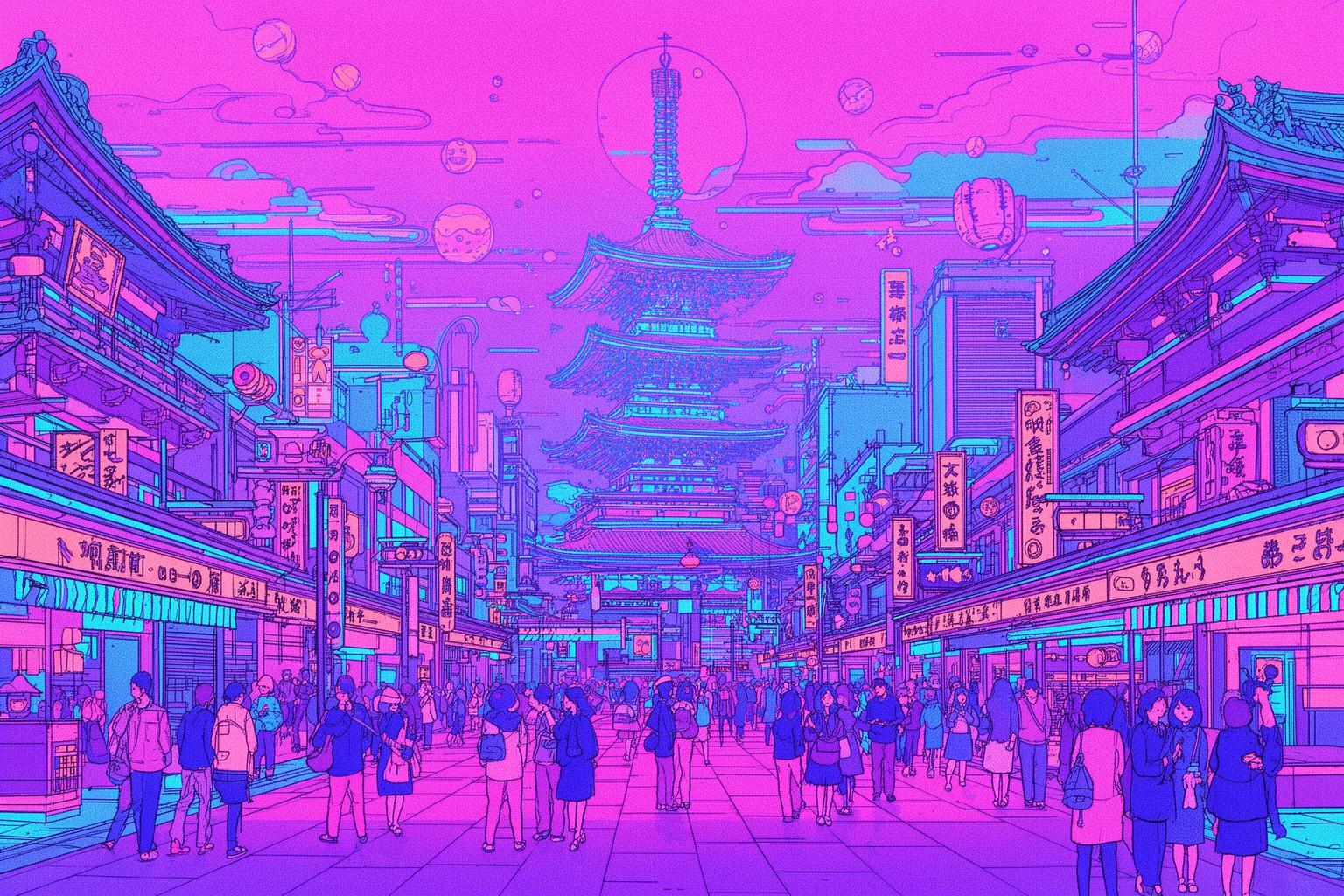
Alright, let’s change things up a bit and head over to Asakusa. Although Asakusa’s atmosphere is more deeply connected to the older Edo Period, its energy and scenery perfectly match the world of Kenshin. This was, and still remains, Tokyo’s grand entertainment district—a place where people came to unwind. It’s a lively, bustling area that truly embodies the vibrant, sometimes chaotic spirit of the city inhabited by Kenshin and his friends. During the Meiji era, Asakusa was thriving, home to Japan’s first movie theater and the Ryounkaku, a twelve-story tower symbolizing modernization. Though the tower is long gone, the spirit of the area as a hub for the people persists. It’s a place of grand temples, bustling market streets, and a tangible sense of history that lingers in the air like the incense from Senso-ji Temple.
Senso-ji Temple’s Timeless Presence
At the center of Asakusa stands Senso-ji, Tokyo’s oldest temple, and an iconic landmark. Passing through the huge Kaminarimon (Thunder Gate) with its giant red lantern instantly transports you to another world. The long stretch called Nakamise-dori, leading up to the temple, is lined with shops offering an endless variety of goods. Here, the energy is absolutely electric. The vast crowds, the mix of languages, the vivid souvenirs, and the tempting aromas of street food create a sensory experience like no other. Though it can feel touristy, its historical importance is unquestionable. This temple has served as a spiritual heart for centuries, a constant amid the city’s constant evolution. It’s easy to picture Yahiko causing trouble here, or Kaoru and Kenshin visiting during a festival. The main temple hall is truly majestic, and the five-story pagoda beside it is stunning, especially when illuminated at night. It stands as a symbol of enduring tradition amidst relentless change—a key theme in Kenshin’s story.
Off the Beaten Path: Discovering Nakamise-dori’s Hidden Treasures
While Nakamise-dori’s main path is a must-visit, the real treasures lie in the smaller streets branching off from it. These side alleys are less crowded and filled with specialized, traditional shops. You’ll find beautifully crafted combs, elegant fans, and finely made yukatas. There are also numerous excellent food spots offering genuine local treats. Here, you can enjoy freshly made ningyo-yaki (small cakes filled with red bean paste, shaped like pagodas or doves) or savory age-manju (deep-fried buns). One of the best experiences is taking a rickshaw ride. The rickshaw pullers, or shafu, are knowledgeable guides who lead you through the backstreets, sharing stories about the area’s rich history. Seeing Asakusa from a hand-pulled rickshaw—a popular form of transport during the Meiji era—is perhaps one of the most immersive Kenshin-like experiences available. It offers a direct connection to the period and lets you view the district through the eyes of the anime’s characters. This experience links you to the past in a way that simply walking around cannot. It may be a bit pricey, but for any true fan, it’s unforgettable.
Kagurazaka’s Secret Passages: Aoi-ya After Dark
For a slightly different, more refined Meiji atmosphere, we should head to Kagurazaka. This neighborhood is genuinely captivating and exudes a distinctly unique vibe. Known for its French influence, with numerous bakeries and bistros, its core remains authentically traditional Japan. While the main street is a lively modern thoroughfare, the true charm lies in the side alleys. Kagurazaka is a maze of narrow, stone-paved lanes called yokocho, lined with traditional, upscale restaurants known as ryotei, often concealed behind modest wooden walls and bamboo fences. The area conjures the aura of Aoi-ya, the restaurant and inn run by the Oniwabanshu that served as headquarters for Kenshin and his companions in Kyoto. It’s elegant, mysterious, and steeped in history.
Stone-Paved Slopes and Hidden Ryotei
Strolling through Kagurazaka’s back alleys, particularly at night, offers a surreal experience. Dimly illuminated by lanterns, the sound of footsteps on the wet stones is frequently the only noise. The atmosphere is exclusive and enigmatic. Occasionally, one might catch the faint strains of a shamisen from behind a closed door or glimpse a geisha in full attire slipping around a corner. These ryotei were once venues for political negotiations and dining spots for the Meiji elite. The architecture is impeccably preserved, featuring dark wood, paper screens, and small, carefully maintained gardens. The ambiance evokes a setting for clandestine meetings—perhaps between Kenshin and a government official—or a tense confrontation with a new adversary. The most renowned of these alleys is Hyogo Yokocho, which appears unchanged for over a century. It sparks the imagination, making you feel as though you’ve uncovered a hidden part of the city reserved for those in the know. This is a more mature, refined facet of the Meiji era, yet an essential one.
The Modern-Meiji Fusion
What’s remarkable about Kagurazaka is its seamless blend of old and new. Within these traditional alleys, you’ll encounter stylish modern bars, cafes, and art galleries. This fusion perfectly embodies the spirit of the Meiji period—the dynamic interaction between Japanese heritage and Western innovation. You might find yourself savoring a perfectly crafted cocktail in a chic, minimalist bar housed within a beautifully renovated traditional home over 80 years old. This contrast is what makes Kagurazaka so intriguing. It stands as a living testament to Tokyo’s respect for its past, even as it continuously evolves. The Meiji spirit isn’t merely about preserving relics in a museum; it’s about weaving them into the fabric of contemporary life. This blend of elegance, history, and modern edge makes Kagurazaka an indispensable stop on our journey to discover Kenshin’s Tokyo. It feels authentic, sophisticated, and just slightly dangerous—in the best possible way.
A Wanderer’s Respite: Finding Peace in Tokyo’s Gardens
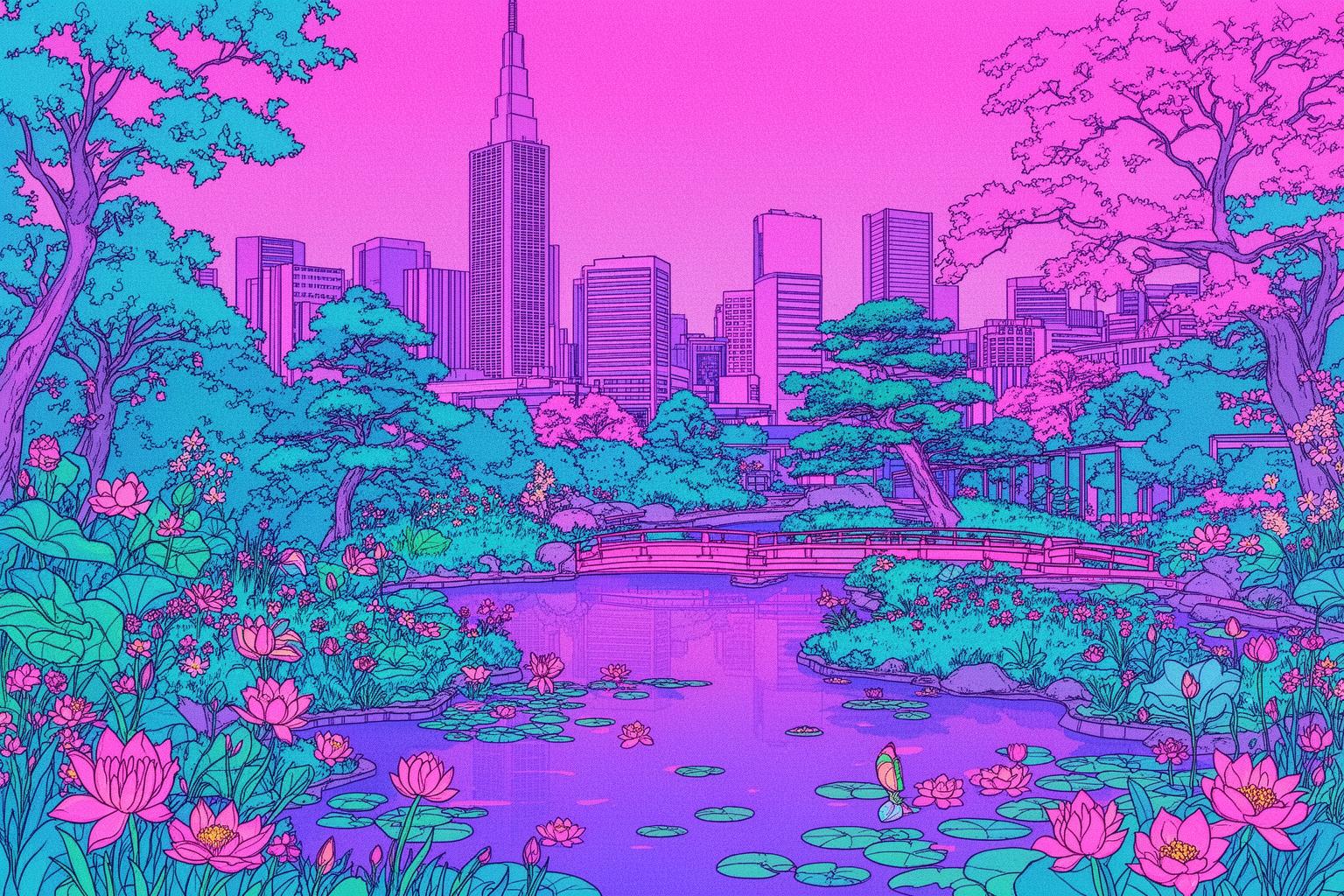
The world of Rurouni Kenshin isn’t solely about clashing swords and the hustle of the city. It also contains many quiet, reflective moments, often set against the backdrop of beautiful, tranquil natural scenery. These are the scenes where characters contemplate their past, face tough choices, or engage in meaningful conversations. To experience this aspect of Kenshin’s world, you must escape the city’s concrete and retreat into one of Tokyo’s magnificent traditional gardens. These gardens are carefully designed masterpieces, intended to be miniature, idealized landscapes. They serve as calm oases where you can slow down, breathe, and connect with a more timeless, peaceful side of Japan.
Koishikawa Korakuen: A Feudal Lord’s Legacy
Koishikawa Korakuen is among Tokyo’s oldest and most stunning gardens. It was originally created during the Edo period by a feudal lord, but its design blends elements from both Japanese and Chinese landscapes, producing a truly unique atmosphere. As you wander along the garden’s winding paths, you’ll encounter various scenes: a large central pond reflecting the sky, man-made hills offering gentle viewpoints, and charming wooden bridges such as the iconic red Tsutenkyo Bridge. The garden is intended for strolling, with the scenery shifting with every step. It’s the perfect spot to awaken your inner wanderer. You can easily picture Kenshin walking these same paths, burdened by his past, finding a moment of clarity by the water’s edge. The garden boasts weeping cherry trees that bloom beautifully in spring, vibrant maple trees that ignite the landscape in autumn, and a serene iris field. It’s a place deeply connected to the seasons and natural rhythms of life, providing a powerful escape from the city’s chaos.
Rikugien Garden: Poetry in Landscape Form
Rikugien is another Edo-period masterpiece, often regarded as one of Tokyo’s most beautiful gardens. Its name means “Garden of Six Poems,” and it was designed to replicate 88 scenes from famous Japanese poems. The entire garden is essentially a work of literary art. It exudes a deeply romantic and poetic atmosphere, ideal for those tender moments from the series. Picture Kenshin and Kaoru sharing a quiet conversation on a bench, or Yahiko and Tsubame sharing a shy, sweet exchange. The garden features a large central pond with several small islands linked by quaint bridges. Scattered throughout are traditional teahouses where you can sit, enjoy a cup of matcha and a traditional sweet, and gaze at the breathtaking view. One of the best spots is Fujishiro-toge hill, which offers a panoramic vista of the entire garden. It’s a place that invites quiet reflection and appreciation of beauty. Rikugien feels less like a park and more like a sacred space, a landscape crafted to soothe the soul and spark the imagination. It’s an essential part of experiencing the full depth of the Rurouni Kenshin world.
The Ultimate Time Slip: Edo-Tokyo Open Air Architectural Museum
If there’s one place that will absolutely blow your mind and make you feel like you’ve stepped right onto a Rurouni Kenshin film set, it’s the Edo-Tokyo Open Air Architectural Museum in Koganei Park. This spot is, without question, the ultimate destination for our quest. It’s an outdoor museum where historical buildings from across Tokyo—buildings that would have otherwise been lost—have been carefully relocated and reconstructed. These aren’t replicas; they are the original buildings. You can enter them, explore their interiors, and experience them firsthand. The museum even features an entire section devoted to structures from the Meiji and Taisho periods, creating a fully immersive townscape from that era.
Walking Through a Meiji Town
Entering the Meiji section of the museum feels truly surreal. You find yourself on a street lined with remarkable historic buildings: an early 20th-century stationery store, a traditional soy sauce shop, and even an old public bathhouse, or sento, boasting a grand, temple-like exterior and breathtaking murals of Mount Fuji inside. You can step inside and see the interiors preserved exactly as they once were. The attention to detail is astonishing. The public bathhouse, especially, feels like the kind of place Sanosuke and Yahiko would visit after a hard day of training. One of the most impressive aspects is the variety of buildings, including stately Western-style homes from wealthy Meiji families that showcase the blend of Japanese and European design popular at the time. There’s also a small, modest police box, or koban, that looks exactly like the type of post a Meiji-era policeman would occupy—ready to get into a lighthearted scuffle with our heroes.
Spotting Kenshin’s World in Real Life
As you roam through this architectural park, you’ll frequently experience moments of recognition. You might see a building and think, “That’s exactly like the photo studio from the manga,” or “This street corner is definitely a spot for a chase scene.” The museum lets you inhabit the world you’ve only encountered in 2D form. You can touch the aged wood of the buildings, peer through lattice windows, and soak in the atmosphere of a bygone era in a way nowhere else in Tokyo allows. It offers a tangible, concrete connection to the world Kenshin and his friends once lived in. For sure, it’s educational—but for fans, it’s far more than that. It’s a pilgrimage site. A place to spark your imagination and see firsthand the authentic setting of the story you cherish. If you can visit only one place on this list, make it this one. It’s the genuine article, an absolute must-see that will leave your inner anime fan overjoyed.
Tastes of the New Era: Eating Like the Kenshin-gumi
A significant part of experiencing any culture is through its cuisine, and the Meiji era showcased its own distinctive culinary scene. This period marked a major shift in the Japanese diet. Meat, which had long been forbidden due to Buddhist teachings, became more commonplace. Western foods were introduced and adapted. To fully immerse yourself in Kenshin’s world, you need to savor the flavors of his era.
Gyunabe: The Flavor of Meiji Modernization
The signature dish of the Meiji era is undoubtedly gyunabe, the forerunner to modern sukiyaki. This hot pot dish features thinly sliced beef, vegetables, tofu, and noodles simmered in a sweet and savory broth made of soy sauce, sugar, and mirin. Consuming beef was viewed as a symbol of modernization and Western influence, representing the building of a strong nation with robust people. Consequently, gyunabe restaurants sprang up throughout Tokyo and gained immense popularity. This is exactly the kind of celebratory meal the Kenshin-gumi would share after a hard-fought victory. Gathering around a bubbling pot, sharing food and laughter—this perfectly captures the found-family dynamic central to the series. Some traditional restaurants in Tokyo still serve sukiyaki in the classic style, making a visit both a delicious and historically meaningful experience. It’s more than just food; it’s a taste of the era’s optimism and progressive spirit.
Sweets and Street Snacks
Of course, it’s not only about hearty meals. The streets of Meiji Tokyo would have been lively with vendors offering a variety of snacks, many of which remain popular today. Consider dango, the sweet rice dumplings on a skewer favored by Kenshin, often grilled fresh at stalls in neighborhoods like Yanaka Ginza or Asakusa. Another staple is senbei, rice crackers available in numerous shapes, sizes, and flavors, ranging from sweet to savory. For a more leisurely treat, you could visit a traditional kanmidokoro, a sweet shop serving delights such as anmitsu (a dessert of agar jelly, fruit, red bean paste, and syrup) or zenzai (sweet red bean soup with mochi). Alternatively, you might find an old-fashioned kissaten, a Meiji- or Taisho-era coffee shop. Coffee, another Western import, became fashionable in this period. These kissaten often feature a nostalgic, retro ambiance with dark wood interiors, vintage furnishings, and a calm, relaxed atmosphere. It’s the ideal spot to enjoy a cup of coffee and a book, while imagining Kenshin’s world unfolding just beyond the window.
Beyond Tokyo: The Pilgrim’s Journey to Meiji Mura
If you are a super-dedicated fan—truly next-level—and have some extra time, there is a place outside Tokyo that stands as the ultimate destination. I’m talking about Meiji Mura, or “Meiji Village,” located near Nagoya in Aichi Prefecture. This is literally a whole village of over 60 preserved buildings from the Meiji period, spread across a vast, beautiful park. It’s like the Edo-Tokyo Open Air Architectural Museum, but on a grander scale. They have preserved and relocated remarkable buildings from all over Japan and even overseas. You can ride a functioning steam locomotive and a streetcar from that era. You can explore grand hotels, churches, post offices, sake breweries, and private homes. It’s the most comprehensive and immersive Meiji-era experience possible in Japan. Though it’s a bit of a journey from Tokyo, if Rurouni Kenshin is your passion, visiting Meiji Mura is a true pilgrimage. It offers the definitive glimpse into the architecture and lifestyle of the time, bringing the world of the anime to life in a stunning way. It requires a full day, but the reward is an unforgettable experience.
Living the Blade: Hands-On Samurai Spirit

Ultimately, to genuinely connect with the spirit of Kenshin, simply visiting the locations is not enough; you might want to immerse yourself in some of the action. Although the samurai era officially ended, their martial arts and philosophy have persisted. In contemporary Tokyo, you can find dojos offering trial lessons or martial arts experiences for tourists, such as Kendo, the way of the bamboo sword, or Iaido, the art of drawing the sword. This is less about learning to fight and more about experiencing the discipline, focus, and philosophy underlying the samurai arts. Holding a shinai in a Kendo dojo, adopting the proper stance, and practicing a swing provides a small window into the training world that characters like Kenshin and Kaoru devoted their lives to. It’s a physical and visceral way to engage with the core themes of the series—the notion that true strength arises not from aggression, but from control, discipline, and a commitment to protect. The experience can be intense and deeply fulfilling, enriching your understanding and appreciation of the story.
So, Did We Find Kenshin?
After strolling through the quiet alleys of Yanesen, experiencing the vibrant energy of Asakusa, getting lost in the secret passages of Kagurazaka, and time-slipping at the Open Air Museum, the question remains: Can you truly find the Rurouni Kenshin vibe in modern Tokyo? I believe you already know the answer. It’s a resounding, heartfelt, “Oro?”-filled yes. The spirit of that era, the soul of Kenshin’s world, isn’t gone. It’s not a ghost. It’s woven into the very fabric of the city. You discover it in the quiet dignity of an old wooden house, in the flavor of a traditional sweet, in the sound of a temple bell, and in the profound calm of a classical garden. It’s in the dynamic clash and beautiful harmony of the old and the new that continue to define Tokyo today. Kenshin’s story was about finding a way to live in a new era while honoring the past, and Tokyo itself is the greatest example of that. So yes, the Battosai may have put down his sword, but his spirit, and the spirit of his beautifully chaotic, romantic, and unforgettable era, remains here. You just have to wander a little to find it. And trust me, the journey is absolutely worth it.