Yo, what’s the move? Mia Kim here. So you’ve done the Golden Route. You’ve snapped a pic with the deer in Nara, got lost in the Shibuya Scramble, and ate your body weight in takoyaki in Osaka. Mad respect. You’ve seen the highlight reel, the Japan that’s all bright lights, serene temples, and next-level food. But real talk, if you’re on your second or third trip, you start looking for that different flavor, that deeper cut. You start looking for the vibes the guidebooks don’t tell you about. Japan’s got a whole other side, a shadow self that’s low-key terrifying, deeply fascinating, and absolutely unforgettable. We’re talking about the places where urban legends are born, where the air gets heavy and the silence is a little too loud. This ain’t your kawaii Japan tour. This is for the real heads, the ones looking to catch a different kind of vibe, the kind that sticks with you long after you’ve left. We’re about to dive deep into the world of Japanese urban legends and visit the actual spots that inspired them. It’s gonna be a trip, no cap. So buckle up, we’re going ghost hunting, but like, in a respectful, vibey way. Peep the map below to see the ground we’re gonna cover.
If you’re ready to explore the eerie landscapes that inspired classic horror manga, check out our guide to Japan’s real-life yokai haunts.
Aokigahara: The Whispering Sea of Trees
The Vibe Check
Alright, let’s start with the big one, the place infamous worldwide: Aokigahara Forest. Known in English as the “Suicide Forest,” its true name, Jukai, means “Sea of Trees.” And honestly? That name feels entirely different when you’re actually there. Standing at the edge, looking in, it truly resembles a sea—a dense, deep green ocean of trees so thick they swallow the sky. The moment you step off the main path, the atmosphere shifts instantly and dramatically. The sunlight simply… vanishes, filtering down into faint, dappled patches on the moss-covered ground. But the most striking thing isn’t what you see; it’s what you don’t hear. The porous volcanic rock forming the forest floor absorbs sound, creating a silence so tangible it almost feels physical. No birds chirp, no animals rustle—just the sound of your own breathing and the thump of your heart. It’s a heavy, oppressive quiet, as if the forest is holding its breath, waiting. You get a primal sense of being watched, a feeling that you’re an intruder in a place governed by ancient, sorrowful rules. The air is chilly, even in summer, carrying the damp, earthy scent of moss and decay. This is a profoundly sad place, not merely spooky. You feel the weight of countless stories clinging to the twisted roots and gnarled branches. It’s not a destination for cheap thrills but a place for quiet reflection on life’s fragility. The sensory deprivation—both auditory and visual—is genuinely disorienting, making it easy to see how people might lose their way, both literally and metaphorically.
The Legend Deep Dive
The legends surrounding Aokigahara are as tangled as its roots. The most widespread myth claims that compasses and GPS devices malfunction here due to rich deposits of magnetic iron in the volcanic soil. Though there is some truth to magnetic anomalies if you place a compass directly on the rock, modern GPS and reliable compasses work just fine. Yet the legend endures because it reinforces the forest’s core identity: a place where you can get lost. A place that almost wants you to get lost. However, the true horror of Aokigahara isn’t geological but human. The forest has long been tragically linked to suicide, a reputation cemented by Seicho Matsumoto’s 1961 novel Kuroi Jukai (Black Sea of Trees), which romanticized the idea of a final journey into the woods. The spirits of those who died here, called yurei, are said to wander the Jukai, unable to move on. These are not vengeful spirits, or onryo, as featured in many Japanese horror tales. Rather, the lore describes them as lost and sorrowful, with their whispers carried on a wind that doesn’t exist. Visitors often report faint crying, shadowy figures glimpsed between the trees, or an icy touch on the shoulder. Another unsettling aspect is the strings or tape tied to trees. These aren’t trail markers left by rangers; they’re laid down by people unsure if they want to go through with their final act. It’s a lifeline, a way to find their way back to the living if they change their mind. Encountering one of these colorful strands leading deeper into the oppressive green is both heartbreaking and eerie—a tangible symbol of the internal struggle playing out within these woods.
The Experience and The Reality
Visiting Aokigahara is a surreal experience, blending natural beauty with profound sadness. Situated on the northwestern side of Mount Fuji, the contrast between the iconic, majestic mountain and the dark, tangled forest below is striking. Most visitors stay on well-marked, perfectly safe nature trails leading to attractions like the Narusawa Ice Cave and Fugaku Wind Cave. These paths reveal a unique moss-covered lava-rock landscape that’s stunning in its own right. Along these trails, signs posted by suicide prevention groups carry messages such as “Your life is a precious gift from your parents” and “Please think of your family.” These reminders are sobering reflections of the forest’s reality. The real danger, and the root of its reputation, lies in wandering off the trails. It’s incredibly easy to become disoriented—every direction looks the same, with an endless wall of identical trees and dense undergrowth. The uneven, root-strewn ground makes walking difficult, and stumbling upon left-behind personal belongings is a stark and disturbing sight. It’s important to understand that this isn’t a haunted attraction but a real place facing a serious issue. If you choose to visit, do so with the utmost respect: go during the day, stay on designated paths, and bring a friend. The aim isn’t to find something gruesome but to experience the unique, somber atmosphere of a place where nature’s beauty and human sorrow are deeply intertwined. It’s a location that forces you to confront uncomfortable truths, and in that way, it offers a powerful travel experience.
Inunaki Village: The Forbidden Hamlet of Horror
The Vibe Check
Alright, let’s shift from the painfully real to the entirely mythical. We’re heading to Fukuoka Prefecture on the island of Kyushu to explore a place that’s the epitome of urban legend: Inunaki Mura, or “Howling Dog Village.” If Aokigahara embodies palpable sadness, Inunaki radiates pure, unfiltered dread. The legend carries strong “wrong turn” horror movie vibes. It’s a masterclass in folk horror, tapping into primal fears of outsiders, isolated communities with their own dark rules, and places where societal laws simply… cease to exist. The atmosphere of the Inunaki legend is one of sheer hostility. It’s not just haunted; it’s actively and aggressively trying to keep you away. The story describes a lost village, buried deep in the mountains, so cut off from the rest of Japan that its residents have become feral, violent, and aggressively hostile to any stranger who stumbles upon their land. It exists on the edge of the map, a quirk in reality where modernity hasn’t just been forgotten but violently rejected. The name “Howling Dog” itself conjures something wild and untamed, and the legend definitely lives up to it. It’s the ultimate campfire tale—one you share to spook your friends—but it’s grown beyond that, taking on a life of its own.
The Legend Deep Dive
The Inunaki Village legend is a chilling mix of eerie details refined over decades through internet forums and word-of-mouth. It always begins with a traveler driving along a remote mountain road in Fukuoka who spots a dirt turnoff marked by a crudely made sign. This sign is the legend’s most iconic feature. It declares: “The constitution and laws of Japan are not in effect past this point.” Creepy, right? It’s a simple yet powerful way to signal that you’re leaving the known world behind. According to the tale, if you’re brave (or foolhardy) enough to continue, you enter a village where everything feels immediately wrong. The villagers are said to be the product of generations of inbreeding, with strange customs and a fierce hatred of outsiders. The story claims they hunt down and kill intruders using farm tools, and that no one who enters ever escapes. The village is reportedly littered with broken-down cars and the remains of previous victims. Their hostility supposedly stems from the village’s history as a place where people with leprosy were once exiled or as a community of Burakumin—an outcast social group—resulting in deep mistrust of outsiders. The focal point of this folklore is the Old Inunaki Tunnel, considered the true gateway. Most ghost sightings and supernatural activity are reported there. People say their car engines stall inside, that blood-curdling screams echo through the tunnel, and that ghostly figures appear in headlights or even land on windshields. The legend’s popularity surged worldwide with the 2019 horror film Howling Village, directed by Takashi Shimizu (creator of Ju-On: The Grudge), which introduced this chilling piece of Japanese folklore to a global audience.
The Experience and The Reality
So, is there a real-life murder village where Japan’s constitution doesn’t apply? Of course not. But like all great urban legends, the Inunaki story is woven from threads of truth. There was indeed a real Inunaki Village, but it was a typical settlement of ceramic makers and coal miners. It was officially abandoned and submerged in 1970 due to the construction of the Inunaki Dam, so the village now lies beneath a reservoir. The heart of the legend, and the site that thrill-seekers actually visit, is the Old Inunaki Tunnel. The modern Inunaki Tunnel remains in daily use, but the old one—sealed with concrete blocks yet still accessible through a narrow gap—is the true eerie location. It’s genuinely creepy: dark, dripping with water, covered in graffiti, and filled with thick, stagnant air. It’s the perfect ghost story setting. The legend’s fearsome reputation was also amplified by a horrific real-life crime in 1988, when a group of youths abducted and murdered a man near the tunnel. This tragic event likely merged with the existing folklore, adding a layer of authentic darkness to the myth. So, while you won’t be chased by deranged villagers, visiting the Old Inunaki Tunnel remains genuinely unsettling. It’s a pilgrimage spot for paranormal enthusiasts and Japanese horror fans. It stands as a testament to the power of storytelling to transform a forgotten piece of infrastructure into a terrifying landmark. The vibe is less about real danger and more about soaking in the atmosphere that gave birth to one of Japan’s most enduring modern myths.
The Round Schoolhouse of Bibai: Echoes in the Halls
The Vibe Check
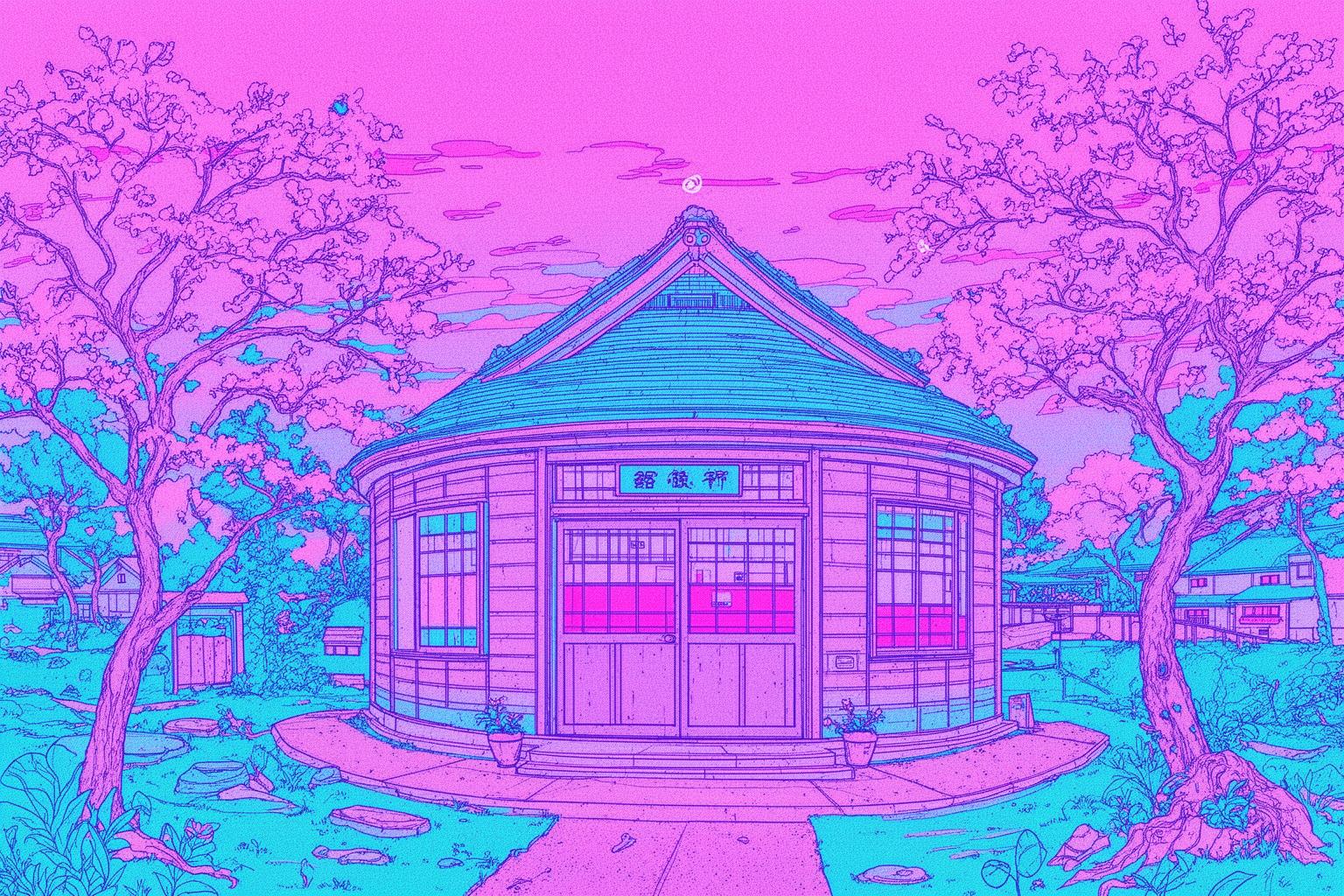
Let’s journey north, far north, to the vast, snowy island of Hokkaido. Our next destination is quite different. It’s not a site of violent legends or deep-seated sorrow, but rather one of eerie architectural beauty and creeping decay. We’re talking about the former Numashino Elementary School, better known as Bibai’s Round Schoolhouse. This spot is a dream for anyone fascinated by haikyo (the Japanese art of exploring ruins) and the allure of urban decay. The atmosphere here is pure, melancholic nostalgia. An abandoned school already holds powerful resonance—a place once filled with life, laughter, and energy now stands in silence. But this school’s distinctive circular design elevates its eerie ambiance to another level. The curved hallways appear endless, creating a disorienting effect. The quiet is punctuated only by the wind whistling through shattered windowpanes and the drip-drip-drip of melting snow. It’s a visual feast of peeling paint, rusting lockers, and desks still arranged in classrooms as if the students vanished suddenly. The central spiral staircase, a stunning piece of forgotten architecture, feels like the building’s spine, and standing at its center, gazing up at the sky through the collapsed roof, offers a strangely spiritual experience. It evokes a post-apocalyptic vibe, but in a quiet, contemplative manner. The mood isn’t threatening but expresses profound emptiness and the relentless passage of time.
The Legend Deep Dive
Japanese culture holds a rich tradition of ghost stories centered around schools, so it’s no surprise that a place as atmospheric as the Round Schoolhouse has gathered its own legends. These tales aren’t as elaborate as the Inunaki myth but align more with classic Japanese school ghost lore. The most common stories speak of child spirits said to still wander the halls. Visitors, especially urban explorers who enter, report hearing faint sounds of children laughing or running, the squeak of an invisible swing set, or the mournful tones of a piano playing by itself. Some claim to have seen small, shadowy figures darting down the curved corridors or peering from empty classroom windows. Another recurring tale describes a sensation of being pushed or nudged, particularly near the central staircase, as if a playful, unseen child is seeking your attention. These stories are likely intensified by the building’s acoustics; the circular layout can distort and carry sounds in disquieting ways. The legend of the Round Schoolhouse isn’t about a single terrifying entity. Instead, it represents the collective psychic residue of a place once brimming with youthful energy, now left to decay in silence. It’s the ghost of a memory, which can be just as haunting as any malevolent spirit. This echoes the widespread Japanese folklore figure of the zashiki-warashi, a childlike spirit inhabiting homes, known to be more mischievous than harmful.
The Experience and The Reality
The Round Schoolhouse of Bibai has a captivating real history. Built in 1959 to serve the children of workers at the Mitsubishi Bibai Coal Mine, once a thriving industry in Hokkaido, its circular design was not intended to be spooky; rather, it was a marvel of modern, efficient architecture aimed at maximizing natural light and facilitating easy movement. But when the coal mine closed in 1972 amid Japan’s energy shift, the surrounding town declined. The school shuttered in 1974, just 15 years after opening, and has been slowly deteriorating ever since. Today, it stands in a remote, often snow-covered field, a concrete monument to a bygone industrial era. Reaching it requires a car and a bit of effort, as it’s located outside Bibai’s main city area. Officially, entry is forbidden due to structural instability and private property status. Yet, it has become a legendary destination for photographers and urban explorers worldwide, drawn to its unique beauty and haunting ambiance. For those who do venture inside (at their own risk), it’s a photographer’s paradise. The interplay of light and shadow along the curved hallways, the textures of decay, and the poignant sight of educational posters still clinging to walls create striking images. The Round Schoolhouse exemplifies how a place doesn’t need a bloody legend to be haunting. Its power lies in its silence, its history, and the stark visual poetry of its decay. It’s a quiet ghost story told not through whispers, but through architecture.
Oiran Buchi: The Gorge of Crying Courtesans
The Vibe Check
Let’s return to the main island of Honshu, to a place where breathtaking natural beauty conceals a tale of brutal betrayal. Welcome to Oiran Buchi in Yamanashi Prefecture. The name means “Courtesan’s Gorge” or “Courtesan’s Deep Pool,” and it exudes a chilling blend of awe and sorrow. At first glance, it’s stunning. You’re surrounded by the lush, green mountains of Chichibu-Tama-Kai National Park. A vibrant red suspension bridge, the Oiran Buchi Tsuribashi, spans a deep gorge where a river rushes over massive boulders far below. The water’s roar is constant. It’s a picture-perfect scene of Japanese nature. But once you learn the story, the entire atmosphere shifts. The river’s roar begins to sound like screams. The gorge’s beauty takes on a sinister quality, becoming a beautiful yet inescapable tomb. The wind whistling through the trees feels like the mournful sighs of ghosts. This place perfectly embodies the Japanese concept of mono no aware, a gentle sadness for transience, but here it’s tinged with the horror of a violent and unjust fate. Standing on that bridge, swaying slightly over the chasm, you can’t help but feel a profound sense of tragedy. The place’s beauty makes its dark legend all the more potent.
The Legend Deep Dive
The story of Oiran Buchi is a historical horror rooted in the turbulent Sengoku period (the Warring States era) of the 16th century. The powerful Takeda clan, led by the renowned warlord Takeda Shingen, operated a secret gold mine here. To keep the miners motivated and prevent them from fleeing and revealing the mine’s location, the clan employed 55 oiran (high-ranking courtesans) to entertain them in an opulent settlement near the mine. However, after a crushing defeat at the Battle of Nagashino in 1575, the Takeda clan weakened and feared their enemies would uncover their source of wealth. They decided to permanently silence everyone who knew the mine’s location. The clan’s retainers crafted a monstrous plan. They told the 55 courtesans they were hosting a celebratory party. A large, temporary stage of bamboo and wood was built over the gorge’s deepest part—deliberately rickety. The women were invited onto the stage to dance and celebrate. At the peak of the party, the retainers, hidden on the cliffs, cut the ropes holding the platform. The stage collapsed, and all 55 women, dressed in their beautiful, heavy kimonos, plunged to their deaths in the raging river below. Legend says their dying screams echoed through the gorge and can still be heard on stormy nights. Their spirits, bound to the site of their murder, supposedly roam the area, with ghostly figures seen near the bridge, forever searching for justice. The river running through the gorge, the Fuefuki River, means “flute playing river,” and some versions of the legend say the women’s ghosts can be heard playing mournful flute tunes, a common skill for courtesans of that time.
The Experience and The Reality
Visiting Oiran Buchi today is a powerful experience precisely because of this dark folklore. The site lies along a winding mountain road, National Route 411, also known as the Ome Kaido. The journey itself feels like traveling back in time, deeper into a more ancient, wild Japan. The main attraction is the suspension bridge. Crossing it, feeling it sway with each step while the river roars far below, is genuinely unnerving when you know the legend. You instinctively grip the handrails a little tighter. On one side of the gorge stands a small memorial and a statue of Kannon, the Buddhist goddess of mercy, erected to soothe the spirits of the murdered women. Leaving an offering or saying a quiet prayer here feels like a necessary act of respect. The legend’s historical accuracy is debated by historians. While the Takeda clan did operate gold mines in the region, there’s no definitive proof of this specific massacre. Yet whether fact or folklore, the story has become the place’s identity. It serves as a dark reminder of the era’s brutality and the disposable value placed on women’s lives. For travelers, Oiran Buchi is more than a scenic viewpoint. It’s an exercise in emotional and historical imagination—a place to consider how a landscape can hold stories and how a beautiful vista can also be a memorial to a horrific tragedy. The combination of natural splendor and a gruesome tale makes it one of Japan’s most uniquely haunting spots.
Hashima Island (Gunkanjima): The Battleship Ghost Town
The Vibe Check
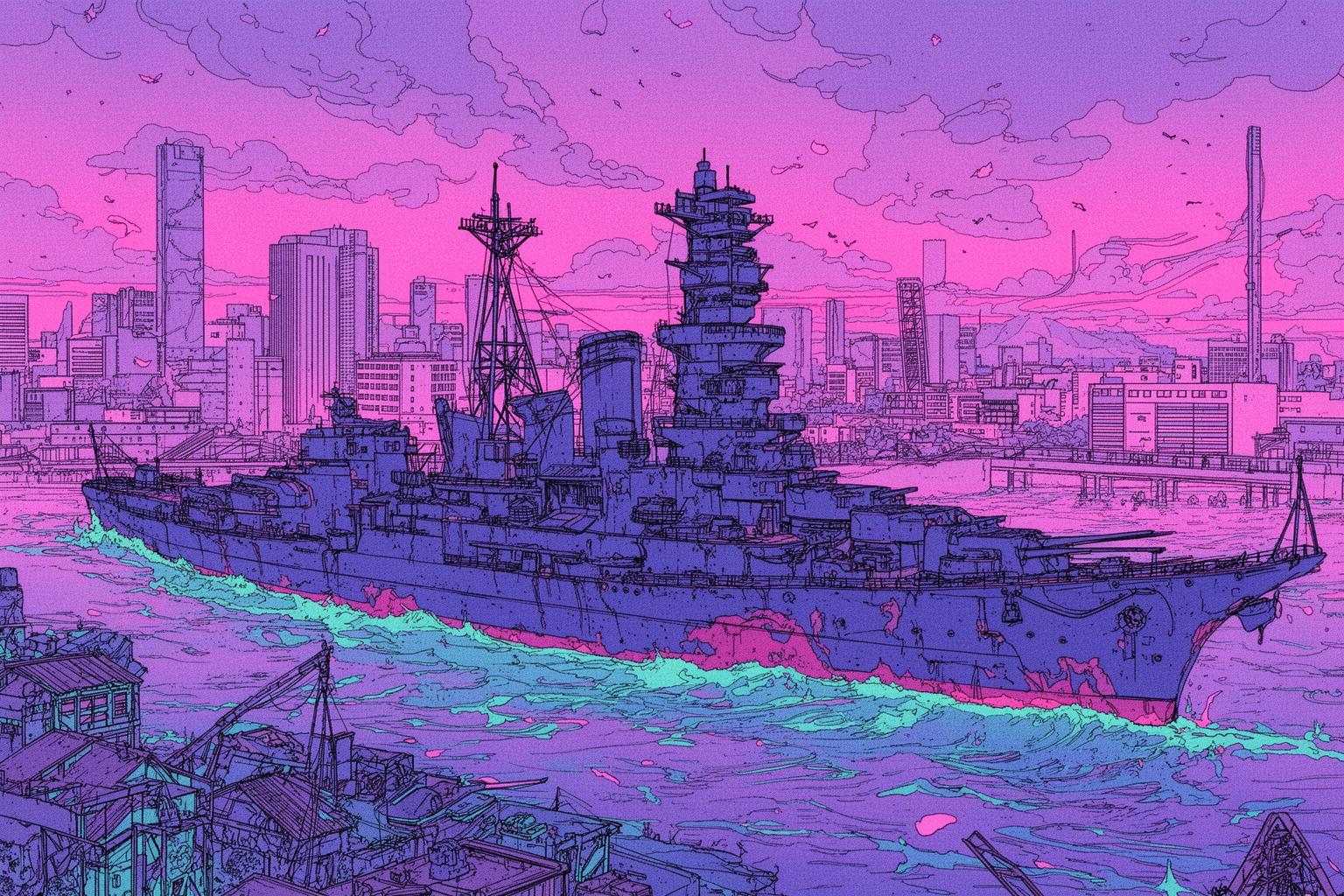
For our final destination, we’re heading back down to Kyushu, near the coast of Nagasaki, to an island that seems like it was torn right out of a dystopian sci-fi film. This is Hashima Island, better known as Gunkanjima or “Battleship Island,” named for its outline, crowded with concrete apartment blocks and industrial buildings that resemble a giant warship on the horizon. The atmosphere here is overwhelming. It’s a concrete ghost town, standing as both a testament to Japan’s rapid industrial growth and a reminder of its darkest wartime history. The sensation is one of total and profound abandonment on a vast scale. As your tour boat nears, the density of the decaying structures is breathtaking. It’s a concrete jungle slowly being reclaimed by nature, with green vines crawling over grey walls. The sounds are of the sea crashing against the island’s protective barriers and the cries of seagulls—a stark contrast to the industrial noise that once defined this place. Once you step onto the island, it feels like walking through a real-life apocalypse. You see crumbling apartment buildings with windows like hollow eyes, and personal items—a single shoe, a broken television—still visible amid the rubble-strewn rooms. It’s more than eerie; it’s deeply moving and profoundly unsettling. It represents a powerful, tangible symbol of a forgotten community and a history that remains contested.
The Legend Deep Dive
The ghosts of Gunkanjima are tied to its harsh and undeniable past. The island was developed by Mitsubishi in the late 19th century as an undersea coal mining facility. For decades, it was a thriving community, and at its height in the late 1950s, it was one of the most densely populated places on Earth. However, the hauntings and dark legends arise not from this period of industrial success but from World War II. During the war, to support its military efforts, Japan employed forced labor. It is estimated that hundreds of Korean and Chinese civilians, along with Allied prisoners of war, were compelled to work under brutal conditions in Gunkanjima’s undersea coal mines. They endured starvation, exhaustion, and cruel treatment. Many died from accidents, malnutrition, or were killed attempting to escape the island prison. The legends of Gunkanjima are the stories of their spirits—the onryo (vengeful ghosts)—who remain bound to the place of their suffering. Visitors on tour boats and former residents have reported seeing ghostly figures in the windows of the apartment blocks, especially in the building dubbed “The Stairway to Hell.” People have spoken of hearing whispers in Korean or Chinese carried on the wind or experiencing sudden, inexplicable cold spots and waves of despair. These are not mere spooky stories; they are intrinsically connected to a painful and controversial chapter of Japanese history, which the government and company have been criticized for minimizing. The island’s designation as a UNESCO World Heritage site in 2015 came with the condition that Japan acknowledge the history of forced labor—a commitment many feel has yet to be fully honored.
The Experience and The Reality
Visiting Gunkanjima is a tightly controlled but unforgettable experience. Access to the island is only possible through official tours departing from Nagasaki Port. The boat ride takes about 30-40 minutes, and as the island transforms from a tiny speck on the horizon to a vast concrete giant, anticipation builds. Due to the danger posed by collapsing buildings, visitors are confined to specially constructed walkways covering only a small part of the island. While you can’t roam freely among the structures, you get close enough to sense their immense, decaying presence. Tour guides share the island’s history, often emphasizing the engineering marvels and the close-knit community life of its Japanese workers during its peak. This official narrative frequently contrasts sharply with the darker history that shadows the island, creating a compelling and sometimes uncomfortable tension for visitors. The island’s eerie atmosphere gained worldwide attention when it inspired the villain’s lair in the 2012 James Bond film Skyfall. Although the scenes were filmed on a set, the film perfectly captured the island’s striking aesthetic of grand decay. A visit to Gunkanjima is a complex journey. You are witnessing a UNESCO heritage site, an industrial relic, a film location, and a site of immense human suffering — all at once. It’s a place that defies easy answers. It challenges you to face multiple, often conflicting layers of history. And in the silence of its deserted streets and empty apartments, you feel the weight of every one of those stories. It’s a heavy atmosphere, certainly, but one crucial to understanding the full, intricate story of modern Japan.
So there you have it—a quick tour through the shadowy side of Japan. These places are more than just spooky spots; they are gateways into the country’s folklore, history, and soul. They remind us that for every bright, bustling city, there’s a dark, whispering forest nearby. This is a different kind of travel, one that’s less about sight-seeing and more about sensing the atmosphere. And sometimes, the vibes that chill you to the bone are the ones you remember most. Stay curious, stay respectful, and maybe leave a little light on tonight. Peace.