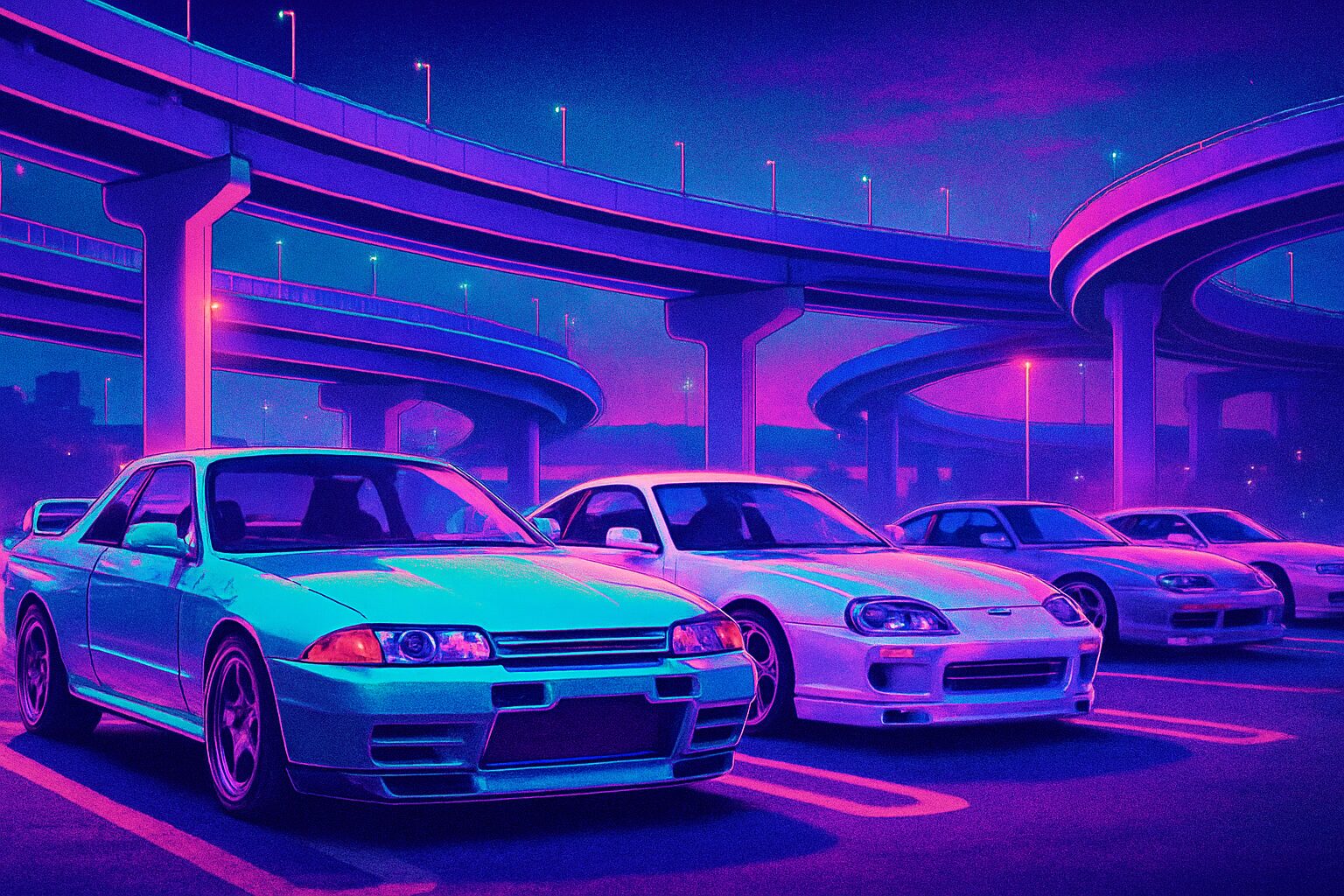
Alright fam, let’s have a real talk. You’ve been to Japan. You’ve crushed the Golden Route, seen the temples in Kyoto, got lost in the Shinjuku scramble, and maybe even hit up Akihabara for that sweet, sweet otaku culture fix. You’ve seen the highlights, you’ve got the pics for the ‘gram, and you’re thinking, “What’s next? What’s the level-up?” You’re a repeat visitor now, a seasoned traveler looking for that next-level, IYKYK experience that most tourists miss. You’re hunting for the soul of modern Japan, the living, breathing subcultures that pulse just beneath the surface. If that’s the vibe, then I’ve got two words for you: Daikoku Futo. This isn’t just a place; it’s a destination. It’s a concrete island sanctuary floating in Tokyo Bay, a cathedral of horsepower where the gods of JDM answer prayers with the roar of a straight-six and the hiss of a blow-off valve. Forget what you think you know about car meets. This ain’t your local parking lot gathering. This is the source, the epicenter, the legendary stage where automotive dreams, dripping in neon and fueled by high-octane passion, come to life every weekend. For those who’ve already tasted the magic of Japan and are craving a deeper, more authentic bite, returning to the country means seeking out these sacred grounds. Daikoku PA isn’t just a stop on an itinerary; it’s the entire pilgrimage, an electrifying rite of passage that redefines your understanding of Japan’s vibrant, creative, and utterly obsessive culture. It’s time to go beyond the guidebooks and plug directly into the main-vein of Japan’s coolest subculture. Trust me, this is the Japan you came back for.
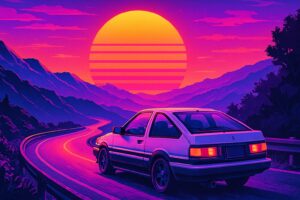
For those who’ve already tasted the magic of Japan and are craving a deeper, more authentic bite, returning to the country means seeking out these sacred grounds, much like the enthusiasts who chase the ghost of 80s JDM touge drifting.
The Concrete Island Calling: Rolling Up to the Sanctuary
Reaching Daikoku PA is an experience all its own. It’s not somewhere you simply come across by chance. There’s no convenient train station or bus stop right at the entrance. It requires dedication. The only true way to get there is by car, which feels fitting in a poetic sense. You must immerse yourself in the very culture you’re about to witness. The journey starts on the Shuto Expressway, the famous network of elevated highways winding through Tokyo like a metallic serpent. Specifically, you’re headed for the Bayshore Route, known as the Wangan. Yes, that Wangan—the one from the manga, the anime, the legend. As you merge onto the expressway, the atmosphere instantly changes. Ordinary city traffic melts away, replaced by a different breed of machine. You’re no longer just traveling; you’re engaging in a ritual. The towering skyscrapers of Minato Mirai in Yokohama form your backdrop, their lights sparkling like a futuristic dreamscape. You’ll navigate a labyrinth of interchanges and tunnels, with the signs for Daikoku Futo guiding you like a North Star. Anticipation rises with every kilometer. You can feel it in the air—a subtle, electric hum of excitement. You might be overtaken by a JZX100 Chaser, its sleek body gliding effortlessly through the lanes, its exhaust a deep baritone promise of what lies ahead. Or perhaps a brightly colored Honda S2000 will dart past, its high-revving engine singing a siren’s call. This is just the prelude, the opening scene. The final approach is what truly makes your heart race: a vast, looping cloverleaf ramp that feels like an ascent into another realm. As you spiral upward, suspended over the bay’s dark waters, you begin to see it—a warm, orange-and-white glow shining from below. It’s the light pollution of paradise. That glow is Daikoku, calling you home. Descending the ramp and pulling into the parking lot, you cross an invisible boundary. You’ve left the ordinary world behind. Now, you stand on sacred ground.
Sensory Overload: It’s Giving Electric Symphony
The moment your wheels come to a stop and you turn off the engine, it hits you — not just one thing, but everything, all at once. It’s an all-out assault on the senses, but in the most exhilarating way possible. The first thing you notice is the sound. It’s far more than mere noise; it’s a rich, layered symphony. At the base lies a steady, deep rumble—a collective idle of hundreds of distinct engines. Overlaid are the unique tones of individual cars: the guttural, bass-heavy roar of an RB26DETT from a Nissan Skyline GT-R, the high-pitched, almost insect-like buzz of a modified rotary engine in a Mazda RX-7, the sharp crackle and pop of an anti-lag system from a Lancer Evolution, and the smooth, thunderous growl of a Toyota 2JZ-GTE. Every few seconds, this symphony is accented by the sharp hiss of a blow-off valve releasing pressure, a sound as satisfying to a car enthusiast as a perfectly timed bass drop. Then your eyes adjust. The entire parking lot glows with the eerie yet warm orange light from massive highway lamps above. This light reflects off acres of polished paint, creating a shimmering sea of metal. But that’s just the backdrop. The real spectacle is the neon. Cars aren’t merely parked; they’re displayed. You’ll see elaborate underglow kits casting vibrant pools of blue, green, and purple light onto the asphalt. Engine bays glow with custom LED lighting, showcasing meticulously clean and modified power plants. Headlights and taillights aren’t ordinary; they’re custom-designed works of art featuring intricate animations and chasing light patterns. It’s a kaleidoscope of color that moves and breathes. And then there’s the smell. It’s a unique blend of high-octane gasoline, hot metal, and burnt rubber, mingling with the surprisingly pleasant aroma of hot coffee and fried chicken from the on-site Lawson convenience store. It’s the scent of passion, of late nights in the garage, of raw horsepower unleashed. You can almost taste the energy in the air. People are everywhere, but it’s far from chaotic. There’s a flow, a rhythm. Small groups gather around cars, hoods popped, pointing and murmuring appreciatively in Japanese. Photographers with serious gear move like ninjas, seeking the perfect angle to capture the light just right on a fender. The vibe is chill, respectful, and deeply communal. It’s an overwhelming experience, but one that makes you feel instantly alive and connected. You’re not just a spectator; you’re part of the electric dream.
The Main Stage: A Roster of JDM Royalty
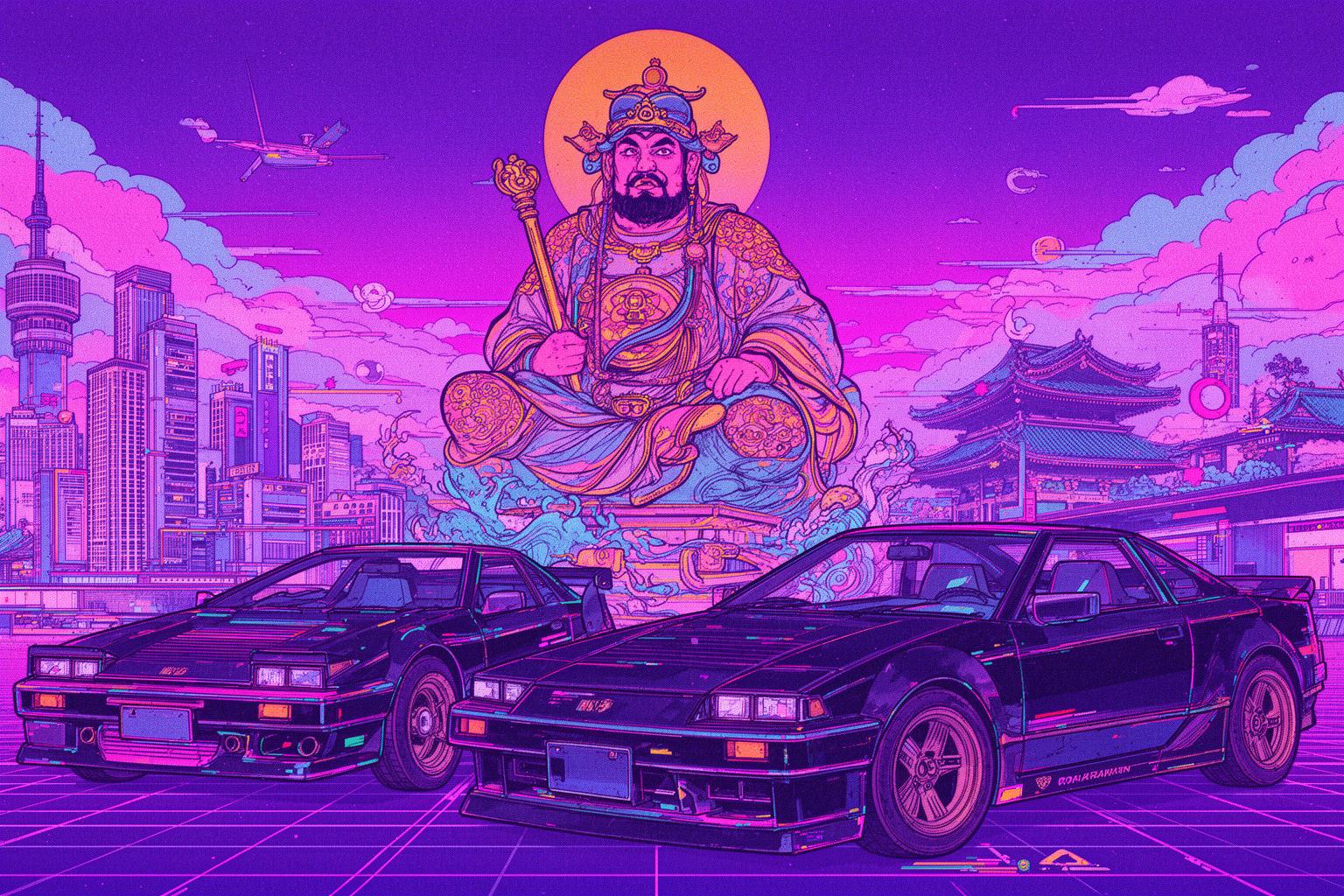
Walking through the rows of cars at Daikoku feels like stepping into a living, breathing museum of Japanese automotive history and culture. Every turn reveals another icon, another legend you’ve only encountered in magazines or video games. This isn’t merely a collection of vehicles; it’s a showcase of identity, with each car telling a unique story about its owner.
Godzilla’s Breeding Ground: The Skyline Dynasty
You can’t discuss Daikoku without paying respect to the king: the Nissan Skyline GT-R. They appear everywhere, spanning every generation, each more impressive than the last. Pristine R32s—the original Godzilla—look as flawless as the day they left the factory, their minimalist, aggressive lines still captivating decades later. Their owners treat them with a reverence normally reserved for ancient relics. Then there are the R33s, often seen as the more refined grand tourers of the family, but here they’re built for battle, equipped with massive single turbos and widebody kits. The true showstopper, however, is the R34. Seeing one in person, especially in its iconic Bayside Blue or the stunning Midnight Purple III, feels like a religious experience. The Daikoku lights reflecting off its sharp, sculpted body is pure magic. Owners proudly open their hoods to display the legendary RB26DETT engine, often featuring brightly colored HKS cam gears, polished GReddy intake plenums, and intricate custom pipework that resembles art more than piping. You’ll hear them before you see them—their deep, resonant exhaust note a signature sound of the night. It’s a tribute to the enduring legacy of a car that defined a generation of performance.
Rotary Rebels: The Song of the Wankel Engine
Suddenly, a different sound slices through the air—a high-revving, angry buzz resembling a swarm of giant mechanical hornets. Following the noise leads you to the rotary corner, where the Mazda RX-7 reigns supreme. The FD3S, with its timeless, sleek, and curvaceous body, still looks like it’s from the future. You’ll find them in every variation imaginable: from stock-bodied beauties in Competition Yellow Mica to full-on track beasts with massive carbon fiber wings and vented hoods. The pop-up headlights give them a playful charm, but make no mistake, these are serious machines. Their owners are a special breed, captivated by the complex and elegant Wankel rotary engine. They’ll enthusiastically discuss apex seals and bridge porting, their passion contagious. You’ll also spot the older, boxier FC3S—the hero car of Ryosuke Takahashi from Initial D—whose retro-cool style commands major respect. The scent of two-stroke oil often lingers nearby, a unique part of the rotary experience. Hearing one rev as it leaves the lot, its exhaust spitting flames, is a quintessential Daikoku memory you won’t soon forget.
The Supra Saga: From 2JZ Hero to Modern Icon
No JDM hall of fame is complete without the Toyota Supra, and Daikoku is their kingdom. The A80, or MK4, is legendary. Its muscular shape is instantly recognizable, and its presence is commanding. The roar of its 2JZ-GTE inline-six engine is iconic—a smooth, powerful growl capable of handling astronomical horsepower. At Daikoku, stock Supras are rare. Instead, you’ll see 1000-horsepower drag builds sporting massive rear tires, show cars with immaculate engine bays where every part gleams chromed or polished, and street-tuned monsters ready to take on the Wangan at a moment’s notice. The unmistakable three-circle taillights shine like beacons in the night. Alongside these classics, the new A90 (MK5) Supra has earned its place. Initially divisive due to its BMW partnership, the Japanese tuning scene has warmly embraced it. You’ll find them slammed on air suspension, outfitted with aggressive Pandem or HKS widebody kits, and sporting exhausts that make them sound far fiercer than stock. It’s a fascinating contrast: old guard and new blood parked side by side, showcasing the evolution and enduring spirit of one of Japan’s most treasured sports cars.
Sideways Saints: The Drift Missile Squad
Beyond the holy trinity of GT-Rs, RX-7s, and Supras lies the core of Japan’s grassroots motorsport scene: the drift cars. This is where style becomes grittier, and stories are written in battle scars. The Nissan Silvia family rules here. S13s, S14s, and S15s fill the area. Some are “drift missiles”—functional, worn machines with mismatched panels, zip-tied bumpers, and cracked fiberglass, all evidence of a life pushed to the edge on touge or track. Their beauty lies in their purpose-driven nature. Others are show-quality builds, featuring flawless paint, perfect wheel fitment, and wild liveries that look as if they arrived straight from a D1 Grand Prix event. But it’s not only Silvias. Large-bodied sedans play a big part too. Toyota Chasers, Mark IIs, and Crestas—especially the JZX100 chassis—are revered for their robust 1JZ-GTE engines and their surprising agility drifting despite their size. Their long wheelbases produce smoky, elegant drifts, accompanied by a deep, menacing growl. These cars possess a certain swagger, a gangster-like aura that’s undeniably cool. This corner of Daikoku feels the most genuine, offering a direct connection to the rebellious drifting spirit born on Japan’s mountain passes.
Beyond the Titans: The Deep Cuts of Daikoku
While legendary sports cars often grab the spotlight, the true charm of Daikoku lies in its remarkable diversity. It’s a place where every facet of Japanese car culture is honored, and some of the most unforgettable encounters come from the vehicles you least expect.
Pocket Rockets: The Kei Car Revolution
Just when you think you’ve seen everything, you’ll find a cluster of incredibly tiny cars that seem to defy the laws of physics. Welcome to the world of modified Kei cars. These vehicles, restricted to a 660cc engine displacement, are a distinctively Japanese phenomenon driven by tax and insurance incentives. At Daikoku, however, they become canvases for some of the wildest creativity. You’ll spot Suzuki Cappuccinos and Honda Beats—tiny mid-engine roadsters—lowered on miniature wheels with outrageously loud exhausts that sound like angry lawnmowers. The star of the show is often the Autozam AZ-1, a miniature supercar with gullwing doors. Seeing a group of these with their doors open, resembling a flock of tiny, colorful birds, is both surreal and delightful. The owners pour as much love, money, and passion into these small machines as the supercar enthusiasts do, proving that in Japan, car passion comes in all shapes and sizes.
Low and Slow: The Art of VIP (Bippu) Style
In another section of the lot, you’ll encounter a very different vibe. No loud exhausts or massive spoilers here. Instead, there’s an air of quiet, imposing luxury. This is the world of Bippu, or VIP style. The formula is straightforward but challenging to master: take a large, rear-wheel-drive Japanese luxury sedan like a Toyota Celsior (Lexus LS), Crown Majesta, or Nissan Cima, and make it as low and clean as possible. Often painted in subtle black, white, or silver, these cars let their stance speak volumes. The hallmark is in the wheel fitment—extreme negative camber known as oni-kyan or “demon camber,” where the tops of the wheels tilt sharply inward. The goal is to have the lip of the massive, multi-piece, often chrome wheels sit perfectly flush with the fender. It’s a stunning demonstration of precision. Interiors are equally important, frequently customized with leather upholstery, window curtains, and crystal chandeliers hanging from the rearview mirror. This style draws inspiration from the Yakuza, projecting an image of understated power and impeccable taste. Watching a line of these land yachts glide silently into the parking area is witnessing a truly unique and influential aspect of Japanese car culture.
Anisong & Horsepower: Decoding Itasha Culture
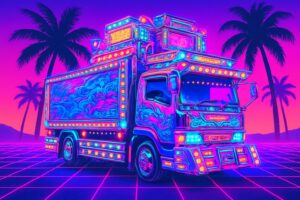
Prepare for a visual jolt. Turn a corner and you’ll be confronted with a car that’s more than just a vehicle—it’s a rolling shrine to an anime character. This is Itasha, literally meaning “painful car,” as its extreme appearance can be cringe-worthy to mainstream eyes. But for the owners, it’s the ultimate tribute to their favorite characters and series. The whole car is covered in professionally designed and applied vinyl wraps showcasing large, vivid images from popular anime, manga, or video games. The detail is astounding, with symmetrical designs that flow with the car’s body lines. This isn’t just a few stickers; it’s a full-scale mobile art exhibit. You’ll find everything from a Hatsune Miku-themed Honda Civic Type R to a Love Live!-covered Toyota 86. The owners’ passion for anime matches their love for the car, creating a perfect blend of two of Japan’s biggest subcultures. It’s a bold, unapologetic, and wonderfully quirky element of the Daikoku experience.
Gaijin Supercars with a Japanese Soul
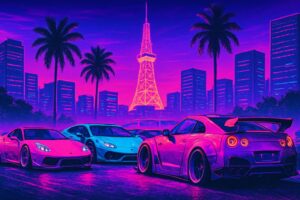
Even foreign exotics aren’t immune to Japan’s distinct tuning style. While a stock Lamborghini Aventador or Ferrari 488 would turn heads anywhere, at Daikoku, that’s merely the baseline. Here, they’re pushed to extremes that might bring a purist in Italy to tears. Think Liberty Walk and RWB (RAUH-Welt Begriff), companies renowned for their bolt-on overfenders that completely reshape Porsches and Lamborghinis. You’ll see Aventadors with exhausts inspired by bosozoku motorcycles, pipes shooting straight up into the air. Ferraris wrapped in holographic vinyl, with underglow lighting pulsing in sync with booming sound systems. It’s a captivating fusion of Italian engineering and Japanese rebellion. These owners aren’t satisfied with merely possessing a supercar; they must make it uniquely theirs, infusing it with the wild, boundary-breaking spirit that epitomizes Japanese car culture.
The People Behind the Power: The Daikoku Community
After some time, you begin to realize that while the cars are incredible, they only tell half the story. The true heart of Daikoku lies in its people. This isn’t a formal, organized event; it’s a spontaneous gathering of a diverse community bound by a single, all-encompassing passion. The owners of these amazing machines are surprisingly approachable. Despite possible language barriers, a simple nod, a smile, and a gesture toward your camera usually suffice to get permission for a photo. You’ll spot groups of friends who clearly belong to the same car club, wearing matching jackets and parking their similarly styled cars in a neat row. You’ll also see solo drivers who have come just to park and soak in the vibe, their car being their singular pride and joy. There are older gentlemen who’ve been tuning Skylines since the ’80s, sharing their knowledge with younger enthusiasts just starting out with their first Silvias. The mood is one of deep mutual respect. There’s no brand snobbery here. The owner of a million-dollar supercar can often be seen admiring the craftsmanship of a modest Kei car, and vice versa. Everyone recognizes the time, effort, and passion poured into every build, regardless of budget. It’s also an international crossroads. On any given night, you’ll hear English, Mandarin, German, and a dozen other languages spoken by fellow enthusiasts who’ve traveled across the globe just to be here. You might exchange a knowing glance with a fellow foreigner across the lot—a silent acknowledgment that you both “get it.” This is the place. You are here. The unspoken rules are simple: be respectful. Don’t touch a car without explicit permission. Don’t get in the way of photographers. Don’t be obnoxious. Just absorb, appreciate, and be a gracious guest in their house. This shared understanding creates a safe and welcoming space for everyone to geek out together.
The Rhythm of the Night: Ebb and Flow
Daikoku isn’t just a static display; it’s a living, breathing entity with its own distinct rhythm. The best nights are usually Friday and Saturday, when the weekend officially begins. The action starts to build around 9 PM, but the prime hours run from 10 PM to 1 AM. During this time, the lot is at its busiest—a constantly shifting puzzle of automotive art. Cars are always arriving and departing. A convoy of RX-7s might roar away in unison, their rotary engines harmonizing, only for their spots to be quickly taken by a group of VIP-style sedans that glide in quietly. This ongoing flow means you can stay put and watch the entire scene transform around you every half hour. A key element of this ecosystem is the convenience store. The Lawson at Daikoku PA is more than just a shop; it’s the heart of the community. It’s where you grab a hot can of BOSS coffee to warm your hands on a chilly night or a steaming karaage-kun (fried chicken stick) to refuel. Standing outside Lawson, sipping your coffee and watching the endless parade of cars, is a quintessential Daikoku experience. But the night has its boogeyman: the shutdown. Daikoku PA is, after all, a public rest area on a busy expressway. If it gets too crowded or too noisy, the police arrive. There’s no drama or chaos—a couple of police cars simply block the entrance ramp, stopping any more cars from coming in. A calm announcement plays over the PA system. This is the signal. The shutdown is an inevitable part of the Daikoku experience, and the dispersal unfolds like a beautiful, ritualistic process. Within minutes, the symphony of idling cars swells into a crescendo of roaring engines as hundreds of vehicles start up and begin a slow, orderly procession toward the exit, their taillights painting red streaks across the night. Watching the lot shift from a lively festival to an empty, silent concrete space in under 15 minutes is a surreal sight. Don’t be disappointed if it happens; consider it the natural end to the night’s performance.
Your Turn to Join the Legend: Pro-Tips for Your Pilgrimage
Feeling the urge? Ready to make the pilgrimage yourself? Let’s get you ready. First—this is non-negotiable—you need a car. Renting is your best option. While a basic compact will do, why not make the journey part of the experience? Many specialty rental shops around Tokyo/Yokohama, like Omoshiroi Rent-a-Car, offer the chance to rent the very JDM icons you’ll see. Picture yourself pulling into Daikoku in a Toyota 86, a Suzuki Swift Sport, or even your own R34 GT-R. It’s the ultimate way to dive in. Next, timing is crucial. Aim for a Friday or Saturday night, arriving after 9 PM. Weeknights may have small gatherings, but the weekend is when the real event happens. Dress warmly, even in summer. Being on a man-made island in the bay means strong winds and surprisingly chilly temperatures. A good jacket is essential. Bring your camera, naturally, but also carry cash. Vending machines are everywhere in Japan, and Daikoku’s offer an impressive selection of hot and cold drinks vital to the experience. Once there, keep moving. Don’t stick to one spot. Explore the entire lot, climb the pedestrian overpasses for stunning aerial views, and soak everything in. If Daikoku PA closes, don’t worry. Many groups head to nearby spots, like Tatsumi PA, for a second round. Following the stream of taillights can lead to new adventures. Most importantly, come with an open mind and respect. You’re a guest in a very special place. Be cool, and you’ll be welcomed into one of Japan’s most incredible cultural experiences.
Leaving Daikoku and ascending that spiral ramp back onto the Wangan feels surreal. The symphony of engines fades behind you, replaced by the rush of wind and the hum of your own car. The neon glow shrinks in your rearview mirror until it’s just another light in Tokyo’s vast cityscape. But the experience lingers. The sights, sounds, and the feeling of being surrounded by so much passion and creativity stay with you. Daikoku Futo is more than just a parking lot of cool cars. It’s a tribute to a culture that cherishes self-expression, craftsmanship, and community. It’s where garage-built dreams take flight at night, where street legends come to be seen, and where people from around the world connect through a shared language of horsepower and style. Without a doubt, it’s one of the most authentic, electrifying, and unforgettable experiences in Japan. It’s the kind of night that turns a great trip into a legendary one, leaving you with stories to tell and a burning desire to return and do it all again. It’s not just a memory; it’s an addiction, and the only cure is to go back.