Yo, let’s get real for a second. You’ve seen the videos, right? The ones with skiers and boarders absolutely disappearing into clouds of white, snorkel-deep in powder that looks lighter than air. That’s Japow, the legendary Japanese powder snow, and it’s a whole mood. But what if I told you that you could chase that epic snow while time-traveling back to the vibrant, kinda wacky, and totally awesome 90s? Forget the sleek, international-style mega-resorts for a minute. We’re going deeper. We’re diving headfirst into the world of Heisei Era ski resorts, those glorious, sprawling snow playgrounds built during Japan’s economic bubble. These places are living, breathing monuments to a time of limitless optimism, day-glo ski suits, and a non-stop J-Pop soundtrack. It’s a vibe that’s pure magic—a unique blend of world-class snow and nostalgic, retro-cool aesthetics that you just can’t find anywhere else on the planet. This isn’t just a ski trip; it’s a cultural deep-dive, a journey into the heart of a bygone golden age where the vibes are as deep as the powder. It’s about shredding immaculate groomers by day and soaking in a massive, tiled onsen by night, all while the faint echo of a 90s pop ballad drifts through the air. This is the Japan ski experience that’s seriously low-key but high-key amazing, and it’s waiting for you to drop in.
For a different kind of retro adventure in the city, explore the postmodern vibes of Tokyo’s urban islands.
Echoes of the Bubble: The Soul of a Heisei Resort
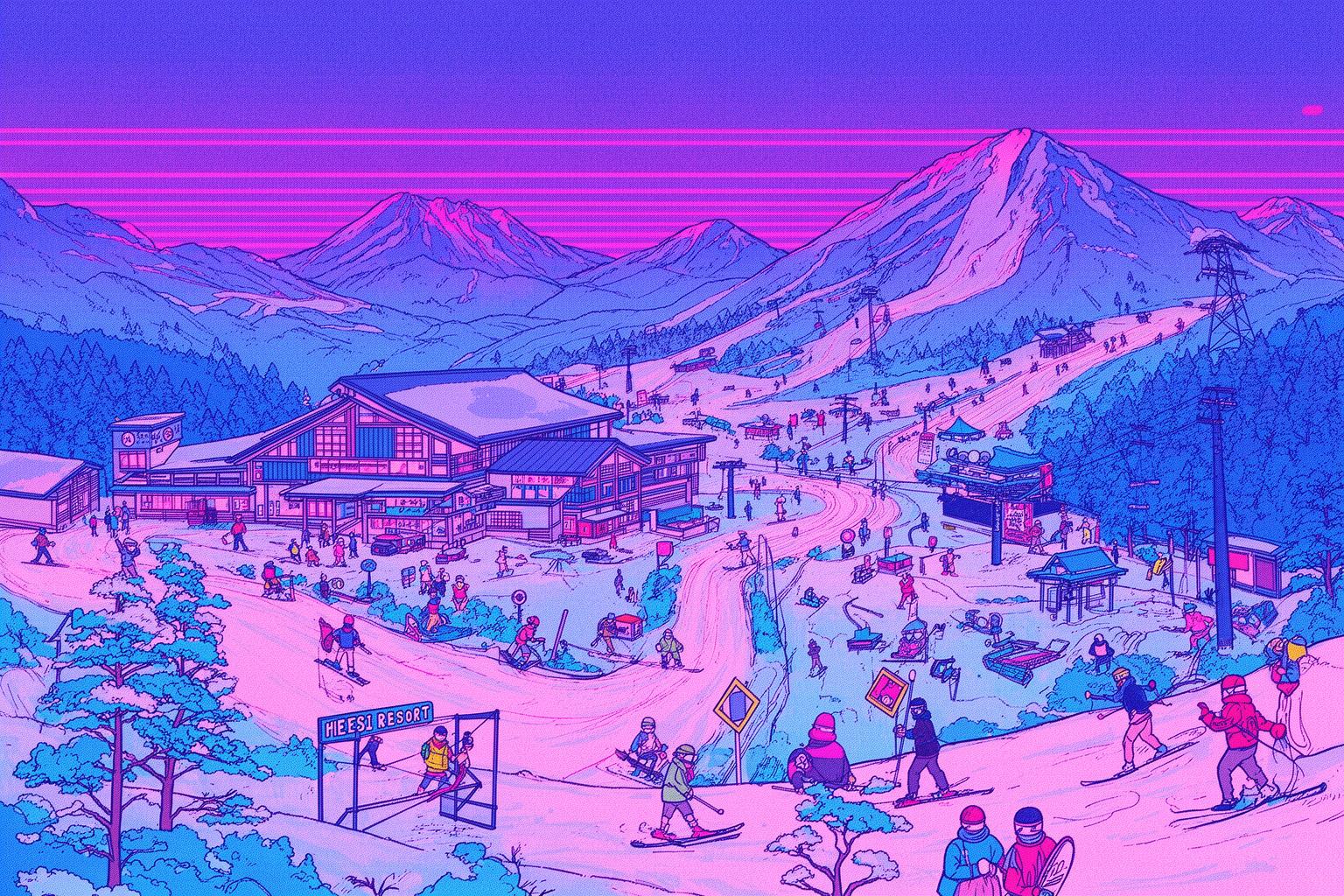
To truly grasp the Heisei resort scene, you need to know the backstory. Imagine this: it’s the late 1980s in Japan. The economy is soaring, a period now called the “Bubble Era.” Money was abundant, optimism was high, and the country was constructing bigger, bolder, and more impressive structures than ever before. A huge part of this cultural moment was the ski boom. Skiing became the ultimate trendy pastime, celebrated in hit movies like “Watashi wo Ski ni Tsuretette” (“Take Me Skiing”). It was the must-do activity. So, corporations invested massive amounts into building these mega-resorts, mostly nestled in the snowy mountains of Nagano, Niigata, and Tohoku. They weren’t just setting up ski lifts; they were creating entire self-contained fantasy worlds.
The architecture gives it away first. You arrive at these sites and see gigantic hotels that look like something from a sci-fi film or a European fairy tale, placed right at the foot of the mountain. Picture sweeping curves, pastel hues, and vast wings linked by glass-walled corridors. The lobbies are typically vast, multi-story atriums with marble floors, grand pianos, and slightly worn but still splendid chandeliers. It’s all about grandeur—a snapshot of prosperity preserved in time. Inside these colossal structures, you’ll find everything: multiple restaurants offering everything from French dishes to traditional kaiseki, enormous onsen hot spring facilities, souvenir shops selling character-themed cookies, and—the real highlight—retro game arcades with vintage UFO catchers and classic fighting games. It’s a time capsule. You can almost hear the synth-heavy tunes of bands like Dreams Come True or Zard reverberating through the long, carpeted hallways. This is the essence of the Heisei resort—it’s a ghost of the bubble, a monument to a dream, and honestly, it’s just incredibly cool.
The Japow Phenomenon: Why the Snow Slaps Different
The retro vibe is definitely on point, but let’s focus on the main attraction—the snow. The term “Japow” isn’t just marketing talk; it’s an actual meteorological marvel. Here’s the deal: frigid, dry air moves east from the Siberian tundra, gathers a huge amount of moisture crossing the Sea of Japan, then crashes into the Japanese Alps. This forces the air upward, rapidly cooling it and causing massive snowfall. Because the air is so cold, the snowflakes formed are incredibly light and dry—not the heavy, wet snow you might expect. This is champagne powder: whisper-quiet, bottomless, and creating an almost surreal feeling of floating when you ride through it. The snow billows over your head, turning every run into a white-room experience.
What makes the Heisei resorts perfect for Japow hunters is that many are off the main international tourist radar. While crowds line up at Niseko or Hakuba, you can hit places like Appi Kogen or Madarao and lap fresh, untouched powder all day. These resorts are vast, with endless powder stashes to discover. Built for the huge crowds of the bubble era, they often feel blissfully empty on weekdays. You get wide-open groomers all to yourself, ideal for powerful high-speed carves. When a storm hits, the tree runs and ungroomed bowls transform into a true paradise. Dropping into a perfectly spaced birch forest, weaving through the trees with snow exploding all around you, is next-level. It’s pure joy and the reason people travel across the globe to experience this. The snow quality is exceptional, and at these retro resorts, you enjoy it without the crowds—no exaggeration.
A Tour of the Time-Warp: Iconic Heisei Destinations
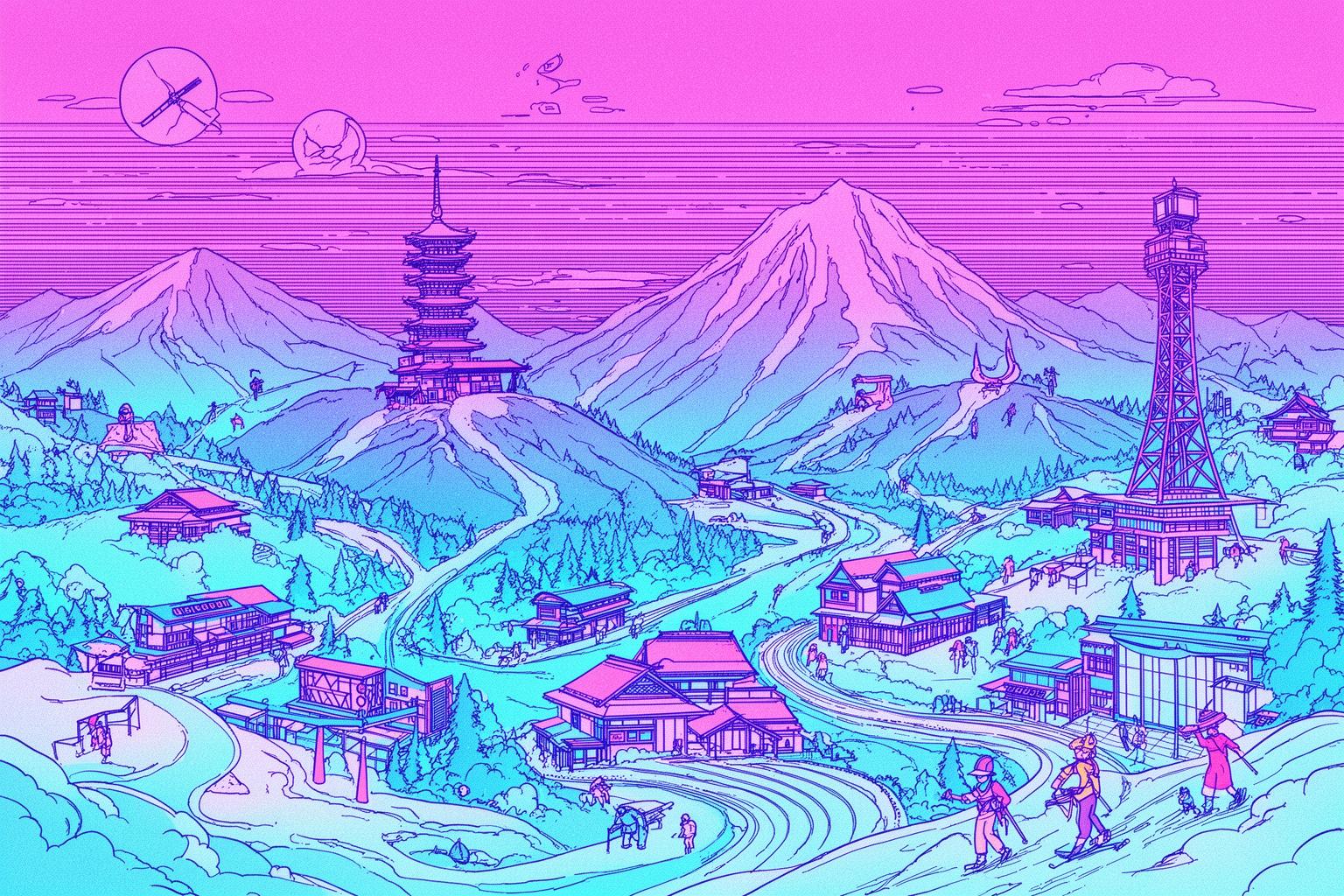
Not all Heisei resorts are made equal, but they all share the same DNA of ambition and nostalgia. Each offers its own unique character and story. Getting to know them is like progressing through different levels of a video game dedicated to the ’90s. Some are polished and grand, others more rustic and wild, yet all are epic in their own way.
Naeba Ski Resort: The Emperor of the Bubble
If one resort perfectly captures the Heisei ski dream, it’s Naeba. Situated in Niigata’s Yuzawa region, this legendary spot centers around the Naeba Prince Hotel, a sprawling complex stretching along the mountain’s base. It feels less like a hotel and more like a self-contained city. This was the heart of the ski boom, famous for epic nighttime concerts by J-Pop queen Yumi Matsutoya, aka Yuming. For decades, her winter shows became a cultural event and the soundtrack to a generation’s ski holidays.
Naeba today exudes a fascinating mix of grandeur and faded glory. Its scale remains staggering. Skiers can navigate 22 lifts over varied terrain, from gentle beginner slopes near the hotel to challenging mogul fields and steep pitches higher up. The highlight is the Dragondola, Japan’s longest gondola, linking Naeba to the nearby Kagura Ski Resort. This 20-minute ride glides silently over a pristine valley. Kagura is a powder haven known for deep snow and superb backcountry access, making the combination of Naeba’s resort-style runs and Kagura’s powder stash unbeatable. After a full day, explore the maze-like Prince Hotel interior, enjoy a food court serving excellent katsudon, and soak in the atmosphere of a place that was once the heartbeat of Japanese youth culture.
Appi Kogen: The Aspen of Japan
Travel north to Iwate Prefecture, and you’ll find Appi Kogen, a resort intentionally designed as the “Aspen of Japan.” The layout is impeccable. Most slopes face north, preserving the snow’s powdery condition longer by shielding it from the sun. The runs are long, wide, and meticulously groomed—like cruising down a multi-lane corduroy highway. It’s a dream for those who love opening up and carving. The main hotel complex at the base, with its pale yellow and terracotta colors, resembles a European ski village straight from the bubble era.
What distinguishes Appi is its slightly more refined and polished feel. It’s less chaotic than Naeba, feeling more spacious and organized. Yet the Heisei spirit remains. The immense Hotel Appi Grand exemplifies bubble-era ambition with its mix of restaurants, shops, and a large onsen. On-mountain dining is a nostalgic experience, with huge cafeterias at the summit and mid-mountain seating hundreds. Enjoying hot ramen or classic Japanese curry rice while overlooking Appi’s vast slopes becomes a lasting memory. Appi is also renowned for its tree runs, with several designated “powder fields” offering an exhilarating and safe way to enjoy legendary Japow in a beautiful forest setting.
Madarao Kogen: The Powder Bowl Paradise
Straddling Nagano and Niigata prefectures, Madarao—affectionately known as “Madapow”—represents a different facet of the Heisei era. Unlike the monolithic corporate visions behind Naeba or Appi, Madarao feels more like a village, with smaller hotels and pensions creating a laid-back atmosphere. But don’t mistake its modest appearance; Madarao is a powerhouse when it comes to snow.
The resort’s standout feature is its bowl-shaped mountain, a natural snow catcher committed to powder skiing. While many Japanese resorts strictly limited off-piste skiing, Madarao embraced it early, actively encouraging tree skiing and thinning forest areas to create some of the country’s best tree runs. Dropping into Crystal Bowl or the Ninja course on a deep powder day is pure bliss. Skiers constantly discover new lines, launch off natural features, and get face shots of ultra-light snow. Still largely unknown internationally, fresh tracks are often available well into the afternoon. The main Madarao Kogen Hotel has classic Heisei features—a sprawling onsen, retro arcade, and palpable ’90s vibe—but Madarao’s true soul lies deep in its powder-filled birch forests.
GALA Yuzawa: The Bullet Train Resort
For bubble-era convenience and audacity, nothing beats GALA Yuzawa in Niigata. This resort is famed for one astonishing feature: its own Shinkansen (bullet train) station built directly into the gondola base. No exaggeration. You can board a train in downtown Tokyo and, in about 80 minutes, step off the platform, pass through ticket gates, and queue for the gondola up the mountain. It’s an engineering wonder born from the height of the ski boom, a concept so wild it seems unreal.
The experience is simultaneously futuristic and nostalgic. The base station is a huge complex housing rental shops, restaurants, and an onsen, designed to accommodate Tokyo day-trippers. The skiing is enjoyable, with varied terrain and surprisingly good snow thanks to its “snow country” location. Yet the true GALA Yuzawa experience lies in the journey as much as the skiing—riding a 300 km/h train to ski for the day perfectly embodies Heisei ambition: if you can dream it, you can build it. It’s a must-visit for anyone wanting to witness Japan’s bubble-era ambition at its peak.
The Après-Ski Scene: Soaking, Snacking, and Singing
The Heisei resort experience doesn’t stop when the lifts close; in fact, that’s when an entirely different vibe comes alive. The après-ski culture here isn’t about upscale cocktail bars or wild nightclubs. It’s more intimate, wholesome, and distinctly Japanese, centered around three treasured pillars: onsen, food, and karaoke.
Soaking It All In: The Onsen Culture
After a day spent powering through thigh-deep powder, nothing beats stripping down and sinking into a steaming hot onsen. Every Heisei-era hotel worth visiting features a large public bath, often with both indoor and outdoor pools (rotenburo). The indoor baths tend to be grand, tiled spaces with high ceilings and expansive windows framing the snowy landscape. But the true magic lies in the rotenburo. Sitting in a natural hot spring surrounded by snow-covered rocks and trees, with snowflakes gently falling around you, is a transcendent experience. It soothes your muscles, warms your spirit, and is the perfect way to end a day on the slopes. This ritual connects you to Japan’s volcanic natural landscape and is a vital part of the cultural experience.
Fueling Up: The Food Is Fire
As a foodie, I can say the culinary scene at these resorts is a surprisingly low-key highlight. Forget overpriced, underwhelming ski hill fare. Here, you’ll find genuine, delicious, and affordable Japanese comfort food. On the mountain, lunch usually means choosing between a steaming bowl of ramen, a hearty plate of katsu curry (breaded pork cutlet with rich Japanese curry and rice), or a comforting gyudon (beef bowl). These bustling cafeterias serve food that truly hits the spot. Around the hotel or in nearby towns, your options grow. Cozy izakayas offer grilled skewers and cold beer, family-run restaurants specialize in soba noodles, or you can indulge in a multi-course kaiseki meal at your hotel. It’s all about hearty, soul-satisfying dishes designed to recharge you for another day on the slopes.
Finding Your Voice: Retro Entertainment
For evening entertainment, it’s time to embrace the retro. Explore your hotel halls, and you’ll probably stumble upon a game center. These aren’t modern arcades; they’re time capsules filled with claw machines housing slightly outdated plushies, Taiko no Tatsujin drum games, and maybe an old-school Street Fighter II cabinet. It’s pure, simple fun. Then there’s karaoke. Almost every hotel offers karaoke rooms you can rent by the hour. Gather your group, grab some drinks, and dive into a songbook thick with both Japanese hits and English classics. There’s no better way to bond and capture the joyful, slightly wild spirit of the Heisei era than by belting out a Backstreet Boys or SMAP tune at full volume. It’s the perfect, playful end to a perfect ski day.
Your Mission Guide: Nailing the Heisei Trip

Ready to book your ticket and step into the time warp? Slay. Here are some practical tips to help make your trip smooth and unforgettable.
Getting There
Access to many resorts, especially in the Nagano and Niigata areas, is surprisingly convenient thanks to the Shinkansen. The Japan Rail Pass can be a very cost-effective way to travel from Tokyo to hubs like Echigo-Yuzawa or Nagano Station, where you can then catch a resort shuttle bus. For resorts farther north, such as Appi, flying into a regional airport might be a better option. Driving is also possible, but be prepared for snowy roads and ensure your rental car has snow tires.
When to Go
Japan’s ski season usually runs from mid-December to early April. For the absolute deepest, lightest powder, January and February are the prime months, as this is when Siberian storms most consistently bring daily fresh snow. March tends to offer more sunny days and milder temperatures, ideal for spring skiing and cruising on groomed runs, though the epic powder days become less common.
Gear and Language
Rental gear is available at all resorts, but its quality can vary. Some have modern, high-quality equipment, while others might have gear that feels a bit retro. If you’re particular about your setup, it’s best to at least bring your own boots. Regarding language, larger resorts often have some English-speaking staff, but fluency is not guaranteed. Learning a few essential Japanese phrases like “Arigato” (Thank you), “Sumimasen” (Excuse me), and “Kore, kudasai” (This, please) will go a long way and be appreciated by locals.
A Final Tip
Embrace the quirks. Things might not be as sleek or modern as you’re used to. The Wi-Fi could be slow, the décor might be a bit outdated, and the bed may feel firm. But that’s all part of the charm. Don’t resist it—lean into it. Enjoy the unusual pickles at breakfast, sample the odd-flavored soft drink from the vending machine, and spend some time trying to win a stuffed animal from the UFO catcher. It’s all part of the Heisei resort experience.
More Than a Memory
A visit to one of Japan’s Heisei ski resorts is far more than just a pursuit of deep powder. It’s a journey into a distinct chapter of Japanese history, marked by unrestrained optimism and creative vitality. These resorts aren’t forgotten, melancholy relics; they are living museums, carefully preserved and still delivering a world-class snow experience. They remind us that sometimes, things that are slightly faded and out of fashion hold the most soul. As you ride the lifts, you’ll gaze over vast, empty slopes and the grand, somewhat quirky hotels, feeling connected to the past—and to the thousands who once skied these runs sporting big hair, bright jackets, and Walkmans playing the latest J-Pop hits. So come for the Japow, because it’s truly as incredible as its reputation suggests. But stay for the vibe. Stay for the nostalgic sensation of discovering a perfect, untouched slice of the 90s, frozen in time beneath the snow. It’s a trip that’s utterly unique, deeply Japanese, and an adventure you’ll never forget.