What’s up, my travel fam! Sofia here, coming at you live from the heart of Japan’s electric dreamscape. Tonight, we’re doing something a little different. We’re not just traveling; we’re time-slipping. We’re about to trade the neon glow of Tokyo for the ancient whispers of Kyoto, but we’re doing it with a twist. We’re hopping on the Shinkansen, Japan’s legendary bullet train, under the cloak of darkness. And trust me, this isn’t just a train ride. It’s a whole vibe. It’s an initiation into a state of mind that feels… well, it feels like being a modern-day ninja. Forget everything you think you know about travel. This is about ghosting through the country, a silent shadow moving at 300 kilometers per hour. It’s about watching a world of light dissolve into a personal universe of reflection, all while being propelled by some of the most advanced technology on the planet. This journey is the ultimate paradox: hyper-futuristic speed meets ancient, meditative stillness. It’s where the soul of the shinobi meets the spirit of innovation. Before we dive into this epic journey into the void, let’s get our bearings. Our vanishing act begins at the heart of the machine, the legendary Tokyo Station. This place isn’t just a station; it’s a city within a city, the perfect place to stock up on provisions and mentally prepare for the mission ahead. It’s where millions of stories begin and end every single day, and tonight, ours is the one that slips into the night.
この忍びの旅は、現代の街中に潜む隠れたストリートウェア忍者たちの世界にも通じるものがある。
The Art of Preparation: Gearing Up at the Grand Terminal
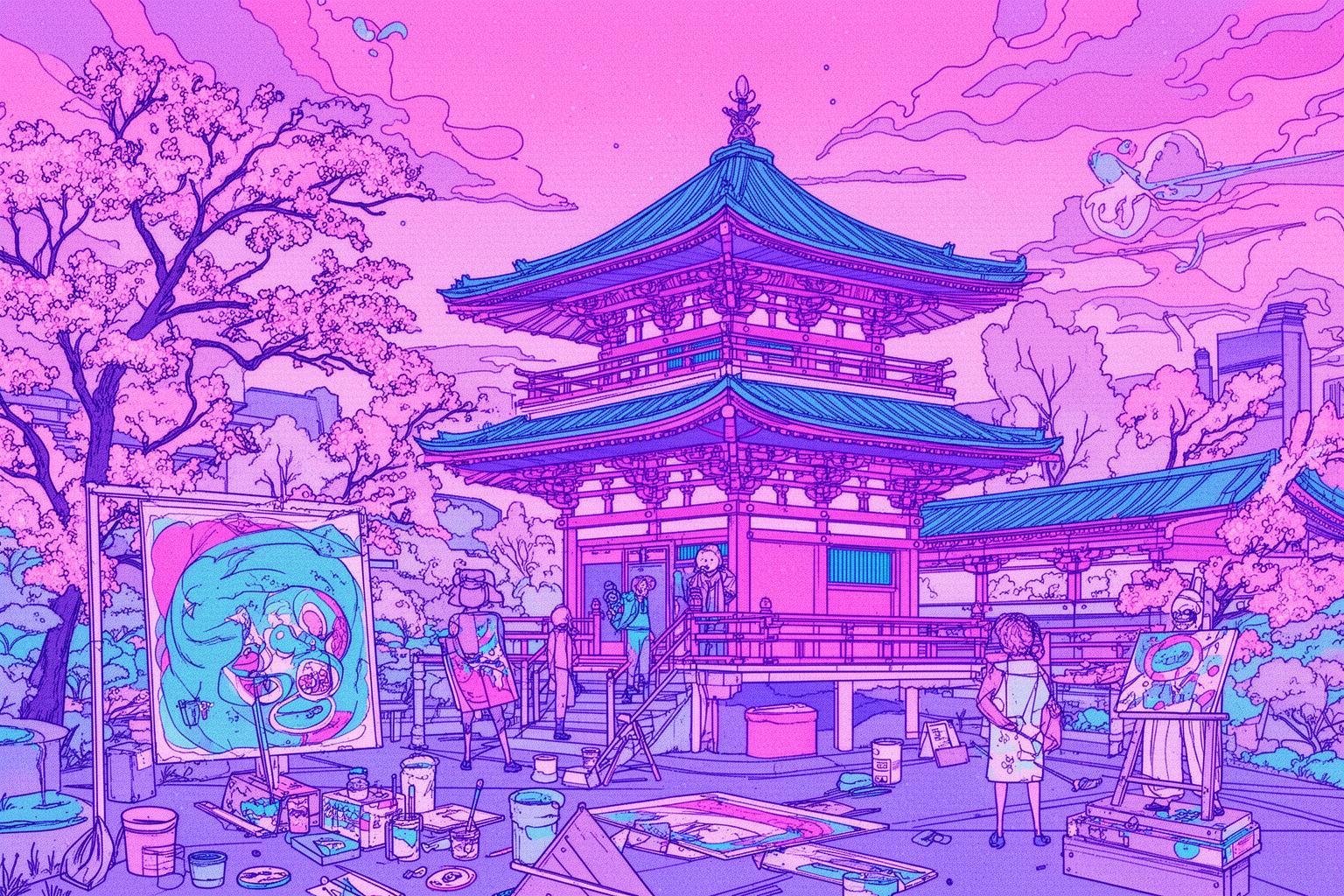
Your mission, should you decide to accept it, begins well before the train quietly arrives at the station. It starts amidst the beautiful, controlled chaos of a major Japanese train station at night, such as Tokyo Station or Shinagawa. This is no ordinary commuter hub; it’s an expansive ecosystem of light, sound, and purpose. Think of it as a hidden ninja village, a headquarters where every operative readies themselves for their secret mission. The atmosphere here is electric yet orderly. Streams of people move with an unspoken understanding, a collective rhythm that’s both awe-inspiring and slightly intimidating if you’re new to it. But this is where you learn the first rule of the modern ninja: blend in. Watch closely. Move with intention.
Your initial objective is to secure provisions. A true shinobi never travels hungry. Forget dull, overpriced train snacks. We’re talking about the holy grail of Japanese travel cuisine: the ekiben. These aren’t just boxed lunches; they’re culinary masterpieces, carefully curated bento boxes showcasing Japan’s regional specialties. The basements of major department stores connected to the stations, known as depachika, are treasure troves. You’ll find everything from perfectly grilled eel over rice to colorful assortments of sushi and intricately prepared vegetables. Choosing your ekiben is a ritual. It’s your fuel, your comfort, your link to the land you’re about to cross quietly. This is the modern equivalent of the ninja’s hyorogan, or soldier pills—compact rations designed for endurance and stealth. Grab a bottle of cold green tea or a can of hot coffee from one of the many vending machines on the platform itself. Pro tip: these platform vending machines are invaluable. They offer a surprising variety of hot and cold drinks, a small comfort that feels like a secret unlocked. This whole process of gathering supplies is part of the journey. It’s not a chore; it’s strategic preparation that centers you before you dive into the abstract realm of high-speed travel.
The station’s atmosphere is a study in contrasts. On one side, you have the sheer scale and energy of it all. Digital signboards flicker with destinations written in elegant Japanese characters and bold English letters, shifting silently in a hypnotic rhythm. Announcements, delivered in calm, melodic tones, resonate under the vaulted ceilings. On the other side, there’s an incredible sense of personal space and quiet dignity. People stand in perfectly straight lines. No shouting, no pushing. It’s a discipline that feels profoundly cultural, a shared understanding that efficiency and respect are paramount. This is the environment where a ninja would excel. It’s a world of predictable patterns and movements, making it easy to navigate with purpose once you grasp the flow. You’re an anonymous face in a sea of focused individuals, each on their own path. This anonymity is your cloak. You’ve already begun to vanish, becoming part of the system—a ghost in the machine—long before you board your futuristic vessel.
The Ghost Arrives: The Silent Specter of the Shinkansen
Then arrives the moment of truth. You stand on the platform, provisions in hand. You’ve located your designated spot, precisely marked on the ground like the work of a master architect. You watch the digital clock inch closer to your departure time. In Japan, trains don’t run late. The idea of a Shinkansen being even a minute behind schedule is nearly unimaginable. This punctuality is more than excellent service; it’s a philosophy. It’s a pledge of reliability and a tribute to the extraordinary engineering and human coordination that powers this system. In its own way, it is a form of ninjutsu—the art of accomplishing a goal with maximum efficiency and minimal fuss.
Then it happens. Without a loud roar or screeching brakes, the Shinkansen glides into the station. It doesn’t simply arrive; it materializes. One moment, the track is empty; the next, a long, white serpent with a nose cone crafted by aeronautical engineers silently slips past you. Its presence is breathtaking. So spotless, it looks as if it just rolled out of a showroom. The sound it produces is a low hum, a whisper of the immense power coiled within. This is no brutish industrial machine. It’s an elegant instrument of speed. Its arrival is so graceful and silent, it feels like a specter, a ghost from the future. The doors align perfectly with the markings on the platform where you and the other passengers wait. The hiss of the pneumatic doors opening is the only sound to break the spell. It’s an invitation. A portal opening to another dimension, a world of speed and shadow.
Boarding is a masterclass in Japanese efficiency. A quick cleaning crew dashes through the train during the brief stop, performing a ‘seven-minute miracle’ of tidying up and turning seats to face the direction of travel. Then passengers disembark in an orderly manner, and you and your fellow travelers board. No fuss, no drama. You find your seat, stow your luggage in the overhead compartment, and settle in. The Shinkansen’s interior is a sanctuary of calm. The seats are spacious and comfortable, with ample legroom. The lighting is soft, the air is clean, and ambient noise nearly absent. It contrasts sharply with the bustling energy of the station you just left. This transition is immediate and absolute. You have stepped from the public world into a private capsule. Your seat becomes your dojo, your temporary hideout. Here, your transformation from traveler to observer, from tourist to ninja, truly begins. You feel the quiet thrum of potential energy beneath your feet. The doors close with a soft chime and gentle sigh, sealing you inside. The outside world is now on display, but you are no longer part of it.
The Vanishing Act: Dissolving into the River of Night
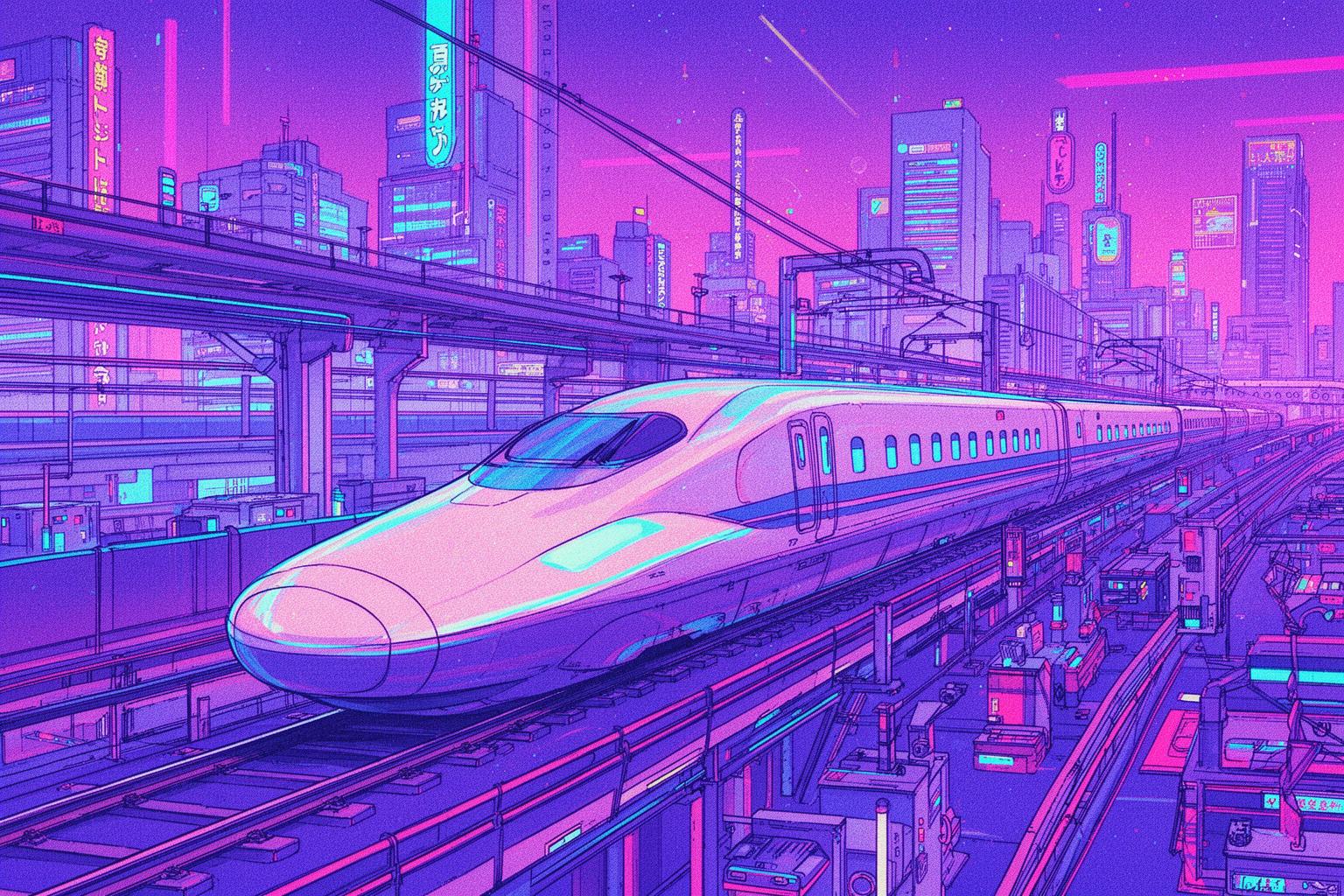
This is the defining moment of the entire experience: the departure. On a typical train, you feel a jolt, a lurch, the clanking of machinery. The Shinkansen is different. It begins moving with such incredible smoothness that for a moment, you wonder if it’s moving at all. It feels more as if the station itself is sliding away. The platform attendants bow deeply as the train pulls away, a gesture of respect and farewell that is distinctly Japanese. Then the acceleration starts—a steady, powerful, and utterly seamless surge of speed. There’s no G-force pressing you into your seat, just a growing sense of momentum, of being effortlessly propelled forward.
The city lights start to shift. At first, you can distinguish individual buildings, car headlights, and apartment windows. But as speed increases, these points of light blur, stretching and warping into long horizontal streaks of neon and gold. Tokyo’s cityscape, one of the world’s largest and most vibrant metropolises, dissolves into an abstract stream of light. It’s a breathtaking, almost psychedelic scene. You are literally watching a city of millions fade before your eyes. This is the vanishing act. This is ongyo-no-jutsu, the art of becoming invisible. You are no longer in Tokyo. You are traveling through a corridor of pure light, a transient being drifting between places. The sensation is surreal—a potent blend of detachment and exhilaration.
The train leans into a turn, and the river of light curves with you. You pass other trains, brief blurs speeding in the opposite direction. You glide through small stations without stopping, their lights flashing past in an instant. The sensory input is both overwhelming and hypnotic. You are witnessing the world at a speed the human body was never meant to experience on solid ground, yet you sit in perfect stillness and comfort. This is the central paradox of the Shinkansen: an experience of intense motion and profound tranquility simultaneously. The Japanese have a concept called ma, which can be translated as negative space or the pause between things. The night Shinkansen journey is a passage through a physical and temporal ma. You exist in the space between two great cities, Tokyo and Kyoto, in the pause between the end of one day and the beginning of the next. For these few hours, you are gloriously and completely untethered.
In the Belly of the Beast: Meditations in the Dark
Soon, the last traces of the city’s light pollution vanish. The brilliant river of light disappears, and the window becomes a dark mirror. This is when the journey shifts to a deeper phase. The outside world almost completely fades away. There are no rolling hills or scenic coastlines to admire—only darkness, intermittently broken by brief glimmers from small towns you pass in the blink of an eye. The window now reveals just one thing: your own reflection, layered over the faint, ghostly streaks of the world speeding by. This is the moment the journey turns inward. It becomes a deliberate meditation. With no external distractions, you are left alone with your thoughts. The train’s rhythmic, hypnotic sound—a soft, steady whoosh—becomes your mantra.
This is genuine stealth mode. Like a historical ninja on a covert mission, who would spend long hours in darkness, waiting, listening, and remaining perfectly still, mastering their own mind to endure extended sensory deprivation without losing focus. Your Shinkansen capsule is a modern dojo for this practice. The world outside is a blank black canvas, and your mind is free to paint upon it. You can reflect on your travels so far—the incredible sights and sounds of Tokyo. You can plan your next steps in Kyoto, imagining the temples and gardens waiting to be explored. Or you can simply let your mind drift, untethered, just as your body moves with the train.
Now is a good time to get acquainted with your fellow shadows. Look around the cabin and you’ll see a cross-section of modern Japan. Salarymen, ties loosened, either working on laptops or catching some sleep, trained to use this transit time for rest. Young couples sharing headphones, their faces lit by the soft glow of a smartphone. Elderly travelers reading a book or quietly gazing at their own reflections in the window. What you won’t find is chaos or loud conversations. The cabin sustains a serene, almost library-like atmosphere. Everyone exists in their own bubble, respecting the shared space. This collective quiet is another form of the ninja’s art of invisibility. Being a ninja wasn’t only about hiding in the rafters; it was about blending in with any group, appearing as a simple farmer, priest, or merchant. On the Shinkansen, everyone is a traveler, part of the same quiet, temporary tribe. Together, you are all ghosts.
Now is the moment to enjoy your ekiben. Unwrapping the bento is a small ceremony in itself. The beautifully arranged food pleases the eyes before it satisfies the stomach. As you eat, you are literally consuming the essence of a place, even as you speed away from it. It grounds you, providing a sensory anchor in an otherwise abstract experience. The sweetness of the tamagoyaki (rolled omelet), the texture of perfectly cooked rice, the subtle tang of pickled vegetables—all bring you back to your body, back to the present moment, even as that moment races through space and time.
The Shinobi and the Shinkansen: A Tale of Two Japans
To truly grasp the vibe of this journey, you must understand the two forces at play: the ancient art of the ninja and the modern marvel of the Shinkansen. Though they seem worlds apart, both arise from the same cultural DNA—expressions of Japan’s obsession with efficiency, precision, and the art of achieving goals with grace and skill.
The ninja, or shinobi, were not solely the black-clad assassins of legend. They were intelligence operatives, spies, saboteurs, and special forces in feudal Japan. Their value lay more in information than combat. Masters of stealth (shinobi-iri), disguise (hensojutsu), and escape (tonjutsu), they wielded many specialized tools, but their greatest weapon was the mind. They studied geography, psychology, and meteorology, learning to exploit human perception’s weaknesses. Their philosophy was to achieve the maximum result with minimal effort and exposure. A skilled ninja was unseen, unheard, and unknown.
Now, consider the Shinkansen. Its development began after World War II, during Japan’s period of rebuilding and reinvention. The goal was to create not only a fast mode of transport but one that was incredibly safe, reliable, and comfortable. The engineers were obsessed with precision. Tracks laid with millimeter accuracy, trains crafted for aerodynamic efficiency to reduce noise and vibration, scheduling orchestrated like a ballet under a central command that seems futuristic. The Shinkansen embodies the same principles that guided the shinobi: accomplishing a goal—transporting millions swiftly across the country—with unmatched efficiency, silence, and grace. The train is a tool, as precisely constructed as a ninja’s grappling hook or smoke bomb. It enables swift, silent travel across vast distances, allowing you to infiltrate a new city under the cover of night, arriving rested and ready for your “mission.”
This journey is where these worlds collide. You use cutting-edge technology to tap into an ancient mindset. You embody the shinobi spirit—not by wielding shuriken, but by moving through the world with awareness, efficiency, and calm. The train’s dark, reflective window becomes a meditation tool. The cabin’s anonymity your cloak of invisibility. The speed and silence your stealthy means of infiltration. This is not merely a trip; it’s a practical application of a warrior’s philosophy.
Practical Ninjutsu: Tips for Your Night Mission
While embracing the philosophical spirit, here’s some practical advice for your journey. Booking a Shinkansen ticket is straightforward: available at major JR ticket offices or multilingual machines. The Japan Rail Pass is a game-changer for extensive travel but does not cover the fastest Nozomi and Mizuho trains without a supplement. For a night trip, reserving a seat is golden advice—it guarantees your spot and lets you choose a window seat for the full reflective experience. The extra cost is worthwhile for peace of mind. For a premium experience, the Green Car (first class) offers wider seats, more legroom, and an even quieter cabin—the VIP lounge of the shadow world.
Luggage-wise, overhead racks fit standard carry-ons, while larger suitcases go in designated areas at car ends. A recent rule requires oversized baggage reservations on many lines, so check the JR site if traveling heavy. A ninja travels light—pack smart. Stations are impeccably signed in Japanese and English, usually separating Shinkansen platforms from local lines. Allow plenty of time; rushing is not the ninja way. The goal is to move with calm purpose.
Onboard amenities include clean, high-tech toilets every other car, some smoking rooms, and an occasional trolley service offering snacks and drinks—though limited, which makes bringing your own ekiben the ultimate power move. Wi-Fi is available but spotty through tunnels and remote areas, a blessing encouraging you to disconnect digitally and immerse yourself in the journey. Embrace this digital detox. Let the world outside, or your reflection within the window, be your entertainment.
Re-entry: The Slow Dawn of a New World

After what feels like both an eternity and a mere moment, you begin to notice a change. A faint glow emerges on the horizon, a soft, orange bloom against the blackness. The darkness starts to recede. You begin to make out the silhouettes of mountains and the outlines of buildings. The train, which has been steady at cruising speed for hours, starts a subtle, almost imperceptible deceleration. You are re-entering the realm of light and place. The abstract journey is coming to an end, and a concrete destination draws near. This is the ninja arriving at the outer edge of the target city. The time for introspection is over; the moment for action is approaching.
Clusters of lights appear more frequently, growing denser. They resolve into individual windows, streetlights, and the headlights of cars on the highways running parallel to the tracks. The black mirror of the window gradually transforms back into a transparent portal, revealing the suburbs of your destination. You can feel the city’s energy reaching out to welcome you. The spell of the dark, empty void is breaking. Your meditative state begins to shift toward anticipation. You start gathering your belongings, awakening from your high-speed trance. An announcement comes over the intercom, first in Japanese, then in English, confirming your imminent arrival. The station’s name—Kyoto, in this case—is spoken with calm finality.
The final approach is as smooth as the departure. The train glides through a network of tracks, passing other trains resting for the night. You see the familiar architecture of a major urban center. The train slows further, and the sounds of the outside world start to filter back into your consciousness. You pull into the massive, futuristic structure of Kyoto Station. The contrast is immediate and striking. You have traveled from the hyper-modern capital of Tokyo to the ancient, cultural heart of Japan, yet you arrive at a station that resembles a cathedral from the future. It’s a reminder that in Japan, the past and future are not in opposition; they exist in a constant, beautiful dialogue.
The Final Act: Disappearing into the Ancient Capital
The train comes to a complete, silent halt. The doors hiss open. The mission is accomplished. Or rather, this stage of it is. The journey on the Shinkansen has ended. You step out of your climate-controlled, tranquil capsule and onto the platform. The air feels different. The sounds are unfamiliar. The energy of Kyoto contrasts with Tokyo’s. It’s calmer, perhaps, but with a profound, historical resonance that seems almost tangible in the air.
This is the final and most crucial aspect of the ninja’s art: assimilation. You, the silent observer who has just slipped across the entire country, now must do the reverse of vanishing. You have to blend into a new environment. You merge with the flow of people moving toward the exits, your footsteps echoing through the vast station. You read the signs, find your way to the subway, a bus, or a taxi. You become just another face in the crowd, your epic, high-speed journey a secret you carry within. No one around you knows that you have just spent the last few hours as a passenger in a void, a shadow inside a metal ghost. You arrive at your destination not tired or worn, but refreshed, centered, and carrying a unique story to tell.
Leaving the station, you step out into the Kyoto night. The air is cool. The city is quieter than Tokyo, the lights softer. You can almost smell the history. Your adventure in the ancient capital is about to begin. The Shinkansen journey was the perfect transition, a rite of passage. It cleansed your palate, cleared your mind, and delivered you to a new world, ready to be explored. It’s more than merely traveling from point A to point B. It’s a transformative experience, a journey that’s as much about the inner landscape as the outer one. It’s about finding stillness in motion, poetry in speed, and a touch of the ancient warrior’s spirit in the heart of modern Japan. So next time you’re here, don’t just take the train. Embark on a mission. Vanish into the night. It’s a vibe you’ll never forget. Bet.