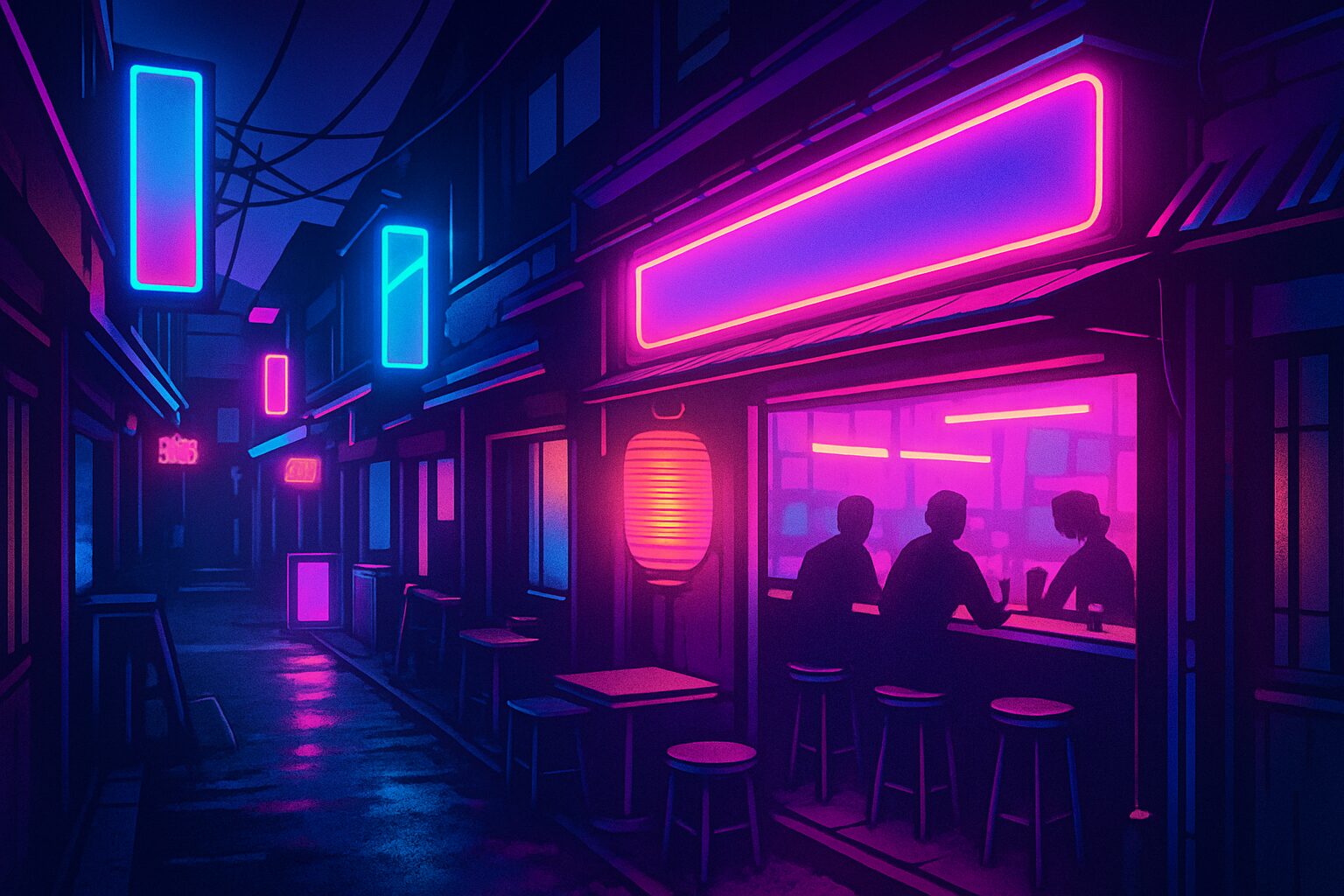
Yo, what’s up. Mia Kim here. Let’s talk about a vibe. Not just any vibe, but a very specific, cinematic one. Picture this: you’re in Tokyo. The city is a dazzling, overwhelming galaxy of neon signs, unfamiliar sounds, and a million people moving with a purpose you haven’t quite figured out yet. It’s electric, but it can also be a little lonely, right? You’re an outsider looking in, floating through a beautiful dream. If this feeling resonates, you’ve probably seen Sofia Coppola’s masterpiece, ‘Lost in Translation’. The film is a whole mood, capturing that unique blend of melancholy, wonder, and the quiet search for connection in a foreign land. While Bob and Charlotte found their moments of solace in the sleek, panoramic views of the Park Hyatt’s New York Bar, the true soul of their Tokyo experience—and the one we’re chasing today—lies in the smaller, more intimate spaces. It’s found in the dimly lit, smoke-filled corners of an izakaya, where salarymen unwind, where a quiet nod from the bartender makes you feel seen, and where the world outside fades away, leaving just the warm glow of a paper lantern and the clinking of glasses. These places are the heart of Tokyo’s nightlife, the real-deal spots where you can step off the tourist track and into a scene straight out of a movie. They’re where you stop feeling like a visitor and start feeling like a part of the city’s pulse. This guide is your key to finding them. We’re not just listing bars; we’re unlocking a feeling. We’re going on a hunt for those cinematic, moody, and utterly unforgettable izakayas that feel like they were made for whispered conversations and life-changing encounters. It’s about more than just good food and drink; it’s about finding your own ‘Lost in Translation’ moment. Let’s get into it.
For a different kind of cinematic Tokyo nightlife, explore the city’s gritty izakayas that feel like a scene from a 2000s film.
What’s the Vibe? Decoding the ‘Lost in Translation’ Izakaya Experience
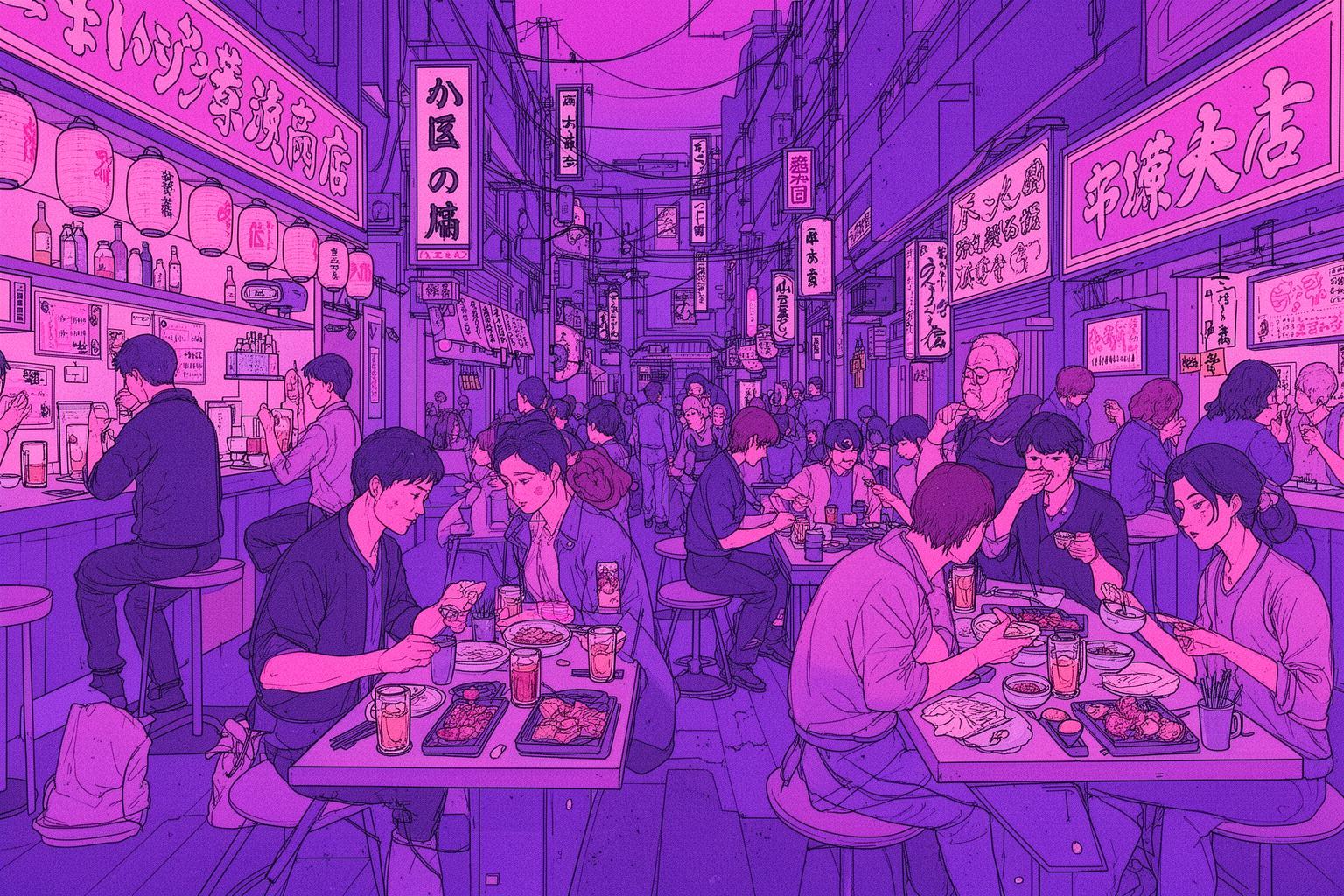
Before we explore specific alleys and neighborhoods, we need to break down the aesthetic. What exactly makes an izakaya feel like it belongs in the movie? It’s not about pinpointing the exact location, but about capturing the essence. The vibe is flawless, a distinct blend of sensory details. First, size matters. We’re talking tiny — ridiculously small. Places seating only five to ten people, tops. The intimacy is key. You’re not in an anonymous club; you’re in someone’s somewhat expanded living room. Seating is almost always at a counter, a well-worn wooden slab that has witnessed decades of spilled sake and resting elbows. This encourages connection, either with the person beside you or, more importantly, with the ‘taisho’ or ‘master’—the owner and chef who quietly orchestrates the entire experience.
Then there’s the lighting. Forget bright, sterile LEDs. We want a warm, amber glow. Light filtering through paper lanterns (akachochin) hanging outside, casting a red hue on the pavement. Inside, it’s about low-watt bulbs, shadows lingering in corners, and just enough light to see steam rising from your oden. This lighting is cinematic gold. It makes everyone look a bit more intriguing, a bit more mysterious. It softens the edges of the world and creates a cocoon from the city’s visual noise. The walls and shelves are often cluttered, but in a curated, soulful manner. Yellowed movie posters, vintage whisky bottles, handwritten menus taped to the wall, photos of regular patrons — a living museum of the bar’s history. These aren’t design choices; they’re layers of time and memory.
The soundtrack is crucial, too. Sometimes it’s the gentle sizzle of yakitori on the grill, the rhythmic chop of a knife, the low murmur of conversation in an unfamiliar language. This is the score of authenticity. Elsewhere, you might hear an old record player spinning city pop, scratchy jazz, or moody blues. The taisho acts as DJ, and their music taste reveals everything about the bar’s soul. It’s the opposite of a curated Spotify playlist; it’s personal and deeply felt. The air itself contributes to the atmosphere. In older izakayas, there’s often a faint, not-unpleasant mix of old wood, stale cigarette smoke (many classic spots still allow smoking), and the savory aroma of dashi broth. It’s a scent that tells the story of countless nights just like this one.
This entire experience sharply contrasts the modern, sterile, or high-energy bars you might find elsewhere. It’s a deliberate step back in time, a rejection of the sleek and new in favor of the worn and soulful. The ‘Lost in Translation’ vibe is about discovering pockets of the past, quiet sanctuaries where time slows down. It’s about the beauty in imperfection — the nicks in the counter, cracks in the pottery, the quiet dignity of a place with nothing to prove. Here, in these unpretentious havens, you can truly feel the film’s quiet, contemplative spirit and find space to simply be yourself, a stranger in a strange land, seeking a temporary home.
The Holy Grail: Shinjuku’s Golden Gai & Omoide Yokocho
When picturing cinematic Tokyo alleys, Shinjuku stands out as ground zero. It hosts two of the city’s most iconic and atmospheric izakaya labyrinths: Golden Gai and Omoide Yokocho. Undoubtedly, they serve as the quintessential starting points for anyone seeking that Bill Murray vibe. Though they resemble preserved film sets, they remain fiercely and vibrantly alive.
Golden Gai: A Maze of Stories
Let’s begin with the legend: Golden Gai. Nestled in a corner of the otherwise futuristic and sprawling Shinjuku, this area is like a time capsule. It’s a preserved post-war block, made up of six impossibly narrow alleys packed with over 200 tiny, two-story bars. Some spots only hold four or five patrons at once. The buildings are haphazardly leaning on each other, with a chaotic web of electrical wires overhead. Stepping into Golden Gai for the first time, especially at night when lanterns glow, feels like entering another dimension. The scale is immediately disorienting but deeply human. Each doorway and steep, narrow staircase leading up to a second-floor bar promises its own unique world.
Historically, Golden Gai attracted artists, writers, musicians, and filmmakers. It was a bohemian hub, and that creative, slightly rebellious spirit still lingers. This isn’t a place for loud parties or big groups; it’s a space for conversation, listening, and soaking in the atmosphere. The vibe prioritizes finding your tribe over getting drunk. Many bars showcase themes reflecting their owners’ passions—’80s punk rock, vintage French cinema, arthouse photography, or even medical memorabilia. Peeking through the tiny windows while wandering by is part of the experience, offering glimpses into these self-contained worlds.
Now, a bit of practical advice—Golden Gai can be intimidating at first. Many bars charge a cover fee, called ‘otoshi’ or ‘sekiryo,’ ranging from 500 to 1500 yen, usually including a small snack. Don’t think of it as a tourist tax; it’s standard and helps sustain these tiny businesses. Also, some bars fiercely guard their regulars and may display ‘Members Only’ signs or turn away newcomers, especially foreigners. Don’t take it personally—it’s about preserving their intimate atmosphere. The trick is to look for bars with English menus or ‘Welcome’ signs. A good approach is to stroll the alleys, sense the mood, and choose a place where the taisho makes eye contact or offers a nod. Once inside, the experience is magical—you’ll find yourself shoulder-to-shoulder with other patrons, and conversations often spark naturally. This is where you might share a deep, unexpected chat with a local architect or traveling musician. It’s the ultimate ‘Lost in Translation’ moment.
Omoide Yokocho: Memory Lane’s Smoky Embrace
A short walk from Golden Gai, just west of Shinjuku Station, lies another legendary spot with a completely different but equally cinematic energy: Omoide Yokocho. Its name means ‘Memory Lane,’ though it’s more famously known as ‘Piss Alley,’ a holdover from post-war times when sanitation left much to be desired. Today, it’s cleaner but retains a gloriously gritty and unpretentious soul. While Golden Gai is about intimate drinking dens, Omoide Yokocho is a full-sensory assault, especially on smell and taste. The alley is perpetually clouded with smoke—not from cigarettes but from dozens of yakitori grills working overtime.
The atmosphere here is rustic and lively. The ‘bars’ are more like open-fronted stalls, with tiny wooden counters and stools spilling into the narrow pathway. You’re literally rubbing elbows with passersby. It’s loud, chaotic, and absolutely wonderful. The main attraction is the food—especially yakitori (grilled chicken skewers) and motsuni (stewed offal). This is Tokyo’s blue-collar soul food at its best. Salarymen with loosened ties grab a quick beer and a few skewers before catching the last train home. It feels genuinely authentic, a slice of everyday Tokyo life.
Ordering is straightforward. Find a seat (if lucky!), order a beer (‘biru’) or lemon sour, and point to the skewers you want from the sizzling grill before you. Don’t hesitate to try everything—from classic ‘momo’ (thigh) and ‘negima’ (leek and chicken) to more adventurous cuts like ‘hatsu’ (heart) and ‘kawa’ (skin). It’s all delicious, kissed by charcoal and smoke. The pace is quick—people don’t linger for hours. This is a place to refuel, relax briefly, and move on. Yet, during that short time, you are fully immersed. The billowing smoke, the chorus of ‘Irasshaimase!’ (Welcome!), and the clatter of plates create a symphony of the city. While Omoide Yokocho lacks the quiet reflection of Golden Gai, it offers another ‘Lost in Translation’ experience—the feeling of being swept up in the beautiful, chaotic, and savory rhythm of Tokyo’s working-class heart.
Shibuya’s Secret: Nonbei Yokocho (Drunkard’s Alley)
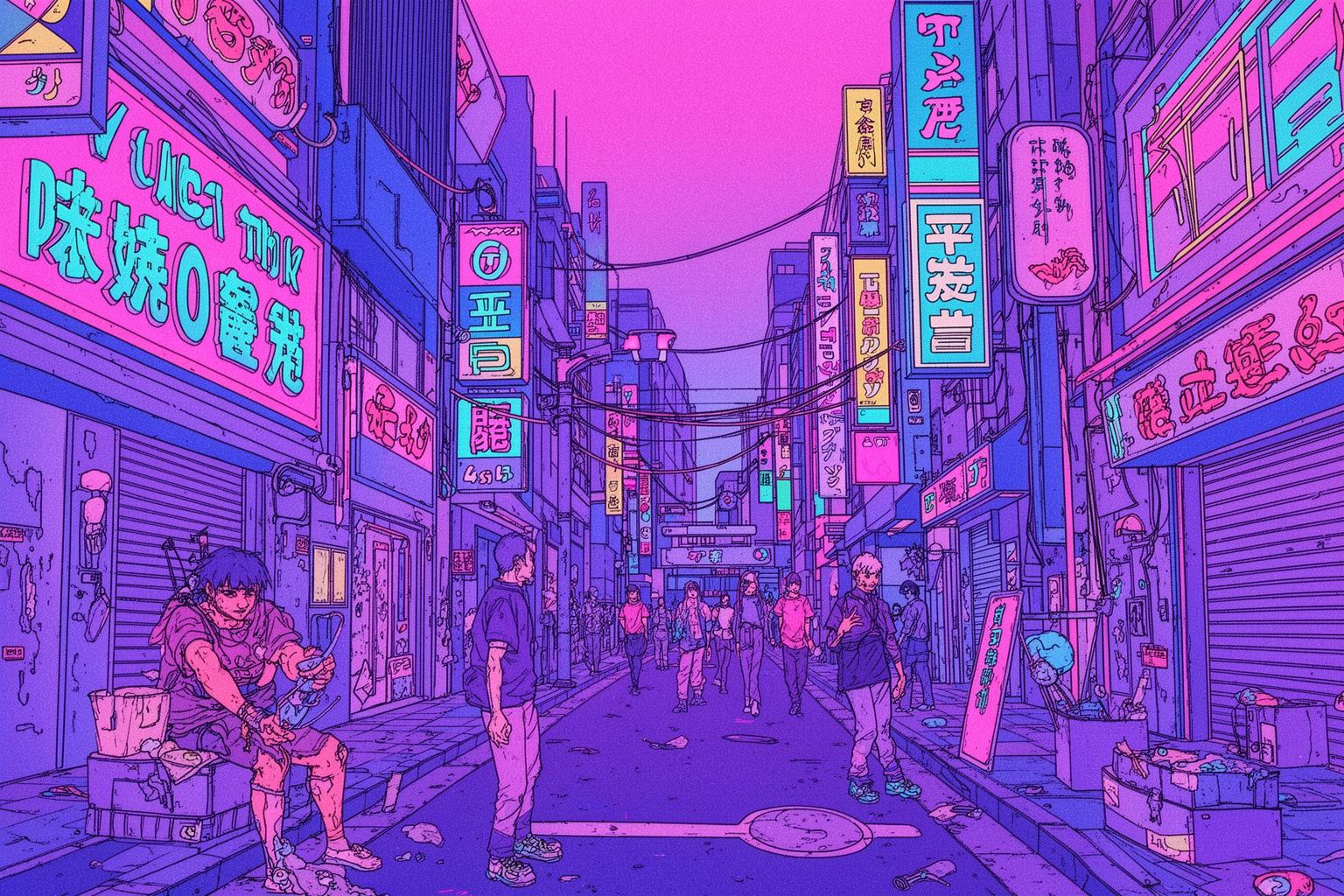
Everyone associates Shibuya with its famous scramble crossing—a mesmerizing, overwhelming surge of people and massive video screens. It stands as the symbol of hyper-modern Tokyo. Yet, just a stone’s throw from that futuristic turmoil lies a small, lantern-lit gateway to the past: Nonbei Yokocho, or “Drunkard’s Alley.” Discovering it feels like uncovering a secret level in a video game. One moment you’re engulfed in the sensory overload of 21st-century Tokyo, and the next, you step into a quiet, narrow alley that seems frozen in time since the 1950s. This striking contrast is what makes Nonbei Yokocho so unique and an ideal spot for a cinematic escape.
Compared to its Shinjuku counterparts, Nonbei Yokocho is smaller and somewhat more refined. It consists of two parallel lanes lined with about 40 tiny bars and eateries. The atmosphere strikes the perfect balance between the bohemian, conversation-centered bars of Golden Gai and the smoky, food-focused stalls of Omoide Yokocho. Here, you’ll find some of the city’s best yakitori, tranquil oden spots where ingredients quietly simmer in a rich broth, and cozy bars operated by the same families for generations.
The lanterns emit a soft, welcoming glow, and the relative calm compared to the rest of Shibuya is almost startling. It’s a place to pause and breathe. You can take a seat at the counter, order a hot sake, and simply observe the handful of people strolling by. It’s an ideal spot for solitary reflection, journaling, or having a quiet one-on-one conversation. The bar owners, often older, carry the neighborhood’s history with them. While they may not speak much English, a smile and respectful demeanor go a long way. They have witnessed Shibuya’s transformation from a quiet district into a global icon, all from behind their small wooden counters.
One of the best ways to enjoy Nonbei Yokocho is to see it as a peaceful refuge. After the exhilarating chaos of the scramble crossing, stepping into this alley feels like a treat. Pick a place that appeals—perhaps an oden spot on a chilly night where you can point to daikon radish, tofu pouches, and fish cakes to sample. The gentle steam and subtle flavors offer great comfort. Or settle into a tiny yakitori joint and savor each perfectly grilled skewer. Nonbei Yokocho provides a powerful “Lost in Translation” moment by revealing Tokyo’s dual nature. It shows how the city’s past and future coexist, often just inches apart. It’s a reminder that even in the most crowded, futuristic places on Earth, you can still find pockets of quiet, human-scale tradition when you know where to look.
Beyond the Famous Alleys: Finding Your Own Cinematic Spot
While the famous yokocho (alleys) offer essential experiences, the true spirit of ‘Lost in Translation’ often lies in the joy of discovery. It’s about unexpectedly finding a spot that isn’t listed in any guidebook, a place that feels uniquely yours for the night. To experience this, you need to venture beyond the main hubs and explore Tokyo’s equally cool but more understated neighborhoods. Here, you’ll discover the next generation of soulful izakayas and uncover the city’s genuine local character.
Neighborhoods like Shimokitazawa, Koenji, and Kichijoji serve as treasure troves for this type of exploration. They are Tokyo’s creative centers, famed for their vibrant vintage clothing shops, independent record stores, small theaters, and live music venues. The izakayas here embody an artsy, laid-back atmosphere. They are less focused on tourists and more dedicated to serving the local communities of students, artists, and musicians. Walking through Shimokitazawa’s streets after dark, you’ll notice numerous noren curtains hanging over modest entrances. Peek inside, and you may find a standing bar (tachinomi) crowded with young creatives, a cozy spot specializing in craft sake, or a place devoted to Okinawan food and music.
The joy lies in the search. The approach is simple: get off at the station, choose a direction, and start walking. Follow the lanterns. Let your curiosity lead you. Look for places with handwritten menus, the sound of laughter drifting out, or an intriguing facade. These neighborhoods feel less like the towering metropolis of Shinjuku and more like a collection of villages, each with its own unique personality. Koenji, for instance, carries a punk rock vibe, and its izakayas often have a grittier, raw edge. Kichijoji, near the beautiful Inokashira Park, offers a slightly more relaxed, family-friendly atmosphere, but its Harmonica Yokocho is a lively maze of tiny eateries and bars that come alive at night.
For a somewhat more modern yet equally vibrant alleyway experience, try Ebisu Yokocho. Located in the slightly upscale Ebisu district, this is a contemporary reinterpretation of the classic yokocho. It’s a single covered arcade filled with a variety of food and drink stalls, from mushroom specialists to wine bars to gyoza masters. The vibe is loud, social, and incredibly fun. Though it lacks the Showa-era grit of Omoide Yokocho, it offers a different kind of connection—a place where it’s easy to strike up conversations across tables and share dishes from various stalls. It’s a more boisterous, communal ‘Lost in Translation’ moment—less quiet reflection, more shared celebration.
The key tip for finding your own spot is to learn to recognize the signs. The single red paper lantern (akachochin) is the universal symbol for an izakaya. A noren, the short fabric curtain hanging in the doorway, indicates the establishment is open. Pushing it aside and stepping in represents a symbolic crossing into another world. Don’t hesitate to try a place even if you can’t read the menu. A smile, some pointing, and a spirit of adventure will reward you with an experience truly your own. This is the essence of the film’s message: the most meaningful moments happen when you step outside your comfort zone and allow yourself to get a little lost.
Izakaya 101: The Unspoken Rules & How to Order Like a Pro
Alright, so you’ve found a spot that seems like the perfect cinematic hideaway. What’s next? Stepping into a small, local izakaya for the first time can feel a bit intimidating. But honestly, it’s super laid-back once you get the basic flow. Here’s a quick guide to the etiquette and ordering process to help you navigate the experience like a pro.
When you enter, you’ll be greeted with a loud, cheerful “Irasshaimase!” (Welcome!). The taisho or staff will probably ask how many people are in your group (“Nan-mei-sama desu ka?”). Just hold up the corresponding number of fingers. They’ll then show you to a seat, which in these cozy spots is almost always at the counter. It’s the best seat in the house, giving you a front-row view of all the action.
Once seated, you’ll likely be handed a hot, damp towel called an “oshibori.” Use it to wipe your hands, then fold it neatly and set it aside. Soon after, you’ll receive a small appetizer you didn’t order—this is the “otoshi.” It’s a compulsory dish and serves as your table charge. Don’t worry; it’s not a scam. It’s a long-standing part of izakaya culture. The cost is usually a few hundred yen and is meant as a gesture of hospitality. Just enjoy it as part of the experience.
First things first: drinks. The classic opening line in Japan is “Toriaezu, biru!” which means “For now, beer!” It’s a way to get started while you check the menu. Japanese draft beer (“nama biru”) is always a reliable pick. If beer’s not your thing, highballs (whisky and soda) are very popular and refreshing. For a uniquely Japanese option, try a lemon sour or a “chu-hai” (shochu highball) with flavors like grapefruit or oolong tea.
Next, food. Izakaya menus focus on small plates meant for sharing, similar to Spanish tapas. The idea is to order several dishes gradually throughout the evening instead of one large meal. The menu might be all in Japanese—don’t panic. This is where your sense of adventure comes into play. You can ask for an “osusume” (recommendation) or, if you’re unsure, point to what others are enjoying. Some must-try classics include “karaage” (Japanese fried chicken, always a hit), “edamame” (a timeless favorite), “agedashi tofu” (deep-fried tofu in a savory broth), and, of course, “yakitori” if available. For something a bit more daring, try “ei-hire” (grilled stingray fin), a chewy, savory treat that pairs perfectly with sake.
Speaking of sake, it can be intimidating to dive in. A good starting point is to ask for a “tokkuri” (small flask) of the house hot sake (“atsukan”) or cold sake (“reishu”). The taisho will generally choose a solid, drinkable option for you. When drinking with others, the etiquette is to pour for everyone else at the table, but never for yourself. Someone should always fill your cup—it’s a lovely sign of mutual respect.
When you need the server’s attention to order more or ask for the check, the magic word is “Sumimasen!” (Excuse me!). To request the bill, say “O-kaikei onegai shimasu.” In many traditional izakayas, you’ll pay at the front register on your way out, so it’s a good idea to carry cash, as some smaller places don’t take credit cards. Saying a simple “Gochisosama deshita” (Thank you for the meal) as you leave is a polite way to show your gratitude. Following these easy steps will make your visit smoother and show cultural respect that the taisho and other guests will definitely appreciate. It’s the key to turning a good night into a great one.
More Than Just a Drink: The Cultural Soul of the Izakaya
To fully appreciate the cinematic essence of a great izakaya, it’s important to grasp its significance in Japanese society. An izakaya is far more than simply a bar or restaurant. Sociologists describe it as a ‘third place’—a vital setting that is neither home (the first place) nor work (the second place). It serves as a sanctuary, a community center, and a place of release. For many Japanese, especially the diligent salarymen often portrayed in films and anime, the izakaya is a key part of daily life. It’s where the strict social hierarchies of the workplace temporarily dissolve over a few drinks. It’s a space to vent frustrations about one’s boss, celebrate small successes, or simply sit in comfortable silence, knowing you are among equals.
This is why these venues are charged with human drama and emotion, making them ideal cinematic backdrops. They are stages where the subtle, quiet narratives of everyday life unfold. Consider the themes of ‘Lost in Translation’—loneliness, alienation, and the quest for genuine connection. The izakaya responds directly to these emotions. It’s a place built for connection, whether through the lively camaraderie of colleagues or the silent, mutual understanding between a solo drinker and the bar’s master. The taisho is the guardian of this sacred space. More than just a chef or bartender, they are a confidant, a listener, and the pillar of the community gathered around their counter. The bond between the taisho and their regulars, formed over countless shared evenings, is the invisible framework that holds the place together.
For travelers, entering one of these establishments offers a deep cultural immersion. You move beyond being a passive observer to become a temporary participant in the local ecosystem. You’re not merely observing the culture; you are sitting inside it, absorbing it. The quiet rituals—the pouring of sake, the serving of the otoshi, the final nod of thanks—are all parts of a social fabric woven over centuries. The izakaya tradition dates back to the Edo period, when sake shops began allowing customers to sit and drink on-site, eventually adding small snacks alongside the alcohol. That humble beginning is still evident in the unpretentious nature of even the most cherished izakayas today.
This is why seeking the ‘Lost in Translation’ vibe isn’t about finding a trendy, visually stylish bar. It’s about discovering a place with soul. It’s about finding a venue that feels lived-in, a place where the walls have absorbed thousands of conversations. When you sit at that worn wooden counter, you become part of a long line of people who have sought refuge, comfort, and connection in that very spot. You share the space with the ghosts of salarymen past and the dreams of the person beside you. In those moments, surrounded by the quiet murmur of a language you don’t speak, you experience a profound sense of peace and belonging. You might be alone, but you aren’t lonely. And that feeling embodies the entire film, captured in a single, perfect glass of sake.
So go ahead, chase that feeling. The neon-lit streets of Tokyo await, hiding countless small pockets of warmth and humanity within them. That cinematic, ‘Lost in Translation’ moment you seek won’t happen in a sterile hotel bar or a tourist-filled hotspot. It’s waiting for you down a narrow, lantern-lit alley, behind a simple noren curtain. Be bold. Be curious. Push aside the curtain and step inside. You may not understand every word on the menu or every nuance in the conversation around you, but you’ll grasp the feeling. It’s a feeling of being found just when you thought you were completely lost. For relaxing times, make it Suntory time… or perhaps just a highball at a ten-seat bar where the master knows your drink before you do. The best stories wait in the places you least expect. Go find them.