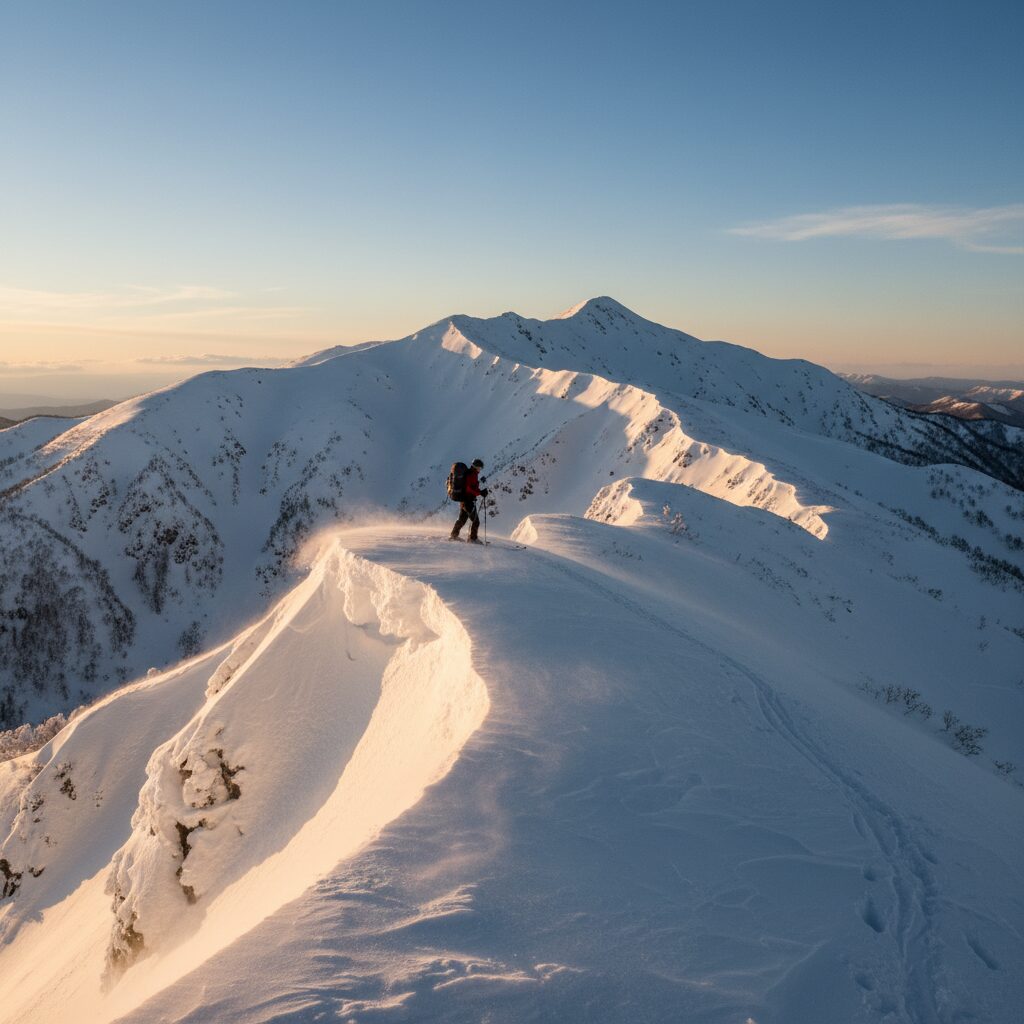
Yo, what’s up, world travelers and adventure seekers. Keiko here, coming at you straight from the concrete jungle of Tokyo, but my mind? My mind is somewhere else entirely. It’s lost in the deep, untamed, and straight-up legendary wilderness of Hokkaido’s Hidaka Mountains. Forget what you think you know about hiking in Japan. We’re not talking about the weekend warrior trails or the Insta-famous peaks with perfectly placed vending machines. Nah, we’re talking about the final boss. The real deal. The Hidaka range is Japan’s raw, unfiltered soul, a jagged spine of mountains stretching for 150 kilometers, so remote and rugged that it feels like stepping back in time. This isn’t just a trek; it’s a full-on expedition into a world where nature is unapologetically in charge. It’s a place that demands respect, rewards the prepared, and leaves an indelible mark on anyone bold enough to answer its call. This is the kind of trip that changes your entire perspective, the kind of story you’ll be telling for years. So, if you’re craving an adventure that’s less about the ‘gram and more about the grit, buckle up. We’re about to dive deep into the heart of Japan’s last great wilderness. It’s a whole vibe, and I’m here to spill all the tea on how you can experience it. No cap.
Before you set out, it’s worth learning about the region’s rich Ainu culture and crafts in Nibutani.
The Vibe Check: What Makes Hidaka a Different Beast

First things first, let’s set the scene. The Hidaka Mountains are not the Japan Alps. They’re not Mount Fuji. They are, for lack of a better term, wilder. Think of the Alps as a beautifully curated gallery of peaks—accessible and well-documented. The Hidakas, by contrast, are like a hidden artist’s studio: chaotic, raw, and fiercely private. The atmosphere here is thick with solitude. You can walk for days without seeing another soul, your only companions the whistling pikas, the stoic Ezo-shika deer, and the undisputed rulers of this realm, the Higuma, or Ussuri brown bears. The mountains themselves are geologically distinct, sharper and more rugged than their central Honshu counterparts. Glaciers carved deep, U-shaped valleys, leaving behind knife-edge ridges called ‘kirettos’ that will test both your nerve and your balance. The trails, where they exist, are often nothing more than faint suggestions—paths shaped by animals, washed away by streams, or swallowed by thigh-high bamboo grass known as ‘sasa’. The challenge here isn’t just elevation; it’s the terrain itself. You’ll be engaging in ‘sawa-nabori,’ the very real and very wet practice of hiking directly up riverbeds, and ‘yabu-kogi,’ the art of literally swimming through dense bamboo thickets. It’s a full-body workout and a mental challenge of the highest order. The feeling you get out here is one of profound insignificance before overwhelming nature. It’s humbling. The air carries the scent of damp earth, pine, and the clean, metallic aroma of snowmelt. The silence is so complete it feels loud, broken only by the rush of wind over a col or the distant cry of a hawk. This isn’t a place you conquer; it’s a place you’re granted temporary passage through, and that sensation—that deep, primal connection to a world untouched by the manicured perfection of modern Japan—is the ultimate reward. It’s a high-key spiritual experience, low-key terrifying at times, and 100% unforgettable.
The Legendary Traverse: Your Main Quest
A multi-day traverse is the ultimate Hidaka experience. This is the pilgrimage. The classic north-to-south route, or portions of it, demands careful planning and complete self-reliance. Unlike other popular mountain ranges in Japan, you won’t find a network of cozy mountain huts (‘sanso’) offering hot meals and futons. Here, your home is on your back. Your tent is your fortress, your sleeping bag your refuge. This dedication to self-sufficiency defines a Hidaka trekker. It’s a mark of honor, a testament to your skills and preparation.
Gearing Up: The Essentials
Let’s be clear: you don’t simply arrive at the Hidakas unprepared. You gear up as if for a mission. Your equipment isn’t just for comfort; it’s your lifeline. You need a durable, four-season tent capable of withstanding the fierce Hidaka winds that sweep over the ridges without warning. A warm sleeping bag and insulated pad are critical, as even summer nights can plunge to near freezing. Your cooking system must be dependable, and you should carry enough fuel and food for your entire itinerary, plus at least two extra days for emergencies. Weather can trap you in your tent for a day or more. Water is abundant from the streams but must be treated. The risk of the Echinococcus parasite, carried by foxes, is very real. A reliable filter or purification tablets are absolutely necessary. Then there’s the bear situation. You must remain bear-aware at all times. This means carrying a bear bell to alert wildlife, storing food in a bear canister or hanging it properly away from your tent, carrying bear spray, and knowing how to use it. It’s not about fear, but about being smart and respectful. This is their home; you’re just a visitor. Your pack will be heavy, but every item serves a purpose. Packing for the Hidakas is an art—balancing necessity and weight. Get it right, and you’re set. Get it wrong, and the mountains will show no mercy.
The Iconic Ridges and Unforgettable Challenges
The core of the traverse is the ridgeline. Picture this: you break camp at dawn, the world bathed in a gentle alpine light. You ascend from a forested valley onto an exposed ridge, and suddenly the entire world opens before you. To your left and right, a sea of peaks stretches out, layers of blue and purple fading into the distance. The trail becomes a narrow walk along a granite spine, with sheer drops on both sides that make your stomach flutter. This is the thrill of the ‘kiretto’. Sections like the traverse near Mount Poroshiri, the highest peak in the range, are famed for their exposure and scrambling. You’ll use your hands as much as your feet, finding holds in the rock and pulling yourself over obstacles. It’s a dance of precision and focus. But the challenge isn’t only in the high-wire sections. The valleys bring their own tests. Many peak approaches involve ‘sawa-nabori’, where the trail is literally the river. You’ll hop across rocks, wade through knee-deep, icy water, and use the terrain to navigate. It’s slow, demanding work that needs waterproof boots and tolerance for soaking. Then there’s the ‘yabu-kogi’. Here the trail vanishes into dense ‘sasa’ bamboo. The only option is to push through. You become a human bulldozer, parting the sea of green, following your compass and trusting the ridge or river is on the other side. It can be frustrating, exhausting, and disorienting. But the moment you emerge, covered in leaves and sweat, there’s a raw sense of accomplishment that no well-maintained trail could ever give. These challenges capture the essence of the Hidaka experience. They’re the test, the rite of passage that makes the summit views even more rewarding.
Flora, Fauna, and the Bear in the Room
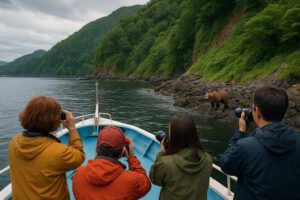
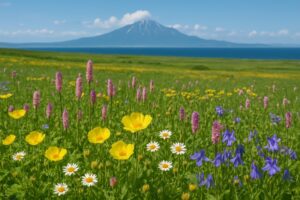
Beyond its rugged geology and physical demands, the Hidaka range is a sanctuary of remarkable biodiversity. The ecosystem here is a precious relic. As you climb, the forest shifts from mixed broadleaf trees to fragrant spruce and firs, until you break the treeline and enter the alpine zone. This is where the magic unfolds. During the brief summer, these high-altitude meadows burst with color. You’ll find blankets of delicate alpine flowers unique to Hokkaido, like the deep pink ‘Ezo-no-tsugazakura’ and the fluffy ‘Chishima-fugoro’. These tiny, hardy plants are proof of life’s tenacity in this harsh environment. If you look closely among the scree slopes, you might catch the high-pitched squeak of a ‘nakiusagi’, or pika — a tiny, endearing relative of the rabbit that looks like a real-life Pokémon. They dart between rocks, gathering food for the long winter ahead. But the true MVP of the Hidaka ecosystem is the ‘Higuma’ brown bear. Spotting one is both terrifying and profoundly moving. These are magnificent, powerful animals, with one of Japan’s healthiest bear populations living here. Your entire trek is undertaken with the constant awareness that you’re sharing their territory. You make noise, watch for tracks and scat, and never leave food unattended. While encounters are rare if you follow safety protocols, preparedness is key. Seeing a bear from a safe distance, quietly foraging across a mountainside, is a humbling reminder of who truly rules this land. It’s a profound privilege that solidifies the feeling that you’re in a wild place, far removed from the safety and predictability of the city.
Timing Is Everything: The Seasonal Glow-Up
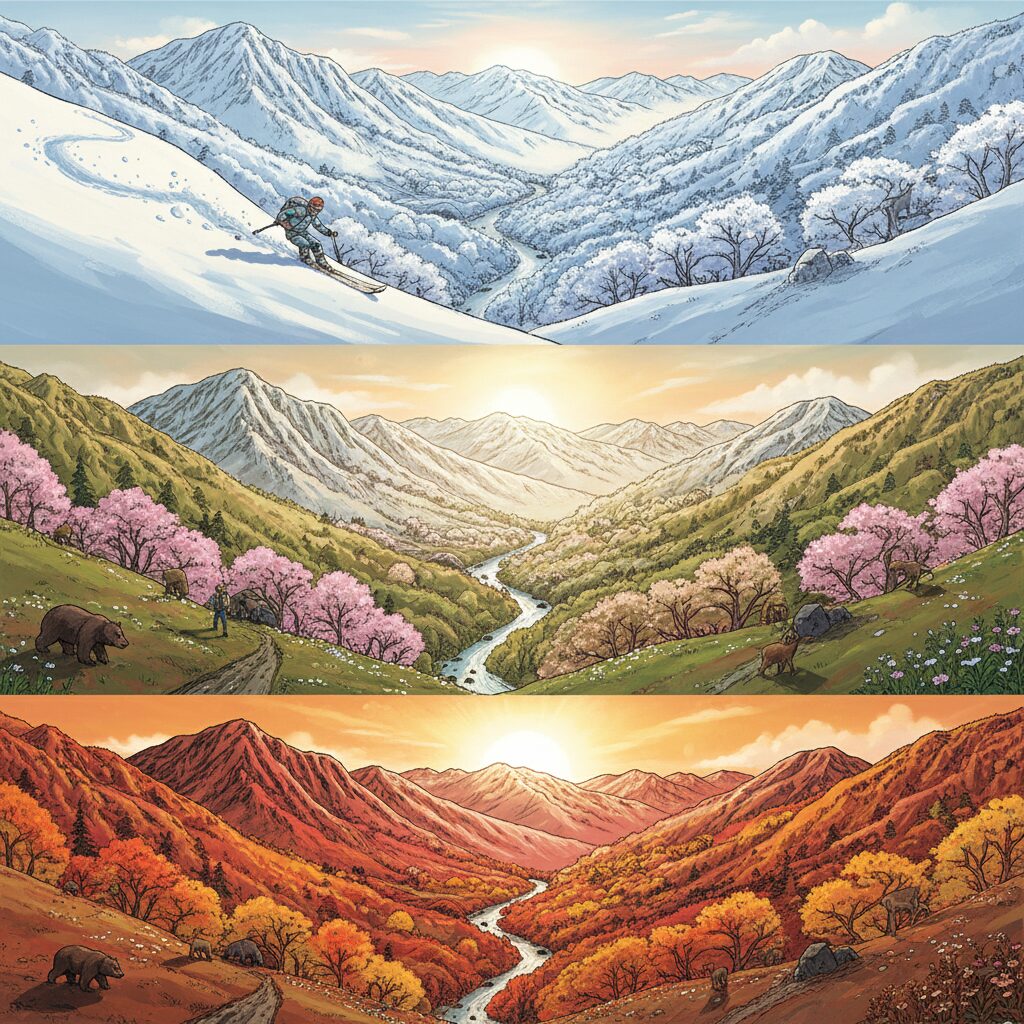
The window of opportunity for trekking in the Hidakas is brutally brief. This isn’t a year-round destination. Your entire itinerary will depend on a few precious months when the mountains are accessible to hikers who aren’t at expedition level. Choosing the right time to go is probably the single most crucial decision you’ll make.
Summer’s Peak: The Green Dream
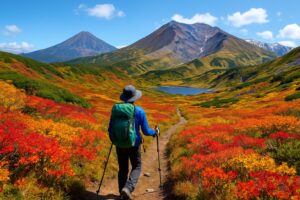
The main season begins in late July and extends through August. This is prime time, no doubt. The last of the heavy winter snow has finally melted from the high passes, opening up the traverse routes. The mountains are at their most vibrant, bursting with fifty shades of green. Alpine flowers bloom fully, splashing the high meadows with purple, yellow, and white. The days are long, giving you ample daylight for those grueling climbs and complex route-finding. The rivers, while still cold, are usually at their lowest and most manageable levels for ‘sawa-nabori’. The weather is at its most stable, though ‘stable’ in the Hidakas is a relative term. You can still expect rain, sudden thick fog, and powerful winds. But this is your best chance for a classic, successful traverse. The energy is electric; the mountains’ life force buzzes all around you. It’s a sensory overload in the best way possible.
The Autumn Flex: A Brief, Fiery Farewell
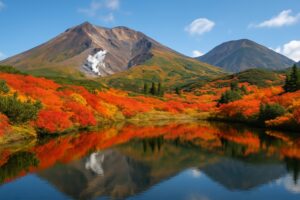
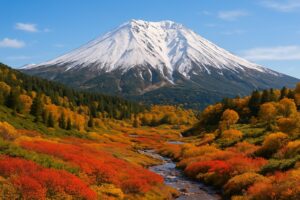
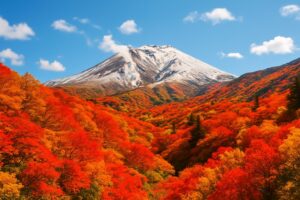
By early September, the atmosphere shifts. The air acquires a sharp, sudden crispness, and the mountains begin their spectacular autumn transformation. The ‘koyo’, or autumn foliage, in the Hidakas is extraordinary. Japanese rowan trees ignite in fiery reds and oranges, while Erman’s birches turn a brilliant shimmering gold. The ‘sasa’ bamboo fades to pale yellow, contrasting beautifully with the dark green conifers and gray granite peaks. The landscape is breathtaking—a masterpiece of natural art. Hiking during this period is quieter, more melancholic. The already sparse crowds thin out further. The bugs are gone, which is definitely a plus. However, the weather window becomes significantly more volatile. Days shorten, nights grow colder, and the first snow dustings on the highest peaks starkly remind you that winter is coming. It’s a high-stakes, high-reward time to visit. The beauty is insane, but you must be sharp, watch the forecast like a hawk, and be ready to change plans or bail at a moment’s notice.
The No-Go Zones: Winter and Spring’s Iron Grip
From October through early July, the Hidaka Mountains become a completely different world. They are buried under meters of snow, battered by Siberian winds, and become an extreme, high-angle environment dominated by avalanche risk. This is the realm of professional mountaineers on full-scale expeditions. For the average trekker—even a highly experienced one—this period is a firm no-go. Access roads are closed, trails vanish, and objective dangers skyrocket. Seriously, unless you have elite winter mountaineering and survival skills, don’t even consider it. It’s just not the move. The Hidakas demand patience. Waiting for the proper summer season is part of the respect they command.
Access & Logistics: The First Challenge Is Just Getting There
Part of the Hidakas’ allure and mystique lies in their sheer inaccessibility. There are no cable cars or scenic bus routes leading to a convenient starting point. The journey begins well before you lace up your boots. The logistical challenge of merely reaching the trailhead acts as the first filter, deterring casual visitors. You have to truly, truly want it.
The Trailhead Puzzle
Reaching the start of your trek is an adventure in itself. The main entry points lie at the end of long, often unpaved forest service roads called ‘rindo.’ These roads are frequently in poor condition, prone to washouts, and often closed to private vehicles. For popular trailheads, such as Mount Poroshiri’s, you may need to reserve a spot on a specific shuttle bus that navigates these dangerous routes. This requires booking weeks or even months ahead, along with a good understanding of Japanese or a friend to help with the reservation process. For less frequented routes, you might be able to drive partway, but you could face a multi-hour walk along a gated road just to reach the official trailhead. This should be accounted for in your daily mileage and planning. Renting a car is essential. Public transport can take you to towns on the mountain range’s outskirts, like Biratori or Shinhidaka, but it won’t get you into the remote valleys where the trails begin. The best strategy is to fly into New Chitose Airport (CTS) near Sapporo, rent a rugged vehicle (a 4WD is advisable), and stock up on supplies in a larger city before heading toward the mountains. It’s a serious commitment, and this initial hurdle is exactly what keeps the Hidakas so pristine and uncrowded.
The Culture: Ainu Roots and the Soul of the Mountains

Trekking in the Hidaka Mountains means walking through sacred land. This area forms the heart of Ainu Mosir, the ‘land of the human beings’ in the language of the indigenous Ainu people of Hokkaido. The mountains are more than just geological features; they carry deep spiritual significance. Many of the place names you might find difficult to pronounce actually come from the Ainu language and reflect the true nature of the locations. Poroshiri-dake, the tallest peak, translates to ‘Great Mountain.’ Tottabetsu-dake can be interpreted as ‘River of the Box-Like Gorge.’ These names represent a living link to a culture that perceives the divine, or ‘kamuy,’ in every part of the natural world. The bears, rivers, and peaks themselves are all powerful ‘kamuy.’ Approaching a hike here with this mindset turns the journey from a simple physical challenge into a pilgrimage. You are traversing a landscape honored for centuries. This adds depth and a sense of responsibility to your experience. You are not merely a tourist; you are a guest in a place of profound cultural and spiritual significance. This viewpoint fosters greater respect, softer footsteps, and a deeper appreciation for the wild beauty that the Ainu have always revered as sacred.
Pro Tips for Your Hidaka Saga
Alright, let’s dive into the details. Here’s some honest advice to help you survive and thrive out there—stuff that guidebooks often skip over. First, about that water. It may look like the purest, most refreshing water on earth, flowing straight from the snowfields. And it is. But the unseen danger of the Echinococcus parasite from fox droppings is a real threat. It can lead to severe liver disease years later. So no matter how tempting, you must treat every single drop you drink. No exceptions. Invest in a quality filter like a Sawyer Squeeze or Katadyn BeFree, and carry some chemical tablets as a backup just in case. Your future self will thank you. Second, Hokkaido’s weather is notoriously unpredictable—it has zero chill. You can start your day under bright sunshine and be caught in gale-force winds and sideways rain within a couple of hours. Temperatures can plunge 15 degrees Celsius almost instantly when a front arrives. Your layering system must be solid: base layer, fleece, and a top-tier waterproof and windproof hardshell jacket and pants. Keep everything in dry sacks inside your backpack; a wet sleeping bag isn’t just uncomfortable, it’s dangerous. Third, navigation. Never rely solely on your phone or GPS. Batteries die, electronics fail, and cell service disappears as soon as you leave the car. You need physical, waterproof topographic maps and the skills to use them. Carry a compass and know how to use it. Many trail sections are poorly marked or unmarked altogether. In frequent whiteouts, where visibility is less than ten feet, your map and compass are the only tools that will get you safely to your next campsite. Lastly, practice Leave No Trace principles as if your life depends on it—because the wilderness’s life truly does. Pack out everything you bring in, including food scraps. Use designated toilet areas when available, or learn how to properly dig a cathole far from water sources. Don’t build campfires. Keep streams clean. The goal is to pass through this pristine environment and leave it just as you found it. Be a good human.
This isn’t a trip to decide on a whim. The Hidaka traverse is a serious challenge that will test you physically and mentally. It will break you down and build you back up. You’ll face moments of pure exhaustion and doubt, wondering why you ever signed up. But you’ll also experience moments of breathtaking beauty and clarity that can’t be found anywhere else. You’ll watch sunrises turn peaks pink and gold through your tent door, feel the thrill of exposure on a knife-edge ridge, and gain a profound sense of self-reliance and achievement that will stay with you forever. The Hidaka Mountains are a challenge, a trial, and a gift. They offer a glimpse of a wilder, more ancient Japan—a place that refuses to be tamed. The mountains are calling. The question is: are you ready to answer?