Alright, let’s get real for a sec. We’re all chasing that elusive moment of chill, that perfect pocket of peace in a world that’s constantly yelling at us. You might think you’ve found it with a meditation app or a beach holiday, but I’m here to spill the tea on a whole other level of zen, a vibe so deep it feels like it’s rewiring your soul. We’re talking about Japan’s audiophile kissatens, these low-key, high-fidelity temples of sound where time slows down and the only thing that matters is the music vibrating through your bones. Forget your Spotify playlist on tinny earbuds. This is the real deal, a full-body sonic experience, and the genre of choice for ultimate tranquility? Japanese ambient music, or Kankyō Ongaku. It’s not just background noise; it’s the main character, and you’re invited to listen. These aren’t just coffee shops; they are sanctuaries, time capsules from a bygone era, lovingly preserved by masters who have dedicated their lives to the art of pure, unadulterated sound. It’s a uniquely Japanese cultural phenomenon, a deep dive into a world where every crackle of vinyl and every drop of pour-over coffee is part of a sacred ritual. It’s a whole mood, an experience that will stay with you long after you’ve left. This guide is your backstage pass, your deep-dive into how to find and vibe with these incredible spaces. Ready to tune in and drop out? Let’s go.
To fully appreciate these sanctuaries, one should also explore the distinct culture of Japan’s meikyoku kissa.
The Vibe Check: What’s an Audiophile Kissaten Really Like?

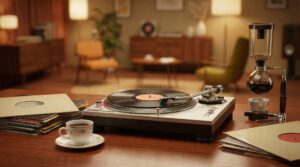
First things first, let’s set the scene. Stepping into an audiophile kissaten, also called a meikyoku kissa (masterpiece café) or jazz kissa, feels like entering another realm. The instant you push open the heavy wooden door, the chaotic energy of Tokyo’s streets fades away, replaced by a deep, reverent silence. It’s a sensory shift that can feel quite startling at first, but your body soon adapts to the slower pace. Your eyes take a moment to adjust to the dim, atmospheric lighting, typically provided by a few carefully positioned vintage lamps emitting a warm, amber glow. The air often holds the rich, comforting aroma of dark-roast coffee, mingled with a faintly sweet scent of aged wood and old paper from the stacks of records lining the walls. It’s a scent that evokes nostalgia, even if it’s a past you’ve never personally known.
The decor usually pays homage to a particular era, most commonly the Showa Period (1926-1989). Think dark wood paneling, well-worn leather armchairs perfect for sinking into for hours, velvet curtains, and perhaps a few framed, faded posters of jazz icons or classical composers. Yet the undeniable focal point, the altar to which all pay homage, is the sound system. This isn’t some inconspicuous Bluetooth speaker tucked away—instead, colossal, furniture-sized speakers often vintage models from renowned brands like JBL, Tannoy, or Altec Lansing dominate the space like ancient monoliths. Nearby stands the turntable, a sleek piece of precision engineering, alongside the warm, mesmerizing glow of vacuum tube amplifiers, their glass valves radiating a soft, ethereal light. This isn’t just gear; it’s a shrine to sound, and the entire room is acoustically arranged to honor it.
At the core of this sanctuary is the ‘master’—the owner and curator of the space. This person is more than a barista; they’re the guardian of the atmosphere, the DJ, the high priest of high fidelity. Often an older gentleman, though not always, the master moves with quiet, purposeful elegance. They might be carefully polishing a record before placing it on the platter, fine-tuning a knob on the amplifier by a hair’s breadth, or preparing your coffee with the intense focus of a surgeon. There’s an unspoken understanding that you’re entering their world, their carefully crafted domain, and your presence is to honor it. This reverence is central to the experience. It’s why strict rules often apply: no loud conversations, no phone calls, and frequently, an outright ban on photography. In some of the more serious establishments, even speaking softly can be a major breach of etiquette. You’re not there to chat with a friend; you’re embarking on a solitary pilgrimage into sound. It’s a form of enforced mindfulness, a digital detox you didn’t realize you craved. The collective silence among patrons creates a shared, intimate experience. Each person is on their own journey, yet together you are carried on the same sonic waves. It’s a truly unique kind of communal meditation.
A Deep Dive into the Sound: Kankyō Ongaku (Environmental Music)
So, what exactly is this enchanting music that inspires such devotion? While many classic kissatens focus on jazz or classical, an increasing number—and the ones we’re exploring for our zen journey—are devoted to the ethereal sounds of Japanese ambient music, or Kankyō Ongaku. The term directly translates to ‘environmental music,’ and that’s exactly what it represents. This isn’t music meant to capture your attention with flashy solos or catchy melodies. Rather, it’s designed to blend with the atmosphere, to color the space around you, becoming part of the very air you breathe. It’s subtle, minimalist, and profoundly moving.
The genre truly found its footing in the late 1970s and flourished throughout the 1980s, coinciding with Japan’s booming ‘Bubble Economy.’ As the country rapidly modernized, with corporations erecting futuristic skyscrapers and sleek new department stores, there emerged a commercial demand for a new type of sound. Companies commissioned musicians to craft audio environments for their spaces—music for a Muji store, a soundscape for a Sanyo AC showroom, a calming soundtrack for a real estate development. This commercial origin is intriguing because it resulted in music that was inherently functional, created to enhance a space without overwhelming it. Artists like Hiroshi Yoshimura, often hailed as the genre’s godfather, crafted masterpieces such as “Green” and “Music for Nine Post Cards,” which feel less like traditional compositions and more like sonic ecosystems. Listening to his work is akin to hearing the gentle rustle of leaves, the soft patter of rain, or the sensation of light filtering through a window, all expressed through sound.
Other significant figures from this golden era include Midori Takada, whose album “Through the Looking Glass” offers a mesmerizing journey through minimalist percussion and hypnotic patterns, and Yoshio Ojima, whose work for the Spiral building in Wacoal stands as a prime example of corporate-sponsored art that transcends its commercial origins. Then there’s Satoshi Ashikawa, whose album “Still Way (Wave Notation 2)” is so sparse and delicate it seems as if it might dissolve at any moment. The beauty of Kankyō Ongaku lies in its embrace of a fundamental Japanese aesthetic principle: ma (間). Ma can be translated as ‘negative space’ or ‘the interval.’ It’s the silence between notes, the pause in a conversation, the empty space in a room. In Western music, the emphasis is often on the notes themselves—the melody, the harmony. In Kankyō Ongaku, the space between the notes holds equal importance. These intervals create a sense of breath, openness, allowing the listener to fill in the gaps with their own thoughts and emotions. This music doesn’t dictate how you should feel; it creates a space for you to simply be. It’s this quality that makes it the ideal soundtrack for the meditative experience of an audiophile kissaten. The sound doesn’t distract; it centers you, gently guiding your mind away from the clamor of the outside world and into a state of deep, focused calm.
The Gear That Absolutely Slaps: Exploring the Audio Tech

To truly savor the kissaten experience, you have to pay considerable respect to the technology. This is where the ‘audiophile’ aspect of the name becomes serious, standing in stark contrast to the convenience-driven nature of modern audio. The sound systems in these venues are more than mere equipment; they are treasured artifacts, with each element selected and maintained with obsessive attention to detail. The aim isn’t simply volume or clarity in the contemporary digital sense; it’s about capturing a specific sonic character—a warmth, richness, and presence that makes you feel as though the musicians are performing right there in the room.
The speakers make the most striking statement. You’ll find legendary models that audio enthusiasts dream of: towering JBL Paragons or Hartsfields, massive Tannoy Westminsters, or the iconic Altec Lansing ‘Voice of the Theatre’ speakers. Their large size and design, often featuring substantial horns, aren’t for show alone; they enable these speakers to move air in a way that creates a vivid, dynamic soundstage. The sound you get isn’t just heard with your ears but felt deep in your chest. The bass is pronounced yet not overwhelming, the midrange lush and detailed, and the highs clear without sharpness. It’s a sound that’s both powerful and extraordinarily gentle.
At the core of the system driving these magnificent speakers are the amplifiers. In most classic kissatens, that means vacuum tube amps. In an era of sterile, ultra-efficient digital amplifiers, tube amps are cherished for their uniquely warm, organic, and slightly ‘imperfect’ tone. The glowing glass tubes introduce subtle harmonic distortion that is deeply pleasing to the ear, making instruments sound fuller and more spatially rich. The master knows their amp intimately, understanding how different tubes influence the sound and how to coax the best performance from the setup. It’s a living, breathing system that demands ongoing care and attention.
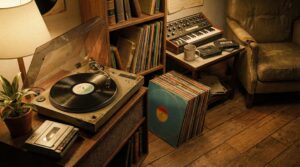
And naturally, there is the source: the turntable. You’ll find high-end models from brands like Garrard, Thorens, or Micro Seiki, often paired with specialized tonearms and cartridges. The master’s careful handling as they select a record, clean it with an anti-static brush, and gently lower the needle into the groove is a ritual in itself. Choosing vinyl is a conscious decision; it’s not merely nostalgia. Vinyl enthusiasts argue the analog format preserves a warmth and depth lost in digital recording. The subtle surface noise, the crackling before the music starts—these aren’t imperfections; they’re part of the texture, reminders that you’re engaging with a physical object, a captured moment in time. This entire chain—from record groove to stylus, through tube amplifier, and out of horn speakers—is painstakingly curated to deliver a unique and immersive sonic experience. That’s why you can’t replicate this feeling at home, no matter how high-quality your headphones. You have to be there, seated in the sweet spot, letting the sound wash over you completely.
Your Sonic Itinerary: Where to Find These Hidden Gems
Alright, so you’re captivated by the vibe. The key question is, where do you actually discover these places? By their nature, they tend to be low-key and often tucked away from the main streets. You won’t find flashy signs or big advertisements. Finding them is part of the fun—a treasure hunt for tranquility. While I can’t provide a definitive list—as many remain treasured local secrets and rely on a loyal clientele—I can guide you to the neighborhoods where these sonic sanctuaries usually cluster.
Tokyo’s Counter-Culture Centers: Shimo-kitazawa & Koenji
If you’re after a kissaten with a bohemian, artsy vibe, Shimo-kitazawa and Koenji are your prime destinations. Known for their maze-like streets filled with vintage clothing shops, small independent theaters, and live music venues, these neighborhoods exude a relaxed, creative energy perfectly suited to kissaten culture. Here, you’ll often find smaller, more intimate venues, sometimes run by younger owners who offer a fresh take on tradition. The music selection might be diverse, blending classic Kankyō Ongaku with modern ambient artists or experimental electronica. Picture a cozy second-floor room full of mismatched furniture, plants spilling over every surface, and the soft glow of a single lava lamp. The vibe is informal, more like hanging out in a cool friend’s living room—one with an exceptional sound system. These spots are great for first-timers since the atmosphere is less intimidating than more traditional, hardcore establishments.
The Intellectual’s Sanctuary: Jimbocho
Jimbocho is Tokyo’s book district, where streets are lined with stores selling everything from rare antique manuscripts to contemporary manga. It’s a haven for book lovers, and tucked among these literary gems, you’ll find some of the city’s oldest and most respected kissatens. The connection is natural: both reading and deep listening are solitary, contemplative activities. A kissaten in Jimbocho serves as the ultimate quiet refuge. Imagine a basement space, down a narrow staircase, with walls lined not only with records but also floor-to-ceiling bookshelves. Patrons tend to be older, including university professors, writers, and devoted regulars who have frequented the place for decades. The atmosphere is scholarly and deeply respectful. The silence is profound, interrupted only by the turning of pages and sublime music. The focus often lies on classical music or jazz, but the core principle of deep, uninterrupted listening is constant. It’s the ideal spot to spend a rainy afternoon, completely absorbed in a book and an exquisite symphony.
Classic Elegance: Ginza & Shinjuku
For a taste of the traditional, grand-dame kissaten experience, head to central, established areas like Ginza or parts of Shinjuku. These are the legendary venues, some operating since the 1950s or 60s. They radiate timeless elegance and unwavering dedication to their craft. The décor may be more formal, the rules stricter, and the sound systems legendary. These are iconic destinations among audiophiles worldwide, pilgrimage sites for those eager to hear specific speakers or a master’s famous record collection. There might be a cover charge, or a higher one-drink minimum, but you’re paying for an unparalleled experience. Visiting one of these institutions feels like stepping back in time. You can almost sense the echoes of countless conversations, ideas, and moments of quiet reflection absorbed by the walls over the decades. It’s a powerful, humbling experience that connects you to a deep history of Japanese counter-culture.
Useful Tips for Your Search
Locating these spots often requires some digital detective work on Japanese-language blogs or magazines, or simply wandering down side streets in search of discreet signs—often just a small plaque with a name. The best time to visit is usually weekday afternoons when they’re at their quietest. Weekends can be busier, which may affect the meditative atmosphere. Be ready for a one-drink minimum, which is standard practice. You’re not just buying coffee; you’re renting a seat and paying for the musical experience. So order a drink, settle in, and plan to stay at least an hour to fully immerse yourself.
Kissaten Etiquette 101: How to Vibe Respectfully
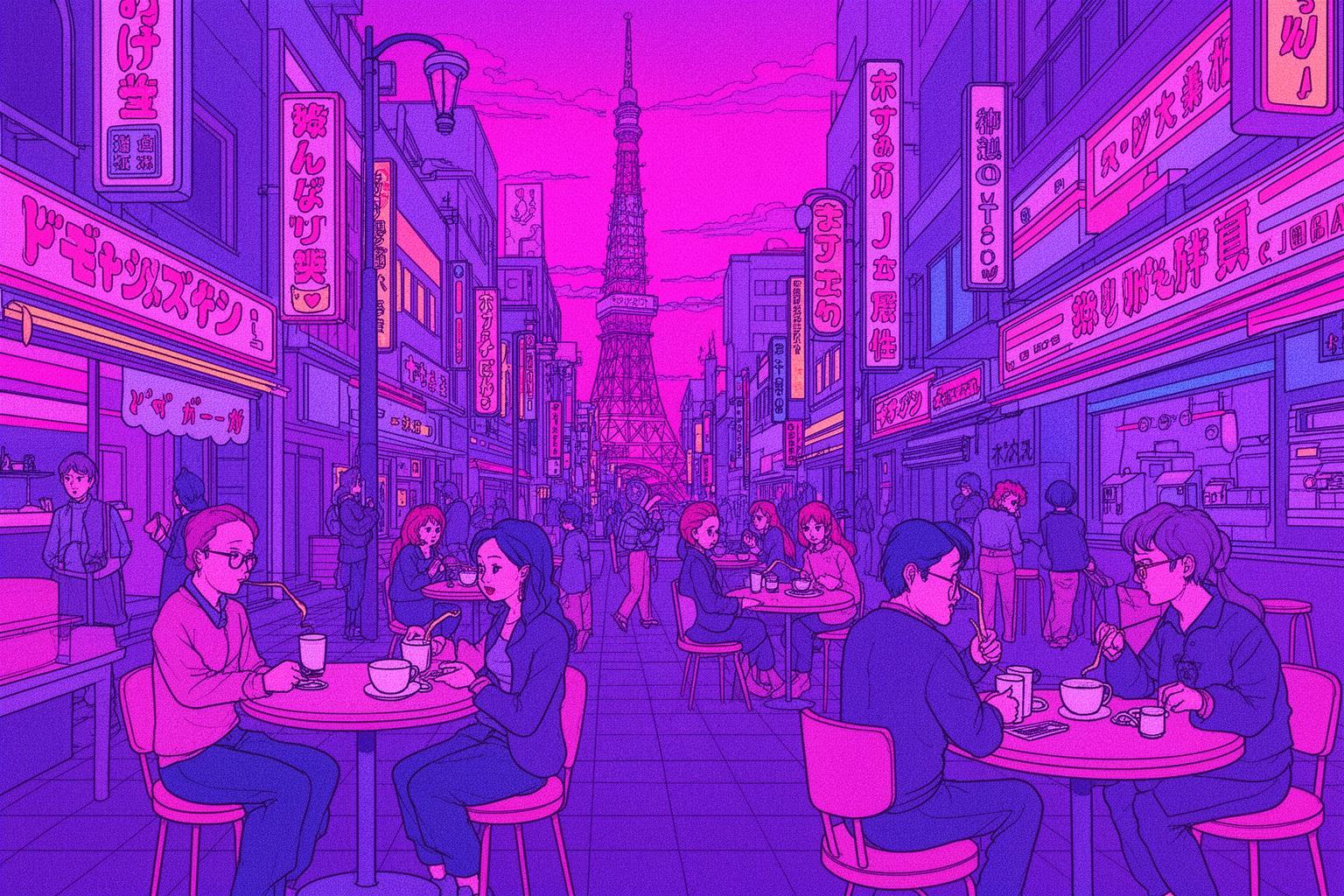
Navigating the social codes of a new culture can be challenging, and in a setting as specific and rule-bound as an audiophile kissaten, knowing the etiquette really pays off. Getting it right goes beyond politeness; it’s about showing respect to the master, the other patrons, and the music itself. It’s a vital part of the experience. Think of it as a user’s manual for achieving maximum zen.
Silence is Golden (No, Seriously)
This is the absolute top rule. The main purpose of the space is listening. Loud conversations are strictly forbidden. In most places, you should speak only when necessary—such as when ordering—and do so in a soft whisper. In the most traditional kissatens, there may even be signs explicitly banning any conversation altogether. This isn’t meant to be unfriendly; it’s about preserving the sanctity of the sonic environment. Your phone should be on silent, notifications off. Don’t even consider taking a phone call. The silence is a shared agreement, and by respecting it, you help maintain the peaceful atmosphere for everyone. Embrace it as a rare chance for a digital detox and a break from constant communication.
The Art of Ordering
When you arrive, the master will typically indicate an open seat. Once seated, take a moment to peruse the simple, often handwritten menu. The highlight is almost always the coffee, especially the kōhī burēndo (house blend). This is usually a dark, rich roast, carefully prepared using pour-over methods such as a flannel nel drip or an elegant glass siphon brewer. The brewing itself is a performance. Watching the master’s precise, deliberate movements is part of the meditative ritual. Don’t rush them. Order simply and quietly. Besides coffee, you may find black tea, melon soda with a scoop of ice cream, or plain toast. The menu embodies the classic kissaten vibe, so enjoy the retro offerings.
Respect the Sweet Spot
In many kissatens, there is one chair or a small sofa positioned perfectly for listening—the stereo ‘sweet spot,’ where the sound from the left and right speakers blends into a perfectly balanced, three-dimensional audio image. This seat is highly prized. If it’s available, feel free to take it, but recognize its importance. If someone else occupies it, don’t hover or stare. Simply choose another comfortable spot. The room’s acoustics are usually excellent throughout, so anywhere you sit will sound fantastic. Sitting in the sweet spot is like reaching the final boss level of the listening experience.
Put the Phone Away
This rule extends beyond sound to visual distraction as well. Bright phone screens are extremely disruptive in the dim, carefully curated ambiance of a kissaten. Most establishments enforce a strict no-photography policy, both to protect patrons’ privacy and to prevent the space from becoming just another Instagram backdrop. This is not a place for content creation; it’s for quiet reflection. Resist the urge to document everything. Instead, be present. Let your eyes take in the room’s details, watch the master at work, close your eyes, and focus solely on the music. The memory of the feeling you have in the space will be far more impactful than any photo you could snap.
The Master is the DJ
Unlike a bar where you might shout requests to the DJ, the music in a kissaten is entirely chosen by the master. They have spent years, sometimes a lifetime, curating their record collection and refining their taste. The day’s selection is a deliberate setlist designed to shape a specific mood or guide the listener on a journey. Requests are generally unwelcome. Trust the master—they know what they’re doing. Part of the enchantment lies in surrendering control and allowing yourself to be led by their curation. You might discover a new artist or hear a familiar track in an entirely new way. It’s an act of trust that is always rewarded.
More Than Just Coffee: The Menu and the Ritual
While the sound is undoubtedly the main attraction, the food and drink served in a kissaten are essential to the experience, acting as a comforting and ritualistic complement. The menu often offers a nostalgic nod to mid-century Japan, featuring simple, hearty dishes that perfectly match the retro ambiance. The process of ordering, waiting, and slowly savoring your coffee alongside a small bite is all part of the art of slowing down and tuning into your senses.
The Pour-Over Pour-fection
Let’s dive deeper into the coffee, as it truly is an art form. Kissaten coffee is a world apart from the light, acidic roasts common in the third-wave coffee scene. Here, the beans are typically roasted dark, producing a brew that is bold, low in acidity, and rich with deep, chocolatey, almost smoky notes. The brewing method is crucial. The nel drip is a traditional technique using a flannel cloth filter, which allows more of the coffee’s natural oils to pass through, resulting in a rich, syrupy body and an exceptionally smooth finish. It’s a slow, manual process that demands great skill. Another familiar sight is the siphon brewer, a theatrical device resembling something from a science lab. It uses vacuum pressure and vapor to produce a clean, aromatic, and remarkably clear cup of coffee. Regardless of the method, each cup is brewed individually, to order. The care and precision devoted to your single cup embody the entire kissaten philosophy: focus on one thing, and do it perfectly.
Nostalgic Bites
The food menu is usually concise, centered on comforting classics. One of the most iconic kissaten treats is Ogura Toast: a thick, fluffy slice of Japanese milk bread (shokupan), toasted and topped with a slab of butter and a generous layer of sweet red bean paste (anko). The mix of salty butter and sweet beans on soft bread is pure, unfiltered comfort. Another favorite is the Tamago Sando, a deceptively simple egg salad sandwich, also served on fluffy, crustless shokupan. The egg salad is creamy and rich, delivering a perfect, gentle flavor. For something more filling, you might find Napolitan Spaghetti, a uniquely Japanese-Western dish of spaghetti stir-fried with sausage, onions, bell peppers, and a sweet, ketchup-based sauce. It’s a bite of pure Showa-era nostalgia.
The Sweet Finish
And if coffee isn’t your preference or you visit later in the day, the Cream Soda is an absolute must-try. This isn’t an ordinary soda. It’s a vivid, almost unnaturally green melon-flavored soda, served in a tall glass topped with a scoop of vanilla ice cream and often a bright red maraschino cherry. It’s a whimsical, joyful, and incredibly photogenic treat that instantly transports you back to childhood. Each item on the menu is more than just nourishment; it’s a slice of cultural history, a flavor that tells a story. Ordering a coffee and a slice of toast is not merely a transaction; it’s taking part in a tradition that has comforted souls for decades.
The Modern Renaissance: Why This Vibe Is Everything Right Now

It’s intriguing to consider why these quiet, slow, analog spaces are gaining prominence in our hyper-digital, fast-paced world. There’s a striking irony that many people outside Japan discovered Kankyō Ongaku through the most contemporary means: the YouTube algorithm. In the mid-2010s, YouTube’s recommendation system began unearthing and promoting full uploads of rare Japanese ambient and city pop albums from the 1980s. Suddenly, millions globally were immersed in Hiroshi Yoshimura’s “Green” or Mariya Takeuchi’s “Plastic Love.” This digital revival sparked a major new wave of interest in the genre, resulting in vinyl reissues, new compilations, and a worldwide audience eager for these atmospheric sounds.
This recently gained popularity has revitalized the culture of deep listening and the spaces that nurture it. A new generation, both Japanese and international, now seeks out audiophile kissatens not as dusty relics, but as vital and relevant sanctuaries. In a world overflowing with choices and algorithmic playlists tailored to our every preference, there is a profound appeal in surrendering to a carefully curated experience. Visiting a kissaten becomes a deliberate choice to disconnect, to set your phone aside, and to trust the master’s taste. It’s a rejection of the fragmented, multitasking way we typically consume media.
These spaces provide an antidote to the modern condition. They serve as havens from notification anxiety and the relentless pressure to perform online. They offer a tangible, multisensory experience in an increasingly virtual world. You can feel the bass resonate in your chest, smell the aroma of brewing coffee, see the warm glow of tube amps, and savor the nostalgic flavors of the menu. It’s a holistic experience that engages the entire body. It’s a kind of secular worship, a pilgrimage to a temple of sound where the sole purpose is to be present. This is why the kissaten experience feels so essential today. It reminds us of the power of slowness, the beauty of imperfection, and the profound human need for quiet reflection and a shared, silent community.
A Final Note on Finding Your Frequency
Your journey into the realm of Japanese ambient music and audiophile kissatens is more than just an intriguing, alternative tourist experience. It’s a deep immersion into a culture that cherishes contemplation, craftsmanship, and the beauty of what remains unspoken. It offers a chance to encounter a profound sense of peace that can be rare in daily life. When you step out of a kissaten and back onto the lively street, the world feels changed. The city’s noise may sound like a symphony instead of a cacophony. You feel grounded, calmer, and more aware of the subtle nuances around you. You’ve been recalibrated.
So, on your next visit to Japan, seek out these hidden treasures. Be patient, respectful, and open. Let the expert guide you. Let the warm, analog sound envelop you. Order a coffee, settle into that worn leather armchair, and simply listen. It’s not about finding the ‘best’ or most famous spot. It’s about discovering the space that resonates with you, your own personal sonic sanctuary. In the quiet hum of a vacuum tube and the gentle crackle of a spinning record, you may just find the perfect pocket of zen you’ve been searching for all along.