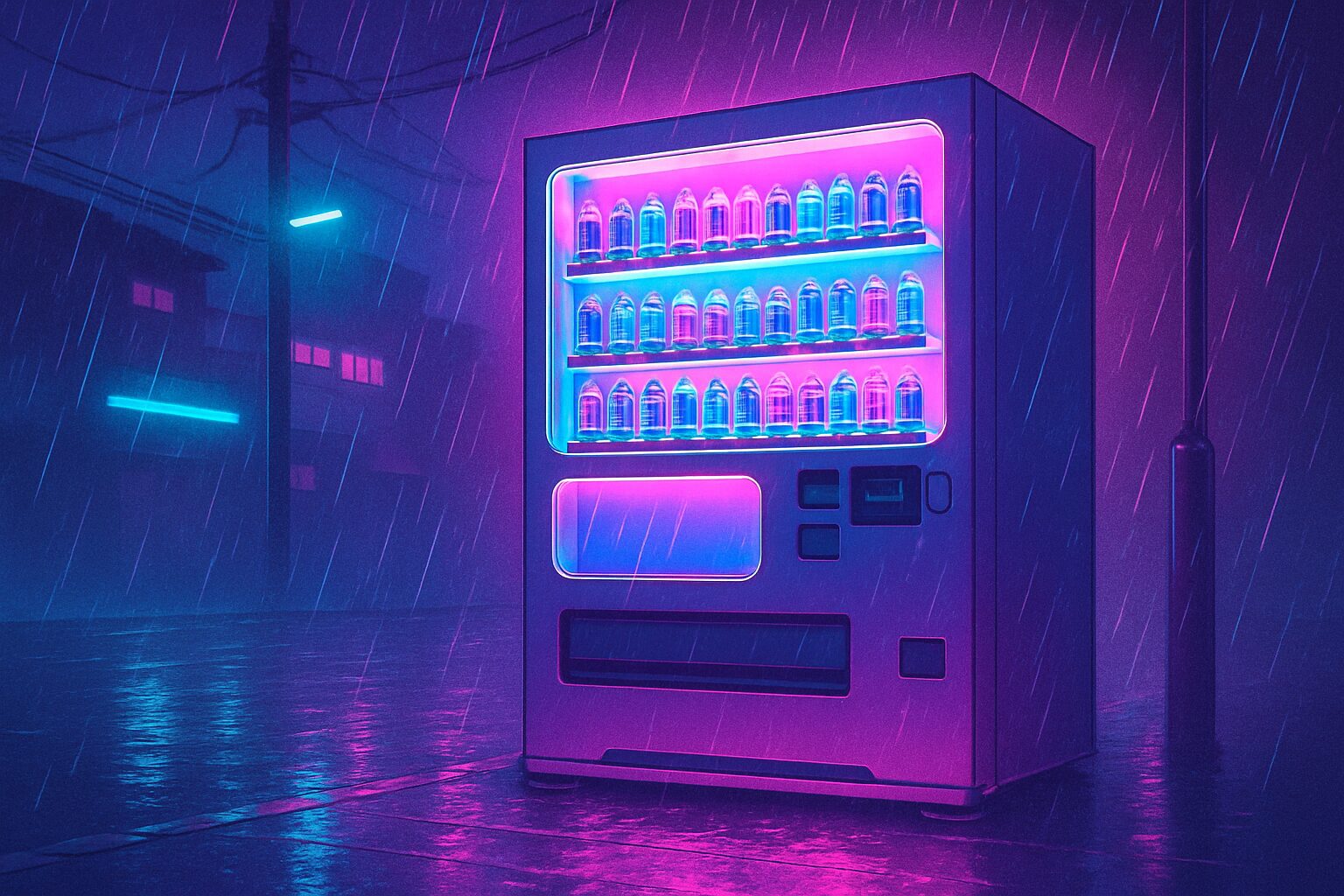
Rain in Tokyo isn’t just weather; it’s a total vibe shift. The city, usually a hyper-caffeinated explosion of sound and movement, suddenly gets its audio levels tweaked. The frantic energy mellows into a steady, rhythmic pulse. The concrete canyons of Shinjuku and Shibuya are painted in a glossy, reflective sheen, and the world is suddenly seen through a hazy, cinematic filter. It’s on nights like these, when the crowds thin out and the city takes a collective breath, that you can find one of Japan’s most profound and understated experiences. It’s not in a temple, nor a museum, nor a Michelin-starred restaurant. It’s in the quiet, unwavering glow of a lone vending machine, a silent sentinel standing guard on a deserted street corner. Forget what you know about vending machines as mere conveniences. In Japan, especially on a rainy night, they are something more. They are beacons, tiny islands of warmth and light in the cool, damp dark. They are cultural artifacts that tell a story of safety, society, and a unique form of unspoken hospitality. This isn’t just about grabbing a quick drink; it’s about pausing to witness a moment of pure, unadulterated Japanese aesthetic—an experience that’s legit ’emoi’, as the kids here would say. It’s a low-key pilgrimage for the soul, a chance to connect with the city’s quiet, introspective heart. Standing there, bathed in its synthetic light, you feel like you’ve stumbled upon a secret, a scene meant just for you, a temporary shelter from the rain and the relentless forward march of time. This is where the real Japan lives, in the spaces between the major attractions, in the hum of a refrigerator and the soft thud of a can dropping into a tray.
This quiet, introspective heart is a form of urban zen you can also discover by exploring the chill back alleys of Ura-Harajuku.
The Neon Sermon: Decoding the Sensory Language

To truly understand what makes this experience so special, you need to break it down. It’s a complete sensory immersion, a symphony of light, sound, and feeling unlike anything else. It’s not something you merely watch; it’s something you sense deep within, a moment that carves itself into your memory with surprising clarity. The Japanese have a word, fuzei, which roughly means an atmosphere or mood that stirs deep emotions. A vending machine on a rainy night embodies pure fuzei.
The Light Itself is a Vibe
The undeniable star is the light. It’s not the harsh, flashy glare of a Las Vegas casino or a Shibuya crossing billboard. Instead, it’s a steady, humming, almost sacred glow. This light performs an urban alchemy—it turns an ordinary street corner into a stage. The rain, which might be seen as a bother, becomes a canvas for the light to play with. Each raindrop on the asphalt acts as a tiny, fractured mirror, scattering the machine’s glow in countless shards. Puddles pool into deep, inky canvases, their smooth surfaces perfectly reflecting the illuminated buttons and vibrant product images. The light seeps into the mist, forming a soft-focus halo, a visual aura pushing back against the darkness. It’s a light full of solitude but also deeply comforting. It signals that even here, in this quiet, overlooked corner of a sprawling city, there is life, service, and warmth waiting. The color palette is a language, too. The warm, inviting oranges and reds of hot coffee cans promise comfort and energy. The cool blues and whites of water and sports drinks suggest refreshment and clarity. The vibrant greens of tea evoke tradition and calm. Each button is a tiny, glowing promise, a gateway to a specific sensation. In the night’s silence, this light doesn’t just illuminate; it speaks. It says, “I am here. You are not alone. Come, take a break.”
The Soundtrack of Solitude
Lean in and listen. The city’s usual noise has softened, giving way to a more intimate soundscape. The dominant sound is the rain itself—a gentle, percussive tapping on the machine’s thin metal roof, a soft hiss as it sweeps the pavement. It’s natural white noise that shields you from the outside world. Beneath that is the machine’s own voice: a low, steady, almost meditative hum. It’s the sound of electricity, of heating and cooling elements working tirelessly. A mechanical heartbeat in the sleeping city. This hum forms the bassline of your private concert. Then you choose to join. You slide a coin into the slot—a satisfying, metallic clink-clink-clatter as it navigates the inner maze. Or perhaps you use a Suica or Pasmo card, which chimes with a cheerful, digital beep!. You press a button. Silence falls briefly, a moment of suspense, and then the mechanical symphony begins. Gears whir, mechanisms shift deep inside the machine’s core. It’s a purposeful sound, a process set in motion just for you. The climax is the final thud—a solid, reassuring noise as your chosen can or bottle drops into the retrieval slot. It’s definitive. It’s final. It’s yours. Reaching in and taking your drink, the entire soundscape—the rain, the hum, the clunk—melds into a moment of pure, solitary satisfaction. You are the sole audience to this performance.
A Warmth in the Cold
The last part of the sensory experience is the feeling. Your hands are chilled from the damp air, the rain has numbed your skin. You reach into the machine, your fingers closing around a can of hot coffee. The warmth is immediate and startling in its intensity. A concentrated pocket of heat within the vast coolness of the night. This simple thermal contrast is incredibly powerful. It’s not merely a warm beverage; it’s a tangible transfer of energy, a physical symbol of comfort. As you hold the can, heat seeps into your palms, travels up your arms, spreading a sense of solace. You might pop the tab and sip, the hot liquid warming you from the inside. Even if you opt for a cold drink, the experience remains tactile. The smooth, chilled aluminum, beaded with condensation mingling with raindrops, feels sleek and futuristic. It’s a jolt of crisp, cold reality. This physical touch grounds you in the moment. You’re not just observing a scene; you’re an active participant. The vending machine has given you a small, affordable, immediate comfort—no questions asked. It’s a simple exchange, yet on a rainy night, it feels like a profound kindness from an inanimate object.
The Ghost in the Machine: A Cultural Autopsy
So, why this fascination with vending machines? Why are there more than four million of them scattered throughout Japan, perched on the slopes of Mount Fuji, standing guard in remote rice paddies, and lining every alley in the cities? The answer lies in a deep, intricate story woven from strands of history, technology, economic necessity, and a distinctive cultural mindset. They are not merely a quirky aspect of the landscape; they directly reflect the society that created and embraced them. Understanding their role is essential to grasping a part of the Japanese spirit.
From Tobacco to Corn Soup: A Brief Historical Journey
The tale begins, as many do, with a clever invention. The first vending machine in Japan is believed to have been a tobacco dispenser created in 1888. However, the true surge—the vending machine revolution—occurred during the post-war economic boom of the 1960s and 70s. As Japan’s economy expanded rapidly, so did its appetite for convenience and enthusiasm for technological innovation. Companies such as Fuji Electric and Sanden developed machines capable of dispensing both hot and cold drinks from a single unit, a breakthrough that made them indispensable year-round. This was an era marked by rapid urbanization and the rise of a “salaryman” culture. People worked longer hours and commuted greater distances. The demand for quick, accessible refreshments soared. Vending machines provided the perfect answer: they operated 24/7, required minimal staffing, and could be installed virtually anywhere. Major beverage companies like Coca-Cola, Suntory, and Kirin recognized the opportunity and began deploying their branded machines nationwide, creating an extensive and competitive network. This history is visible in the machines themselves; you can often spot older, slightly worn models from the 80s and 90s alongside brand-new, high-tech ones equipped with digital touch screens and cashless payment options. They serve as a living timeline of Japan’s consumer culture and technological advancement.
Omotenashi 24/7: Invisible Hospitality
At the core of Japanese culture is the concept of omotenashi, often translated as “hospitality,” yet it runs much deeper. It represents a selfless, anticipatory form of service—a desire to meet a guest’s needs before they are even expressed. The network of vending machines is a perfect, though impersonal, manifestation of omotenashi in practice. Society has collectively ensured that no one will ever be too far from a hot coffee on a chilly morning or a refreshing sports drink on a humid afternoon. The machines anticipate your thirst. They foresee your need for a brief moment of rest. They provide this service without judgment or expectation, at any hour day or night. It’s a form of care deeply woven into the urban infrastructure. From an East Asian perspective, this contrasts with the more interactive, service-driven convenience culture found in places like Taiwan or South Korea, where 24-hour convenience stores staffed by people are more prevalent. In Japan, this automated hospitality reflects a preference for efficiency and a certain comfort with non-verbal, system-based interactions. The machine serves you without the need for social niceties, which many find comforting.
The Social Contract of Convenience
The mere presence of millions of unattended, cash-filled boxes speaks to one of Japan’s most defining traits: its remarkably low crime rate. The unwritten social contract keeps the system functioning. People don’t vandalize the machines, nor do they attempt to break into them. This high level of public trust often astonishes first-time visitors. It enables a degree of convenience and automation unthinkable in many other parts of the world. It’s a society based on the assumption that individuals will act responsibly. You will pay for your drink. You will place your empty can in the recycling bin conveniently located next to the machine. This trust creates a virtuous cycle. Because the machines are secure, companies are willing to install them everywhere. Because they are ubiquitous, they become an essential and dependable part of daily life. They are a tangible representation of a society that largely operates on mutual respect and civic responsibility.
Economic Realities and Urban Planning
Pragmatic factors also drive the dominance of vending machines. Japan has long faced a shrinking workforce and a rapidly aging population, making labor both costly and scarce. Automating sales via vending machines is a highly efficient business model. Additionally, urban real estate in Japan is exorbitantly expensive. A vending machine can conduct profitable retail operations within a footprint of just one square meter. This enables them to be wedged into the narrowest urban spaces—a narrow gap between buildings, a small corner of a parking lot, or a nook in a subway station. They excel at maximizing “dead space.” Such economic and spatial efficiency has led to their proliferation on a scale unmatched anywhere else. They have become an integral and seamless part of the urban landscape, as familiar as traffic lights or mailboxes.
A Universe in a Box: Your Guide to the Goods
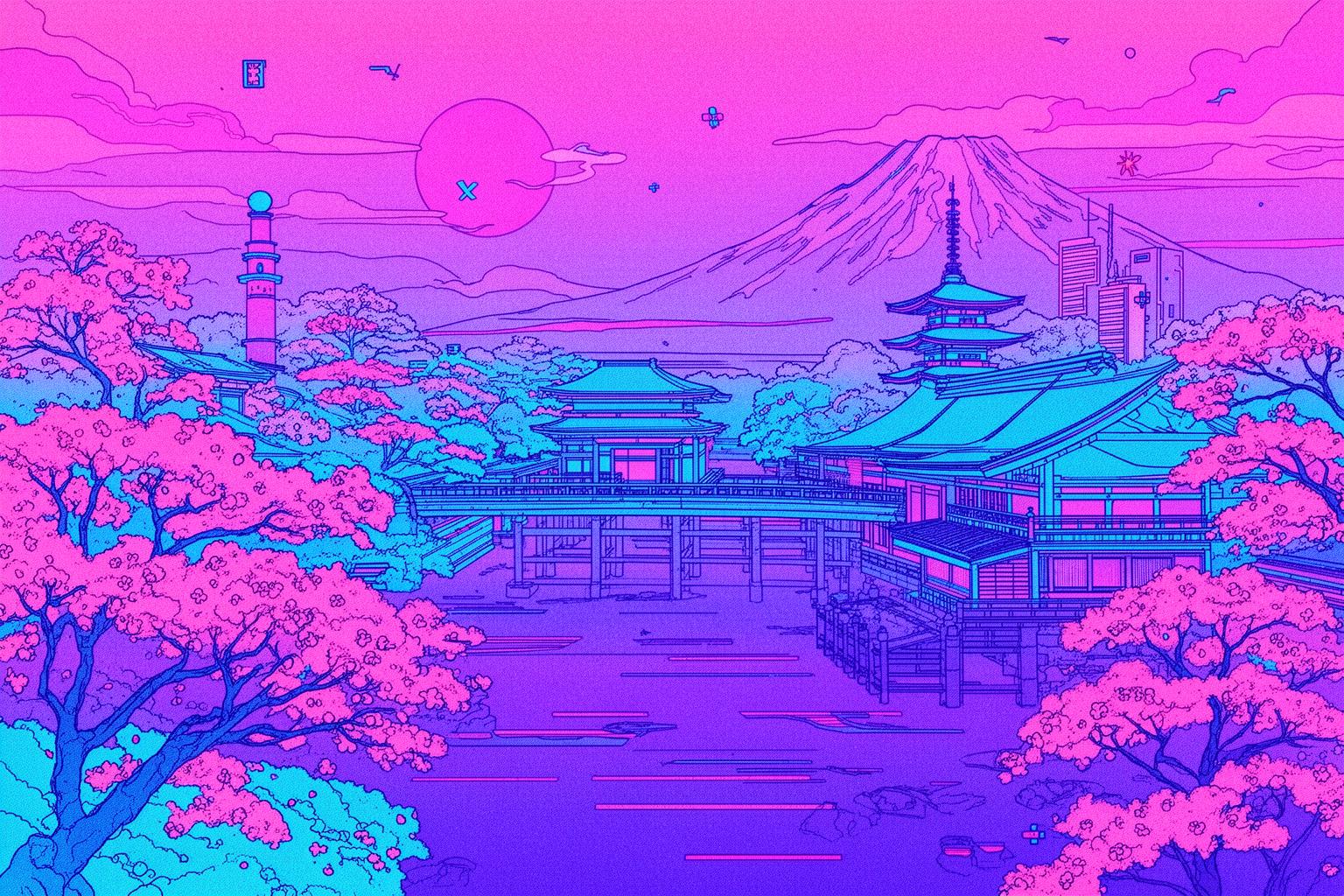
Looking through the glass of a Japanese vending machine feels like gazing into a small, illuminated museum showcasing the country’s beverage culture. The vast variety can be overwhelming but also presents a tasty puzzle to figure out. The selection is a captivating blend of global brands, uniquely Japanese creations, and seasonal specialties, offering a glimpse into the nation’s palate. Exploring the choices is part of the enjoyment, with each option telling its own story.
The Classics Crew: Coffee, Tea, and Juice
This category forms the core of vending machine offerings. Let’s begin with coffee. Japan’s canned coffee scene is exceptional. You’ll encounter an impressive range of options, often organized by color-coded tabs: red for hot, blue for cold. Suntory’s BOSS coffee, recognized by its iconic fedora-wearing logo, provides everything from robust black coffee to creamy café au lait. Georgia, a Coca-Cola brand, is known for its rich, full-bodied flavors. Asahi’s Wonda is another key contender, celebrated for its smooth morning-shot varieties. The product names are legendary: “Premium Fire,” “Emerald Mountain Blend,” “Kiwami Black.” This is far from simple instant coffee; it’s a meticulously crafted product tailored to discerning consumers. Moving to tea—this is Japan after all—you’ll find unsweetened green tea (ocha) from brands like Ito En’s Oi Ocha and Kirin’s Namacha, both refreshing staples. Barley tea (mugicha), a caffeine-free roasted grain tea, is especially popular during summer, alongside oolong tea, which offers flavors between green and black tea. Beyond the classics, sweetened milk teas, lemon teas, and other varieties await. Don’t overlook the juices and soft drinks. Familiar names like Coke and Pepsi appear, but the real gems are local favorites. Calpis, a yogurt-based soda with a sweet and tangy taste, is uniquely Japanese. C.C. Lemon, a vitamin C-rich soda, enjoys widespread popularity. And of course, there’s Pocari Sweat and Aquarius—the “ion supply drinks” that serve as Japan’s answer to Gatorade, crucial for enduring humid summers.
That’s… in a Vending Machine?: The Wild Side
Here’s where things get truly intriguing. Beyond the usual drinks lies a world of delightful oddities. Perhaps the most famous is canned hot corn potage soup. Yes, soup. On chilly days, opening a can of this creamy, sweet corn soup, often with whole corn kernels inside, can be strangely comforting. You’ll also find machines offering hot oshiruko, a sweet red bean soup with chewy mochi pieces. In some regions, vending machines even dispense dashi, the essential Japanese soup stock, in flavors like flying fish or kombu—a handy shortcut for busy home cooks. The weirdness extends beyond hot beverages. Some machines sell crepes in bottles, fruit jellies, and even canned bread. It’s not limited to food and drinks either. Depending on location, you might find vending machines offering umbrellas (a savior on rainy nights), toys, manga, fresh flowers, personalized seals (hanko), and even t-shirts. In rural areas, machines might vend local produce such as fresh eggs or bags of rice. The most legendary are the beer and sake vending machines. Although less common now due to stricter laws, they still exist—typically found in hotels or traditional inns—and require a special age-verification card to operate. This remarkable creativity showcases Japan’s passion for automation and convenience.
Catch the Season: Limited Edition Drops
A highlight of Japanese consumer culture is its focus on seasonality and limited-edition flavors, naturally reflected in vending machines. The selection is ever-changing, mirroring the seasons. In spring, sakura (cherry blossom) and strawberry-flavored drinks make their appearance. Summer brings a wave of refreshing options: salt-infused lychee drinks, frozen slushie-style beverages, and special “cool mint” formulas. Autumn features flavors like grape, pear, and roasted sweet potato. Winter reigns supreme for hot drinks, expanding the range of coffees, teas, and specialty items like hot chocolate, warm lemonades, and ginger ales. Beverage companies leverage these limited editions to spark excitement and retain consumer interest. For travelers, sampling a seasonal drink from a vending machine offers a fun, authentic way to connect with Japan’s changing seasons.
How to Hunt for Your Perfect Vending Machine Moment
Now that you’re convinced by the concept, how do you discover your own ideal, cinematic vending machine experience? It’s not about locating a particular machine at a fixed location. It’s about adopting a certain mindset and knowing where to search. This isn’t a tourist spot you can plug into Google Maps—it’s an atmosphere you must seek out and craft yourself.
Go Off-Grid: The Best Places to Explore
The most unforgettable vending machine moments rarely happen on the brightly lit main streets of busy tourist areas. The vibe you want is solitude, quiet, and a hint of melancholy. To find this, you need to wander. Leave the main road behind. Explore the maze-like residential backstreets, known as roji. These narrow alleys, lined with small houses and low-rise apartments, house the loneliest and most atmospheric machines. They stand beneath the eaves of homes or beside small neighborhood parks, their light pooling quietly on empty streets. Another ideal spot is rural or suburban train stations, especially late at night after the last train has left. The deserted platform, silent except for one glowing machine, feels straight out of an indie film. Countryside roads offer great hunting grounds too. A solitary machine by a bus stop in the middle of nowhere, surrounded by rice fields, has a striking, almost surreal beauty. The key is to escape the noise and the crowds. Your goal is to find a machine that feels like it’s waiting solely for you.
Framing the Feeling: Tips for Photographers
The visual charm of this scene is unmistakable, making it a favorite subject for photographers. But capturing the mood takes more than a quick snap. Think carefully about your composition. Avoid shooting the machine straight on. Use the surroundings to tell a story. Frame the machine with a dangling power line, a narrow alley, or a reflection in a puddle. Reflections become your best ally on a rainy night, creating symmetry and adding depth to your image. Notice how neon light bounces off wet surfaces—the shiny asphalt, a parked car’s hood, or a discarded umbrella. If you have a tripod, experiment with long exposures. This technique will smooth falling rain into atmospheric streaks and make the machine’s glow appear even more vivid and otherworldly. But above all, capture the sense of solitude. Frame your shot to highlight the machine’s isolation. Show the empty street fading into darkness. Make the machine the lone point of light and warmth in a cool, dark world. This isn’t just a photo of a vending machine; it’s a portrait of a mood.
Your First Encounter: A Simple Guide
For newcomers, approaching a Japanese vending machine can feel a bit daunting due to the many buttons and Japanese characters. But it’s very simple. Most machines accept 10, 50, 100, and 500 yen coins, as well as 1,000 yen bills. Newer machines often have readers for IC cards like Suica, Pasmo, or ICOCA—the same cards used on trains. This is the easiest payment method: just tap your card on the reader, and you’ll hear a cheerful beep. Products and their prices are clearly displayed. After inserting money or tapping your card, a small light next to each available product button will glow. Press the button for the item you want. That’s it. The machine does the rest. Take your drink from the slot below and remember to retrieve your change from the coin return. And please be considerate—recycling bins next to machines are typically separated for plastics, cans, and glass. Use them properly. It’s part of the unspoken social contract.
More Than a Machine: Cyberpunk, Aesthetics, and Philosophy
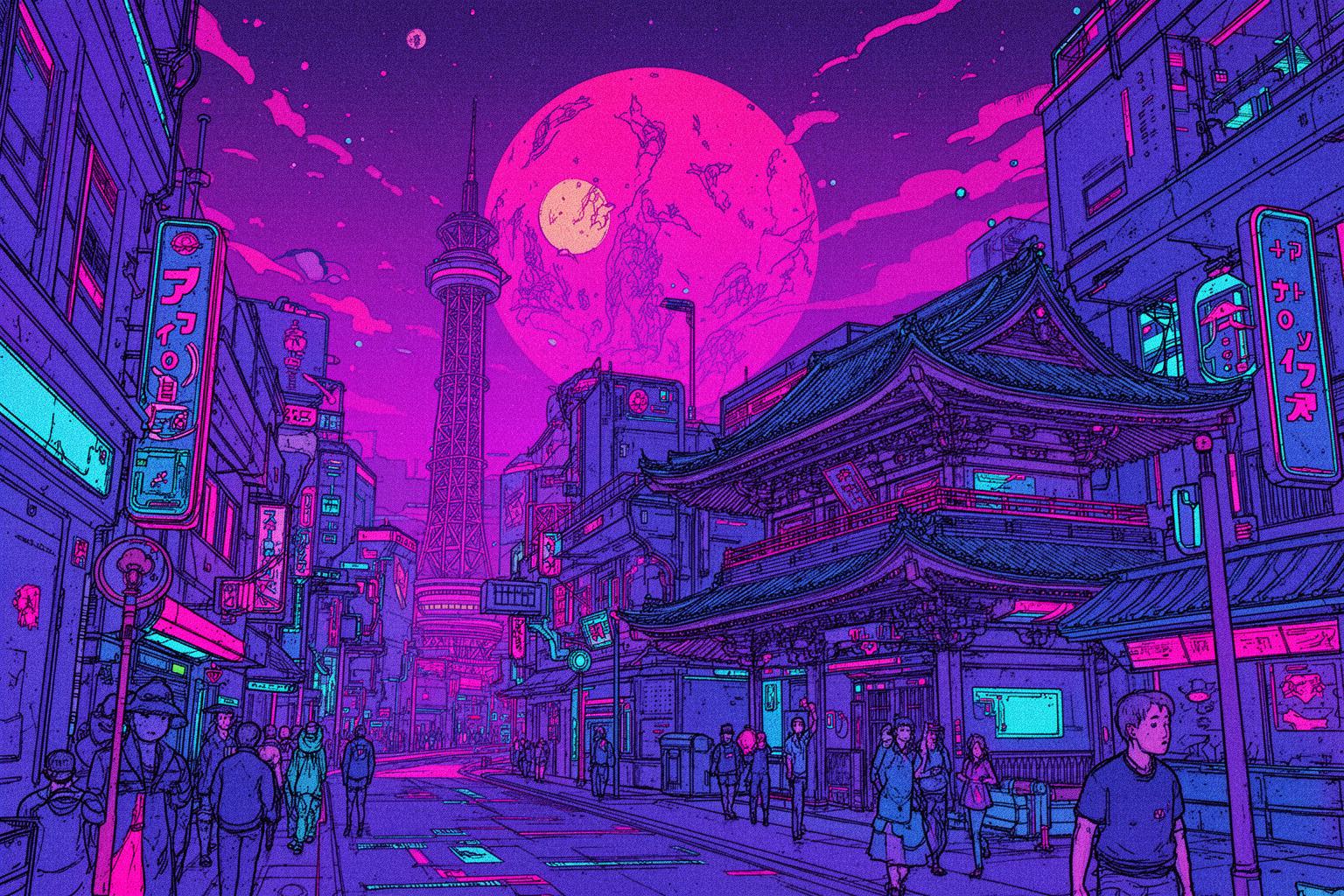
This simple act of purchasing a drink from a vending machine on a rainy night resonates deeply because it taps into rich cultural and aesthetic traditions. It represents a moment where modern technology, ancient philosophy, and futuristic visions intersect. It’s more than just a striking photo opportunity; it’s a chance to connect with some of the fundamental ideas that shape the Japanese worldview as well as our collective imagination of the future.
Wabi-Sabi in a Can
There is a quintessential Japanese aesthetic called wabi-sabi, a perspective centered on embracing impermanence and imperfection. It celebrates beauty found in modesty, humility, and the unconventional. While a brand-new, gleaming vending machine is appealing, a slightly older one marked with scratches, rust around the edges, and a flickering light embodies wabi-sabi. The rain heightens this sensation, streaking the glass and blurring the colors. The scene is imperfect, asymmetrical, and fleeting—the rain will cease, the night will end, you will finish your coffee and move on. Wabi-sabi encourages appreciating the beauty in this ephemeral imperfection. It reveals that the subtle melancholy of the solitary scene is precisely what makes it beautiful—a quiet resistance to a world that often demands flawless perfection. In this light, the vending machine becomes an altar honoring the beauty of the everyday, the worn, and the overlooked.
Living in a Blade Runner Dream
Why does this imagery feel so familiar and cinematic? Because for decades, film, anime, and video games have employed this very aesthetic to portray a particular vision of the future. The lonely, neon-lit streets of a futuristic city, often slick with rain, define the essence of the cyberpunk genre. Think Blade Runner, Akira, or Ghost in the Shell. In these narratives, technology is pervasive and advanced, yet society feels fractured and individuals frequently isolated. The vending machine perfectly symbolizes this dynamic—it is a piece of advanced technology offering service without human interaction. It stands for a world where human needs can be fulfilled impersonally. Standing at a vending machine on a rainy Tokyo night, you can’t help but feel as though you’ve stepped into one of these futuristic realms. The machine’s glow on your face, the sound of the rain, the hum of electricity—it’s a live-action enactment of a future we have long dreamed about and feared. This connection adds a layer of surreal, sci-fi enchantment to the experience.
A Moment of Mono no Aware
Closely related to wabi-sabi is another essential Japanese concept: mono no aware. Often translated as “the pathos of things,” it conveys a gentle, transient sadness about life’s impermanence. It is the bittersweet awareness that beautiful moments are temporary—for example, watching cherry blossoms fall. Your quiet moment at the vending machine is another expression of this. The warmth of the can will dissipate, the rain will stop, the sun will rise, and the city will burst back into life. The solitude and calm of this specific instant are fleeting. Recognizing this doesn’t make the experience sorrowful in a negative sense; it makes it more meaningful. It invites you to be fully present, to savor the sensory details—the light, the sound, the warmth—knowing they will not last. It is a profound, meditative experience, a small but profound lesson in cherishing the beauty of the present, brought to you by a humble drink dispenser.
A Final Sip
Japan is a land of striking contrasts. It is a place where ancient traditions blend seamlessly with cutting-edge technology, where moments of peaceful calm can be discovered amidst the world’s busiest cities. The true charm of traveling here often comes from uncovering these intersections. It is in the small, seemingly insignificant moments that the country’s essence shines brightest. Experiencing a vending machine on a rainy night is one such moment. It represents a harmony of aesthetics, culture, and technology, costing nothing more than a few coins and a willingness to stray from the usual path. It reminds you that sometimes, the most unforgettable destinations aren’t places at all. They are fleeting moods, quiet pauses, and a simple, warm can of coffee in your hands as you watch the rain fall over a sleeping city. So next time you find yourself in Japan and the rain starts to fall, don’t retreat to your hotel. Take a walk. Find a light in the darkness. Buy a drink and simply be present. You may discover that the city’s quiet, glowing soul is waiting for you.