Yo, what’s up, fellow culture heads and travel fiends? Li Wei here, coming at you with a story that’s less of a travel guide and more of a vibe check on one of Japan’s most soul-stirring destinations. Forget the neon-drenched hustle of Tokyo for a hot minute. We’re going off the grid, but in the most aesthetically pleasing way possible. We’re talking about the Seto Inland Sea, or Setouchi, a tranquil body of water sprinkled with over 700 islands, nestled between three of Japan’s main islands. But this isn’t just some scenic cruise. Nah, this is a full-blown modern-day pilgrimage. An ‘Art Pilgrimage’. Imagine hopping from one island to another, not just to see sights, but to experience world-class contemporary art that doesn’t just sit in a stuffy museum—it breathes with the landscape itself. It’s a place where Tadao Ando’s concrete poetry meets Yayoi Kusama’s polka-dotted dreams, all set against a backdrop of shimmering sea and sleepy fishing villages. This journey is about slowing down, tuning in, and letting art and nature rewire your brain. It’s a whole mood, a transformative experience that has seriously changed the game for what a trip to Japan can be. The Setouchi region has reinvented itself from a cluster of forgotten, post-industrial islands into a global mecca for art lovers, architects, and anyone searching for a little bit of magic. So, grab your ferry pass and an open mind, because we’re about to dive deep into the chill, inspiring waters of the Setouchi art islands.
To truly feel this vibe, you need to experience the heart of it all on the iconic art island of Naoshima.
Catching the Setouchi Wave: The Atmosphere is Everything
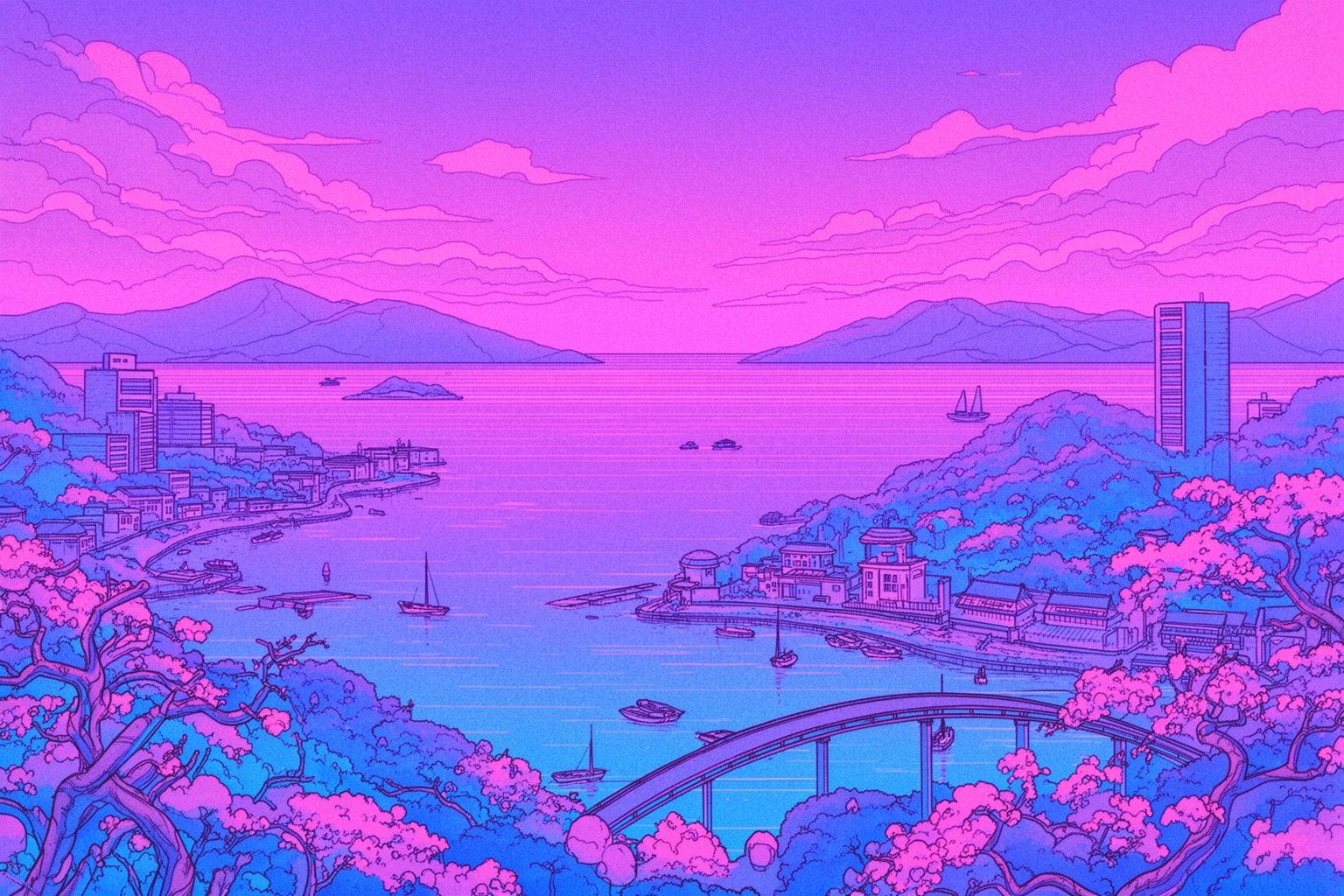
Before we even talk about the art, you need to grasp the vibe of the Seto Inland Sea itself. This isn’t the wild, dramatic Pacific Ocean. The Setouchi is famously calm, sheltered by the surrounding landmasses of Honshu, Shikoku, and Kyushu. The water often lies as still as a mirror, reflecting the soft, almost painterly light the region is known for. It’s a landscape that feels ancient and profoundly serene. Having grown up hearing stories of the mighty Yangtze and Yellow Rivers, the gentleness of this sea feels like a whispered secret. It possesses its own unique character, a quiet power that invites you to slow down. The air smells of salt and pine, and the dominant sounds are often the gentle chug of a ferry engine or the cry of a sea hawk overhead. Time moves differently here. It stretches and breathes. You find yourself gazing out at the archipelago, where islands overlap in hazy shades of blue and green, and suddenly realize an hour has passed. It’s a meditative state that the journey itself inspires. The islands, each with their own small port, terraced fields, and quiet villages where elderly residents offer a friendly nod, feel like they belong to another era. This atmosphere is the canvas. The art is not merely placed here; it responds to this profound sense of place. It’s a dialogue between human creativity and the immense, quiet beauty of nature. The feeling is one of discovery, of unveiling layers. You’re not just a tourist taking in sights; you’re an explorer, a pilgrim, piecing together a story told across the water. The entire experience feels thoughtfully curated, yet naturally woven into the fabric of the islands. It’s this perfect balance that makes the Setouchi region a true masterclass in cultural tourism.
The Rebirth Saga: How Art Saved the Islands
To truly understand what’s happening in Setouchi, you need to know the backstory. It’s a genuine glow-up tale. For much of the 20th century, these islands were centers of industry—quarrying, refining, and manufacturing. But as Japan’s economy changed, these industries declined, leaving behind damaged landscapes and a shrinking, aging population. The younger generation moved to big cities, and the islands slowly faded. It’s a familiar story of rural decline seen across the developed world. Then, a visionary idea emerged. In the late 1980s, Soichiro Fukutake, head of the Benesse Corporation (known for education and publishing), partnered with the now-renowned architect Tadao Ando. Their shared vision was to transform Naoshima into a world-class art destination. The philosophy was innovative: rather than simply building a museum, they aimed to create a space where art, nature, and architecture coexist harmoniously, inspiring all who visited. They didn’t want to erase the past but to heal it. This wasn’t about commercialization; it was about regeneration. From my perspective, this initiative is deeply rooted in East Asian philosophies emphasizing the interconnectedness of all things. It’s not about man conquering nature, but finding a thoughtful way to live within it. The project began with the Benesse House Museum, a striking facility that functions as both a museum and a luxury hotel. It was a bold statement—this was meant to be special. The success at Naoshima became a model, and the project extended to nearby islands like Teshima and Inujima, each time honoring the island’s unique history and character. This thoughtful, long-term approach is what gives the Setouchi art project its authenticity. It’s a powerful story of revival, showing that art can be a strong force for social and environmental change.
The Art Island Trinity: Your Pilgrimage Hotspots
While there are numerous islands to discover, your adventure will likely focus on the big three: Naoshima, Teshima, and Inujima. Each island has its own unique character and a lineup of unforgettable experiences that will stay with you for years. Consider them the major temples on your pilgrimage.
Naoshima: The Original Art Mecca
Naoshima stands at the heart of the Setouchi art scene as the island that kicked everything off. It boasts the most developed art infrastructure, making it easy to spend two full days immersing yourself in its offerings. The island is generally divided into three areas: Miyanoura Port (where most ferries dock), Honmura (home of the Art House Project), and the Museum area (site of the major Benesse attractions). The best way to get around is by electric bike, which you can rent near the port. Riding along the coastal roads with the sea breeze in your hair is an essential part of the Naoshima experience.
The Museum Zone: Where Artistic and Architectural Masters Converge
This southern area of the island is a stunning feast of art. It features the architectural brilliance of Tadao Ando, whose trademark smooth, exposed concrete creates a fitting frame for both art and nature.
- Benesse House Museum: This flagship venue demonstrated that the concept was viable. It combines a luxury hotel with a contemporary art museum, designed so you can live amongst the artworks. Hotel guests can wander the galleries at night, alone with pieces by artists like Andy Warhol, Jean-Michel Basquiat, and Gerhard Richter. Even non-guests must see the museum; perched on a hill with ocean views, it is itself a masterpiece. Ando’s design cleverly uses light and space to guide your gaze toward the ocean, blurring the indoors and outdoors.
- Chichu Art Museum: Prepare to be amazed. This is one of the most extraordinary museum experiences worldwide. “Chichu,” meaning “in the earth,” refers to the museum’s underground construction, which preserves the coastline’s natural beauty. Barely visible outside, it is a subterranean sanctuary by Ando, showcasing works by Claude Monet, Walter De Maria, and James Turrell. The space is lit only by natural light filtering through skylights, so the art transforms with the time of day and weather. Viewing Monet’s “Water Lilies” under soft, natural light feels almost religious, as if seen as the artist intended. De Maria’s installation features a massive granite sphere on a grand staircase beneath a skylight, exemplifying scale and precision. Turrell’s “Open Sky” invites you to sit in a room with a square ceiling opening, watching the sky become a shifting canvas of color—pure meditative magic. Tip: book tickets online well in advance.
- Lee Ufan Museum: Another Ando-designed semi-underground museum dedicated to Korean minimalist artist Lee Ufan, a pivotal figure in the Mono-ha (School of Things) movement. This collaboration reveals a quiet, contemplative space exploring interactions between natural and man-made materials—stone, steel, concrete. The sparse but powerful art prompts reflection on existence and the space between things. Drawing from East Asian aesthetics, it offers a deeply philosophical, serene environment.
Honmura’s Art House Project: Where Art Moves In
On the island’s eastern side lies Honmura’s old town, where the Art House Project takes a unique approach. Instead of new museums, traditional vacant Japanese houses are transformed into permanent art installations. One ticket grants access to most of these houses, turning your visit into an art-filled treasure hunt through the village’s charming narrow streets.
- Minamidera: An Ando-Turrell collaboration, the exterior resembles a simple wooden building harmonizing with the neighborhood. Inside, you enter complete darkness where your eyes gradually adjust and an ethereal glowing screen slowly emerges. This profound experience explores perception, trust, and sight itself, beautifully playing with your senses.
- Kadoya: The first Art House project, this 200-year-old house features a work by Tatsuo Miyajima. A pool of water houses 125 digital LED counters set at varying speeds by local residents, creating a meditation on time, life, and community, accompanied by the soothing sounds of lapping water.
- Haisha: A wildly different experience, this former dentist’s office was transformed by artist Shinro Ohtake into a chaotic, playful scrapbook collage of found objects, paintings, and sculptures. Among its surprises is a replica of the Statue of Liberty, providing a lively contrast to the other projects’ minimalist calm.
Icons of Naoshima
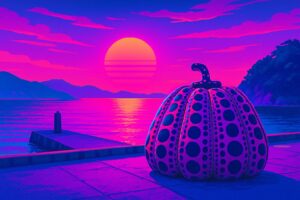
No visit to Naoshima is complete without paying tribute to Yayoi Kusama, whose iconic pumpkin sculptures are symbols of the island. The Red Pumpkin welcomes you at Miyanoura Port—a giant hollow form you can walk inside. The real star is the Yellow Pumpkin, perched at a small pier near Benesse House. Taking a photo here is a rite of passage. After the original was destroyed by a typhoon in 2021 to the sorrow of art lovers worldwide, it was carefully restored and returned in 2022, symbolizing resilience. Against the sea and sky’s blue backdrop, it’s a genuinely joyful sight.
Teshima: An Ode to Water and Life
If Naoshima serves as the intellectual core of the art islands, Teshima offers their spiritual heart. More rural and expansive, it hosts perhaps the most moving installation in Setouchi. Exploring by electric bike is ideal, though the hilly terrain makes the electric assist essential. The ride through terraced rice paddies cascading to the sea is part of the experience.
Teshima Art Museum: A Place of Worship
This is no conventional museum. Created by artist Rei Naito and architect Ryue Nishizawa, the low, white concrete structure resembles a drop of water resting on a hillside. Visitors remove their shoes and enter a vast, open space with two large oval ceiling openings connecting it to the sky, wind, rain, and forest sounds. The artwork is the floor itself—tiny water droplets rise from small holes, pooling and flowing in a silent, mesmerizing dance. There are no paintings or sculptures; the art is the space, light, water, and your presence. People sit or lie down for hours, enveloped in a peaceful, cosmic yet intimate atmosphere. This space beautifully embodies Setouchi’s philosophy of harmony between art and nature. As with Chichu, booking tickets ahead is required.
Les Archives du Cœur (The Heart Archives)
Situated in a small, remote beachside building, this installation by French artist Christian Boltanski is profoundly moving. It houses a library of human heartbeats. In dim light, a single bulb flashes in sync with recorded heartbeats, playing through speakers. Visitors can listen to thousands of pulses from around the world and add their own for a small fee. The overlapping sounds of pounding hearts and nearby waves create a haunting and resonant meditation on life, death, and memory.
Teshima Yokoo House
For lovers of bold, psychedelic art, this vibrant traditional house in Ieura village was transformed by Japanese graphic design legend Tadanori Yokoo. Using colored glass, mirrors, and his vivid paintings, Yokoo explores life and death through surreal imagery. The garden, featuring a rock pond and a climbable tower, rounds out this dynamic experience.
Inujima: The Phoenix of Industry
Inujima is the smallest of the main art islands with a story steeped in dramatic transformation. Once home to a copper refinery abandoned after just a decade in the early 20th century, its striking brick ruins had almost a century to be reclaimed by nature. Today, this industrial legacy has been masterfully reimagined as a distinct art destination.
Inujima Seirensho Art Museum
A triumph in ecological and architectural design, this museum by artist Yukinori Yanagi and architect Hiroshi Sambuichi integrates the refinery ruins to comment on Japan’s modernization, powered solely by natural energy. Visitors navigate dark, maze-like corridors encountering installations featuring the words and images of nationalist author Yukio Mishima. The architecture itself is a highlight, using the sun’s heat and old smokestacks to create natural airflow, cooling in summer and warming in winter. It powerfully expresses sustainability and a new harmony between industry and nature.
Inujima Art House Project
Spread across the tiny village, this project consists of five small galleries designed by Kazuyo Sejima, impeccably integrated with the landscape. These sleek, modern aluminum and acrylic structures shimmer and nearly disappear into their surroundings. Each houses a unique contemporary artwork, forming a delightful walking tour through the island’s quiet paths and gardens. The entire island is small enough to explore on foot in just a few hours.
Venturing Further: The Extended Setouchi Universe
While Naoshima, Teshima, and Inujima are the highlights of the art pilgrimage, the true charm of Setouchi lies in its diversity. If you have extra time, broadening your itinerary to include some of the other islands provides a richer, more varied perspective of the region.
Shodoshima: The Olive Island with a Mediterranean Flair
Shodoshima, one of the largest islands in the Seto Inland Sea, has a distinctly different atmosphere. It is called “Olive Island” because it was the first place in Japan to successfully cultivate olives. The landscape is dotted with olive groves and Greek-style windmills, lending it a charming Mediterranean vibe. However, it’s not just about olives—Shodoshima is also a key center for traditional soy sauce production, with numerous breweries still using large wooden barrels and centuries-old techniques. Visitors can tour these breweries and sample some of the finest soy sauce available. For nature enthusiasts, Kankakei Gorge offers stunning views, especially in autumn when the foliage turns vibrant shades. The island also features the famous Angel Road, a sandbar that emerges twice a day at low tide, connecting three small islets to Shodoshima. Legend says couples who cross it hand-in-hand will find happiness. Shodoshima also takes part in the Setouchi Triennale, boasting a unique collection of art installations spread across the island, often set in breathtaking natural surroundings.
Ogijima and Megijima: Islands of Cats and Folklore
These two small islands are a short ferry ride from Takamatsu and can easily be visited together in a day. Megijima is well-known in folklore as the “Ogre Island” from the classic Momotaro (Peach Boy) story. You can explore the large caves where the ogres are said to have lived, alongside quirky art installations and a pleasant beach. Ogijima, located a bit farther out, is the true treasure. It’s a tiny, steep island with a charming village that cascades down the hillside. Known for its large population of friendly cats, it’s a beloved “cat island” that delights animal lovers. The island also features beautiful Art House projects from the Triennale, including Jaume Plensa’s “Ogijima’s Soul,” an impressive welcome center at the port with a roof made from characters of various languages. Strolling the narrow, winding paths of Ogijima village, where cats lounge in the sun and art appears in unexpected places, is a truly magical experience.
The Main Event: Understanding the Setouchi Triennale
We’ve mentioned it several times, but what exactly is the Setouchi Triennale? It’s a large international art festival held every three years, spanning a dozen islands and two mainland ports. During festival years, the whole region comes alive. Alongside the permanent collections on Naoshima, Teshima, and Inujima, numerous new, often temporary, artworks are displayed. There are performances, workshops, and special events, creating an electric atmosphere. It’s a time when art enthusiasts from around the world gather in this tranquil sea, sharing a collective experience of discovery. While many popular installations from previous festivals have become permanent, visiting during a Triennale year offers an elevated experience. However, it’s also much busier and requires more advance planning. If you prefer a quieter, more reflective visit, coming in an off-year is an excellent option. You’ll still find plenty of world-class art to enjoy, but with more room to breathe and contemplate.
Logistics of the Pilgrimage: A Practical Guide
Exploring an archipelago of art islands might seem complex, but with some planning, it’s actually quite straightforward. The key is to enjoy the journey and embrace a slower travel pace.
Your Gateways to the Islands
The primary departure points for the art islands are Takamatsu Port in Kagawa Prefecture (on Shikoku island) and Uno Port in Okayama Prefecture (on Honshu, the main island).
- Takamatsu: A great base, this charming small city offers a vibrant food scene (more on that later), beautiful gardens like Ritsurin Garden, and excellent ferry links to Naoshima, Teshima, Shodoshima, Ogijima, and Megijima. You can fly directly into Takamatsu Airport (TAK) or arrive by train.
- Uno: A smaller port town but the nearest and most direct gateway to Naoshima. Easily reached from Okayama City, a major Shinkansen (bullet train) stop. If your focus is solely Naoshima, Teshima, and Inujima, staying around Uno is very convenient.
Master the Ferries, Master the Journey
Ferries are essential in Setouchi—they’re more than just transport; they’re part of the experience. Standing on the deck of a slow ferry, watching islands pass by, is a key part of the pilgrimage. There are two main types: slower, larger car ferries and smaller, faster passenger boats. Be sure to check ferry schedules carefully—they vary by season, and some routes don’t operate daily. Websites like Benesse Art Site and the Setouchi Triennale have the latest timetables. A helpful tip is to photograph the schedule at the port upon your arrival so you know exactly when the last boat departs. Avoid getting stranded!
Crafting Your Itinerary: Slow and Steady Wins the Race
Don’t rush. The biggest mistake for first-timers is trying to see too much in one day. Island hopping requires time. Here’s a gentle suggestion:
- A 3-Day Plan: Spend one full day on Naoshima. On day two, explore Teshima (allocate at least half a day for the Teshima Art Museum and travel). On day three, visit Inujima in the morning and then return, or take in another nearby island like Ogijima.
- A 5-Day Plan: This allows a more relaxed pace. Spend two days on Naoshima to fully appreciate it. Dedicate one full day to Teshima, with time to cycle the island. On day four, visit Inujima and perhaps explore Uno town. On day five, take a day trip to Shodoshima or the cat-and-ogre pair of Ogijima and Megijima.
Important tip: Check museum and Art House closing days. Most close on Mondays, and some also on Tuesdays if Monday is a national holiday. Always refer to the official Benesse Art Site calendar while planning. Accommodation, especially on Naoshima, fills up months ahead, so book early.
Fueling Your Art-Filled Soul: The Tastes of Setouchi
A pilgrimage requires effort, and you’re bound to get hungry. Fortunately, the Setouchi region boasts an amazing food scene that is just as integral to its culture as the art.
Welcome to the Udon Kingdom
Kagawa Prefecture, home to Takamatsu, is famously known as the “Udon Kingdom.” Udon noodles are taken very seriously here. The local specialty, Sanuki Udon, is renowned across Japan for its firm, chewy texture. Udon shops are everywhere, from stylish city eateries to rustic countryside stalls. Sampling a simple bowl of `kake udon` (served in hot broth) or `bukkake udon` (with a thicker, savory sauce) is essential. Many establishments operate on a self-service basis, where you pick up a tray, order your noodles, and then add tempura and toppings yourself. It’s affordable, delicious, and the perfect fuel for a day spent island hopping.
Island-Hopping Delicacies
The islands themselves offer an abundance of culinary treasures. Surrounded by the sea, the seafood is exceptionally fresh. Seek out small restaurants in the port villages serving the day’s freshest catch. On Shodoshima, be sure to try dishes featuring local olives—olive oil, pickled olives, and even olive-fed beef. The island’s soy sauce is also exceptional; some places even feature soy sauce-flavored ice cream, surprisingly tastier than it sounds. Many of the art sites include wonderful cafés and restaurants that offer unique experiences, such as the café at the Teshima Art Museum or the fine dining restaurant at Benesse House, both offering stunning ocean views.
A Gentle Conclusion: The Art of Being Still
What you gain from a journey through the Setouchi art islands is more than just a camera roll filled with stunning photos. It’s a feeling—a memory of the light in the Chichu Art Museum, the sound of a single drop of water in the Teshima Art Museum, the taste of salt on the sea breeze as you travel between islands. It’s an experience that recalibrates your senses, teaching you the art of stillness, close observation, and discovering profound beauty in the quiet spaces between things. In a world constantly clamoring for your attention, Setouchi softly whispers. It stands as a testament to the power of a bold vision and the belief that art is not merely to be seen—it’s to be lived. It reminds us that rebirth is always possible—for a landscape, a community, and for ourselves. This pilgrimage lingers with you, a quiet hum in the background of your mind, long after you’ve returned to the busyness of daily life. It’s a journey that’s not just good for the ‘gram; it’s truly good for the soul.