What’s up, fellow culture heads? Mia Kim here, and today we’re taking a deep dive, like, straight into the abyss, into a vibe that completely changed the game. Forget your loud, flashy, jump-scare-a-minute horror flicks. We’re going back to 90s Japan, a time when the vibes were getting seriously weird and the horror cinema scene decided to get quiet. Like, real quiet. The kind of quiet that gets under your skin and lives there, rent-free. We’re talking about the birth of a new kind of fear, a psychological dread that moves with the stealth and precision of a ninja in the dead of night. It’s not about what you see; it’s about what you feel creeping in the periphery, in the grainy static of a VHS tape, in the dark corner of a totally normal apartment. This is the era of J-Horror, where the ghosts didn’t just haunt houses—they haunted your tech, your mind, and the very fabric of modern life. It’s a whole mood, a masterclass in atmospheric tension that hits different, even today. Before we get lost in the shadows, let’s ground ourselves in the real world, at the epicenter of where so much of this cinematic magic—and terror—was born: Toho Studios in Tokyo. This is where legends were made, and where the quiet whispers of these onryō first found their way onto film.
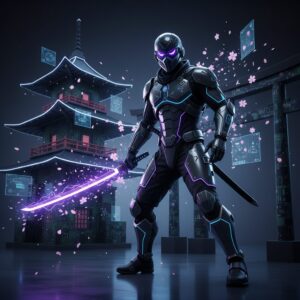
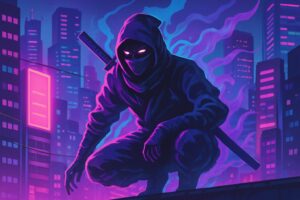
This stealthy, atmospheric approach to fear, much like the undercover shinobi aesthetic found in Harajuku’s Y2K techwear, operates on a level of subtle, pervasive influence.
The Vibe Shift: When Horror Got Quiet
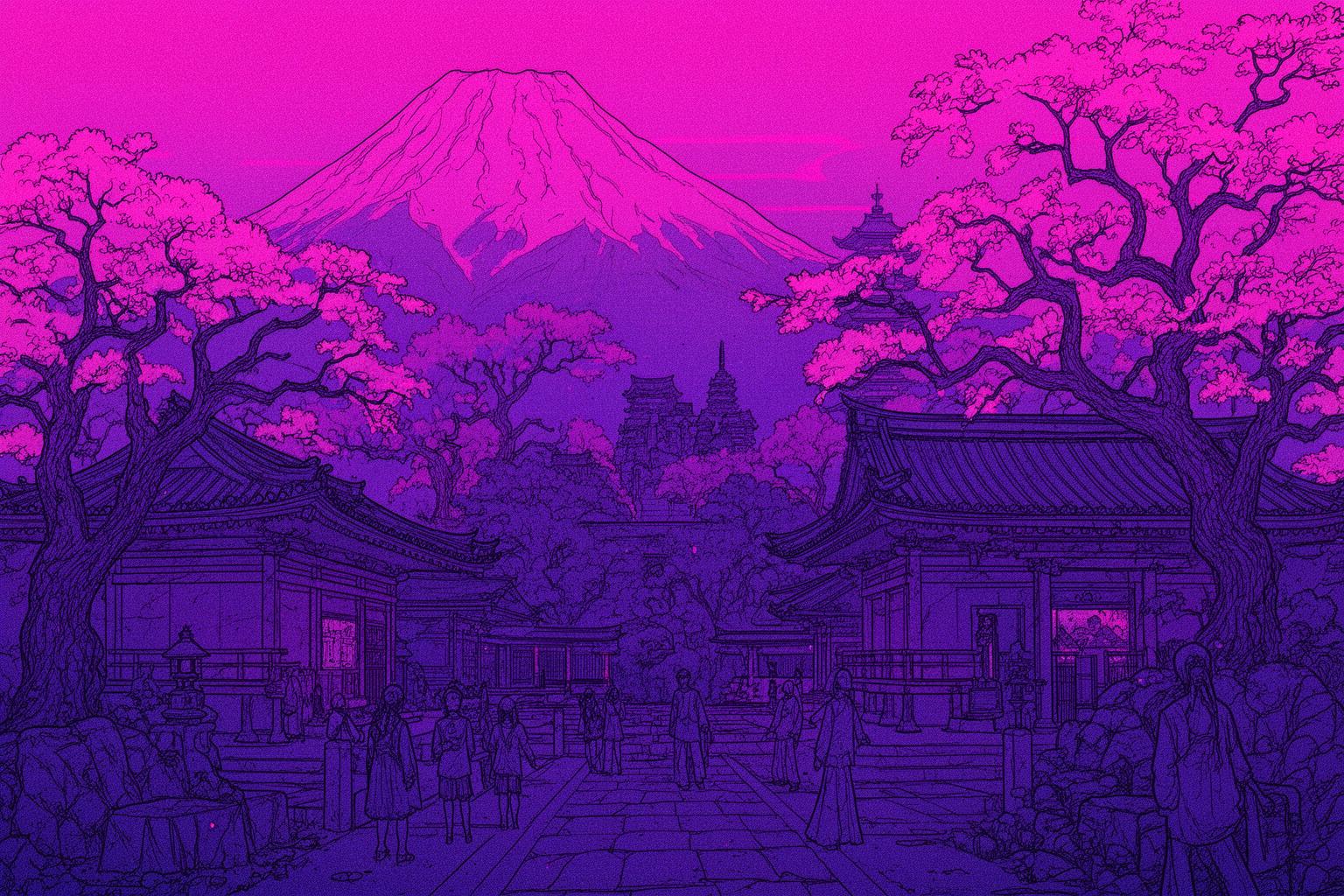
To truly grasp what sets 90s J-Horror apart, you need to understand the atmosphere it emerged from. The 80s were loud on a global scale. Slasher films dominated the West—think Freddy, Jason, Michael Myers. It was all about a clear, physical threat with a knife, loud musical cues, and a body count you could easily track. Japan experienced its own share of gore and chaos, but as the 90s approached, things shifted. The economic bubble burst, uncertainty seeped into the national psyche, and technology began to feel less like a promise and more like an intrusive presence. This created the perfect conditions for a new style of horror, one reflecting a growing internal, creeping anxiety.
This is where the ninja-like suspense enters. It marked a shift from external, physical dangers to internal, psychological invasions. The monsters of this time weren’t just lurking under the bed; they hid in signals, phone lines, or the apartment next door. They moved with a stealth far more unnerving than a guy in a hockey mask. Why? Because you couldn’t fight them or run away. They were an idea, a curse, a feeling. This new generation of filmmakers—directors like Hideo Nakata, Kiyoshi Kurosawa, and Takashi Shimizu—recognized that real fear isn’t about sudden shocks. It’s about the slow, agonizing, drawn-out dread. It’s the sensation of being watched when there’s no one there. It’s a two-minute shot of an empty hallway where nothing happens, but your heart races because you know something’s wrong. The vibe is deeply, fundamentally off. They weaponized atmosphere, transforming ordinary places into pressure cookers of tension. A typical Tokyo apartment, a high school, a sterile hospital room—these became the new haunted castles. The horror was found in the everyday, making it feel like it could happen to you. It wasn’t just a movie anymore; it was a potential reality, and that’s a huge evolution for a genre that changed everything.
This change traded spectacle for subtlety. Instead of fully revealing the monster in all its gory detail, these films offered hints: a flash of long black hair, a pale face in a reflection, a strange, out-of-place sound. Your mind fills in the rest, and honestly, the monster you imagine is always scarier than any CGI creature. This is the art of suggestion—a key element of traditional Japanese aesthetics—now harnessed for maximum psychological impact. It’s brilliantly clever and quietly devastating.
Ancient Spirits in a New Machine: The Cultural DNA
You can’t discuss J-Horror without acknowledging the centuries of ghost stories that preceded it. The spirits haunting 90s J-Horror are direct descendants of the yūrei (faint spirits) and, more specifically, the onryō (vengeful spirits) of Japanese folklore. These aren’t the friendly, Casper-like ghosts. Onryō are usually souls—often female—who died engulfed in intense anger, sorrow, or injustice. Their rage is so potent that it surpasses death, manifesting as a physical curse on the location where they died or on those who wronged them. This isn’t merely random haunting; it’s a focused, relentless, and often contagious form of vengeance.
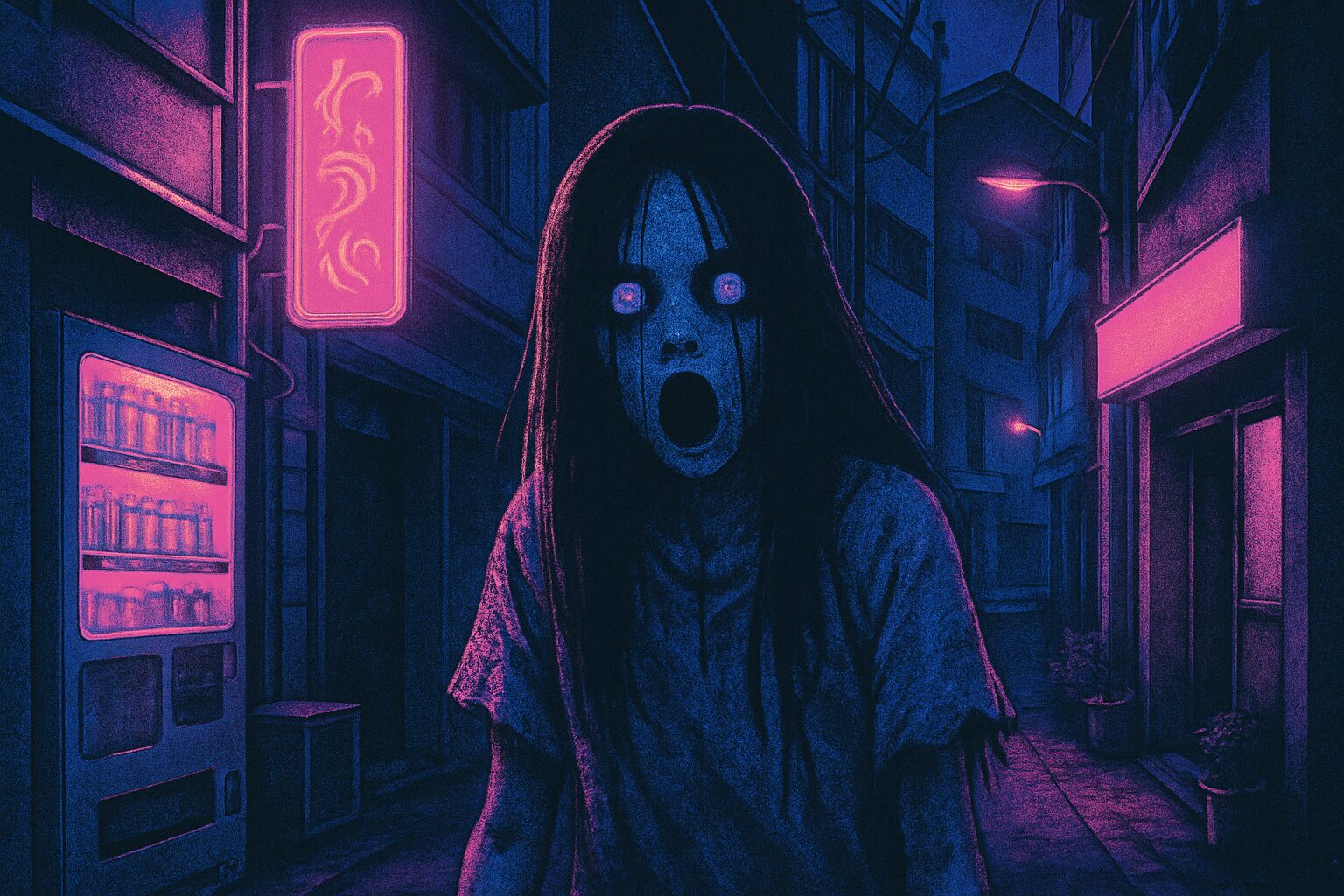
The classic onryō appearance is iconic for a reason: long, disheveled black hair obscuring the face, a simple white burial kimono, and pale skin. This isn’t just a spooky outfit; it’s a visual symbol steeped in tradition. Consider Oiwa from the famous kabuki play Yotsuya Kaidan, often regarded as the original onryō. Her tale of betrayal and horrific revenge established the template for centuries to come. Fast forward to the 90s: who do you recognize? Sadako Yamamura from Ring. Kayako Saeki from Ju-On. They are Oiwa’s digital-age descendants, swapping the old feudal realm for a new one: our media-saturated reality. Their hair remains long and black, their rage is still deeply rooted, but their method of delivery has evolved. The curse is no longer bound to a single bloodline or physical place; it can now be copied, transmitted, and spread like a virus via a VHS tape or a haunted house that infects anyone who enters.
Another essential cultural concept at work here is ma (間), which can be translated as negative space, interval, or pause. In traditional Japanese art, music, and architecture, empty space holds as much importance as filled space. It’s the silence between the notes that gives the music its power. J-Horror directors are masters of cinematic ma. They employ long, lingering shots, pregnant pauses in dialogue, and eerie quietness to build tension. The fear lies not in the action itself but in the anticipation of action. That empty hallway, flickering TV screen, or dark corner of the frame—these are filled with ma, and our frightened minds rush to fill that emptiness with the worst imaginable horrors. It’s a psychological judo move. The filmmaker isn’t directly scaring you; they’re crafting the ideal conditions for you to scare yourself. This is the core of that ninja-like suspense. The attack is indirect, nearly invisible, yet its effect is total.
Case Study: Ring (1998) – The Ghost as a Virus
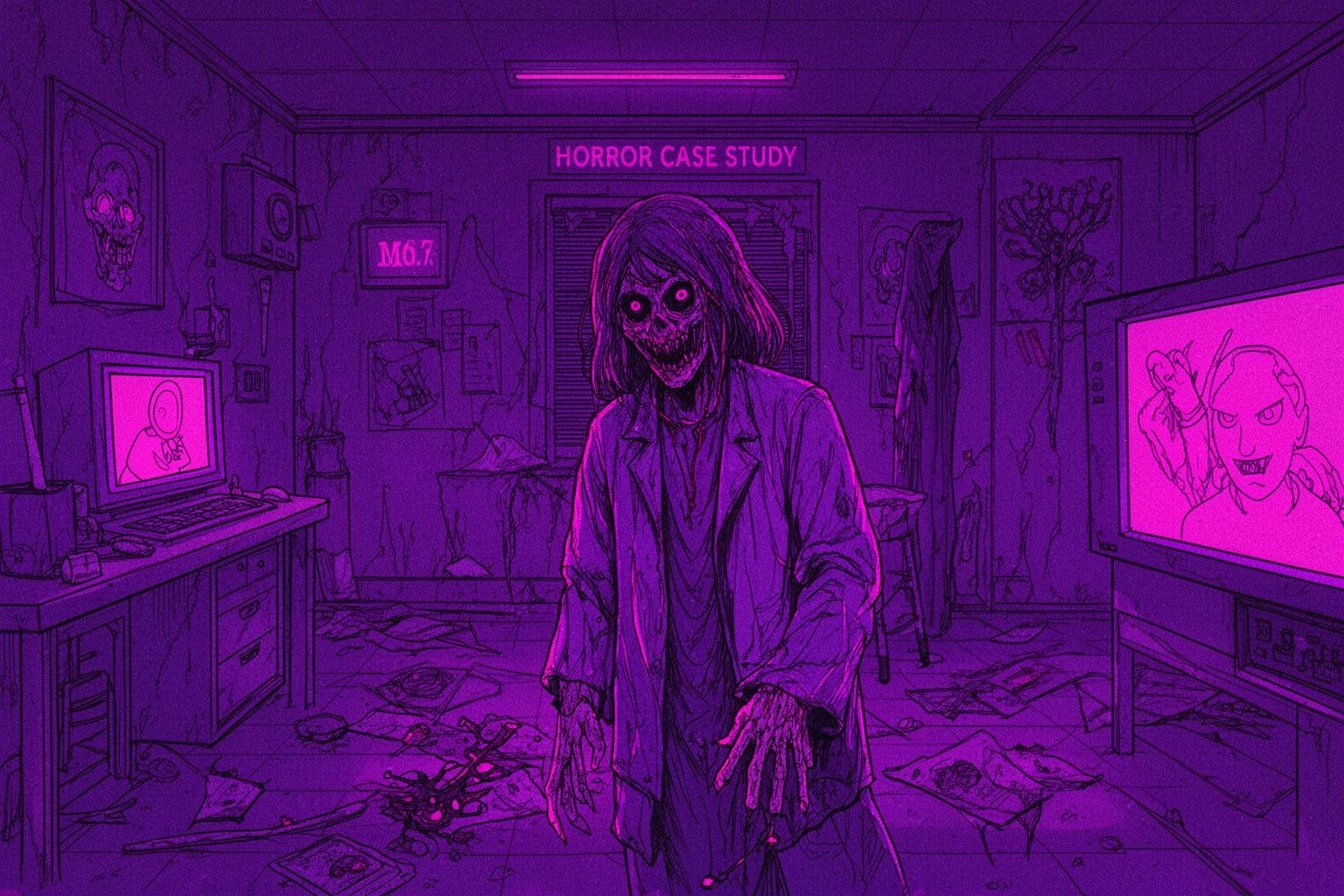
Alright, let’s dive into the heart of the film that essentially propelled the J-Horror phenomenon to unprecedented heights: Hideo Nakata’s Ring. If there’s any perfect example of a ninja-like ghost, it’s Sadako Yamamura. She is the ultimate stealth predator of the modern era. She doesn’t need to kick down your door or chase you with a weapon. Instead, she sends you a link. A cursed VHS tape. You watch it, the phone rings, and a voice says, “Seven days.” That’s it. The deal is sealed. The countdown begins.
What makes this premise so brilliant is how it transforms technology—something meant to connect and entertain us—into a carrier for a supernatural plague. The VCR, a fixture in every 90s household, becomes a Trojan horse for an ancient evil. The horror isn’t lurking in a distant, eerie castle; it’s right there in your living room, coming straight from your TV. The film’s protagonist, a journalist named Reiko, doesn’t battle Sadako with weapons. She fights her with information. The first half of the movie unfolds like a detective story, a desperate quest to uncover the origins of the curse before time runs out. This slow-burn, investigative approach is essential. It allows the dread to creep in gradually. We’re not just watching a horror film; we’re piecing together the mystery alongside Reiko, and with every clue about Sadako’s tragic history, the sense of looming doom intensifies.
Sadako’s movements define unease. When we finally see her, she doesn’t run or fly. She moves with a jerky, unnatural, almost non-human gait. It’s as if her body defies the laws of physics—a glitch in reality itself. Her most iconic moment—climbing out of the TV—is a stroke of horror genius. It’s the ultimate breach of a safe space. The boundary between the fictional world on the screen and the real world of the viewer is shattered. She’s no longer just a character in a movie; she’s right there with you. Nakata’s direction in this scene is pure brilliance. There are no elaborate effects. It’s simply a static shot of the TV, the figure emerging closer and closer from the well, then slowly crawling out of the screen. The fear arises from its stark, unblinking realism. There’s no musical cue, only the sound of the tape and the eerie creak of her movements. She’s a ghost for the digital age, a story replicating itself to survive. The only way to save yourself is to copy the tape and show it to someone else, making you an unwitting accomplice in spreading the curse. You don’t defeat Sadako; you merely pass the horror along. It’s a chillingly modern twist on an ancient folk tale and perfectly captures that stealthy, infectious terror.
Case Study: Cure (1997) – The Mind Ninja
Now let’s discuss a film that explores the “ninja” concept purely through psychological means. Kiyoshi Kurosawa’s Cure isn’t a ghost story, yet it stands as one of the most chilling films ever produced in Japan, with suspense that is entirely ninja-like. The threat here isn’t supernatural; it’s a man named Mamiya, an amnesiac possessing a remarkable ability to unlock the hidden murderous rage within ordinary people simply through hypnotic suggestion.
He is the ultimate psychological ninja. He doesn’t kill anyone himself, nor does he explicitly order others to kill. He merely asks questions. He engages in seemingly normal conversations, uncovers the small cracks in their psyche—the repressed frustrations and resentments—and gently pries them open. He’s like a human virus infecting the mind. Those he interacts with—a police officer, a teacher, a doctor—go on to commit brutal murders, marking their victims with a bloody ‘X’ carved into the neck, yet they have no real memory of why they acted. They only felt an uncontrollable urge. The horror in Cure lies in the terrifying notion that the barrier between our civilized selves and our most primal, violent impulses is razor-thin. Mamiya doesn’t create the monster; he merely reminds it that it exists.
Kurosawa is a master of atmosphere, and Cure stands as his magnum opus of dread. The film is shot in a washed-out, sickly color palette. The settings are all liminal spaces: decaying industrial sites, sterile interrogation rooms, peeling apartments. A constant low hum of industrial noise fills the background, evoking a sense of urban decay and spiritual rot. The pacing is deliberately slow, featuring long takes where characters simply stare into space—it’s deeply unsettling. We follow Detective Takabe as he investigates these bizarre, motiveless crimes, and the deeper he delves, the more his own sanity unravels. His pursuit of Mamiya transforms into a battle of wills, a psychological chess match with ever-shifting rules. Mamiya’s power lies in his emptiness, his lack of identity. He is a mirror reflecting back the darkness within everyone he encounters. This represents a far more insidious form of horror, suggesting that evil is not external but already resides within us, waiting for a small push. Mamiya is the whisper in the dark that delivers that push, a silent assassin of the soul.
Case Study: Audition (1999) – The Slow-Burn Infiltration
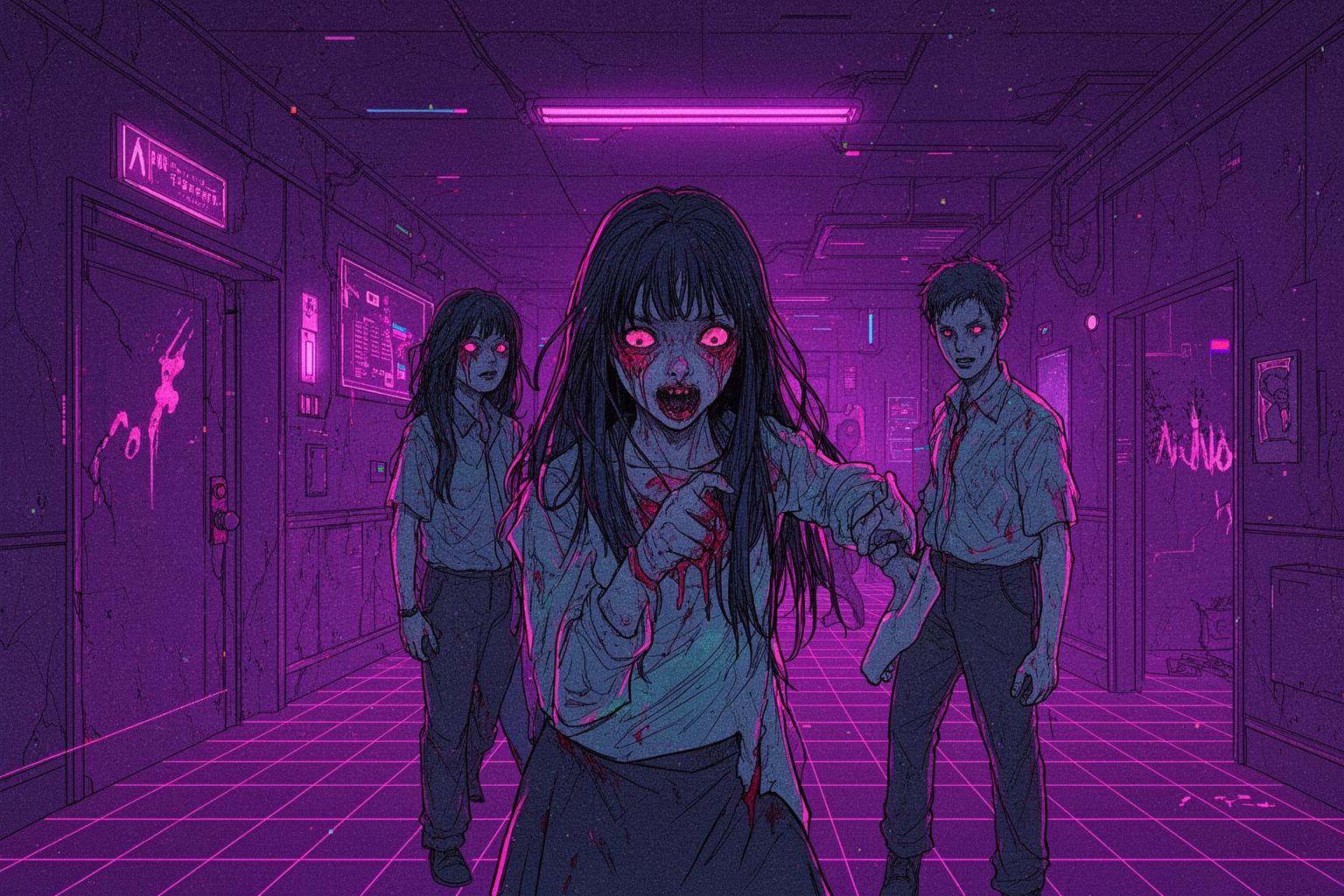
Takashi Miike’s Audition is a film that takes its time. During the first hour, you might easily believe you’re watching a quirky romantic drama. It follows Aoyama, a lonely widower who, at the suggestion of his film producer friend, holds a fake movie audition to find a new wife. He becomes enamored with Asami, a shy, beautiful former ballerina with a mysterious past. The tone is sweet and melancholic, creating a relaxed atmosphere. But that’s the trap.
Asami is the true ninja here, though her skill lies in deception. She presents herself as the perfect, submissive, traditional Japanese woman—the ultimate male fantasy. She integrates herself into Aoyama’s life so seamlessly and thoroughly that he never realizes the danger until it’s far too late. Miike crafts the suspense with masterful patience, dropping subtle, unsettling hints that something is off about Asami. A strange story from her past. A phone call revealing her apartment is empty except for a large, ominous sack. A contact listed on her resume turning up dead. Blinded by infatuation, Aoyama dismisses these red flags. Meanwhile, the audience begins to sense a growing cold dread. We know he’s walking into a trap, but the nature of it remains unknown. The tension arises from this dramatic irony: we watch a man fall in love with a monster, while he remains completely unaware.
The final act of Audition is famously one of the most brutal and harrowing sequences in cinema history. Its effectiveness stems from the slow, deliberate build-up preceding it. The psychological horror in the first two-thirds of the film gives the physical horror in the last third its devastating impact. Asami’s revenge is not random; it’s a calculated response to Aoyama’s deception (the fake audition) and his failure to love her exclusively. Her methods are quiet, precise, and disturbingly intimate. The use of acupuncture needles and piano wire is not the work of a furious monster but of a meticulous predator. She immobilizes him, tortures him, all while whispering “kiri, kiri, kiri” (deeper, deeper, deeper). It’s a chilling deconstruction of romantic ideals and gender roles. Asami is the ultimate ninja of the heart, enticing her target with a guise of vulnerability before striking with absolute precision. The suspense in Audition isn’t driven by jump scares but by the slow, horrifying realization that the person you thought you knew is a complete stranger—and they are about to inflict unimaginable pain.
The Aesthetics of the Unseen
So how did these directors achieve this ninja-level suspense? It all comes down to a distinct set of filmmaking techniques that prioritize mood above all else. This aesthetic of subtle dread is what makes these films uniquely chilling.
First, sound design—or more accurately, the absence of it. 90s J-Horror is quiet. Silence becomes a character in its own right, creating a void that your mind fills with anxiety. When sound does surface, it’s purposeful and impactful. It’s not a loud orchestral score dictating your fear; it’s something far more organic and unsettling. Think of the strange, garbled, distorted noises on Sadako’s cursed videotape, sounding like something from another dimension. Or the iconic death rattle of Kayako in Ju-On, produced solely with the human throat—a guttural croak instantly recognizable and bone-chilling. It’s not a scream but the sound of a voice box shattered, a life violently ended. These unnatural sounds disrupt the normal soundscape of reality, signaling that something is profoundly wrong.
Next comes the cinematography. Forget shaky cams and frantic cuts—J-Horror directors from this period favored long takes and static shots. They’d lock the camera in place and let the scene unfold naturally. This does a couple of things: it forces you to scan the frame, peer into dark corners, and search for threats. It builds immense tension as you wait for something—anything—to happen. Often, the horror occurs in the background, out of focus or on the frame’s edge: a pale face in a window, a shadowy figure at the end of a long hallway. This technique mirrors how peripheral vision works, making scares feel organic rather than cheap tricks. The use of banal, everyday spaces is also crucial. Horror is framed by bland beige walls, fluorescent lighting, and cluttered rooms. This visual style—often lo-fi and grainy, like home video—grounds the supernatural in stark reality, heightening its believability and terror. It feels less like polished Hollywood and more like disturbing found footage.
Finally, the pacing. Perhaps the biggest distinction between J-Horror and its Western counterparts is that these films are slow. They take their time, uninterested in delivering constant adrenaline rushes. Instead, they cultivate a single, sustained mood: dread. The story unfolds gradually, piece by piece, often focusing on isolated, lonely characters who mirror the viewer’s experience. This slow-burn approach tests patience, but the payoff is immense. By the climax, you’re not just scared—you’re emotionally and psychologically drained. Fear has been simmering inside you for 90 minutes, and the release is both terrifying and cathartic. It’s a completely different rhythm of horror, one that lingers long after the credits roll. It’s not a quick slash; it’s a slow-acting poison. It’s the ninja way.
The Haunting Legacy: How J-Horror Went Global
The impact of this 90s wave was, to say the least, enormous. Hollywood took significant notice. The early 2000s were flooded with American remakes: The Ring (2002), The Grudge (2004), Dark Water (2005). These films became major box office hits and introduced a whole new audience to J-Horror tropes—the long-haired female ghost, the cursed technology, and the emphasis on investigation and mystery.
However, here’s the thing about a ninja: they’re difficult to replicate. While some remakes, particularly Gore Verbinski’s The Ring, succeeded in capturing the atmospheric dread, many fell into a familiar pitfall. They replaced the original’s quiet, subtle suspense with a heavy dose of Hollywood jump scares. The ma, that crucial negative space, was often crowded with loud musical cues and rapid cuts. The slow-burn pacing was accelerated to cater to an audience thought to have a shorter attention span. They got the aesthetic—the ghost’s appearance—but often missed the essence, the deep cultural roots, and the patient, psychological terror that made the originals so effective. The ninja’s stealth was swapped for a more overt, forceful approach.
Still, the influence of 90s J-Horror is undeniable and extends far beyond the remakes. Its DNA is evident in much of what is now labeled “elevated horror” or “arthouse horror.” Consider modern horror films that favor atmosphere and psychological dread over cheap shocks. Films like It Follows, with its relentless, slow-moving supernatural pursuer, feel like a direct spiritual successor to the unstoppable curse of Ring. The works of directors such as Ari Aster (Hereditary, Midsommar) and Robert Eggers (The Witch), with their focus on slow-building tension, family trauma, and inescapable doom, clearly owe a debt to the path paved by filmmakers like Kiyoshi Kurosawa. 90s J-Horror demonstrated that you don’t need a huge budget or flashy effects to be terrifying. What you need is a profound understanding of human psychology, mastery of atmosphere, and the courage to embrace silence. It taught a generation of filmmakers that what you don’t show often wields more power than what you do. It was a paradigm shift that continues to echo throughout the genre today—a quiet ghost whose presence remains strongly felt.
Your First Mission: How to Vibe with J-Horror
Feeling brave? Ready to venture into the shadows yourself? Bet. Here’s a brief guide for first-timers eager to experience this iconic era of cinema. First things first: set the mood. This isn’t a movie to have playing in the background while you scroll through your phone. You need to give it your full attention. Turn off the lights, put your phone away, and turn up the volume. A good pair of headphones is a game-changer, heightening your awareness of the subtle, eerie sound design. The goal is immersion—to let that quiet dread wash over you.
Where to begin? You can’t go wrong with the holy trinity: Ring (1998) is the perfect starting point. It’s a brilliant mystery and a masterclass in building tension. Next, dive into Ju-On: The Grudge (the 2002 theatrical release is the most well-known, but the original V-cinema versions from 2000 are even rawer and scarier if you can track them down). This one focuses less on a linear plot and more on pure, nightmarish atmosphere. It’s a haunted house experience captured on film. After that, if you’re ready for something more cerebral and existentially terrifying, watch Cure (1997). It will play with your mind in the best way possible. And for those who can handle a slow-burn romance spiraling into unspeakable horror, Audition (1999) is essential viewing.
While watching, pay close attention to the little details. Notice how space is used within the frame. Observe what’s happening in the background. Listen for sounds that shouldn’t be there. Try to tune into the film’s wavelength. Don’t get frustrated with the slow pacing; see it as part of the experience. It’s designed to lull you into a false sense of security, making you vulnerable. Be prepared for ambiguous endings, too. These films aren’t interested in tying everything up neatly. They often conclude on a note of despair, suggesting the curse continues, the cycle unbroken. The horror doesn’t end when the credits roll. It’s a feeling meant to linger, making you glance twice at the static on a screen or the dark corner of your own room. That’s the true mark of a successful mission. The fear follows you home.
The Last Whisper
The golden era of 90s J-Horror was a distinctive moment, a perfect convergence of cultural unease, technological shifts, and creative brilliance. This cinematic movement transformed the horror genre, replacing loud shocks with a subtle, creeping dread that was far more insidious. The “ninja-like” suspense it mastered—stealthy, precise, and psychologically shattering—was more than a trick; it mirrored a world confronting new, unseen fears. These films grasped that the scariest ghosts aren’t those that scream in your face, but those that whisper through the static, slipping into your life so quietly you don’t realize until it’s too late. They stand as a tribute to the power of suggestion, atmosphere, and the primal terror of the unknown. So, when you’re seeking a scare, consider forgoing the slasher and embrace the silence. Let the shadows grow long, hit play, and allow the quiet dread to take hold. It’s a feeling that, once it takes hold, never truly lets go.