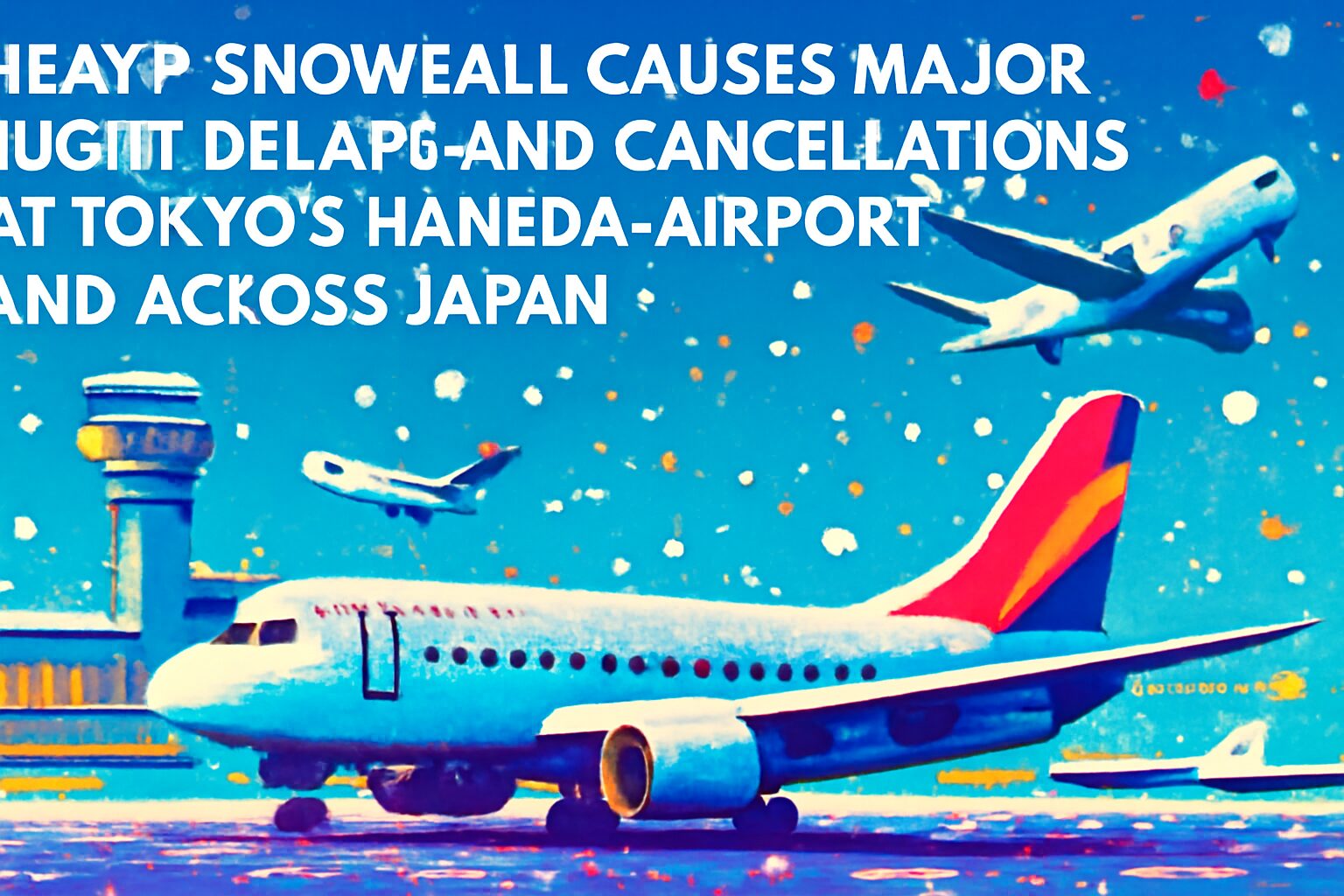
Widespread Travel Chaos as Winter Storm Hits Japan During Peak New Year Season
A severe winter storm has brought heavy snowfall to large parts of Japan, causing significant disruption to air travel on January 2nd. Tokyo’s Haneda Airport (HND), one of the world’s busiest airports, has become the epicenter of widespread delays and cancellations, affecting thousands of travelers during the peak New Year holiday return period. All Nippon Airways (ANA), one of the country’s major carriers, has reported major operational difficulties, with ripple effects impacting airports nationwide.
Background: New Year’s Travel Meets Severe Weather
The first week of January is traditionally one of the busiest travel periods in Japan. Millions of people return to their hometowns or take vacations for the New Year’s holiday, known as Oshogatsu. This year, the U-turn rush coincided with a powerful cold front, creating a perfect storm for travel chaos.
While heavy snow is common in northern regions like Hokkaido and areas along the Sea of Japan, significant snowfall in the Tokyo metropolitan area can severely cripple its highly concentrated transportation infrastructure. Haneda Airport serves as a critical hub for both domestic and international flights, meaning any disruption there quickly cascades throughout the entire country’s aviation network.
On-the-Ground Impacts: De-Icing Delays and Mounting Cancellations
Airlines are grappling with the severe weather conditions. The primary causes for the extensive delays are the time-consuming process of aircraft de-icing and deteriorating runway conditions, which slow down takeoffs and landings.
According to reports from ANA, flights operating out of major hubs, especially Haneda, are experiencing significant schedule changes. The impact is not localized; routes from Hokkaido in the north to Western Japan are facing numerous cancellations. This has left thousands of domestic and international passengers stranded, scrambling to rebook flights or find alternative transportation.
Advice for Travelers
If you are scheduled to fly to, from, or within Japan in the coming days, it is crucial to stay informed and be prepared for potential disruptions.
- Check Your Flight Status: Before heading to the airport, check the latest status of your flight directly with your airline via their official website or mobile app.
- Contact Your Airline: For information on rebooking or refunds, contact your airline’s customer service. Be aware that call centers may be experiencing high call volumes.
- Consider Alternatives: While air travel is heavily impacted, other transport options like the Shinkansen (bullet train) may also experience delays due to weather. Check their operational status as well.
- Pack Patience: Airports will likely remain crowded and chaotic for several days. Allow extra time for check-in and security procedures.
Outlook: Lingering Disruptions Expected
Even after the snow stops, the knock-on effects are expected to last for several days. Airlines will face a backlog of canceled flights and displaced passengers, leading to continued congestion and high demand for available seats. Travelers with flexible itineraries may want to consider postponing their travel if possible. The situation remains fluid, and further updates from airlines and airports are expected as they work to restore normal operations.