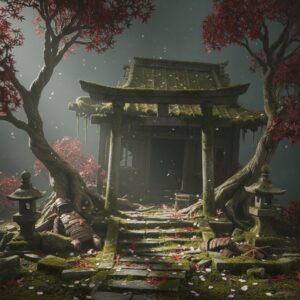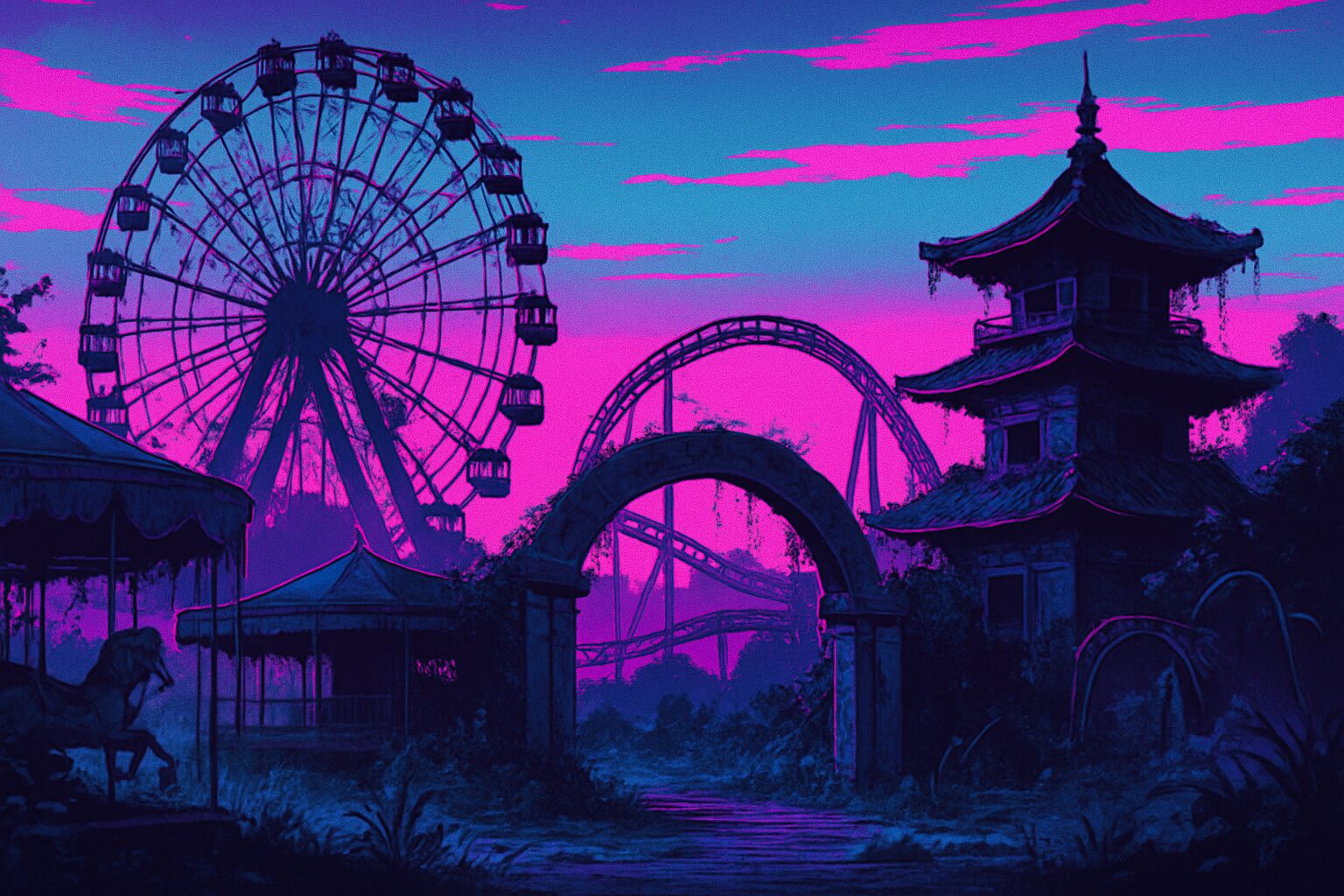
Yo, what’s up, fellow travelers! It’s Emily, and today we’re ditching the neon glow of Shibuya Crossing and the serene vibes of Kyoto’s temples for something… different. We’re diving headfirst into the world of haikyo—the Japanese art of exploring ruins. But we’re not just talking about any old crumbling buildings. We’re chasing the ghosts of laughter and cotton candy, venturing into the surreal, silent worlds of Japan’s abandoned amusement parks. These places are straight-up time capsules, monuments to a wild era of economic boom and bust. They’re where dreams went to die, but in their decay, they’ve found a new, hauntingly beautiful kind of life. It’s a side of Japan that’s low-key melancholic, intensely atmospheric, and absolutely unforgettable. Forget what you think you know about Japan; we’re about to explore the beauty in the breakdown, the poetry in the peeling paint. These parks aren’t just ruins; they are sprawling canvases of faded joy, reclaimed by nature with a quiet, powerful grace. They represent a Japan that bet big, dreamed bigger, and then woke up to a different reality, leaving these massive playgrounds as silent witnesses. Stepping into one is like walking through a Studio Ghibli film directed by a post-apocalyptic visionary—surreal, beautiful, and deeply moving. It’s a next-level travel experience that connects you to the country’s modern history in a way no museum ever could. So, get ready to explore the eerie silence where screams of joy once echoed.
For a deeper look into the era that created these surreal landscapes, explore the faded glamour of Japan’s bubble-era resorts.
The Ghost of a Fairytale: Nara Dreamland, The Lost Kingdom
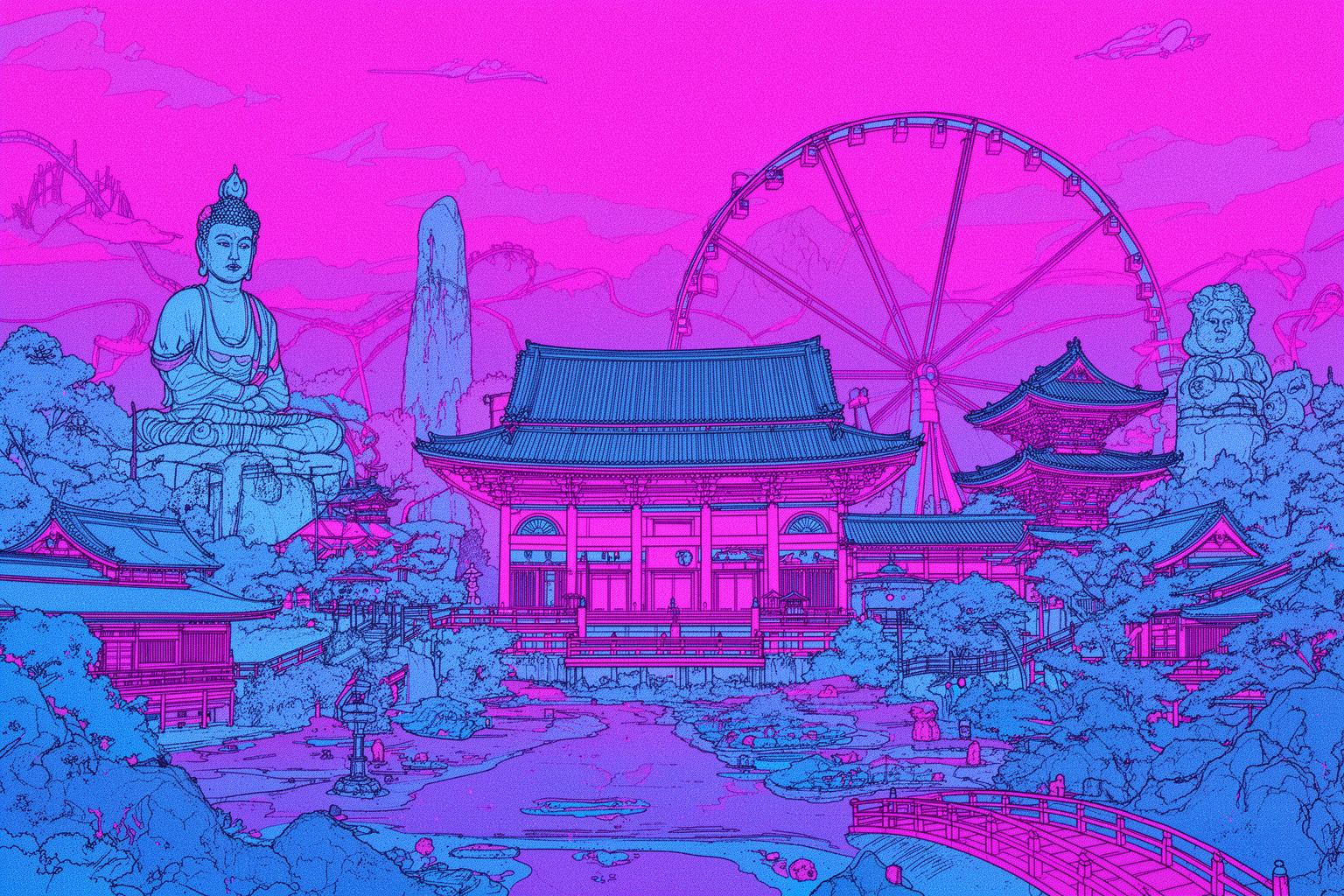
If there’s one place that reigns supreme as the undisputed king of Japanese amusement park haikyo, it’s Nara Dreamland. This site is legendary. Opened in 1961, it was Japan’s bold answer to Disneyland, born from a vision to bring a slice of that Californian magic to the Kansai region. For decades, it was a true wonderland, a spot where families created memories against the backdrop of a fairytale castle and thrilling rides. But as bigger, flashier parks like Tokyo Disneyland and Universal Studios Japan emerged, Dreamland’s shine began to fade. Visitor numbers dropped, and in 2006, the gates closed forever, leaving the entire park to the mercy of time and nature. What remains is a sprawling, hauntingly beautiful ghost of its former glory, a place that floods you with nostalgia so strong it feels like walking through someone else’s faded photograph. Though the park was fully demolished in recent years, its legend lives on in the world of urban exploration, setting the standard by which all other haikyo are measured. Its story stands as a poignant reminder of the impermanence of even the happiest places.
A Dream Imported: The Disneyland Connection
The origin of Nara Dreamland is fascinating. The park’s founder, Kunizo Matsuo, visited the newly opened Disneyland in America and was utterly impressed. He even met Walt Disney himself to discuss bringing the concept to Japan. At first, a partnership seemed likely, but disagreements over licensing fees led Matsuo to go solo. The result was a park that was, to say the least, heavily inspired by its American counterpart. It featured its own Main Street, a pink fairytale castle that looked suspiciously familiar, and various themed lands. But rather than a cheap imitation, Dreamland possessed its own unique, Showa-era charm. It stood as a testament to Japan’s post-war ambition and its remarkable ability to adopt and adapt foreign culture. For years, it thrived as a symbol of the nation’s growing prosperity. Standing within its silent ruins before demolition, you could almost sense the phantom energy of that initial burst of optimism—a dream of a Japanese-style American paradise that, for a time, was breathtakingly real.
Walking Through a Memory: The Vibe of the Park
Exploring Nara Dreamland (when it still stood) was a deeply atmospheric experience. The silence was the first thing that struck you. It was a heavy, layered silence, broken only by the creak of rusty metal in the wind and the calls of birds that had made the park their home. Nature was in the midst of full-scale reclamation. Weeds pushed through cracks in the pavement of Main Street, ivy crept up the fairytale castle, and the water in the log flume ride was stagnant and murky green. The vibe was a mixture of profound sadness and serene beauty. It was a place of complete contradiction. The cheerful, pastel colors of the carousels and tea cup rides were peeling and faded, covered in grime. The smiling faces of cartoon mascots were weather-beaten and eerie. Every corner told a story. You could almost hear the phantom echoes of carousel music, the distant roar of a roller coaster, and the laughter of children. It was a powerful, melancholic feeling—a direct confrontation with the passage of time and the fragility of human creations. It wasn’t frightening like a horror film; it was haunting in a deeply emotional, philosophical way. It made you reflect on your own memories, your childhood, and how swiftly time passes.
Icons in Repose: The Castle, The Coaster, The Carousel
Certain structures within Nara Dreamland were simply iconic. The centerpiece, naturally, was the Sleeping Beauty-like castle. Standing before it, silent and surrounded by overgrown gardens, was a surreal experience. It was the heart of a dead kingdom, a symbol of a dream that had ended. Then there was Aska, a massive wooden roller coaster that dominated the park’s skyline. Its intricate wooden framework, graying and weathered, was a masterpiece of defunct engineering. You could almost sense the ghost of its thunderous roar as cars once sped along its tracks. It was a sleeping giant, its immense power now completely dormant. The carousel, with its beautifully crafted horses frozen mid-gallop, their paint cracked and peeling, was another poignant sight. These weren’t just decaying rides; they were sculptures of memory, each telling a tale of joy and abandonment. The intricate details—from the ornate decorations on the carousel to the design of the lamp posts on Main Street—spoke of a level of craftsmanship and care that made the park’s current state all the more heartbreaking. It was a world-class playground slowly, gracefully returning to the earth.
Cowboys and Collapse: The Surreal World of Western Village
If Nara Dreamland was a faded fairytale, then Western Village, or Uesutan Virreji, situated in Tochigi Prefecture, was a strange, sun-bleached fever dream. This place was next-level weird and wonderful. Opened in 1975, it was a theme park devoted to the American Old West, a concept that feels both incredibly specific and uniquely Japanese. Picture a full-scale Western town, complete with a saloon, a sheriff’s office, and a bank, all inhabited by animatronic cowboys and townsfolk. The park even featured a massive, one-third scale replica of Mount Rushmore. For years, it was a favorite destination for families seeking a taste of Americana. But like many theme parks from its era, it couldn’t keep pace with shifting tastes and economic realities. It closed in 2007, leaving behind one of the most surreal haikyo sites in the country. It’s a place where the American frontier mythos collided with Japanese pop culture before being left to slowly decay, creating a scene that feels like something out of a forgotten sci-fi movie.
Westworld, Japan-Style: The Bizarre Concept
The entire concept behind Western Village offers a fascinating glimpse into Japan’s relationship with American culture. The park was a full immersion into a romanticized, Hollywood-style Old West. There were live-action shootouts, staged bank robberies, and performances featuring can-can dancers. The main attraction was a huge indoor ride where visitors traveled through scenes populated by dozens of animatronic characters, from gunslingers to prospectors. The attention to detail was astonishing. The park wasn’t just a group of buildings; it was an effort to create a living, breathing world. This wasn’t merely a theme; it was a complete dedication to a vibe. The existence of such a place reveals the global reach of American pop culture, as well as Japan’s unique ability to take a foreign concept and make it entirely its own, with a level of devotion that is both impressive and slightly bewildering. It was as much a cultural artifact as it was an amusement park.
The Silence of the Saloon: An Atmosphere Frozen in Time
Entering the abandoned Western Village is a remarkable experience. Unlike other parks overrun by nature, much of Western Village was indoors or sheltered, preserving it in an eerie state of suspended animation. You could step into the saloon and find poker chips still scattered on a table, as if the players just walked away. The animatronic figures were the most haunting aspect. They stood frozen mid-gesture, their synthetic skin peeling and glass eyes staring blankly into the dusty air. A robotic bartender remained ready to pour a drink that would never come. Animatronic bank tellers slumped over their counters. It was a whole town of artificial people, switched off and left to rot. The atmosphere was thick with a sense of sudden abandonment. It felt less like gradual decay and more like a place flash-frozen in its last moments. The silence here was different from Nara Dreamland’s—it was the silence of a held breath, an interrupted story. Dust motes danced in shafts of light filtering through grimy windows, seemingly the only things moving in this static, silent world.
That Mount Rushmore Vibe: Unforgettable Sights
The most striking feature of Western Village was undoubtedly its replica of Mount Rushmore. Seeing the iconic faces of Washington, Jefferson, Roosevelt, and Lincoln carved into a man-made mountain in rural Japan is an astonishing experience in itself. Seeing it abandoned, with weeds creeping from the presidential heads and grime streaking their faces, is on another level entirely. It stands as a powerful symbol of a faded dream—a grand, ambitious project now looking absurd and melancholy in disuse. Inside the main buildings, other sights were equally memorable: a life-sized animatronic of John Wayne on his horse, now covered in thick dust; a fake chapel with a robot priest waiting for a congregation that would never come. These were not just quirky novelties but deeply unsettling relics. Western Village was a masterclass in surreal decay, a place blurring the line between kitsch and art, comedy and tragedy. It stood as a monument to a bizarre chapter in entertainment history, preserved now in a beautiful, dusty ruin.
A Giant Slumbers: Gulliver’s Kingdom
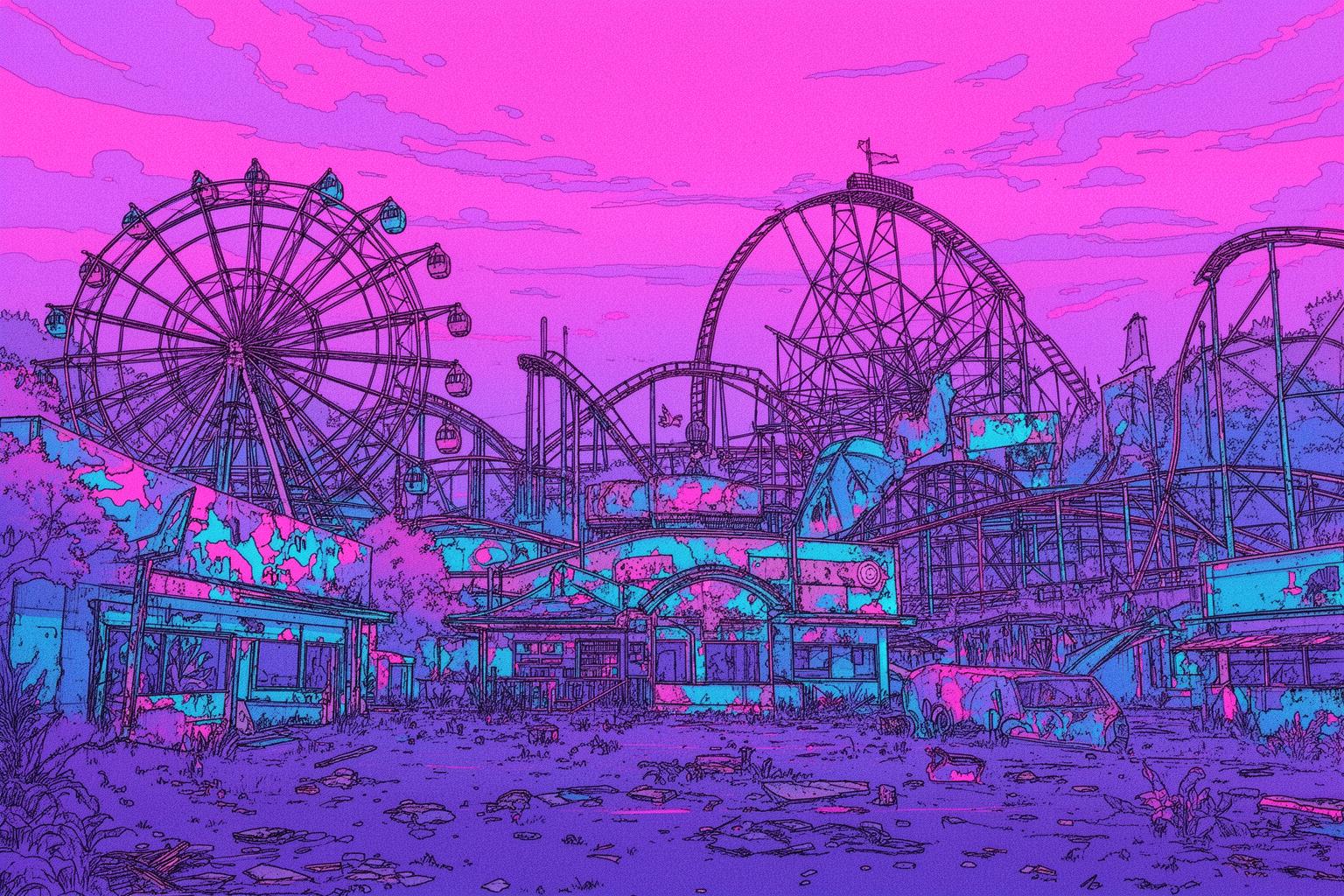
Sometimes, a theme park is destined to fail from the beginning. Such is the story of Gulliver’s Kingdom, a park that operated for just four years, from 1997 to 2001. Situated at the base of Mount Fuji, its location appeared idyllic, yet it faced a couple of significant challenges. First, it was funded by a bank that collapsed during the Asian financial crisis. Second, and more unsettling, it was located right next to Aokigahara, Japan’s notorious “suicide forest”—hardly the cheerful, family-friendly atmosphere one would want for an amusement park. The park was themed around Jonathan Swift’s novel Gulliver’s Travels, with its centerpiece being a truly astonishing sight: a 147-foot-long statue of Lemuel Gulliver, tied down just as he was in the land of Lilliput. After the park’s rapid closure, this giant statue was left exposed to the elements, becoming one of the most iconic and eerie haikyo images ever seen.
A Literary Legend Brought Low
The idea of a park based on a classic piece of 18th-century English satire was already quite niche. Gulliver’s Kingdom was a daring, though perhaps flawed, effort to bring literature to life. The park featured attractions inspired by Gulliver’s various adventures, including a bobsled run and several smaller rides. Still, everything was overshadowed by the massive Gulliver statue. It was an impressive construction—a colossal human figure lying flat on the ground. While the park was operating, visitors could walk around and even over him, experiencing something of the perspective of the tiny Lilliputians. Once abandoned, the statue took on a different significance. It became a symbol of a fallen giant, a grand and ambitious project undone by circumstances beyond its control. Nature began reclaiming its concrete limbs, and its painted face started to fade and peel, evoking a sorrowful, sleeping expression. It stood as a poignant, literal representation of a dream defeated.
The Sense of Insignificance
The atmosphere at the deserted Gulliver’s Kingdom was dominated by the enormous scale of the central statue. Standing at the feet of the crumbling giant, framed by the majestic silhouette of Mount Fuji, was a humbling experience. It made you feel small and insignificant, like a tiny Lilliputian in a realm of forgotten giants. The mood was deeply melancholic, shaded by the dark legend of the nearby forest. The silence here felt heavier and more profound. Unlike the faded joy of Nara Dreamland or the strange stillness of Western Village, Gulliver’s Kingdom carried an air of genuine tragedy. It was the story of failure—a dream that barely took flight before crashing down. The image of that colossal, recumbent figure, a man-made titan slowly swallowed by the forest, stands as one of the most powerful metaphors of the haikyo phenomenon. It speaks to hubris, impermanence, and nature’s ultimate, inevitable triumph over human ambition. The park was completely dismantled in 2007, but its photos and tales endure—a chilling and beautiful cautionary story.
The Allure of Decay: Why We’re Obsessed with Haikyo
So, what’s the fascination? Why are we drawn to these places of decay and abandonment? It’s more than just the excitement of exploring forbidden territory. The appeal of haikyo, especially these forgotten amusement parks, resonates with something deep inside us. It’s an intersection of aesthetics, philosophy, and pure nostalgia. It’s about discovering a strange kind of beauty in what has been left behind and valuing the stories silent spaces hold. In a country like Japan, often viewed as hyper-modern and always moving forward, these pockets of stillness and decay offer a compelling counter-narrative. They serve as tangible reminders that time passes, things change, and nothing lasts forever. And there is a profound, quiet beauty in that.
Wabi-Sabi and Mono no Aware: The Japanese Art of Imperfection
When discussing ruins in Japan, you can’t overlook the concepts of wabi-sabi and mono no aware. These deeply rooted Japanese aesthetic ideals are crucial for understanding the haikyo atmosphere. Wabi-sabi embraces beauty in imperfection, impermanence, and incompleteness. It’s the charm found in a cracked tea cup, the patina on aged wood, or moss covering stone. Abandoned parks are essentially massive, walk-in illustrations of wabi-sabi. The peeling paint, rust, and encroaching nature—all are part of a natural cycle of aging and decay that carries its own subtle, unique beauty. Mono no aware differs slightly; it translates roughly as “the pathos of things” or “a gentle sadness at life’s transience.” It’s the bittersweet emotion evoked by watching cherry blossoms fall, knowing their beauty is fleeting. That same feeling envelops you when standing in a silent, empty amusement park—a tender sorrow for lost joy, faded dreams, and the passage of time. These philosophies provide a lens through which to appreciate these places not as failures, but as objects of reflective beauty.
A Snapshot of a Bygone Era
These parks also serve as priceless time capsules. Most were constructed during Japan’s “bubble economy” in the 1980s, a period marked by extraordinary economic growth and optimistic excess. Money was abundant, and building vast, elaborate theme parks seemed like a sound investment. When the bubble burst in the early ’90s, the economic environment shifted dramatically, and many parks could no longer sustain themselves. So, when you explore one of these sites, you’re not simply witnessing a ruin; you’re encountering a physical relic of a specific, high-flying moment in Japanese history. The design sensibilities, character mascots, and types of rides all reflect a distinct era. It’s a tangible connection to the past, a way to grasp the hopes and dreams of a generation. It’s history you can walk through and physically engage with, and that’s a powerful experience.
The Urbex Code: A Guide to Responsible Exploration
Alright, let’s be honest for a moment. While the idea of sneaking into a ghostly theme park sounds like an ultimate thrill, we need to consider the reality. Urban exploration, or “urbex,” involves a specific set of rules and risks, both legal and physical. These sites aren’t open to the public for good reasons. Before you even think about climbing a fence, you should understand what you’re getting into. It’s not only about respect; it’s about staying safe and avoiding legal trouble. The urbex community follows a strict code of ethics focused on preserving these remarkable places, not damaging them.
First Rule of Haikyo: It’s Likely Illegal
This is crucial. Nearly all of these abandoned parks sit on private property. Entering without permission is trespassing, which is illegal in Japan, just as it is in most countries. Being caught can result in fines, arrest, and possibly deportation for non-Japanese citizens. Local residents often keep a close watch on these areas, and property owners may have security cameras or patrols. The reality is, you’re taking a serious legal risk. This article doesn’t encourage breaking the law; it aims to explore the culture and aesthetic of these sites—often best appreciated through the amazing photos and documentation by experienced, responsible explorers.
The Real Dangers: Beyond Ghosts
Aside from legal consequences, these locations can be genuinely hazardous. We’re talking about structures that have been deteriorating for decades with no upkeep. Floors might be rotten, roofs could collapse, and rusty metal is everywhere. There’s a risk of falling through weak flooring or having debris fall on you. Many old buildings also contain dangerous materials like asbestos. Then there are natural threats. In rural zones, you might encounter wildlife ranging from snakes to wild boars. Getting hurt in a remote, abandoned place is a serious problem—you can’t just call for a quick rescue. These aren’t controlled environments; they’re unpredictable and potentially dangerous.
The Explorer’s Creed: Leave No Trace
For those who do take part in urban exploration, there is a universal rule: “Take only pictures, leave only footprints.” This is the golden rule. The responsible explorer’s goal is to document a place exactly as found, without altering anything. That means no graffiti, no vandalism, and no souvenirs. Destroying or stealing from a haikyo site isn’t exploration; it’s simply destruction and theft. It spoils the experience for future explorers and disrespects the site’s history. The beauty of these places lies in their preserved decay. The responsible community works hard to protect these fragile environments, often keeping locations secret to shield them from those who might cause harm.
Get Your Ruin Fix (Legally): Safe Alternatives
So, you’re captivated by the haikyo aesthetic but not keen on the trespassing aspect. Totally understandable. The good news is that there are perfectly legal and safe ways to experience the amazing sensation of exploring Japan’s history. These spots offer a similar atmosphere of decayed grandeur and historical richness, but without the danger of falling through a floor or getting arrested. From abandoned islands open for tours to remarkable open-air museums, you can satisfy your craving for ruins the legit way.
The Battleship Island: Gunkanjima
If you want to visit a world-famous, breathtaking ruin legally, look no further than Hashima Island, better known as Gunkanjima or “Battleship Island.” Located off the coast of Nagasaki, this was once a thriving undersea coal mining site and a city on the sea, home to thousands of residents. At its height, it was among the most densely populated places on Earth. When the mine shut down in 1974, the city was abandoned overnight. Today, it stands as a concrete ghost town. The sea-beaten apartment buildings, crumbling schools, and silent hospitals make for a truly haunting sight. You can’t wander freely due to safety concerns, but official boat tours land on the island and guide visitors through designated safe zones. It’s an unforgettable experience that offers an intimate, up-close view of a city claimed by the elements.
History Preserved: Meiji Mura and Open-Air Museums
For a different type of historical exploration, check out Japan’s incredible open-air architectural museums. The crown jewel is Meiji Mura, near Nagoya. It’s not a ruin but a vast park preserving over 60 buildings from the Meiji Period (1868-1912). These are authentic historic structures rescued from demolition and relocated to the park. You can step inside Frank Lloyd Wright’s Imperial Hotel lobby, take a seat on an old steam train, or explore a historic prison. It delivers that same feeling of stepping back in time, but in a beautifully curated and well-maintained way. Another excellent choice is the Edo-Tokyo Open Air Architectural Museum in Tokyo, where you can stroll through buildings from various periods of the city’s history. These sites are a fantastic way to appreciate old architecture and connect with Japan’s past without any of the risks involved in haikyo.
Final Thoughts on Faded Dreams
Japan’s abandoned amusement parks are more than just eerie places to explore. They serve as silent storytellers, conveying ambition, joy, economic shifts, and the unstoppable passage of time. These sites embody profound melancholy alongside unexpected beauty, reminding us that even our grandest and happiest creations are impermanent. In their decay, they find a new role as canvases for nature and sanctuaries of memory. Although most of us will only experience them through a camera’s lens, their stories and unique, powerful atmosphere remain an essential part of Japan’s modern cultural fabric. They stand as quiet, forgotten dreamlands, waiting at the end of a lonely road, holding the echoes of countless forgotten smiles.