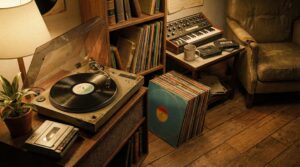
Yo, what’s good, fellow travelers and vibe curators! Megumi here, your go-to guide for navigating the electric, chaotic, yet surprisingly soulful streets of Tokyo. As an event planner, my whole gig is about creating unforgettable atmospheres, crafting moments that stick. But when I clock out, I’m on the hunt for a different kind of vibe—one that’s less about the crowd and more about the connection. I’m talking about a deep, resonant hum that cuts through the city’s noise. And lately, I’ve found it in the most unexpected, yet quintessentially Japanese, of places: the hallowed halls of Tokyo’s listening bars. Forget everything you know about a typical night out. We’re not talking about screaming over a bad DJ or sipping a generic cocktail. We’re diving headfirst into the world of ‘Vinyl Omakase,’ a sensory experience so profound, so meticulously crafted, it’s basically a religious experience for your ears. It’s a full-on cultural immersion, a trip back in time, and a masterclass in the Japanese art of absolute dedication, all soundtracked by the crackle of a needle hitting a groove and fueled by whisky so rare it feels like you’re sipping on a ghost. This isn’t just about listening to music; it’s about hearing it, probably for the first time, on audio equipment that represents the absolute peak of 90s Japanese engineering—a golden era when ‘Made in Japan’ was a statement of uncompromising quality. Imagine settling into a dimly lit room, the air thick with the scent of old paper, aged wood, and fine spirits. Before you, an altar of glowing vacuum tubes, gleaming turntables, and massive speakers that look more like monolithic sculptures. You don’t get a menu. You don’t make a request. You simply nod to the master behind the counter, a silent guardian of sound, and you say the magic word: ‘Omakase.’ You’re putting your entire evening, your entire sensory journey, in their hands. And what you get in return is pure, unadulterated magic. It’s a vibe you can’t just find; you have to seek it out. It’s the ultimate flex for anyone who truly loves music, craft, and the lost art of just… being. Ready to get your mind blown? Let’s drop the needle on this deep cut of Japanese culture.
For a deeper look into the roots of this curated sound culture, explore the world of Tokyo’s legendary vinyl kissaten.
The Sonic Sanctuary: What Even IS a Listening Bar?

Before we dive into the full ‘omakase’ experience, it’s important to grasp the basics. So, what exactly is a listening bar? In Japan, these are called rekōdo bā (record bar) or, drawing from their historical origins, jazu kissa (jazz café). But honestly, those names only touch the surface. A listening bar is a sanctuary—a temple devoted to the ritual of sound. This concept emerged from a unique post-war cultural period. In the 1950s and 60s, Japan was rebuilding, with Western culture, particularly American jazz, hugely influential. However, vinyl records—especially imported ones from labels like Blue Note or Prestige—were incredibly expensive, a luxury beyond the reach of most people. Thus, the jazu kissa came to be. These were small, often dim and smoky cafés where you could buy a cup of coffee, expected to be savored over hours, while listening to an ongoing stream of the latest and finest jazz records played on a high-end sound system. It wasn’t a social spot. People didn’t go there to chat. They went to listen. Deeply. It was a space for serious appreciation, a library for the ears. The owner served as the head librarian, the curator, holding the rare and treasured sonic treasures that everyone yearned for.
Jump forward to today, and that central philosophy remains vibrant, though it’s undergone a notable transformation. The modern listening bar has expanded beyond jazz. You’ll find bars dedicated to soul, funk, city pop, ambient, techno, rock—whatever genre you can imagine. If it was pressed on vinyl, there’s likely a bar devoted to it somewhere in Tokyo. Yet the spirit of reverence endures. When you enter one of these venues, you’re not just walking into a bar. You’re stepping into a carefully curated environment designed for one goal: optimal sonic immersion. The setup gives it away immediately. Forget tables arranged for conversation. Seating—whether plush armchairs or simple wooden stools—almost always faces the same direction: toward the sound system. This isn’t merely a collection of equipment; it’s an altar. The centerpiece, the focal point of the entire room, often dramatically spotlighted, signaling clearly what the establishment values most. The owner, or ‘master,’ stands behind the counter, overseeing this altar, selecting records with the concentrated precision of a surgeon. The atmosphere is communal yet profoundly personal. You share the space and sound with a handful of others, but everyone is enveloped in their own experience, connected by invisible threads of music. Talking, if allowed at all, happens in hushed whispers—brief murmurs that don’t disrupt the sonic tapestry being woven from the speakers. This stands in stark contrast to today’s algorithm-driven, disposable music culture. This is music as a destination, not mere background noise. It’s a deliberate act, a kind of meditation. You come to surrender yourself to the sound, to let the master’s selections guide you, and to appreciate the artistry—not only of the musicians but also of the audio engineers, equipment designers, and the curator who has crafted that perfect moment.
The ‘Omakase’ Glow Up: From Sushi to Sound Waves
Alright, let’s dive into the magic word: ‘Omakase’ (お任せ). If you’re somewhat familiar with Japanese cuisine, you likely connect it to upscale sushi dining. It literally means, ‘I leave it to you.’ When you opt for omakase, you don’t choose from a menu; you entrust the chef completely. You’re saying, ‘You’re the expert. You know what’s freshest and best today. Surprise me. Delight me.’ It’s a sign of respect for the chef’s skill and experience, often leading to a meal that’s far more inventive and exquisite than anything you could have selected yourself. Now, imagine applying that idea to a room packed with thousands of vinyl records and a sound system capable of moving even a god to tears. That’s Vinyl Omakase. It’s the ultimate listening experience, a journey curated live by the bar’s owner—a master of atmosphere and music. They become a ‘sound sommelier,’ a storyteller through sound. It’s a performance, and you get a front-row seat.
Here’s how it usually unfolds. You find your seat, order a drink, and catch the master’s eye. Instead of asking for a menu or making a specific request, you simply say, ‘Omakase, onegai shimasu’ (Omakase, please). Often, a slow nod of understanding is all you receive in response. Then, the magic starts. The master begins to read you, reads the room. What’s the vibe tonight? A rainy Tuesday or a lively Friday? Are you on a date, or flying solo, lost in thought? They pick up on all these subtle signals and start shaping a narrative, one record at a time. The first track sets the tone. It might gently ease you in—perhaps a smooth 70s Japanese City Pop gem, like a rare pressing of a Taeko Onuki album, with its breezy melodies and lush arrangements enveloping you. As you sip your whisky, the mood may shift. Noticing your foot tapping, the master might slide into a deep, heavy funk groove from a James Brown B-side, the bassline so tight and punchy you feel it in your chest. Then, just when you’re locked into the rhythm, they surprise you—a blast of avant-garde free jazz from a Pharoah Sanders record, the saxophone screaming with raw, spiritual intensity, shattering the mood and reconstructing it into something fresh and exhilarating. To bring you back, the journey might wind down with ethereal, ambient soundscapes from a Brian Eno album, gentle synth pads creating a sense of weightlessness—a perfect sonic palate cleanser. Each track flows into the next with an uncanny logic you couldn’t have predicted. It’s a conversation without words: the master plays, you respond, and your reaction shapes what comes next. The true beauty of Vinyl Omakase lies in the thrill of discovery. You’re bound to hear music you’ve never encountered before. This is the complete opposite of your Spotify Discover Weekly playlist, which is just an algorithm guessing what you want, based on what you’ve already heard. This is human curation at its finest, a deeply personal recommendation from someone whose life revolves around music. You’re not just hearing their collection—you’re glimpsing their soul, passion, and history. It’s an honor, really. You leave not only with a new list of artists to explore but with the memory of a perfectly sequenced, emotionally resonant journey crafted just for you, in that moment.
The Altar of Analog: Drooling Over Vintage 90s Japanese Audio Gear
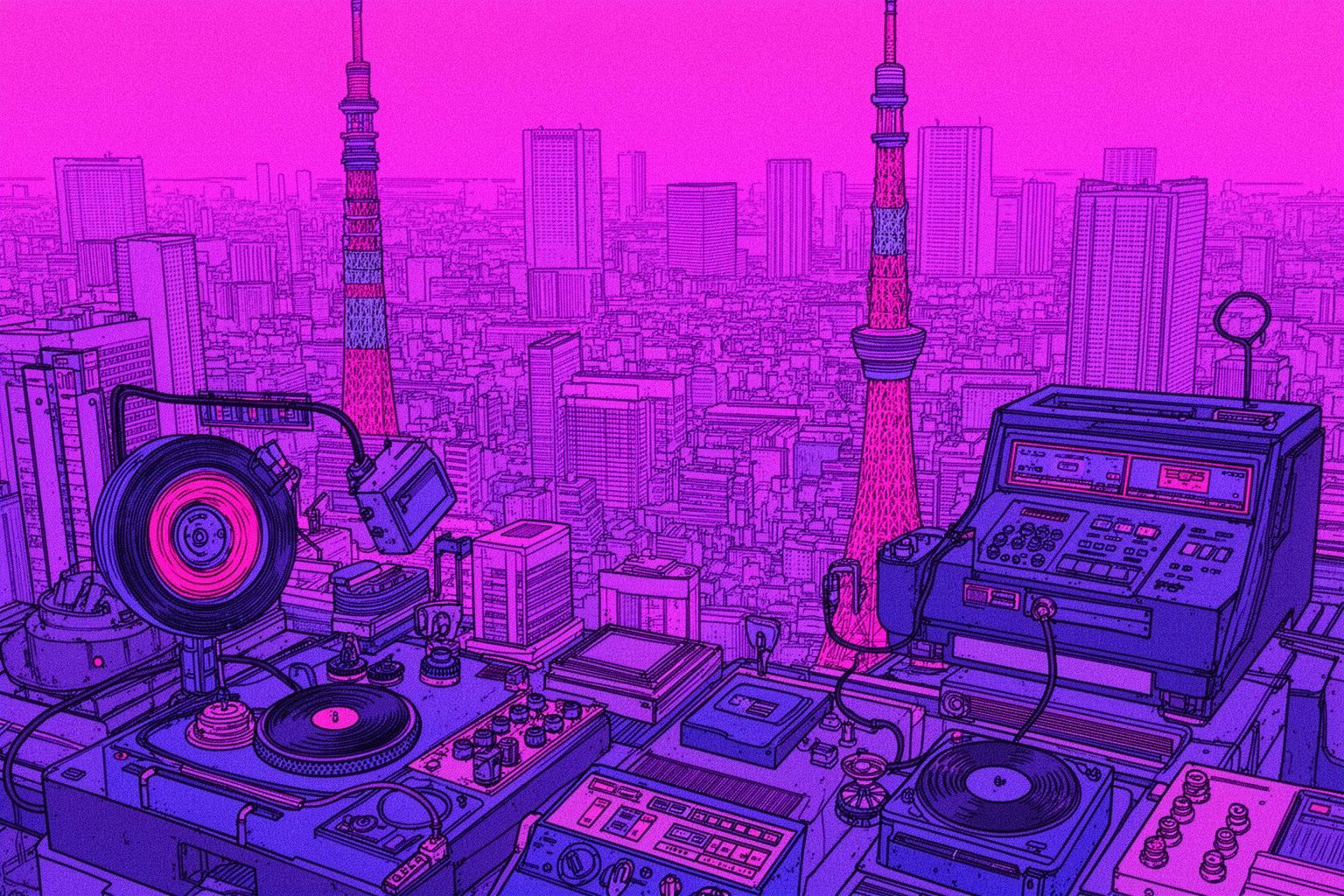
Now, let’s dive into the hardware, because music alone tells only half the story. The other half—the element that transforms the experience into something truly transcendent—is the equipment. The sound systems in these listening bars aren’t merely collections of costly components; they are meticulously restored and finely tuned instruments in their own right. Many feature the holy grails of Japanese audio engineering, especially from the 80s and 90s. This was Japan’s ‘Bubble Era,’ a time of extraordinary economic prosperity when companies had seemingly unlimited budgets for research and development. They competed to craft the most powerful, precise, and exquisitely over-engineered audio equipment the world had ever seen. The results have become legendary. This gear was built to last forever, with a sound character often described as ‘warm,’ ‘rich,’ and incredibly ‘musical.’ It’s the kind of sound that feels like it’s embracing your brain.
The Golden Age of ‘Made in Japan’ Hi-Fi
To truly appreciate what you’re hearing, you need to understand the context of this golden era. While the West in the 80s saw the rise of cheap, plastic mass-market electronics, Japan pursued audio perfection as an obsession. Top engineers at brands like Sansui, Kenwood, Luxman, and Accuphase were revered like rock stars. They weren’t just making electronics; they were creating art. They used the finest materials, the sturdiest transformers, and the highest-grade capacitors. These products were designed with a ‘cost-no-object’ mindset. The aim wasn’t merely to reproduce sound, but to convey the emotion, space, and soul of the original performance. Today, this gear carries a presence: the heavy, brushed aluminum faceplates, the satisfying, chunky knobs that click into place with mechanical precision, and the mesmerizing glow of large blue or green VU meters all speak of a bygone era of superb quality and craftsmanship. These are not just machines; they are monuments to a time when Japanese manufacturing dominated the world, producing a sound that modern, lightweight digital equipment often struggles to match.
The Heart of the System: Amplifiers by Sansui and Luxman
The amplifier is the core of any audio system, and in many listening bars, that core bears the name Sansui. Sansui amps from the 70s through the early 90s are legendary for their sound—powerful, commanding, and known for deep, resonant bass that is both tight and profoundly impactful. When a kick drum hits through a vintage Sansui, you don’t just hear it; you feel it in your bones. Their AU series, especially large integrated amps, are highly coveted. They grip the speakers firmly and control the sound with iron resolve, yet remain remarkably musical and easy to listen to for hours. On the other side, there’s Luxman. If Sansui represents power and punch, Luxman embodies romance and refinement. Famous for their vacuum tube amplifiers, which cast a warm, golden glow in the dim light of the bar, tube amps are prized for their rich, lush midrange that makes vocals and instruments like saxophones sound incredibly vivid and present. Their sound is often described as three-dimensional, creating a tangible feeling of musicians playing right there in the room. Then there’s Accuphase, the pinnacle of precision. With iconic champagne-gold faceplates, Accuphase gear looks and feels like it belongs in a laboratory. Their amplifiers are renowned for clarity, detail, and neutrality. They add no warmth or color; they simply amplify the signal with minimal distortion, revealing the deepest layers of a recording. Spotting an Accuphase amp with those massive hypnotic VU meters signals a purist owner.
The Source of the Magic: Technics and Micro Seiki Turntables
None of this, of course, matters without an exceptional source. The turntable—or ‘record player’—is where the magic begins. When it comes to Japanese turntables, one name stands out: Technics. The Technics SL-1200 is arguably the most famous turntable ever made, beloved by DJs for its rugged durability and rock-solid speed stability thanks to its direct-drive motor. But Technics also produced exquisite high-end turntables for audiophiles, like the SP-10, broadcast-quality machines built with insane precision. Seeing one spinning a record testifies to the owner’s dedication to flawless playback. While Technics represents precision engineering for the masses and professionals, Micro Seiki embodies the artisanal, almost spiritual side of turntable design. Micro Seiki turntables are breathtakingly beautiful objects. Often employing belt-drive systems and heavy platters, they achieve unparalleled rotational stability and vibration isolation. Their philosophy was to create a background of complete silence—a ‘black’ canvas from which the music can emerge with shocking clarity. A Micro Seiki turntable is less a piece of equipment and more a sculpture, a rare and revered artifact from the golden age.
The Voice of God: Speakers from Yamaha and TAD
Finally, there are the speakers—the voice of the system. In many serious listening bars, you’ll find imposing, monolithic speakers that dominate the space. A legendary model you’ll often see is the Yamaha NS-1000M. Instantly recognizable by its black finish and the metallic sheen of its beryllium drivers, the NS-1000M was originally designed as a studio monitor. It is incredibly accurate and revealing, refusing to flatter the music and offering the absolute truth of the recording, for better or worse. Listening to a well-recorded album through these is a revelation. For true cost-no-object bars, you may encounter the giants: TAD (Technical Audio Devices) speakers, the ultra-high-end division of Pioneer. Featuring large horn drivers, TAD speakers deliver a sense of scale and dynamics that is simply staggering. They reproduce both the full power of a symphony orchestra and the intimate whisper of a solo vocalist with equal finesse. Hearing a big band on a pair of TADs is the closest you can get to being in the room with the musicians without a time machine. They don’t just play music; they fill the room with sound, creating an immersive, physical experience you both hear and feel.
Liquid Gold: Sipping on Rare Japanese Whisky
The profound and deliberate experience of listening to music on a world-class vintage audio system calls for a beverage of equal craftsmanship and complexity. It’s no wonder, then, that listening bars often house some of the most remarkable collections of rare Japanese whisky you’ll find anywhere. The philosophy remains consistent: a commitment to craft, an appreciation for aging and subtlety, and a deep respect for masters who have devoted their lives to their art. Just as the bar owner curates a sonic journey, they also curate a liquid one. The back bar of a serious listening venue serves as a museum of Japanese distilling history, offering the opportunity to sample spirits as rare and coveted as the records lining the shelves.
The Ghost in the Glass: Hunting for Discontinued Whiskies
Not long ago, Japanese whisky was a well-kept secret. Now, however, that secret is out. The world has awakened to its extraordinary quality, sparking a huge surge in popularity. While this boom benefits the industry, it also has a downside: demand far exceeds supply, particularly for well-aged expressions. Consequently, many legendary whiskies have been discontinued, or hai-ban in Japanese, because distilleries simply ran out of sufficiently aged stock to continue production. These discontinued bottles have become legendary, prized collector’s items that command astronomical prices at auction. Yet, you can often find these ghosts poured by the glass in a quiet listening bar. We’re talking about whiskies from silent distilleries like the mythical Karuizawa or Hanyu, whose iconic ‘Ichiro’s Malt Card Series’ ranks among the most collectible whiskies worldwide. You might also come across older bottlings of familiar names—a Yamazaki 18 from a decade ago, a beautifully smoky Yoichi 20, or a delicate Hakushu 12, which has unfortunately vanished from regular sale. The owners of these bars were frequently collecting these bottles long before the boom, driven not by investment but by pure passion. For them, sharing a dram of a rare, irreplaceable whisky with a discerning customer is part of the experience. It bridges the craft of the distiller with that of the musician, creating a perfect harmony of sensory pleasures.
How to Order Like a Pro
When faced with a wall of rare bottles, ordering can feel intimidating. But just like with music, you can always rely on ‘omakase.’ Simply tell the bartender your flavor preferences—whether you enjoy smoky, fruity, or rich and sherried whiskies—and let them select something special for you. If you prefer to order on your own, it’s helpful to know the local customs. The most common ways to enjoy good Japanese whisky are either ‘straight’ (sutorēto) or ‘on the rocks’ (rokku). If you request it on the rocks, don’t expect a glass filled with cloudy, machine-made ice. Instead, you’ll experience the theater of the Japanese ice ball. The bartender carefully hand-carves a large, crystal-clear block of ice into a perfect sphere that fits your glass snugly. This is not mere showmanship; the dense, large sphere melts far more slowly than standard ice cubes, chilling your whisky with minimal dilution and preserving its intricate flavors. Another very popular way to enjoy whisky in Japan is the Highball (haibōru). But forget the casual mix of whisky and soda water you might find elsewhere. The Japanese Highball is a refined art. It’s crafted with a precise ratio, using highly carbonated soda water, and stirred a specific number of times to achieve the ideal balance without losing carbonation. It’s incredibly refreshing and lets the subtle notes of the whisky emerge in a new way. It’s the perfect drink for a long listening session.
Beyond Whisky: Other Exquisite Sips
While whisky is often the centerpiece, these bars take pride in the quality of everything they offer. Many have broadened their selections to include exceptional Japanese craft gins from distilleries like Kyoto’s Ki No Bi, which incorporates unique botanicals such as yuzu, green tea, and sansho pepper. You may also discover artisanal shochu and awamori—complex spirits providing a different but equally rewarding tasting experience. And for those abstaining from alcohol, the non-alcoholic options are never an afterthought. Reflecting their kissaten heritage, many bars serve outstanding coffee, often prepared with meticulous pour-over or siphon techniques. Rare Japanese teas are also frequently offered, served with the same care and attention as a rare whisky. The point is that whatever you choose to drink, it will be of the highest quality, served with intention, to perfectly complement the main event: the music.
The Unspoken Rules: Listening Bar Etiquette 101

Entering a quiet room where a dozen strangers are deeply absorbed in a pair of speakers can feel a bit intimidating for a first-timer. However, the atmosphere isn’t intended to be exclusive or pretentious; it’s rooted in mutual respect—respect for the music, the master, the equipment, and your fellow listeners. Adhering to the unspoken etiquette is essential to fully appreciate the experience and to be welcomed back. Consider these guidelines not as a list of restrictions but as a way to align yourself with the vibe of the space.
First and foremost: Keep your voice low. This is the golden rule. The music takes center stage here, not your chatter. In some of the most serious bars, conversation is completely prohibited. In others, soft whispers are allowed, but it’s best to follow the lead of those around you. If no one else is speaking, neither should you. This isn’t the place to catch up with a friend or conduct business. It’s a space for reflection and attentive listening. Your phone should be silenced, and avoid scrolling through it, as the blue light distracts and breaks the analog atmosphere.
Next, be considerate with photography. These bars have interiors that are stunning and atmospheric, but no flash photography, ever. Flash totally disrupts the carefully crafted mood. It’s always courteous to ask the master for permission before taking photos, even without flash. Many owners take pride in their spaces and equipment and will gladly allow discreet photos, while others prefer a camera-free zone to keep the focus on sound alone. Just ask quietly and honor their wishes.
It goes without saying, but don’t touch the audio equipment. This vintage gear represents the owner’s passion and expertise. It’s a prized, often irreplaceable collection, and absolutely off-limits. Appreciate it from afar—think of it like a museum display that can also make the walls shake.
Regarding the music, respect the curation. The master is the DJ, the storyteller. Avoid shouting out requests. This isn’t a jukebox. Especially when choosing the ‘omakase’ approach, trust their flow and the journey they’ve prepared. Some bars provide a small notepad at the counter for requests; if so, feel free to write down an artist or song. However, understand the master will play it only if it suits the mood. Don’t take it personally if your request isn’t played immediately or at all.
Finally, remember these are businesses. Most listening bars are small with very limited seating. Order at least one drink per person. Don’t just order a glass of water and occupy a seat for hours. Many bars also charge a cover fee, sometimes called an otoshi or a table/seat charge, often accompanied by a small snack. This is common in many small Japanese bars, so don’t be surprised to see it on your bill. Supporting these passion-driven, small businesses by being a respectful, paying customer helps keep this unique culture thriving.
Finding Your Sonic Haven: Where to Go
Tokyo is an expansive megalopolis, with these sonic sanctuaries scattered throughout the city—hidden away in basements, tucked down unmarked alleyways, or perched on the upper floors of inconspicuous buildings. Part of the enjoyment lies in the search itself. Rather than providing a fixed list of specific bars (which may close or change), it’s more useful to get a feel for the vibe of different neighborhoods so you can explore and discover a spot that truly resonates with you.
Shinjuku Golden Gai: This is an ideal starting point on your journey. Golden Gai is a renowned maze of tiny, rickety post-war buildings intersected by six narrow alleys, each filled with dozens of minuscule bars, some seating only five or six people. It feels like stepping onto a movie set. Amid the livelier watering holes are several legendary listening bars. The experience is incredibly intimate and cinematic—you’ll be sitting shoulder-to-shoulder with other guests, close enough to see dust motes dancing in the glow of a single vacuum tube. It’s perfect for a solo deep dive, a place to lose yourself in the sound and atmosphere for a few hours.
Shimokitazawa & Koenji: Located on Tokyo’s west side, these neighborhoods are celebrated for their bohemian, counter-culture vibe. They’re brimming with vintage clothing shops, independent record stores, and live music venues. The listening bars here reflect that spirit, often specializing in psychedelic rock, ’60s garage, punk, and obscure indie music. The atmosphere is generally more relaxed and informal compared to the serious jazz kissas. The crowd tends to be younger, and the bar owners are often musicians or devoted local collectors. If you want to hear The Velvet Underground on an exceptional sound system, these neighborhoods are the place to explore.
Ginza & Aoyama: At the more sophisticated end of the spectrum lie the upscale districts of Ginza and Aoyama. The listening bars here are chic and stylish, often accompanied by a cover charge to match. The interiors are impeccably designed, the whisky selections world-class, and the sound systems absolutely stunning. This is where you go for a flawless, high-end experience. The clientele is older and more affluent, and the atmosphere exudes quiet, luxurious contemplation. It’s the perfect setting for a special occasion or when you want to experience the pinnacle of the listening bar concept.
Nishi-Ogikubo & Sangenjaya: To uncover the true hidden gems, you need to venture into more residential neighborhoods or yokocho (side-alley) areas. Places like Nishi-Ogikubo, Sangenjaya, and Gakugei-Daigaku host beloved local spots run by passionate owners. These bars often serve as community hubs for music lovers. They may not have the glamour of the Ginza bars, but they brim with character and authenticity. Here, the owner knows every regular by name and will happily spend hours discussing the details of a particular record pressing or the tubes in their amplifier. Discovering one of these spots feels like being entrusted with a wonderful secret. This is the heart and soul of Tokyo’s listening bar culture.
A Personal Journey: My First Vinyl Omakase

To truly set the scene, I need to tell you about my first visit. A friend of mine, a musician, had mentioned these bars with hushed, reverent tones. He gave me a vague address in a quiet neighborhood I barely knew. After getting lost twice, I finally found it: a heavy, unmarked wooden door at the bottom of a flight of concrete stairs. No signs, no windows. It felt like stepping into a secret society. I took a deep breath, pushed the door open, and stepped inside.
The change was immediate. The city noise disappeared, replaced by a profound, warm silence, punctuated by the softest, most beautiful jazz piano I had ever heard. The room was tiny, seating maybe ten people. The air smelled of old books and something sweet and smoky. My eyes adjusted to the dim light and were immediately drawn to the source of the sound: a breathtakingly beautiful Micro Seiki turntable spinning on a thick wooden counter. Behind it, a wall of records stretched to the ceiling. An older man with slicked-back grey hair and glasses looked up from a record sleeve, gave me a single, knowing nod, and motioned to an empty stool at the bar. I slid into the seat, my heart pounding slightly. I didn’t know the rules or what to do. I simply pointed at a bottle of Hibiki whisky and, recalling my friend’s advice, whispered, “Omakase, onegai shimasu.”
He poured my drink, carved a perfect ice sphere, and placed it in front of me without a word. The piano track faded out. He stood for a moment, glancing at his shelves, then with practiced grace pulled a record from its sleeve. He set it on the platter, brushed it with an anti-static brush, and lowered the needle. A moment of silent anticipation, the gentle thump of the needle finding the groove, a soft crackle, and then… the sound. It was a female vocalist, a Japanese singer I’d never heard before. Her voice wasn’t just coming from the speakers; it filled the room—it was almost holographic. I could hear her subtle intake of breath, the slight reverb of the studio, the exact spot where the bass player was behind her. It was the most immediate, most ‘real’ music I had ever experienced. Over the next two hours, he took me on an extraordinary journey. From that intimate vocal track to a sprawling, epic funk jam. From a melancholic minimalist classical piece to a high-energy bebop explosion. He never spoke, but it felt like the most intense conversation I’d had all year. He was reading my mood, pushing and pulling, challenging and soothing. I left that bar feeling completely transformed. My ears seemed recalibrated. I didn’t just hear music; I felt it, understood it on a deeper level.
That’s the power of this experience. It’s more than just a cool bar or a great sound system. It’s a fundamental shift in how you connect with music. It reminds you that in a world of endless digital streams and fleeting distractions, there are still places devoted to deep, mindful appreciation of art. It’s a sanctuary built of vinyl, vintage tubes, and quiet reflection. So next time you’re in Tokyo, when the neon lights and crowds overwhelm you, seek out one of these hidden doors. Push it open, take a seat, and trust the master. Let them curate a journey just for you. It’s not just a vibe—it’s a whole new way of listening. Believe me, it’s an absolute game-changer.