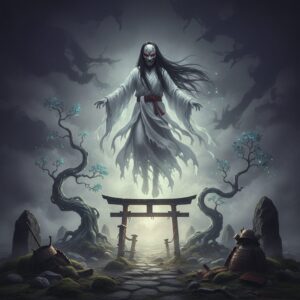
Yo, what’s the move? If you’ve ever binged Jujutsu Kaisen and felt that legit chill when a Curse shows up, you’re tapping into something real. That whole vibe? The oppressive weight of negative energy, the ghosts born from human grudges, the places that just feel off—that’s not just some anime fantasy. No cap. It’s a concept that’s been brewing in Japan for centuries, deeply woven into the country’s spiritual fabric. Before Gojo Satoru was breaking down Cursed Techniques, real-life monks and mystics were dealing with Onryō (vengeful spirits) and Yokai (supernatural monsters) that would give Mahito a run for his money. These ancient tales of raw, untamed emotion manifesting as paranormal horror are the OG source code for the world of Jujutsu Sorcerers. The Curses you see on screen are just the latest evolution of legends that have haunted these islands forever.
So, we’re about to go on a different kind of Japan tour. Forget just the highlight reel of tourist traps. We’re peeling back the veil and diving headfirst into the Cursed Realms of reality. This is a journey to the real-life domains where history is so heavy you can feel it in the air, places where the barrier between our world and the next feels paper-thin. We’re talking about the stomping grounds of Japan’s most legendary vengeful spirits, the mountains considered gateways to the afterlife, and the quiet urban corners where ancient grudges still whisper in the shadows. This is Japan unfiltered, where every weathered shrine and forgotten stone tells a story of sorrow, rage, and power so immense it had to be deified to be contained. Get ready to do a vibe check on spots with some serious Cursed Energy. This is the ultimate pilgrimage for any JJK fan who wants to understand the deep, dark, and fascinating roots of the series. Let’s get it.
To fully immerse yourself in this supernatural atmosphere, consider experiencing a glamping stay in a mythical Japanese forest.
Sukuna’s Domain: The Real Legend in Hida Province
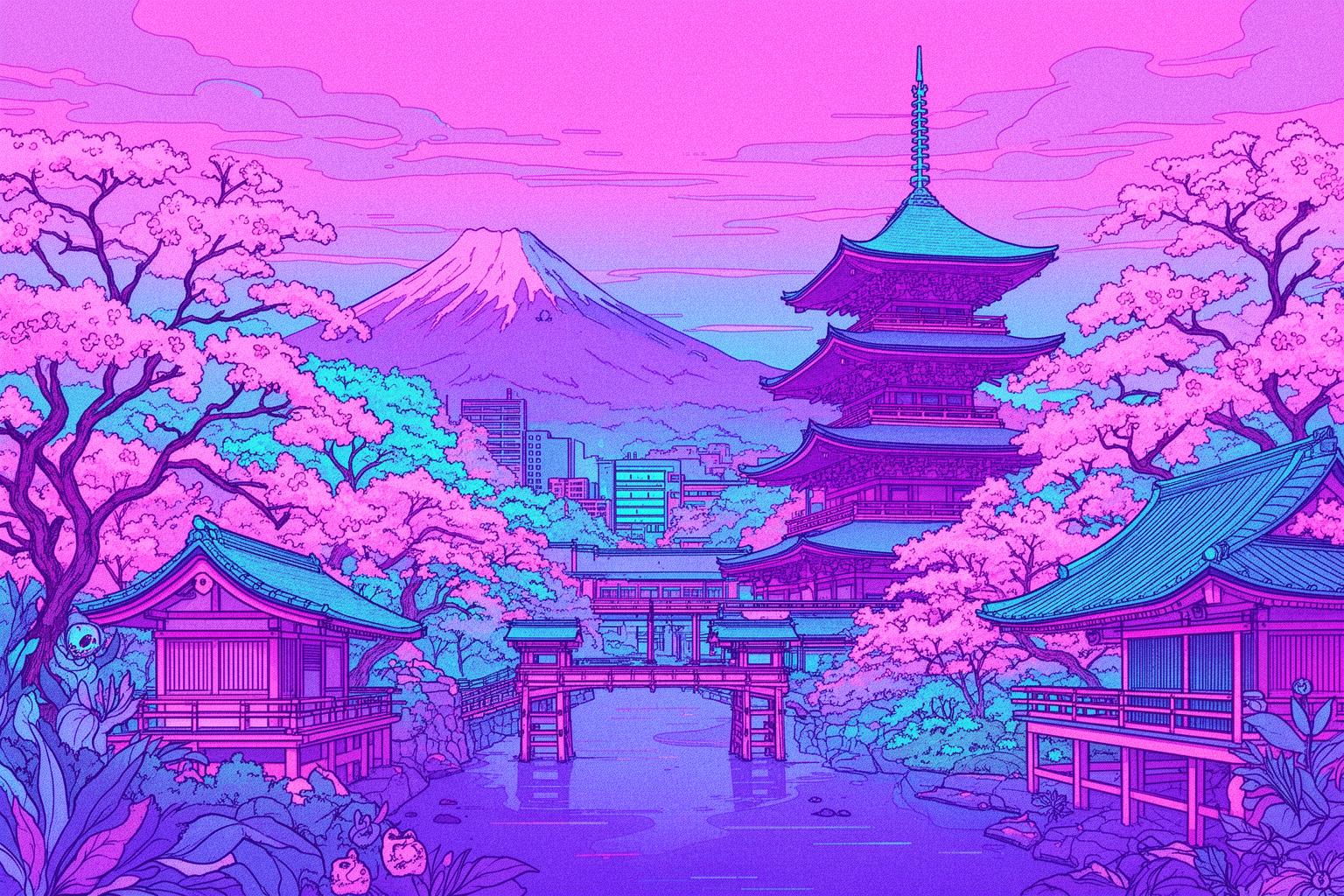
First, we need to discuss the King of Curses himself: Ryomen Sukuna. In Jujutsu Kaisen, he is the ultimate catastrophe, a demon of unimaginable power whose fragmented soul, sealed within twenty indestructible fingers, continues to cause destruction. This iconic villain’s origin isn’t purely fictional; it is drawn from one of Japan’s oldest chronicles, the Nihon Shoki, dating back to the 8th century. But here’s the twist: the true story of Ryomen Sukuna is far more complex and disputed than the anime suggests. To uncover the truth, you must venture to the mountainous, mist-covered region of Hida, in present-day Gifu Prefecture. This area is Sukuna’s original homeland.
The Nihon Shoki offers a grim portrayal, describing Sukuna as a monstrous being with two faces—front and back—four arms, and four legs, who rebelled against the imperial court, ravaging villages and spreading terror. The court dispatched a military commander to defeat this ‘demon,’ and the official tale ends there: monster vanquished, imperial order restored. Simple, right? But if you visit Hida, you’ll hear a very different account. Local legends portray Ryomen Sukuna not as a demon, but as a hero, a chieftain who introduced Buddhism to the region and protected his people. His unusual form wasn’t monstrous, but rather a symbol of great wisdom and strength. He was a benefactor, a cultural figure. This contrast is both striking and intriguing. Was he a Cursed Spirit, or a Jujutsu Sorcerer—a hero whose power was demonized by a central authority that feared him? This debate is the real Cursed Technique, clouding the truth for over a thousand years.
To truly sense this energy, you need to make a pilgrimage to Senkou-ji Temple, hidden on a mountainside near Takayama. Getting there is a journey in itself—a winding path leading deeper into the serene, powerful nature that defined ancient Japan. The air cools, the scent of cedar and moist earth fills your lungs, and the modern world feels very distant. Senkou-ji Temple is said to have been founded by Sukuna himself. It is not a grand, polished site; it’s rustic, ancient, and deeply spiritual. The temple’s wooden structures are aged darkly, and the grounds are scattered with moss-covered statues. Inside the main hall, you’ll find artifacts and statues dedicated to him. The central image enshrined here is not a fearsome demon, but a respected figure. One particular statue, supposedly carved by the renowned monk Enku, depicts Sukuna as a protective deity. This duality hits hard: here, in his own land, the King of Curses is a guardian god. It makes you wonder how much history is simply a matter of perspective—one person’s Curse is another’s savior.
The entire Hida region feels like a Domain Expansion. Mountains loom overhead, frequently cloaked in thick fog rolling through the valleys. For a photographer, this place is a dream. The play of light and shadow, the deep greens of the forest contrasted with the grey mist, and the way old farmhouses with thatched roofs seem to emerge naturally from the landscape—all this has a powerful, almost mythical atmosphere. Capturing Sukuna’s homeland isn’t about broad, sunny panoramas; it’s about close, intimate shots: the texture of moss on a stone lantern, steam rising from a hot spring, the intense gaze of a wooden statue in a dim temple hall. This is where you feel the immense Cursed Energy—or sacred energy, depending on who you ask—that gave birth to such a legendary figure. For first-time visitors, renting a car is the best way to explore. Public transport is limited, and the most remarkable sights are often tucked away on narrow mountain roads. Take your time. Let the atmosphere settle in. Stand at the foot of Senkou-ji and listen to the silence of the mountains. You may begin to understand why a figure of such tremendous power could arise from a place like this.
The OG Special Grades: Japan’s Three Great Vengeful Spirits
In the world of JJK, Special Grade Curses originate from immense, concentrated human fear and hatred. They are disasters, not merely monsters. Japan’s history features its own legendary equivalents: the Nihon San Dai Onryō, or the Three Great Vengeful Spirits. These were not random ghosts, but powerful nobles and even an emperor whose lives ended in such profound tragedy and injustice that their rage literally shook the nation from beyond the grave. Their tales serve as the blueprint for how a human becomes a devastating Cursed Spirit. To prevent them from wreaking havoc on the country, the people of Japan did what they could: they enshrined and deified them, transforming their Cursed Energy into a source of divine power. This represents peak Jujutsu sorcery in the real world.
Sugawara no Michizane: The Cursed Scholar Who Became the God of Learning
Let’s begin with Sugawara no Michizane, a story oozing main character energy from start to finish. Picture this: a brilliant scholar, poet, and politician in the 9th-century Heian court of Kyoto. A prodigy, he rose through the ranks thanks to his intellect and integrity. Yet his success bred enemies. The powerful Fujiwara clan, envious, framed him for treason and exiled him to the remote island of Dazaifu, far from his home and family in the capital. He died there, broken-hearted and full of grief, his name left sullied. End of story? Far from it.
Soon after his death, Kyoto suffered catastrophic disasters. Plagues, droughts, and freak lightning storms plagued the capital. The Imperial Palace was struck by lightning multiple times, killing several of Michizane’s political rivals—the very men who had engineered his downfall. Fear gripped the people. The consensus was clear: this was Michizane’s Onryō, his vengeful spirit, exacting revenge. In a frantic response, the court posthumously pardoned him, restored his titles, and elevated him to the highest ranks. But the disasters persisted. That wasn’t enough. So they went further, erecting a grand shrine in his honor in Kyoto, Kitano Tenmangu, to appease his spirit. He was deified as Tenjin, the god of the sky and thunder—a nod to the lightning that characterized his wrath. In a final, brilliant act of spiritual jujutsu, they transformed him from a vengeful spirit into a patron god of scholarship and learning, redirecting his immense intellectual energy for the nation’s benefit.
Visiting Kitano Tenmangu today is a remarkable experience. It’s a vast, sprawling complex in northern Kyoto with an electric atmosphere. It doesn’t feel frightening but immensely powerful, as if built to contain something vast and unimaginable. The main gate and halls are ornate and imposing, a testament to the court’s desperation to calm his spirit. The grounds are famed for their plum blossoms; Michizane adored plum trees, and legend says his favorite plum tree uprooted itself and flew from Kyoto to Dazaifu to be with him in exile. In late winter, when hundreds of plum trees bloom here, the air fills with their sweet fragrance—a beautiful, almost melancholic tribute to the man himself. Statues of oxen are everywhere, believed to be Michizane’s messengers. It’s said the ox pulling his funeral cart stopped and refused to move, marking the spot for his main shrine in Dazaifu. Students nationwide come to rub the ox statues’ heads and pray for success in exams. It’s wild to think of kids seeking good grades from a pacified Special Grade Vengeful Spirit. The vibe is intense. It’s a site steeped in historical weight—a tragedy transformed into a blessing. For photographers, visiting during plum blossom season is a must. The contrast between delicate pink and white blossoms against the dark, heavy wood of the ancient shrine is pure poetry. On the 25th of each month, a massive flea market animates the grounds, injecting lively, chaotic energy that contrasts the shrine’s usual solemnity. It’s a living place, not just a historical monument—a testament to how deeply Michizane’s spirit was woven into Japanese culture.
Taira no Masakado: The Rebel Samurai Who Still Haunts Tokyo
If Michizane’s tale is a tragic opera, Taira no Masakado’s is an all-out heavy metal saga. Masakado was a powerful samurai in the 10th century who, for a brief, glorious time, declared himself the ‘New Emperor’ of eastern Japan, challenging the Kyoto court’s authority. He was a force of nature, but his rebellion was crushed, and he was decapitated in battle. His head was taken back to Kyoto and displayed as a warning. Yet Masakado’s spirit was too stubborn to be silenced by death. Legend has it his head didn’t decompose for months; its eyes rolled and it gnawed its teeth at night. Then one day, the head glowed, shot skyward, and flew back east, seeking its body. It finally landed in a small fishing village that would grow into modern Tokyo.
The landing spot is now Masakado no Kubizuka, or ‘The Mound of Masakado’s Head.’ This is where the story becomes extraordinary. It sits in the Otemachi district, one of the world’s priciest, most influential business areas. The site is a tiny, unassuming patch of land with a small stone monument, a few trees, and stone frogs (a pun on kaeru, meaning both ‘frog’ and ‘to return,’ symbolizing hope that his spirit returns to its body). This ancient, sacred plot is surrounded by towering glass-and-steel skyscrapers, creating a mind-bending contrast. Standing there, you feel a quiet hum of a powerful, ancient presence while just feet away, thousands rush about their day. It feels like a glitch in the matrix—a small pocket of immense Cursed Energy at the heart of modern civilization.
Here’s the kicker: Masakado’s spirit is far from dormant. His curse is one of Tokyo’s most potent and feared ghost stories. In the 1920s, after the Great Kanto Earthquake, the Ministry of Finance attempted to level the mound to build an office. A series of mysterious accidents, illnesses, and deaths—including the sudden death of the finance minister— plagued the project. Spooked, the ministry rebuilt the shrine immediately. After World War II, American occupation forces tried bulldozing the site for a parking lot. A bulldozer flipped, killing the driver, and plans were abandoned again. Today, executives from surrounding banks and corporations visit regularly to pay respects, and no office dares place a desk facing away from the mound. They know better. Masakado is not to be trifled with.
Visiting the Kubizuka is surreal. It’s open and free 24/7. The atmosphere is heavy—not frightening but deeply unsettling in an indescribable way. It exudes primal energy, raw defiance refusing erasure by modernity. This is the perfect real-world example of a Curse’s lingering power tied to a location. For photographers, the challenge and thrill lies in capturing the stark contrast: the small, dark, earthy shrine framed against towering, impersonal skyscrapers. A visual testament to ancient magic refusing to die in the new world. This site is a must for anyone who thinks ghost stories belong only in the countryside. Masakado shows that even in the most technologically advanced city, some spirits remain too powerful to exorcise.
Emperor Sutoku: The Royal Curse That Swore to Haunt a Nation
Our third Great Vengeful Spirit may be the most tragic and terrifying of all: Emperor Sutoku. His story is a descent into political intrigue and personal betrayal ending in a vow of unrelenting vengeance. Sutoku was a 12th-century emperor forced to abdicate due to court politics and a complex succession dispute involving his own father. After a failed rebellion to reclaim his throne, he was exiled to Sanuki province on Shikoku island. In exile, he sought peace through Buddhism, laboriously copying sacred sutras for years. He intended to send them to the Kyoto court as a sign of repentance and spiritual devotion. But fearing a curse, the court cruelly rejected and returned the sutras.
This final rejection shattered him. Legend has it that in utter despair and rage, Sutoku bit off his tongue and wrote a curse in his own blood: ‘I will become a great demon of Japan, taking the emperor down to the common people and making the common people emperor.’ He cast the sutras into the sea and stopped grooming himself, letting hair and nails grow until he resembled a demonic tengu. When he died, his spirit unleashed chaos upon Japan. The rise of the samurai class, the imperial court’s fall, and centuries of civil war are attributed to his curse. His bitterness was so profound and cosmic in scale, it was believed to have fundamentally altered Japanese history.
Like the other Onryō, only appeasement could calm him. Centuries after his death, Sutoku’s spirit was brought back from exile and enshrined at Shiramine Jingū, built specifically to pacify his wrath. Visiting Shiramine Jingū offers a different experience from Kitano Tenmangu. While Tenmangu feels powerful yet benevolent, Shiramine has a somber, heavy atmosphere. It’s a beautiful, quiet shrine where the deep sadness is palpable. Situated near the old Imperial Palace, it serves as a strategic shield against Sutoku’s lingering rage. Interestingly, the shrine is also associated with sports—especially ball games like soccer—due to a pun involving a god of mari (a traditional courtly kickball game) also enshrined here. This juxtaposition is quintessential Japan: an ancient, terrifying curse transformed into a modern, benign deity invoked by athletes seeking victory.
Walking Shiramine Jingū’s grounds, reflect on the sheer force of human emotion that birthed Sutoku’s legend. His story reveals how negative emotions—betrayal, grief, injustice, rage—fuel the most powerful Curses. His vow to become a ‘great demon’ represents the birth of a Special Grade Curse. Visitors will sense a distinct atmosphere at the main hall—a space for quiet contemplation on how a single broken heart can change the world. From a photographer’s standpoint, focus on details conveying this mood: the dark, unpainted wood of older structures, shadows cast by towering trees, and the earnest faces of those leaving prayers. This place isn’t about spectacle but a profound, sorrowful power. It’s a chilling reminder that sometimes the most fearsome monsters are those we create through cruelty.
Gateways to the Other Side: Where the Veil is Thin
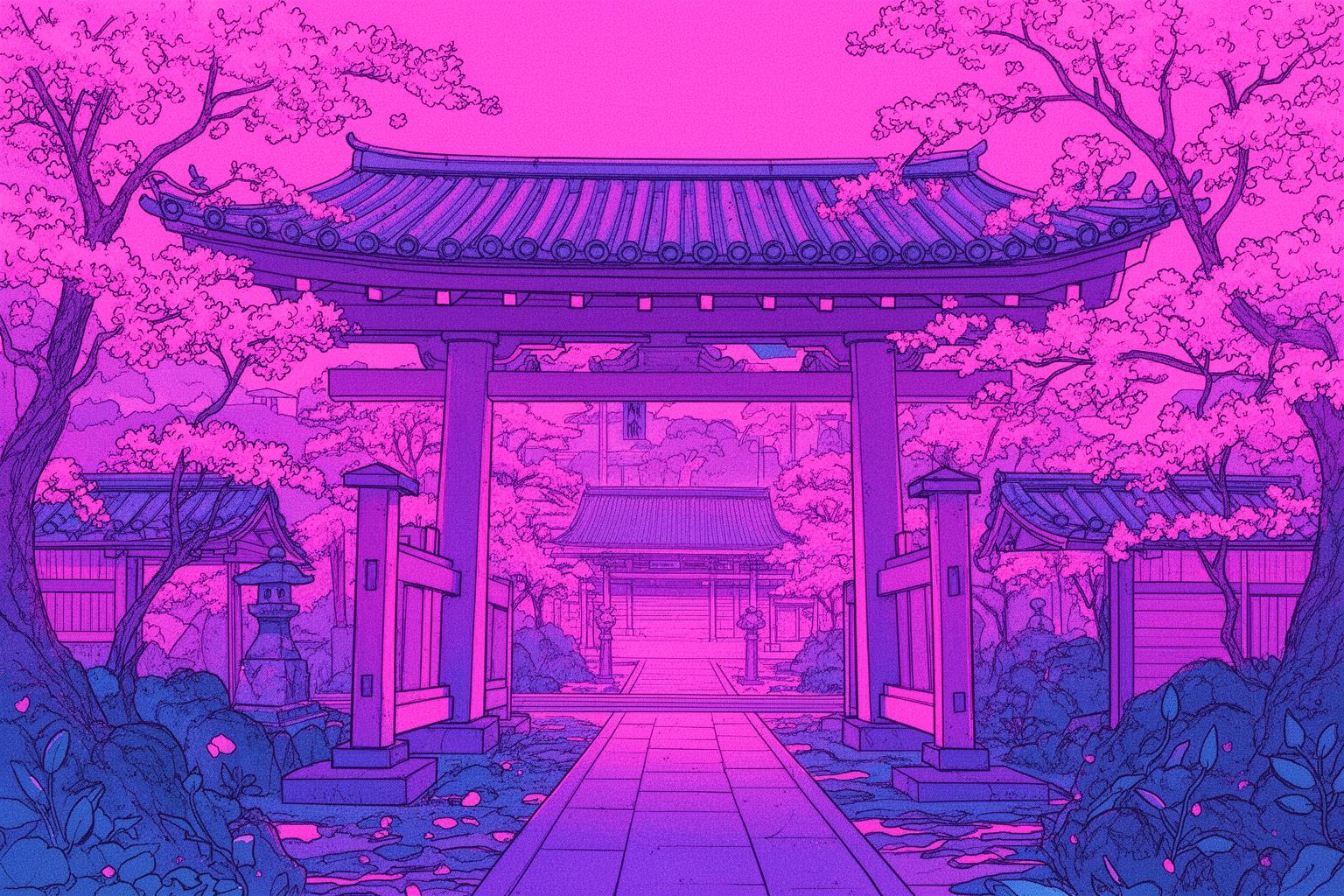
Beyond the grand legends of individual spirits, Japan is scattered with ‘power spots’ where the boundary between the living world and the realm of the dead is said to be naturally fragile. These locations evoke an ancient, otherworldly atmosphere, filled with energy that can feel either sacred or sinister depending on the moment. In JJK terms, these are places where Curses would naturally emerge in great numbers.
Mount Osore: Japan’s ‘Fear Mountain’
If there’s one site in Japan that seems lifted straight from a horror manga, it’s Osorezan, or Mount Osore, located in Aomori Prefecture at the remote northern tip of Japan’s main island. The name literally means ‘Fear Mountain,’ and it fully deserves that title. This is not just a spooky mountain—it is one of Japan’s three most sacred sites and is widely believed to be an actual gateway to the afterlife. The landscape is unlike anywhere else in Japan. It’s the caldera of an active volcano, filled with a striking, almost toxic-looking turquoise lake called Lake Usori. The ground is ashen and barren, marked by bubbling mud pits and steaming volcanic vents that release a pungent, suffocating sulfur smell all around. It truly resembles the classic depiction of Buddhist hell.
Walking through Osorezan is a complete sensory overload. The constant steam hissing, the rotten egg stench, and the sight of desolate rocky terrain set against the vivid blue water create a disorienting experience. The entire area is regarded as a temple, Bodai-ji, with paths lined by countless stone piles and offerings. The most poignant sights are the thousands of small Jizo Bosatsu statues—guardians of children and travelers—often dressed in tiny red bibs and hats, surrounded by toys and pinwheels. These are offerings made by grieving parents for children who have passed away. The pinwheels spin incessantly in the volcanic winds, their bright colors a stark and cruel contrast to the bleak landscape. It’s a place steeped in profound sorrow, a tangible expression of grief.
However, Osorezan’s most famous feature is the Itako—blind female mediums believed to communicate with the spirits of the dead. During the temple’s annual summer festival, these elderly women sit in small tents and, for a modest fee, will channel messages from deceased relatives. People come from all over Japan for this rare chance to speak to lost loved ones one last time. Believe it or not, witnessing the raw emotion of these exchanges is deeply moving. It underscores Osorezan not just as a place of fear, but as a site of connection and healing—a bridge between worlds. The atmosphere perfectly embodies a domain where life and death intersect. You feel like a visitor, or even an intruder, in a realm not meant for the living. Reaching Mount Osore requires dedication: a long trip involving a Shinkansen to Aomori, followed by local trains, and finally a bus winding up the remote peninsula. The site closes during harsh winter months, so plan to visit between late spring and autumn. For photographers especially, I recommend going on a cloudy, overcast day—the flat, diffused light enhances the desaturated tones and intensifies the eerie, otherworldly mood. Don’t just take photos; put the camera down and simply be present. Feel the wind, listen to the pinwheels, and inhale the sulfur. It’s an experience that will linger long after you’ve left.
Yotsuya’s Ghost: The Oiwa Inari Shrine
Sometimes the most Cursed places are not remote, hellish landscapes but hidden in plain sight, tucked away in quiet residential neighborhoods in Tokyo. This is the case with the Oiwa Inari Shrine in Yotsuya. This shrine is intimately connected to Japan’s most famous ghost story, Yotsuya Kaidan, the tale of Oiwa, a woman poisoned and disfigured by her cruel samurai husband who sought to marry a younger bride. Her death was horrific, but her revenge became legendary. Her ghostly, distorted face appeared everywhere to haunt him, driving the man to madness and death. Oiwa’s Onryō became the quintessential vengeful female spirit in Japanese folklore.
Several spots in Yotsuya are linked to her, but the Oiwa Inari Shrine carries particular power. It’s a tiny shrine squeezed between modern apartment buildings, easily missed by unaware passersby. For those who know the story, it has a heavy reputation. Supposedly built on the grounds of her former home, the shrine was established to appease her restless spirit. The atmosphere here differs greatly from grand shrines made for figures like Michizane. It’s small, intimate, and deeply unsettling. The air feels heavy and still, charged with a quiet tension. It’s the kind of place where you sense unseen eyes watching you, and where any sudden noise can make your heart leap.
What’s most fascinating is the enduring nature of the legend. Oiwa’s story has been adapted into countless kabuki plays, and it’s said that any Yotsuya Kaidan production is cursed unless the cast and crew first make a pilgrimage to this shrine to seek Oiwa’s permission. Numerous accounts tell of mysterious accidents, injuries, and even deaths striking productions that neglect this ritual. This is a living curse, a tale with real-world effects even today. Visiting the shrine is a brief but memorable detour if you’re in the Shinjuku/Yotsuya area. It’s a poignant reminder of how some stories become rooted in the very earth of a place. The contrast between the mundane urban environment and the terrifying legend it guards is what truly captivates. In Tokyo, you are always treading layers of history, and some of those layers are still crying out.
Final Vows: Looking Beyond the Veil
Traveling through Japan’s haunted landscapes makes it clear that the world of Jujutsu Kaisen is more than just fantasy. It is a contemporary, high-energy interpretation of ancient, deeply felt spiritual concepts that remain very much alive. The notion that strong human emotions can stain a place, that grudges can persist beyond death, and that some energies are so powerful they must be revered and contained—this forms the foundation of Japanese folklore. From the fierce rage of exiled nobles to the quiet sorrow that lingers on a volcanic mountain, these stories are woven throughout the land.
Visiting these sites is not merely ghost hunting or following an anime-themed itinerary. It’s about connecting with a dimension of Japan that many visitors overlook. It’s about grasping the profound respect and fear that nature and the spirit world inspire here. It’s about seeing how stories serve to explain the unexplainable, process tragedy, and transform sources of great fear into objects of worship and even blessing. The pacification of Michizane, Masakado, and Sutoku represents the ultimate form of Jujutsu—harnessing and redirecting powerful Cursed Energy to restore balance.
So next time you find yourself in Japan, look more closely. When you visit a shrine, consider the story behind its creation. Was it built out of pure devotion or sheer terror? As you stroll through a quiet neighborhood, wonder what tales the old stones and trees might hold. The Cursed Energy—the echoes of powerful souls and epic histories—remains present. You just have to know where to look. And perhaps, just perhaps, show a little respect. You never know who, or what, might be listening.