What’s up, world travelers. Hiroshi Tanaka here, your friendly neighborhood guide to the Japan that’s not in the glossy pamphlets. Today, we’re taking a hard left turn from the bright lights of Shibuya and the serene temples of Kyoto. We’re about to tune into a different frequency, a quieter, more haunting broadcast from a Japan that’s slowly fading from memory. We’re talking about haikyo—the art, the obsession, the pilgrimage of exploring ruins. And not just any ruins. We’re zeroing in on the real heavy hitters, the places that hold the most potent vibes: the abandoned hospitals and medical facilities of the Showa era. These aren’t just empty buildings, fam. They’re concrete time capsules, silent monuments to a whirlwind century of ambition, hope, and eventual, inevitable decay. They’re places where the air itself feels thick with unspoken stories, where the silence is so loud it’s like a physical presence. Walking through them—or, more accurately and legally, observing them from a safe distance—is like stepping into a living ghost story, a tangible piece of history that asks you one simple question: what happens when a dream is left to die? It’s a heavy question, for sure, but the answer is breathtakingly beautiful. It’s the peeling paint, the rust-eaten gurneys, the sunlight cutting through a dusty ward. It’s the raw, unfiltered poetry of impermanence, a core tenet of Japanese aesthetics, playing out in real-time. This is a journey into the quiet heart of modern Japan’s past, a place that’s as eerie as it is profound. It’s a vibe you won’t find anywhere else. Let’s get into it.
For a different kind of concrete ghost story, consider exploring the haunting ruins of Gunkanjima.
The Vibe Check: Why Are We Obsessed with Showa Haikyo?
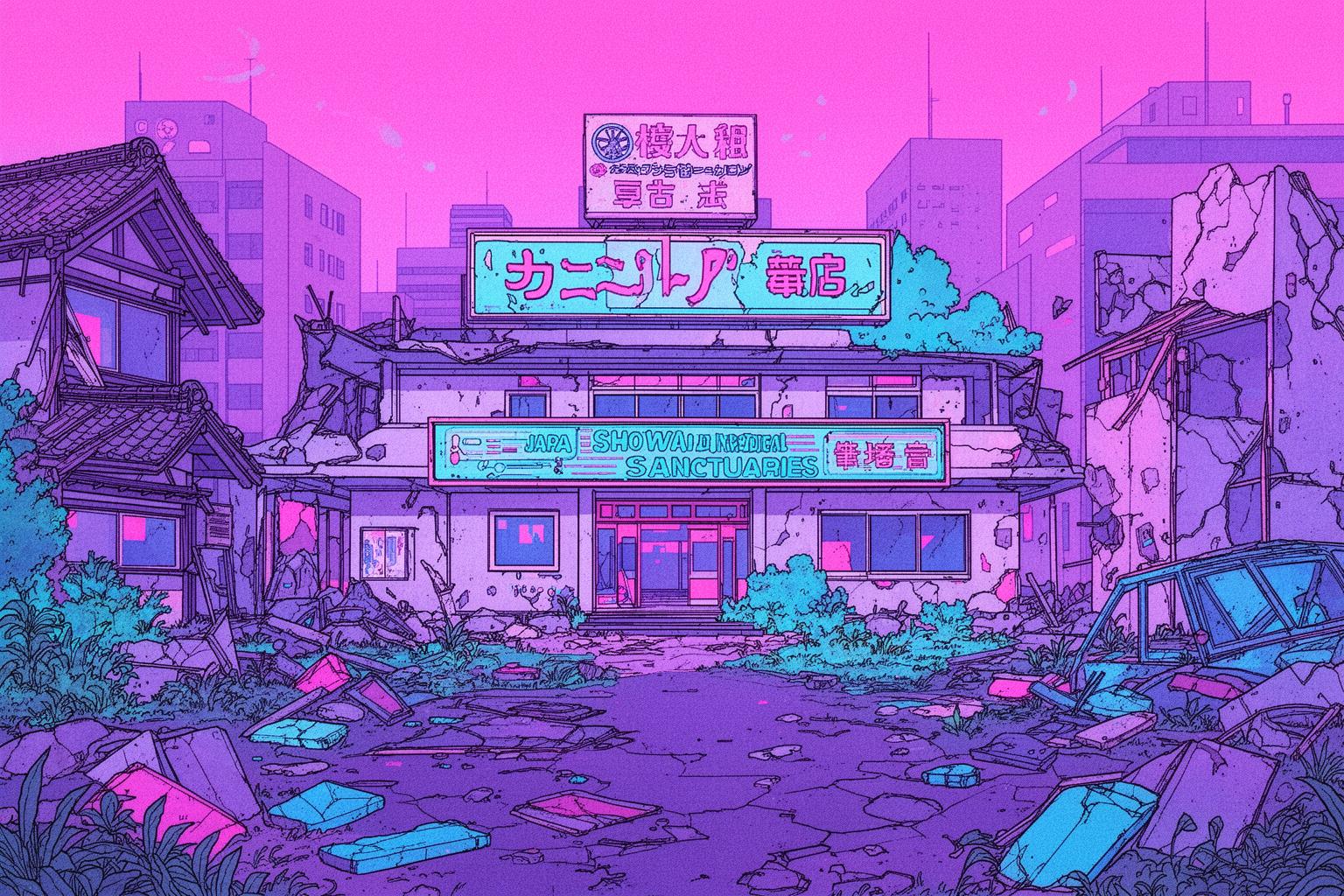
So why the fascination? Why do people from Japan and beyond find themselves drawn to these decaying shells of concrete and steel? It’s not just about the eerie thrill, though that certainly plays a role. The allure of these Showa-era medical haikyo runs much deeper, a complex blend of aesthetics, history, and psychology. It creates an entire mood, an aesthetic universe that resonates with something primal within us.
First, there’s the pure visual poetry of decay. In Japan, we have the concept of wabi-sabi, a worldview that embraces transience and imperfection. It’s about discovering beauty in things that are modest, weathered, and incomplete. A Showa hospital haikyo is essentially a grand cathedral dedicated to wabi-sabi. This is evident in the way nature reclaims human-made structures—vines creeping through shattered windows, moss covering concrete walls, trees growing through the floor of what was once a lively waiting room. It’s a slow, beautiful struggle between human ambition and the unstoppable force of time, with time invariably prevailing. The textures are incredible: peeling paint revealing layers of various colors like an archaeological dig, rust patterns resembling abstract art, and a soft, velvety dust that blankets everything, muting the world in shades of gray. For photographers, it’s a paradise where every corner captures a poignant masterpiece of melancholy beauty.
Then comes the nostalgia, the feeling of natsukashii. The Showa era (1926-1989) was a remarkable period. It stretched from pre-war militarism, through the destruction of World War II, into an amazing post-war economic boom, and finally the flashy, extravagant Bubble Economy of the 80s. It was a time of intense transformation, grit, and ambition. The design aesthetics from that era are unmistakable—the rounded edges of medical devices, analog dials and gauges, the unique mint-green paint on the walls, and the bulky Bakelite telephones—all artifacts from a completely different world. For older Japanese people, these places offer a direct portal to their past. For younger generations and visitors, it feels like stepping onto the set of a vintage film. These hospitals aren’t merely empty; they’re filled with the ghosts of a particular time. You can almost hear the squeak of nurses’ shoes on linoleum, the crackle of an old radio in the staff room, and the distant wail of a siren.
And of course, there’s the human aspect. Hospitals are spaces filled with intense emotions. They are stages of life and death, hope and despair, quiet suffering and miraculous recovery. When abandoned, that emotional energy doesn’t just disappear; it seems to seep into the very walls. Wandering through a deserted pediatric ward, with its faded cartoon murals and a solitary tiny shoe on the floor, delivers an emotional punch. Standing in an operating theater, where a large surgical lamp hangs like a silent, all-seeing eye above a rust-stained table, you can’t help but feel the weight of the human stories played out within those walls. These places are powerful because they are profoundly human. They remind us of our fragility and mortality. The experience is both humbling and strangely life-affirming. It’s this potent combination—the wabi-sabi beauty, Showa-era nostalgia, and raw human emotion—that makes these locations so utterly captivating. It’s a vibe that sinks deep into you and lingers long after you’ve gone.
A Ghost in the Machine: The Story of the Showa Era
To truly grasp the full story, you need to understand the background. These hospitals didn’t simply appear and then vanish. They are a direct outcome of the wild ride that was Japan’s Showa era. It’s the tale of a nation rebuilding itself, reaching great heights, and then facing the aftermath when the celebration ended. The history of these buildings mirrors the story of modern Japan itself.
Let’s go back to the early and mid-Showa period. After the war, Japan was literally in ruins. Yet, the determination to rebuild was overwhelming. Industry surged, cities grew rapidly, and the population increased. This brought a huge demand for public infrastructure, particularly healthcare. Both the government and private sector launched a construction boom. Hospitals, clinics, and especially sanatoriums for tuberculosis—a major public health concern at the time—were built nationwide. They were constructed with a deep sense of pride and national purpose. The architecture often combined strict, functional modernism with traditional design elements. These were built to endure, standing as firm, imposing symbols of a nation rising again.
Next came the late Showa era, the famed Bubble Economy of the 1980s. Japan was an economic titan, with money flowing freely. This sparked another surge in building projects. This phase was flashier. Hospitals expanded, adding new wings equipped with cutting-edge (for the time) technology. Private clinics and specialized medical centers appeared, often situated in scenic, remote areas, designed as luxurious “health resorts.” These facilities were monuments to affluence, founded on the belief that prosperity would last forever. The designs grew bolder, materials more costly. They marked the height of Japan’s postwar confidence.
But the bubble inevitably burst. When it did in the early 1990s, the impact was severe. The economy crashed, ushering in the so-called “Lost Decade.” Suddenly, the easy money vanished. Companies went bankrupt, and construction projects were abandoned abruptly. Hospitals burdened by debt found themselves unable to repay loans. Smaller rural clinics became unsustainable as young people migrated to cities, leaving behind aging, shrinking communities. Large, specialized mountain sanatoriums lost relevance as medical advances meant diseases like tuberculosis could be treated with pills rather than extended isolation in fresh mountain air.
What was the result? These once-essential institutions began closing one after another. Some shut down in an orderly way, moving equipment and records out. But many closed suddenly amid financial turmoil. Doors were locked, gates chained, and everything was left exactly as it was on their final day. Beds were still made. Medical charts remained in racks. X-rays hung on lightboxes. Medicine vials lined pharmacy shelves. It was as if the staff vanished like the crew of the Mary Celeste. This is why exploring these places feels so eerie. They aren’t mere empty buildings; they are perfectly preserved snapshots of a specific moment, frozen by economic collapse. They stand as accidental museums of the 20th century, silent witnesses to the dramatic rise and fall of Japan’s Showa dream.
Journey into the Quiet Wards: Case Studies of Forgotten Sanctuaries
Alright, let’s dive into the core of it. While I can’t and won’t provide you with a treasure map to specific, illegal-to-enter locations—for your safety and to preserve these sites—we can embark on a journey of the imagination. Let’s explore the archetypes, the classic types of medical haikyo whispered about within the urbex community. These are composites, inspired by the countless forgotten places scattered across the Japanese archipelago. Think of them as profiles of the ghosts that haunt the landscape.
The Mountain Sanatorium: Whispers in the Pines
Imagine this: you’re deep in the mountains of a region like Nagano or Gunma. The air is crisp, with the scent of pine and damp earth. The road up here was long and winding, and it’s been hours since you’ve seen another soul. Then, through a break in the trees, you spot it. A sprawling complex of low-rise buildings, their wooden facades weathered to a silvery gray, their tiled roofs speckled with moss. This is the classic mountain sanatorium, built in the mid-Showa era to house tuberculosis patients. Its very design reflects its purpose: long, open-air verandas where patients would rest, massive windows to welcome the healing sunlight and mountain air. It was a place of quiet convalescence and enforced stillness.
Now, that stillness is eternal. The silence here is another kind of presence, cushioned by the dense forest slowly reclaiming its territory. You’d see the main ward building, its long corridors now tunnels of shadow and light. In the patient rooms, the scene is hauntingly intimate: a rusted metal bed frame stands in the center, maybe with a thin tatami-mat mattress on top, compressed and stained by decades of humidity. Nearby, a small wooden nightstand might still hold a ceramic teacup or a pair of old spectacles. The personal effects truly move you—a single slipper on the floor, a faded postcard tacked to a corkboard, a child’s drawing. These aren’t just objects; they’re echoes of lives lived, long, monotonous days spent staring out at the same unchanging mountain view, hoping for a cure.
Then come the medical wings. The examination rooms are grim, with peeling leather benches and strange, archaic metal instruments scattered on trays. The X-ray room stands out: the machinery bulky and almost steampunk in design, a hulking metal beast from another era. Often, you’ll find stacks of X-rays left behind—ghostly images of anonymous ribcages and lungs, intimate medical secrets of people long gone, now exposed to the elements. The atmosphere blends melancholy and peace. It was a place of suffering, but also of healing. Now it stands as a monument to both, a quiet sanctuary gently being absorbed back into the nature once thought to be its cure.
The Seaside Clinic: Swallowed by Salt and Time
Now let’s shift gears. Head to one of Japan’s many rugged coastlines, to a small fishing village that’s seen better days. Tucked away on a cliff overlooking the churning gray sea is another common archetype: the abandoned seaside clinic. This was likely a small, privately-run facility operated by a single doctor and family, serving local fishermen and their families for decades. Its decline mirrors the town’s own—as the fishing industry waned and young people left for the cities, the clinic lost patients and eventually closed its doors.
Here, decay is accelerated by the sea. The salt-laced air is brutal. Every metal surface is eaten away by rust, blooming in orange and brown hues. Paint peels off the exterior walls in huge, curling sheets, revealing weathered wood beneath. The soundscape is dominated by the rhythmic crash of waves against the rocks below and the cries of gulls circling overhead. It’s a relentless, primordial sound that makes the human-made silence inside even more profound.
Inside, humidity has ravaged everything. Wallpaper sags from the walls, heavy with moisture. Medical charts and patient records have turned into a pulpy, mildewed mush. In the pharmacy, rows of glass bottles and vials remain on shelves, their labels faded and contents cloudy and mysterious. It feels like a laboratory of decay. In the waiting room, you might find old, salt-stained magazines from the late ’80s, filled with ads for products and celebrities now relics of the past. The examination room is small and intimate, with an old, cracked leather examination table and a glass cabinet stocked with frighteningly old-fashioned syringes and medical tools. This place feels less grand and more personal than the mountain sanatorium. It tells the story of a community’s slow fade, a testament to the doctor who tried to hold it together, and a stark reminder that even essential services can become obsolete amid shifting demographics and economics. The sea is a patient, powerful force, and this little clinic is its latest conquest.
The Grand Urban Hospital: A Concrete Behemoth’s Last Breath
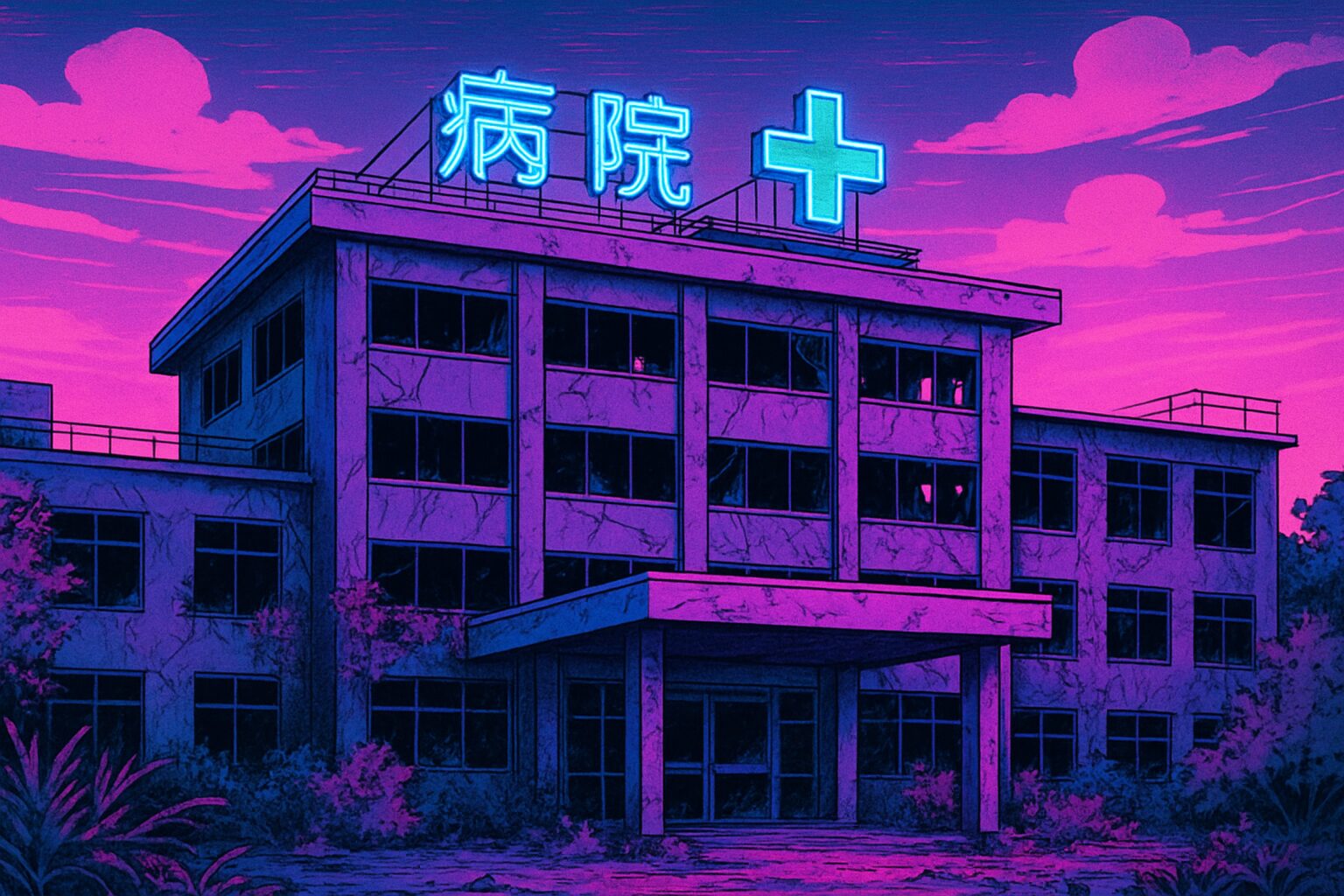
This is the big one—the site featured most often in dramatic haikyo photography. On the outskirts of a major city, looming over the landscape like a dead giant, stands the abandoned grand hospital. A product of the Bubble Economy, it’s a huge, multi-story concrete complex built with confidence and seemingly endless funds. It might have housed hundreds of beds, multiple operating theaters, specialized wings from pediatrics to psychiatry, even a chapel or rooftop garden. Its closure was sudden and catastrophic, a direct result of the bubble bursting. One day it was a state-of-the-art medical center; the next, a ghost ship.
The scale overwhelms you. It’s a labyrinth. Endless corridors stretch out in all directions, lined with doors to identical rooms. Some rooms are stripped bare by scrappers, others frozen in time. You could wander for hours and still miss much. Operating theaters are the crown jewels for explorers: vast, sterile-white tiled rooms now grimy, with massive surgical lamps hanging like mechanical chandeliers. Operating tables stand at the center, surgical tools left scattered on nearby trays, as if surgeons fled in haste. The tension in such a room is palpable.
Each section has a distinct, heavy vibe. The pediatric ward is the most emotionally charged: faded Disney characters painted on walls, a lonely rocking horse in a playroom corner, tiny cots lined up in a row—a potent symbol of innocence lost. The psychiatric ward escalates the intensity, with reinforced doors, barred windows, and stark seclusion rooms. The atmosphere is thick with the residue of human suffering. The morgue, usually in the basement, carries dread so heavy even seasoned explorers hesitate to enter. Empty body lockers and the autopsy table starkly remind visitors of the building’s ultimate function. Exploring here is an overwhelming sensory journey, covering every facet of human existence from birth to death under one decaying roof. It’s a concrete testament to Bubble era hubris and a reminder that even the biggest, most modern institutions can fall.
The Asylum on the Outskirts: The Unspoken Stories
This last one demands a different energy—deep respect and solemnity. On society’s fringes, both literally and figuratively, lie the remains of old mental health facilities. These places carry a unique weight, a history often dark and complicated. Built in an era when mental health was poorly understood and heavily stigmatized, they were often sites of isolation and confinement rather than healing.
The architecture itself tells a story of control: high walls, barred windows, heavy lockable doors, layouts designed for surveillance. Patient rooms were often little more than small, stark cells. Seeing them, you can’t help but reflect on the lives confined here, often for years, cut off from the outside world. The grounds, extensive yet overgrown, have therapeutic gardens now tangled with weeds. Rusted swings in forgotten courtyards or crumbling greenhouses are especially poignant.
Inside, the atmosphere is deeply somber. You might find remnants of occupational therapy—unfinished crafts, looms with threads still in place, easels with blank canvases—heartbreaking signs of attempts to find meaning and purpose within a restrictive environment. Treatment rooms can be unsettling, containing archaic and intimidating equipment connected to therapies now deemed inhumane. Unlike other haikyo, the thrill of exploration here is replaced by profound sadness and ethical weight. This is a place for reflection, not adventure. It stands as a powerful memorial to those whose stories were often silenced and a reminder of how far our understanding of mental health has come—and how far it still must go. These sites aren’t for sport; they are for bearing witness to a difficult, often hidden chapter of our collective history.
The Art of Urbex: Photography and Haikyo
For many, the primary way to engage with haikyo is through a camera lens. Urban exploration and photography are naturally intertwined. It offers a means to capture the fleeting beauty of these decaying spaces, to document them before they crumble or are torn down, and to share their unique atmosphere with a broader audience without physically bringing them there. Haikyo photography is its own art form, complete with distinct aesthetics and ethical considerations. It goes beyond simply photographing a spooky old building; it’s about narrating the story of a place through light, shadow, and composition.
The most important rule of haikyo photography is to master natural light. Since these places lack electricity, sunlight is the only source of illumination. This is a blessing rather than a drawback. The way light filters through a broken window, casting a sharp beam through dusty air, symbolizes the genre. Photographers refer to “god rays” for good reason—it’s a truly transcendent sight. Learning to work with this light is essential. You might use a tripod for long exposures in dark corridors, capturing the ambient glow that creates a serene, otherworldly image. Alternatively, you might harness the harsh, direct sunlight to produce stark contrasts of light and shadow, highlighting the grit and texture of decay.
Composition matters deeply. The aim is to immerse the viewer, making them feel as if they stand there beside you. Leading lines are a powerful device—a long corridor, a row of beds, or a spiraling staircase can draw the eye far into the frame. Framing is another timeless technique. Shooting through a broken window, doorway, or gap in a wall creates depth and a sense of voyeurism, as if the viewer is peering into a hidden world. Yet the true magic lies in focusing on small details, the so-called “money shots.” It’s not merely the wide-angle of a crumbling hall; it’s the close-up of a doctor’s signature on a moldy patient chart. It’s the texture of peeling paint on a single door. It’s the way light catches a shard of broken glass on the floor. These intimate details tell the human story of the place and anchor the vast decay in personal, relatable terms.
Ethics in haikyo photography are just as crucial as technique. The cardinal rule is to leave a site exactly as it was found. This means no staging. A genuine haikyo photographer records the scene authentically, without rearranging objects for a more “dramatic” shot. Moving that teddy bear into a perfect beam of light may create a striking photo, but it ruins the scene’s authenticity for future visitors. It turns a genuine artifact into a cheap prop. Respect for the location is essential. This principle also applies to sharing. Responsible explorers are very cautious about revealing the exact locations of these sites. Once a location goes viral, it’s effectively a death sentence. It draws vandals, thieves, and inexperienced individuals who may get injured or cause damage, often resulting in increased security or rapid demolition. Haikyo photography is a delicate balance between documentation and preservation, a way to celebrate these places while helping to protect their silent dignity.
The Real Talk: Legality, Dangers, and the Haikyo Code
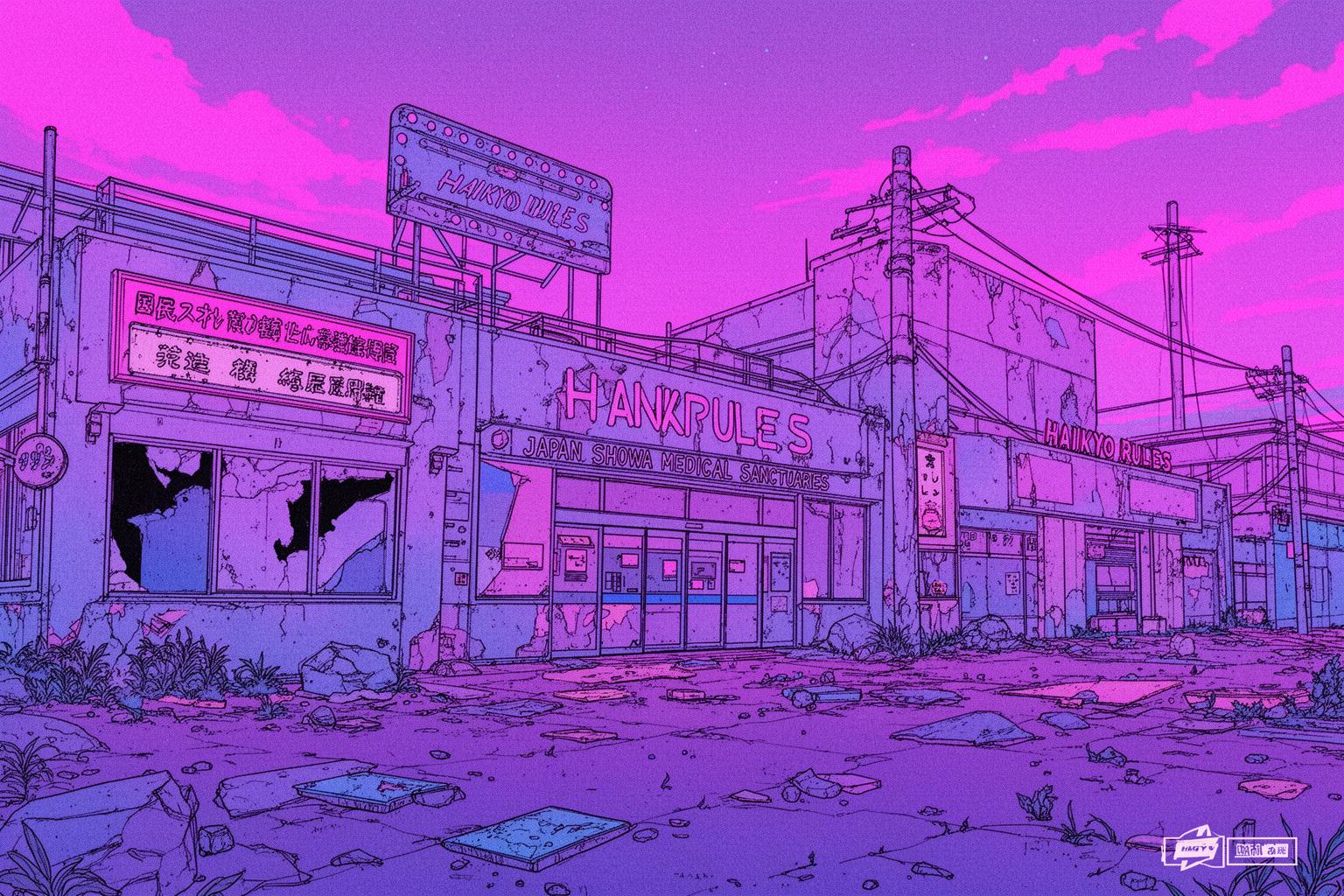
Alright, let’s pause the poetic descriptions for a moment and get straight to the point. This is the most crucial part of the entire article, so pay close attention. While the world of haikyo is undeniably fascinating, exploring it comes with serious legal and physical dangers. This is not a game. You can’t just climb a fence and start exploring. You need to be fully aware of the consequences because they are very, very real.
Trespassing is Off Limits: The Legal Facts
Let’s be perfectly clear: in Japan, entering private property without permission is illegal. Period. It doesn’t matter if the building looks abandoned, gates are open, or no signs are posted. Being on private property without the owner’s consent means you are trespassing. Article 130 of the Penal Code covers unlawful intrusion (住居侵入罪, jūkyo shinnyūzai), which can lead to arrest, fines up to 100,000 yen, or imprisonment. Japanese police take this seriously. Locals are often well aware of these abandoned sites and report suspicious activity promptly. Foreigners are not exempt, and claiming ignorance of the law is not a valid defense. Many popular haikyo locations are now monitored with security cameras or motion sensors. Getting caught is very likely and will quickly ruin your trip and land you in serious trouble with Japanese authorities. Seriously, don’t do it.
More Than Just Ghosts: Real Dangers Inside
Even if you somehow obtain permission, the physical risks inside these buildings are severe. These structures have been left to decay for decades with no maintenance. They are highly unstable and hazardous. Here’s a rundown of what could seriously injure or kill you.
First, structural integrity. Floors may be rotten from years of water damage. A floor that looks solid can collapse beneath you, sending you crashing down to the level below. Ceilings and roofs can fall without warning. Stairs may crumble. Every step you take is a potential hazard.
Second, hazardous materials. Asbestos was widely used during the Showa era. As these buildings degrade, asbestos fibers can become airborne. Inhaling them can cause severe lung diseases, including cancer, many years later. You won’t even realize you’ve been exposed. There may also be chemical spills in old labs or pharmacies, along with mold and fungus that can cause respiratory issues.
Third, sharp objects. Broken glass is everywhere. Windows are shattered and shards scatter the floors. Rusted metal protrudes from walls and collapsed parts of the building. A simple slip can cause deep cuts, and contracting tetanus in an abandoned hospital is an irony you want to avoid.
Finally, you are not alone. These dark, quiet places often shelter wildlife. You might encounter stray dogs, snakes, giant hornets (suzumebachi), or even wild boars or bears, depending on the area. And then there is the human element. You don’t know who else might be using the site for shelter or illegal activities. Running into someone in a dark, isolated place is a scenario better suited for horror films.
The Unwritten Rules: The Urbexer’s Code
For those who do take part in this activity, there is a strict, internationally recognized code of conduct to minimize risk and impact. It’s a philosophy of respect crucial to preserving these sites. The motto is simple: “Take only pictures, leave only footprints.”
This means you do not break anything to get inside. You don’t force doors or smash windows. If a place is sealed, you turn back. You don’t vandalize with graffiti or damage the property in any way. You don’t steal souvenirs. That old medical chart or medicine vial might seem like a cool keepsake, but it’s part of the site’s story. Taking it is theft and spoils the experience for others who come after you. You leave everything exactly as you found it. The goal is to move through the space like a ghost—observing but never altering. And as noted earlier, you don’t share specific location details publicly. This protects the site from those who would not show the same respect. It’s a code founded on the belief that these places aren’t playgrounds; they are fragile historical sites that deserve dignity and care.
The Showa Spirit Lives On: Finding the Vibe Without Breaking the Law
So, after all those warnings, you might be thinking, “Great, Hiroshi, you’ve introduced me to this fascinating world and then told me I can’t visit.” I understand. But the good news is, there are safe and completely legal ways to experience the haikyo aesthetic and the Showa-era atmosphere without wearing a hard hat or breaking the law. You just need to know where to look.
Official Ruins and Open-Air Museums
Japan boasts some world-class “official” ruins that you can explore safely and legally. The most famous is Gunkanjima (Hashima Island) off the coast of Nagasaki. This former coal mining site and apartment complex was entirely abandoned in the 1970s. It’s a literal concrete ghost island, a UNESCO World Heritage site, and you can join a boat tour that lands on the island and leads you along designated safe paths. It offers the quintessential haikyo experience, fully authorized and guided.
There are also open-air architectural museums preserving buildings from past eras. The most renowned is Meiji-mura in Aichi Prefecture, which focuses on the Meiji era, but others like the Edo-Tokyo Open Air Architectural Museum in Tokyo showcase preserved Showa-era buildings. You can stroll through old shops, houses, and public buildings, immersing yourself in the design and atmosphere of the time in a meticulously maintained, museum-quality setting.
Haikyo-Themed Cafes and Art
The haikyo aesthetic has permeated popular culture. In cities such as Tokyo and Osaka, you can occasionally find cafes, bars, or art galleries intentionally designed to resemble ruins. They feature elements like exposed brick, peeling plaster, vintage furniture, and salvaged industrial pieces to create a wabi-sabi, post-industrial vibe. It’s a way to enjoy the aesthetic in a comfortable, curated, and entirely legal setting—often accompanied by a good cup of coffee or a craft cocktail.
Moreover, many Japanese photographers and artists focus on capturing haikyo. Following their work is a wonderful way to experience these places. They frequently hold exhibitions in galleries, and their photobooks are stunning works of art that allow you to appreciate the beauty of these locations in exquisite detail from the comfort of home. You can admire their skill and courage without taking any personal risks.
Digital Exploration: The World of Haikyo Online
Let’s face it, we live in the digital age. There is a vast global community of urban explorers online who share their discoveries through high-quality photos, videos, and detailed accounts. Platforms like Instagram, YouTube, and specialized forums are treasure troves of haikyo content. You can take a virtual tour of an abandoned hospital in Japan, guided by an experienced explorer, all from your phone or computer. In one afternoon of browsing, you can see more places than you might in a year of risky real-world exploration. This is undoubtedly the safest and most accessible way to delve into the world of haikyo. You get all the visual excitement and historical context without any legal or physical danger. It’s a powerful tool for appreciation and a great way to connect with a passionate community of fellow enthusiasts.
Final Thoughts from a Fellow Wanderer
So there you have it: a glimpse into the silent, beautiful, and complex world of Japan’s Showa-era medical haikyo. These sites are more than just eerie ruins; they represent a vital, though fading, part of our cultural heritage. They serve as tangible history lessons, art installations shaped by time and neglect, and profound spaces for reflection. They reveal the ambition and folly of a bygone age, the relentless force of nature, and the beauty found in imperfection and decay. They remind us that nothing lasts forever, and there is a strange comfort in that truth. The stories they hold form an essential part of Japan’s broader narrative, and it’s important that we keep them alive.
My advice to you, as a traveler seeking the authentic Japan, is to embrace the spirit of haikyo. Seek out quiet places, forgotten corners, and stories not told in guidebooks. You don’t need to trespass to experience this. The Showa vibe can be found in an old kissaten coffee shop, a sleepy rural town, or through the lens of a talented photographer. What matters is looking beyond the shiny and new to appreciate the profound beauty of things weathered, worn, and steeped in history. Keep your eyes open, stay curious, and above all, stay safe. The deepest journeys are often those we take into quiet spaces, both in the world and within ourselves. Happy travels.