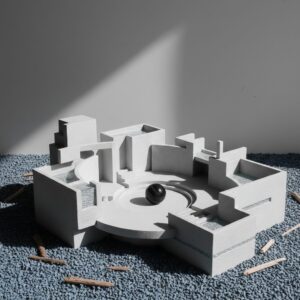
Forget what you think you know about concrete. Seriously. Erase the images of dull, utilitarian cityscapes and brutalist monoliths. We’re about to take a deep dive into a world where concrete is not cold, but serene. Where it’s not a barrier, but a canvas. This is the world crafted by Tadao Ando, the self-taught architectural legend from Osaka, a Pritzker Prize laureate who sculpts with silence, light, and reinforced concrete. His buildings are more than just structures; they are sanctuaries for the soul, modern-day temples that channel a profound sense of Zen without chanting a single sutra. Ando’s genius lies in his ability to take this most humble of industrial materials and transform it into a stage for the most elemental and beautiful drama there is: the dance between light and shadow. His architecture is a quiet rebellion against the noise of modern life. It asks you to slow down, to breathe, to simply be present. It’s a physical manifestation of a spiritual state, a pilgrimage destination for anyone seeking a moment of sublime peace. This journey isn’t just about seeing buildings; it’s about feeling them. It’s about experiencing spaces that can genuinely change your perspective, that can make you feel connected to nature, to the cosmos, and to yourself in a way you never expected. So, let’s get into it and explore these concrete havens where the spirit of Japan’s ancient traditions meets the sharp edge of modernism, creating a vibe that is timeless, powerful, and utterly unforgettable.
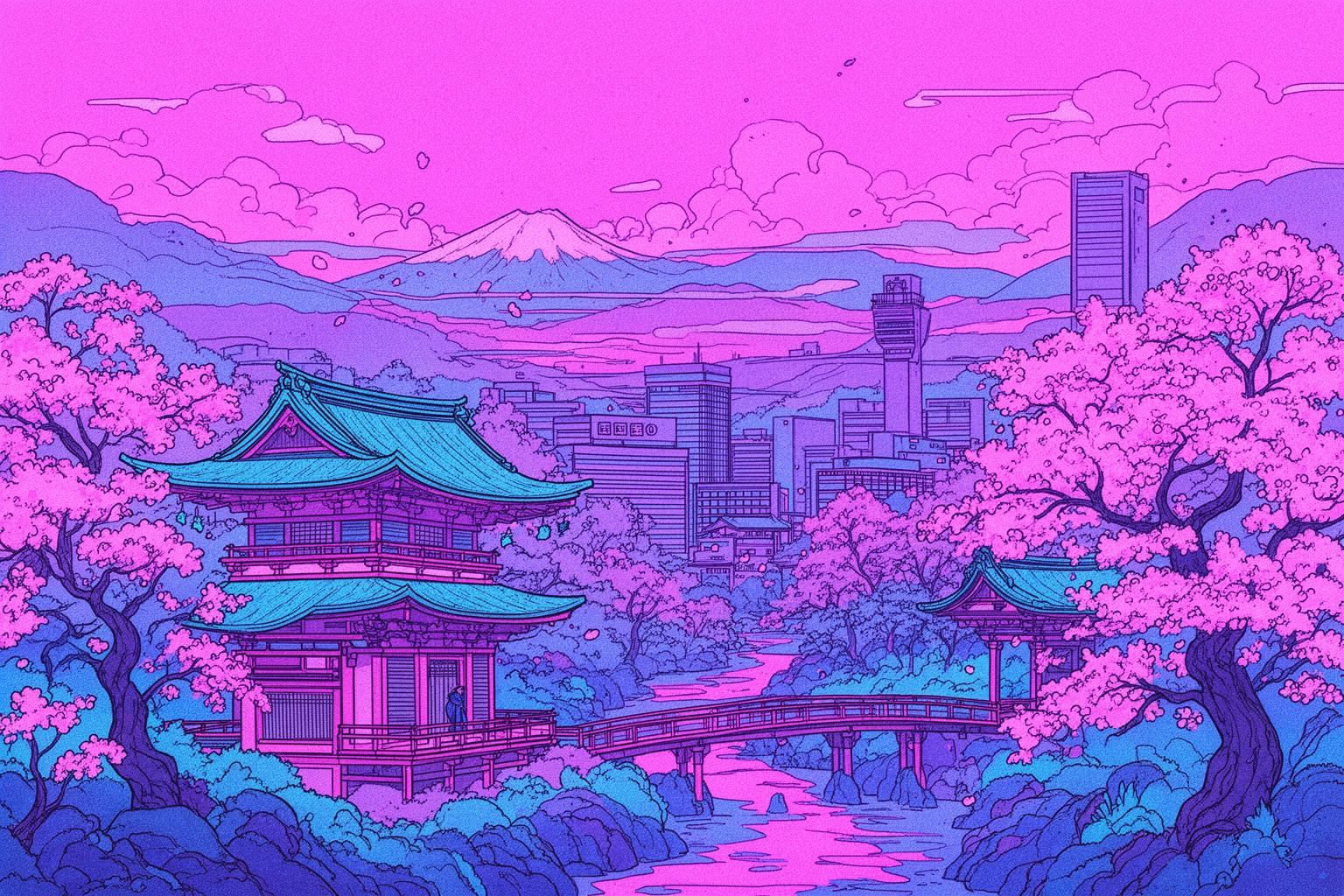
While Ando’s work finds serenity in concrete, Tokyo’s own concrete structures can evoke a very different, yet equally compelling, cyberpunk beauty.
The Ando Philosophy: Concrete, Nature, and the Soul
To truly grasp what Tadao Ando is accomplishing, you must understand his fundamental approach. It’s a deceptively simple trio of elements: concrete, natural light, and the raw presence of nature itself. Yet, the way he fuses them is nothing short of alchemy. This philosophy emerges from his unique background as a former boxer and a self-taught architect who developed his skills by traveling the globe and absorbing the essence of structures ranging from ancient Roman temples to modernist masterpieces by Le Corbusier. Unlike many, he didn’t come from an academic elite; he came from the streets of Osaka, and that grounded origin imbues his work with an elemental, instinctive power.
Concrete as a Silken Canvas
First, consider the concrete. This isn’t ordinary sidewalk concrete. Ando’s concrete is renowned for its flawless, velvety smooth finish. It almost feels like silk to the touch, a paradox that challenges how you perceive the material. He achieves this through painstaking craftsmanship, employing custom lacquer-coated formwork to produce a surface that is immaculate and pure. The characteristic details are the evenly spaced, small round holes left by the tie rods holding the formwork together. These are not hidden but rather celebrated, arranged in a precise grid that gives the expansive walls a human scale and a subtle rhythmic pattern. Often, the concrete panels correspond in size to traditional Japanese tatami mats, another subtle nod to his country’s architectural heritage. For Ando, concrete is the ultimate neutral material—of our era, yet elemental and strong. By removing color, texture, and ornament, he crafts a silent backdrop. This silence is vital; it allows the other elements, primarily light and nature, to take center stage in the story he tells. The concrete does not demand attention but holds space, creating a profound sense of enclosure and security—an almost womb-like atmosphere that readies you for a spiritual or aesthetic experience.
Light as a Divine Sculptor
If concrete is Ando’s canvas, then light is his chisel. In his architecture, light is never just a means of illumination. It is an active, living material that he carves, directs, and unleashes to breathe life and emotion into his spaces. Deep, dark interiors often feature just a few carefully positioned openings—a slender slit in a wall, a skylight, or a cross-shaped aperture. This scarcity renders any light that does enter incredibly precious and powerful. It slices through the darkness like a blade, tracing paths across the smooth concrete walls as the sun moves through the sky. Being inside one of his buildings is an exercise in mindfulness, making you keenly aware of the time of day and the changing seasons simply by observing the quality and position of the light. This resonates deeply with traditional Japanese aesthetics, such as the concept of in’ei raisan (In Praise of Shadows) described by Jun’ichirō Tanizaki, which honors beauty found not in bright light but in subtle shades and depths of shadow. Ando understands that light cannot be truly appreciated without darkness. He sculpts shadows with the same care as his walls, using them to evoke mystery, depth, and a calm, contemplative mood.
Nature as the Protagonist
Ando’s buildings are never hermetically sealed boxes; they engage in a constant, dynamic dialogue with the natural world. But he doesn’t simply place a building within a scenic landscape. Instead, he uses architecture to frame nature, curate it, and amplify its presence. A window might be positioned not to capture a sweeping vista but to perfectly frame a single tree, transforming it into a living artwork. A wall might be erected deliberately to block an unremarkable view, guiding your gaze upward to a narrow slice of sky above. Water frequently figures in his work, employed for its reflective qualities that double the sky and introduce movement and tranquility to the stillness of concrete. The wind becomes audible as it courses through narrow corridors. Rain is made visible as it streaks down smooth walls, creating fleeting patterns that mark the passage of time. He orchestrates encounters between the man-made and the natural, often requiring you to walk outdoors to move between different sections of a building, exposing you to the elements and reminding you that you are part of a larger environment. This dialogue is fundamental to the Zen spirit of his work, breaking down the barrier between inside and outside and reminding us of our place within the natural order. It is a humbling and deeply centering experience.
The Holy Trinity: Three Sanctuaries to Experience Ando’s Vision
To truly grasp Ando’s magic, you must embark on a pilgrimage to his most potent spiritual spaces. Although his portfolio is extensive, a few standout projects serve as perfect expressions of his philosophy. These are not merely buildings; they are journeys. Each uniquely employs concrete, light, and nature to evoke wonder and deep introspection. Visiting them feels less like architectural tourism and more like a spiritual quest.
Church of the Light (Ibaraki, Osaka): The Crucifix of Pure Radiance
Tucked away in a quiet residential suburb of Ibaraki, just outside Osaka, lies perhaps Ando’s most renowned and emotionally stirring work: the Church of the Light. From the outside, it appears deceptively simple, almost austere—a monolithic box of his signature smooth concrete. There’s no steeple, grand entrance, or stained glass, revealing nothing of the profound experience inside. This is Ando’s hallmark: the journey and reveal are everything.
Your entrance is indirect. You pass by an angled concrete wall cutting into the main volume, creating a narrow, compressed threshold that compels a moment of transition. You leave the bright, noisy world behind and step into a space of deep, resonant darkness. Your eyes adapt slowly, and the air feels cool and still. The interior is stark, stripped of traditional religious decoration. The materials are raw and honest: concrete walls, dark wooden floors, and simple wooden pews. It’s a place of profound silence, where your own breathing seems amplified.
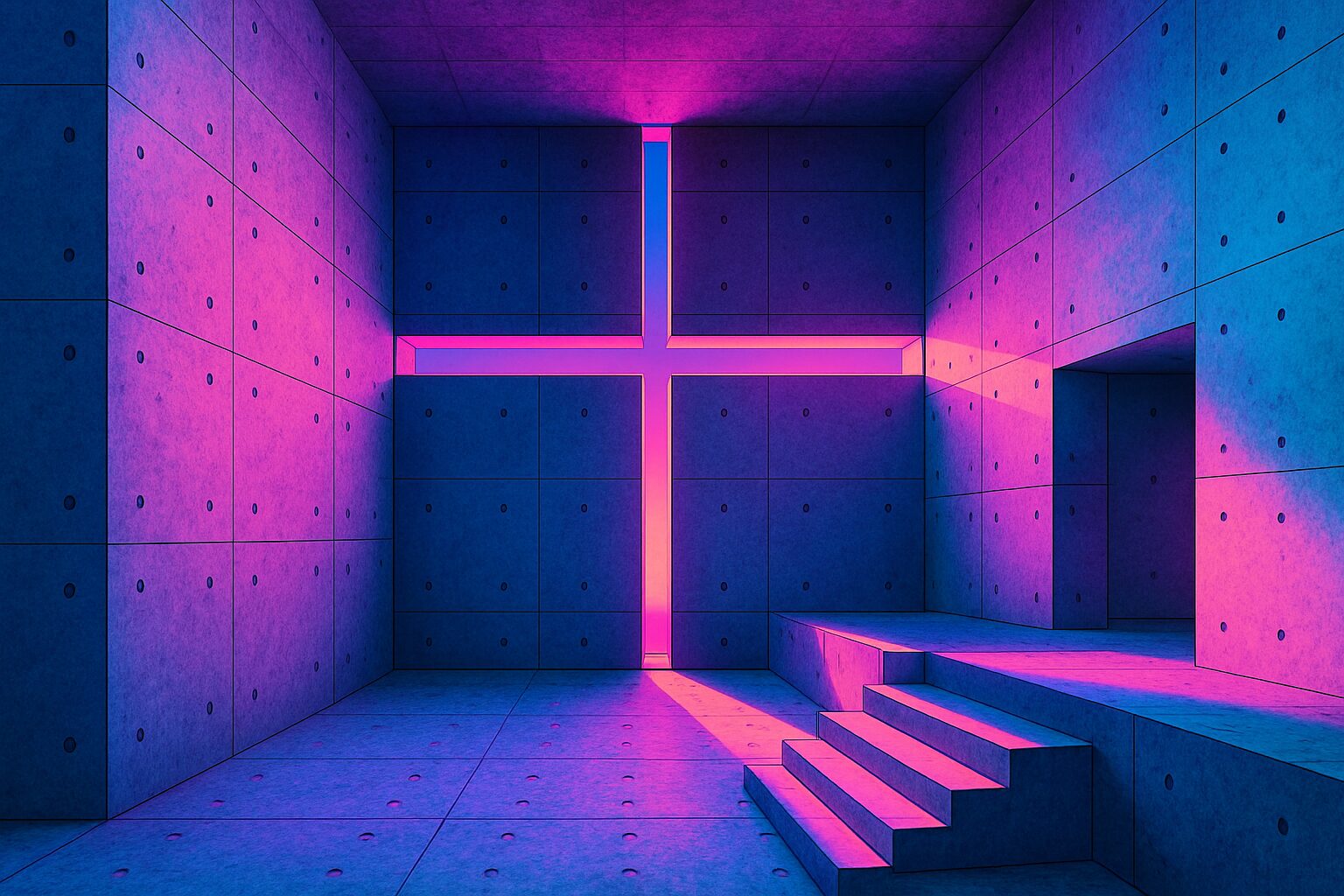
Then you behold it. The entire eastern wall behind the altar is pierced by a single, breathtaking cruciform slit. It is not a hanging cross but a cross composed of pure, unfiltered light. The outside world floods in through this opening, dissolving the heavy concrete and forming a symbol of immense power and grace. It is pure architectural theater that can genuinely take your breath away. The effect is overwhelming. In the chapel’s darkness, the cross’s light feels blindingly brilliant, almost divine. This symbol is both Christian and universal—a focal point for contemplation regardless of faith.
What is remarkable is how this space transforms. On bright, sunny mornings, the cross is a razor-sharp blade of light casting crisp shadows that slowly sweep across the floor. On overcast days, it becomes a soft, ethereal glow, suffusing the space with gentle, diffused radiance. Sitting in the pews and watching this quiet performance is meditation itself. The space doesn’t preach; it simply is, inviting you to find your own meaning in the silence and light. A key practical note: the Church of the Light is an active place of worship, with visits generally restricted and requiring advance reservation on their website. Plan well ahead, as spots fill quickly. Access involves a train ride from Osaka to Ibaraki Station, followed by a short bus trip. This small effort rewards you with an unforgettable experience.
Water Temple (Awaji Island): A Journey into the Sacred Lotus
If the Church of the Light centers on the power of a single, focused moment, the Water Temple on Awaji Island celebrates a winding, multi-sensory journey. This is Ando at his most narrative, crafting an experience that unfolds in stages, playing with your expectations and guiding you toward a stunning subterranean revelation. Officially called Hompukuji, a branch of the Shingon Buddhist sect, the temple transcends any single religious tradition.
Your approach signals that this is no ordinary temple. You ascend a gentle hill along a path of pristine white gravel, the crunch beneath your feet your only sound. To one side, a long, stark concrete wall blocks your view of the sea, directing your attention inward. On the other, a gracefully curved wall leads you toward the entrance. Rounding the corner, the first major reveal appears: a vast, shallow oval pond covered with lotus plants. This stunning tableau reflects the expansive sky, the green pads forming a living mosaic. In summer, when lotuses bloom, it is a vision of paradise, directly referencing Buddhist symbolism where the lotus signifies purity, enlightenment, and rebirth.
But where is the temple? You see only the serene pond. Then you notice stairs descending into its center. This is pure Ando genius. To enter the sacred space, you must symbolically pass through the purifying waters of the lotus pond, leaving the profane world behind. As you descend the concrete steps, the sky and pond vanish, and you are enveloped in cool, quiet darkness. You are entering the earth.
At the bottom, the journey takes another dramatic turn. You step into a circular corridor bathed in intense, warm vermilion light. The cool grey concrete and blue sky you left are replaced by a complete sensory shift. The walls form a vibrant lattice of red-orange wood, a color deeply symbolic in Japanese temples and shrines. Indirect light filters from above, creating a soft, womb-like glow that feels both intimate and sacred. Following this circular path, your sense of direction becomes fluid. This circumambulation serves as a meditative act, preparing you for the inner sanctum. At last, you reach the temple’s heart, a sacred chamber housing the principal Buddha image. Light streams down from a skylight above, connecting the statue to the world of light beyond the pond. The entire experience symbolizes a spiritual journey: purification, descent into the self, and re-emergence toward enlightenment. Visiting the Water Temple involves some travel—usually bus or car from Kobe across the Akashi Kaikyō Bridge to Awaji Island—but this separation from everyday life is integral to the pilgrimage. It is an essential stop for anyone exploring Japan’s fusion of ancient tradition and contemporary art.
Hill of the Buddha (Sapporo): The Great Buddha’s Gentle Embrace
Far north, on the outskirts of Sapporo in Hokkaido, you’ll find one of Ando’s most dramatic, landscape-integrated works: the Hill of the Buddha at Makomanai Takino Cemetery. The story is fascinating. A 13.5-meter stone Buddha statue had stood in an open field for 15 years, solitary and somewhat uninspiring. The cemetery owners asked Ando to design a fitting hall of worship. His solution was audacious and brilliant. Rather than building around the Buddha, he chose to hide it—by constructing an artificial hill enveloping the statue, leaving only the top of its head visible from afar.
This concealment shapes the visitor experience. From a distance, you see a gentle, lavender-covered dome, the Buddha’s serene head peeking out as if meditating among the flowers. It is a surreal, intriguing sight that sparks immediate curiosity. To reach the statue, you embark on a carefully choreographed journey. First, you pass a tranquil water garden whose reflective surface mirrors the sky and cleanses the mind. Then, you enter a long, 40-meter concrete tunnel—dark, solemn, and mysterious. The bare concrete walls are illuminated only at the far end. This tunnel forms a transitional space, heightening your anticipation.
Emerging from the darkness, you step into a vast, conical open-air rotunda. At its center sits the Great Buddha in quiet contemplation. You stand at its feet, compelled to look up, the statue framed by a perfect circle of open sky above. The effect is breathtaking. By concealing and then dramatically revealing the Buddha, Ando entirely transforms your perception. You haven’t merely stumbled upon a statue; you’ve undertaken a pilgrimage to its presence. The statue feels more powerful, sacred, and intimate. The open halo of sky connects the Buddha’s earthy presence with the infinite cosmos—a pure moment of Zen.
This space masterfully integrates the seasons. In mid to late July, the hill is blanketed with 150,000 blooming lavender plants, their vivid purple and fragrant scent creating a heavenly atmosphere. In winter, the landscape is covered in pure white snow, turning the hill into a serene minimalist sculpture. The Buddha’s head, dusted with snow, appears even more tranquil and profound. The Hill of the Buddha powerfully embodies Ando’s belief that architecture shapes not only space but also our emotional and spiritual response. Access is easiest by car, though buses run from Sapporo’s Makomanai Station. Be sure to visit in season to witness the peak lavender bloom or the quiet beauty of snow. It stands as a truly unique spiritual landmark in Japan.
Beyond the Sanctuaries: Ando’s Philosophy in Public and Private Spaces
While Ando’s spiritual architecture represents the most concentrated expression of his vision, his philosophy of harmonizing with nature, shaping light, and employing concrete with poetic intensity permeates all his works, from world-class art museums to lively shopping centers. To fully appreciate his genius, one must explore how these principles are adapted across different settings, particularly on the art islands of the Seto Inland Sea and within Tokyo’s sophisticated urban landscape.
The Art Islands: Naoshima, Teshima, and Inujima
The transformation of a few quiet, depopulated islands in the Seto Inland Sea into a world-renowned art destination is one of modern Japan’s most extraordinary cultural achievements, with Tadao Ando as its principal architect. Collaborating with the Benesse Corporation, he designed a series of museums and hotels that not only house art but seamlessly integrate into the landscape, becoming artworks themselves.
Benesse House Museum
This was the starting point for the art island initiative on Naoshima. It is a stunning blend of a luxury hotel and contemporary art museum. The building itself is a masterpiece of integration, embedded into a hillside overlooking the shimmering Seto Inland Sea. Its concrete structures and expansive glass windows are designed to frame breathtaking views of the water and surrounding nature. The architecture guides visitors through galleries featuring artists like Bruce Nauman and Jackson Pollock, while the experience is continuously punctuated by views of the outdoors. Staying overnight here offers the ultimate Ando experience—waking in a room where a modern art piece adorns one wall and a perfectly framed sea view fills another is to momentarily live inside his vision. The building’s ramps and walkways lead you on a journey that blurs the boundaries between inside and outside, art and nature, hotel and gallery.
Chichu Art Museum
Arguably the crown jewel of Naoshima, the Chichu Art Museum offers an architectural experience of unmatched power. The name Chichu means “in the earth,” and true to this, the entire museum is constructed underground to preserve the island’s natural coastline. From above, only geometric openings—squares, rectangles, triangles—are visible on the green hillside. This represents Ando’s ultimate gesture of respect towards nature. Visiting the museum is like a pilgrimage. You wander through sublime, open-air concrete courtyards and corridors, feeling the sun and wind, before descending into subterranean galleries. Each gallery is custom-designed to showcase the work of just three artists. One room is dedicated entirely to Claude Monet’s Water Lilies series, illuminated solely by diffuse natural overhead light, with a floor made from thousands of tiny marble cubes, making you feel as if you’ve stepped inside the paintings. Another gallery presents a massive granite sphere by Walter De Maria in a cathedral-like space of impressive scale and precision. Lastly, you encounter the mesmerizing light installations of James Turrell, for whom Ando’s light-manipulating architecture is the perfect complement. The Chichu is a testament to the power of a focused, singular vision, where architecture, art, and nature become an inseparable, sacred trinity.
Ando Museum
On a smaller scale, the Ando Museum in Naoshima’s Honmura district encapsulates his dialogue with history. Here, he took a century-old traditional wooden house and inserted a stark, angular concrete cube within it. Entering the warm, dark wooden building, you are suddenly confronted by this cool, gray, modern form. Light filters through a skylight in the concrete ceiling, illuminating the space and highlighting the contrast between the rough-hewn wooden beams of the old home and the smooth, perfect planes of the new structure. It is a powerful conversation between past and present, shadow and light, tradition and modernity, contained within a small, intimate space.
Urban Interventions: Finding Zen in the City
Ando’s work is not confined to remote, picturesque landscapes; he also brings his philosophy of serenity and connection to nature into the heart of some of the world’s busiest cities, creating serene oases amid urban chaos.
Omotesando Hills (Tokyo)
Taking on a large commercial project on Omotesando, Tokyo’s equivalent to the Champs-Élysées, was a tremendous challenge. Ando’s solution was characteristically brilliant. To respect the scale of the neighborhood and the iconic zelkova trees along the avenue, he kept the building’s height consistent with the trees and submerged a third of its volume underground. The interior centers around a vast, six-story atrium with a central ramp spiraling upward, echoing the gentle slope of Omotesando itself. This creates the sensation of walking down a street rather than through a shopping mall. A huge glass facade allows natural light to flood the space, linking the interior to the outside environment and the changing seasons. It is a commercial space that feels surprisingly public and tranquil—a testament to his ability to humanize large-scale urban architecture.
21_21 Design Sight (Tokyo)
Situated within Tokyo’s Roppongi Midtown complex, this design museum exemplifies Ando’s respect for green space. Developed in collaboration with fashion designer Issey Miyake, the concept was inspired by the idea of “A Piece of Cloth.” This translated into a dramatic, low-profile roof constructed from massive, folded steel plates that appear to rise up from the ground. More than 80 percent of the museum’s floor area is located underground, preserving the surrounding park’s integrity. The entrance, with its soaring ceiling and expansive glass walls, provides beautiful views of the lawn, while the subterranean galleries offer pure, focused spaces for exhibitions. The building is both iconic in form and subtle in presence—a design hub deeply connected to the earth it occupies.
How to Vibe with Ando: A Traveler’s Guide
Experiencing Tadao Ando’s architecture is not a passive endeavor. These spaces require your presence, your focus, and some thoughtful planning. To fully appreciate your architectural pilgrimage, you need to approach it with the right mindset and practical preparation. This is more than just a photo opportunity; it’s about allowing the spaces to work their transformative effect on you.
Planning Your Pilgrimage
Map Out Your Route
Ando’s masterpieces are spread throughout Japan, so seeing them all in one trip is unlikely unless you have ample time. It’s best to group your visits by region. One excellent choice is a Kansai-centered trip, basing yourself in Osaka or Kyoto and taking day trips to the Church of the Light (Ibaraki), the Water Temple (Awaji Island), and his early residential projects nearby. Another popular itinerary follows the Setouchi Triennale route, focusing on the art islands of Naoshima and Teshima, accessible from Okayama or Takamatsu. If you’re in Tokyo, 21_21 Design Sight and Omotesando Hills are easily reachable. Up in Hokkaido, the Hill of the Buddha makes for an essential excursion from Sapporo. Think of it as crafting a personalized thematic journey according to your travel path.
Reservations Are Absolutely Essential
This is the most crucial piece of practical advice: never assume you can just show up. Many of Ando’s renowned works have strict visitor limits and reservation protocols. The Church of the Light requires online booking, often weeks or months in advance. The Chichu Art Museum on Naoshima uses a timed-entry ticket system that must be booked online well ahead, as popular time slots sell out quickly. Always check the official website of each site for the latest booking details. This cannot be overlooked if you want to avoid disappointment.
Timing Matters
Since light is a fundamental element in Ando’s architecture, the time of day and weather conditions can profoundly influence your experience. Whenever possible, visit on a sunny day. The dramatic interplay of light and shadow is often most striking under clear skies. Still, don’t be discouraged by cloudy weather; the softer, diffused light can create a more peaceful and contemplative ambiance, especially at the Chichu Art Museum. Pay attention to the sun’s path. The cross at the Church of the Light appears distinct in the morning compared to the afternoon. If your schedule allows, linger to watch how the space changes as light shifts. This is when the architecture truly comes alive.
The Art of Seeing and Feeling
Slow Down—Significantly
In a world driven by fast travel, Ando’s architecture invites you to slow your pace. These are not places to rush through. Upon arrival, resist the impulse to immediately start photographing. Find a bench or a quiet spot and sit quietly for several minutes. Let your eyes adjust and the silence settle in. Meander slowly along the paths and corridors. Observe the details: the concrete’s texture, the exactness of the joinery, the way sound reverberates. The longer you stay, the more the building reveals itself. These spaces are meditative, rewarding a similarly meditative approach.
Engage Every Sense
An Ando building is an immersive experience. It’s not only visual. Listen closely: is the space quiet? Do you hear the wind, a distant ocean, or the crunch of gravel beneath your feet? Acoustics are intentionally crafted. Touch a concrete wall—feel its impossibly smooth surface. Compare that to the roughness of wooden benches or the coolness of metal handrails. Notice the temperature shifts, the cool air in the Water Temple or the warmth of sunlit spots on the floor. Engaging all your senses turns you from a mere observer into a participant in the architectural encounter.
Read the Shadows
In Western thought, shadows often signify absence. In Japanese aesthetics, and particularly in Ando’s work, shadows hold a positive presence. They possess weight, texture, and form. Pay equal attention to the dark spaces as you do to the light-filled ones. Observe how shadows define edges, create depth, and evoke a sense of mystery and calm. The darkness gives meaning and power to the light. Following a shadow as it slowly moves across a wall can be as captivating as watching a film.
The Ando Legacy: A Concrete Mark on the World
Tadao Ando’s impact reaches far beyond Japan’s borders. His distinctive fusion of modernist design, traditional Japanese spatial ideas, and profound respect for nature has established him as one of the most admired and sought-after architects today. Bringing his concrete sanctuaries to Italy, France, Germany, and the United States, he has demonstrated that his fundamental principles—the strength of simplicity, the conversation with nature, and the spiritual essence of space—resonate with a universal human desire for peace and beauty. His work at Venice’s Punta della Dogana, where he introduced his signature concrete forms into a historic customs building, exemplifies the dialogue between old and new. The Pulitzer Arts Foundation in St. Louis brilliantly showcases the creation of perfect, naturally illuminated spaces designed for art contemplation.
Yet, his greatest legacy lies in the profound emotions his buildings inspire. He has shown the world that concrete need not feel heavy or oppressive; it can embody serenity and elegance. He has revealed that a building can be more than just a vessel for activity; it can serve as a journey, a spiritual guide, a place that connects us with both our surroundings and ourselves. In today’s increasingly cluttered and chaotic digital world, the spaces he designs feel more vital than ever. They serve as an antidote to noise, a sanctuary for the mind, and a powerful reminder of the beauty found in the simplest elements: a beam of light, the texture of a wall, the framing of the sky.
To enter an Ando building is to step momentarily outside of time. It is to be reminded of the quiet power of stillness. His concrete walls do more than enclose space; they contain silence. And within that silence, you begin to hear your own thoughts, to feel, to simply exist. This is his gift. He doesn’t merely construct buildings; he shapes experiences. He creates a stage for quiet revelations. A journey through his works is not just a tour of architectural marvels; it is a pilgrimage toward a state of concrete Zen, a modern pursuit of a moment of sublime, unshakable peace.