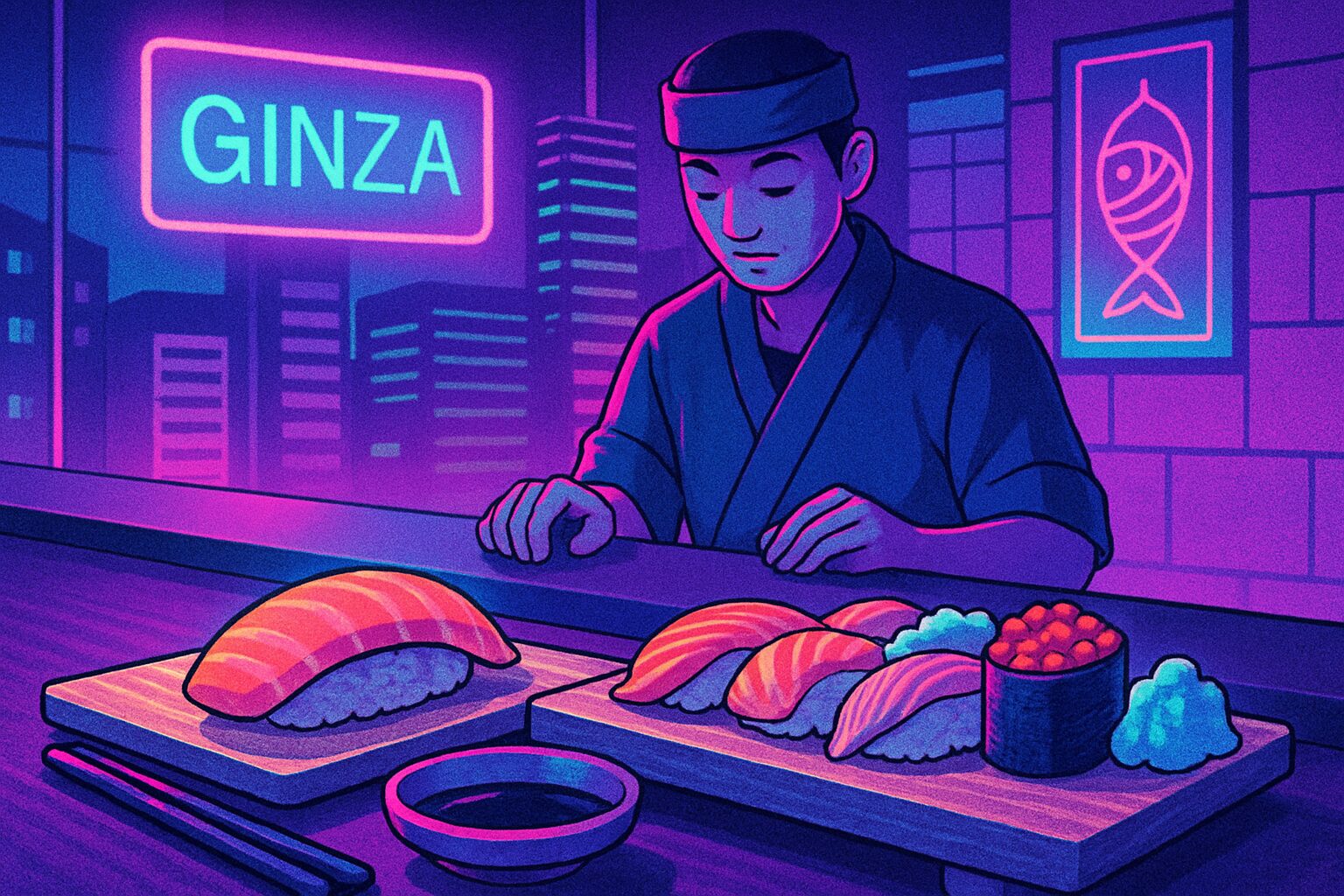
Yo, what’s up, fellow travelers and culture seekers? Ryo Kimura here, ready to drop you into the heart of Tokyo’s most legendary district for a culinary experience that’s straight-up life-changing. We’re talking Ginza. The name itself just hits different, right? It conjures images of neon-drenched nights, high-fashion boutiques, and an air of untouchable elegance. It’s the city’s glittering, sophisticated soul. But beyond the glitz and the glamour, hidden behind discreet sliding doors and down unassuming alleyways, lies the true pinnacle of Japanese cuisine: the Michelin-starred sushi omakase. This isn’t just dinner; it’s a performance, a tradition, a high-stakes art form where the chefs, or taisho, are absolute rockstars, and the counter is their stage. Forget everything you thought you knew about sushi from your local takeout spot. Ginza is the global epicenter, the major leagues, where a single piece of nigiri can tell a story of seasons, craftsmanship, and a lifetime of dedication. It’s a deep dive into a world of subtle flavors and textures that will rewire your brain and your palate. It’s a vibe that’s both intensely traditional and hyper-modern, and honestly, if you’re looking for a core memory from your Japan trip, this is it. It’s a splurge, for sure, but the experience is priceless. This is the real deal, the culture trip you’ve been searching for, and we’re about to unpack it all.
If you’re looking to extend this unparalleled omakase experience beyond Tokyo, consider a stay at a private chef omakase ryokan in Hakone.
Decoding the Ambiance: It’s a Whole Mood

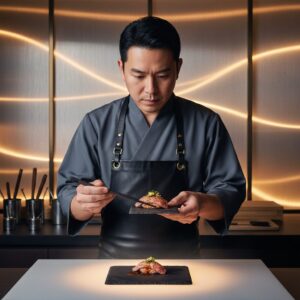
Slide open that deceptively simple wooden door, and the first thing that strikes you isn’t a scent or a sound, but a sensation. The atmosphere is impeccable. You leave behind the chaotic energy of Ginza’s streets and enter a sanctuary of serene, focused tranquility. The air itself feels altered—cleaner, charged with anticipation. Most of these top-tier sushiya are remarkably intimate, often seating no more than eight to ten guests around a single, flawless counter. This counter serves as the centerpiece, the altar of this culinary temple. It’s nearly always made from one solid slab of pale, fragrant hinoki cypress wood, sanded so smoothly it feels like silk. The wood’s scent—clean, subtly citrusy, and calming—acts as the foundational note of the room’s distinctive aroma, mingling with the faint, sweet fragrance of vinegared rice and the crisp, oceanic smell of the day’s catch.
The aesthetic embodies pure Japanese minimalism, but don’t confuse simplicity with a lack of intention. Every detail is deliberate. The lighting is soft and expertly directed, highlighting the chef’s hands and the jewel-like sushi he presents, while casting the rest of the room in a warm, gentle glow. The walls may be textured earthen plaster; the floor, cool polished stone. There’s no loud music or distracting décor. The only soundtrack is the soft murmur of conversation, the gentle clink of sake cups, and the rhythmic, precise sounds of the taisho at work: the whisper of his knife slicing fish, the soft pat-pat-pat as he shapes the rice, the subtle scrape of a tool against wood. It’s a meditative soundscape that draws you in, compelling you to be fully present. You’re not merely a customer here; you’re an audience member, a participant in a ritual honed over generations. The space is crafted to eliminate distractions, focusing your senses entirely on the chef, his craft, and the food. It’s a quiet yet confident statement—one that says everything by saying almost nothing.
Omakase Unlocked: Trusting the Taisho’s Flow
So what exactly is omakase? Literally translated, it means “I’ll leave it up to you,” and that sums up the entire philosophy. You are placing full trust in the chef. There’s no menu to wrestle with, no choices to make. You embark on the taisho’s culinary journey, with him as your guide. He’s spent the morning at the Toyosu Fish Market selecting the very best ingredients, crafting a narrative for the evening. The meal you’re about to enjoy is a unique performance, showcasing that day’s peak ingredients, the season, and the chef’s personal creativity. It’s a conversation between the chef, nature, and you. This demands a degree of surrender that may feel unfamiliar at first, but letting go is where the enchantment begins. You are about to discover flavors and combinations you would never have chosen yourself, each one building on the last in a flawlessly orchestrated symphony of taste.
The Opening Act: Tsumami Sensations
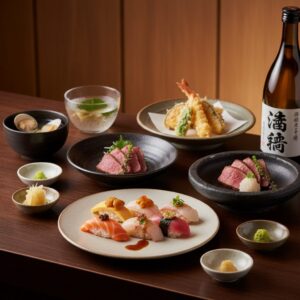
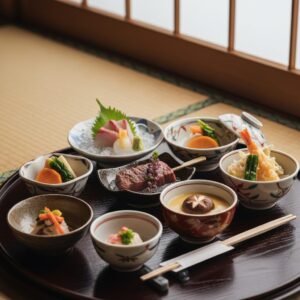
The omakase experience rarely starts with raw fish on rice. It begins with a series of small, exquisite appetizers called tsumami. This is the taisho’s opportunity to awaken your palate and demonstrate both his skill and the variety of seasonal ingredients. These are no mere snacks; they are intricate, beautifully crafted dishes showcasing diverse cooking techniques. You might be served a gently steamed abalone, tender enough to melt in your mouth, accompanied by a sauce made from its own liver—a rich, oceanic flavor bomb. This could be followed by a delicate clear soup, or suimono, featuring a single piece of pristine white fish or a seasonal vegetable, the broth so pure and light it feels restorative. Perhaps spring brings firefly squid (hotaru ika), grilled to perfection and bursting with umami, or autumn offers seared bonito (katsuo no tataki) with smoky, crisp skin and ruby-red rare flesh, complemented by garlic and ponzu. Other possibilities include creamy monkfish liver (ankimo), often dubbed the foie gras of the sea, or slices of rich, fatty grilled eel (shirayaki unagi) with a dab of authentic wasabi. Each tsumami course serves as a chapter in the story, designed to stimulate your senses and prepare you for the main event: the nigiri.
The Main Event: The Nigiri Sequence
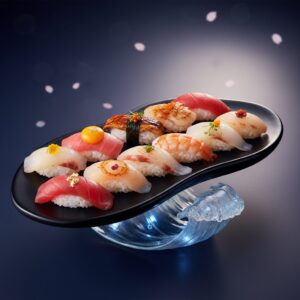
Once the tsumami has set the scene, the taisho signals the transition. He meticulously cleans the counter before you, and the nigiri sequence commences. This is the core of the omakase. One by one, the chef shapes a perfect pillow of rice, tops it with a slice of fish or seafood, brushes it with a delicate touch of soy sauce (nikiri) or sprinkles it with a pinch of sea salt, and places it directly before you on the counter or a small plate. The rule is simple: eat it immediately. It is served at the ideal temperature, with the rice warm and the fish cool—a contrast crucial to the experience. Waiting even thirty seconds can alter everything. The progression is intentional, a carefully curated flow of tastes and textures. It often begins with lighter, more delicate white fish (shiromi), like flounder (hirame) or sea bream (tai), whose clean flavors open the palate. From there, it moves to silver-skinned fish (hikarimono) such as gizzard shad (kohada) or horse mackerel (aji), typically cured in salt and vinegar to balance their stronger, oilier character. The kohada is a classic test of a chef’s skill and a hallmark of Edomae style.
The sequence then progresses to richer, more intense flavors. You may encounter various types of squid (ika), scored with countless tiny cuts to achieve extraordinary tenderness, or sweet, plump shrimp (ebi). Then comes the crescendo: tuna. You might enjoy a trio of cuts from the same bluefin tuna, experiencing a journey across the fish. It may begin with akami, the lean, deep red meat from the back, rich with pure tuna flavor. Next is chutoro, the medium-fatty belly, striking the perfect balance of richness and flavor, melting in your mouth. Finally, the grand finale: otoro, the fattiest, most marbled belly portion, decadently buttery and dissolving on your tongue in a wave of umami. After the tuna, the chef might serve creamy, briny sea urchin (uni) piled on a crisp sheet of seaweed, or glistening salmon roe (ikura), marinated in soy and sake so each orb bursts with savory juice. The meal gradually winds down with something like savory sea eel (anago), simmered in sweet soy broth until soft as a cloud, and concludes traditionally with tamagoyaki. This is no ordinary omelet; it might be a sweet, custardy, cake-like creation or a savory, layered roll, functioning as a dessert and a final testament to the chef’s skill.
The Soul of Sushi: Shari and Neta
For the uninitiated, it’s easy to assume sushi is all about the fish (neta). But any master will tell you the true essence, the soul of sushi, lies in the rice (shari). This is where a chef truly distinguishes himself. The process is both science and art. The type of rice, how it’s washed and cooked, the exact steaming time—all are precisely controlled. Then there’s the vinegar seasoning. Some chefs use a white rice vinegar (komezu) for a lighter, cleaner flavor. Others, especially those upholding traditional Edomae style, prefer red rice vinegar (akazu), made from sake lees, which gives the rice a darker color and deeper, more complex umami flavor. The temperature of the shari is equally critical. A master chef keeps the rice near body temperature so that when it meets your tongue, it feels natural, almost melting away against the cooler neta. The balance of vinegar, salt, and sugar in the shari is a closely guarded secret, perfected over a lifetime. It must be bold enough to complement oily fish yet subtle enough not to overpower delicate white fish. When you eat a piece of nigiri from a true master, pay attention to the rice—notice its texture, with each grain distinct yet sticking together, its temperature, and its complex, lingering flavor. It’s a revelation.
The neta, of course, is just as vital. Quality is non-negotiable. Chefs cultivate decades-long relationships with specific vendors at Toyosu market to secure the absolute best of the day’s catch. But it’s not only about freshness. Many fish benefit from aging, a process called jukusei. Like aging fine beef, this breaks down enzymes, intensifying umami and producing a softer, more tender texture. Fish that’s too fresh can be tough and lacking in flavor. The chef knows precisely how many days to age each type of fish—from a few days for white fish to over a week for tuna—to bring it to perfection. Preparation techniques like kobujime, where fish is sandwiched between kelp sheets, infuse subtle, savory umami. Curing with salt and vinegar, as with hikarimono, preserves the fish, firms its texture, and balances richness. Every slice, every score, every brush of nikiri is an intentional act aimed at maximizing the potential of that unique piece of seafood. This is the kodawari—the relentless, obsessive pursuit of perfection—that defines the Ginza sushi experience.
The Michelin Constellation Over Ginza

Tokyo holds the distinction of having the most Michelin-starred restaurants in the world, with a significant concentration of those stars found right here in Ginza, illuminating the tiny sushi counters. But what does that star truly signify in this context? It represents the pinnacle of excellence, a global standard of quality that extends far beyond simply “good food.” A Michelin star recognizes consistency, the quality of ingredients, mastery of technique, harmony of flavors, and the chef’s personality expressed through their cuisine. For a Ginza sushiya, earning a star is the result of a grueling, lifelong apprenticeship and a daily pursuit of perfection. Securing one is a monumental accomplishment; preserving it is a constant challenge.
A one-star rating denotes “a very good restaurant in its category.” These establishments are often extraordinary, delivering a world-class experience that leaves a lasting impression. A two-star rating signifies “excellent cooking, worth a detour,” where the chef’s personality and skill are more pronounced, the cuisine more polished, and the experience more memorable. Then there is the ultimate honor: three stars, meaning “exceptional cuisine, worth a special journey.” These are the temples of gastronomy, places that profoundly influence the culinary world. Chefs at this level, such as the legendary Jiro Ono (whose restaurant, Sukiyabashi Jiro, famously resides in a Ginza subway station), are regarded as living national treasures. The star is more than a review; it’s recognition that the chef is an artist of the highest order. This is also why the price reflects so much more than just fish and rice. It accounts for years of training, the sourcing of ingredients often auctioned at astronomical prices, the artistry, the intimate atmosphere, and a piece of culinary history. It’s an investment in an unforgettable experience, a tangible taste of perfection.
The Art of the Get: Scoring a Seat in Sushi Paradise
Alright, let’s be honest. You can’t simply walk into a three-Michelin-starred sushiya in Ginza and expect to get a table. Securing a reservation at one of these prestigious spots is famously challenging, almost like a game in itself. Demand is worldwide, while availability is limited to about eight seats per night. So, how do you manage it? First, forget about calling them directly, especially if you’re not fluent in Japanese. Many top-tier restaurants don’t accept reservations from first-time international customers directly, due to language barriers and the strict cultural taboo against no-shows in Japan.
Your best ally in this process is the concierge at a luxury hotel. These concierges are experts. They have established connections with restaurant owners and often have access to exclusive booking slots unavailable to the general public. If you’re serious about this experience, booking a room at a hotel with an exceptional concierge service can be invaluable. Inform them of your preferred dates and top restaurant choices well in advance—months, not weeks. Being flexible increases your chances.
Another excellent option is to use a specialized third-party online reservation service. Platforms like Omakase, Tableall, and Pocket Concierge focus on securing spots at high-end, hard-to-book restaurants in Japan. They charge a fee but manage the entire process, bridging language gaps and guaranteeing your reservation. Usually, you’ll need to pay in advance, which brings up an important point: cancellation policies are strict. They’re non-negotiable. If you cancel, you’ll almost always be charged the full cost of the meal, no exceptions. The chef prepares extremely costly ingredients specifically for you. A no-show is deeply disrespectful and causes significant financial harm to the small restaurant. So, once booked, you’re committed. Arrive on time—not early, and definitely not late. Punctuality is a crucial sign of respect. Some legendary venues are even more exclusive, operating by introduction-only (shokai-sei), meaning you need a trusted regular to vouch for you. For those, you’ll have to make the right connections. That’s all part of the charm.
The Unspoken Etiquette: How to Vibe with the Masters

Stepping into a Ginza sushiya can feel a bit daunting, but don’t worry. The etiquette isn’t a strict set of rules meant to trip you up; it’s about showing respect to the chef, the ingredients, the other guests, and the tradition. Mastering these subtle details will not only make you appear skilled but also enrich your own experience. It’s about harmonizing with the environment, not resisting it.
Above all, the most important rule: avoid wearing strong perfume, cologne, or scented lotion. The high-end sushi experience relies on delicate, subtle aromas. A strong scent will overpower these for both you and others at the counter. It’s seen as a serious faux pas. Come with a clean palate and fresh senses.
When the nigiri is served, eat it immediately. We’ve mentioned this before, but it’s worth emphasizing. It’s a brief moment of perfection. You may use either chopsticks or clean hands to eat nigiri. In fact, many aficionados believe using hands is preferable, as it helps prevent dropping the piece or squeezing the rice too firmly. Gently pick it up, turn it so the fish side lightly touches your tongue first, and eat it in one bite. Never dip the rice side of the nigiri into soy sauce. The chef has already seasoned it with his nikiri. Dipping it is akin to telling a Michelin-starred chef their dish needs more salt. The soy sauce dish is typically reserved for sashimi served during the tsumami course. The pickled ginger, or gari, is meant to cleanse your palate between sushi pieces, not to be eaten on top of the sushi itself.
Interacting with the chef is part of the experience, but you must gauge the mood. If the taisho is friendly and engaging, feel free to ask questions about the fish or his technique. They often enjoy sharing their expertise. However, if the chef is deeply focused and moving with quiet intensity, respect their space. This is their creative zone—let them work undisturbed. Photography is another delicate matter. Always ask permission first by saying, “Shashin o totte mo ii desu ka?” Most chefs will allow photos of the food but never with flash. Photographing the chef or other guests is usually prohibited unless you have clear permission. Be quick and discreet; don’t stage an elaborate photoshoot while your perfectly prepared sushi cools. Your respect and thoughtfulness will be appreciated and will greatly enhance the experience for everyone.
Ginza’s Afterglow: What to Do Before and After the Feast
A meal like this is the highlight, the centerpiece of your evening, but it becomes even more memorable when you complement it with the full Ginza experience. The neighborhood itself is a spectacle — a stunning fusion of timeless elegance and cutting-edge style — and exploring it before and after dinner transforms the entire night into something truly exceptional.
Pre-Omakase Exploration: Setting the Scene
Arrive in Ginza an hour or two prior to your reservation to immerse yourself in the atmosphere. On weekend afternoons, the main street, Chuo-dori, turns into a pedestrian haven (hokousha tengoku), perfect for a leisurely stroll. Browse the displays at flagship stores of global luxury brands and iconic Japanese department stores. The Wako Building, with its famous clock tower, stands as a Ginza landmark and a symbol of lasting sophistication. For a true foodie warm-up, visit the basement food hall, or depachika, of department stores like Mitsukoshi or Matsuya. These vibrant food emporiums showcase everything from flawlessly crafted seasonal fruits costing hundreds of dollars to delicate Japanese sweets (wagashi) and, of course, extraordinarily fresh fish. It’s an excellent way to visually appreciate the premium ingredients your chef will be working with.
Art enthusiasts should explore some of the district’s many galleries. The Ginza Graphic Gallery (ggg) or the Shiseido Gallery present beautifully curated exhibitions, often free to visit. Alternatively, for a quiet moment, seek out the serene rooftop garden at the Ginza Six shopping complex. It offers a surprising patch of greenery and a stunning view over the district — an ideal spot to clear your mind and build anticipation for the culinary experience ahead.
Post-Dinner Decompression: Ginza by Night
After your meal, your senses will be alive. Resist the urge to simply take the subway home. Allow the experience to linger by wandering through Ginza’s glowing nightscape. The crowds have thinned, and neon lights reflect on the polished sidewalks, creating a cinematic, almost Blade Runner-like mood. This is the perfect moment to discover one of Ginza’s legendary cocktail bars. Many are tucked away on upper floors of unassuming office buildings, marked only by small signs. Places like Star Bar Ginza, run by master bartender Hisashi Kishi, or the intimate, atmospheric Bar High Five, are institutions where Japanese bartending — a craft pursued with the same precision and dedication as sushi mastery — shines. Watching a bartender carve a perfect ice sphere is a performance in itself. These bars offer quiet, refined spaces ideal for a nightcap and for reflecting on the incredible meal you’ve just enjoyed. Sipping a flawlessly mixed Old Fashioned while the city sparkles below is the perfect way to conclude a night of pure Ginza indulgence.
The Final Take: Is It Worth the Splurge? Absolutely.

A Michelin-starred omakase experience in Ginza is undeniably a splurge. It’s an investment, a standout item on your travel budget. So, the big question: is it truly worth it? The answer is an emphatic yes. Because what you’re paying for isn’t just a meal—it’s a front-row seat to a master at the height of their craft. It’s an immersive lesson in Japanese culture, philosophy, and aesthetics. It’s a taste of shun, the Japanese reverence for seasonality, and kodawari, the spirit of relentless perfectionism.
You’re partaking in a tradition passed down and refined over generations, yet still vibrant and evolving on your plate. You’re engaging with a chef who has devoted their life to mastering a singular art form. The silence, focus, and respect in the room all become integral to the flavor. You’ll leave not just satisfied, but transformed. Your appreciation for taste, texture, and the incredible potential of simple ingredients will be forever deepened. It’s one of those rare travel experiences that truly lives up to the hype—and then some. It’s a story you’ll share for years, a memory etched into your palate. In a world of fleeting trends and disposable moments, a Ginza omakase is something genuine, something profound. It’s the ultimate vibe check on Japanese culture, and it delivers every single time. Truly.