What’s up, globetrotters? Ami here, fresh off the runway and diving headfirst into the neon-drenched, yet surprisingly quiet, corners of Tokyo. Let’s spill the tea on a place that’s pure IYKYK energy. We’re not talking about the Shibuya Scramble’s electric chaos or Shinjuku’s skyscraper glow. We’re zeroing in on a neighborhood that doesn’t even try to get your attention, because frankly, it doesn’t need it. Welcome to Nishi-Azabu, the undisputed capital of quiet luxury and the sacred ground for one of Japan’s most enigmatic dining traditions: the shoukai-sei, or “introduction-only,” omakase restaurant. Forget what you know about making reservations. Here, your name isn’t on a list unless someone who truly matters puts it there. This isn’t just dinner; it’s an initiation into a hidden world of culinary artistry, where unmarked doors in unassuming alleyways lead to the most mind-blowing meals of your life. It’s a universe away from the tourist trail, a place where Tokyo’s elite come not to see and be seen, but to disappear and simply… taste. This is the ultimate trust fall, a cultural deep dive that’s as much about connection and respect as it is about the perfect slice of otoro. So, buckle up. We’re about to decode the secrets behind the city’s most exclusive dining scene.
For those who find the concept of an exclusive, multi-course Japanese meal fascinating, you can also experience this pinnacle of hospitality by booking a stay at one of Japan’s incredible ryokans offering in-room omakase.
The Nishi-Azabu Glow-Up: Where Tokyo Whispers, Not Shouts

First things first, let’s set the tone correctly. Nishi-Azabu is a completely different creature compared to its more well-known neighbors. If Roppongi is the life of the party, shouting for another round of shots beneath a canopy of neon lights, Nishi-Azabu is the effortlessly cool guest in the corner, holding a glass of vintage whisky and watching everything with a knowing smile. The energy here isn’t loud; it’s a quiet, confident hum. The main landmark is an intersection—the Nishi-Azabu crossing—a place you typically drive through on your way somewhere else unless you have a very specific, very exclusive reason to stop. There are no major train stations that drop you directly into its heart, which is by design, not an oversight. This slight inconvenience serves as a natural filter, preserving the area’s residential, high-end tranquility. As the sun sets, the neighborhood morphs. The daytime facade of quiet, upscale apartment buildings and foreign embassies shifts into a nocturnal playground for the city’s power players. You won’t find hordes of tourists or noisy pub crawlers. Instead, sleek, black chauffeur-driven sedans glide silently to the curb, their tinted windows concealing passengers who slip into nondescript doorways without a second glance. The street style here isn’t about bold logos or passing trends; it embodies “quiet luxury.” Think impeccably tailored coats, exquisite leather goods, and fabrics that softly whisper quality rather than loudly boast brand names. It’s a sartorial language reflecting the neighborhood itself: understated, confident, and unapologetically premium. Walking these streets at night feels like being backstage at an exceptionally refined show. You can sense the energy, the weight of conversations happening behind those minimalist facades, but all wrapped in a blanket of calm. This is where multi-million-dollar deals are closed over a flight of sake, where A-list celebrities dine without a single camera flash, and where true connoisseurs gather to honor culinary masters. It’s a world built on discretion, and that feeling of being an insider—knowing exactly which plain wooden door to slide open—is a currency all its own.
The Secret Handshake: Demystifying “Shoukai-sei” Culture
So what’s the story behind this “introduction-only” system? In Japanese, it’s known as shoukai-sei (紹介制), a concept that goes well beyond being just a velvet rope for the wealthy. It’s not merely about financial status; it’s about social capital, trust, and a deeply rooted cultural practice aimed at preserving harmony and quality. To grasp shoukai-sei, one must understand the Japanese mindset toward hospitality and community. At its heart, the system is a fortress designed to safeguard the sanctity of the dining experience. For the chef, or taisho, their restaurant is much more than a business—it’s their stage, their temple, and their life’s work condensed into an intimate setting, often with fewer than ten seats. They have devoted their entire being to perfecting their art and seek to share it with guests who genuinely appreciate the craftsmanship and respect the ambiance. The introduction system serves as a vetting mechanism, ensuring that every person seated at the counter comprehends the unspoken etiquette. A referral from a trusted regular, a joren, serves as a seal of approval. It implies, “This person understands. They won’t be disruptive, wear overpowering perfume, will respect the chef, and will appreciate the subtleties of the cuisine.” It’s a method of managing the atmosphere to keep it ideal, not only for the chef but for every guest present. Think of it as a carefully curated community for the evening. This practice has historical origins, reflecting the private clubs and patron systems of old Japan, where relationships and reputation were crucial. In a culture that prioritizes the group over the individual, ensuring a harmonious experience for all guests is paramount. The exclusivity also acts as a powerful branding tool. The challenge of gaining access elevates the restaurant to near-legendary status. It creates mystique and desire that no amount of marketing could ever buy. It becomes a story, a quest, and a badge of honor for those lucky enough to secure a seat. Most importantly, it cultivates a deeply personal connection between the chef and their clientele. The taisho often knows the preferences, allergies, and even personal histories of their regulars. This enables an unmatched level of personalized service, turning a simple meal into a meaningful, ongoing dialogue. It’s a system built on loyalty, where the chef cares for their patrons, and the patrons, in turn, uphold the integrity of the chef’s sacred space.
Behind the Noren Curtain: An Anatomy of the Ultimate Omakase

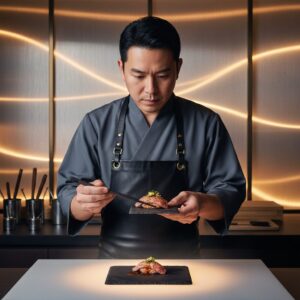
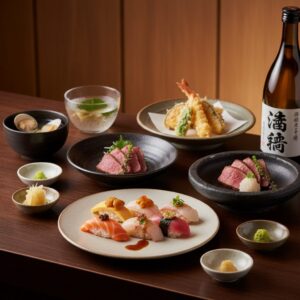
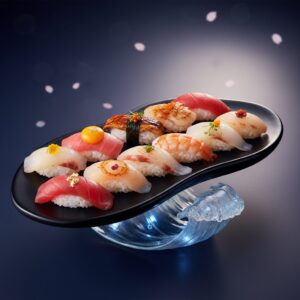
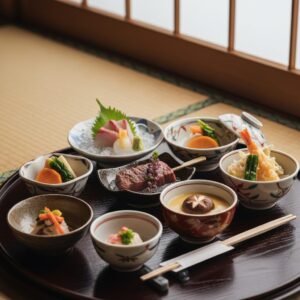
Imagine you’ve deciphered the code and secured the golden ticket. What truly unfolds when you step past that unmarked door? The experience is a symphony for the senses, carefully orchestrated from the moment you arrive. First, finding the location is a challenge on its own. Your directions might be as cryptic as “the third door down the alley with the single bonsai tree.” There’s no sign, no menu displayed outside—just a feeling that you’ve found the right place. You slide open the heavy wooden door, and the outside world immediately fades away. You’re welcomed not by a busy hostess stand, but often by the taisho himself or his partner, the okami. They greet you by name, a small yet powerful gesture that says, “You belong here.” The space is almost always stunning in its simplicity. The air carries the clean scent of hinoki wood, savory dashi, and the faint, vinegared sweetness of sushi rice. Your gaze is drawn to the counter—a single, flawless piece of wood, sanded so smooth it feels like silk. It’s a stage where every seat offers a front-row view. The lighting is dramatic, focusing completely on the chef’s hands and the ingredients before him. The ceramics that will hold your food aren’t mere plates; they are works of art crafted by renowned potters, each selected to complement the dish it presents. The omakase, meaning “I leave it up to you,” begins. It’s a journey, a narrative of the seasons conveyed through a procession of small, perfect dishes. It might start with something delicate, a sakizuke (appetizer) of creamy sesame tofu topped with fresh Hokkaido uni and a speck of real wasabi, flavors that gently awaken your palate. Next, a few slices of sashimi—but this is far from ordinary raw fish. The chef may explain how this particular piece of madai (sea bream) was aged for three days to deepen its umami, served with a special smoked soy sauce that enhances its subtle sweetness. Then follows a warm dish, perhaps a perfectly steamed abalone, so tender it melts in your mouth, paired with a sauce made from its own liver—a rich, briny taste of the ocean. The main event, the nigiri sequence, reveals the true mastery on display. You watch, captivated, as the taisho performs a ballet of precise movements. His hands, constantly rinsed, shape the perfect pillow of shari (sushi rice)—warmed to body temperature with each grain distinct. He selects a piece of shimmering kohada (gizzard shad), its skin intricately scored, and in swift motions presses it onto the rice. He brushes it with a whisper of nikiri (sweet soy glaze) and places it on the counter before you. He instructs you to eat it immediately, with your hands, to experience it at its peak flavor and texture. This ritual repeats a dozen or more times, each piece a revelation. The shockingly fatty otoro (tuna belly) that melts on your tongue like savory butter. The crunchy, sweet kuruma ebi (Japanese tiger prawn), cooked moments before serving. The creamy, intense uni, piled high in a crisp nori seaweed wrap. Each bite tells a story of its origin, its season, and the chef’s philosophy. The meal ends not with a heavy dessert, but with something elegant: a slice of the chef’s signature tamagoyaki (rolled omelet), which can be savory like a castella cake or sweet like a custard, followed by a perfect piece of peak-season fruit—a single, flawless strawberry that tastes more purely of itself than any you’ve ever had. It’s an experience both humbling and exhilarating, a direct connection to a tradition of perfection that leaves you transformed.
The Golden Key: Your Playbook for Gaining Access
Alright, this all sounds incredible, but let’s be honest. How can a traveler, even a savvy one, actually secure a seat at one of these legendary counters? It’s challenging, no question, but not entirely out of reach. It demands a strategy that blends social savvy, financial clout, and a bit of luck. Let’s explore the possible ways to gain access. The most traditional and reliable method is through personal connections — the “social game.” If you have friends, business contacts, or acquaintances based in Tokyo who frequent these establishments, that’s your golden ticket. Being invited as their guest is the ultimate entry point. Once you’ve been and made a good impression, you might earn the privilege to book your own reservations in the future. For the traveler, networking is essential. Contacts you build in your home country within fields like finance, art, fashion, or luxury hospitality might connect to counterparts in Tokyo who can open these doors. It’s a long-term approach, but the most genuine way in. The second, more accessible option for upscale travelers is the “concierge power play.” Concierges at Tokyo’s premier luxury hotels—such as Aman Tokyo, The Peninsula, Mandarin Oriental, and Ritz-Carlton—are masters at their craft. They spend years nurturing relationships with the city’s top restaurants and act as gatekeepers. Likewise, premium credit card concierge services like American Express Centurion or JP Morgan Reserve have dedicated teams capable of working wonders. However, requests can’t be casual. You need to be precise and show genuine intention. Instead of saying, “Get me into a famous invitation-only sushi place,” you should say, “I am a dedicated student of Edomae-style sushi and would be immensely honored to experience a master’s craft in an intimate setting during my visit on these specific dates. I am, of course, flexible regarding budget.” This approach shows respect and knowledge, increasing the concierge’s willingness to use their most valuable contacts on your behalf. A third, far less common path is what I call the “side door” strategy. This involves becoming a regular at a publicly accessible, top-tier restaurant led by a chef who belongs to the elite culinary circle. Be an outstanding guest, show genuine appreciation, engage with the chef about ingredients and techniques, and build a sincere rapport. Over time, that chef might offer to make a call for you to one of their friends who runs a shoukai-sei spot. It’s about integrating into the ecosystem and proving your worth as a diner. This path requires time and commitment, but the experience of discovering other exceptional restaurants is a reward in itself. Lastly, there’s the lottery: some restaurants utilize exclusive, high-end Japanese reservation platforms that occasionally release seats due to last-minute cancellations from regulars. These seats vanish within seconds, but for the truly determined, monitoring these platforms can sometimes lead to a miraculous opportunity.
Vibe Check: The Unspoken Etiquette of Elite Dining

Securing a reservation is just half the challenge. Once you’re seated, your behavior matters most. These intimate dining experiences follow a set of unspoken rules, and respecting them is essential to honor the chef, fellow guests, and the food itself. This is your etiquette guide to ensure you receive a return invitation. First and foremost: punctuality is essential. Omakase meals are typically served to all guests at once. Arriving late disrupts the chef’s flow and is seen as highly disrespectful. Aim to arrive five minutes early. The most important rule, often overlooked by Westerners, is to avoid wearing any strong fragrances. This means no perfume, cologne, or heavily scented lotions and hair products. The delicate aromas of the food—the subtle scent of vinegared rice, the fresh fragrance of fish, the smoky grill notes—are a vital part of the experience. A cloud of Chanel No. 5 will ruin it for you and everyone nearby. Dress appropriately. While there may be no formal dress code, smart, elegant attire is expected. Think stylishly understated—this is no place for shorts, t-shirts, or ripped jeans. You are a guest in a temple of food; dress accordingly to show respect for the occasion. Keep your phone out of sight. The experience unfolds in real-time right before you. Constant texting or scrolling signals disinterest. Photo policies vary—some chefs strictly forbid it, while others allow a few quick, discreet shots. The golden rule is always to ask permission from the taisho first, and never use a flash. The best approach is to put your phone away and fully immerse yourself in the moment. Engage with the chef but be mindful of the atmosphere. They are intensely focused, though many welcome sincere questions about their craft. Inquire about the origin of the fish, the story behind a particular ceramic piece, or the sake’s characteristics. Show curiosity and a desire to learn. Avoid loud conversation or sensitive business talk; the mood is typically calm and reflective. Lastly, when it comes to the food, trust the chef. Eat each piece of nigiri immediately upon presentation. It is crafted to be enjoyed within seconds at the ideal temperature and texture. If the chef suggests eating with your hands, do so—it is traditional and deepens your connection to the food. By following these simple etiquette points, you’re not just a good customer; you’re becoming a welcomed participant in a valued cultural ritual.
Nishi-Azabu and Beyond: Crafting the Perfect Evening
An evening centered on a world-class omakase in Nishi-Azabu calls for a thoughtfully curated array of accompanying experiences. Though the meal itself may last only two hours, you can craft an entire story around it to create a genuinely unforgettable night in Tokyo. Begin your evening with a pre-dinner drink that sets an elegant and reflective mood. The bars scattered throughout Nishi-Azabu and its nearby neighborhoods are hidden gems, just as exclusive and artful as the restaurants themselves. Skip the noisy pubs and instead seek out a classic Japanese cocktail bar or a serene ‘listening bar’ (meikyoku kissaten). Picture yourself settling into a plush leather armchair in a dimly lit space, surrounded by walls lined with thousands of vinyl records. The bartender, a true craftsman, carefully carves a perfect ice sphere for your Japanese whisky or prepares an exquisite gin martini infused with local botanicals. There’s no loud music—just the warm, analog sound of a vintage jazz record playing softly. It’s the ideal mindset to shift from the city’s hustle to the calm, focused atmosphere required for an omakase dinner. After your meal, with your palate and spirit fully satisfied, take a leisurely stroll. The quiet, winding streets of nearby Moto-Azabu and Minami-Azabu are home to stunning modern architecture and grand diplomatic residences. This peaceful walk offers the opportunity to digest and reflect on the remarkable meal you’ve just enjoyed. For a touch of culture, the Roppongi Hills complex is just a short walk or taxi ride away. The Mori Art Museum, perched on the 53rd floor, often stays open late and showcases cutting-edge contemporary art. Even if you don’t go inside, the observation deck presents one of the most breathtaking panoramic views of the Tokyo skyline—a glittering sea of lights stretching to the horizon. It’s a striking contrast to the intimate, concentrated experience you just had at the sushi counter. Alternatively, you might choose to close your night as you began it: with a quiet, expertly crafted drink. Discover another hidden bar for a nightcap, perhaps one known for rare sakes or fruit cocktails, to end the evening gently and elegantly. By framing your Nishi-Azabu dining adventure with these considered moments before and after, you transform it from a mere meal into a full, immersive cultural journey through one of Tokyo’s most exclusive enclaves.
This is the world of Nishi-Azabu’s hidden dining scene—a world that demands more than just a reservation; it calls for your respect, curiosity, and presence. Gaining entry past the velvet rope is certainly challenging, but it’s a pursuit that unveils much about the deeper layers of Japanese culture—the profound dedication to craft, the importance of relationships, and the understanding that the greatest luxuries are often those quietly savored, not loudly proclaimed. Whether you secure a seat at one of these legendary counters or not, the quest itself is an adventure. It invites you to look beyond the surface, to connect with others, and to appreciate the artistry hidden in plain sight throughout Tokyo. The true essence of being the main character isn’t just about dining at the finest spot; it’s about grasping why it holds that distinction. So venture out, explore, stay curious, and discover your own introduction-only moments wherever they may lie.