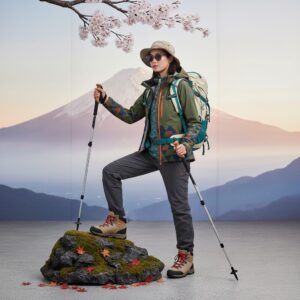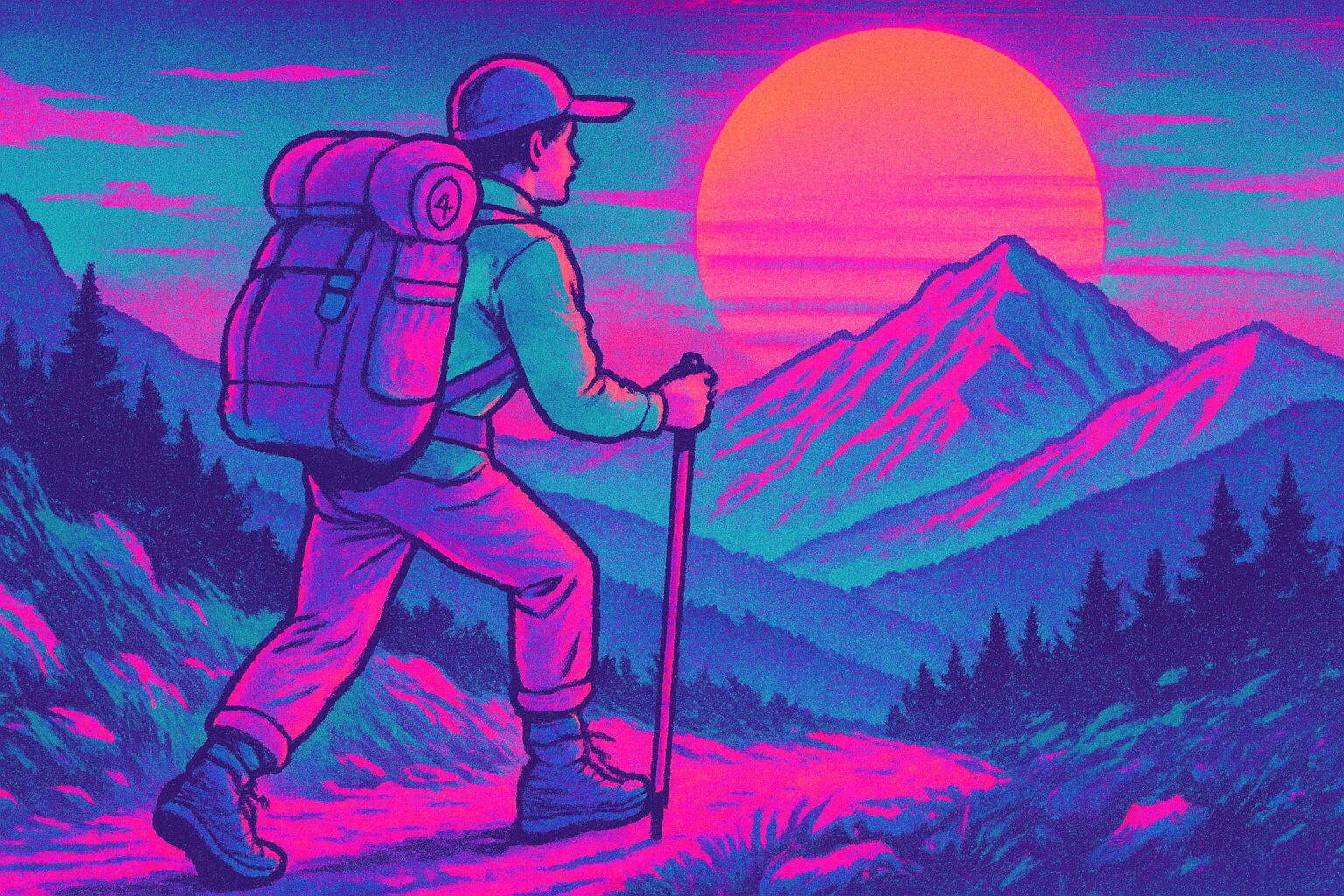
What’s up, fellow explorers? Ami here. Let’s talk about time travel. Not the kind with a souped-up DeLorean, but something you can do with a good pair of sneakers and a train pass. We’re going on a hunt for a very specific vibe, a feeling that’s pure magic and totally unique to Japan: the Shōwa Retro and Bubble Economy dream. You’ve probably heard of the Shōwa era (1926-1989), a period that saw Japan transform into an economic titan. The final years of this era, especially the late 1980s, became known as the “Bubble Economy”—a time of insane wealth, boundless optimism, and a cultural aesthetic that was bold, a little bit cheesy, and utterly unforgettable. It was the age of City Pop, neon-drenched nights in Shinjuku, and a belief that the party would never end. But what does any of this have to do with hiking? That’s the secret sauce. During this boom, money was poured into developing domestic leisure spots. Mountains on the edges of cities were transformed into playgrounds for the newly affluent masses. They built futuristic ropeways, sprawling observation decks with 360-degree views, and quirky European-themed restaurants on remote peaks. These weren’t just trails; they were destinations, engineered for maximum enjoyment and a touch of glamour. Fast forward to today, and while the economic bubble has long since popped, many of these places remain, perfectly preserved like insects in amber. They are tangible echoes of a bygone era, offering a hiking experience that’s less about quiet contemplation and more about stepping onto the set of a 1980s movie. It’s a nostalgic journey, or natsukashii, even if you never lived through it. This guide is your ticket to finding these time-capsule trails, where the rustle of leaves mingles with the phantom synth-bass of a Tatsuro Yamashita track. It’s a totally different way to see Japan, a low-key trip that’s high on atmosphere. Get ready to explore the intersection of nature, nostalgia, and seriously good views.
Mount Takao: Tokyo’s Time-Traveling Playground
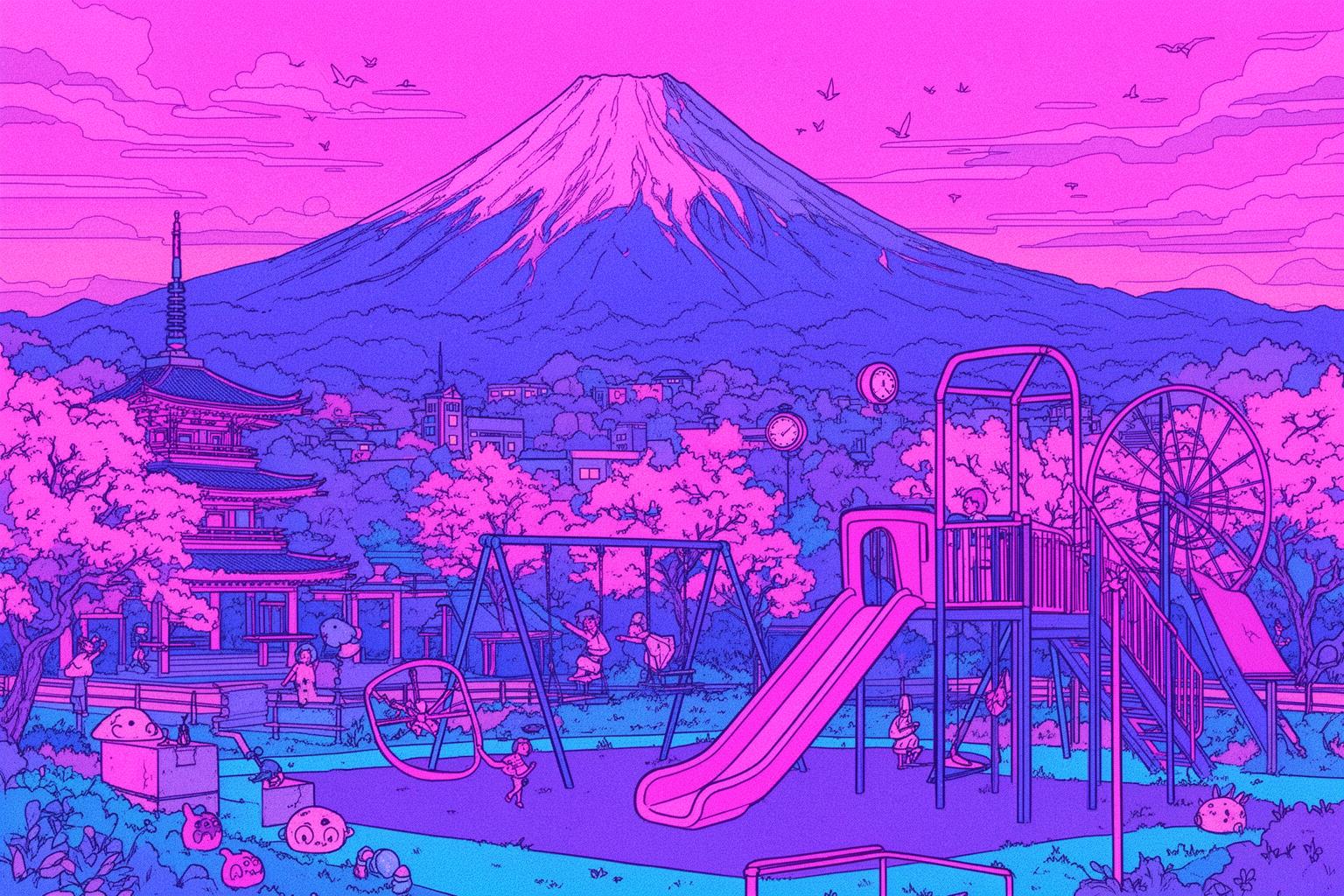
Our first stop is the OG, the quintessential classic, and perhaps the most accessible retro hike around: Mount Takao. Just an hour by train from the neon frenzy of Shinjuku, Takao feels like a completely different world—and more importantly, a different era. It has been a sacred mountain for centuries, but its contemporary identity was shaped during the post-war boom, cementing its place as Tokyo’s go-to nature escape throughout the prosperous 80s. The journey itself sets the mood. You’ll board the Keio Line, a classic commuter train, watching the dense urban landscape gradually transition to suburbs and finally to lush green hills. Arriving at Takaosanguchi Station delivers a bit of a temporal jolt; the station building is a striking, modern creation by Kengo Kuma, full of warm wood and sharp angles. But don’t be deceived—this is just the gateway. The true time machine lies just a few steps beyond.
Your climb is where the Shōwa atmosphere really comes alive. You have two nostalgic choices: the Takaotozan Cable Car or the Echo Lift. The cable car is iconic. Opened in 1927, its current cars and station infrastructure have a durable, mid-century vibe. Painted in bright green or yellow, it ascends Japan’s steepest cable car incline. As you rise at a thrilling 31-degree angle, the forest canopy rushing past is an exhilarating sight. But for the ultimate 80s throwback, opt for the Echo Lift, a two-person chairlift reminiscent of a cozy local ski resort. Without a safety bar, only a simple metal pole to hold onto, you glide silently up the hillside, feet dangling just above ferns and wildflowers. It feels less like a commute and more like a ride at a charmingly old-fashioned amusement park. You hear birdsong, feel the breeze, and for twelve blissful minutes, you’re transported to a gentler, slower time—an ideal introduction to the mountain’s retro soul.
About halfway up, the main route for most visitors is Trail 1, the Omotesando Trail—a paved path that’s less rugged hike and more cultural pilgrimage leading to the renowned Yakuo-in Temple. Along the way, the trail is lined with elements straight from the Shōwa era playbook. You’ll pass ancient cedar trees, some said to be hundreds of years old, their roots twisting across the path. Between them are classic teahouses, or chaya, with iconic red benches and large red parasols. Here you can enjoy a bowl of tororo soba (soba noodles with grated yam) or try the local favorite, tengu-yaki, a sweet pastry shaped like the face of the tengu—the mountain’s mythical winged goblin guardians. The souvenir shops are a treasure trove of retro kitsch—forget minimalist modern design, think wooden walking sticks with colorful ribbons, keychains with jingling bells, and snacks in packaging that appears unchanged since 1985. It’s all part of the charm.
Yakuo-in Temple itself is a vibrant, stunning complex dedicated to the tengu. Statues of these long-nosed, fierce-looking deities stand guard everywhere, enhancing the mountain’s mystical ambiance. Though the temple’s history is ancient, its presentation has that classic Shōwa-era tourist vibe—accessible, somewhat theatrical, and highly photogenic. After paying your respects, you continue the final stretch to the summit. At 599 meters, Mount Takao’s peak offers a spectacular reward. On a clear day, the view is breathtaking: the sprawling Tokyo metropolis, the Shinjuku skyscrapers like tiny crystals on the horizon, and beyond, the majestic snow-capped cone of Mount Fuji. The summit area itself exudes an old-school charm. There’s a large visitor center with slightly dated exhibits and a noodle shop that has likely been serving the same delicious soba for decades. Families and groups of friends gather here to lay out picnic blankets and celebrate a day away from the city—a scene that has repeated for generations.
But the ultimate Bubble Economy experience on Takao isn’t just the view; it’s the Takao Beer Mount. Open only during summer, this all-you-can-eat, all-you-can-drink beer garden boasts one of the world’s best views. The concept is pure 80s indulgence: celebrating success and leisure with cold beers and a mountaintop buffet. The plastic tables and chairs, bustling self-serve stations, and lively, slightly chaotic atmosphere perfectly capture that era’s celebratory energy. Sipping a cold Asahi while watching the sunset over Tokyo is an experience that bridges nature with nostalgic city life. For a quieter retro attraction, don’t miss the Monkey Park and Wildflower Garden near the cable car’s top station. This classic Shōwa-era family spot is a simple enclosure where you can observe Japanese macaques. The educational signage and overall presentation have a charming vintage vibe—a throwback to simpler family outings.
For first-timers, the best way to tackle Takao is by taking the Keio Line direct from Shinjuku Station, a journey under an hour. To avoid huge weekend crowds, try visiting on a weekday. The mountain is beautiful all year, but autumn is especially spectacular, with the forest bursting into fiery red, orange, and yellow. A pro tip: buy a one-way ticket for the cable car or lift on the ascent, then hike down a less crowded trail like Trail 4 with its scenic suspension bridge or the wooded Trail 6 alongside a stream. This way, you get the full retro ascent experience and a proper nature hike on the descent. Mount Takao is more than a mountain; it’s a living museum of Japanese leisure culture, and every step is a journey through time.
Mount Rokkō: Jazz, Nightscapes, and Bubble-Era Romance
If Mount Takao is Tokyo’s cheerful, family-friendly retro escape, then Mount Rokkō, towering above the chic port city of Kobe, is its refined, romantic elder sibling. Kobe has always possessed a cool, international atmosphere distinct from the rest of Kansai. Its history as one of Japan’s first ports open to foreign trade instilled a deep appreciation for Western culture, from jazz music to patisseries. During the Bubble Economy era, this sophistication made Mount Rokkō the ultimate date destination. The aim wasn’t to endure a strenuous hike to conquer the peak; rather, it was to drive or take the scenic cable car up to its stylish mountaintop attractions, culminating in a view famously dubbed the “Ten-Million-Dollar Night View.” Hiking on Mount Rokkō involves linking these glamorous points, strolling through tranquil forests that open up to breathtaking vistas and impeccably preserved remnants of 80s luxury.
The ascent is an essential part of the experience. You begin by heading to Rokkō Cable Shita Station, a beautiful, classical-style building that evokes a European mountain railway station. The Rokkō Cable Car itself is a work of art. The two-car train, one featuring an open-air observation deck, climbs a steep, wooded slope, offering tantalizing glimpses of Kobe and Osaka Bay below. The slow, rhythmic clatter of the cable and the vintage style of the cars immediately transport you back in time. Upon reaching the top station, you board the Rokkō Sanjō Bus, a loop route connecting the various attractions scattered across the broad, plateau-like summit. Riding this bus feels like wandering through a sprawling, high-altitude theme park—a hallmark of Bubble-era leisure development where convenience and experience were paramount.
The crowning jewel of the Mount Rokkō experience is the Tenran Observatory, situated right next to the cable car’s top station. This is the spot. The architecture is classic mid-century modern, a simple yet elegant platform designed to maximize the stunning panorama. By day, the view is breathtaking, stretching from Kobe’s urban sprawl to the distant shores of Wakayama. But the real magic unfolds at dusk. As the sun dips below the horizon, the city lights start to twinkle on, one by one, until the entire Osaka-Kobe metropolitan area becomes a glittering carpet of diamonds. This is the “Ten-Million-Dollar Night View,” a name reportedly coined because the cost of all the electricity for the lights visible from this spot was once estimated at that amount. Standing here, with the cool mountain air on your face, it’s easy to picture a scene from an 80s J-drama: a stylish couple, the woman clad in a sharp power suit, the man in a loose designer jacket, leaning against the railing, the city lights reflecting in their eyes. It’s such a cinematic scene, deeply tied to that era of romance and prosperity, that you can almost hear a smooth City Pop track playing in the background.
Beyond the main observatory, the mountaintop is dotted with other charmingly retro attractions. Rokko Garden Terrace is a cluster of shops and restaurants housed in buildings designed to resemble a quaint European village. It’s slightly kitschy, somewhat artificial, but thoroughly sincere in its Bubble-era ambition to bring a slice of the Swiss Alps to Japan. Here, you can enjoy a meal with a view or browse for souvenirs. A short bus ride away lies the Rokko Alpine Botanical Garden, a beautifully maintained garden showcasing alpine plants from Japan and the Himalayas. It’s a peaceful, classic leisure spot, ideal for a gentle stroll. For something a bit more whimsical, the Rokko Music Box Museum is a must-see. It houses an impressive collection of antique music boxes and automata, with regular concerts demonstrating their intricate mechanisms and lovely sounds. It’s another one of those quirky, specialized attractions beloved by 80s developers, designed to create a complete, multifaceted resort experience.
The hiking trails on Mount Rokkō serve as the connective tissue between these nostalgic hubs. You can hike from the Garden Terrace to the botanical garden, or opt for a longer route exploring the mountain’s unexpectedly rugged interior. A popular trail leads down to Nunobiki Waterfall, a series of four picturesque cascades celebrated in Japanese literature and art for centuries. The path descends from the summit’s man-made dreamscape back into raw nature, finally ending near Shin-Kobe Station. This transition—from retro-futuristic mountaintop to timeless nature and then to the modern city—offers a journey through diverse layers of Japanese history and culture. Another well-known trail is the challenging ‘Rock Garden,’ a steep, rocky ridge providing a more adventurous experience, proving that Rokkō isn’t just about views and attractions.
Practical tips for a trip to Mount Rokkō: the journey there is part of the fun, involving a combination of train, bus, and cable car. From central Kobe (Sannomiya Station), you can take a Hankyu, JR, or Hanshin train to their respective Rokkō stations, then a city bus to the cable car base. It’s highly recommended to purchase the Rokko-Arima Joyful Pass or a similar combo ticket, which covers all necessary transport and often offers discounts on attractions. The best time to visit is late afternoon. Arrive with enough daylight to explore the mountaintop highlights, then settle in at the Tenran Observatory or Garden Terrace to witness the mesmerizing transformation from day to night. It’s an experience that perfectly captures the glamour and romantic spirit of Japan’s bubble years.
The Izu Peninsula: Faded Glamour on the Jogasaki Coast
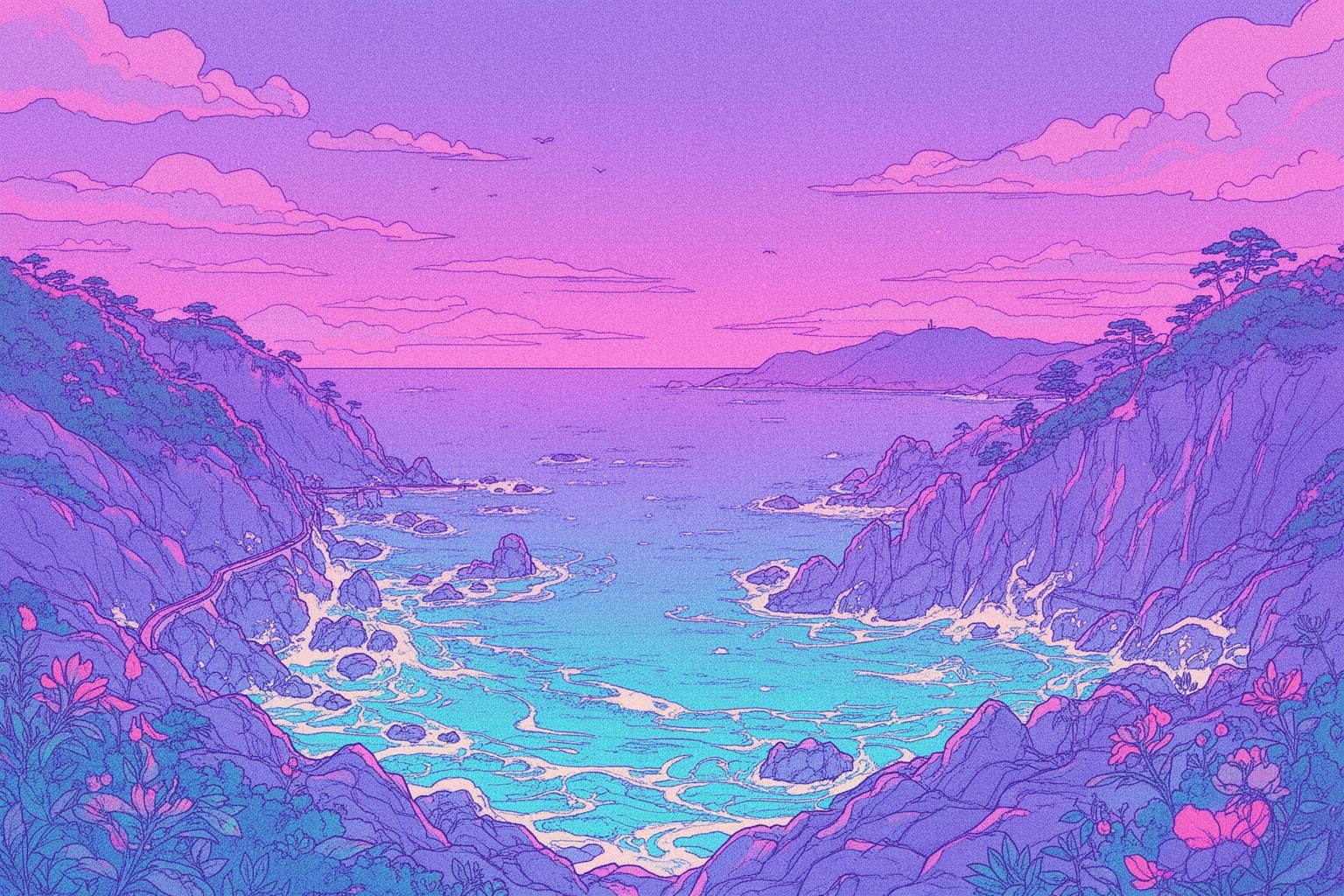
Venturing beyond the major cities, we arrive at the Izu Peninsula, a sunlit, finger-like stretch of land reaching into the Pacific Ocean, just a shinkansen ride from Tokyo. During the Bubble Economy, Izu was known as Japan’s Riviera, a playground for the wealthy and ambitious. Corporations constructed lavish seaside resorts, golf courses were carved into the hills, and coastal towns such as Atami and Ito buzzed with vibrant, celebratory energy. Today, that frenetic energy has mellowed, leaving behind a captivating landscape where stunning natural beauty intertwines with the vestiges of faded glamour. Hiking here, especially along the Jogasaki Coast, feels like wandering through the ruins of a once-mighty empire, where dramatic volcanic cliffs and turquoise waters are punctuated by beautiful, melancholic reminders of a more decadent era.
The Jogasaki Coast Hiking Trail is the highlight of the area. This roughly 9-kilometer path traces a breathtakingly rugged coastline formed by a massive lava flow from Mount Omuro’s eruption thousands of years ago. The result is a striking landscape of jagged black cliffs, secluded coves with crystal-clear waters, and a lush maritime forest of pine and cherry trees. The hike itself offers a genuine immersion in nature, with the constant soundtrack of waves crashing against the rocks. What truly makes it a Shōwa Retro experience, however, are the man-made features scattered along the route—traces of the Bubble-era tourism boom, now weathered by sea salt and time.
The trail’s most iconic landmark is the Kadowaki Suspension Bridge. Stretching 48 meters and suspended 23 meters above a rocky inlet, this bridge is not a sleek, modern engineering marvel. It feels sturdy, perhaps a bit overbuilt—a product of its era. Crossing it, with the waves churning far below, is a thrilling experience reminiscent of a classic adventure film. Nearby, the Kadowaki Lighthouse stands as a stark white sentinel. You can climb to the top for a free panoramic view of the coastline and the vast Pacific. The observation deck, equipped with simple metal railings and coin-operated binoculars that still cost just 100 yen, is a quintessential piece of Shōwa-era infrastructure. These binoculars, rusted but functional, recur along the coast as nostalgic portals for closer views, relics from a time when such simple novelties were central to the tourist experience.
Continuing along the trail, you’ll notice other reminders of the past. Faded wooden signposts point toward viewpoints or small coves. You may come across the foundations of a former seaside cafe now reclaimed by nature. Concrete benches, weathered and moss-covered but still inviting rest, are scattered at scenic spots. The small fishing harbors like Futo and Izu-Kogen are home to family-run seafood restaurants and souvenir shops that seem frozen in time. The omiyage (souvenirs) sold here often come in brightly colored boxes featuring slightly dated graphic designs and cartoonish illustrations of fish or the coastline. These are not trendy artisanal goods but honest, nostalgic remnants of a mass-tourism era.
For a side trip that enhances the retro atmosphere, visiting nearby Mount Omuro is essential. This perfectly symmetrical, bowl-shaped dormant volcano looks like something out of a child’s drawing. Rather than hiking up, you take a chairlift to the summit, similar to Mount Takao. The slow, gentle ascent with your legs dangling over grassy slopes offers incredible views of the Izu Peninsula and the distant Izu Islands. The summit is a crater you can walk around in 20-30 minutes, offering one of Japan’s best 360-degree vistas. From here, you can truly grasp the scale of the Bubble-era development—the golf courses and resort hotels nestled within the natural landscape—a god’s-eye view of the dream that was built.
To fully immerse yourself in the era’s atmosphere, consider staying in one of the grand old hotels or ryokans in towns like Ito. Many were built or extensively renovated in the ’80s and still retain much of their original charm. Expect vast lobbies with plush carpeting and crystal chandeliers, enormous banquet halls designed for corporate parties, and decor that was once the height of luxury. Staying in one of these establishments, enjoying large communal baths (onsen), and savoring a traditional multi-course kaiseki dinner is the perfect way to conclude a day hiking through the region’s natural and historical landscapes. It completes the time-travel experience.
To reach the Jogasaki Coast, take the train to Izu-Kogen Station on the scenic Izu Kyuko Line. From there, a bus or short taxi ride will bring you to the trailhead. The trail is well-marked but can be uneven and rocky in spots, so sturdy walking shoes are essential. You can hike the entire length or opt for shorter sections. The true beauty of this hike lies in its blend of wild nature and human history— a poignant reminder that even the grandest dreams eventually fade, leaving behind a beautiful, melancholic echo against the timeless backdrop of sea and sky.
The Shōwa Soul: Why These Trails Vibe Different
So, what is it that links these diverse locations—a sacred mountain near Tokyo, a romantic peak in Kobe, and a volcanic coastline in Izu? It’s the spirit, the particular cultural DNA woven into their very fabric. Hiking these trails isn’t just about admiring stunning scenery; it’s about sensing the vivid resonance of the late Shōwa and Bubble eras, a time marked by unprecedented peace, prosperity, and a uniquely Japanese vision of the future. Grasping the reasons behind these places transforms the experience from a mere walk into a form of cultural archaeology.
The Bubble Economy was a time of nearly unrestrained confidence. Japan stood as an economic powerhouse, and this confidence was reflected in massive investments in domestic leisure. With ample funds and a desire to savor the good life, people turned to nature—but they wanted nature with modern conveniences. This led to the development of what might be called ‘leisure mountains.’ The intent wasn’t simply to create paths from point A to B; it was to craft an entire experience. Ropeways and cable cars served not just as transport, but as attractions themselves, providing exciting rides and futuristic designs. Observation decks were constructed not only for the views but as destinations for dates and family photos. Restaurants were positioned at summits—after all, why shouldn’t you enjoy a fine meal following a bit of light exercise?
A distinct aesthetic was also at work. The era embraced a fascination with mimicking Western luxury. That’s why you find places like Rokko Garden Terrace with its faux-European village style, or grand hotels in Izu resembling those on the Mediterranean coast. This was a form of aspirational architecture, bringing a hint of the exotic to domestic audiences. This often blended with a quirky, sometimes kitschy, sense of fun. Think of whimsical music box museums, monkey parks, and character-themed snacks. It was a time marked by sincerity and a lack of cynicism. These attractions were created with a genuine desire to delight visitors.
All of this contributes to a feeling the Japanese call natsukashii. This powerful and complex word roughly translates as ‘nostalgia,’ but carries more depth. It’s a gentle, bittersweet affection for the past, a yearning for a time long gone. For Japanese people who lived through the era, these trails act as a direct portal to their youth. Yet what’s fascinating is that even for those who didn’t experience it firsthand, the feeling endures. It taps into a universal sense of a bygone, more hopeful era. It carries the same energy as the global fascination with vaporwave aesthetics, which reinterprets 80s and 90s commercial and cultural elements into a hazy, dreamlike art form. Hiking these trails is like stepping into vaporwave in real life.
So, how can you discover your own retro trail? Here’s a guide for spotting one. Look for the equipment: vintage cable cars, chairlifts, and ropeways are dead giveaways. Notice the mountain destinations: observation towers, revolving restaurants (a true holy grail of Bubble-era design), and museums with niche themes. Pay attention to the signage: are the fonts rounded and bubbly? Are the illustrations hand-drawn and somewhat cartoonish? Check out the souvenir shops: if they offer towels printed with maps and keychains with tiny bells, you’re in the right place. Finally, trust your instincts. If a location feels a bit dated but charming and well maintained, if it seems earnest and designed for simple pleasures, you’ve likely stumbled upon a pocket of the Shōwa dream.
These trails stand in contrast to the hyper-modern, minimalist Japan often showcased in design magazines. They are warm, a little loud, and brimming with character. They remind us that before ‘cool Japan’ became a global brand, there was another form of cool—one based on economic strength, limitless optimism, and the simple joy of sharing a beautiful view with someone dear.
Beyond the Hike: A Walkman for the Soul
We have traveled from the lively base of Mount Takao to the sparkling night view from Mount Rokkō, and along the dramatic, memory-filled cliffs of the Izu Peninsula. Each path offered more than just a route; it offered a story, a feeling, and a direct connection to a Japan that is fading from sight but not yet lost. These hikes provide a unique way to experience this incredible country, a way to connect with a past defined by a forward-looking spirit. It’s a beautiful contradiction, waiting for you just beyond the city limits.
To walk these trails is to realize that a mountain is more than a geological feature; it is a cultural artifact. The concrete viewing platforms, quaint chairlifts, and old teahouses are as much a part of the landscape as the ancient cedar trees and volcanic rocks. They reflect an era when a confident, energetic nation looked upon its natural beauty and chose to create playgrounds in the sky, spaces for all to share in prosperity and enjoy the simple, profound joy of a good view.
So, next time you plan a trip to Japan, consider looking beyond the famous temples and futuristic skylines. Think about bringing your hiking shoes and seeking out a different kind of history. Find a weathered pair of coin-operated binoculars, drop your metaphorical 100 yen, and take a closer look. You might just glimpse the ghost of a brighter, more vibrant past shimmering on the horizon. Pop in your metaphorical City Pop cassette, lace up your sneakers, and prepare to hike back to a time when the future felt as bright and limitless as the view from a mountaintop. The trail is waiting.