What’s up, world-travelers and culture seekers! Ayaka here, coming at you straight from the heart of Japan. Today, we’re ditching the basic tote bags and single-use plastics for something with way more vibe, way more history, and honestly, way more drip. We’re talking about the furoshiki. Picture this: a single, gorgeous square of fabric that can transform into a chic handbag, a secure bottle carrier, an elegant gift wrap, or even a statement scarf. It’s not magic, it’s an art form that’s been part of Japanese life for over a thousand years, and it’s making a major comeback. In a world obsessed with sustainability and personal style, the furoshiki is the ultimate life hack you didn’t know you needed. It’s zero-waste, endlessly versatile, and a legit way to connect with Japanese culture on a deeper level. So, get ready to unfurl the possibilities, because we’re about to dive deep into the world of furoshiki and show you how this one piece of cloth can literally change your game, whether you’re navigating the streets of Tokyo or just trying to make your daily life a little more beautiful and a lot less wasteful. This isn’t just about wrapping things; it’s about wrapping your life in intention, creativity, and a touch of Japanese soul. Let’s get it.
For more ways to embrace this sustainable mindset during your travels, explore the concept of mottainai and other zero-waste Japanese philosophies.
The Ancient Roots of a Modern Trend
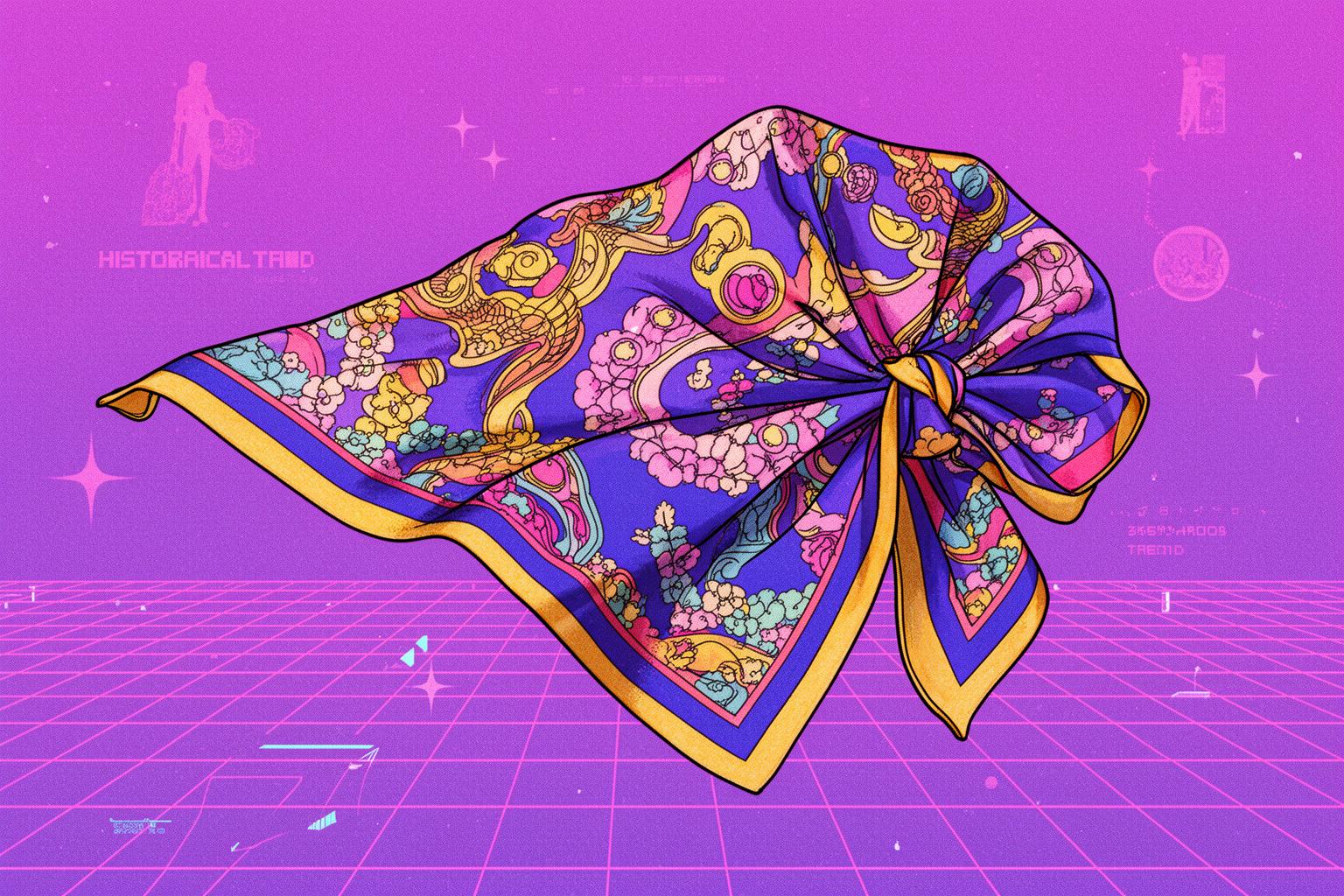
Before furoshiki became the eco-conscious trend it is today, it had a long and fascinating history. To really capture its spirit, we need to rewind the clock—way, way back. Over 1,200 years ago, during the Nara Period (710-794), it wasn’t even called furoshiki. Instead, people used a cloth called tsutsumi to wrap their most treasured items, especially those meant for temples like the Shosoin Imperial Treasury. The purpose was protection, respect, and reverence. This was the original intent: to safeguard what was precious. The cloth itself symbolized the value of its contents.
However, the name furoshiki—which literally means “bath spread”—didn’t appear until the Muromachi Period (1336-1573). This is where the story gets its upgrade. Imagine high-ranking shoguns and feudal lords building lavish bathhouses, or furo, as places to relax and socialize. It was the spa day of that era. When visiting the bathhouse, they wrapped their kimonos and belongings in cloths marked with their family crests to prevent mix-ups. After the bath, they stood on the same cloth to dry off and dress. It served as a personal, portable changing mat. From “bath spread” to daily essential, the name stuck, and the practice gradually spread from aristocracy to the general public.
By the Edo Period (1603-1868), furoshiki had truly become a vital part of everyday life for everyone. Japan’s cities thrived, commerce flourished, and people were constantly on the move. Merchants wrapped their wares in furoshiki to transport goods securely, flexibly, and conveniently. Travelers used them to pack belongings for long journeys along the Tokaido Road. Housewives carried groceries, wrapping vegetables in one cloth and a bottle of soy sauce in another. It was the original reusable bag, a versatile tool woven from cotton or silk. The patterns on furoshiki grew more intricate, showcasing personal taste, status, and regional flair. It was more than utility; it became a form of self-expression.
Then, in the 20th century, after World War II, Japan experienced rapid modernization. Plastic bags and paper wrapping came to symbolize convenience and Western progress. The humble furoshiki seemed outdated—a relic from a past era. For decades, it faded into the background, tucked away in drawers and closets, a quiet reminder of grandma’s generation. But culture has a way of coming full circle. In the 21st century, with a global emphasis on sustainability and a renewed appreciation for craftsmanship, furoshiki is back and cooler than ever. The Japanese concept of mottainai—a profound regret about waste—is resonating worldwide. Furoshiki embodies mottainai, offering a beautiful, practical solution to a world overwhelmed by disposables. It’s proof that the smartest answers are often those already with us, patiently waiting to be rediscovered.
More Than a Cloth: The Furoshiki Philosophy
To truly grasp the essence of the furoshiki, you must look beyond the fabric and connect with the philosophy it embodies. It’s more than just an eco-friendly accessory; it represents a mindset. It quietly challenges the throwaway culture that characterizes modern life. Using a furoshiki is an act of mindfulness. The folding and tying, the transformation of a flat square into a three-dimensional form, encourages you to slow down. You’re not simply stuffing items into a plastic bag; you’re engaging with an object, considering its shape, and crafting a personalized container. This small ritual imbues an ordinary task with care and intention.
This concept closely relates to the Japanese aesthetic of wabi-sabi, the appreciation of beauty in imperfection and impermanence, as well as the idea of teinei na kurashi, living a life with care and attention to detail. A furoshiki is not designed to be a perfect, rigid box. Its beauty resides in its soft form, the subtle wrinkles in the fabric, and the way the knot settles just right. Each use is a little different. It adapts, it changes, it lives with you. This flexibility is its greatest strength. One cloth can serve as a grocery bag one day, a gift wrap for a friend’s birthday the next, and a picnic blanket for a spontaneous afternoon in the park on the weekend. This adaptability is central to its charm. It doesn’t impose a purpose; it invites you to give it one.
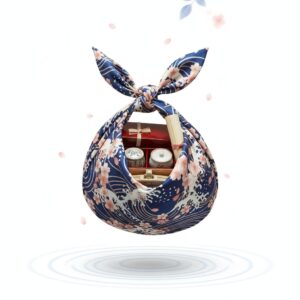
Additionally, the furoshiki carries a profound sense of respect. When wrapping a gift in a furoshiki, you do more than just conceal it. You surround it with beauty and care. The act of unwrapping becomes part of the gift, a shared moment of appreciation. The giver presents the gift, often untying the knot for the recipient, and then the furoshiki is either returned or kept as part of the gift—a sustainable cycle of giving. This is a world apart from tearing open wrapping paper and immediately discarding it. It’s about thoughtfulness, connection, and honoring both the object and the receiver. It transforms a simple exchange into a meaningful experience. Embracing the furoshiki is embracing a quieter, more thoughtful, and sustainable way of engaging with the world. It’s a small shift that creates ripples, a tangible connection to a culture that understands true value lies not in possessions but in how we care for them.
Choosing Your Perfect Furoshiki
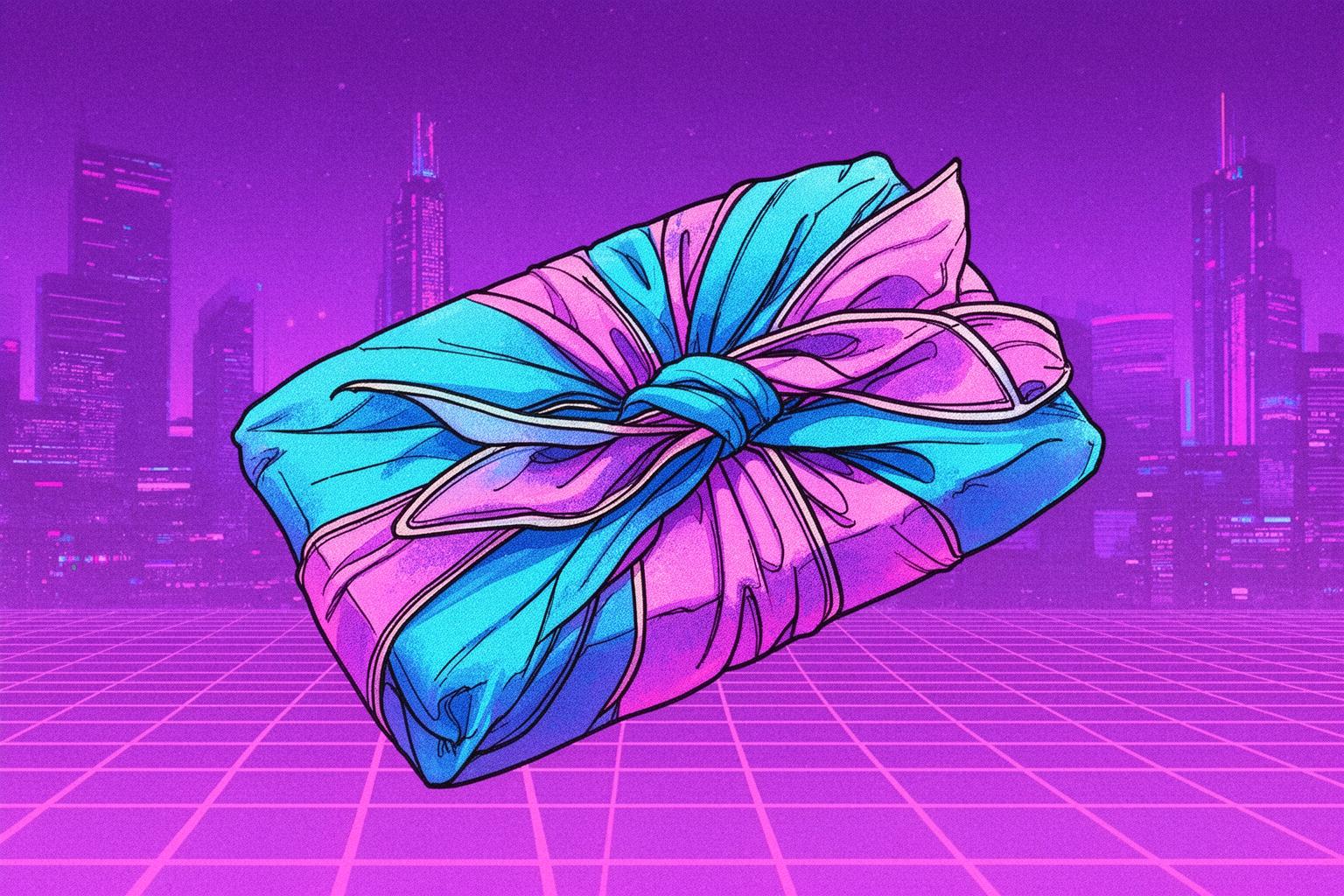
Entering a furoshiki shop feels like walking into a kaleidoscope. The abundance of colors, patterns, and textures can be overwhelming, yet that’s where the excitement begins. Selecting the perfect furoshiki is a personal adventure, guided by three key factors: size, material, and design. Getting these right is essential to unlocking the true potential of this remarkable cloth.
Understanding the Sizes
Furoshiki come in a variety of standard sizes, each suited for specific uses. You wouldn’t wrap a candy bar in a bedsheet, and the same principle applies here.
- Ko-furoshiki (Small Size – about 45-50 cm or 18-20 inches): These small-sized cloths are ideal for wrapping your bento lunch box, a small book, or a tiny gift. They also work well as decorative placemats or handkerchiefs. Think of them as your everyday essentials, easy to carry in your bag for spontaneous wrapping needs.
- Chuhaba (Medium Size – about 68-75 cm or 27-30 inches): Often considered the most versatile and popular size, this is the Goldilocks of furoshiki—not too big, not too small. It’s perfect for wrapping medium-sized gift boxes, bottles of wine or sake, or even transforming into a stylish handbag for a day out. If you buy only one to start, make it a chuhaba. You’ll be amazed by its versatility.
- Futahaba (Large Size – about 90-104 cm or 35-41 inches): This larger size offers serious carrying capacity. A futahaba cloth is great for making shoulder bags, small backpacks, or bundling clothes for a weekend trip. It’s also ideal for wrapping bigger, bulkier gifts like sweaters or large coffee table books. This size showcases furoshiki’s true potential as a bag alternative.
- Mihaba and Larger (Extra Large – about 120-230 cm or 47-90 inches): These are the giants of the furoshiki world. Historically, they were used for carrying bedding or large household items. Nowadays, they’re less common for daily use but make stunning statement pieces. You can use one as a wall tapestry, tablecloth, or chic beach cover-up—perfect for making a bold, beautiful impression.
Exploring the Materials
The fabric of a furoshiki greatly influences its appearance, texture, and function. Each material has its own distinct character.
- Cotton (Momen): The reliable workhorse. Cotton furoshiki are durable, easy to wash, and hold knots firmly. They’re ideal for everyday tasks like grocery shopping, packing lunches, and general carrying. Available in countless prints and often the most affordable, they’re perfect for beginners.
- Silk (Kinu): The luxurious choice. Silk furoshiki are incredibly soft, lightweight, and have a beautiful sheen that makes colors shine. Reserved for special gifts and formal occasions like weddings, they drape elegantly but can be slippery, requiring a bit more care when tying knots. A silk furoshiki is truly a work of art.
- Chirimen Rayon or Silk Crepe (Chirimen): Known for its unique crinkled texture from twisted weaving threads, this fabric has a lovely drape and a subtle matte finish. Heavier than plain silk and less prone to wrinkles, it’s a popular choice for high-quality, elegant gift wrapping. The texture feels wonderful and looks very sophisticated.
- Polyester and Synthetic Blends: Modern fabrics offer practical benefits. Polyester furoshiki are extremely durable, water-resistant, and easy to clean. They’re excellent for bags that endure rough use or protecting items from light rain. They also showcase vibrant, contemporary prints brilliantly.
The Meaning Behind Patterns
Furoshiki designs do more than decorate—they tell a story. Many traditional patterns carry symbolism that adds meaningful depth to your wrapping.
- Karakusa (Arabesque Vine): A classic scrolling vine design symbolizing longevity, prosperity, and strong family bonds, as vines spread endlessly. It’s a traditional and auspicious pattern, fitting for any celebration.
- Seigaiha (Blue Ocean Waves): Featuring layered concentric circles resembling waves, this pattern symbolizes peace, luck, and resilience, reflecting a wish for a calm and peaceful life like the endless ocean waves. It’s serene and beautiful.
- Asanoha (Hemp Leaf): A geometric pattern of interwoven hemp leaves. Since hemp grows strong and fast, this pattern represents growth, health, and vitality. It was traditionally used on children’s clothing hoping for robust development.
- Shippo (Seven Treasures): Composed of interlocking circles forming a net-like design, it represents the seven treasures of Buddhism (gold, silver, lapis lazuli, crystal, agate, red pearl, and carnelian) and symbolizes harmony, good relationships, and fortune.
- Same Komon (Shark Skin): Fine dots arranged in overlapping semicircles, resembling shark skin. Used by the powerful Kishu Tokugawa samurai clan, it conveys sophistication and strength.
Today, furoshiki designs range from traditional patterns to playful characters, bold modern graphics, and minimalist solid colors. Choosing a pattern is a way to express your style and, if you like, to embed a secret message or wish within your wrap.
The Art of the Knot: Your Furoshiki How-To Journey
Alright, you’ve chosen your furoshiki and are ready to begin wrapping. This is where the magic unfolds. Don’t be intimidated! Furoshiki wrapping is essentially a few simple knots and folds. Once you master the basics, a whole world of creativity opens up. We’ll guide you through this process, not as a technical manual, but as a creative session. Put on some good music, spread your cloth on a flat surface, and let’s get started.
The Foundation: Mastering the Knots
Everything begins with a good knot. The most essential and commonly used knot in furoshiki is the mamusubi, or true knot—essentially a square knot. It’s strong, secure, and easy to undo when needed. Forget everything you know about tying shoelaces.
Imagine you have two corners of the furoshiki, labeled A and B. Cross A over B, tuck A under B, and pull tight. This forms the first part of the knot. For the second part, do the reverse: cross B over A, tuck B under, and pull tight. The key is to have the tails of the knot lie flat and parallel to the cloth, not sticking out at awkward angles. To untie a mamusubi, simply pull one tail while pushing the corresponding base of the knot—it will loosen and release effortlessly. Practice this a few times until it feels natural. This is your cornerstone.
Another simple knot is the hitotsumusubi, or single knot. It’s just a basic overhand knot, used to secure a single point or create a simple handle. It’s quick, easy, and effective for simple wraps.
Basic Wraps for Everyday Life
Let’s begin with some fundamental wraps you’ll use regularly.
- Otsukai-zutsumi (Basic Carry Wrap): This is the classic all-purpose wrap for a square or rectangular box. Place the item diagonally in the center of the furoshiki. Take two opposite corners and tie them in a mamusubi on top of the box, ensuring it’s snug. Then take the remaining two corners, bring them up and around the first knot, and tie another mamusubi. This creates a neat, secure package with a convenient handle on top. It’s elegant, simple, and perfect for carrying a bento box or small gift.
- Hira-zutsumi (Flat Object Wrap): Ideal for flat items like a book or tablet. Place the item in the center of the cloth. Fold one side over, tucking any excess underneath neatly. Then fold the other side over, forming a clean rectangle. You’ll have two long ends left; bring them together and tie a mamusubi on top. This sleek, protective wrap looks very professional.
Gifting Game-Changers
Using furoshiki for gift wrapping is a powerful gesture. It shows extra care and becomes a gift itself. Let’s elevate your gift-giving.
- Bin-zutsumi (Bottle Wrap): Gifting a bottle of wine, sake, or olive oil? Skip the paper bag. Place the bottle in the center of your furoshiki. Bring two opposite corners up and tie a single knot at the bottle’s neck. With the remaining two corners, wrap one around the bottle’s body and bring it to the front. Repeat with the other corner in the opposite direction. Bring both ends to the front and tie a neat mamusubi. This creates a secure wrap with a built-in handle. For two bottles, place them side by side, tie a knot between them to prevent clinking, and then proceed with a similar wrap to create a sturdy, impressive double-bottle carrier.
- Hana-musubi (Flower Knot Wrap): Want to add some flair? The flower knot is stunning. Start with the otsukai-zutsumi (basic carry wrap). After tying the final mamusubi, instead of leaving the ends plain, transform them into a flower. Twist one loose end, create a loop, and tuck the tail into the center of the main knot to hold it. This forms your first petal. Repeat with the other three ends, arranging the loops into a beautiful blooming flower atop your gift. It’s a showstopper.
From Cloth to Chic Bag
This is where furoshiki shines as a modern accessory. With a few knots, you can make a functional and stylish bag in moments.
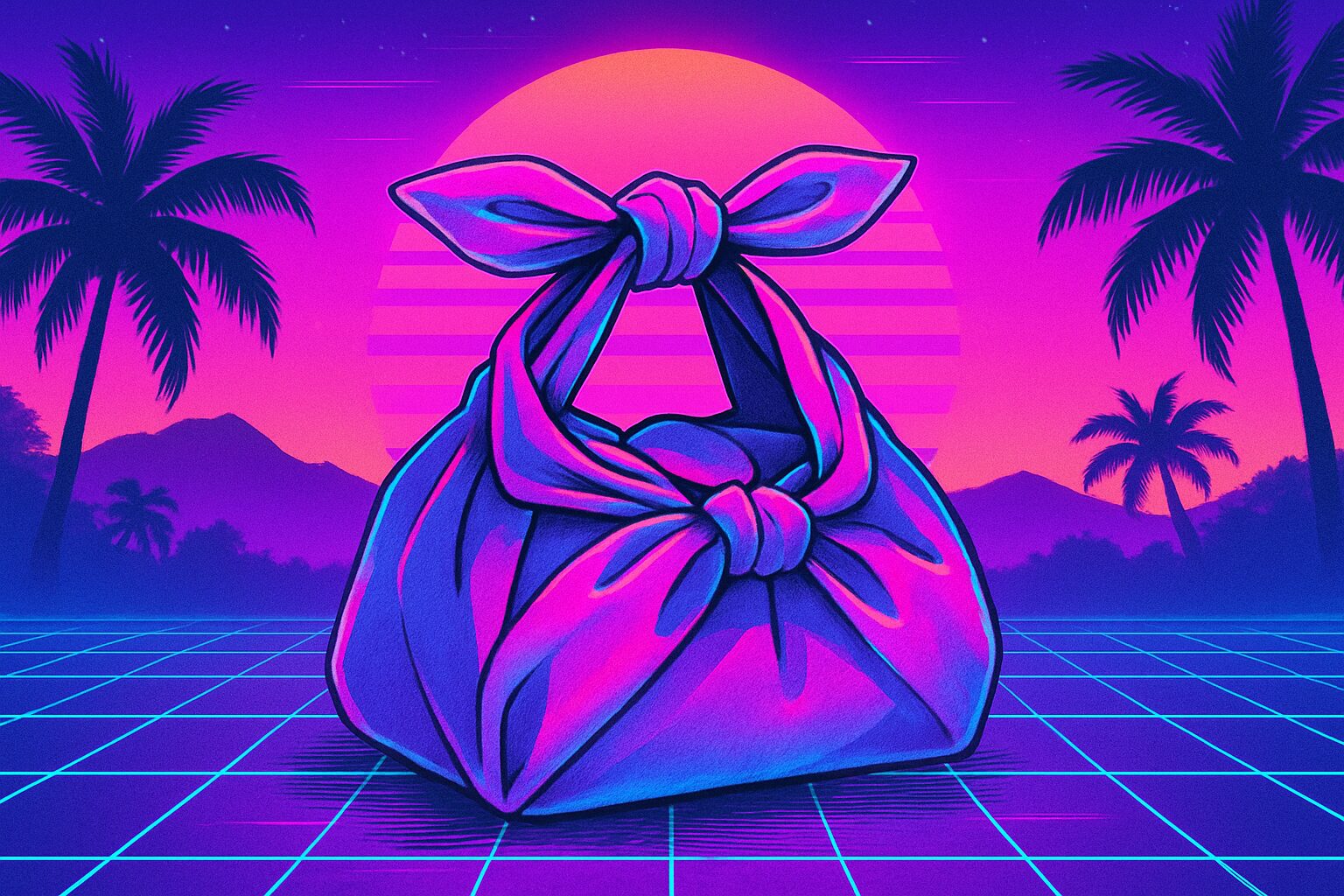
- Shizuku Bag (Teardrop Bag): A fan favorite for its cute, slouchy teardrop shape. Lay your furoshiki flat. Tie two adjacent corners in a mamusubi, then do the same with the other two adjacent corners. You’ll have two large loops. Thread one loop through the other, and that becomes your handle. The bag magically takes shape, perfect for carrying essentials with a unique, organic look.
- Suika Bag (Watermelon Bag): As the name implies, it’s ideal for round items like a watermelon, cabbage, or basketball. Place your round object in the center of the cloth. Bring all four corners up together. Tie two adjacent corners in a mamusubi. Tie the other two adjacent corners in another mamusubi. You’ll have two handles that you can tie together or hold separately, creating a secure, net-like cradle for your item.
- Tesage Bag (Simple Handbag): One of the easiest and most practical bags. Lay the furoshiki face down and fold it diagonally into a triangle. Tie the two long-end corners of the triangle in a simple knot to form the base of the handle. Fold the third corner (the tip) up toward the knot. Finally, bring the folded tip through the two ends of the knot to secure it. The two ends of the first knot form a comfortable handle. You have an instant, open-top handbag—perfect for a quick trip to the local market.
- Furoshiki Rucksack: Yes, you can even create a backpack! Use a larger furoshiki, at least 90 cm square. Lay it flat and place your items in a line down the center. Fold the cloth over the items like a burrito and tie a knot at each end. Now you have a long tube with knots at both ends. Tie these ends together in a big mamusubi to create two shoulder straps. It’s a simple, brilliant hands-free solution.
Furoshiki in the Wild: A Modern Japanese Scene

If you explore Japan today with a discerning eye, you’ll notice the furoshiki thriving, effortlessly woven into the contemporary scene. It’s neither a costume nor a historical reenactment; it remains a vibrant, living element of the culture. During a morning commute in Tokyo, you might spot a stylishly dressed woman carrying her bento box wrapped in a lovely, seasonal chirimen cloth. The compact, tidy package rests on her lap, quietly expressing personal care and tradition amid the city’s hustle.
Visit a department store or depachika, particularly the basement food halls, and you’ll see shoppers refusing plastic bags, instead unveiling their own furoshiki to bundle a delicate cake box or a selection of fine teas. It’s a fashionable and mindful choice. In elite boutiques in Ginza or Omotesando, furoshiki are not just sold as wrapping cloths but promoted as fashion accessories—scarves, bag decorations, and even belts. Luxury brands collaborate with traditional artisans to produce contemporary designs that attract a younger, style-conscious crowd.
In Kyoto, the heartland of Japanese tradition, the connection runs even deeper. Walking through the Gion district, you may see a maiko (apprentice geisha) carrying her belongings in a small silk furoshiki bundle. At a local sake brewery, they’ll offer to wrap your purchase in a custom-printed furoshiki featuring their logo—a keepsake that’s both beautiful and practical. Gift-giving, or zoto, is a significant part of Japanese social etiquette, and here, the furoshiki remains the ultimate standard for presenting a thoughtful gift. It conveys a level of respect and sincerity that paper simply can’t match.
Even in casual settings, its adaptability stands out. On a sunny afternoon in Yoyogi Park, a group of friends might spread out a large furoshiki as an impromptu picnic blanket. A photographer might use a small, dark-colored one to shield their camera lens from sunlight. It’s a tool born of sheer practicality, with uses limited only by imagination. This subtle revival is a wonderful sight to behold. It proves that tradition need not be static; it can evolve, adapt, and find new relevance in a changing world, all while preserving its essential qualities of beauty, utility, and respect.
Your Furoshiki Starter Kit: Practical Tips for Visitors
Ready to start your first furoshiki collection? Japan is the ideal place to begin. Here are some helpful tips to get you started.
Where to Shop
- Specialty Shops: For the best variety and expert guidance, visit a store dedicated to furoshiki. Places like Musubi in Tokyo (Harajuku) and Kyoto are well-known for good reason. They offer a wide range of sizes, materials, and styles, from traditional to contemporary. The staff are passionate and can show you different wrapping techniques.
- Department Stores (Depato): Large department stores such as Isetan, Mitsukoshi, or Takashimaya consistently feature sections with traditional Japanese goods, including a superb selection of furoshiki. This is an excellent spot to find high-quality silk and chirimen fabrics, ideal for gifts.
- Souvenir and Craft Shops: In tourist areas like Asakusa in Tokyo or near Kiyomizu-dera in Kyoto, you’ll find numerous shops selling furoshiki. Quality varies, so be sure to feel the fabric and inspect the prints. You can discover some great, affordable cotton designs perfect for everyday use.
- 100 Yen Shops: Surprisingly, you can even buy small, simple furoshiki at 100 yen stores like Daiso. They are usually made of thin polyester but are an inexpensive way to practice your wrapping and knots without worrying about damaging a pricier cloth.
First-Timer Advice
- Start with Cotton: For your first furoshiki, I strongly suggest a medium-sized (about 70 cm) cotton one. It’s the easiest for beginners, holds knots well, and is highly versatile for many uses.
- Don’t Aim for Perfection: Your initial wraps might appear a bit uneven or loose, and that’s perfectly okay! The charm of furoshiki lies in its natural, imperfect style. Just make sure the knot is secure; the look will improve with practice.
- Wash with Care: Check the fabric type. Cotton and polyester can generally be machine-washed on a gentle cycle, but silk and rayon require gentle hand washing in cool water or dry cleaning to maintain their color and texture.
- Think Beyond Wrapping: Remember, a furoshiki isn’t limited to wrapping. Tie it onto your bag for a splash of color, wear it as a headband or scarf, or hang it on your wall. Let it be a multifunctional part of your life.
The Unfolding Story

The journey of the furoshiki, in many respects, mirrors the story of Japan itself. It is a tale of elegance emerging from practicality, of tradition evolving within the modern world, and of discovering profound beauty in everyday, simple actions. To fold a furoshiki is to connect with a millennium of history, with the hands of merchants, travelers, and artists who have relied on this simple square to safeguard what they cherish. Yet, it is also an act looking forward—a small, personal statement that reflects care for sustainability, craftsmanship, and living more intentionally.
So, whether you visit Japan or simply find one online, I hope you’ll regard the furoshiki as more than a charming souvenir. See it as an invitation: an invitation to be more creative, more mindful, and to carry a piece of Japanese philosophy wherever you go. Unfold it, wrap it, tie it, and make it your own. In a world that often feels complex and disposable, the simple, lasting elegance of the furoshiki serves as a beautiful reminder that sometimes the best things in life are those that can be unfolded and reused again and again. It is more than just a piece of cloth; it’s a way of life, waiting for you to wrap yourself in it.