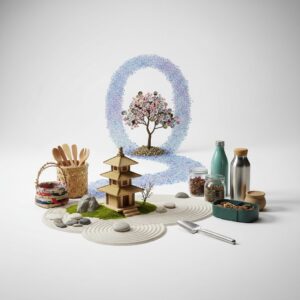
Yo, what’s up, fellow adventurers? Taro Kobayashi here. Ever been hiking deep in a cedar forest, the air so clean it feels like it’s scrubbing your soul, and you stumble upon a tiny, perfectly swept shrine? Or maybe you’re in a buzzing Tokyo ramen joint, watching the chef meticulously use every single part of a chicken to craft a broth that’s straight-up legendary. You see it, you feel it, and you think, “There’s something else going on here.” You’re right. There is. It’s a vibe, an ancient philosophy that’s more relevant now than ever. It’s called “Mottainai,” and it’s about to become your new travel mantra. Forget just seeing Japan; it’s time to feel it on a whole new level.
Mottainai is a Japanese term that’s often translated as “What a waste!” but that’s like saying a mountain is just a pile of rocks. It barely scratches the surface. At its core, Mottainai is a profound sense of regret concerning waste. It’s not just about wasting food or resources; it’s about wasting time, potential, and spirit. It’s a deep, soul-level respect for the interconnectedness of everything. Think of it as the original, OG sustainability mindset, passed down through generations, embedded in the culture so deeply that it shapes everything from a single grain of rice to the way cities are built. For a traveler, tapping into the Mottainai spirit isn’t about being stingy; it’s about unlocking a richer, more authentic experience. It’s about traveling with intention, gratitude, and a whole lot of style. It’s the ultimate eco-friendly flex, and it’s your ticket to understanding the true heart of Japan. Ready to dive in? Let’s get it.
To truly embrace this spirit, consider how it extends to experiences like a sustainable soak in a traditional Japanese onsen.
The Roots of the Vibe: Where Does Mottainai Even Come From?
To truly grasp the Mottainai flow, you need to look back in time. This isn’t some recent trend that just emerged; it’s ancient wisdom deeply embedded in Japan’s spiritual and historical fabric. It’s a philosophy shaped by a distinctive mix of religious beliefs and the harsh realities of living on a mountainous archipelago with limited resources. Its origins run deep, drawing from two primary spiritual traditions: Buddhism and Shintoism.
Starting with Buddhism, which arrived in Japan around the 6th century, bringing with it profound ideas. The most important of these is interconnectedness—the belief that all things, both living and non-living, are linked in a cosmic web. Wasting something isn’t just disrespecting that object; it’s a disregard for the entire chain of existence that brought it to you. The farmer who grew the rice, the water that nurtured it, and the sun that gave it life—all are connected. Buddhist monks lived by this philosophy, practicing mindful frugality that found value and purpose in everything. This wasn’t about poverty; it was about spiritual wealth. They recognized that real abundance comes from appreciation, not accumulation. This way of thinking permeated broader culture, planting the initial seeds of Mottainai.
Next, there’s Shinto, Japan’s native religion, which truly changes the game. Shintoism is animistic, meaning it holds that everything contains a spirit or kami. And that means everything. This includes the yaoyorozu no kami, the eight million gods. Kami inhabit mountains, rivers, and ancient trees, but also the kitchen stove, a well-used cooking pot, a carpenter’s tools, and even a single grain of rice. When something is discarded carelessly, it’s essentially disrespecting its resident spirit. This view gives everyday objects a sense of dignity and life; you don’t simply throw away an old tool—you express gratitude for its service. This belief fostered a culture of exceptional care and maintenance. Items were made to last, repaired, and honored throughout their entire lifespan.
Fast forward to the Edo Period (1603-1868), when the Mottainai philosophy faced its ultimate challenge and truly took shape. For over two centuries, Japan shut its borders to the outside world under the sakoku policy, severely limiting trade and resources. The country had to rely almost entirely on itself. This wasn’t a choice but a survival necessity. From this need arose a hyper-efficient circular economy—one of the most advanced recycling systems ever seen. Specialized recyclers were common in the bustling Edo (modern-day Tokyo) streets. People collected and repurposed just about everything. Paper scraps were gathered, broken down, and remade into new sheets. Ashes from cooking fires were collected and sold to farmers as potassium-rich fertilizer. Old kimonos were never discarded; they were deconstructed and transformed into diapers, cleaning cloths, or stitched together to make new, warm garments. Even human waste collected from households was a valuable resource sold to farmers for fertilizing fields. It was a closed-loop system where nothing was truly “waste.” Everything was given a new life, a future purpose. This wasn’t mere recycling; it was a societal ethos—Mottainai in action, deeply woven into the economy and daily life of millions.
Mottainai in the Wild: Spotting the Philosophy on Your Travels
Alright, history class is finished. What’s really cool is that this ancient vibe still thrives all across Japan. You just need to know where to look. It’s not always loud or obvious; often, it’s a subtle flex, a quiet hum of respect flowing beneath the surface of modern life. Once you tune into the Mottainai wavelength, you’ll start spotting it everywhere, turning your trip into an epic cultural scavenger hunt. Let’s explore where this philosophy appears in the wild, from your dinner plate to the art around you.
Food Culture: The Tastiest Vibe
Japanese cuisine, or washoku, is probably the most delicious and accessible doorway into the world of Mottainai. The respect for ingredients is exceptional, with the principle of using every single part at its core. In the Kansai region (home to Osaka and Kyoto), this idea has a special name: shimatsu. It means maximizing the use of ingredients—not out of stinginess, but out of respect and creativity. You’ll find it in both home cooking and upscale restaurants. Thin shavings of daikon radish peel aren’t waste; they’re stir-fried into a tasty side dish called kinpira. Tough outer cabbage leaves? They’re pickled. Fish bones and heads? They’re the secret to a rich, umami-packed broth called dashi. This is culinary ingenuity born from a zero-waste mindset.
Consider a classic bowl of ramen. That insanely savory broth comes from hours of simmering pork or chicken bones, trotters, skin, and other parts that might otherwise be discarded. The chef extracts every last bit of flavor, honoring the animal by using it all. The same applies to an izakaya—those vibrant Japanese pubs. Check the yakitori menu. Besides the usual chicken thigh (momo) and breast (mune), look closer and you’ll find skewers of crispy chicken skin (kawa), crunchy cartilage (nankotsu), and rich, iron-packed heart (hatsu). This nose-to-tail eating isn’t a new trend here; it’s simply tradition. It’s a direct, tasty expression of Mottainai.
And then there’s the rice. You’ll notice Japanese people, from toddlers to grandparents, making a real effort to finish every last grain in their bowl. This isn’t just good manners—it’s tied to the Shinto belief in the spirit of rice and a deep, cultural gratitude for the hard work of farmers. Leaving even a few grains is considered mottainai. It’s a small action, but it speaks volumes about valuing food. Even how food is presented helps reduce waste. Those plastic food samples, shokuhin sampuru, displayed in restaurant windows aren’t just decoration. They’re hyper-realistic models showing exactly what you’ll order, including portion size, helping you order just what you’ll eat, minimizing leftovers. It’s a simple yet clever system.
Architecture & Crafts: The OG Upcycling
The spirit of Mottainai is literally woven into Japan’s physical culture. It’s reflected in how things are made, repaired, and treasured. This aesthetic finds beauty not in pristine newness, but in an object’s life story, including its scars and fixes. Here, you’ll discover some of the most beautiful and profound examples of the philosophy.
Take kintsugi, the art of golden joinery. This is Mottainai at its most poetic. When a cherished pot or bowl breaks, it isn’t discarded. Instead, a craftsman carefully repairs it using lacquer mixed with powdered gold, silver, or platinum. The cracks aren’t hidden—they’re highlighted, transformed into beautiful golden veins. The philosophy is powerful: the history of damage and repair makes the piece more beautiful, valuable, and unique than before. It celebrates imperfection and resilience. A kintsugi-repaired bowl is a physical embodiment of the idea that breakage doesn’t mean the end. Its story and spirit deserve to endure.
This mindset extends to textiles as well. Before fast fashion, fabric was highly prized. The concepts of sashiko and boro embody this. Sashiko is functional embroidery—a simple running stitch used to reinforce worn areas or mend clothes. Over time, these functional stitches evolved into beautiful geometric patterns. Boro goes even further. The term means “tattered” or “ragged,” referring to textiles patched and mended over generations. Indigo-dyed cotton and hemp fabrics were layered and stitched together, with new patches added as old ones wore out. The result is a fabric collage—a family’s life story told through shades of blue. What began as simple mending has become a celebrated art form. Boro textiles are now highly sought by designers and collectors worldwide for their rich texture, character, and soul.
Even grand architecture carries the Mottainai spirit. Traditional Japanese carpentry, or miyadaiku, especially in temples and shrines, is known for intricate wooden joints that fit together like puzzles, often without nails. This exceptional craftsmanship isn’t just decorative—it allows buildings to be dismantled piece by piece so individual timbers can be repaired or replaced over centuries. The wood, a treasured resource from sacred forests, is honored and preserved. These structures are built for longevity, to be maintained and handed down, a striking contrast to today’s disposable building trends.
Everyday Life: The Low-Key Flex
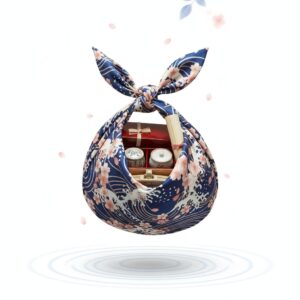
Beyond food and crafts, the Mottainai vibe permeates everyday life in Japan. A perfect example is the furoshiki: a single square of decorated cloth used for nearly anything. It serves as reusable gift wrap, a grocery bag, a bento carrier, a handbag, or even home decor. With a few smart knots, it transforms for any use. Choosing a furoshiki over disposable wrapping or bags is a small, stylish Mottainai act—beautiful, practical, and totally zero-waste. Gift-giving itself reflects this philosophy, with the care in wrapping showing respect for the item and recipient; often, the furoshiki wrapping is considered part of the gift.
Then there’s Japan’s famed public cleanliness. Trash cans are scarce, yet streets remain spotless. Why? Because the unspoken rule is to take your trash home. This is collective Mottainai—a shared responsibility not to “waste” the beauty and comfort of public spaces with litter. It’s respect for the environment. Next to nearly every vending machine, you’ll find dedicated recycling bins with separate slots for PET bottles, cans, and sometimes glass. The system encourages responsible disposal, integrating resource recovery into daily urban life. It’s a simple, effective, and widespread example of Mottainai in action on a large scale.
How to Vibe with Mottainai: A Traveler’s Field Guide
Alright, you’re convinced by the concept. But how can you, as a traveler, actively participate? How do you shift from being a mere observer to becoming part of the flow? It’s simpler than you might expect. Embracing Mottainai during your trip will not only lessen your environmental impact but also deepen your connection to the culture in a more meaningful and fulfilling way. Here are some expert tips for incorporating this philosophy into your journey.
Stay in a Ryokan or Minka
Your accommodation choice can greatly enhance the experience. Rather than opting for a typical hotel, try staying in a ryokan (a traditional Japanese inn) or a renovated minka (an old folk house). These places embody the Mottainai spirit. In a ryokan, you’ll experience omotenashi, the Japanese art of hospitality, characterized by meticulous attention to detail and minimal waste. The multi-course kaiseki dinners perfectly illustrate this, with each dish being small, beautifully arranged, and featuring seasonal ingredients used in their entirety. The portions are thoughtfully sized to satisfy without excess. The futons you sleep on are aired daily and stored away, rather than left out unnecessarily. The building itself often showcases natural materials and design, with sliding paper doors (shoji) that admit natural light and ventilation, cutting down on electricity use.
Staying in a minka offers perhaps an even more intimate connection. These old farmhouses, rescued from demolition, have been lovingly restored using traditional methods and materials. You’re essentially resting inside a piece of history, a structure founded on principles of durability and resource respect. It’s a powerful way to experience the heart of rural Japan and support the preservation of its architectural heritage.
Eat Like a Local
This is the simplest and most enjoyable way to practice Mottainai. Immerse yourself in the local food scene with intention. Seek out a neighborhood restaurant that serves teishoku, or set meals. A teishoku typically includes a main dish (such as grilled fish or pork cutlet), a bowl of rice, miso soup, and several small side dishes. It’s a perfectly balanced and portioned meal that highlights a variety of ingredients with minimal waste—everyday fuel for Japan.
Be adventurous at an izakaya. Don’t just stick with familiar choices. Point to something on the menu you haven’t tried, like chicken cartilage or grilled fish collar. By doing this, you’re actively embracing the nose-to-tail philosophy and showing respect for the ingredient. And don’t forget the golden rule: finish your food, especially the rice. A clean plate is the highest compliment you can give the chef, the farmer, and the spirit of the meal itself. This small gesture is deeply appreciated.
Shop Consciously
Resist the temptation to buy cheap souvenirs impulsively. Instead, let the Mottainai spirit guide your purchases. Japan boasts an incredible second-hand and vintage culture. Visit neighborhoods like Shimokitazawa or Koenji in Tokyo, famous for their numerous vintage clothing and record shops. Here, you’re not just acquiring clothes; you’re giving a pre-loved item a new life. This is Mottainai expressed through fashion.
Look for local artisans preserving traditional crafts. Rather than mass-produced souvenirs, consider investing in a beautiful furoshiki cloth, a hand-dyed tenugui towel, or even a kintsugi repair kit to bring home. By supporting these craftspeople, you help sustain skills and philosophies passed down through generations. For a truly unique experience, explore a local temple flea market (nomi no ichi). These lively markets are treasure troves of old kimonos, pottery, tools, and trinkets. Every piece has a story. Finding something that resonates with you and giving it a new home is a wonderful way to engage with the culture of reuse.
Engage in Workshops
For a hands-on experience, sign up for a workshop. Many venues, especially in cultural centers like Kyoto, offer short classes for tourists. Try your hand at kintsugi and learn how to mend a broken cup with gold. Take a sashiko stitching class and create your own small embroidered piece. Discover the art of furoshiki wrapping and explore dozens of ways to tie a single cloth. These workshops are more than just enjoyable activities; they serve as a direct passage of the Mottainai philosophy. You’ll acquire a new skill and develop a much deeper appreciation for the patience, care, and mindset that underpin these beautiful traditions.
The Deeper Meaning: Mottainai as a Mindset
By now, you understand that Mottainai is far more than just “reduce, reuse, recycle.” It’s a worldview—a philosophy that shifts your focus from consumption to appreciation. It’s not about what you lack, but about being thankful for what you have. This is the true essence of the concept. The feeling of “mottainai” isn’t one of reprimand; it’s a gentle pang of regret, a sense that something precious has been lost. It’s an emotional reaction rooted in gratitude.
Gratitude is central. Mottainai acknowledges that every object and every moment comes from a vast network of energy, labor, and resources. That bowl of rice isn’t merely rice; it embodies sunshine, rain, soil, the farmer’s hard work, the truck driver who delivered it, and the chef who prepared it. To waste it is to disregard that entire chain of effort. This perspective elevates the ordinary to something sacred.
This idea links directly to another key Japanese aesthetic: wabi-sabi. Wabi-sabi is the art of appreciating beauty in imperfection, impermanence, and incompleteness. It honors the rustic, the weathered, and the humble. A moss-covered stone lantern, a cracked teacup, a faded piece of wood—these objects are beautiful not despite their flaws, but because of them. They tell a story of time and existence. Mottainai and wabi-sabi represent two sides of the same coin. A kintsugi-repaired bowl perfectly embodies both. The Mottainai spirit urges “don’t throw it away,” while the wabi-sabi aesthetic celebrates “its scars make it even more beautiful.” Together, they form a powerful philosophy of acceptance and appreciation for life as it is.
The concept extends beyond physical items. You’ll also hear Japanese people say that wasting your potential or a golden opportunity is “mottainai.” If someone has great talent but doesn’t use it, that’s mottainai. If you have a day off yet spend it doing nothing productive or restorative, that too is mottainai. The philosophy applies to intangible resources like time, energy, and skill. It’s a call to live fully, engage with the world, and make the most of the gifts you’ve been given. It’s a life philosophy disguised as an eco-friendly principle.
This ancient idea is also gaining new relevance in the modern world. It’s being rediscovered by young Japanese embracing minimalism, sustainable living, and a revival of traditional crafts. The concept has gone global, partly thanks to Kenyan environmentalist and Nobel Peace Prize laureate Wangari Maathai, who was so moved by the term that she used it as a rallying cry for environmental conservation worldwide. The Mottainai spirit continues to evolve, proving that this ancient wisdom is exactly the message our modern, disposable world needs to hear.
A Personal Reflection: Hiking and the Mottainai Spirit
As someone who spends a great deal of time in the mountains, the Mottainai spirit resonates with me deeply. On the trail, this philosophy is not abstract; it serves as a practical guide for survival and respect. While hiking the Kumano Kodo, the ancient pilgrimage route on the Kii Peninsula, every gram in my pack counts. I bring only the food I need and consume every last bit because it’s essential fuel. I value my water highly. I carefully maintain my gear—my tent, stove, boots—because my safety depends on it. This is the heart of Mottainai: a deep appreciation for the worth of your resources.
The trail’s mantra is “leave no trace.” You pack it in, you pack it out. This embodies pure Mottainai. The mountain offers an incredible experience—the views, the challenge, the peace—and in return, you express your gratitude by leaving it as pristine as you found it. You don’t “waste” its beauty by leaving trash behind. I recall sitting in a mountain hut in the Japanese Alps, watching the caretaker meticulously sort that day’s waste into tiny piles for recycling, composting, and burning. The nearest road was a two-day hike away. Everything had to be carried in or out on someone’s back. In that remote, rugged setting, the reality of resources is unavoidable. You don’t just understand Mottainai; you live and breathe it. It shapes the way you engage with the natural world, with humility and deep gratitude. For me, the mountains are the ultimate classroom for Mottainai.
Your Mottainai Journey Starts Now
Ready to put this all into practice? Great. The Mottainai spirit isn’t something you need to seek out in a certain place or at a specific time. It’s a perspective through which you can experience all of Japan. This philosophy is present throughout the year, with each season bringing its own distinct flavor. In spring, the fleeting beauty of cherry blossoms reminds us to cherish the moment before it slips away—a kind of temporal Mottainai. In autumn, harvest festivals celebrate the earth’s bounty and express heartfelt gratitude, capturing the essence of thankfulness.
For practical tips on locating workshops or unique shops, your best resource is a local Tourist Information Center. They are very helpful and often provide pamphlets or lists of local artisans and classes. When unsure, ask your hotel concierge. If searching online, try using specific Japanese terms for better results: 「金継ぎ体験」(kintsugi taiken, kintsugi experience), 「風呂敷 ワークショップ」(furoshiki workshop), or 「蚤の市 東京」(nomi no ichi Tokyo, flea market Tokyo).
A pro tip for your first time embracing this mindset? Start small. You don’t have to become a zero-waste expert overnight. The first step is simply to observe. Notice how things are packaged, served, and cared for. When you sit down to eat, make a conscious effort to finish everything on your plate, especially the rice. Bring a reusable water bottle. Choose a stylish tenugui towel instead of paper towels. These small acts of awareness are the seeds of the Mottainai spirit. Once you begin noticing, your whole outlook will start to shift.
Traveling with the Mottainai spirit is about more than just being an eco-conscious tourist. It’s a form of cultural immersion. It’s a way to connect with the deep-rooted values that make Japan so distinctive. It will encourage you to be more mindful, more grateful, and more aware of the world around you. This isn’t just a travel tip; it’s a life tip. The most amazing part is that the Mottainai spirit is the ultimate souvenir. It’s something you can carry—without any weight—and bring home with you, a fresh perspective that will transform not only how you travel, but how you live every day. So get out there, open your eyes and heart, and prepare to ride the Mottainai wave. It’s a journey guaranteed to be anything but wasteful. Bet.