Yo, let’s talk about gifts. That moment of anticipation, the crinkle of paper, the big reveal. It’s a whole vibe. But in Japan, the art of giving is next-level. It’s a full-on aesthetic experience where the wrapping isn’t just a prelude to the main event—it is the event. And at the heart of this tradition is something that’s been slaying the game for centuries, way before “eco-friendly” was even a thing: the Furoshiki. Forget your single-use paper and plastic ribbons. Furoshiki is a single piece of beautiful fabric that can wrap anything, become a bag, or even level up your fit. It’s the ultimate multi-tasking queen, a fusion of art, history, and sustainability that is so ridiculously relevant right now, it’s not even funny. This isn’t just about wrapping a present; it’s about wrapping it with intention, with story, and with a piece of culture that’s as timeless as it is trendy. It’s the zero-waste glow-up we all need, a tradition that proves the most beautiful things are often the simplest. So, get ready to dive deep into the world of Furoshiki, where one square of cloth holds infinite possibilities. It’s a craft, a philosophy, and honestly, a total life hack. And once you get into it, you’ll never look at a gift box the same way again.
This versatile art form also extends to sustainable travel, making it the perfect zero-waste companion for any journey.
The Real Tea on Furoshiki: More Than Just a Pretty Cloth

So, what’s the real story behind Furoshiki? At first glance, it’s just a square piece of decorated fabric. Simple enough. But that’s like saying a paintbrush is merely a stick with bristles. The true magic lies not in the object itself, but in its potential, history, and the cultural spirit it represents. Furoshiki embodies pure versatility—a canvas for creativity that takes shape with just a few simple knots.
Exploring the Essence: What is Furoshiki?
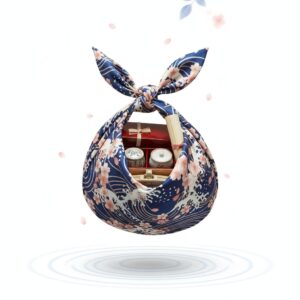
Fundamentally, Furoshiki is the tangible expression of the Japanese concept `tsutsumu` (包む), meaning “to wrap.” Yet, `tsutsumu` carries deeper significance. It’s more than just covering something. It conveys care, respect, and protection. Wrapping an item means enclosing it with good intentions, taking time to present it thoughtfully, honoring both the object and the recipient. This cultural attitude is visible throughout Japan, from the meticulous packaging of a humble snack to the elegant wrapping of a formal gift. Furoshiki is the originator of this ethos. It’s one item with countless uses. One moment, it serves as a refined wrap for a bottle of sake; the next, it transforms into a stylish, makeshift handbag slung over your shoulder. Then it becomes a carrier for a bento box, a picnic blanket, or even wall art. This remarkable adaptability is what makes it iconic. It’s not a disposable item; it’s a companion—a beautiful, reusable tool that promotes a thoughtful and fashionable lifestyle. It stands in stark contrast to the throwaway culture we often accept. Rather than tearing and discarding, you untie and reuse. The Furoshiki that wrapped your gift yesterday might be the scarf you wear tomorrow. That’s its brilliance: a system rooted in respect for resources and an appreciation for enduring beauty.
A Brief History: From Bathhouse Necessity to Fashion Statement
Furoshiki didn’t emerge suddenly to feed today’s sustainability trends. This icon has existed for over a thousand years, evolving alongside Japan’s history and serving various roles. Its story is a cultural metamorphosis. The earliest records trace back to the Nara period (710-794), when cloths used to wrap treasures for the Emperor were stored in the Shōsōin Imperial Repository—these were the prestigious predecessors of modern Furoshiki. However, the name itself has a humbler, relatable origin. Moving forward to the Muromachi period (1336-1573), a shogun named Ashikaga Yoshimitsu built a grand bathhouse in Kyoto, inviting feudal lords to bathe there. These lords wrapped their clothes in cloth bundles to keep them separate from others’ belongings. The cloths were often personalized with family crests, and spreading the cloth on the floor to stand on while drying off became common. Since the cloth (`shiki`) was used at the bath (`furo`), it earned the name “Furoshiki,” literally meaning “bath spread.”
The real heyday of Furoshiki came during the Edo period (1603-1868). As commerce flourished and a vibrant merchant class developed, Furoshiki became an everyday essential for everyone. It was the original tote bag, used to carry everything from market vegetables to books and documents. Ukiyo-e woodblock prints from that era depict people bustling through Edo’s streets with their belongings neatly wrapped in patterned Furoshiki. It was practical, yes, but also a mode of personal expression. The chosen patterns and colors reflected one’s style and social status. After the Meiji Restoration in 1868, as Japan embraced westernization and introduced leather, paper, and plastic bags, Furoshiki use declined. For a time, this beautiful tradition seemed destined to become a historical relic, seen only in period dramas. Yet culture has a habit of coming full circle. In the 21st century, amid global environmental awareness, Furoshiki is enjoying a significant revival. It has been rediscovered by a new generation, not only in Japan but worldwide, praised for its eco-friendly qualities, artistic charm, and incredible flexibility. From bathhouse staple to fashion icon, Furoshiki’s timeless appeal endures.
Why Furoshiki is Your New Sustainable Bestie
In a world where many of us strive to be more mindful of our impact, Furoshiki feels less like an ancient custom and more like a message from the future. It offers a chic, simple answer to a very modern challenge: waste. And let’s be honest, it’s not just about being eco-friendly; it’s about doing so with style. Furoshiki hits every mark.
The Ultimate Eco-Upgrade
Consider the facts. Each year, tons of wrapping paper, most of which can’t be recycled due to shiny coatings, glitter, and tape, end up in landfills. It’s a fleeting moment of joy followed by a pile of garbage. A quietly tragic cycle. Furoshiki completely reverses this. It’s the embodiment of “reduce, reuse, recycle.” One cloth is used repeatedly for years. No tape, no scissors, no waste. Just a beautiful fabric and the skill of your hands. This ethos is closely tied to the Japanese idea of `mottainai` (もったいない), a term expressing regret over wastefulness. `Mottainai` isn’t only about avoiding food waste; it’s a mindset encouraging you to realize the full potential of every object and resource. Furoshiki puts `mottainai` into practice. Why discard something after a single use when it can be employed in countless ways? A gift wrapped in Furoshiki is like presenting two gifts in one. The recipient gets the gift inside and also the beautiful wrap itself, which can be reused to wrap another gift, converted into a bag, or worn as a scarf. It’s a gift that keeps giving—a small piece of a circular economy you can hold. This simple change feels profoundly impactful. You’re not merely wrapping a gift; you’re making a statement. You’re choosing intention over convenience, and sustainability over disposability.
Personal Expression Secured
Beyond its eco-friendly appeal, Furoshiki is a powerful means of personal expression. Think about it: using generic wrapping paper means choosing a mass-produced design. It’s nice, but it’s not you. Selecting a Furoshiki is a curated experience. You get to pick a fabric, pattern, and color reflecting your personality, the occasion, or the recipient. Feeling minimalist and chic? A solid-color linen Furoshiki fits perfectly. Giving to a friend who loves nature? A botanical print cloth is ideal. For a formal event, a lustrous silk Furoshiki with a traditional pattern adds an elegance paper can’t match. How you tie the knot adds another touch of personalization. A simple, clean knot feels modern and understated, while a more intricate, floral knot feels festive and romantic. You’re not just a consumer; you’re a creator. You’re an artist, and the gift is your canvas. This level of thoughtfulness makes a Furoshiki-wrapped gift feel truly special. It tells the recipient you didn’t just grab something off the shelf; you crafted an experience for them. It communicates care and effort in a quiet yet profound way. In an era of digital everything and instant gratification, this tangible, personal touch feels more meaningful than ever. It’s a subtle rebellion against the impersonal, a way to infuse a bit of your spirit into the act of giving.
Decoding the Aesthetic: A Guide to Furoshiki Patterns and Fabrics

Stepping into a Furoshiki shop feels like entering a gallery where every item is meant to be touched, folded, and used. The wide array of textures, colors, and designs can be delightfully overwhelming. Knowing the materials and the stories behind the patterns is essential to selecting the ideal Furoshiki that suits your style and purpose.
Material Girl: Selecting Your Fabric
The texture of a Furoshiki is just as crucial as its appearance. The fabric influences how it drapes, ties, and what it is best suited for. Each material has its unique character.
Cotton (`men`): Consider this your everyday champion—the dependable friend of the Furoshiki realm. Cotton is sturdy, breathable, and softens with every wash. It’s strong enough to become a durable tote for groceries yet gentle enough to wrap a delicate gift. Its knots hold well, making it very beginner-friendly. Cotton Furoshiki come in a vast range of patterns, from traditional to ultra-modern, and tend to be budget-friendly. Ideal for bento boxes, daily use, and casual gift wrapping, it’s a versatile, approachable choice.
Silk (`kinu`): If cotton is the trusty companion, silk is the glamorous, luxe star. Nothing matches the feel of silk—it’s incredibly smooth with a radiant sheen that enhances colors beautifully. Silk Furoshiki are lighter and more delicate than those made of cotton and drape elegantly. They’re perfect for special occasions like weddings or milestone birthdays where you want to impress. Wrapping a gift in silk makes a striking statement of pure elegance. Silk Furoshiki also shine as scarves, adding refined drama to any outfit. They need extra care—hand washing is necessary—but for those standout moments, silk is unmatched.
Rayon/Chirimen Crepe: Rayon offers a great middle ground. It often replicates silk’s drape and sheen at a more accessible price. A particular kind of rayon crepe called `chirimen` is especially popular for Furoshiki. It features a slightly textured, bumpy surface due to a traditional weaving method. This texture makes it wrinkle-resistant and intensifies the color depth. `Chirimen` Furoshiki feel substantial and premium, with their textured finish helping knots hold tightly. They’re excellent for gift wrapping, with a polished and elegant appearance.
Polyester: Don’t underestimate polyester. Contemporary polyester Furoshiki are revolutionary: highly durable, water-resistant, and vibrantly colored. Often designed as eco-friendly bags, they can handle rough use with ease. Plus, they’re simple to wash and quick to dry. Although they lack the natural fiber feel, their practicality and bold, modern designs make them an excellent option for an active, on-the-go lifestyle.
Spill the Designs: Traditional Patterns and Their Meanings
Many Furoshiki patterns are more than pretty motifs; they are symbols imbued with centuries of meaning and good wishes. Knowing the story behind a pattern adds depth and intention to your gift-giving—a secret message woven into the fabric. IYKYK.
Seigaiha (Blue Ocean Waves): A true classic, this pattern features layered, concentric circles simulating waves. It symbolizes a wish for a peaceful, calm life like the tranquil sea, as well as good fortune and resilience, with waves symbolizing continuity. It’s a serene pattern suitable for nearly any occasion.
Asanoha (Hemp Leaf): This geometric pattern consists of repeated hexagons resembling hemp leaves. Hemp’s rapid and resilient growth represents vitality, strength, and healthy development. Traditionally, it adorned children’s clothing as a wish for them to grow strong. It carries a wholesome, powerful aura with a stylish, slightly vintage look.
Karakusa (Arabesque Vine): The swirling green vine is one of the most iconic Furoshiki patterns. The `karakusa` is a mythical vine said to grow endlessly, symbolizing longevity, prosperity, and family interconnectedness. It’s a lively pattern full of positive energy.
Same Komon (Shark Skin): From afar, this pattern resembles a solid shade, but up close reveals countless tiny white dots arranged in overlapping arcs, mimicking shark skin. Because shark skin is tough and protective, it was linked to armor and strength. Samurai families used it in formal wear as a symbol of power and protection against evil. A subtle yet strong and elegant pattern.
Sakura (Cherry Blossoms): Nothing captures Japan quite like cherry blossoms. This cherished flower stands for new beginnings and spring’s arrival. Its beauty and fleeting nature also symbolize life’s impermanence, reminding us to treasure each moment. A sakura-patterned Furoshiki is ideal for spring festivities or gifting someone embarking on a new life chapter.
Modern Muse: Contemporary Furoshiki Art
While traditional patterns remain timeless, the Furoshiki world continues to evolve. Today’s designers add fresh twists to this classic fabric, featuring bold geometric prints, minimalist abstract designs, playful animal illustrations, and even anime collaborations. These modern creations showcase Furoshiki as a living art form that embraces contemporary aesthetics. They’re perfect for expressing your individual style and proving that this ancient tradition still holds a vibrant place in today’s world. Whether you prefer classic or cutting-edge, there’s a Furoshiki tailored to your taste.
Master the Wrap: Your How-To Guide to Furoshiki Knots
Alright, you’ve picked your ideal Furoshiki. Now comes the exciting part: the wrapping. It may seem tricky at first, but don’t be discouraged. Most Furoshiki techniques rely on a few simple, intuitive knots. The essential one is the `ma-musubi`, or basic square knot, which is strong, secure, and easy to undo. It’s simply “right over left and under, then left over right and under.” Once you’ve mastered that, you’re good to go. Let’s explore a few key wraps—not as a dull checklist, but as a creative flow.
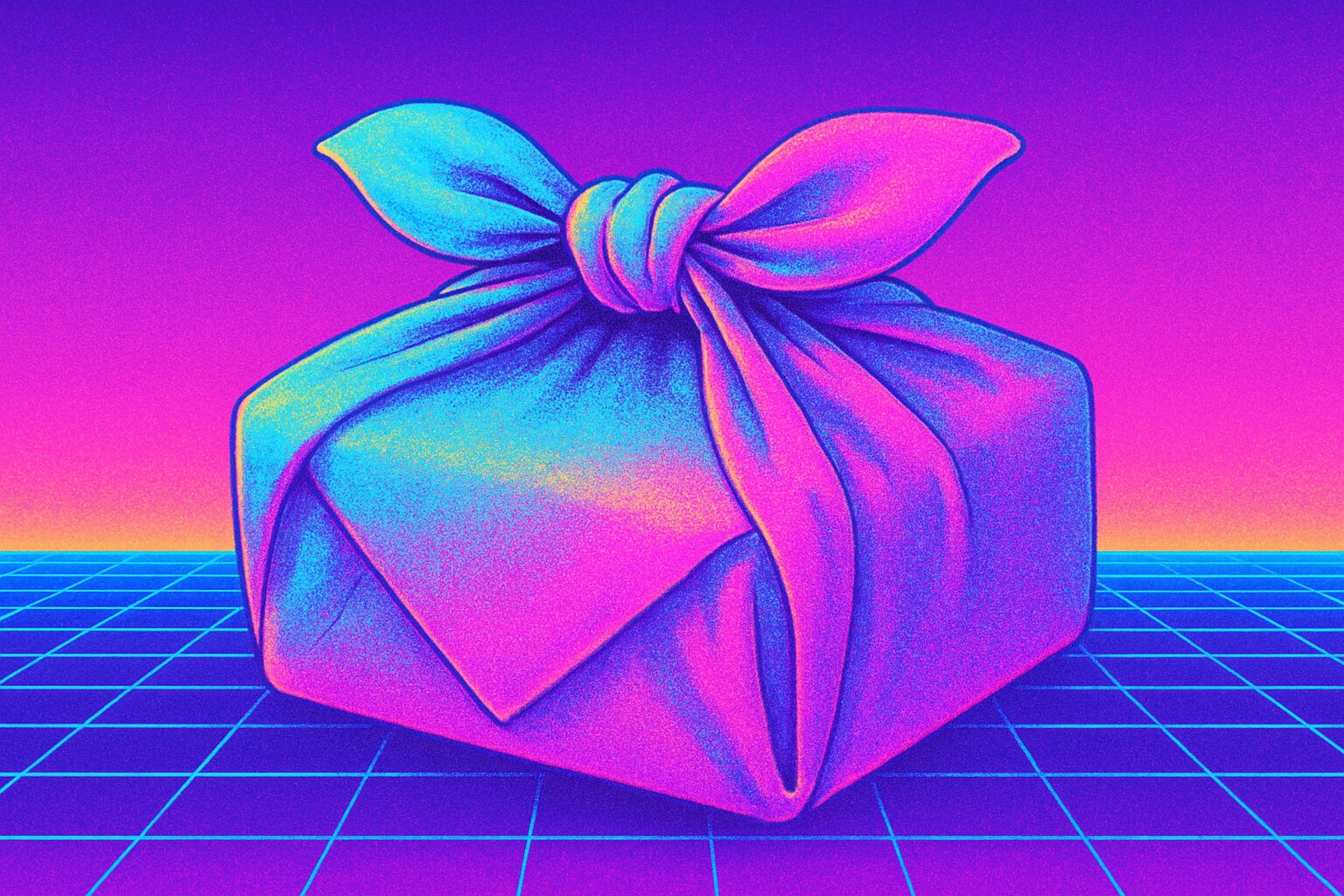
Imagine you have a classic square box to wrap, maybe a book or a box of gourmet chocolates. For this, you’ll want to use the `Otsukai Tsutsumi`, the most fundamental and versatile wrap. Start by laying your Furoshiki flat on a table, positioned like a diamond, with one corner pointing toward you. Place your box right in the center—it’s the star of the show. Now, take the corner closest to you and fold it up and over the box, tucking any excess fabric neatly underneath, like tucking it into bed. Next, take the corner farthest from you and bring it forward, over the box, covering the first fold. Now you have two wings, the corners to your left and right. Bring them together over the center of the box, where the magic happens. Tie them using that `ma-musubi` square knot. Adjust the ends so they resemble beautiful, symmetrical petals. And just like that, you’ve made a simple, elegant package. It’s clean, classic, and a perfect base for all your Furoshiki adventures.
Now, let’s step it up. You’re going to a dinner party with a bottle of wine. Showing up with a bottle in a paper bag is fine, but presenting one wrapped in Furoshiki? That’s next-level. Here’s where the `Bin Tsutsumi`, or bottle wrap, comes in. Place the bottle in the center of your Furoshiki. Bring two opposite corners up and tie them in a simple knot right over the bottle’s cork. Now you have two corners left. Here’s the twist: bring those corners around the bottle’s body, crossing them at the back, then bring them front to tie a secure `ma-musubi`. This creates a snug cocoon for your bottle, complete with a handy handle on top. Want to impress even more? There’s a two-bottle version where you place two bottles side-by-side and wrap them together, forming a handle between them. It’s brilliantly clever and an instant conversation starter.
What about something flat, like a beautiful art book you’re gifting a friend? For this, the sleek `Hira Tsutsumi` is your best bet. This wrap forms a neat, envelope-like package. Place the book in the center of the Furoshiki, slightly offset. Fold one corner over, then the opposite one, creating clean, sharp edges as if wrapping with paper. But instead of tape, you use the fabric itself, twisting and tying the last two corners into an elegant knot or bow on top. It looks incredibly polished and shows real attention to detail.
And just to show you how versatile Furoshiki really is, consider something completely different: a round object, like a melon or a small ball. This is where the `Suika Tsutsumi` (watermelon wrap) shines. Place the object in the center, lift all four corners, and tie them in a series of knots to create a secure net-like carrier with a handle. It’s ultimate proof that with Furoshiki, you can wrap almost anything. It’s both a puzzle and an art form, and mastering a new knot feels incredibly satisfying.
Furoshiki Beyond the Gift: A Whole Lifestyle

To think of Furoshiki merely as gift wrap misses the entire point. Its real charm lies in its versatility. This single piece of fabric can effortlessly become part of your everyday life, replacing disposable items and infusing a touch of Japanese elegance into your routine. It’s more than just an object; it’s a lifestyle enhancement.
Your New Favorite Accessory
Without a doubt, the most popular and practical use for Furoshiki is as a bag. With a few skillful knots, a flat square can transform into a functional and stylish purse, tote, or shoulder bag. The `Shizuku Bag`, or teardrop bag, is a favorite among fans. It involves tying a couple of simple knots at the corners to create a slouchy, chic bag with a handle, perfect for carrying your essentials. For larger loads, like a trip to the farmers’ market, you can knot the corners of a bigger Furoshiki to make a spacious tote bag. The best part? It’s fully customizable. You can adjust the size and shape just by re-tying the knots. And when you’re finished, simply untie, fold, and slip it into your pocket. It’s the most compact, stylish emergency bag you could ask for.
But why limit yourself to bags? Since Furoshiki is essentially a beautiful piece of fabric, it can also serve as wearable art. A smaller silk Furoshiki makes a stunning neck scarf or ascot. Tie it around your ponytail or wear it as a headband for a pop of color. You can even thread a larger one through your belt loops to create a unique, flowing belt. It’s an effortless way to elevate a simple jeans-and-tee outfit into something special. It’s about recognizing the potential beyond the object’s primary use—a genuinely creative and sustainable approach to fashion.
Home Decor Goals
Your Furoshiki’s role isn’t confined to your wardrobe. It can bring a touch of Japanese aesthetics into your home as well. Have a particularly beautiful Furoshiki with a striking print? Don’t tuck it away in a drawer—show it off. You can find simple wooden magnetic hangers made specifically for Furoshiki, allowing you to hang it as a tapestry on your wall. It’s an instant, affordable piece of art that you can swap out with the seasons. A long, rectangular Furoshiki works beautifully as a table runner, adding color and pattern to your dining area. You can even wrap a plain plant pot with one to give it a fresh look. Or, for a quick and easy trick, use a Furoshiki to cover a throw pillow, securing it with a knot in the back. This lets you change cushion covers without sewing—just by swapping the fabric. It’s all about creativity and discovering the decorative potential in this versatile cloth—a simple way to make your space feel more personal and artistic.
The Hunt for Furoshiki: Where to Shop in Japan
If you’re traveling to Japan, bringing home a Furoshiki makes the perfect souvenir. It’s lightweight, easy to pack, beautiful, and genuinely practical. But where can you find the best ones? From centuries-old specialty shops to contemporary design stores, Japan is a paradise for Furoshiki enthusiasts.
Tokyo’s Top Spots
Tokyo is an enormous city, but if you know where to look, you’ll discover some remarkable Furoshiki. For the ultimate experience, be sure to visit Musubi in Jingumae, near Harajuku. This isn’t just a shop; it’s a two-story institution devoted to the art of Furoshiki. The ground floor houses a beautifully curated collection, ranging from tiny cloths for small items to giant ones over two meters wide. The staff are knowledgeable and can demonstrate any wrap technique you’re curious about. They also frequently host workshops (sometimes in English!) where you can learn wrapping skills firsthand. It’s an immersive and educational experience.
For a more mainstream yet equally high-quality option, visit the major department stores, or `depachika`. Giants like Isetan in Shinjuku, Mitsukoshi in Ginza, and Takashimaya in Nihonbashi all have dedicated sections for traditional Japanese goods, including an exquisite assortment of Furoshiki. Here you’ll find premium brands, beautiful silk varieties, and perfectly curated gift sets. Shopping in a Japanese department store is an experience in itself.
If your taste is more modern and design-oriented, check out Kamawanu in Daikanyama. While they’re renowned for their `tenugui` (thin printed cotton towels), they also offer a stunning and stylish range of Furoshiki. Their designs often feature a contemporary twist on traditional motifs, ideal for those with a keen eye for style.
Kyoto’s Cultural Hubs
As the former imperial capital, Kyoto is rich in tradition and craftsmanship, making it an excellent place to search for Furoshiki. Strolling through the historic Gion district or the shops along the paths to temples like Kiyomizu-dera, you’ll encounter numerous textile shops selling beautiful fabrics. Many of these smaller, family-run stores offer unique, locally made Furoshiki you won’t find anywhere else. For a more concentrated shopping experience, Nishiki Market is a great spot to visit. While it’s well-known for food, many stalls also sell crafts and textiles. Additionally, keep an eye out for antique markets, like the one at Toji Temple on the 21st of each month. You may find a stunning vintage silk Furoshiki with a fascinating story.
Ami’s Pro-Tip for Shoppers
When shopping, the most important factor to consider is size. Furoshiki are not one-size-fits-all. They generally come in a few standard dimensions, and the size you need depends on how you plan to use it. A small one, around 45-50 cm (about 18-20 inches), called `chuhaba`, is perfect for wrapping a bento box or a small gift. The most versatile size is about 68-75 cm (27-30 inches), known as `futahaba`, ideal for most gift-wrapping and creating smaller bags. For larger tote bags or wrapping bulky items, you’ll want a `mihaba`, roughly 90 cm (35 inches), or even an `yohaba` at 105 cm (41 inches) or larger. Before purchasing, think about your primary use. If uncertain, a 70 cm or 90 cm Furoshiki is a great starting point, as they offer the greatest flexibility.
Final Thoughts: Wrap It Up with Heart

In a world that often seems to be rushing by, Furoshiki invites us to slow down. It encourages us to be more deliberate, more imaginative, and more connected to the items in our lives. It stands as a beautiful resistance to the disposable, a celebration of sustainability. This craft links us to a rich heritage while feeling perfectly aligned with the future we aspire to create. More than just an eco-friendly substitute for wrapping paper, Furoshiki represents a mindset. It’s the joy of crafting something beautiful with your own hands. It’s the respect shown to a gift by wrapping it thoughtfully. It’s the delight in watching a simple square of fabric transform into a bag, a scarf, or a piece of art. So, the next time you have a gift to give, consider skipping the paper and tape. Choose a Furoshiki that tells a story, tie a knot made with heart, and pass on a tradition that is as thoughtful as it is beautiful. Embrace the versatility of Furoshiki. It’s a small change that makes a big impact, one stunning, reusable wrap at a time.