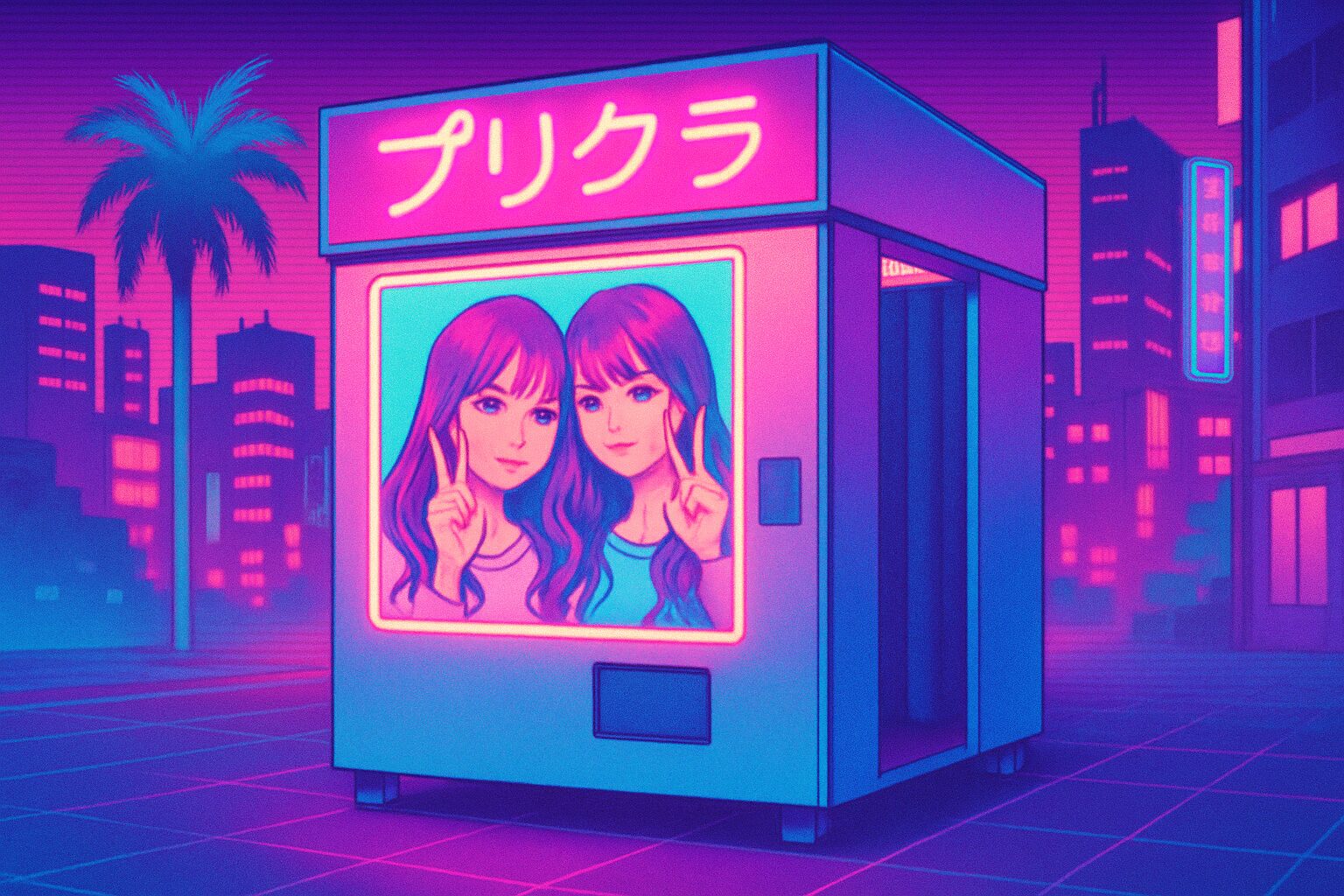
Yo, what’s the move? It’s Ryo, coming at you straight from the electric heart of Tokyo. Picture this: you’re wandering through Shibuya or Harajuku, the neon signs are painting the night sky, the energy is absolutely buzzing, and you hear it. A symphony of high-pitched jingles, the clatter of tokens, and infectious J-pop blasting from a brightly lit entrance. You’ve just stumbled upon a Japanese game center, an arcade, and inside lies a cultural phenomenon that’s way more than just a photo op. We’re talking about Purikura. If you think you know photo booths, think again. This ain’t your grandparent’s grainy, black-and-white strip of four awkward photos. Nah, this is a full-blown, high-tech, kawaii-fueled transformation station. It’s a ritual, a social currency, and a time capsule of pure, unfiltered fun. Purikura is where you and your crew go to immortalize a moment, but not just as you are—as the glowed-up, sparkly, big-eyed anime version of yourselves. It’s an essential piece of the modern Japanese experience, a vibrant thread in the fabric of youth culture that has survived and thrived for decades, constantly reinventing itself to stay iconic. This is your official deep dive into the world of Japanese print club, a place where reality gets a heavy dose of digital magic and the vibes are always immaculate. Bet.
To further explore the kawaii aesthetic that defines modern Japanese youth culture, check out our guide to the world of kawaii stickers and washi tape.
The Glow Up is Real: What Even IS Purikura?
Alright, let’s break it down. The word “Purikura” itself is a classic Japanese portmanteau, blending “Purinto Kurabu” (プリント倶楽部), which literally translates to “Print Club.” At its core, that’s exactly what it is: a club you join briefly to get some prints. But frankly, that explanation is a massive understatement. It’s like calling a Michelin-star tasting menu “a snack.” The concept originated in the mid-90s and quickly blew up, becoming the ultimate accessory for the high-school generation, especially the famous “gyaru” subculture. The original machines were quite basic compared to today’s high-tech models, but the main appeal stayed the same: you weren’t just taking a picture, you were creating a personalized keepsake.
So what sets Purikura apart from a typical photo booth? Everything. Literally everything. A Western photo booth is a cramped box made for passport photos or quick silly snaps. You step in, a harsh flash fires off four times, and a slightly damp paper strip comes out. That’s it. A Purikura machine is a two-part experience. First, there’s the booth itself, which is often surprisingly roomy, equipped with professional-grade lighting, a high-resolution camera, and a green screen. The objective isn’t just to capture your image, but to do so in the most flattering way possible. The flash is soft, the camera angles forgiving, and the entire setup is designed to make you look great from the start. The second, and arguably most important, part is the “rakugaki” station. After posing, you move to a separate area outside the booth with large touch screens and styluses. This is your digital art studio, where you have limited time to go wild customizing your photos. We’re talking filters, glittery stamps, cute text, preset messages, and drawing tools. But the real game-changer in modern Purikura is the built-in AI-powered beauty enhancement. The machine automatically smooths your skin, slims your jawline, adds a touch of blush, plumps your lips, and most famously, enlarges your eyes to create that classic anime or manga-inspired look. This process is called “moru” or “moreru,” a slang term meaning to enhance or beautify beyond reality. And believe me, the moru effect is no joke. You come out looking like a flawless, ethereal version of yourself. It’s this mix of a fun group activity, a creative outlet, and a powerful beauty app realized in physical form that makes Purikura an essential Japanese cultural experience. It’s not really about vanity. It’s about playfulness and creating a hyper-idealized, super-kawaii keepsake of a day spent with your favorite people. No cap.
Stepping into the Neon Dream: The Purikura Experience A-Z
To truly experience the excitement, you need to go through the entire process—from the moment you enter the arcade to the instant you hold that glossy sticker sheet in your hands. It’s a sensory adventure, a whirlwind of options, and a race against time. It’s organized chaos, and it’s captivating.
The Quest for the Ideal Booth
Your journey starts in the game center. Forget quiet, carpeted arcades; Japanese game centers, or “gesen” as they’re called, are dazzling sensory assaults. The air pulsates with a hundred different electronic tunes, the bass from rhythm games vibrates through the floor, and the flashing lights from UFO catchers and fighting games create a never-ending disco. Purikura machines usually occupy their own dedicated floor, often painted in pastel pinks, purples, and blues. It feels like stepping into a kawaii sanctuary. Rows upon rows of towering Purikura machines greet you, each a monolith of colorful plastic and flashing screens vying for your attention. Each machine carries its own name—like “Melulu,” “Chou,” “97%,” or “Arouse”—each promising a slightly different aesthetic.
Here lies your first big decision: how to choose? You study the “gaiyou,” the sample pictures plastered all over the machine’s exterior. They serve as your style guides. One might offer a soft, dreamy, almost hazy look emphasizing a natural glow. Another goes for a sharp, cool, K-pop idol vibe with bold makeup filters and dramatic lighting. A third might stick to the classic, ultra-cute style with enlarged eyes and sparkling backgrounds. This is where you and your friends huddle, pointing and debating. “Ooh, this one makes your skin look so clear!” “No way, the eye style on that one is way cuter.” This step is critical since the machine’s basic algorithm will shape the overall look of your photos before you even start decorating. You’re not just picking a machine; you’re choosing your fantasy persona for the next ten minutes. Once you decide, the real fun begins.
Inserting Coins and Striking Poses
You’ll find a slot for your money on the machine. Most sessions cost between 400 and 500 yen, a steal for the experience. Pro tip: have your 100-yen coins ready. Some machines accept 500-yen coins or digital payments, but 100-yen coins remain the arcade’s universal currency. After payment, the screen prompts you to choose your background themes, the number of shots, and the layout of your final sticker sheet. Then, it’s time to step inside. You pull back a curtain and enter the photo booth. The interior is stark white and intensely bright, like a professional studio. A large screen in front of you shows your reflection, and a friendly, high-pitched female voice starts guiding your shoot.
This segment is a frantic, high-energy race against the clock. The voice shouts “Ready? Three, two, one, CHEESE!” (or “san, ni, ichi, はいチーズ!”), and a countdown timer appears on the screen. Between shots, you have about five to ten seconds to completely change your pose. The screen often assists by showing sample poses—the classic peace sign, the “heart” pose with your hands, the “toothache” pose with a hand on your cheek, or elaborate group stances. You and your friends laugh, scramble, and coordinate as the countdown ticks down relentlessly. The flash fires, freezing a moment of joyful chaos. Then, boom, the next countdown starts immediately. There’s no time to think, only to react. This exhilarating rush makes the photo-taking so memorable. You’ll take about six to eight photos in one or two minutes. When the last shot is done, the voice chirps a happy “Thank you!” and instructs you to step out to the decorating station.
Rakugaki Time: The Digital Art Studio
Here is where the real magic unfolds. You and your crew gather around one or two large touchscreens, each with a stylus. The photos you just took pop up, transformed by the machine’s “moru” effect. Your skin looks flawless, eyes sparkle, and you resemble the main characters from a shoujo manga. Seeing it for the first time is genuinely a pleasant shock. Now, another timer starts, usually giving you about two to three minutes for “rakugaki” (scribbling or decorating). This is a team effort; two people can decorate at once. The interface offers a treasure trove of creative tools. You can change backgrounds to a glittery galaxy, a field of cherry blossoms, or a trendy geometric pattern. You can add text—dates, names, or inside jokes—with endless font choices ranging from cute bubbly letters to elegant scripts.
Then come the stamps. Oh, the stamps. There are literally hundreds: tiny hearts, sparkling stars, cute animals, crowns, devil horns, cat ears, glasses, and more. You can shrink, enlarge, and rotate them as you please. Next is the makeup palette, letting you add blush, switch lipstick colors, apply eyeliner, or add glittery highlights under your eyes. Finally, the free-drawing pen lets you doodle directly on the photos, sign your names, or draw silly mustaches on each other. The timer’s pressure turns the process into a frantic, hilarious dash. “Quick, put a cat stamp on her head!” “Wait, I need to write our group name!” “Hurry, only 30 seconds left!” The cheerful voice guide gives warnings as time runs out. When the timer hits zero, your masterpiece locks in. You’ll be prompted to enter your email or scan a QR code to receive a digital copy of the photos on your phone—a modern addition that’s truly a game-changer.
The Grand Reveal: Your Sticker Masterpiece
After a minute or so of whirring and clanking inside the machine, your prize slides out from a slot at the bottom. It’s a warm, glossy sheet of photo stickers. This is the moment of truth. Everyone gathers round to admire your collective creation. The prints always have fantastic quality, with vibrant colors and crisp finish. The sheet is usually perforated for easy division. This leads to the final ritual: photo distribution. “You can have the one of us doing the heart pose.” “I want the big group shot.” If you’re in a large group, you might need scissors to carefully cut out individual pictures, and many Purikura corners provide counter space and communal scissors for this purpose. You leave with a physical, tangible keepsake of your day. It’s a sticker you can put on your phone case, journal, or laptop. A small, affordable, yet deeply personal souvenir capturing not just your image, but the fun, creativity, and friendship of the moment. And now, with the digital download, you have something perfect to share on your Insta story to complete the cycle. It’s the ideal blend of physical and digital, nostalgic and hyper-modern.
The Evolution of Kawaii Tech: From 90s Fad to 21st Century Phenomenon
Purikura’s journey offers a captivating reflection of Japan’s technological and cultural transformations over the past 25 years. It wasn’t merely a passing trend; it established itself as a cultural phenomenon that continuously adapted, evolved, and secured its role in the social lives of millions.
The OG Purikura Boom
The tale begins in 1995, when the first Purikura machines, created by game companies Atlus and Sega, debuted in arcades. The idea was an immediate and overwhelming success. It perfectly captured the spirit of 90s Japanese youth culture, especially the “gyaru” or “gal” movement. These high school girls, known for their tanned skin, bleached hair, and distinctive fashion, embraced self-expression and community. Purikura became their ultimate medium. After school, they would snap photos with friends, carefully adorn them with the limited stamps and pens available at the time, and then trade the stickers. This practice led to the creation of “puricho” (プリ帳), special binders or notebooks used to collect and organize Purikura stickers. A girl’s puricho was a symbol of her social life; pages filled with pictures of friends, classmates, and boyfriends were a source of pride. It functioned as a tangible social network before the internet era. The machines from this period were simpler, with lower photo quality and minimal beautifying effects, but they laid the groundwork for what followed. They established the essential cycle: take a photo, customize it, and share the physical result.
The Tech That Keeps on Giving
With technological progress came significant advancements in Purikura. The 2000s witnessed enormous improvements in camera quality, printing, and most importantly, software. This era marked the rise of the “moru” culture. Developers began adding features that went beyond basic decoration. Early implementations included skin-lightening and blemish-removing filters, which were extremely popular. Then arrived the eye-enlarging feature, a technical breakthrough that came to define modern Purikura aesthetics. Engineers and programmers dedicated themselves to creating algorithms that could pinpoint facial features with remarkable precision and apply enhancements that appeared (somewhat) natural. Competition intensified among Purikura manufacturers. One company introduced a feature to lengthen and slim legs; a competitor countered with an algorithm that gave hair a glossy, healthy shine. Touchscreens became more responsive, the range of stamps and filters expanded dramatically, and lighting inside the booths became as advanced as those used in professional photo shoots. Today, AI powers the technology to distinguish individual faces in group photos and apply tailored enhancements to each person. It can add realistic makeup contours matching each face shape, and even alter iris color. This constant innovation is why Purikura has never felt outdated. It has consistently been at the forefront of consumer-level photo-editing technology, providing playful digital alterations that even the most sophisticated smartphone apps find hard to match in terms of fun and special experience.
It’s Not Just for Girls Anymore
For many years, Purikura sections in arcades were considered exclusively female spaces. The style, voice instructions, and marketing targeted teenage girls specifically. Some arcades even posted signs barring men from entering Purikura areas unless accompanied by females. This was partly a marketing strategy and partly intended to create a safe and comfortable environment for the primary audience. However, over the last decade, this landscape has shifted significantly. Purikura’s appeal has broadened. It is now a favorite activity for couples on dates, who use it to make cute keepsakes of their time together. It has also become popular among mixed-gender friend groups. Machine manufacturers have adapted to this shift. Although the “kawaii” aesthetic remains prevalent, many new machines offer more toned-down or “stylish” enhancement options. Users can often adjust the intensity of eye-enlargement or skin smoothing, and some machines even feature “natural” or “handsome” modes catering to male users. This evolution has guaranteed Purikura’s endurance, evolving it from a niche subcultural pastime into a mainstream form of entertainment enjoyed by a diverse audience. It stands as a testament to its strong core appeal: the simple pleasure of creating fun, flattering, and unique photos with people you care about.
Decoding the Vibe: Why Purikura is a Whole Mood
So why has this seemingly simple activity become so deeply embedded in Japanese culture? It’s because Purikura is about far more than just snapping a photo. It connects with several core elements of social life and self-expression in Japan. It serves as a canvas, a ritual, and a tangible part of an aesthetic that defines a generation. No wonder it remains popular; it’s an entire vibe, a mood you can’t quite find anywhere else.
A Canvas for Self-Expression
In a society that often prioritizes conformity and harmony, Purikura provides a small, fleeting space for bold, unapologetic self-expression. During those ten minutes, you act as the artist, model, and creative director. You choose how you want to present yourself to the world. Do you want to appear super cute and bubbly? Cool and edgy? Ethereal and dreamy? The machine offers the tools, but you create the final product. The act of “rakugaki” is a creative process. Selecting the right stamps, placing text just so, and doodling on the screen are all ways of personalizing a memory. The finished sticker sheet is more than a photo; it’s a miniature, collaborative art piece that reflects personalities and shared humor within the group. It’s a way to say, “This is us, right now, and this is how we choose to remember it.” This creative control is deeply empowering and a major part of its lasting appeal.
The Ultimate Friendship Ritual
Above all, Purikura is a social activity. It’s something you do with others. It’s a bonding experience from beginning to end. The joint decision to pick a machine, the collective laughter and nervousness while striking poses inside the booth, and the teamwork involved in decorating the photos before time runs out—all of it works to strengthen social bonds. It’s a low-stakes, high-reward activity that builds positive shared memories. In Japan, where group identity holds great importance, activities that reinforce cohesion are highly valued. Purikura is a modern, tech-infused expression of this. Exchanging the finished stickers physically represents this connection. When you give a friend a piece of the Purikura sheet, you’re offering a token of your shared experience and a reminder of your friendship. It’s a small but meaningful gesture that solidifies your bond. That’s why friends often take Purikura to mark special occasions like birthdays, graduations, or simply a fun weekend outing. It’s the official way to capture a good time.
Capturing a Moment, But Make It ✨Aesthetic✨
In the age of Instagram and TikTok, we’re all curating our digital personas. We apply filters, tweak lighting, and carefully pick which images to share with the world. Purikura is the analog predecessor of this trend, but with a distinctive twist. It brings the digital aesthetic of a filtered selfie into the physical realm. You get a tangible object to hold, keep, and share. This fusion of digital and physical is what makes it so special. It has a nostalgic, retro appeal while also showcasing cutting-edge beauty tech. It perfectly captures modern Japan—a country that reveres tradition and physical artifacts while simultaneously pushing the limits of technology and digital culture. Taking Purikura means participating in this “aesthetic-first” philosophy. You’re not just preserving a memory; you’re capturing a vibe. You’re creating an idealized image that is playful, aspirational, and above all, incredibly fun. It’s a form of escapism, letting you step into a hyper-kawaii world for a few minutes and bring a piece of it back into reality.
Your Purikura Pilgrimage: Where to Go and Pro Tips
Feeling the hype? Ready to get your own glow-up? Bet. Navigating Purikura for the first time can feel a bit intimidating, but it’s super easy once you know the basics. Here’s the lowdown on where to go and how to ace your first Purikura session.
The Holy Grails: Shibuya & Harajuku
For the full, authentic Purikura experience, you’ve got to hit Tokyo’s youth culture hubs: Shibuya and Harajuku. These neighborhoods are trendsetting hot spots, with game centers featuring the latest and greatest Purikura machines. In Harajuku, the famous Takeshita Street is packed with shops and crepe stands, and nestled among them are several arcades boasting massive Purikura floors. The vibe here is pure kawaii energy. You’ll be surrounded by school students and fashion-forward teens, creating an infectious atmosphere. In Shibuya, head to the iconic Shibuya 109 building or main Center Gai street. Large arcades like the multi-story GiGO or Taito Stations have entire floors resembling Purikura theme parks. These places usually offer the widest machine selection, from the newest models everyone’s raving about to older, cult-favorite classics. Many also feature “beauty corners” or “powder rooms” equipped with large mirrors, stools, and sometimes even free hair straighteners and curling irons so you can perfect your look before the photo shoot. It’s an all-in-one prep and play experience.
Beyond the Hype: Finding Purikura Everywhere
While Tokyo’s hot spots are unmissable, you don’t need to be in the capital to enjoy Purikura. It’s a nationwide craze. Any decent-sized town or city in Japan will have a game center, which almost certainly includes Purikura machines. You’ll find them in shopping malls, entertainment complexes, and sometimes near major train stations or bowling alleys. The experience is universal. Whether you’re in Osaka, Fukuoka, Sapporo, or a smaller regional city, keep an eye and ear out for the bright lights and cheerful arcade music. Stumbling upon a Purikura corner in an unexpected place is part of the fun when exploring Japan. The local flair might vary, but the core excitement of frantic posing and decorating remains the same.
Pro-Gamer Moves for First-Timers
Ready to approach the machine? Here are some insider tips to make your first Purikura experience smooth and stress-free:
- Coin is King: Have 100-yen coins ready—it just makes things easier. Most arcades have change machines that break 1,000-yen or 5,000-yen bills into coins.
- Scout Your Machine: Don’t jump into the first empty booth you see. Spend a minute walking around and checking the sample photos outside each machine. Pick a style that suits you. Want a natural look or full anime-eye fantasy? The choice is yours.
- Plan Your Poses (Loosely): You won’t have much time between shots, so it helps to have a few poses in mind. The peace sign is timeless. Making a heart with your hands, pointing to your cheeks, or trying a trendy pose you’ve seen online are great ideas. But don’t overthink it! The best photos often come from spontaneous laughter and silly faces.
- Divide and Conquer the Rakugaki: The decorating timer is your real challenge. If you’re with a friend, team up. One person can focus on stamps and backgrounds, the other on text and drawing. With a bigger group, take quick turns. Being fast and decisive is key.
- Don’t Forget Your Digital Copy: This is crucial. After decorating, the machine usually offers a way to get a digital version of your photos via a QR code you scan with your phone. You can then select and save your images from a temporary website. Make sure to do this—it’s the best way to share your Purikura creations online.
- Bring a Small Pair of Scissors: Some places provide scissors, but not always. If you’re with a group and want to split the sticker sheet quickly, carrying a small, travel-safe pair of scissors is a smart move.
The Language of Purikura: A Quick Glossary
Want to sound like you really know what you’re talking about? Here are some essential terms from the Purikura lexicon. Using these will definitely level up your game.
- Purikura (プリクラ): The main attraction. Short for Print Club. It’s the general term for both the photo booths and the stickers they produce.
- Rakugaki (落書き): Literally meaning “scribbling” or “graffiti.” This describes the entire digital decorating process after you take the photos.
- Moru (盛る) / Moreru (盛れる): The most important concept. It means to enhance, exaggerate, or make something look better than it really is. When a photo is described as “moreru,” it means it looks incredibly flattering, thanks to the magic of the machine.
- Mekara (目力): Meaning “eye power” or “eye strength.” It refers to the intensity and beauty of one’s eyes. In Purikura, it specifically applies to the eye-enlarging and enhancing effects that define the aesthetic.
- Bihada (美肌): Meaning “beautiful skin.” This effect smooths your skin, removes blemishes, and gives you a radiant, flawless complexion in the photos.
- Puricho (プリ帳): The “Purikura albums” that were hugely popular in the 90s and 2000s for collecting and trading stickers. While less common today, the idea of collecting Purikura as keepsakes is still very much alive.
Ultimately, Purikura is more than just a pastime; it’s a vibrant, living part of Japanese pop culture. It celebrates friendship, technology, and the joyful, unapologetic pursuit of kawaii. It’s a space that encourages playfulness, creativity, and seeing yourself—quite literally—in a new light. It’s a snapshot capturing a moment, a mood, and an aesthetic all at once. So, the next time you find yourself in Japan, tempted by the neon glow of an arcade, don’t hesitate. Grab your friends, pocket your coins, and dive headfirst into the glittering, high-energy world of Purikura. Go make some memories, sticker-style. You won’t regret it. It’s a vibe you have to experience for yourself.